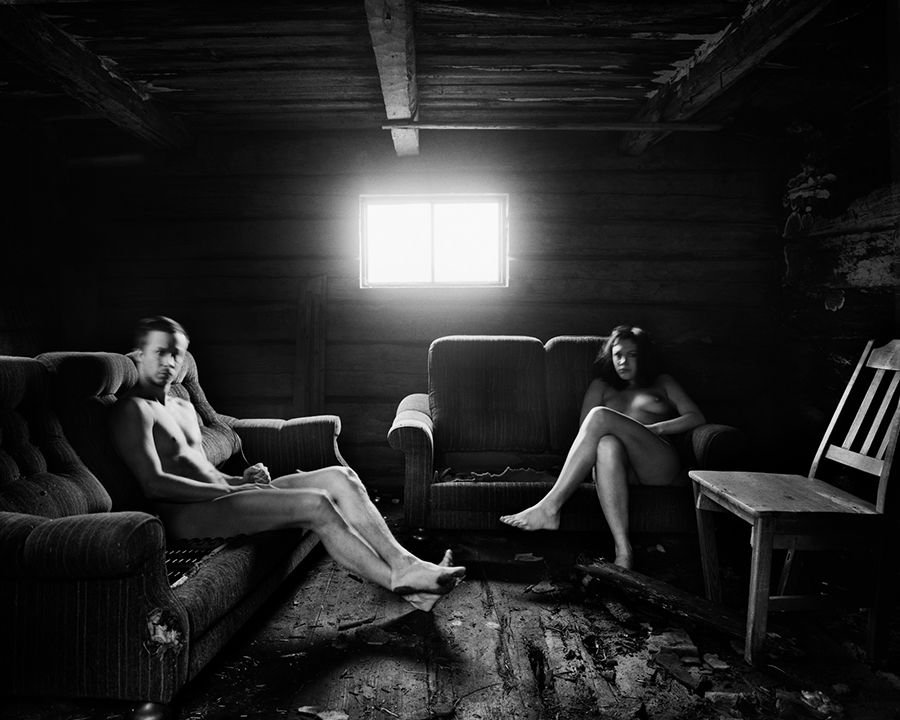
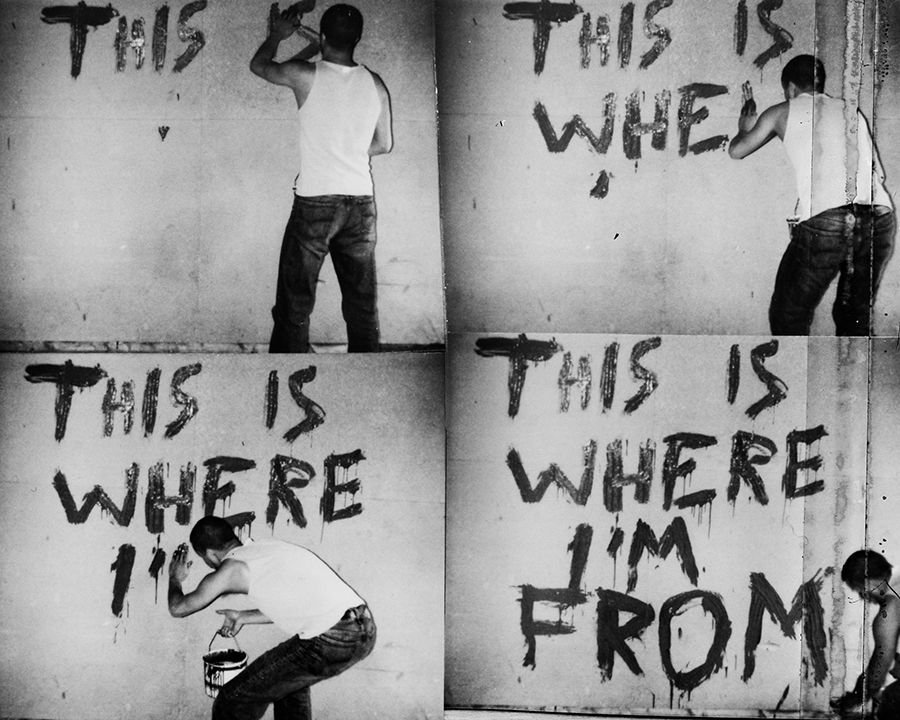
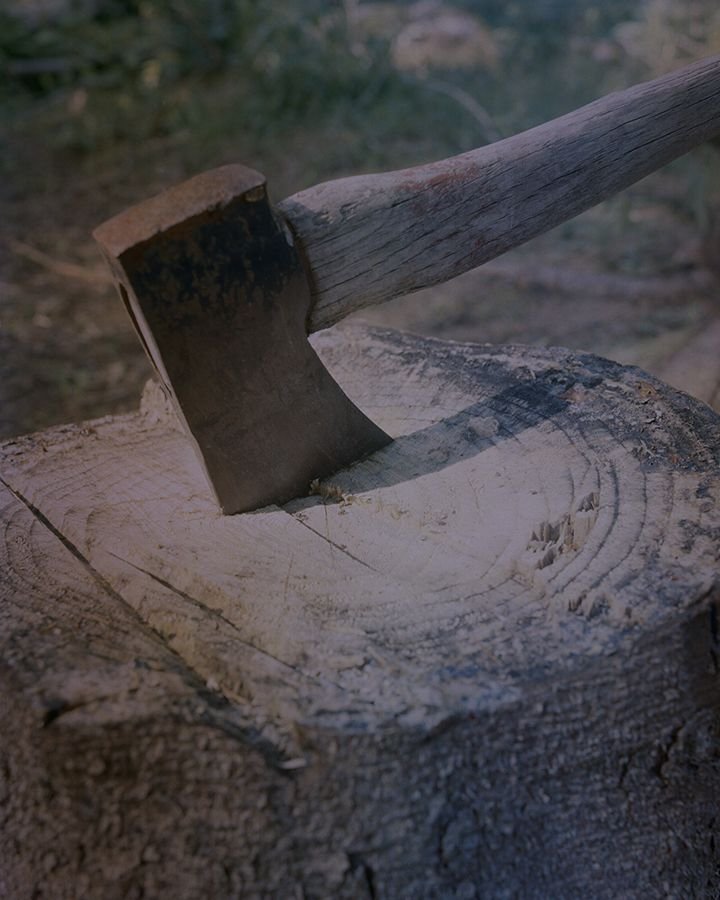
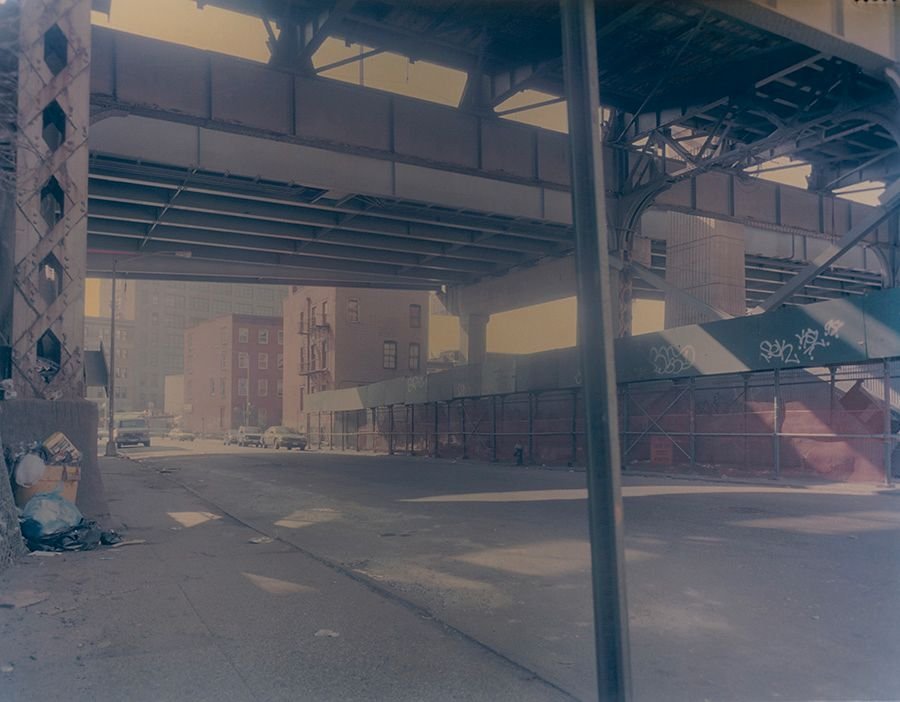
Emaho: You were born in Karlstad and spent your early years in the rural province of Värmland, then at age ten your family moved to Paris, a jump from slow-paced Swedish countryside straight into the exaltation of Parisian life. You’ve described that contrast as something that imprinted directly on your artistic consciousness. Which of those two worlds do you think you were actually running toward in your early photography, the rural stillness you’d lost, or the urban intensity you’d just discovered?
JH Engström: Not sure that’s how it works. I was searching and still am. These places had, and still have, a place deep inside me, but the distance between them also has a place inside me. Maybe that distance is more interesting and important. And the oscillation between almost different universes. Opposite and complementary. It’s also about different energies, different paces, different perspectives, etc. To navigate that oscillation, those differences and that distance is very dynamic.
Emaho: Before you’d even finished your own formal training, you assisted Mario Testino in Paris and then shared a lab with Anders Petersen in Stockholm, two photographers with almost opposite sensibilities, one rooted in high fashion polish, the other in raw, intimate documentary. What did working that close to Testino’s world teach you, even if your own work ended up running in the opposite direction toward Petersen’s influence?
JH Engström: Opposite sensibilities sounds very black and white, and I did not calculate moving from or towards anything. I was working with Mario and suddenly found myself, at a very young age, in this enormous machinery of fashion and image-making. It was fascinating. I learned a lot, also about things I did not want for myself. Anders came into my life differently and much deeper. Also in a very personal way. One thing led to another.
Emaho: You released your first book, Shelter, in 1997, the same year you graduated from Gothenburg University’s photography program, and then almost immediately moved to Brooklyn to begin Trying to Dance, eventually spending time at Robert Frank’s studio in New York. Having access to someone like Robert Frank that early in your career is a rare kind of exposure. What is something Frank said or did around you that you didn’t fully understand the weight of until years later?
JH Engström: I went to New York because I had a dream about it. Naive or not, I went. I did not go there to start Trying to Dance. The process for me, when things eventually become something, is very much one of mess. I fumble around in that mess, and sometimes something comes out of it. In this case, that fumbling and searching led to Trying to Dance.
During that time I spent time at Robert Frank’s studio now and then. I usually brought some beers or coffee, and we would smoke cigarettes and talk. But what stayed with me most from those visits was not what he said, but more his attitude towards life and work. This unwillingness to compromise. Also a sense of freedom. But most of all, I think I was just there, trying to absorb it all. Sometimes I showed him what I was working on, and he was always supportive and encouraging, which of course helped me back then.
Emaho: Trying to Dance took you from Brooklyn back to your native Värmland to finish, and the finished book was shortlisted for the Deutsche Börse Photography Prize in 2005. Beginning a project in one of the most frenetic cities in the world and finishing it in the rural region you grew up in is a strange full circle. Did the project actually change direction once you brought it home, or had you always known Värmland was where it needed to end?
JH Engström: Again, it’s the same thing here: I did not go to Värmland to finish Trying to Dance. There are no such straight lines. Värmland appears in the book because that’s what I lived. That’s where I was at the time. The direction does not change because I go here or there. I’m in the middle of it and try to formulate that. And then it might end up as a finished work. In this case, Trying to Dance. The kind of clarity you are looking for in your question more often comes afterwards, if it comes at all.
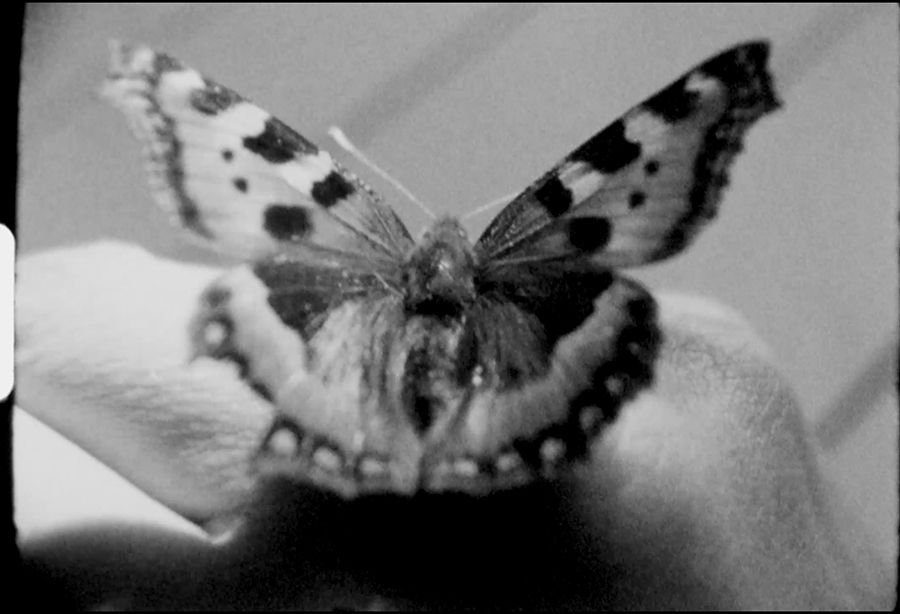
Emaho: Trying to Dance, Tout va bien, and Revoir form an unofficial trilogy stretching from 2003 to 2017, spanning well over a decade of your working life. Looking back at all three now as a single body of work rather than three separate books, what do you think that trilogy is actually about at its core, and is that the same thing you believed it was about when you started the first one?
JH Engström: I never really announced it as a trilogy. It was written somewhere and then, in the logic of copy and paste, it’s now out there. But it’s all my work and of course there are things that relate strongly between them. Basic things. Like time passing, fear, desire, being alive, tenderness, harshness, vulnerability, magic and mystery. But also the inevitable fact that we don’t really know anything.
Emaho: Tout va bien won the Leica Oskar Barnack Prize in 2015, and your earlier book La Résidence received the Golden Letter award, while From Back Home, made with Anders Petersen, won the Rencontres d’Arles photobook prize. You’ve built a career on deeply personal, autobiographical work, yet that work keeps being recognized by some of the most established institutions in photography. Does that institutional validation change anything about how personal you’re willing to make the next project, or does it just confirm you should keep going exactly as you were?
JH Engström: I do my work. Those parameters you mention should and could not change how I work. If I start considering them, I’m going to find myself in a very bad place. To win a prize for your work is always a nice recognition, of course.
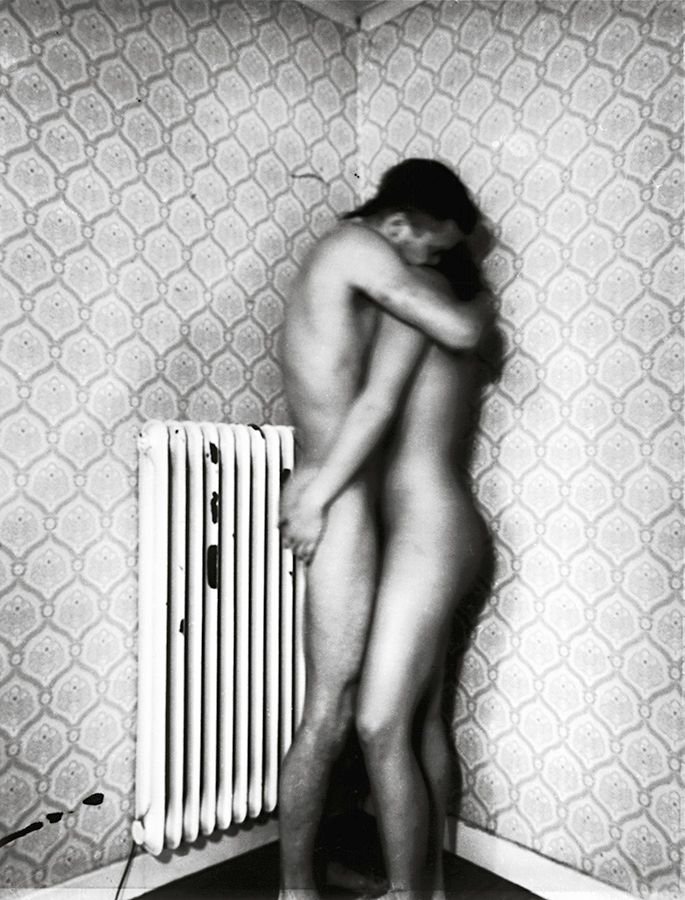
Emaho: In 2012, you and Margot Wallard founded Atelier Smedsby, a one-year workshop built around direct exchange with participants about their own photographic work. Teaching means articulating instincts that, in your own practice, you’ve described as based on bypassing rules entirely and courting the accident. How do you actually teach someone to work that way without turning your own intuitive process into something rigid and prescriptive the moment you try to explain it?
JH Engström: We don’t teach people to work the way we work. That would go against the idea of Smedsby. What is interesting is to dive deep into each participant’s work. What is particular about it? Why do they try to do that specific work? And then we push those questions. We talk a lot. Try to find different perspectives and angles. We argue, and most of all we make a collective contract within the group that makes the whole exchange so much more valuable: Let’s be too pathetic, too ridiculous, and let’s only put honest things on the table.
We also try to identify ways of working, different methods. Every participant carries, of course, a whole world inside them, and so do their images, and we try to find ways for each of them to navigate these worlds and images. Not sure it could even be called teaching. More exploring together.
Emaho: Your practice has expanded well beyond still photography into film, installation, and writing, including projects like Här/Ici/Here and a documentary you made about Anders Petersen himself, the very photographer who shaped your early years in Stockholm. What did turning the camera specifically on Petersen, someone who helped form your own eye, actually teach you about him, or about yourself, that photographing your own life never could?
JH Engström: That was so long ago. I don’t even remember who I was back then. Anders is Anders. Making a film with him did not suddenly reveal who he was to me. I knew him really well before I started making the film. In the end, I might actually have been looking as much at myself while making that film.
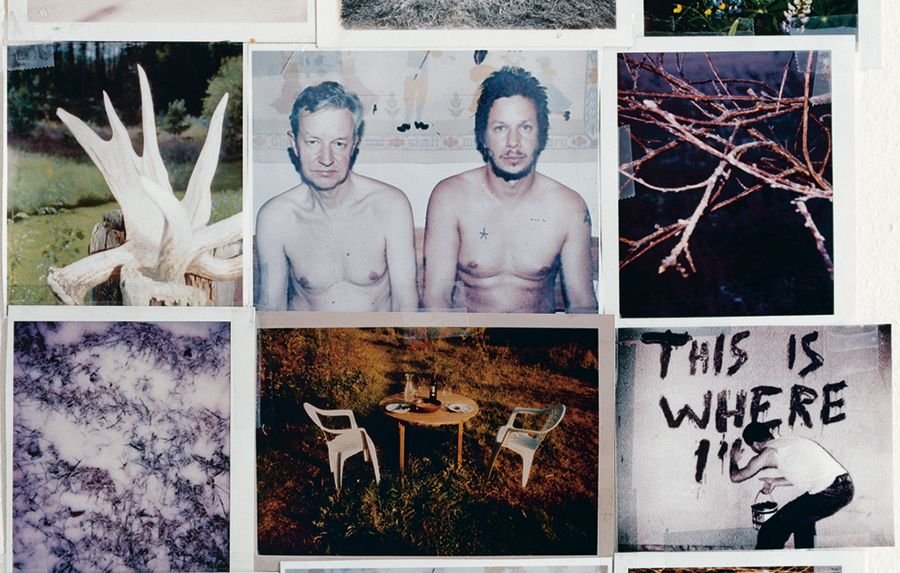
Emaho: Across four decades of books, from Shelter in 1997 to Dimma Brume Mist in 2025, your work keeps circling the same underlying questions: memory, origin, the tension between urban and natural environments, and how we represent our own existence. Do you feel like you’re still asking those same questions because you haven’t found the answers yet, or because the questions themselves are the actual point, and answering them was never really the goal?
JH Engström: I’m not looking for answers. Even less now than before. I just really try to stay close to what I don’t understand.
Emaho: You’ve spent your career living and working between Paris and Värmland, essentially never fully choosing between the two worlds that shaped you as a child. Nearly thirty years since your first book, is there a project or a place you still haven’t photographed that you’re now deliberately saving, or holding off on, because you don’t yet feel ready to make it the way it deserves?
JH Engström: I’m not saving a particular place or project. Actually, what interests me now is that I feel less certain about what the work has to be. Photography has been the centre of my life for a very long time, but lately painting, film, writing and other things have entered more and more. I don’t know where that will lead. It’s scary but also exciting. It feels much more exciting to me than having another project already mapped out. I feel free and I’m far from done yet. That’s where I am right now, I guess.
Portrait Photo: Roberta Stein