Emaho: You grew up in Tunis and moved to Canada at age ten, and you’ve said that around thirteen or fourteen, during the blogging era, you started borrowing friends’ cameras to photograph them in exchange for the photos themselves. That’s a strikingly early, almost transactional entry point into portraiture. Looking back, do you think that exchange, trading images for access, shaped how you still negotiate trust with a subject today?
Oumayma Ben Tanfous: It wasn’t as transactional as it might seem. It was mainly about creating and discovering photography with my friends. All those photoshoots with friends on weekends allowed me to learn, experiment and mostly to create, have fun, and spend time outside with my besties.
Emaho: Despite that early instinct, you didn’t fully commit to a photographic practice until your twenties, after a stint in graphic design and later working as a retoucher. What did retouching other photographers’ images teach you about light, skin, and composition that you don’t think you would have learned as quickly if you’d gone straight from borrowing friends’ cameras into shooting your own work?
Oumayma Ben Tanfous: It allowed me to understand the entire workflow of a shoot, from pre-production all the way to the final image. I was working with art directors, receiving retouching notes, seeing the shoots behind the scenes, listening to clients discuss their feedback and seeing how everyone contributed to the final image. It made the whole process feel much more accessible to me.
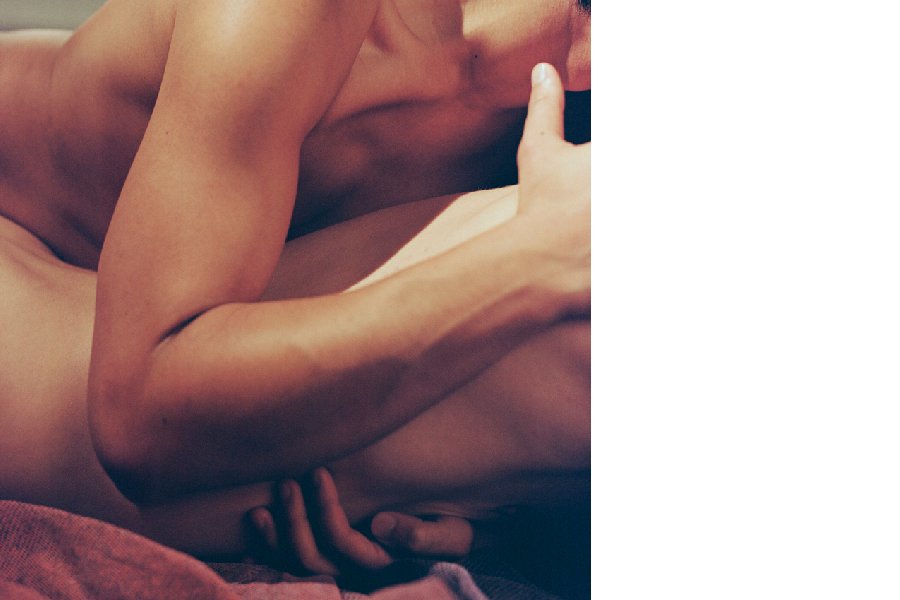
Emaho: You’ve said that at four years old you wanted to paint, and that you still do, secretly. Photography became your public practice while painting stayed private. What is it about painting specifically that you’ve kept back from the world, and has it ever bled into how you compose or light a photograph without you fully intending it to?
Oumayma Ben Tanfous: Painting has always been an inspiration for me and it’s probably the medium, after photography, that I most love going to see in museums. For now, I’m happy to appreciate painting from afar and I’m okay with that.
Emaho: Your debut photobook, “Between I and Lands,” documents your return to Tunisia twenty years after leaving, shot over two years and self-published in 2025 with support from the Canada Council for the Arts. You’ve described the project as being about a relationship with your home country that was “cut short” and trying to rebuild a bridge to it. What was the first image you made on that return trip that told you the bridge was actually starting to hold?
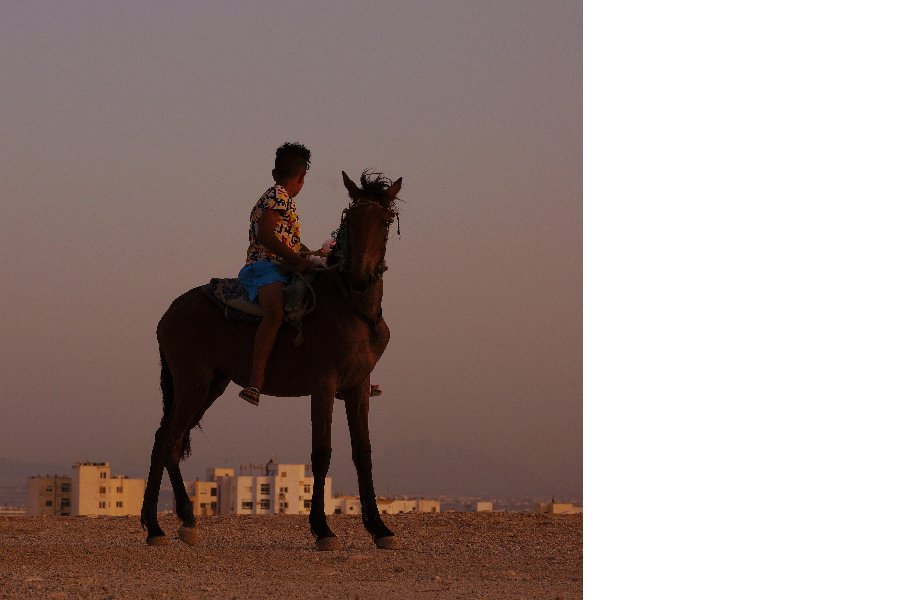
Oumayma Ben Tanfous: The first image I took for the book is also the first photograph that opens it: Amin on his horse, 2022, Tunis. We arrived on this hill and I was a bit overwhelmed, questioning what exactly I was looking for and doubting whether I would find the pictures I wanted to make. Then, almost by magic, Amin passed by us on his horse. We immediately went to talk to him, and after taking that photograph, I slowly started to understand what I was hoping to create. It was almost like waking up from a dream with only blurry ideas and memories. That became the feeling I wanted to create with the book: a recreation of dreams and memories from my childhood.
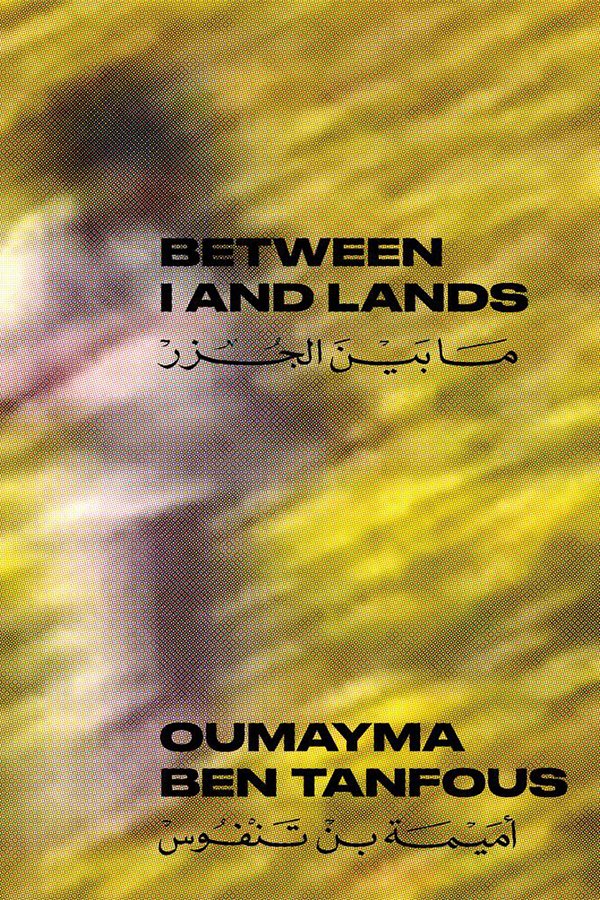
Emaho: The book interweaves your photographs with poems you wrote yourself, a genuine crossing of disciplines inside a single object. Did the poems come out of the same moments as the photographs, written on location as you shot, or did they arrive later, once you were back home trying to process what the images already held?
Oumayma Ben Tanfous: These aren’t poems; they’re journal entries. I started journaling in 2001. For the book, I went back through my old journals and selected a few sentences here and there that I had written during my trips to Tunisia.
Emaho: You’ve worked in medium format film for about five years, describing it as “almost stubborn,” a deliberate slowness against a moment where everything is accelerating, and you’ve said you’re now moving back toward digital and mixed media for your personal projects. What did film force you to understand about patience and attention that you’re now trying to carry with you into faster, more experimental formats?
Oumayma Ben Tanfous: I still mainly shoot medium format. The mixed-media and digital photography have always been part of my practice. Film forces you to be more mindful of the picture you’re creating. You become more careful with composition and light because you know you have a limited number of frames. I think that attention to the image is something I carry with me even when I work faster or with digital.
Emaho: Curator and art historian Taous Dahmani nominated you for Ones to Watch, saying you challenge what femininity might mean in the Arab world and portray intimacy like few other photographers do. That’s a specific, loaded compliment about a specific cultural context. Do you think about that responsibility, representing Arab femininity to audiences who may have almost no other reference point, every time you’re behind the camera, or only when you’re working specifically inside Tunisia?
Oumayma Ben Tanfous: Not at all, really. I don’t think I should be responsible for representing any particular type of femininity. Femininity is diverse and personal to each person who identifies with it. I tend to photograph women often because I grew up surrounded by them, and many of my closest friends are these amazing women. I’m also a big admirer of authors, artists, activists from our region and I love photographing people I find inspiring. But I definitely don’t think about an audience that might have no reference point to the Arab world when I’m photographing. You have to distance yourself from the Western gaze, even though, as an artist, you are part of the art world and an industry that continues to exploit our narratives. Making art and creating work for yourself and your community should be the main reason. People who have no reference point can pick up a book, listen to a podcast, attend a talk…there’s so much you can do if you want to learn.
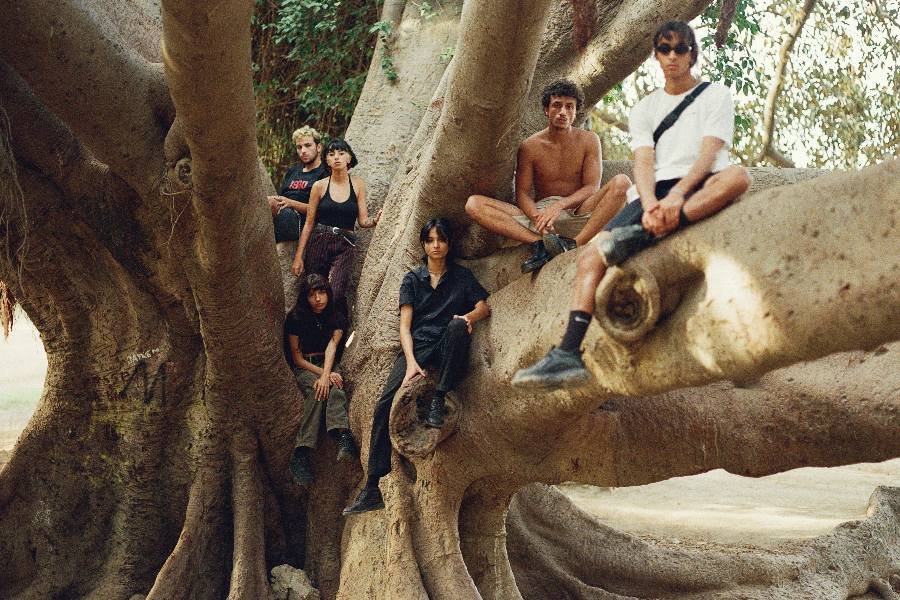
Emaho: Your client list spans Vogue, Document Journal, Kinfolk, Converse, and Apple TV, work that blends fashion’s polish with a documentary instinct for real, unposed narrative. When a commercial brief and your own instinct for authenticity genuinely pull in different directions on set, which one wins, and has a client ever pushed back when you chose the more documentary, less polished option?
Oumayma Ben Tanfous: Yes, that happens a lot. On commercial jobs, sometimes there are more than twenty people working on a campaign, so it’s really about understanding what the client needs at that particular point and finding a way to bring my own perspective into it. To be honest, when it’s huge commercial jobs, it can be really tough to make it look less polished, more documentary, less staged..I find this balance with my personal and editorial work.
Emaho: You’ve now shifted your base from New York and Montreal to somewhere around the Mediterranean, between France and North Africa, moving physically closer to the region “Between I and Lands” was already pulling you back toward. Now that the book exists in the world, has finishing it actually resolved the distance you felt from Tunisia, or has making the work only sharpened your sense of how much more of that relationship you still have to explore?
Oumayma Ben Tanfous: I’m now based in Paris. I will always have a lot to learn about our region and about Tunisia. The book definitely helped heal some wounds. For sure, living in Paris now allows me to be much closer to my culture and my country. In Canada, you can feel very isolated from that part of the world. The winters are so long that sometimes it feels like you’re living on another planet, far away from everything you once knew.