Emaho: You were born in Barcelona, grown up partly in Belgium and then made the deliberate decision in 2006 to move to Paris and dedicate your professional life entirely to photography. That is a very clear act of self-definition for someone who could have stayed inside the broader cultural management world. What did you understand about photography specifically that made you certain it was where you needed to be, and was Paris a practical necessity or a conviction?
Anna Planas: I started working in the socio-cultural field, mostly in Belgium, where I lived before moving to Barcelona. There, we used photography in different projects and workshops for newly arrived immigrants in specific neighbourhoods of the city. When I moved to Paris to join my partner, I knew that I wanted to work in photography, and my ambition was to join Magnum Photos. I was fortunate to be recruited shortly after I arrived, and I spent almost eight years working at the agency.
Emaho: You spent more than seven years at Magnum, and the Magnum gallery in Saint-Germain-des-Prés, where you managed the artistic direction. That is a formidably rigorous education in how photography functions as both a cultural force and a commercial one, inside one of the most legendarily democratic and collectively governed institutions in the medium’s history. What did working at Magnum teach you about the gap between a photographer’s vision and the world’s capacity to receive it, and what did it teach you about the politics of collective decision-making in a creative context?
Anna Planas: The first thing I learned at Magnum was how to work with artists and photographers. The Paris office was very active at the time, and the photographers were highly present, so from the very beginning I was closely connected to their work. My own way of navigating the agency and the photography world was through content, and I had the opportunity to develop this approach across the different roles I held at Magnum.
I always tried to stay closely informed about the personal projects each photographer was working on, and this collaboration became a way for me to engage with the different departments and to present the strongest work in the gallery. This knowledge became my strength within the agency: being close to the photographers and advocating for their work.
Alongside living artists, we were also working extensively with the archives, which became particularly exciting when we created the gallery in Saint-Germain in 2009. We searched for specific series from the Magnum archives, examining the quality of the prints and establishing their dates. At the time, Magnum was very focused on iconic images, whereas we wanted to present complete series, place them in context, and pay attention to sequencing. In that sense, we brought an educational intention into a commercial gallery.
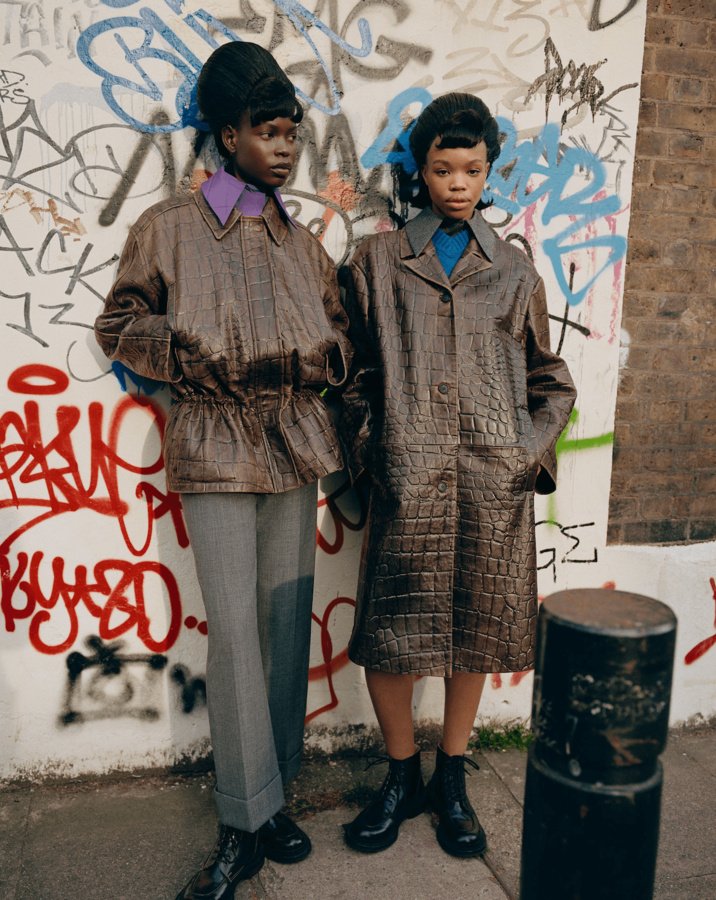 Nadine Ijewere, Untitled, 2025 – Courtesy of the artist & Huxley-Parlour
Emaho: After more than seven years at Magnum you co-founded Temple gallery, a space built on an explicitly experimental programme, organising exhibitions for nearly thirty artists over four years, many exhibited in Paris for the first time, including Sylvain Couzinet-Jacques, Samuel Gratacap, Benjamin Mouly, Lotte Reimann, Katja Stuke, Marine Peixoto and Bruno Zhu. You also curated the major group exhibition The Hobbyist at the Fotomuseum Winterthur and the Rencontres d’Arles through Temple’s network. Co-founding a gallery after years inside an institution is a significant shift in risk and creative authority. What did having your own space allow you to programme that Magnum could not, and where was the gap between what you imagined Temple would be and what it actually became?
Anna Planas: We created Temple with a group of friends after my years at Magnum. Having spent so much time immersed in the history of photography, I became increasingly curious about what contemporary photographers were doing. We began experimenting with some of them through small exhibitions, exhibition design, and zines.
It was incredibly refreshing. A new generation of photographers, closely connected to bookmaking, was trying new approaches, and we wanted to be part of that. We collaborated with many artists whom we have continued to work with ever since, producing books, institutional exhibitions, and many other projects together. Temple had a very DIY way of working, largely thanks to Pierre, whose background was in art and design. For my part, I was interested in connecting the independent scene with institutions in order to give it greater visibility. Institutions were genuinely interested, and from what began as a very small, minimally funded project, we were able to collaborate with Fotomuseum Winterthur thanks to Thomas Seelig and Duncan Forbes, who believed in the idea and chose to support it through the exhibition.
We had a great deal of fun, and we learned how to create exhibitions grounded in deep research that brought together prints and installations alongside books, magazines, vinyl records, vernacular images, and popular culture videos from YouTube.
Emaho: Since its creation in 2020 you managed the artistic direction of the delpire and co bookshop-gallery in the heart of Saint-Germain-des-Prés, organising exhibitions by Theaster Gates, Pati Hill, Vivian Maier, Stéphanie Solinas and William Klein, and building partnerships including the Paris Photo Book Prize with Aperture. That is an extraordinary list of names for a bookshop-gallery that was only two years old when you left it for Paris Photo. What did building that space from its creation teach you about how a small, intimate venue can carry the same curatorial ambition as a major institution?
Anna Planas: The bookshop was a wonderful playground. Having a library as a curatorial tool offers endless possibilities. The idea was to curate through books, and to create a dialogue between the books and the artworks on the walls. My final project at delpire & co was a collaboration with Justine Kurland. For the exhibition, Théophile Calot, who now directs the bookshop, and I removed every book by male artists and, without saying anything to the public, left only books by women and non-binary artists in response to Justine’s Scumb Manifesto. We presented Justine’s collages from that series alongside…
We presented Justine’s collages alongside SCUM Manifesto and invited Moyra Davey to participate. It was a very unique project.
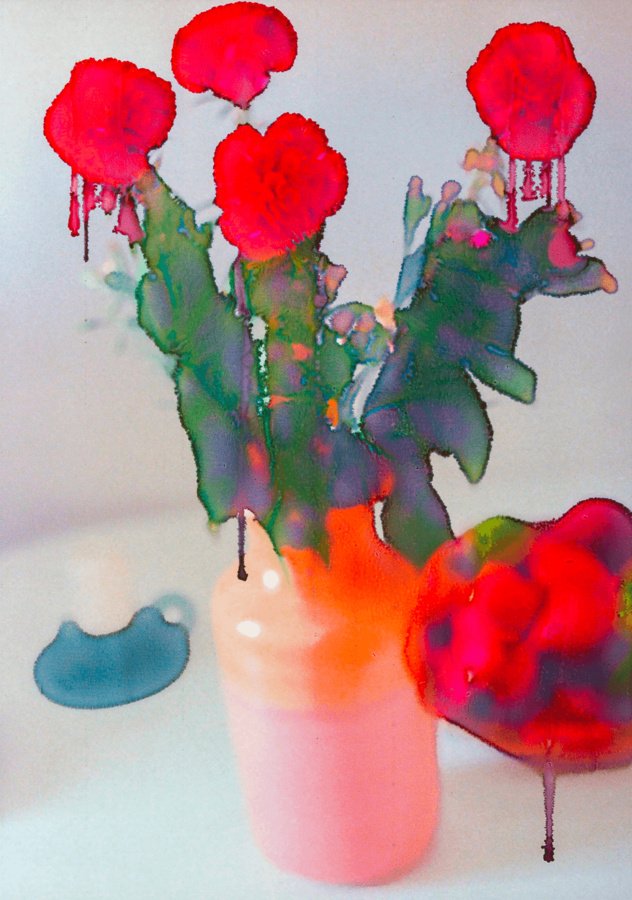 . Alessandro Calabrese, Still Life #01, 2021 – Courtesy of the artist
Emaho: You were appointed Artistic Director of Paris Photo in November 2022, announced immediately after the close of the 25th edition at the Grand Palais Ephémère, which had attracted 60,000 visitors and 183 exhibitors from 31 countries, and you led the fair’s return to the Grand Palais itself in 2024, expanding the exhibition space from 16,000 to 21,000 square metres. The return to the Grand Palais was not just logistical but deeply symbolic for Paris Photo. What does that specific building do to the way photography is encountered, and did the additional space change what you were able to programme in ways you had not anticipated?
Anna Planas: Since returning to the Grand Palais, Paris Photo has never been larger. At the Grand Palais Éphémère, the fair occupied 12,000 square metres, compared with 21,000 square metres at the renovated Grand Palais. This allowed us to expand the fair, create new sectors, and present the diversity of the medium in all its forms.
It was also important to make the fair more accessible for the public by creating a coherent visitor journey. The Grand Palais is a magnificent historic building, unlike any other venue that hosts an art fair. Of course, we encountered some surprises related to the building during the first edition, but we are now developing the fair with a strong programme and solid content.
Emaho: The 2024 edition of Paris Photo invited Jim Jarmusch to curate a selection of 34 photographs around the centenary of Surrealism, a gesture that placed a filmmaker’s sensibility at the centre of a photography fair. What does an outside eye, whether a filmmaker, a novelist or a musician, reveal about photography that those of us who work inside the medium every day can no longer clearly see?
Anna Planas: There are many ways to experience a fair like Paris Photo, with hundreds of artists presented on the walls of participating galleries. The idea behind inviting Jim Jarmusch was to view the fair through his eyes, shaped by his references, inspirations, and friendships—he was very close to Robert Frank – as well as to celebrate the 100th anniversary of Surrealism in 2024.
Jim has always been deeply interested in the avant-garde, and with his band SQÜRL he had recently composed the music for the restored films of Man Ray, produced by Womanray, which were launched in association with the fair during the same week.
Photography benefits from being in dialogue with other art forms, and we encourage that dialogue through invitations of this kind.
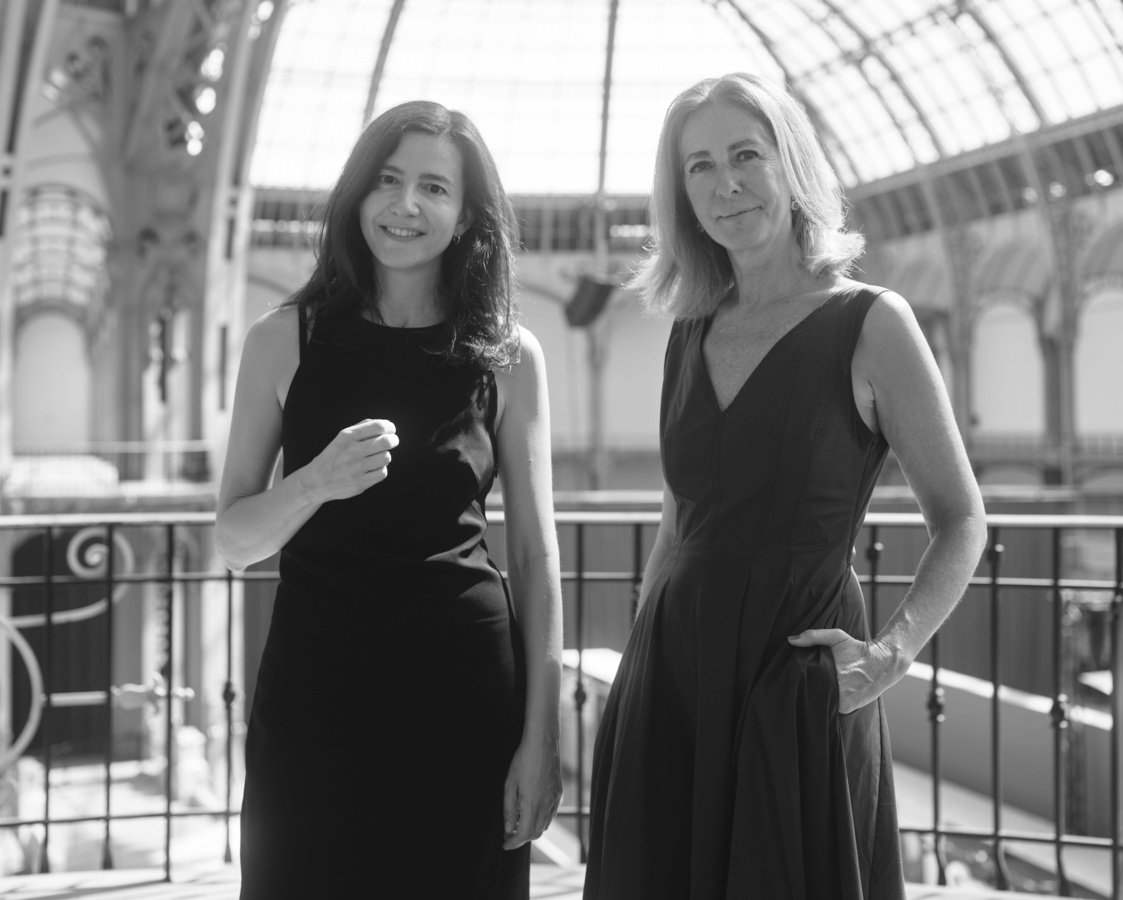 Florence & Anna (c) Cole Barash (2)
Emaho: Paris Photo in 2026 returns to the Grand Palais with the weight of the two previous editions behind it. Without asking you to reveal programming specifics, what is the question the 2026 edition is asking about photography that the previous editions have not yet fully answered, and what does the fair need to do this year that it could not have done three years ago?
Anna Planas: This year we will celebrate the bicentenary of photography, which will be marked across France and internationally. Paris Photo is the first major international event of the season, and we expect particular attention to be focused on the medium.
With this occasion in mind, we have developed a programme that reflects 200 years of photographic history, from the earliest photographs to the latest experiments with new technologies. As a major event dedicated to photography, it is our responsibility to highlight the medium and to present a fair that is firmly rooted in the history of photography.
Emaho: AI-generated imagery is now technically capable of producing work that is indistinguishable from documentary photography in certain contexts, and a generation of artists is using AI not as a shortcut but as a genuine material and a critical subject. At the same time Paris Photo exists to champion the photograph as a specific kind of evidence, a physical and temporal encounter between a camera and the world. How do you think about the presence of AI-inflected or AI-generated work within a fair whose identity is built on the authority of the photographic image, and is there a version of AI in photography that you think belongs at Paris Photo and a version that definitively does not?
Anna Planas: Photography has shaped the way we see, interpret, and construct the world for 200 years, and this photographic vision has continually evolved through technological change. At Paris Photo, we created a Digital sector three years ago and appointed a specialist in digital art as its curator in order to reflect critically on these transformations. We wanted to offer our audience an informed and well-documented way of engaging with the evolving image through the expertise of our curators.