Emaho: You grew up in Kent, Ohio, a town forever tied to the 1970 shootings, and you’ve said that from an early age you “wanted to know what other people lived like.” You’ve described yourself as the kid on the outside looking in. What were you imagining about the families behind the windows, and do you remember the first house you were curious about?
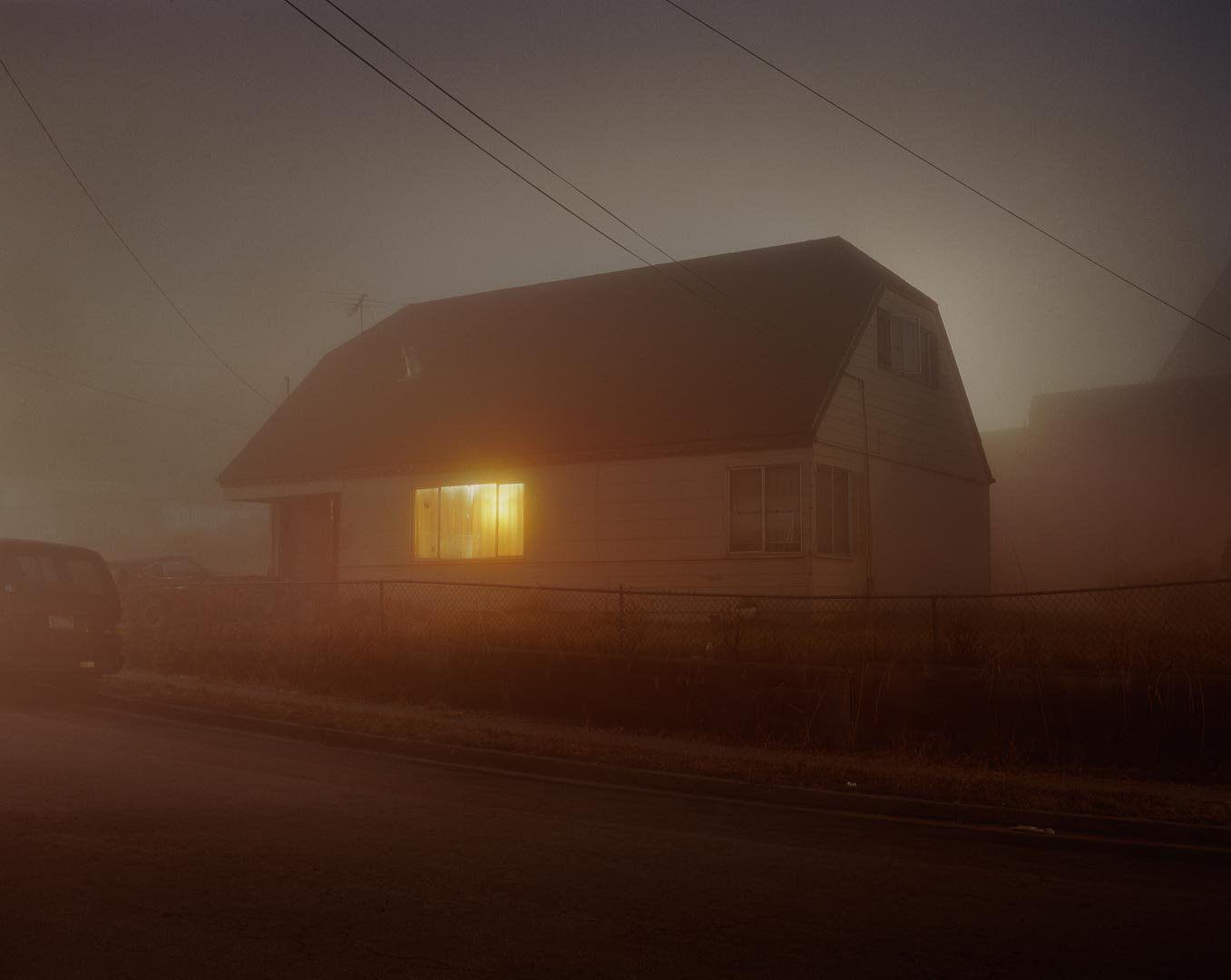
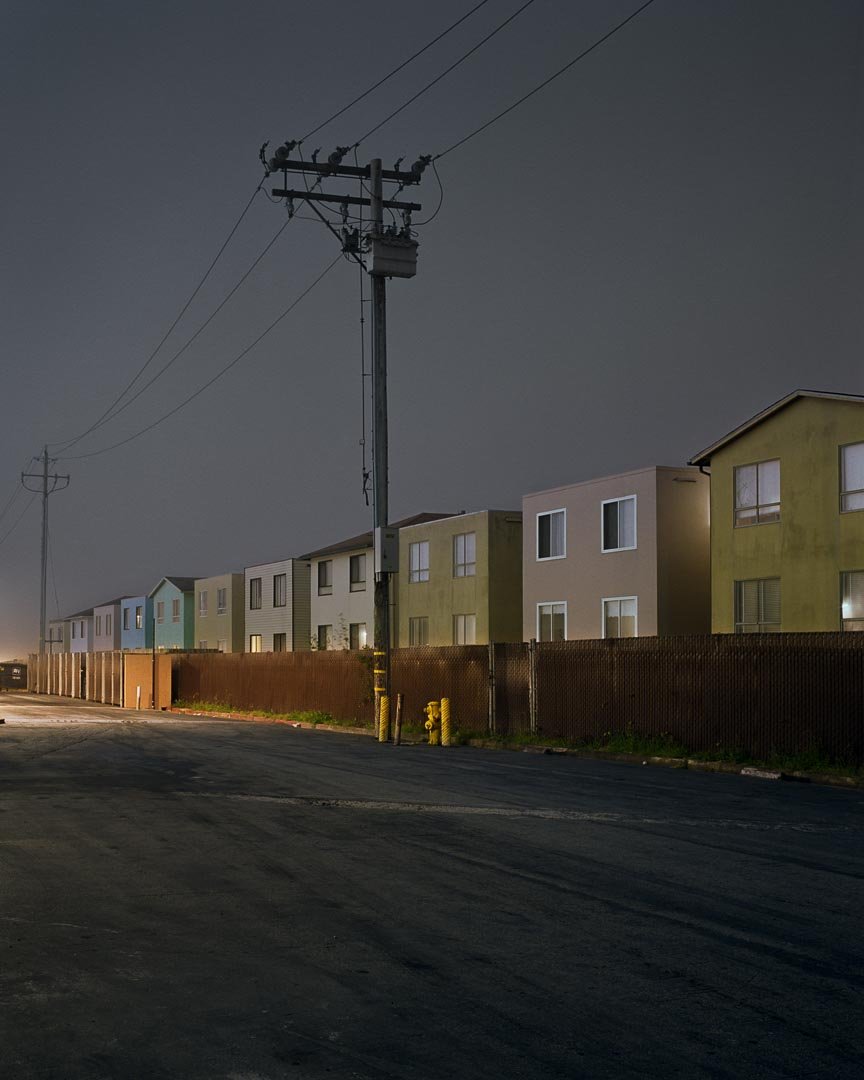
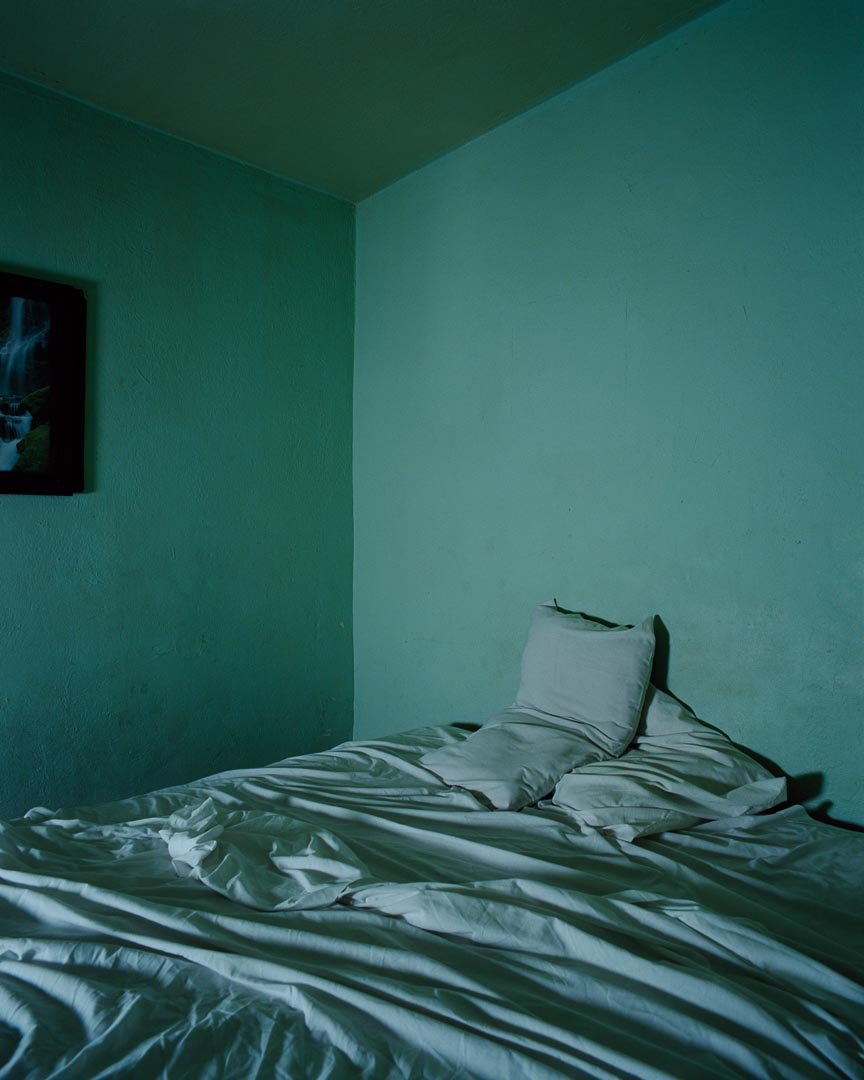
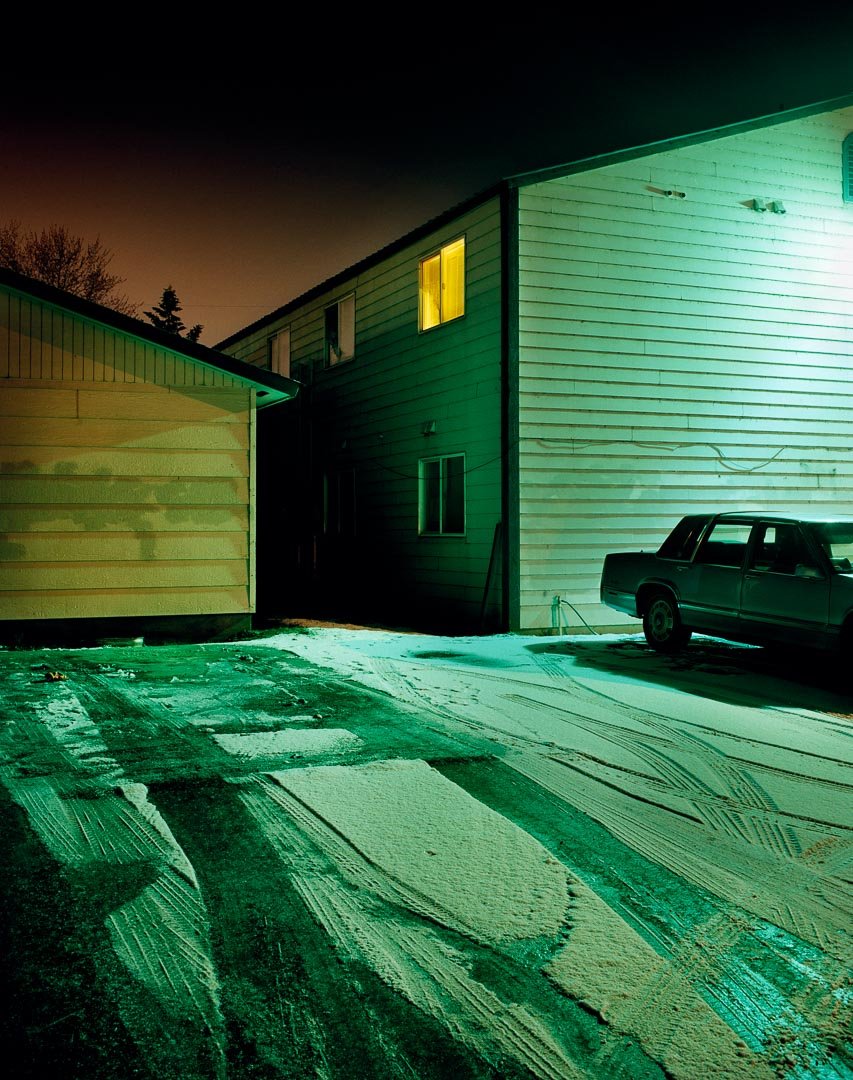
Todd Hido: I think the reason that I wanted to know what other people lived like was because the household that I grew up in was quite chaotic. It was a very basic instinct to wonder about other families, or to imagine something different. Looking at my photographs from House Hunting, you never see anything specific through the windows – no furnishings, no people, not even silhouettes. You know there is life going on inside, but you have to draw on your own imagination to guess at the life of the occupants.
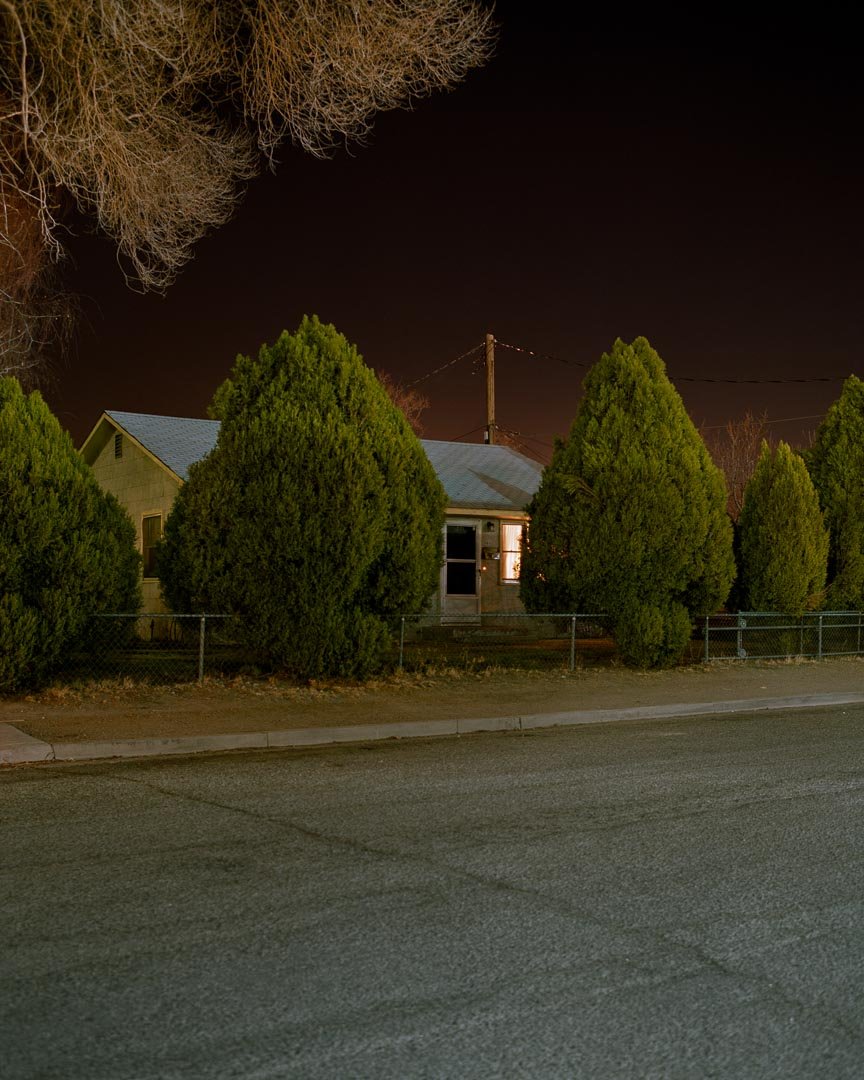
One of the first color photographs I made of a house at night was of a small little home that was dwarfed by these two large trees that sort of obscured most of the home. It was directly across the street from a car dealership, so the lights were spilling out onto the neighbourhood were excessively bright. But inside there was a warm glow that felt right.
Emaho: By sixteen you were a three-time state BMX champion, and your first photographs were of your racing buddies. You tried a commercial photography school in Pittsburgh, but the thought of shooting ketchup bottles for a living pushed you toward art. What did the BMX years teach you that you still use today, and when did you decide photography could be more than a job?
Todd Hido: The BMX years taught me one really important lesson that is always with me – you could be a state champion one year, but if you let it go to your head and didn’t continuously work hard to improve, you would fail the next season. I saw this over and over with other riders – they thought they were awesome and that sucked the urgency right out of them. I think the word for that is hubris? Overconfidence can never lead to growth.
But it was a Roy DeCarava workshop that I took over summer break in 1987 where I learned one of the most valuable lessons to my practice as a fine art photographer. He was the first teacher I had, who really encouraged us to shoot and print in a poetic, emotional way. I’d not seen that before and once I got back to school I began to realize that there was this whole world of photography that was different than making technically perfect images that sold a product.
Emaho: You’ve said a mentor doesn’t create your path, they notice it and help it grow. In 1995, an art therapist you were doing an independent study with in grad school looked at your first night houses, foreclosed homes and portraits, when you had just two or three of each, and told you that you were already telling the story of your life. What did it feel like to hear that, and did you believe him?
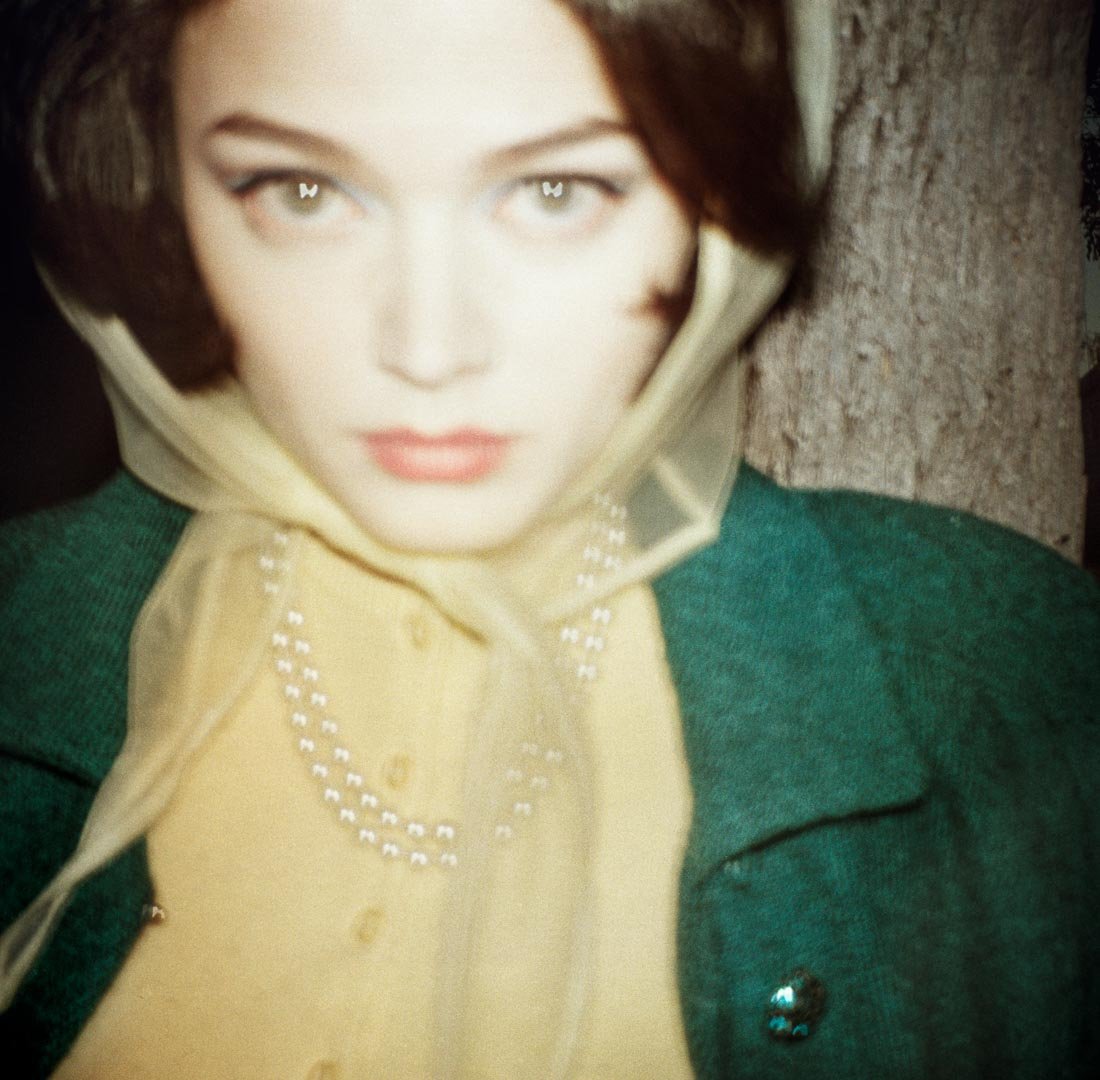
Todd Hido: It felt really amazing to hear that – you rarely get that kind of clarity coming to you at an early age. And I understood that my photos of houses functioned as imagined portraits of the unseen people living inside. And yes, I wanted to believe him, and I did, because the reason that I was even there was because I was using art to sort out my feelings.
Emaho: You found your night houses almost by accident, in a fogbound neighbourhood just south of San Francisco during graduate school, and you’ve said that moment changed everything. You often work alone, with long exposures, and you don’t knock on doors or ask permission. What makes you stop the car on one street and keep driving on another?
Todd Hido: Very often it’s something that’s not “perfect” on the outside. Broken shades, shabby curtains, or overgrown yards etc, catch my eye, but it’s got to be the right neighborhood, or style of home, or often just a feeling. Getting all that to lineup is part of the challenge. It’s very often the places that really reminded me of home that gets me out of the car to make that picture.
Emaho: House Hunting, your first book in 2001, has just 26 photographs and was named best first monograph of the year by Photo-eye. You edit every book yourself. What was the hardest picture to cut, and how did you know the picket fence belonged on the cover?
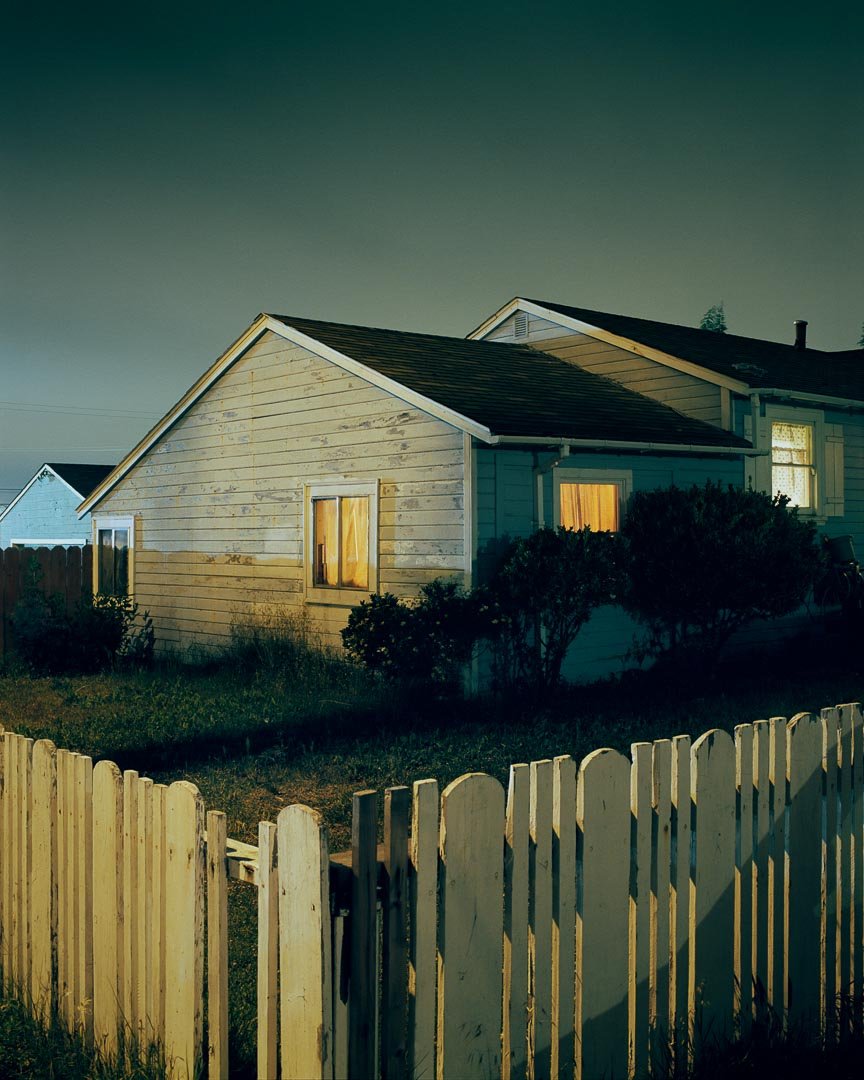
Todd Hido: The picket fence on the cover recalled a Paul Strand picture I’d seen of a fence, it is a classic but really it’s because it’s such a common symbol for the American Dream. That illusion may not have really existed outside of television, movies, and magazines, and it certainly it was not what my experience looked like growing up in the Midwest. For me, like my memories of home, it’s very important that house had been worn out and weathered and untended to, it might have once been a perfect white picket fence, but that was no longer.
Cutting pictures from books wasn’t all that difficult as soon as I realized that I’ve never made a book that didn’t improve by having fewer photographs. House Hunting had 26 images, that’s it. And I very much try not to be too attached to my experience of making the photograph when I am editing. It doesn’t matter how long it took me to get a shot, or how much I wanted it to work if the final result isn’t an image that can’t stand on its own. I half-jokingly say, “all killer, no filler”.
But also it’s helpful to keep in mind that just because a photograph didn’t make it in one book or exhibition does it mean it’s not destined for another. I think Robert Adams calls them “orphans”—images that have not found their place yet. I’ve always seen making photographs as creating an archive of images. They are raw materials that can be shaped by their context. I have groups of houses, landscapes, interiors, portraits, etc. that I add to or borrow from to create something entirely different out of them.
Emaho: Larry Sultan remembers you as a student slipping your own prints into the photobooks of the masters, already planning your own books. You’ve since said that “books are around always,” unlike exhibitions or social media feeds, and you put Raymond Carver’s poems into Roaming and Between the Two before your photographs ended up on his covers. What books live with you now, and which one changed how you think about making your own?
Todd Hido: There is always a Carver book not far away! I’m lucky enough to have been collecting photobooks for over 40 years so I started gathering early and I am very fortunate to have a library of 10,000 photobooks. I cannot imagine living without books. And it’s a living, working library. I love leaving them out on a table, my dresser, etc, open to a special image so you see it every time you walk by. The things you surround yourself with certainly seep into you. For me, it’s important to have things that I want to be influenced by in my daily visual field.
Sometimes I don’t even consciously think of the influence while I’m making the photograph. In Calgary last year, I made an image of a bleak, colorless winter landscape, just white snow and some weathered wood. After I had made a print of the photo, I noticed an Andrew Wyeth book of his works on paper that I have laying out, open to one ink drawing that I walk by daily. The similarity was striking. His influence on me is undeniable – there’s no way that my subconscious didn’t have that drawing tucked away somewhere as I worked.
Regarding a book that really moved me—it wasn’t a specific form, design, or sequence of a book that influenced me, but there is a book that has been very important to me. It’s a catalogue of an exhibition at the MOMA back in the early 90s, called The Pleasures and Terrors of Domestic Comfort. It was this book that I took home with me to study, and it is in the core group of my influences. Also at that exhibition was where I first had seen Larry Sultan’s photographs (or in fact even heard of Larry Sultan), who became a mentor to me as his student, and then being able to teach alongside of him later. Larry had done a book called Pictures from Home and the portraits really spoke to me. I love that it is about some of the challenges of being in a family and also some of the not perfect moments…the pleasures and the terrors, and not just a record of some perfect, idyllic family life.
Emaho: Excerpts from Silver Meadows is named after the street in Kent where you grew up, and you wanted it to be a book that could only exist as a physical object. It mixes portraits, landscapes, vintage snapshots and documents, with images tipped onto the cover. What was it like to put your family material next to your professional work, and which piece almost didn’t make it in?
Todd Hido: I have always been very comfortable mixing and adding vernacular photographs, family images, etc. to sequences of pictures. I think of a string of photographs as a paper movie.
Since photography is inherently documentary, it very much calls up memory, and a sense of time—literally the past. Using that adds another layer, or track, to a book. I think using found photographs next to photographs that I made really helps me get at what I’m thinking or feeling, like adding footnotes for context.
Like all my projects, much more that was left out than was included. A few years back, I finally got to visit the Mies Van der Rohe’s Barcelona Pavilion, which exemplifies the idea of “less is more”. I had heard the phrase before, but when I stood there and really took that in, in real life, I absolutely – finally — understood the sentiment.
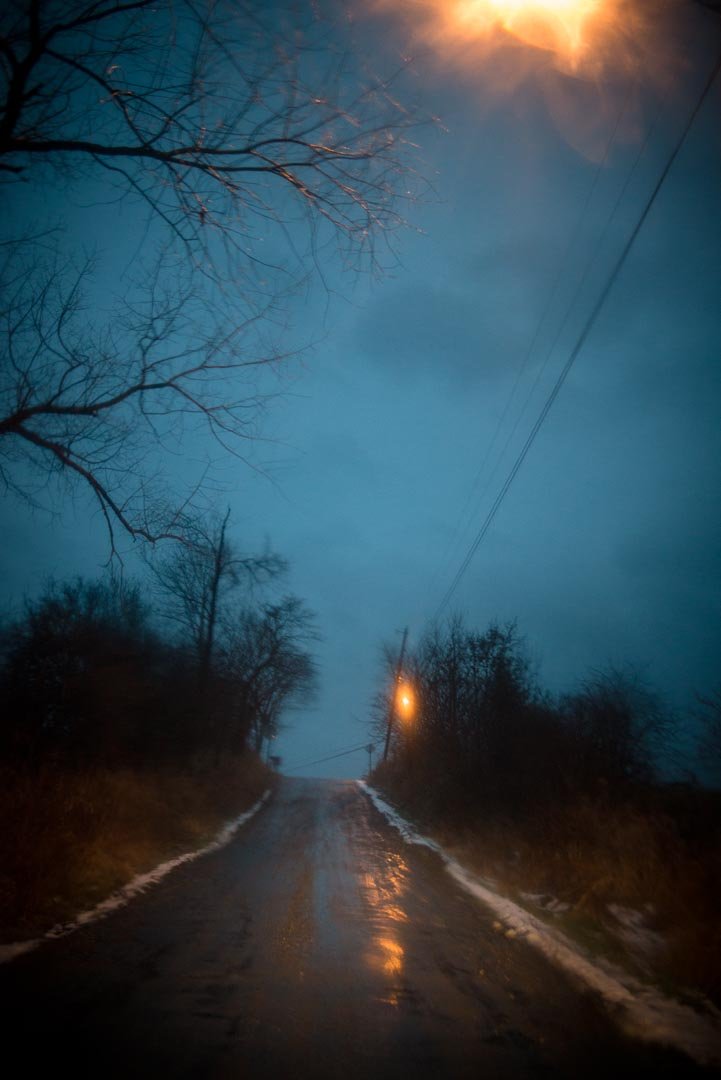
Emaho: For about ten years, you went home to Ohio every Christmas to visit your parents, and Seasons Road grew out of photographs along one small road there. How does a yearly visit turn into a book, and what do you notice about home now that you only see it in winter?
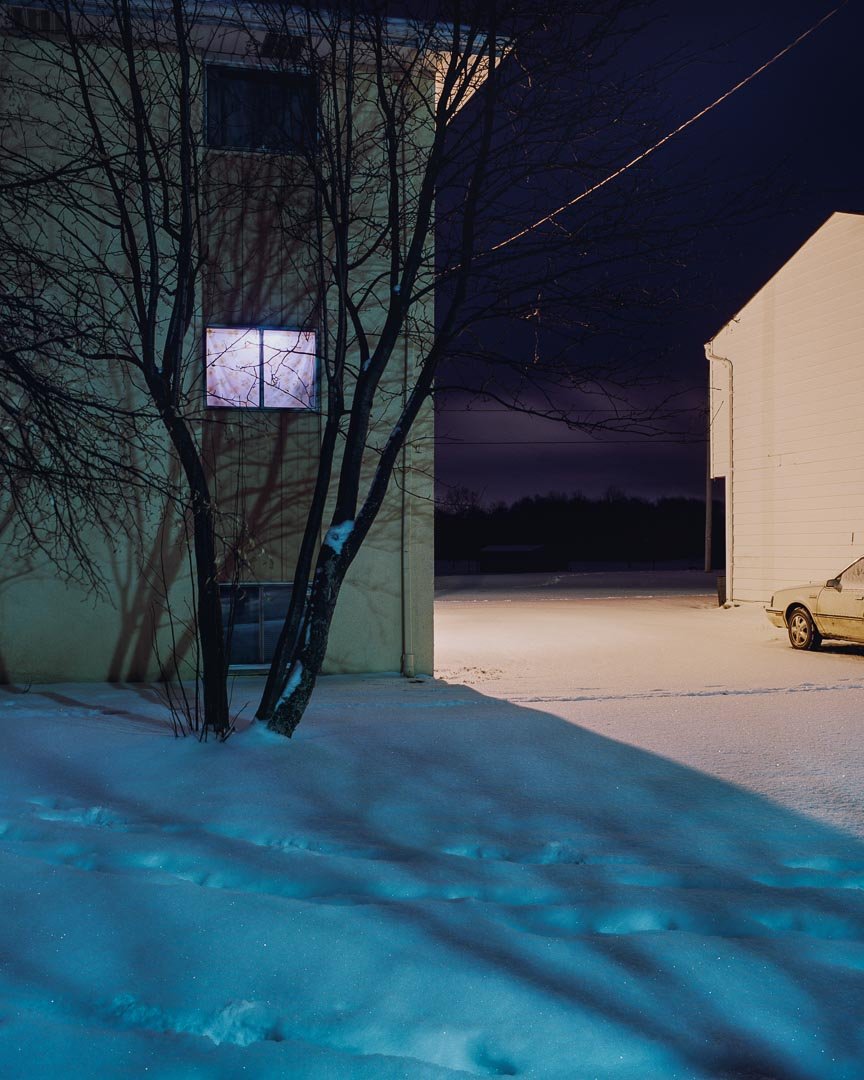
Todd Hido: I just realized I haven’t been there in the summertime for 20 years. I hadn’t thought about that. But yes, this one little road is right near my parents’ house that I’ve driven back-and-forth over many times. The thing I love about Ohio winter is it’s dark and dreary, which is of course what I was used to growing up there. Living in California, you forget about the changing of the seasons. All of that added up to a short little book.
Because of that, I had made enough photographs of the same Ohio road at several different times with different colors, sometimes snow, sometimes rain, or even with a different camera, as that matters greatly.
When you find that works for you, a place, a person, whatever you might want to photograph, it’s interesting to continue to revisit these places or these people. With each engagement, naturally, we don’t want to repeat ourselves, so it pushes us to make or see something differently, and it is really true that you go onto another level.
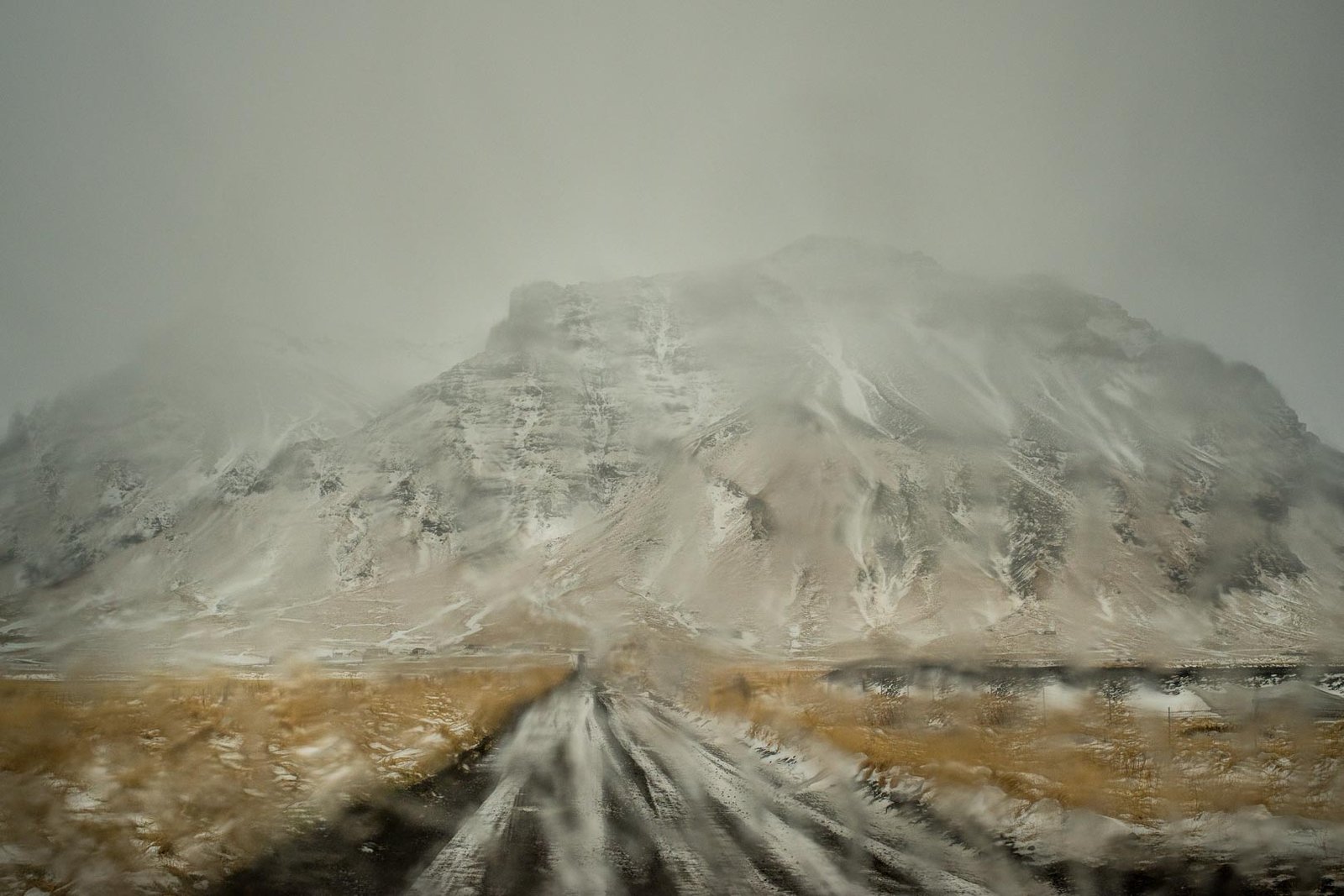
Emaho: Bright Black World was your first work shot outside the US. You’ve said it has nothing to do with your memory and everything to do with a perception of what may be our future, and your Aperture retrospective, Intimate Distance, has since grown to include new work from your travels. After decades of American suburbs, what pushed you to look elsewhere, and what did you bring with you from Ohio?
Todd Hido: Excerpts From Silver Meadows came out in 2012, and it was definitely my most autobiographical book. After I had completed that, I felt more resolved about all of the feelings about my childhood that I had been sorting out by photographing American suburbs. For so long, I had defined myself as a photographer dealing with what it meant to grow up in America, but with that book completed, it freed me up to move beyond those borders.
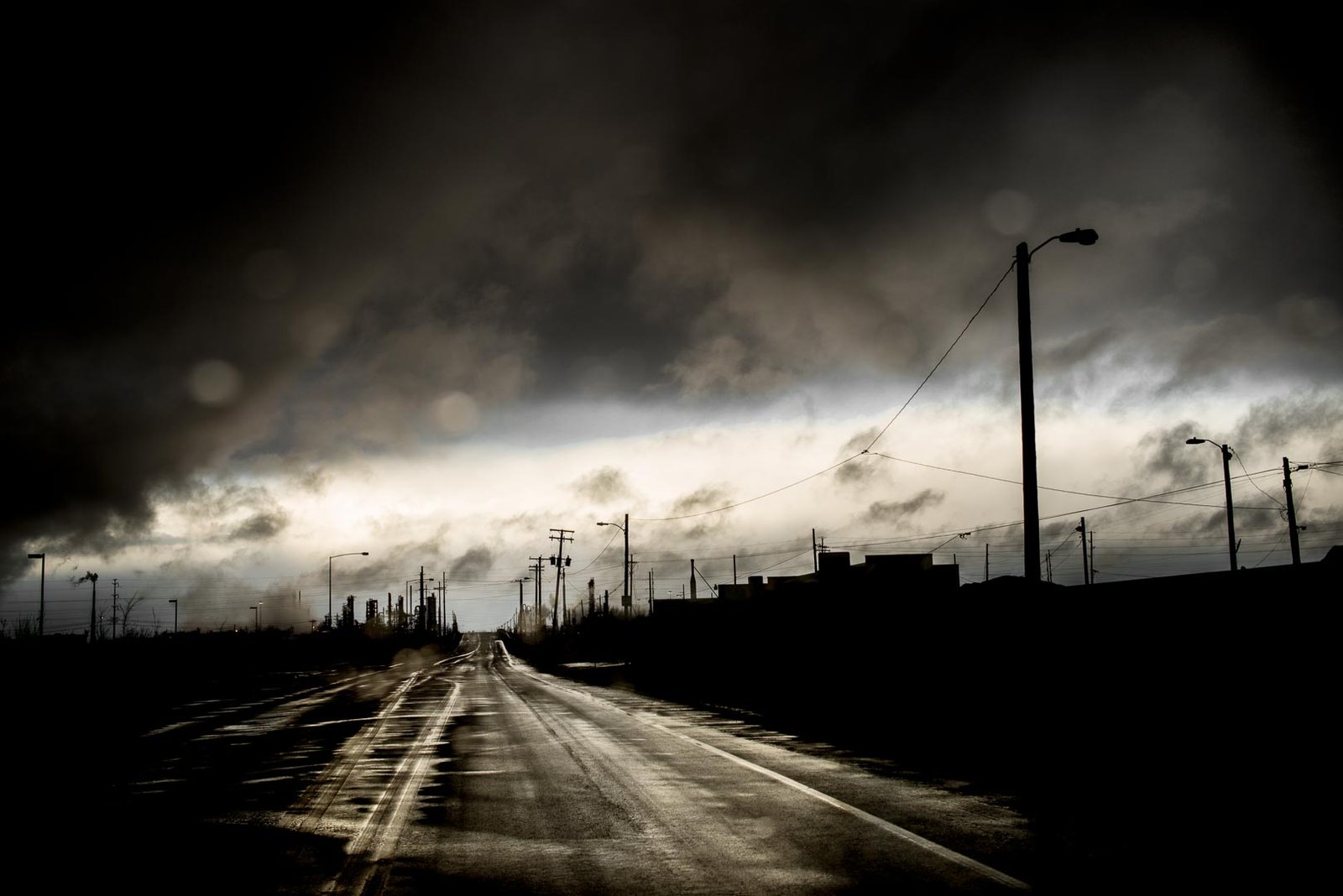
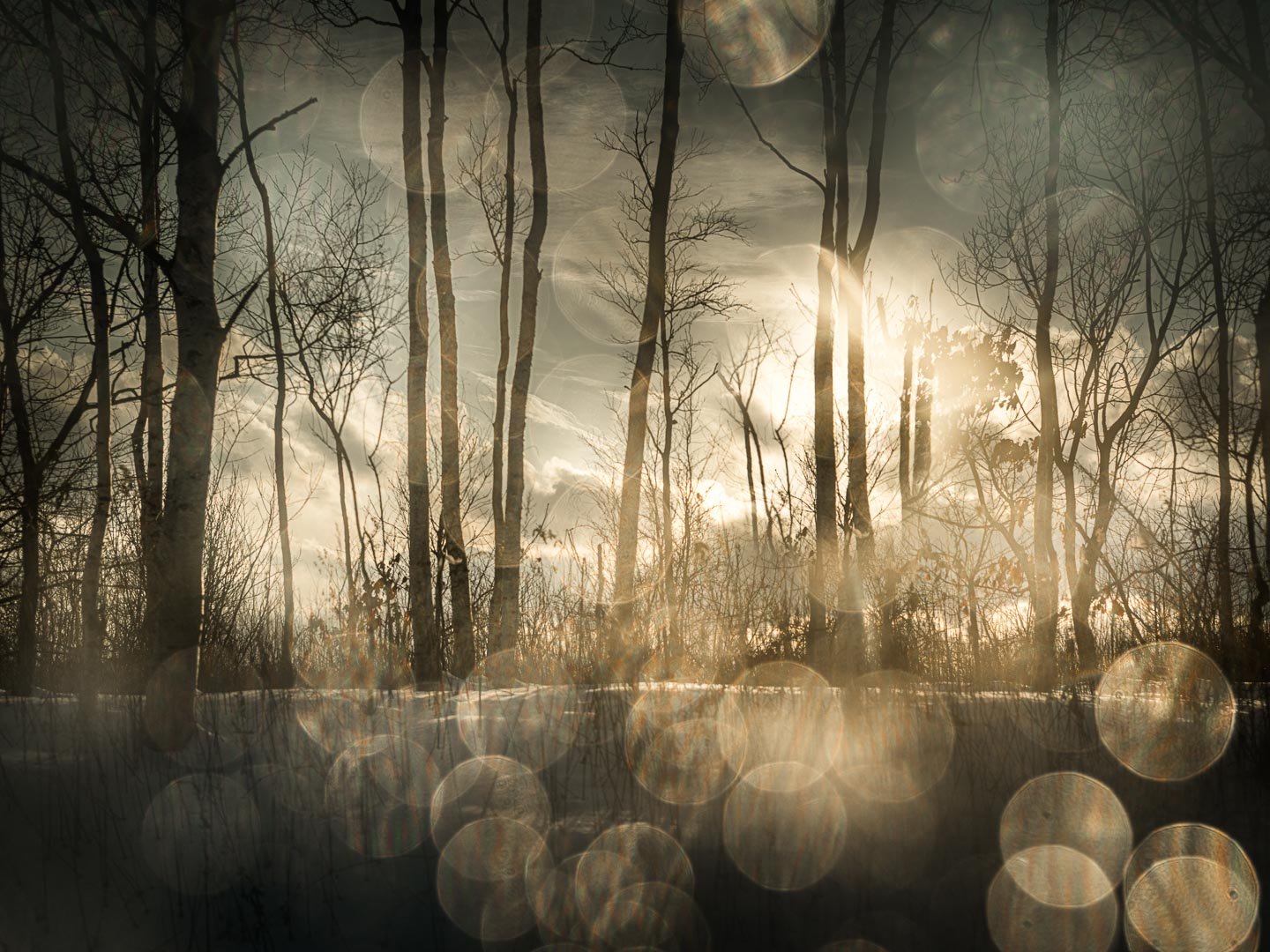
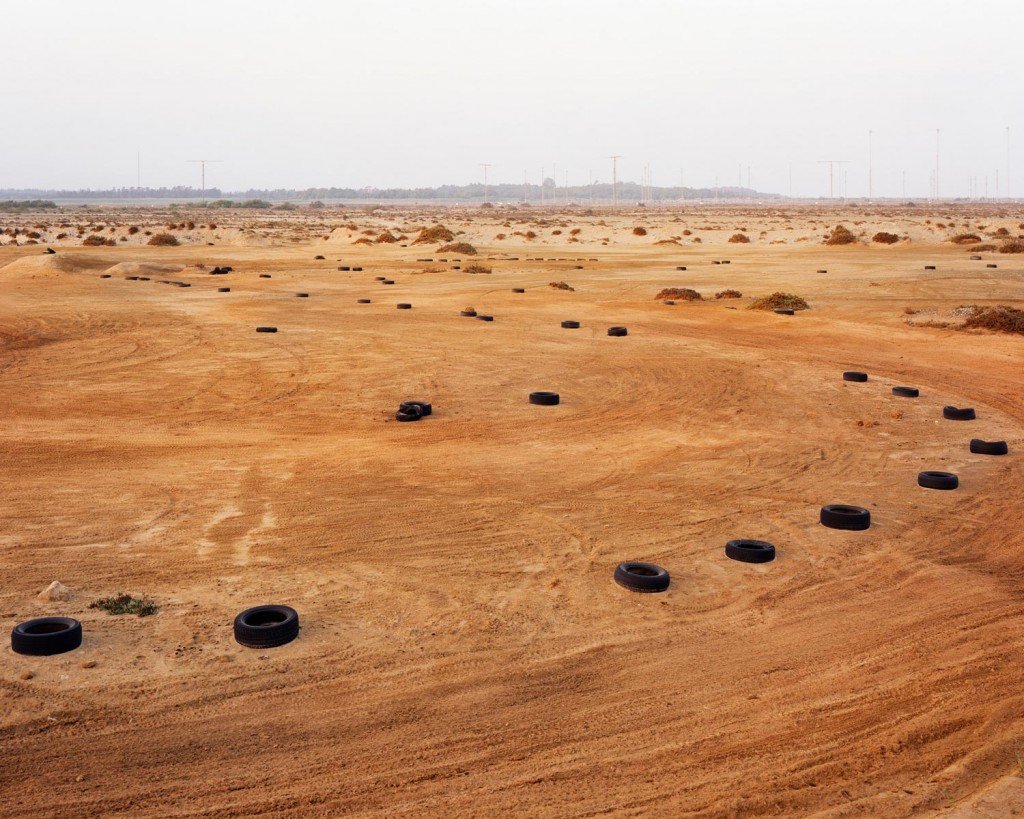
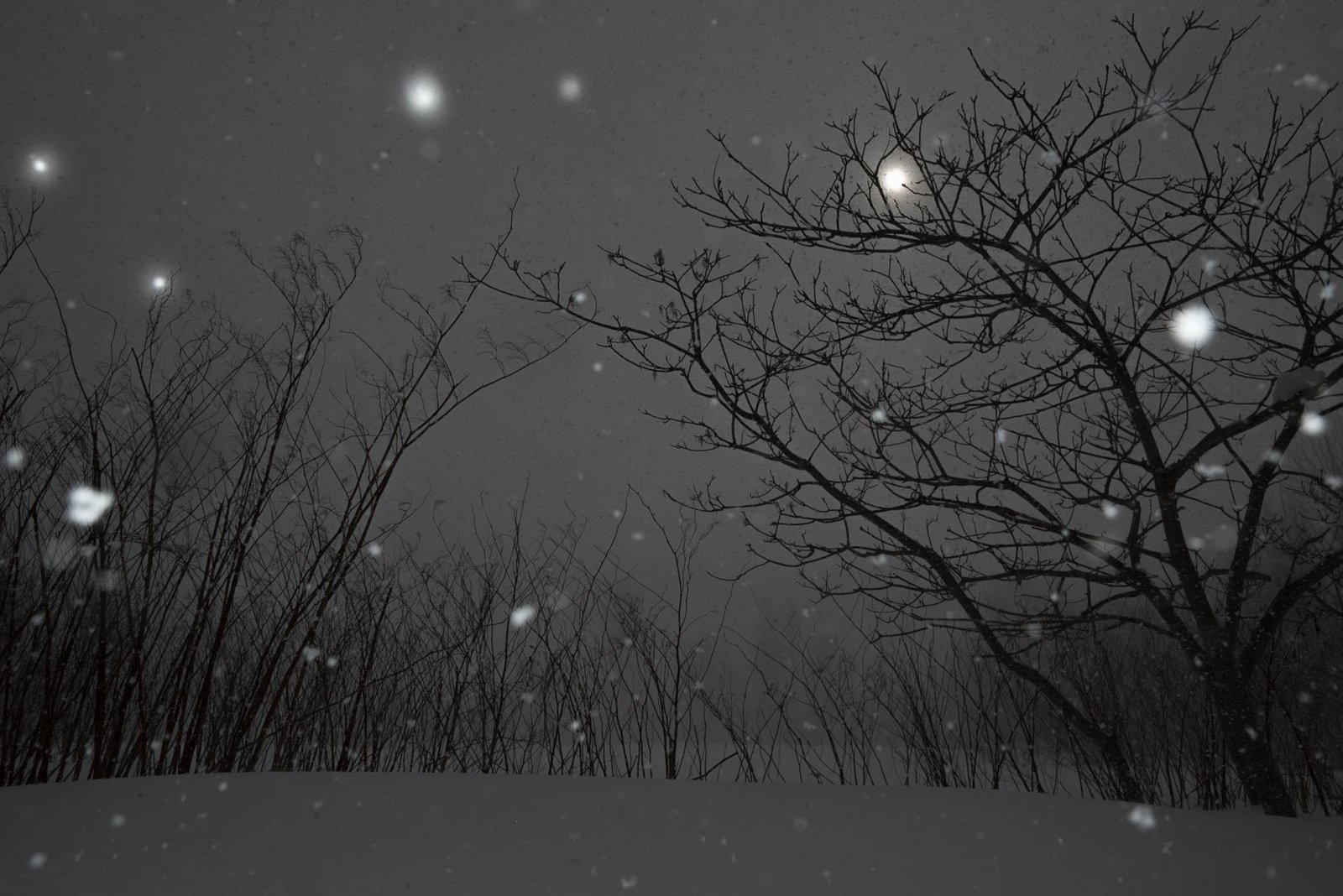
At the time, my wife was reading Ragnarok by A.S. Byatt, who retells the story of the civilization-ending Fimbulwinter, the Nordic apocalypse myth of the never-ending winter. She describes snow falling into the darkness as a “bright black world”. I borrowed those three words from the book for the title as they spoke to me very clearly, and actually articulated perfectly what I was trying to say with my photographs. I’m definitely a visual person, not a writer, so I try to stay alert for scraps of words that sound right to me. The feeling of that phrase described perfectly the types of landscapes I had been making, and it also coincided with the dark decade we’ve just lived through. The news about climate change just kept getting worse and worse, and then the political situation got incredibly dark, and I think I was trying to channel all of those anxieties and fears into these emotional landscapes that mixed a sense of doom with tinges of hope.
What I brought with me from my earlier work was that cinematic sense that something is about to happen or might have just happened. It feels like a slowed down “road movie”. There is a sense of longing and loss juxtaposed with natural wonder that somehow touches me. Ultimately, I think that turns to looking out for hope, or what Cormac McCarthy would call “carrying the light”. In spite of everything, I remain a deeply optimistic person.
Emaho: When your first solo show opened at Stephen Wirtz Gallery, SFMOMA bought all nineteen images. Since then, you’ve been in the collections of LACMA and the Whitney, an In Focus artist at the National Portrait Gallery in London. You shot a Bottega Veneta campaign with Lauren Hutton. You also teach at the California College of the Arts, where you studied. Which of those felt furthest from standing alone at night with a camera, and what do you tell your students about staying true to your own work?
Todd Hido: The Bottega Veneta campaign is not something that I would have imagined myself doing as I was standing out in the cold nights behind some random back alley of grocery store making pictures. But I feel very lucky that embracing my own style of photography when I was starting out nevertheless led to commercial projects when directors want a true artistic voice.
Regarding the things I tell my students – I coax them to believe in their instincts, in what they feel is the right path. I also tell them to dream about seeing themselves in the context that they hope to be seen in. That circles right back to that thing that Larry Sultan mentioned about me putting my pictures inside of other people’s books – it was to see what it felt like, what it might look like to someday have a book of my own. I think that’s how things happen. You have to imagine it for yourself first.
Photos © Todd Hido