Emaho: You were born in Paris in 1985 to a French mother and Cameroonian father, and grew up in an old Christian abbey on the riverbanks of Green Venice in western France, a genuinely unusual, almost romantic childhood setting. How much do you think that environment, half-monastic, half-fairytale, shaped your visual instincts before you’d ever picked up a camera?
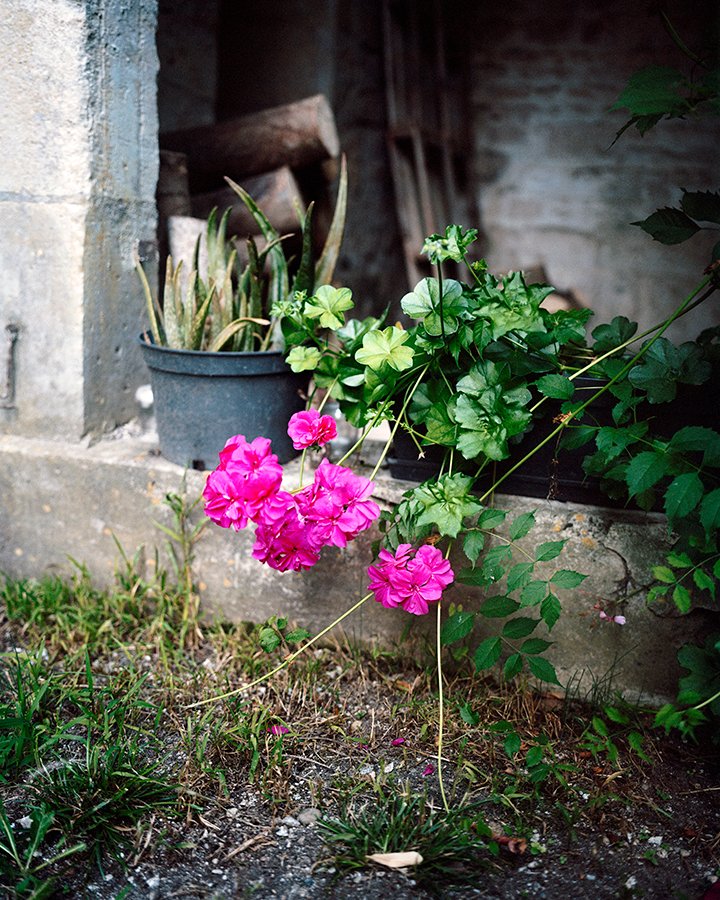
Charlotte Yonga: Yes, I was born in Paris, and when I was four, I moved with my mother and her new partner to this old abbey, where I grew up until I was eighteen. It was a very special and peaceful environment, surrounded by countryside. I think growing up there brought a lot of softness and serenity into my childhood, but it also gave me a very direct relationship with landscape and nature.
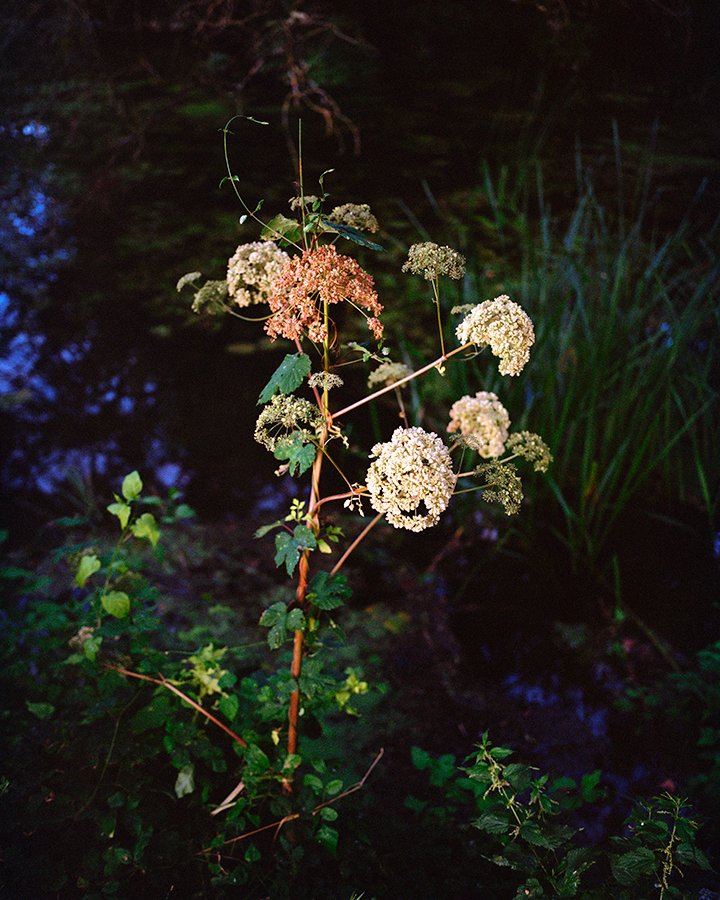
The garden, the trees, the river, the changing light and seasons were all part of my everyday life. Looking back, I think this closeness to nature developed a very sensory way of paying attention to the world — to colors, textures, light, but also to atmospheres. It is probably something that became part of me long before I started taking photographs, and I hope it can still be felt in my images today.
At the same time, there was a strong contrast with Paris, which was still very present in my life because my father lived there. He was going through a difficult time as an undocumented immigrant. I was moving between these two very different environments, and I think both of them shaped me.
Emaho: You discovered photography in your early twenties while studying visual arts at École nationale supérieure d’arts de Paris-Cergy, and you’ve said it was the discipline that let you get into “real life,” out of a studio setting where focusing was difficult for you. What was it about a camera specifically, rather than painting or sculpture or any other visual discipline you’d have had access to at art school, that finally gave you that sense of focus?
Charlotte Yonga: For me, photography is a medium that does not exist entirely on its own: it is an interface, a window. Very quickly, the camera became a reason to connect with the world and with other people, to meet people and enter spaces and realities that I might not otherwise have had access to.
At art school, I found it difficult to stay alone in a studio and produce something. Photography, on the other hand, forced me to go outside, to move, to observe, and to approach other people. Paradoxically, it was this movement that allowed me to concentrate. Photography requires a very particular kind of presence: paying attention to what is happening in front of you — a gesture, a light, a distance — while remaining open to the unexpected.
I think this is what immediately attracted me to photography: it allowed me to make images while staying deeply connected to reality. It became a way of looking, but above all, a way of being in the world.
Emaho: Your documentary “Ku’tchub” centers on a European woman known as the White Queen, who married the polygamous chief of your father’s own village in Cameroon and still lives there off the land, farming and milling corn by hand, even after his death. You’ve said she’s become like a grandmother to you. What did it feel like, on your very first visit to your father’s ancestral village, to encounter someone occupying a place in that community so unlike your own?
Charlotte Yonga: I have actually known the “White Queen” since I was a child. My father took us to visit her when I was a baby, when she was still living with her husband, the Bangangté chief, at the chiefdom. She has always been part of my family history: she appeared in our family photo albums, and my parents often spoke about her.
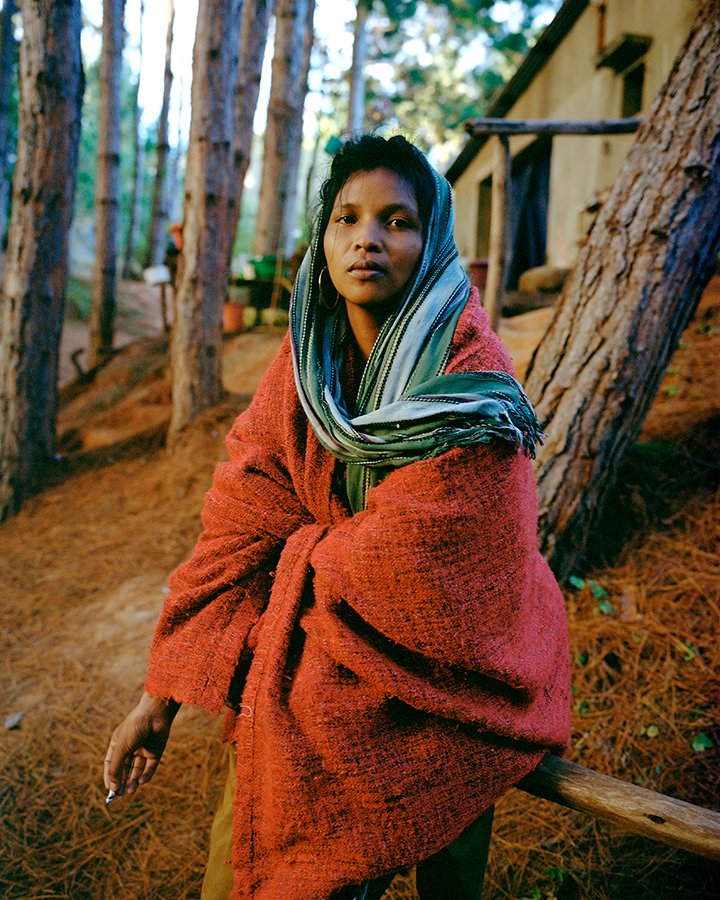
When I met her again at the age of twenty-one, during my first trip to Cameroon as an adult, I was fascinated by her. I was really discovering her extraordinary life story, but also the conditions in which she had chosen to live, her relationship with the land, and the independence with which she had built her life. For me, she represents a rare kind of determination and freedom of mind. I immediately wanted to tell her story and make a filmed portrait of her, which later became my graduation project at art school.
There was perhaps something personal in this encounter as well. I was returning to Cameroon as an adult, with my own family history and my own position between different cultures, and I was meeting again this European woman who had also built her life between very different worlds, but in a way that was completely her own. I still have an immense admiration for her and for what she represents.
Emaho: For your project “Naam Na La,” you arrived in Dakar in May 2021 with no pre-established plan, invited by fellow photographer Lou Escobar into a Blachère Foundation residency centered on the theme of love. Working with zero fixed plan in a country you’d never visited is a genuine risk for a commissioned project. What was the first image you actually made in Senegal that told you the trip was going to work?
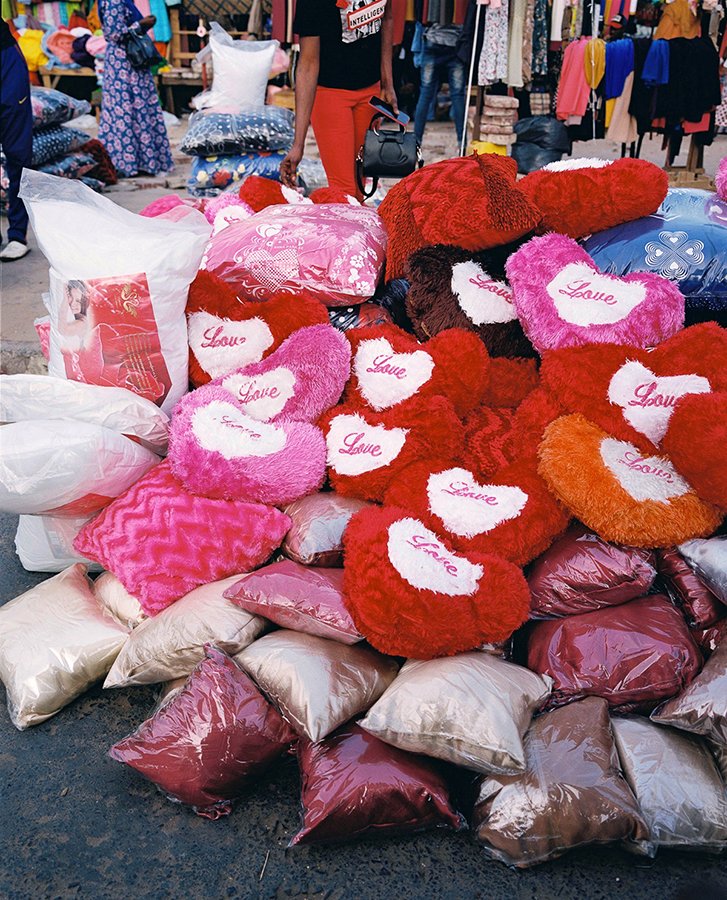
Charlotte Yonga: When I arrive in a country for the first time, I usually try not to take photographs immediately. I need some time for my senses and my eyes to adjust. During the first few days, everything catches your attention because everything is new. But what is new to me is not necessarily what is interesting to photograph. So in Senegal, I first took some time to observe, meet people, and think about what I really wanted to say about the theme of the residency: love.
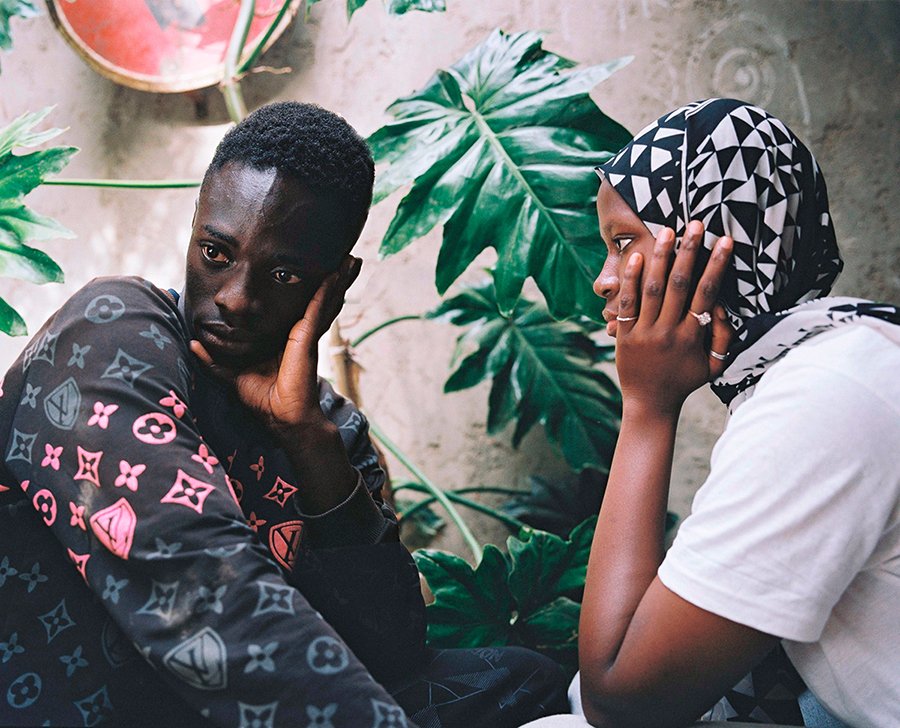
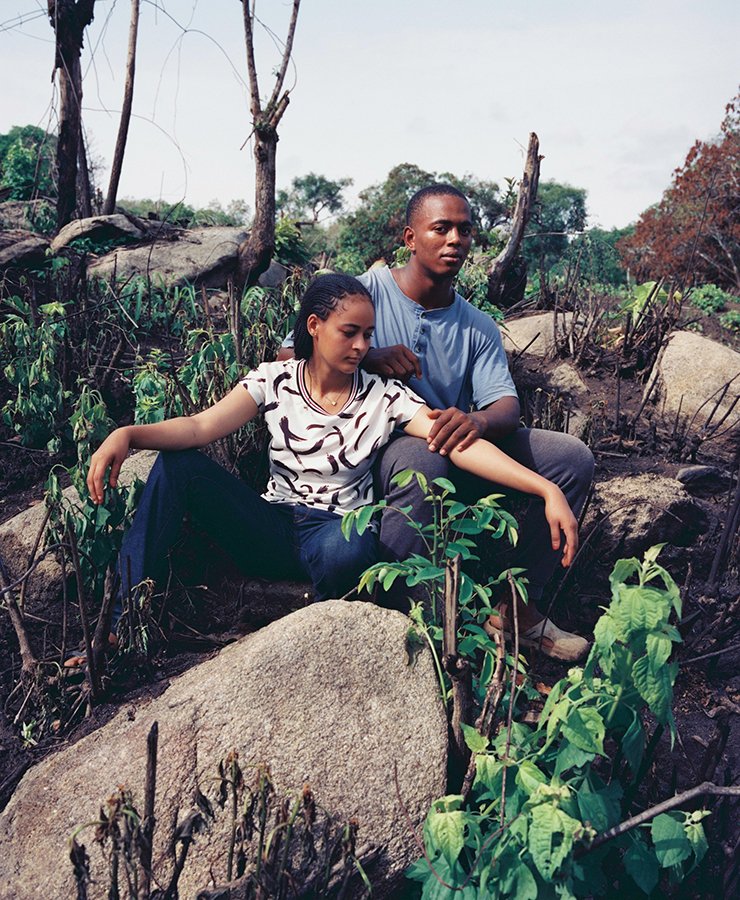
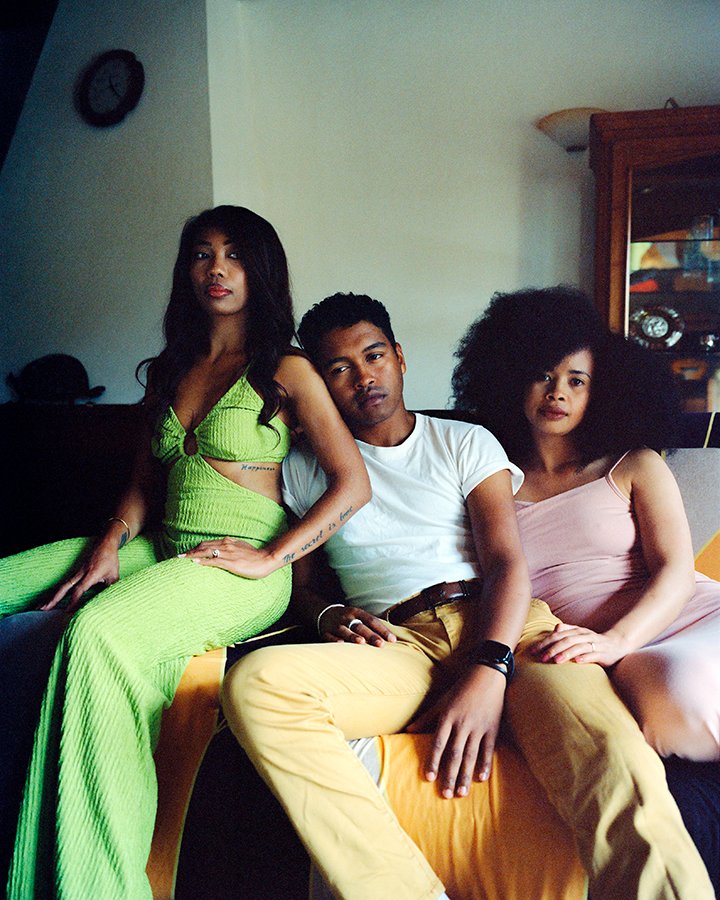
I think the project really started to take shape when I photographed Assane and Nafina in the bedroom, and then the two dancers, Antoine and Babacar. In those images, I felt that I had found something I was looking for: a particular tone, a sense of tenderness and intimacy, but also ambiguity and complexity in human relationships.
At that moment, I understood that I was not trying to “illustrate” love. I wanted to photograph what passes between people: gestures, distances, looks, the ways people touch each other or share a space. And I felt I had found a visual language that was personal to me while also being deeply connected to the encounters I was having in Senegal.
Emaho: You’ve described love as “undeniably common and universal, but also overused and overrepresented in our visual cultures,” and you’ve been developing an ongoing photographic series on the subject since 2021, addressing tenderness, nostalgia, and ambiguity. Photographing something this oversaturated in visual culture means constantly fighting cliché. What’s an image of love you’ve deliberately avoided making because it felt too familiar, too already-seen?
Charlotte Yonga: I think so, although I also believe that an image that feels familiar can still be extremely powerful. So I do not necessarily avoid an image simply because it may have been made before. What matters is how you make it. For me, a lot happens through posture, gestures, looks, the distance between bodies, but also through color and light. A very simple gesture can tell something complex if you leave enough space in the image for it not to be immediately understood.
Love is certainly an overused subject, but it is also constantly changing. The ways we love, form relationships, build families, or express desire and tenderness evolve across generations, cultures, and societies. This is exactly why the subject continues to interest me.
What I mainly try to avoid are images that reduce love to something too obvious or too idealized. I am more interested in the places where ambiguity, fragility, or uncertainty can also appear.
Emaho: Your portraits have appeared in Le Monde, Libération, M Le Magazine, and L’Obs, and your exhibition history spans Paris Photo, the Casablanca Biennale, Bandjoun Station in Cameroon, and M.Bassy in Hamburg. Editorial commissions and gallery or biennale work demand genuinely different things from an image, one serves a story that isn’t yours, the other is entirely your own authorship. How do you protect your personal visual language when you’re shooting for a newspaper versus when you’re building work for a biennale?
Charlotte Yonga: I would not say that I particularly try to “protect” my visual language when I work for the press. I approach a commission with the same attention and the same distance as I do my personal projects, with one essential difference: I did not choose the subject.
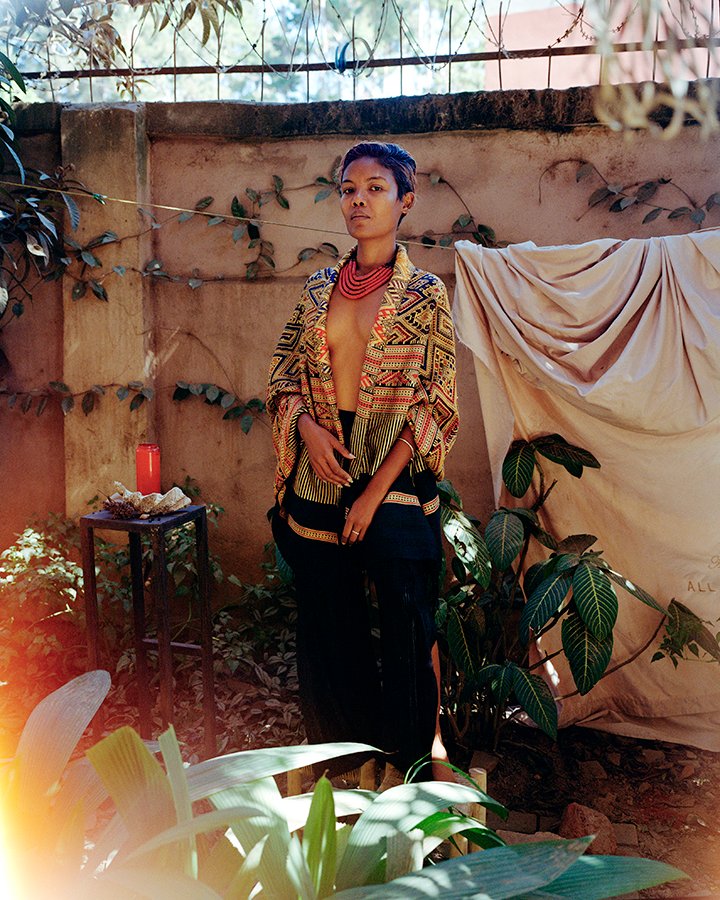
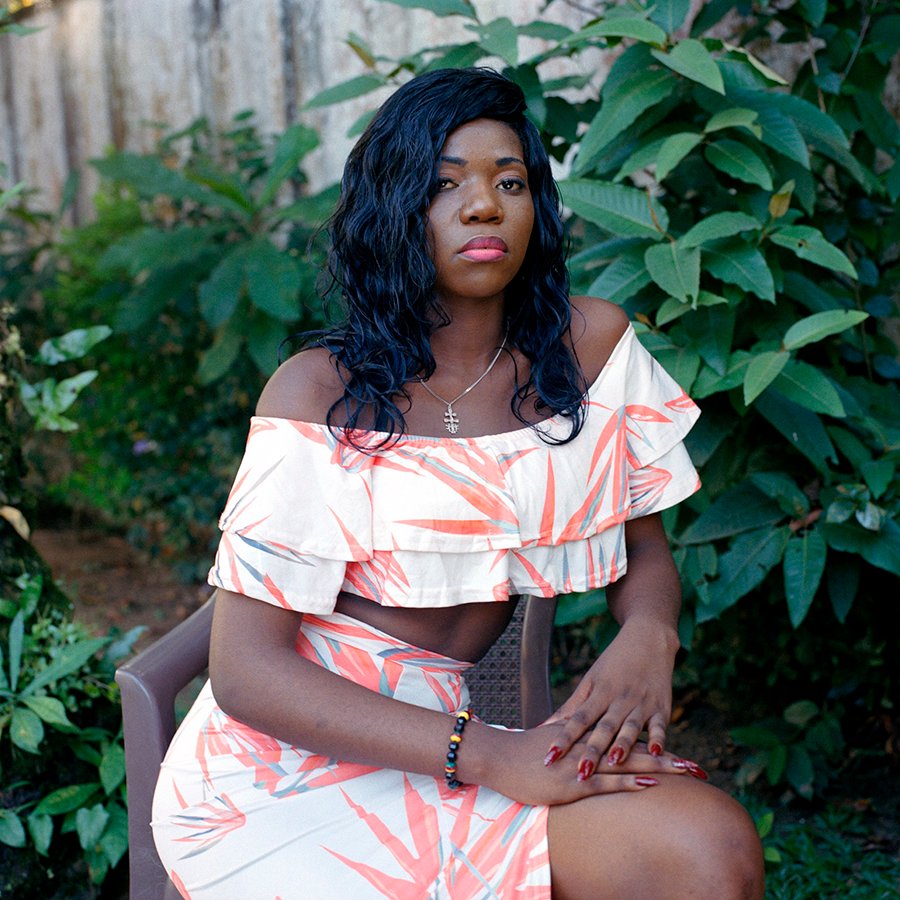
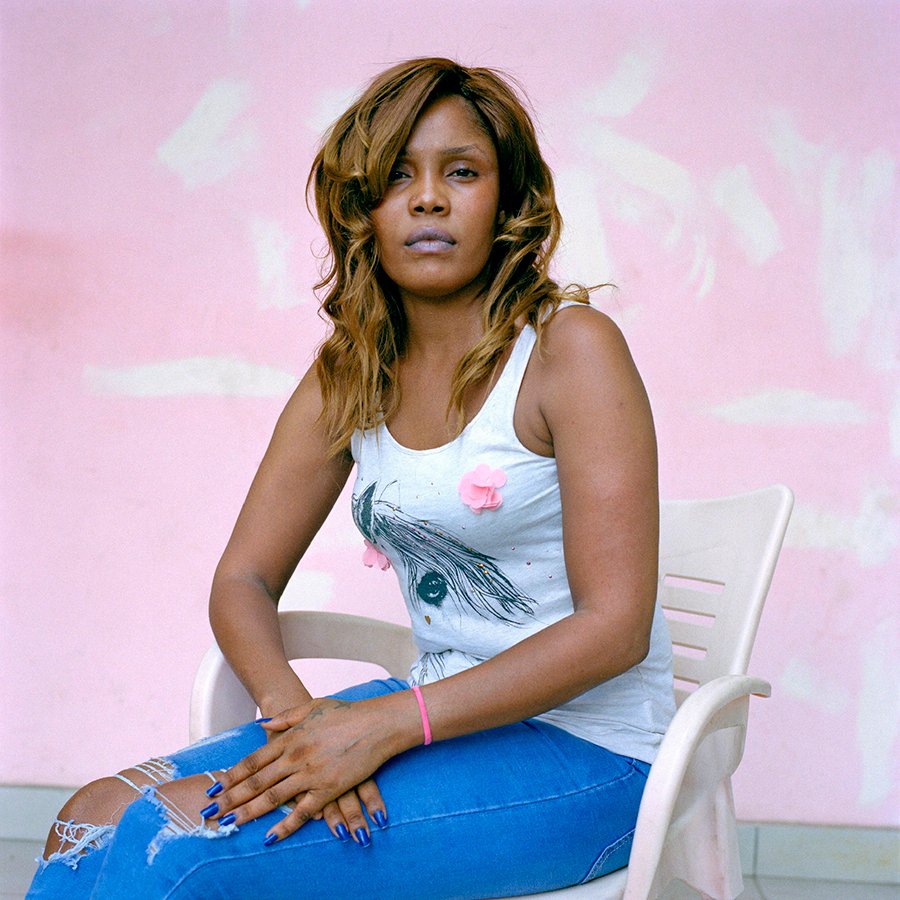
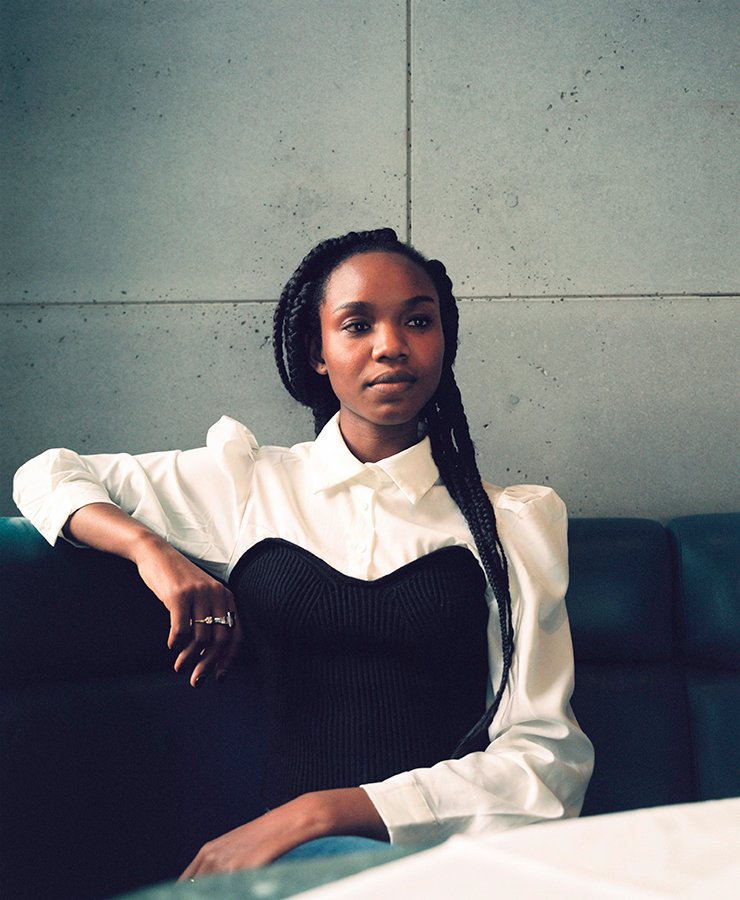
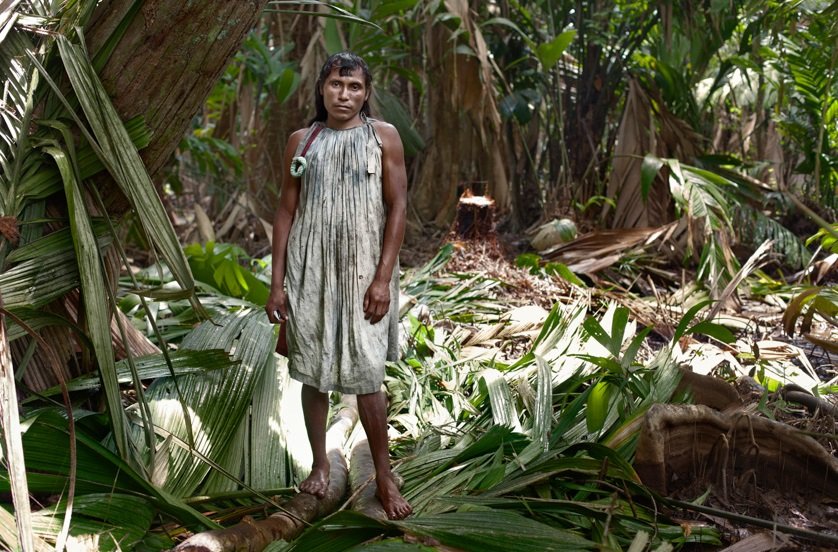
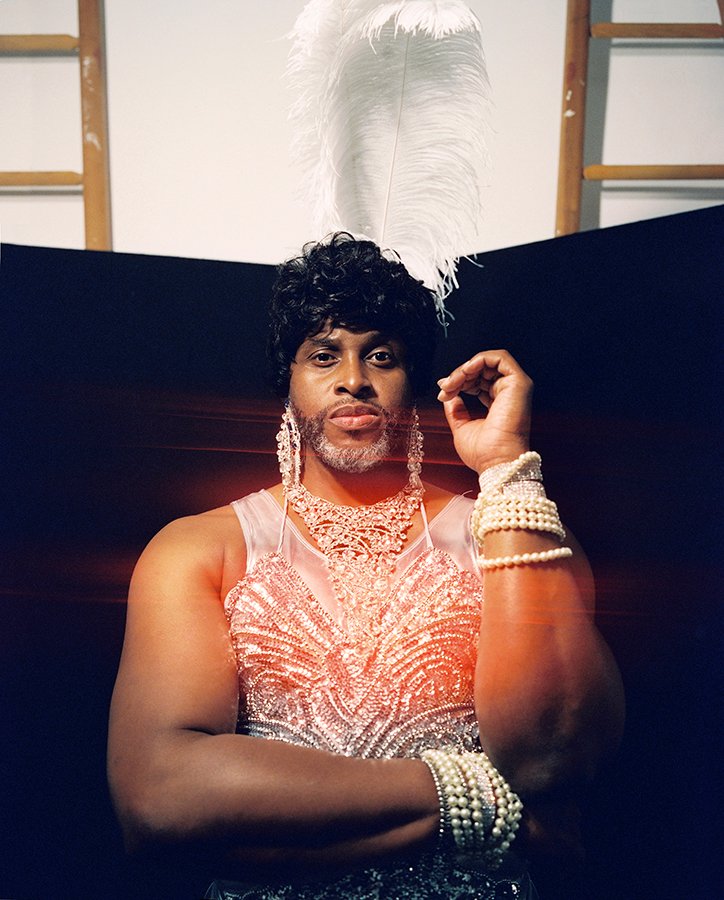
I am usually contacted precisely for what I do: portraits in natural light, often shot on film and in medium format, with a particular attention to the people I photograph and their surroundings. So I try to keep this way of working rather than adopt a different aesthetic simply because it is a commission. What is very important to me is the relationship with the person I am photographing. Whether it is a commission or a personal project, I give the same care and attention to that encounter. I do not simply want to get a “good picture” of someone. I try to create the conditions for a strong presence to appear in the image.
Editorial constraints can actually be very stimulating. They allow me to meet people and enter situations and worlds that I might never have approached on my own. In that sense, I think commissioned work can really feed into a personal practice. It shifts your perspective, creates new encounters, and can sometimes bring up questions that later find their way into your own work. The main difference is probably that in my personal work, I can leave more room for doubt, time, and experimentation. But I do not see these two practices as separate. They are constantly in dialogue with each other.
Emaho: Your practice has expanded from photography into drawing and installation, and you’ve described your work as exploring identity, otherness, and displacement through a dramaturgical approach rooted in Black, feminine, and African perspectives. What does a drawing or an installation let you say about displacement or identity that a photograph, no matter how carefully staged, simply can’t?
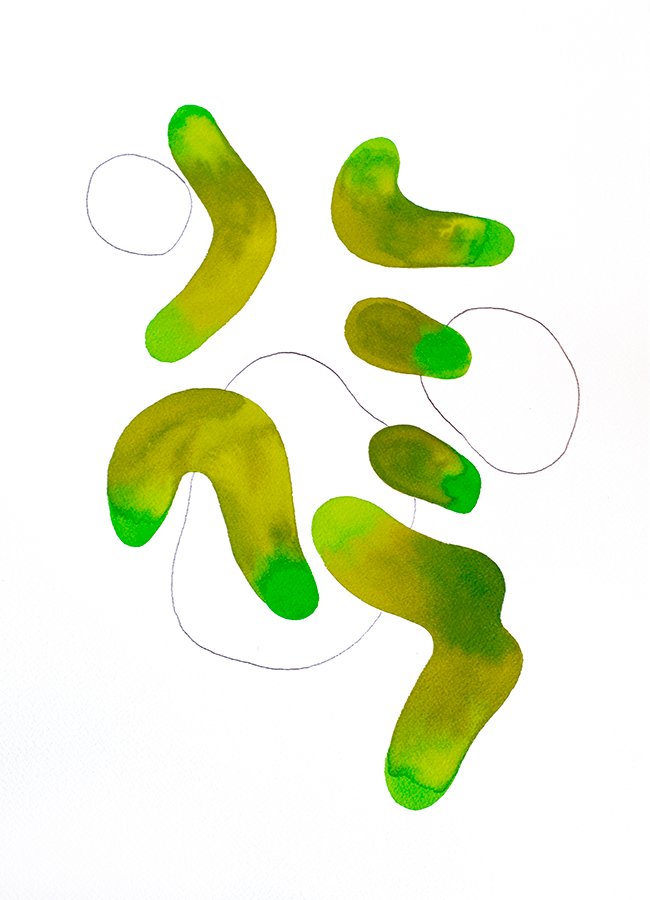
Charlotte Yonga: Over the past few years, I have developed a drawing practice that has become very precious to me. Drawing actually entered my practice at a very particular moment in my life: I started drawing during manic episodes related to my bipolar disorder. At the time, there was something very spontaneous, almost irresistible, about the need to draw. Over time, this practice stayed with me and evolved. Today, it exists far beyond those moments, and I finally find it much easier to concentrate in the studio! I really enjoy working with ink, watercolor, and colored pencils, and exploring my own form of abstraction.
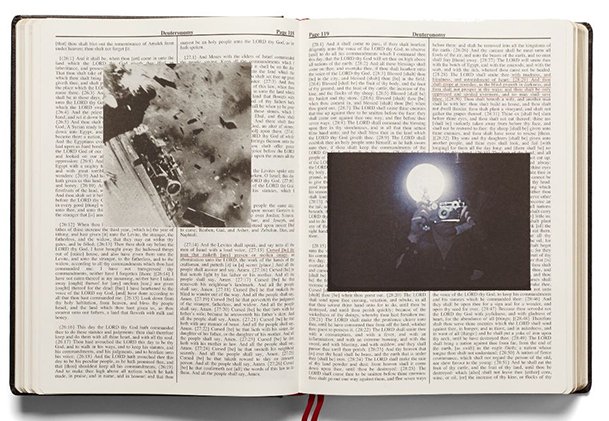
I noticed something particularly interesting when I started bringing my drawings and photographs together. A dialogue began to appear between them through similarities in shapes, colors, patterns, or rhythms, without the need to create an explicit narrative. The drawings then become almost like mental landscapes. They introduce another sense of time and invite us to enter the photographs differently. Photography remains connected to reality and to what was in front of the camera, while drawing gives me more freedom to explore imagination, sensations, and the unconscious. It allows me to approach identity from a more intimate place. Bipolar disorder is part of my history and therefore part of who I am, without defining me entirely. Through drawing, I can explore experiences and inner states that I might not be able to express through photography.
I do not want drawing to explain photography, or photography to explain drawing. What interests me is what appears in the space between them: connections, echoes, and sometimes contradictions. Bringing different mediums into dialogue allows me to create different layers of meaning and different ways of entering the images. Note: I have not made installation work for quite a long time. Today, this part of my practice is mainly focused on the dialogue between photography and drawing. Perhaps we could slightly rephrase the question so that it focuses more specifically on drawing.
Emaho: You’ve said your work seeks to deconstruct stereotypes and offer a more nuanced, reparative vision of culture and identity, a genuinely ambitious mission for any single body of work to carry. Nearly two decades since you first picked up a camera, do you feel like the visual stereotypes you set out to dismantle have actually loosened at all in how African and diasporic identity gets represented, or does the work still feel like it’s starting from the same place it did when you began?
Charlotte Yonga: I feel that many things have changed since my early years at art school. Today, many more photographers and artists from African countries and diasporic communities are visible and are speaking from their own experiences, with their own voices, their own aesthetics, and their own ways of representing their surroundings.
This is an important change because it creates a greater diversity of narratives. We are gradually moving away from representations of Africa and its diasporas that were often created from the outside and reduced to images that were miserable, exoticized, romanticized, or, on the other hand, overly aestheticized. What interests me today is precisely this plurality. There is no single way to represent an African or diasporic identity, just as there is no single experience of these identities. Seeing so many different, and sometimes contradictory, perspectives emerge feels extremely important to me.
Of course, stereotypes have not disappeared, and certain representations continue to repeat themselves. But I believe something has genuinely shifted: people who were historically the subjects of these representations are increasingly becoming the authors of them. And this deeply changes both the images being made and the way we look at them. It is beautiful to witness, and it makes me feel that I am part of a much broader and richer artistic landscape than when I started.