Emaho: You were born in Konya, a conservative city in Turkey’s heartland, and have described being bored there as a teenager while your friends played sports and you wrote poetry and scripts instead. You’ve said that restlessness, which once made you want to escape, has become one of the biggest sources of inspiration for your work. What does it feel like to build a career out of returning, imaginatively and literally, to the exact place you once wanted out of?
Olgaç Bozalp: The part about writing poetry and scripts isn’t entirely correct. When I was 14 or 15, I was actually drawing humorous caricatures and writing song lyrics. But I always felt disconnected from my environment while I was growing up in Konya. I never really felt that I belonged there, or that I was understood or seen. Part of that came from the way my dad’s friends and relatives judged me because I was never particularly good at school. I still have a diary from 2000, and every couple of weeks I literally wrote that I wanted to leave Konya. I eventually left when I was 19. Then, when I was 29, I decided for the first time to approach photography in a more documentary way. My first project began with my dad, and I think, in a way, he represented what “home” meant to me at that point. Something clicked when I photographed him.
It was almost like a light bulb switching on. Humour had always been a big part of who I was, and that was also one of the reasons I studied acting. But after I left acting school, I never really managed to bring that humour into my work. When I started combining my own humour with my dad’s humour, I began to recognise more and more elements of the place where I grew up. Strangely, photography started to feel much more natural after that. It didn’t feel forced or like I was pretending to be someone else anymore. It felt like this was how my work was supposed to be. For the previous ten years, I had struggled quite a lot to find my own voice, and I think returning to those memories and to that place, both literally and imaginatively, finally helped me find it.
Emaho: Your route into photography wasn’t a camera at all, it was theatre. You moved to Cyprus to study acting, and it was while inventing and photographing characters for class that you picked up a camera for the first time. Does that theatrical origin still shape how you direct a shoot today, and is there a version of you that thinks you’re still performing characters, just from behind the lens instead of in front of it?
Olgaç Bozalp: Absolutely. After I failed at university, I felt like I had wasted two years of my life and my parents’ savings. After my two years in Cyprus, I moved to London to become a photographer, but for a long time I still couldn’t really understand what my direction was. During those first years in London, I photographed almost everything I could: babies, weddings, events, birthdays, dogs, watches for eBay sellers, and many other things. Photography became a way to survive and pay my expenses, so for quite a long time it was more of a tool for making money than a way of expressing myself. The moment I decided to start again from scratch and photograph my dad, something from my original relationship with photography came back. The idea of performing, creating characters and putting people into a certain world suddenly returned — along with a feeling that I was finally okay with where I came from.
I remembered that this was actually how I had started photography in the first place, but somewhere along the way I had moved very far away from it. I’ve always been interested in bringing out a hidden side of people, especially the side of them that wants to have fun, play, or escape from their everyday selves for a moment. I think the theatrical part of me is still very much present when I photograph. I’m not necessarily trying to make people “perform” in a conventional sense; I’m interested in creating a space where they can become a slightly different version of themselves. That became really important to me because I realised I cared more about creating a memory with my subjects than simply making a good photograph. I want them to remember the experience of being photographed, not just the image that came out of it.
Emaho: Critics and publications consistently describe your perspective as “hybrid,” caught between the Eastern world you were raised in and the Western cities you’ve since built your life and career in. That word gets used a lot around you. Does “hybrid” actually describe how you experience your own identity, or is it a label that outsiders reach for because it’s easier than sitting with the specifics of your story?
Olgaç Bozalp: I don’t think the term “hybrid” really makes me feel like it describes who I am. Sadly, my work has never really received recognition in my home country, and like anyone else, I wanted to be somewhere where I felt understood and seen. Moving to London at 21 definitely gave me the feeling that maybe I wasn’t the wrong one after all. I realised that people actually cared about my ideas, and that was a huge motivation for me. I know I’ve managed to make a living from my work in the Western world, but there’s also an irony in that. A lot of what I photograph is actually about challenging or questioning the Western, hegemonic ideas of beauty and what is considered desirable or acceptable. Culturally, I definitely feel much closer to the Eastern world. But I think my work is less about trying to define which side I belong to and more about trying to understand my own connection to myself, and how the environments we grow up in shape us. So whether I’m in Turkey or in the UK, I don’t really feel that I fully belong to either. Maybe that feeling of being slightly outside both worlds is actually something that has shaped my work more than the word “hybrid” itself.
Emaho: For Antidote magazine’s “Borders” project, you spent two and a half months moving through South Africa, Lebanon, Turkey and France, and in Beirut you ended up photographing a stranger’s apartment because it reminded you of homes in Konya, right down to the rugs and the prayers on the wall. What does it mean that a neighborhood in Lebanon could feel more like home to you than certain places in Turkey itself, and how do you decide when a stranger’s space has earned a place in your frame?
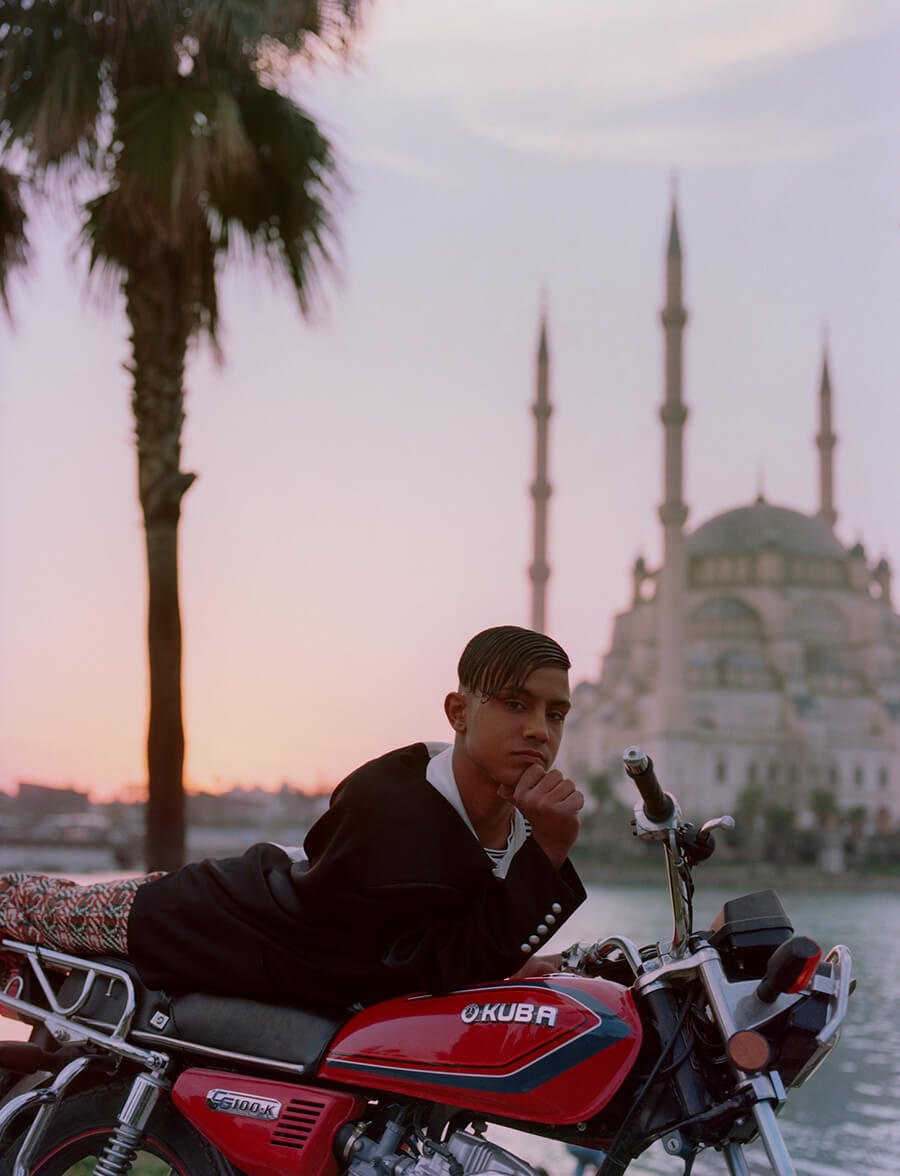
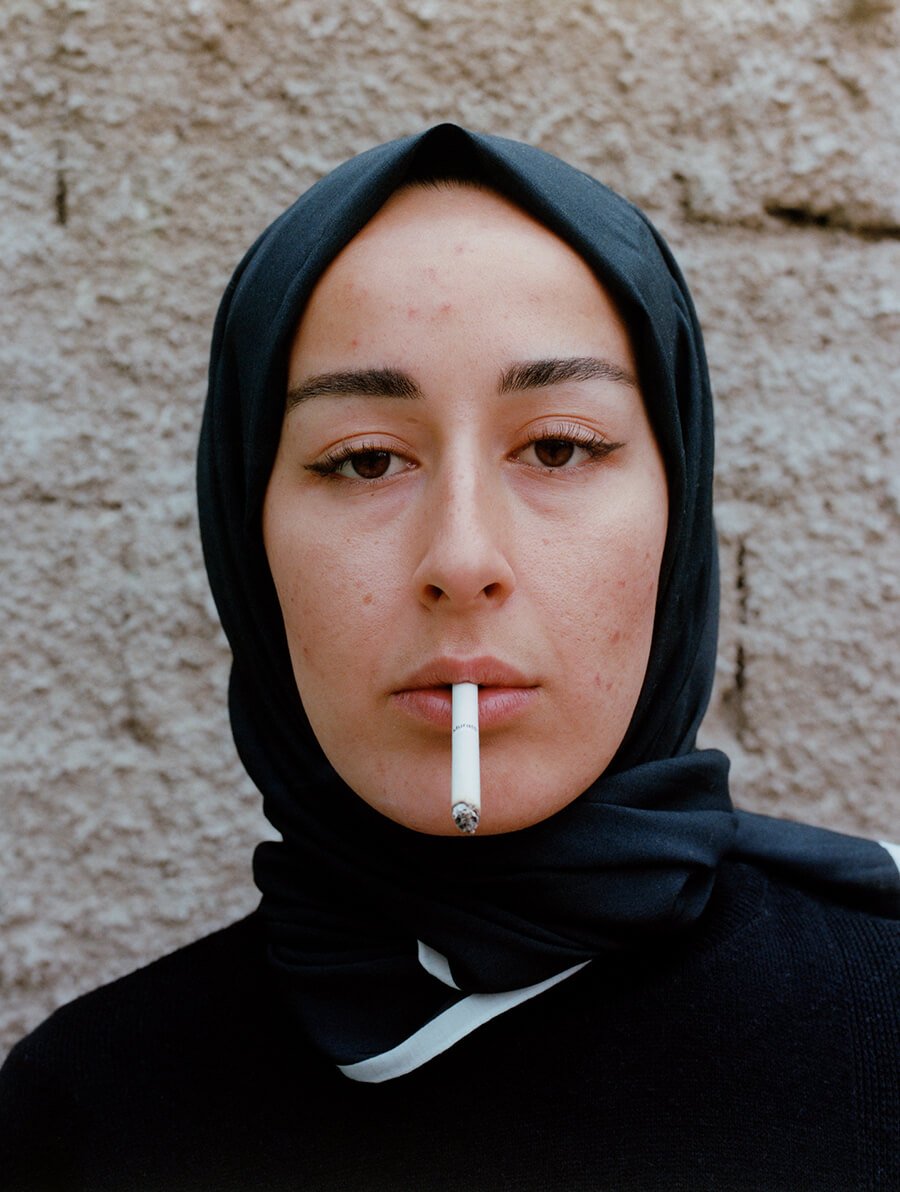
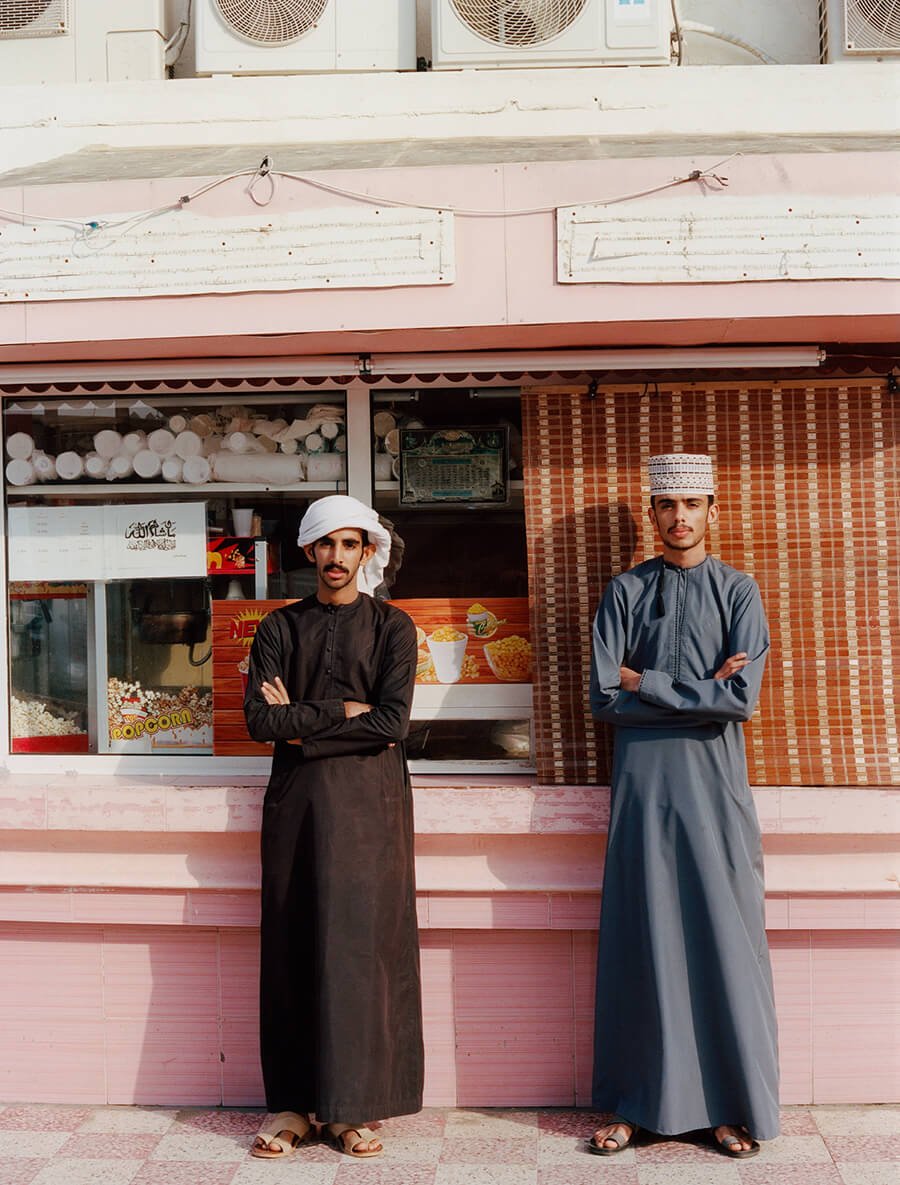
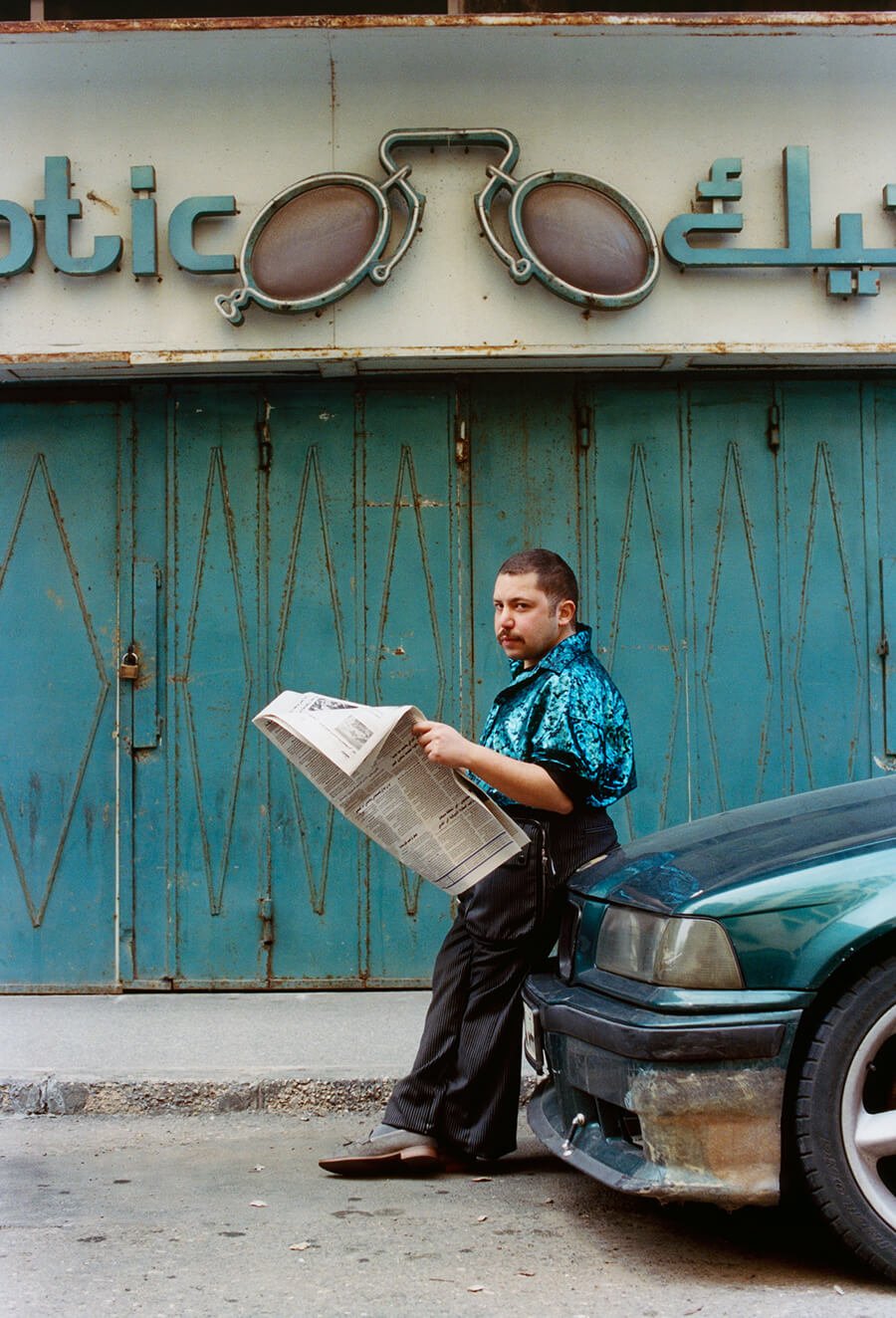
Olgaç Bozalp: After I photographed my dad, Antidote saw the work. They were the first magazine to get in touch with me and gave me a carte blanche, which was a huge moment for me. I wanted to use that opportunity to explore different ways of seeing beauty. At the time, I felt that the Western world was giving us a very narrow perspective on what beauty could look like. You rarely saw people from different backgrounds, especially Middle Eastern people, represented in fashion and beauty campaigns. I remember thinking: you are selling your products to us, but we are not allowed to see ourselves on the products. That really bothered me at the time, and it became an important starting point for my journey. I think a lot of my work since then has continued to question who gets to be seen, how we define beauty, and who gets to belong within that definition. It’s funny that you actually thought of this question, because I’m releasing a new book at the end of this month called Mustafa, which brings together work from the Islamic countries I’ve visited over the last ten years. It connects very directly to what you’re asking. When I first started travelling to these countries, I introduced myself as Olgaç. It didn’t carry any particular connection for me, and it was often difficult for people to pronounce.
At some point I thought, maybe I should use my middle name, Mustafa, because it was much more familiar to everyone. I had never really used that name before. As a child, it felt slightly forced because it was my grandfather’s name. But the moment I started introducing myself as Mustafa, it was as if a new portal opened. Suddenly, I was instantly one of them. I realised that travelling to these places over the past ten years felt like coming home every single time, and that feeling became one of the things that kept me going. I’ve become incredibly grateful to photography for building a bridge between me and other people. Over this decade, I also learned not to believe everything I had been told about the region. I was constantly surprised by how something as simple as saying “Selamünaleyküm, my name is Mustafa” could instantly give me a sense of belonging. The hospitality I experienced, and the way people seemed less individualistic and more connected to one another, had a huge influence on me. It reminded me of how I grew up and of something I felt had disappeared, at least to some extent, in many parts of the world, particularly in Western society. In a strange way, travelling away from where I grew up helped me rediscover something that had always been part of me.
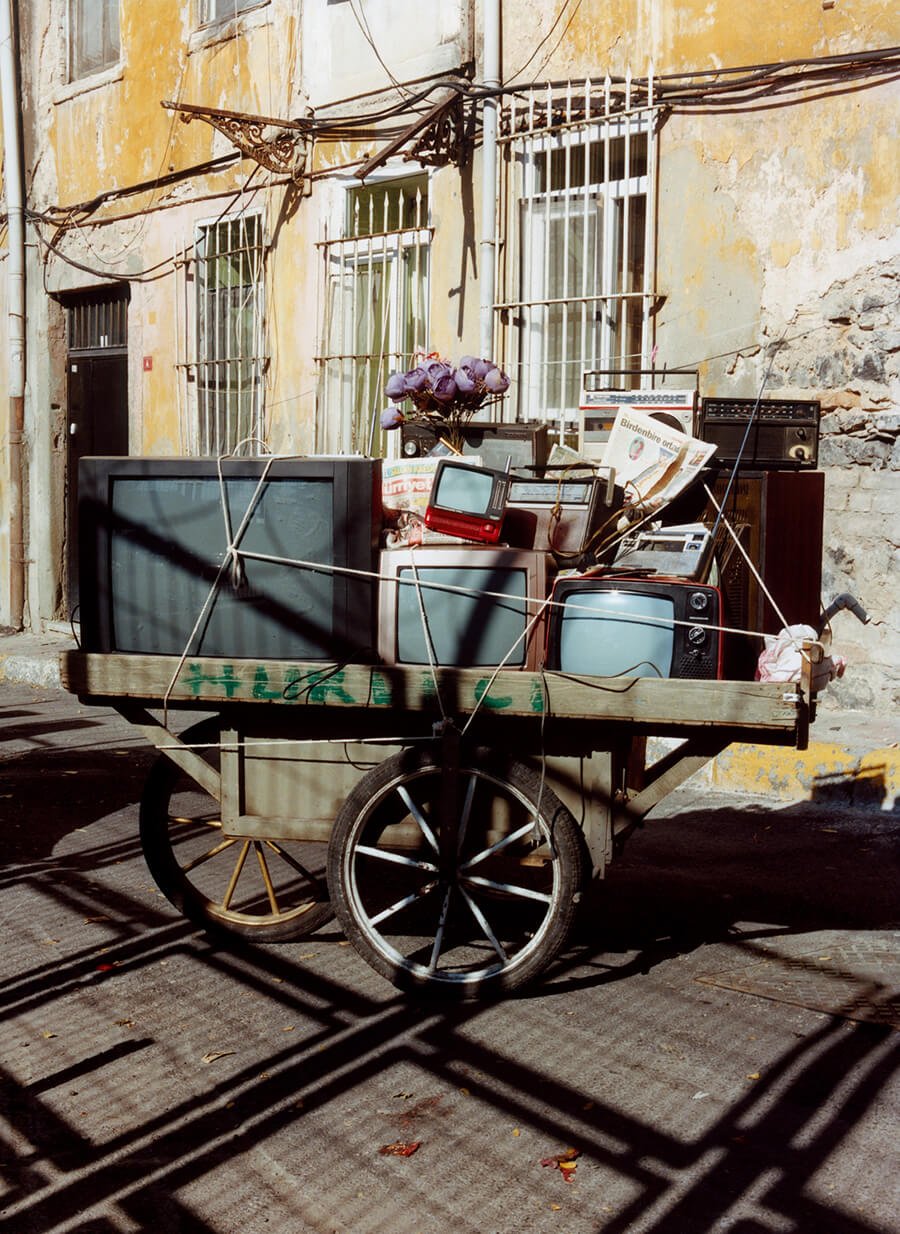
Emaho: Your Numero Homme Berlin series documenting Turkish immigrant families included an image of a man kneeling on an oriental rug beneath a photograph of himself as a child, giving the viewer two versions of the same person’s self-representation at once. That’s a very deliberate visual argument about how identity gets built and displayed inside a home. When you’re photographing diaspora communities, are you documenting how they see themselves, or are you constructing a version of them that fits the story you already came in wanting to tell?
Olgaç Bozalp: In my early work, I often combined fashion with documentary photography. Magazines gave me the opportunity to travel and discover the things I was interested in without having to worry about the financial side of it, so I was able to experiment quite a lot. The specific story you’re asking about is also connected to that. Turks living in Germany would visit my hometown every summer, and they would always arrive in these exaggerated outfits, with lots of jewellery and big cars. I imagine they wanted to show that they had made it in Germany, but that image of them stayed with me from childhood. That’s how I remembered them. Like many of my early projects, fashion became a way for me to recreate and exaggerate these characters. So there is definitely a line between how I imagined them as a child, how I remember them, and how they perhaps saw themselves. I’m interested in that space in between reality, memory and imagination, and fashion gave me a very natural language to explore it.
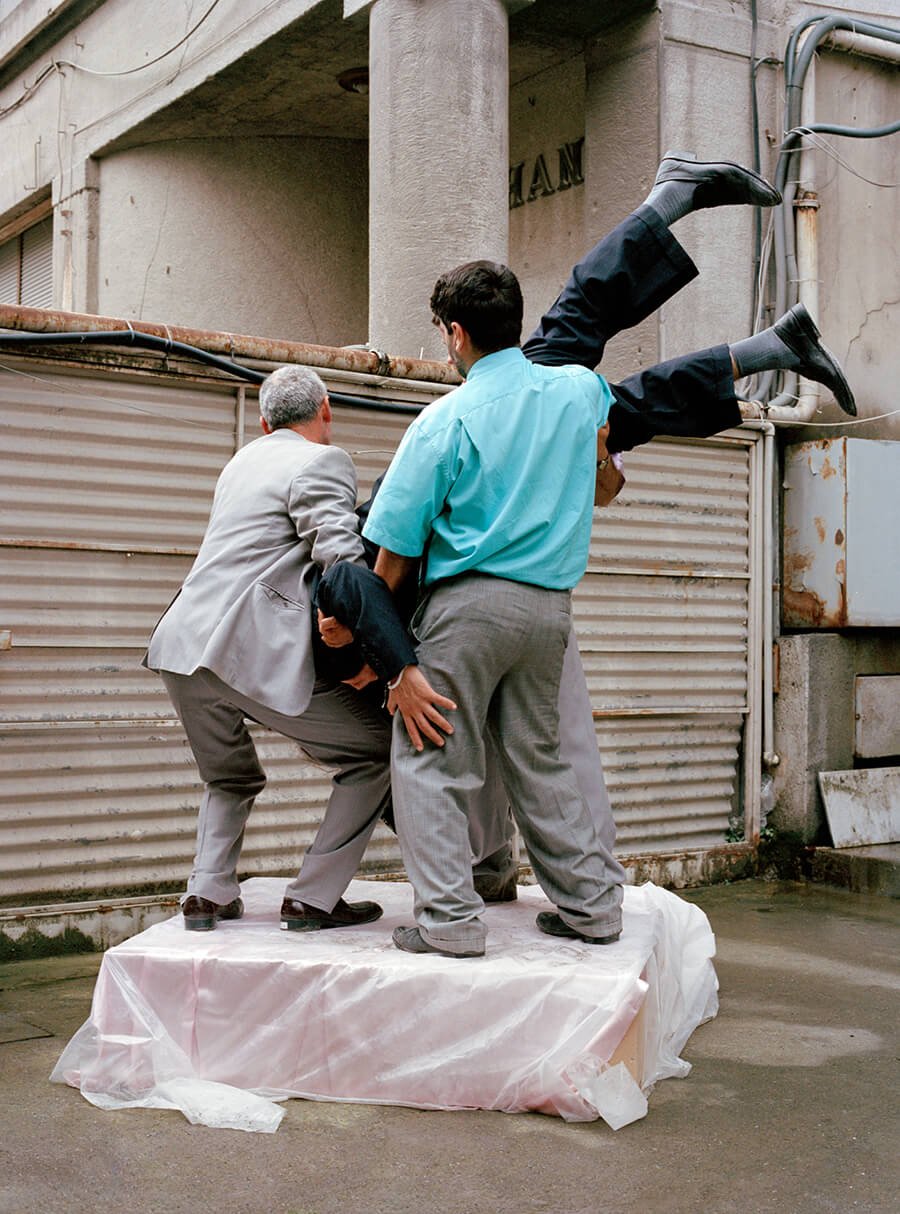
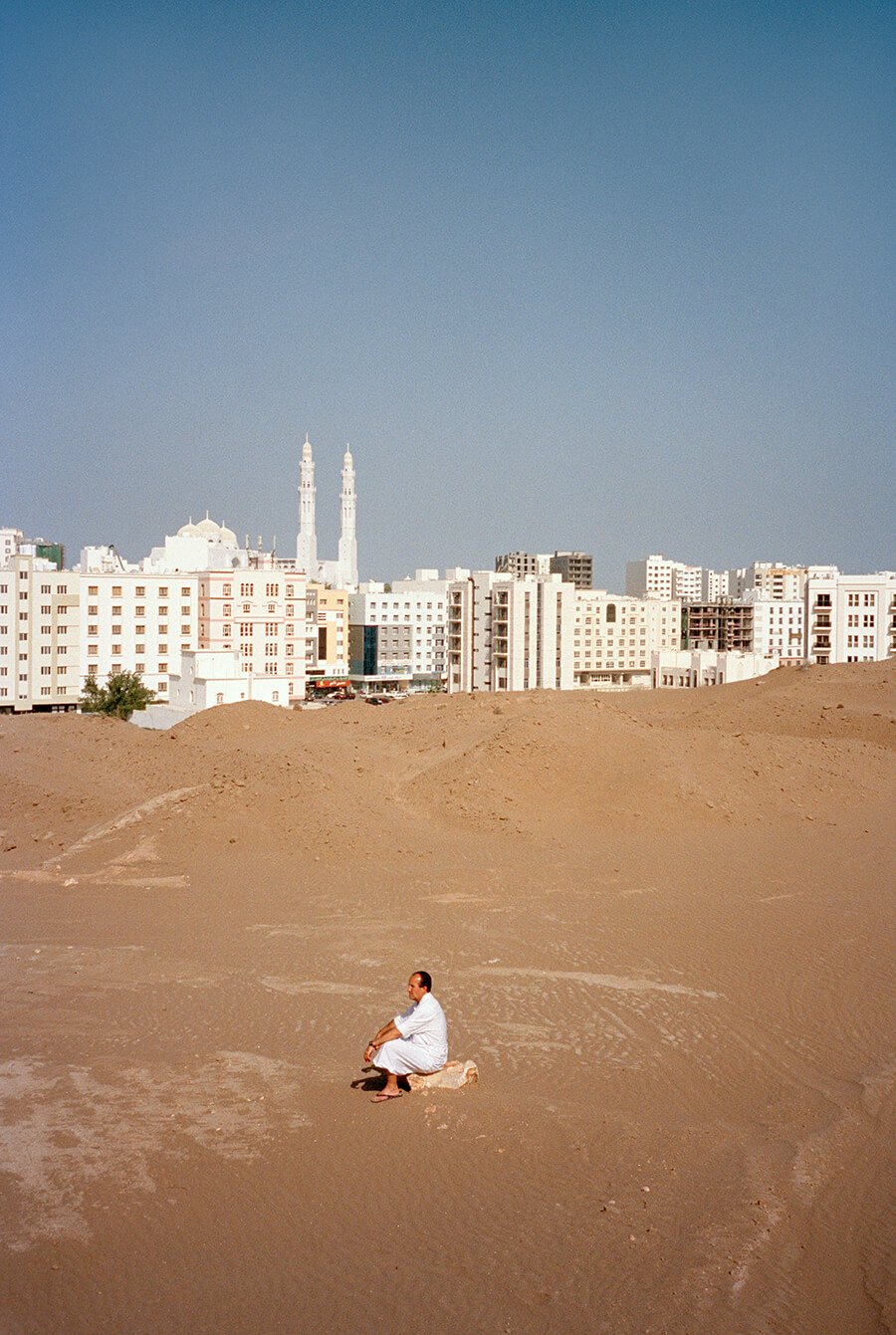
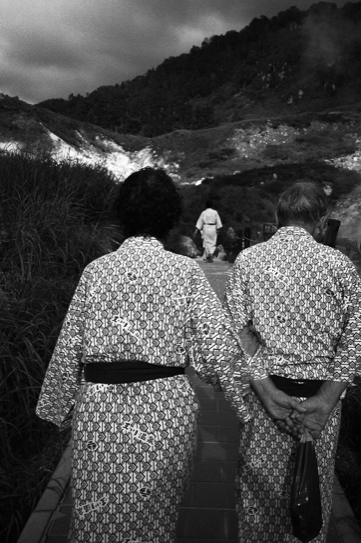
Emaho: One of your most personal ongoing projects follows your father as the two of you travel together through places like Oman, Jordan, India and Japan, reversing the roles from when he took you on your first trips abroad as a child. You’ve said you wanted to see if other people would find him as funny as you do. Has turning your father into a subject changed your relationship with him, or made you see him as a character in a way that occasionally creates distance rather than closeness?
Olgaç Bozalp: In the first five years of photographing my dad, our shared sense of humour was definitely the starting point. Then I stopped sharing his images publicly, but I continued photographing him, exploring different situations and scenarios that reflected the passage of time, the place we came from, and the changes in his age. In reality, I’ve always had a very complex relationship with my dad. We had far too many disagreements when I was growing up, and I think photographing him initially helped me in ways I didn’t fully understand at the time. His images were an important part of my first breakthrough as a photographer, but I eventually had to ask myself: was I genuinely celebrating him, or was I still being driven by a need for his validation? I grew up without much validation from him, and deep down, I think that made me angry. Even in the early days of my career, he would sometimes describe photography as just a hobby. So when I started questioning my reasons for photographing him, it actually made me more confused about the project for a while. But eventually, that confusion brought a kind of relief.
I started to develop more empathy towards him and became more interested in understanding his journey as Hüseyin, rather than seeing him only as my dad. I started wondering who he was before he became my father, what shaped him, and what his own experiences had been. Looking back at the last ten years, photographing him has definitely given me some of my most important memories and some of my most important work. Maybe I needed to move between closeness and distance in order to understand what my relationship with him really was. In a way, the camera gave me the space to do that.
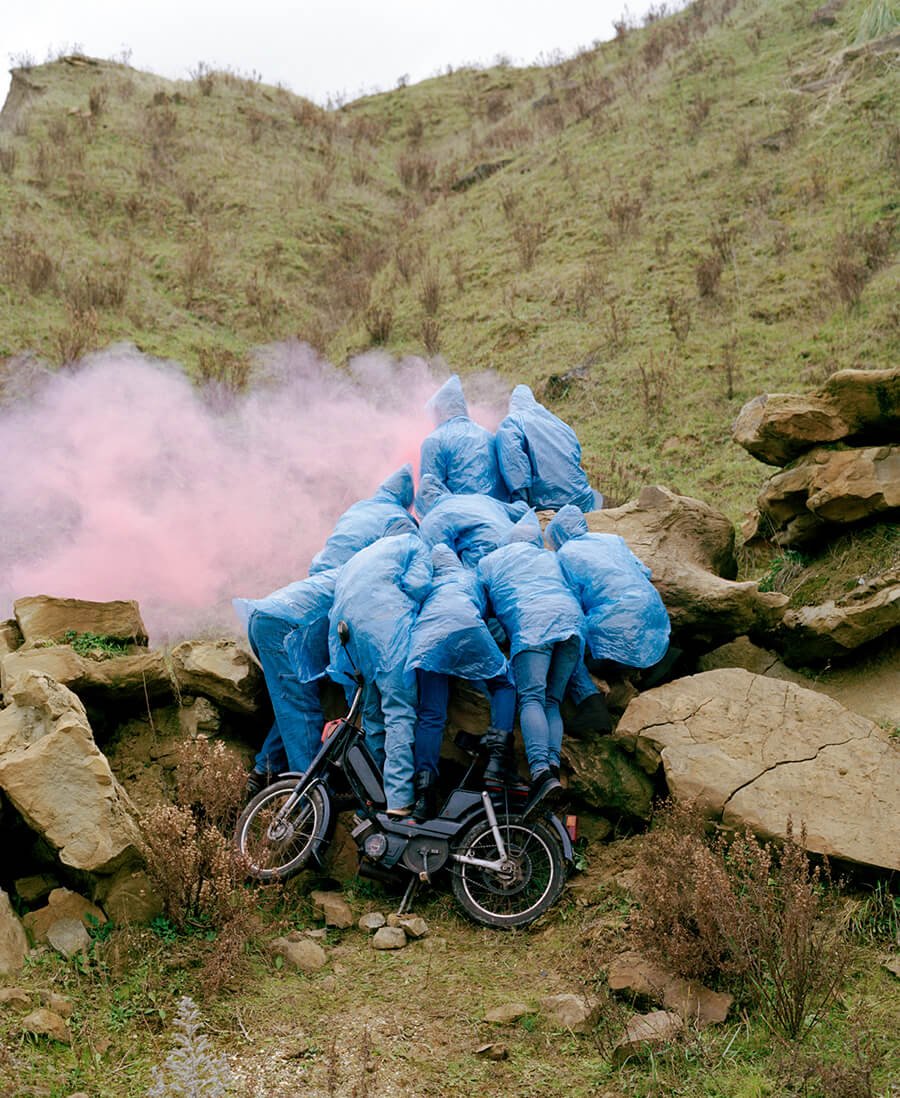
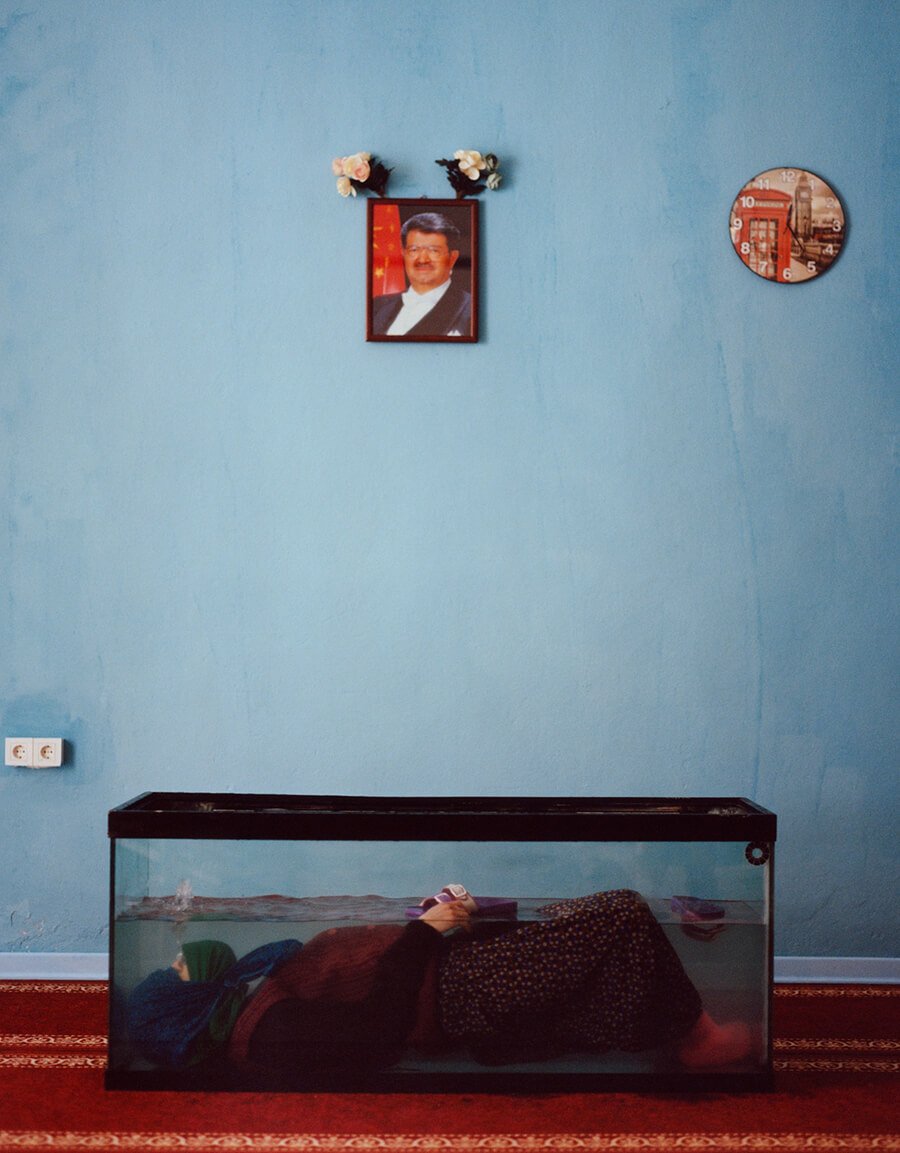
Emaho: Foam described your fictional approach to documentary photography as work that juxtaposes Western and non-Western ideas of beauty, masculinity and femininity to challenge their traditional roles, and one image from your project “Home: Leaving One for Another” places a mother figure in traditional Anatolian dress inside an aquarium alongside a portrait of a former Turkish president. That’s a strange, almost surreal image to build meaning from. Where does an idea like that actually come from, and how much of it is planned versus discovered on set?
Olgaç Bozalp: In 2018, I wanted to take a break from London. I met my partner in Istanbul and decided that I wanted to move there for a year. A few months later, I did. But once I was living there, I realised that I had romanticised Turkey after spending so many years abroad. I also began to notice that many young people, including some of my friends, wanted to leave Turkey themselves, but it was becoming increasingly difficult to do so, both economically and politically. That experience made me start questioning the meaning and motivation behind leaving in the first place. I found myself thinking about what it means to constantly want to be somewhere else, and, ironically, only a few months after moving to Turkey, I find myself startining “Leaving One For Another” Project As humans, I think we often romanticise the past, especially during difficult times. We look backwards and imagine that things were better than they actually were. For me, that image represents this tension between where you want to be and the feeling of being stuck where you are — between longing for somewhere else and realising that perhaps the place you are trying to escape to is also partly an imagined place.
Emaho: You street-cast most of your subjects and spend time in their homes before you ever shoot, which is a slower, more relational process than most fashion or editorial work allows. In an industry that increasingly wants fast turnaround and algorithm-friendly content, what does that patience cost you commercially, and have you ever had to defend that process to a client who wanted something quicker?
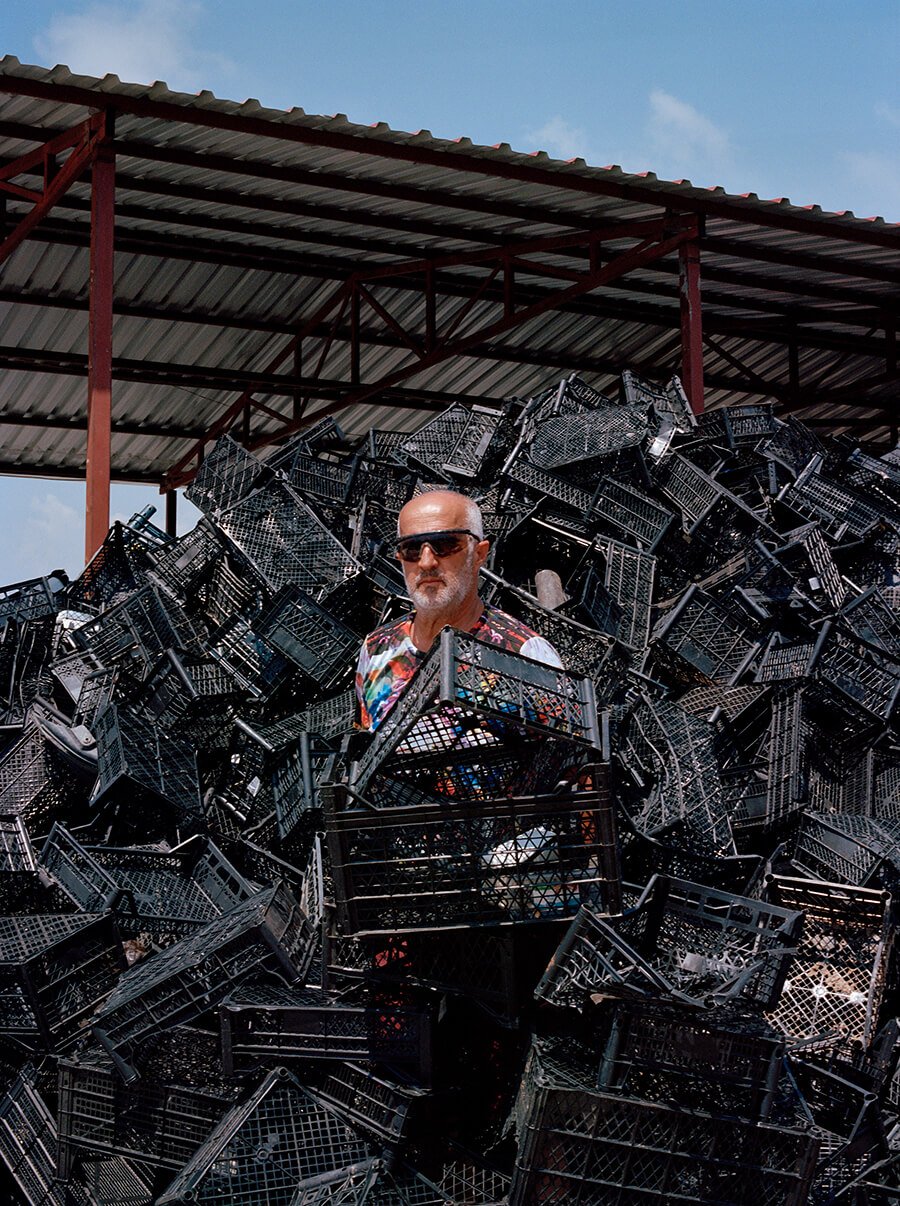
Olgaç Bozalp: Fashion has always been a bridge between my love of travel and what I ultimately want to achieve with my work. Over the years, I’ve often used fashion assignments as an opportunity to travel, and I would photograph my personal work alongside them. At the same time, I always felt that my fashion work needed to belong to the same world as the rest of my photography. I wanted to make sure that the documentary, place and memory elements remained a priority, rather than separating my fashion work from my personal work completely. That helped me develop a consistent visual language, but it also meant that commercially I was probably put into a certain box and became more niche, or was chosen for very specific reasons. It cost me quite a lot in the beginning because I wasn’t willing to completely adapt my work to what was commercially expected of me. But over time, I think that consistency became an advantage. Eventually, it allowed me to work with bigger clients who were specifically interested in that particular way of seeing and in the world I had created through my work.
Emaho: You’ve worked across the full range from Gucci and Carven to Aperture, the National Portrait Gallery, and the Sharjah Art Foundation, moving between fashion’s commercial machinery and the art world’s institutional weight. Do those two worlds actually want different things from your images, or have you found that the tension between them is more imagined than real once you’re the one holding the camera?
Olgaç Bozalp: I started photography with a survival instinct, so making money from it was my first introduction to the taking photograph. Because of that, working with brands never felt alien to me. It was simply how I learned to work as a photographer. When I shifted my focus towards a more personal and documentary approach in 2016, the formula didn’t really change. I applied the same way of seeing to everything without categorising my work too much, and over time, it all started to become part of the same world. Years later, I also began exhibiting some of my fashion work, and I don’t think people necessarily noticed whether something was made as a fashion commission or as a personal project, because I tried to keep everything within the same visual language. That said, there are obviously brands that come with a very specific brief, and sometimes you simply have to work within those expectations. So I think it’s a bit of both. There are moments when the two worlds have very different demands, but I’ve always tried to find a way to bring my own perspective into both rather than completely separating them.
Emaho: The British Journal of Photography credited you with helping diversify visual culture around gender, beauty and race, framing your work as part of a larger industry shift. Nearly a decade into your career, do you think that shift has become real and structural, or has the industry mostly learned to feature diversity in front of the camera while the people making decisions behind it have barely changed at all?
Olgaç Bozalp: I think diversity has definitely become more real and structural compared to when I started, and that has probably helped my career as well. But at the same time, I think part of that change happened because the industry realised that diversity could also be profitable. So sometimes the motivation behind it hasn’t necessarily been as progressive as it might appear from the outside. In my opinion, the people making the decisions haven’t changed drastically enough yet, although I do think things are improving. And they have to, because we need more diversity within decision-making environments, not just in front of the camera. When people from different backgrounds are part of those conversations, they can bring a completely different understanding of an artist’s work and relate to their experiences in a much deeper way. I think real change happens when diversity exists throughout the whole process — from the person being photographed, to the photographer, editor, creative director, curator and everyone making the decisions behind the work.