Emaho: What first drew you to sculpture and multimedia art, and how did your early experiments with clay and pottery as a self-taught artist influence your creative direction?
NS: Since childhood, I was fascinated by small objects – connecting them together and creating stories. At sixteen, I began taking pottery and clay-sculpting classes. Two years in art school also helped me become more familiar with different materials and artistic disciplines, and this encouraged me to continue along this path.
Emaho: How has your experience growing up in Tehran shaped your artistic voice and subject matter throughout the years?
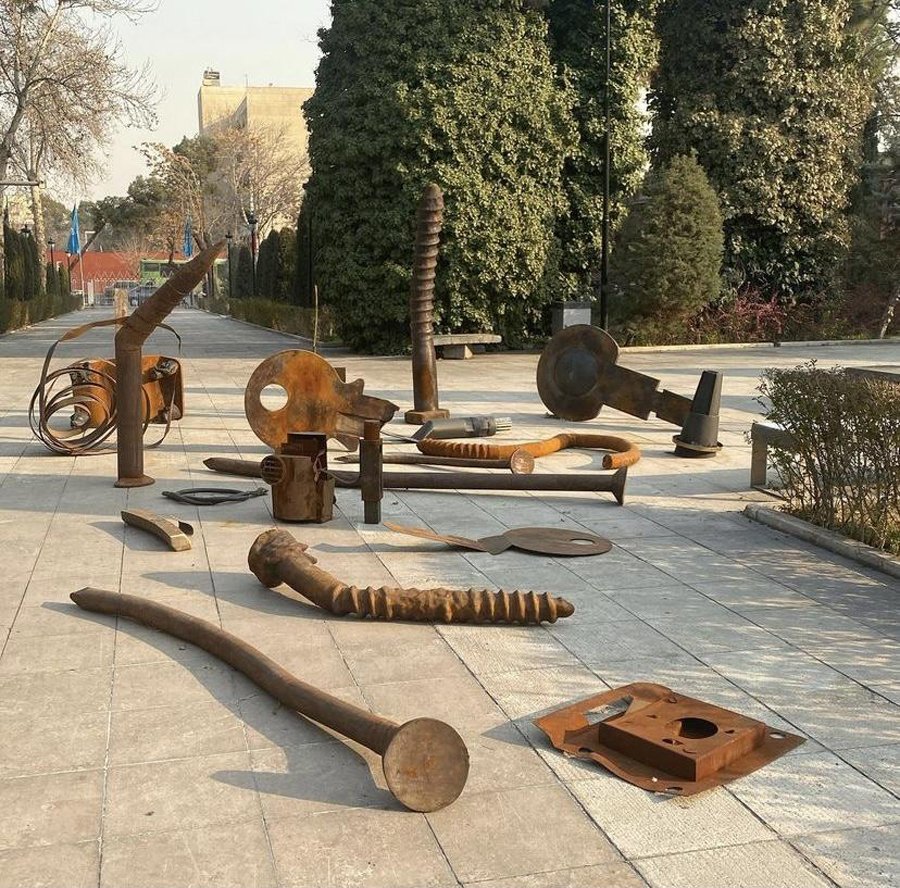
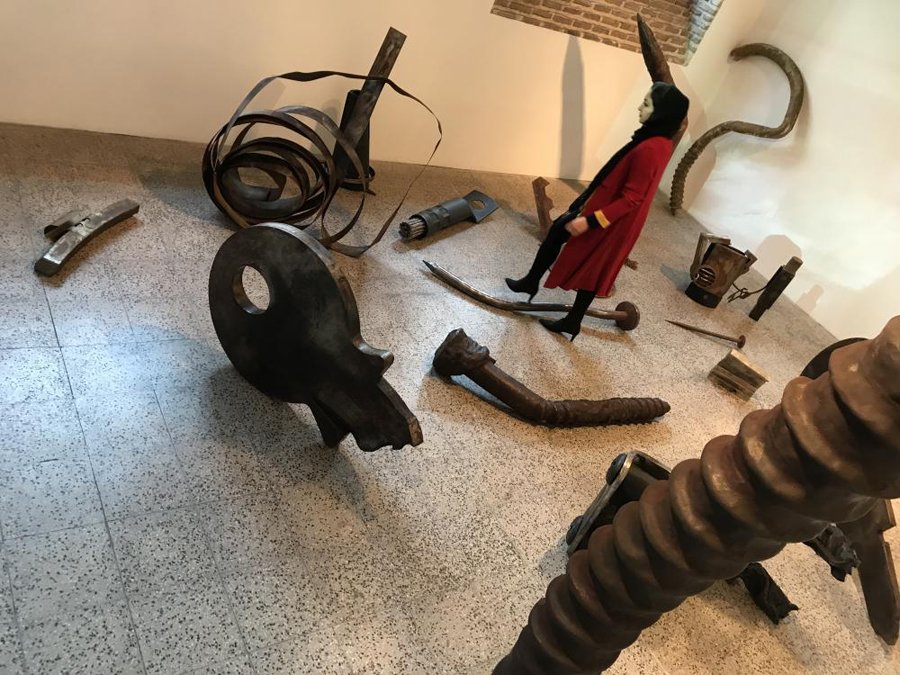
NS: Tehran is the city where I was born and raised. I’ve always had a dual feeling toward it – love and hate. While I feel a sense of calm in this city, it also wounds me and exhausts me. Tehran became the subject of my 2017 series “Street-Level Narratives.” The work included several video-performances about my relationship with the city, as well as an installation made from enlarged metal objects I found while walking through its streets. Objects that were lost, abandoned, stripped of their function—much like how we lose ourselves and erode in big cities.
The sculptures were created on a large scale, but remained faithful to their original materials.
In the video-performance Letter to Tehran, I wrote letters addressed to the city, dropped them into mailboxes, and I’m still waiting for an answer. Tehran itself has become both a subject and a presence in my work, and growing up in a city full of stories and events has continuously shaped my spirit and my other works.
Emaho: Which artists or movements have had the greatest impact on your philosophy of art and your practice as a sculptor?
NS: I cannot single out one artist or movement as the most influential. Every artwork I have seen, every book I have read, every piece of music I have listened to, every film or play I have watched has left an imprint on my unconsciousness—and, at certain moments, that influence has shaped my approach.
Emaho: Your work often explores femininity, myth, and psychological self-realization. Can you share how these themes emerged as central in your art?
NS: Naturally, because I am a woman, the quality of the anima is evident in my work. Everything I create passes through this filter – the way the world, society, and personal life experiences affect me. As a result, self-knowledge becomes one of the most essential functions of creating art for me. Myth, too, is something I believe flows constantly through everyday life. It’s undeniable – always keeping us connected to a world beyond our direct understanding.
Emaho: Could you describe one or two of your most meaningful or inspiring works – perhaps “Embodiment” or “Simurgh”—and what they represent to you personally?
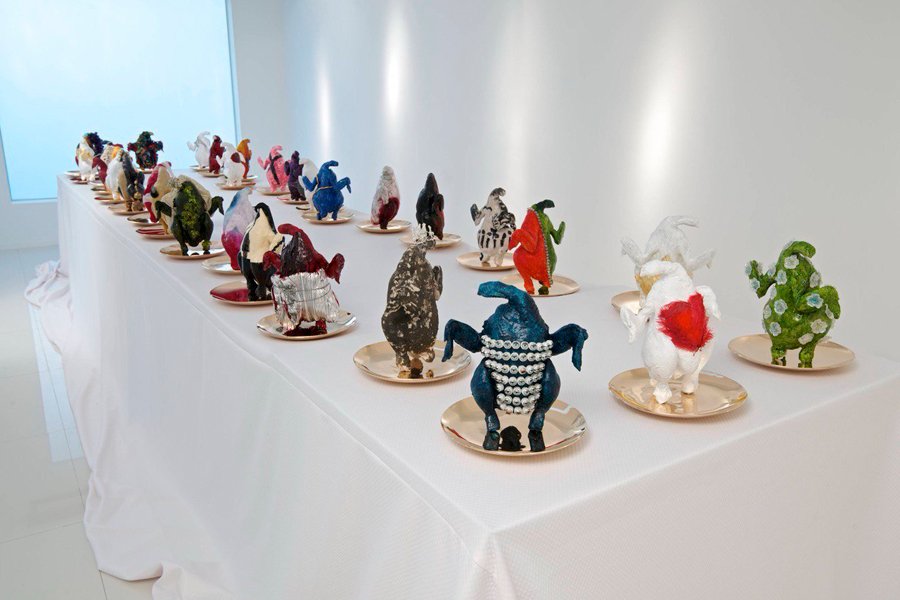
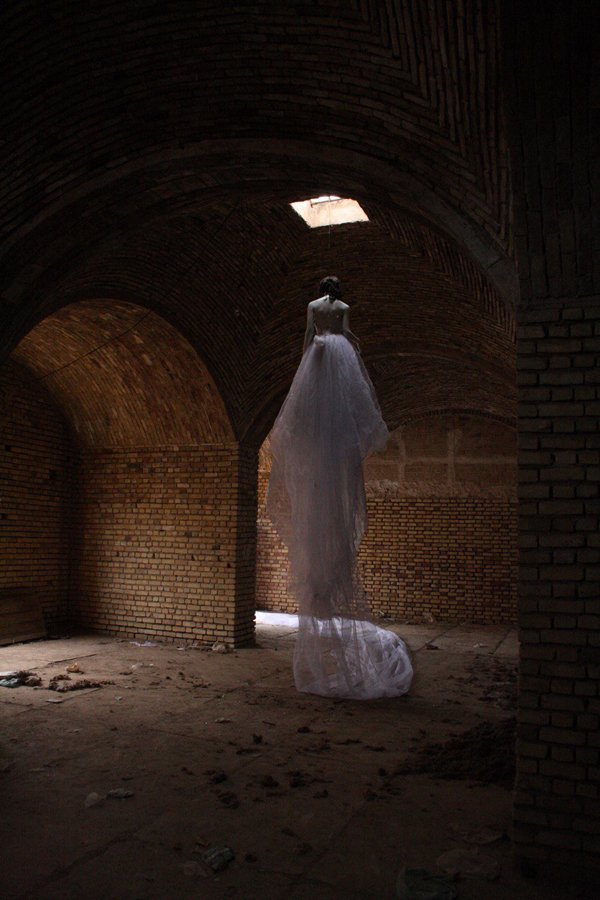
NS: The idea for the Simurgh video art and installation came to me in the kitchen while cleaning chicken. Thirty fiberglass hens, decorated in different colors and ornaments, were arranged on shiny bronze plates on the dinner table. The word Simurgh, the mythical bird, is formed from si (thirty) and morgh (bird).
In ancient Iranian literature, morgh referred to a wise, powerful bird. Today, morgh means a plucked, packaged chicken ready for cooking. In Attar’s The Conference of the Birds, a group of birds fly toward the legendary Simurgh atop Mount Qaf; only thirty reach it, see their own reflection in the water, and realize that they themselves are the powerful Simurgh.
Turning thirty, for me, marked the transition into another stage of life—a rite of passage, a becoming-other, with sacrifice and rebirth. The performance was carried out in a wedding dress.
Emaho: What is the narrative behind your 2025 “Embodiment” solo exhibition in Tehran – what stories or feelings did you hope to evoke in viewers?
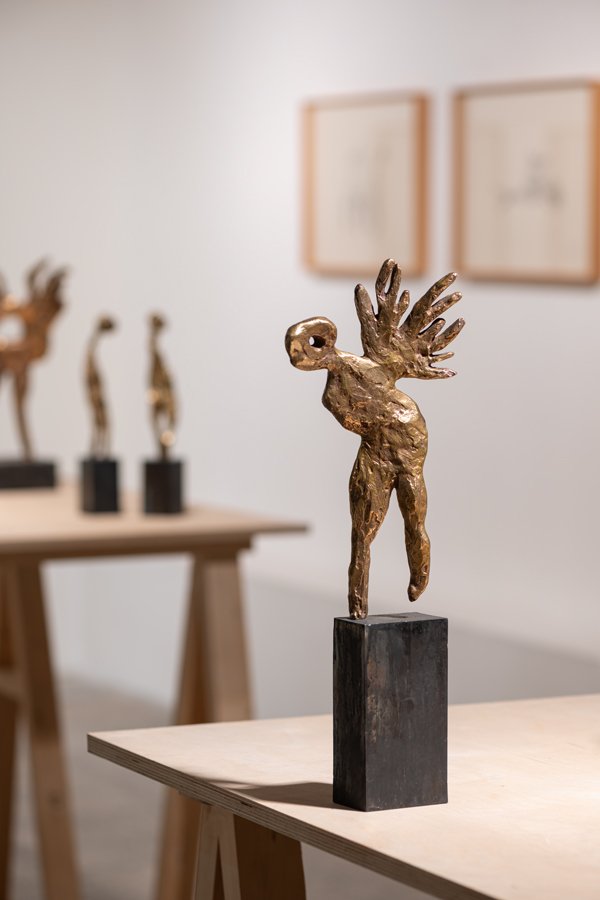
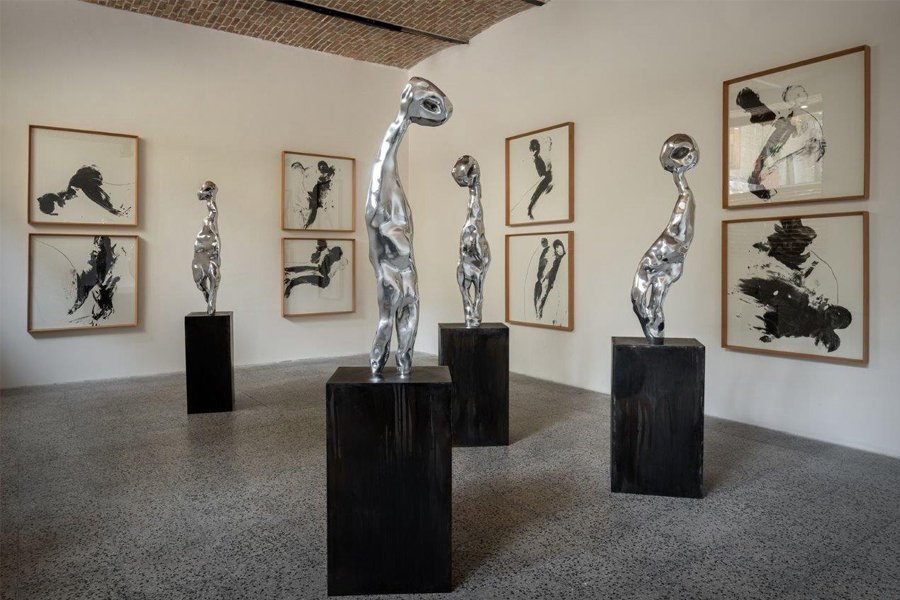
NS: Embodiment was my most recent solo exhibition. It included body prints, large aluminum sculptures, small bronze sculptures, and chalcography prints. The three-dimensional body is printed directly onto paper with ink and becomes two-dimensional. Skin—as the body’s outermost, ever-changing layer—connects the inner and outer worlds.
The forms created were then re-modeled into sculptures. The sculptures, through photo-etching and etching techniques, were again transformed into two-dimensional images. This intentional and unintentional back-and-forth between body and spirit creates a new kind of existence. A few hours before the exhibition’s opening, the Iran–Israel war began, and the show was postponed for a month.
Emaho: Many of your installations transform mundane objects into vessels of emotion. How do you choose these objects, and what do they symbolize in your practice?
NS: The form, history, and story of objects are what I’m interested in. Sometimes I use the objects directly in my work; sometimes I remake them to convey a concept or idea.
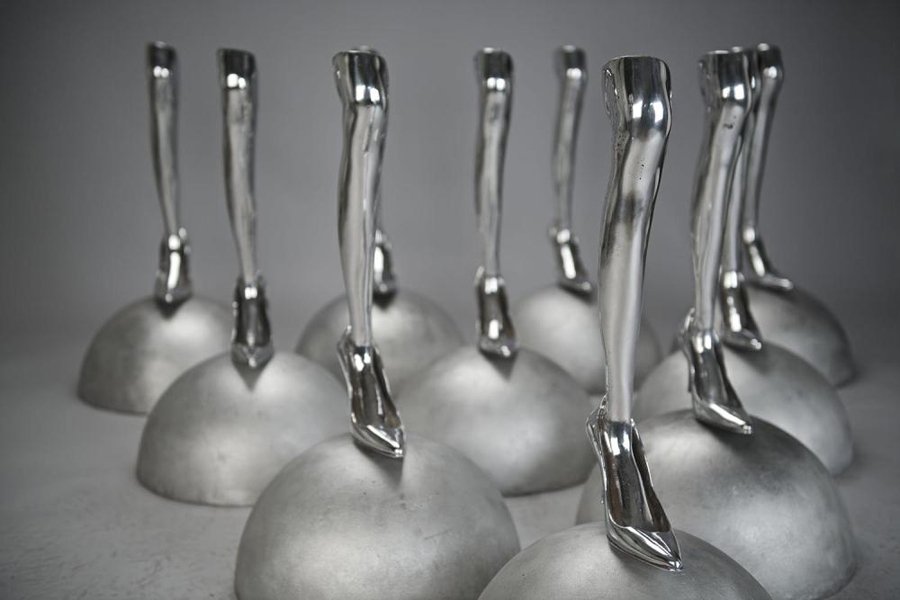
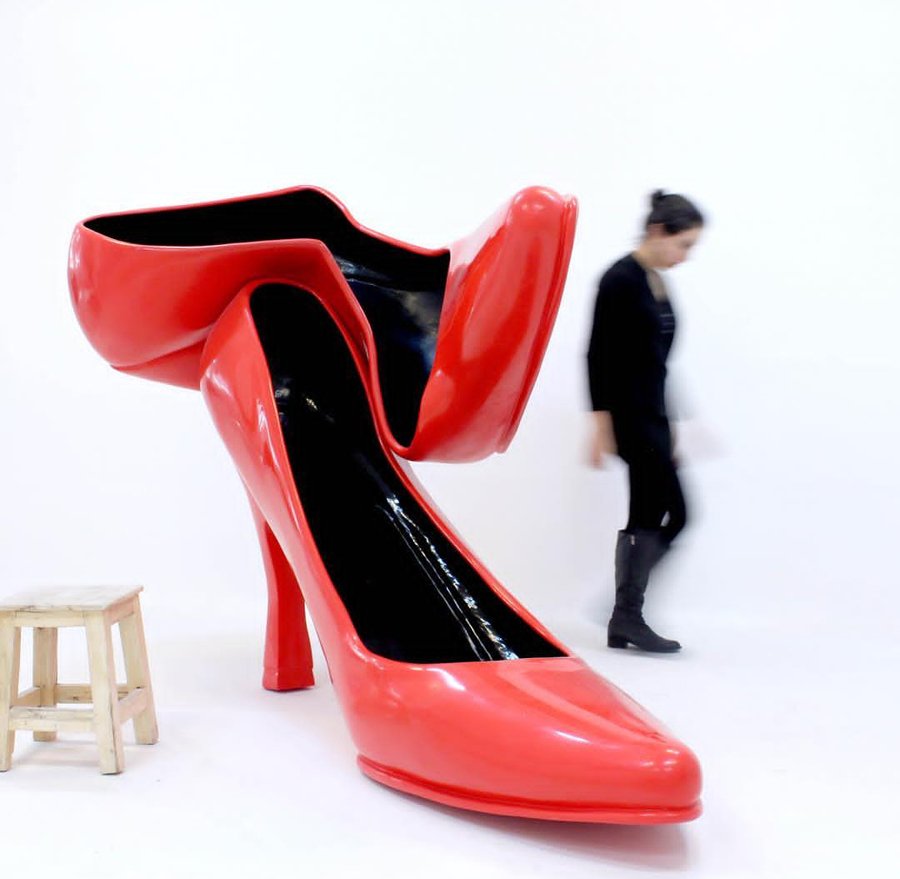
For example, the idea for the deformed high-heeled shoes came to me one night after returning from a party. I felt as if my shoes were tired and didn’t want to be worn again. They can be a symbol of ourselves: under the pressure of society, tradition, religion, family, and rules, we distort from our original form—yet, we still want to preserve beauty and strength.
Emaho: How do mythological archetypes, particularly Jungian symbols and Iranian stories, inform specific sculptures or installations in your oeuvre?
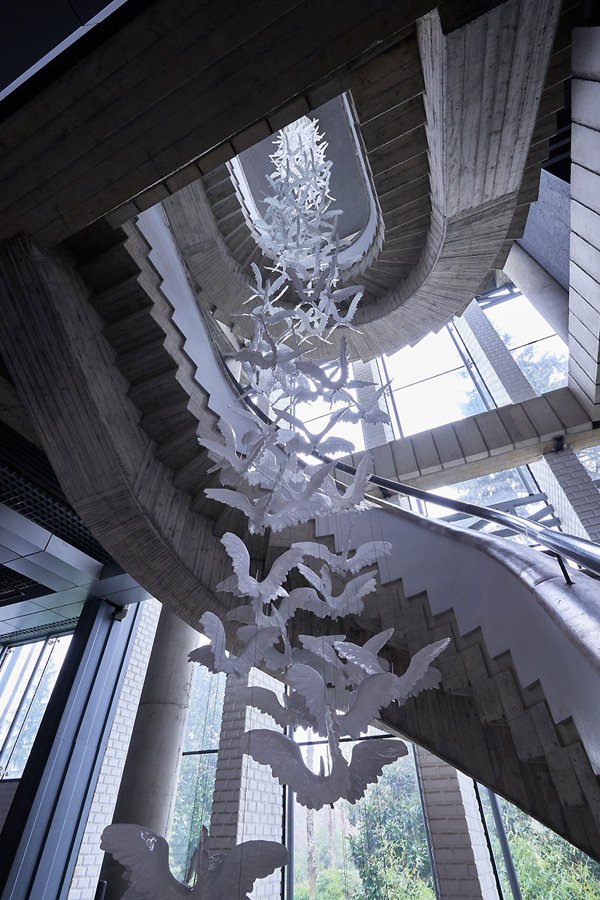
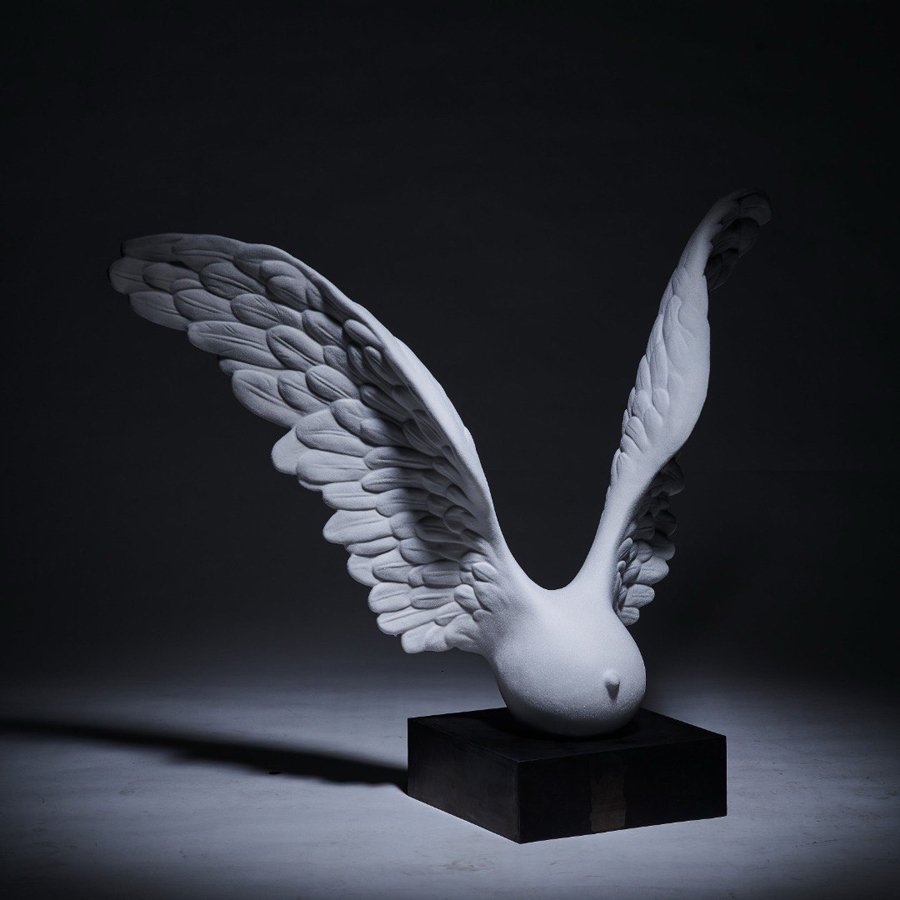
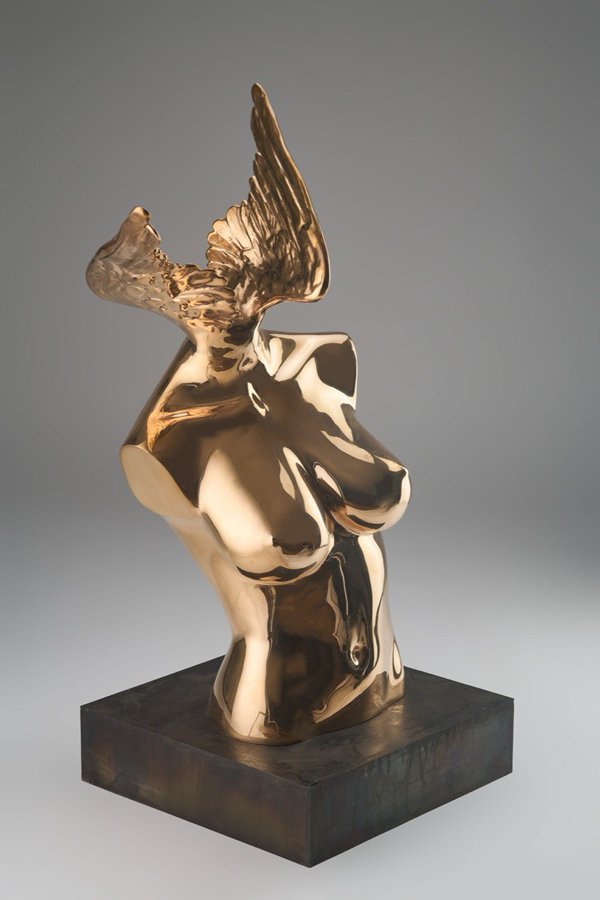
NS: My sculpture ‘Flying’ was directly influenced by Jungian symbols and mythology. It was made from the form of a breast (anima, the feminine psyche of women and men) and wings (animus, the masculine psyche of women and men). It represents the anima and animus within us, brought into balance.
Emaho: Has your work shifted in response to contemporary issues or personal events in your life? If so, can you share an example of how your process and focus evolved?
NS: Yes. My works are often shaped by my reactions to my surroundings. A small stone on the roadside might capture my attention more deeply than major political news that shakes the world. But these influences rarely appear directly in my work. Whatever affects me settles in layers within me and slowly reveals itself through the work.
Emaho: As a member of the Iranian Sculptors’ Association, how have collective or community experiences impacted your development as an artist?
NS: It hasn’t affected my artistic process, because I usually work alone in my studio, and I don’t have pleasant experiences with collective work.
Emaho: Are there current or upcoming personal projects or collaborations you’re particularly excited about? What directions would you like to explore in the future?
NS: Recently, I printed a limited underground edition of my writings from the past six years in Iran. I want to explore more projects based on writing and video art.
Emaho: What advice would you give to emerging artists—especially women—who want to transform personal stories or social issues into powerful visual art?
NS: To work with confidence, strength, and without giving in to censorship. The energy, time, and love we put into the work never remain without result.