Emaho: Can you share a little about your early life and how your surroundings influenced your path toward becoming a painter?
Reem: I grew up feeling that there wasn’t enough art around me, so creating became my response to that feeling. The simple childhood things, cutting paper, making collages, collecting small objects still shape the way I approach my paintings today.
Emaho: When did you first discover your passion for painting, and what drew you to this form of expression?
Reem: It started as a hobby, but the moment I noticed how quiet and peaceful my mind felt while painting, I knew this is what I’m meant to do. I feel most myself while painting, and it’s usually the only place where everything just makes sense. I’m honestly obsessed with the process of turning what I feel and think into something I can physically look at.
Emaho: Your Palestinian identity and lived experience in a conflict zone add a profound depth to your work. How do these realities shape the themes and emotional landscapes of your paintings?
Reem: As a diaspora Palestinian, there’s a constant search for things that remind me of home. That sense of distance, longing, and holding onto grey memories shapes the emotional
world of my paintings. I feel the need to preserve moments, feelings, and objects that feel like they’re slipping away.
Emaho: What personal memories, cultural elements, or artistic influences have played a meaningful role in shaping your visual language?
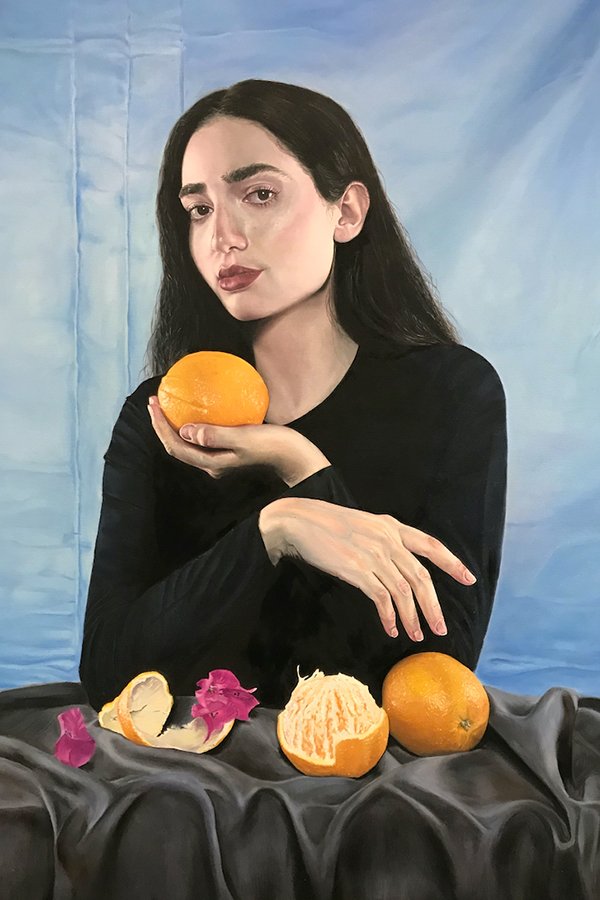
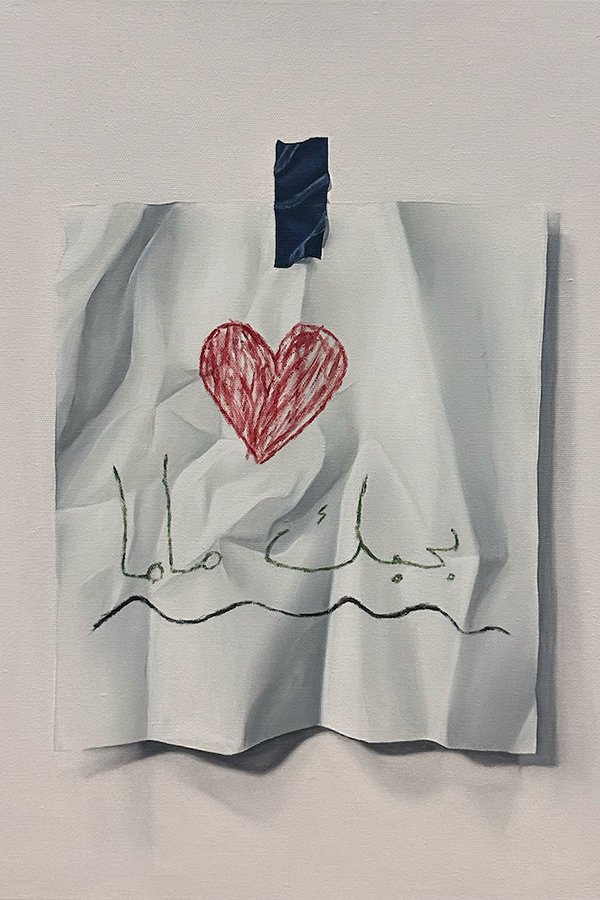
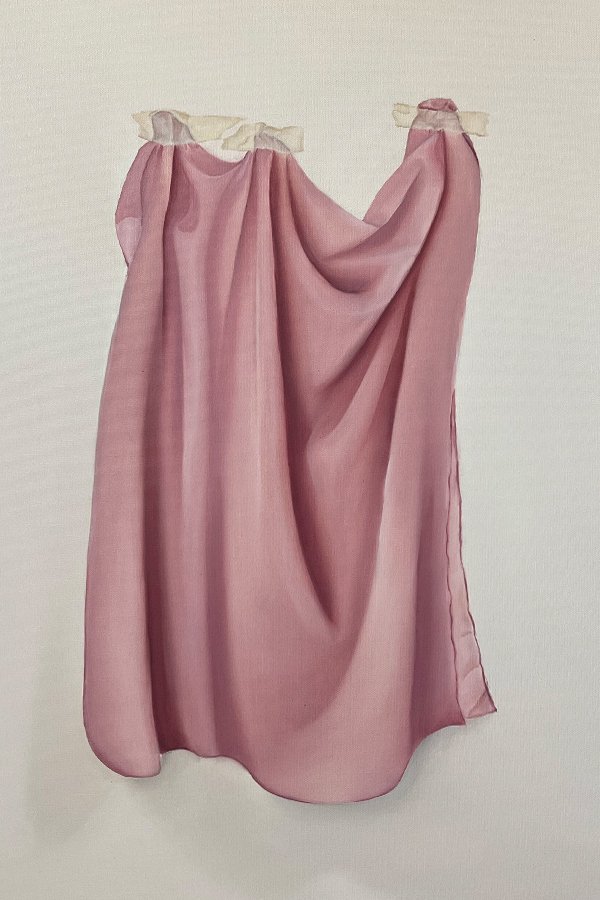
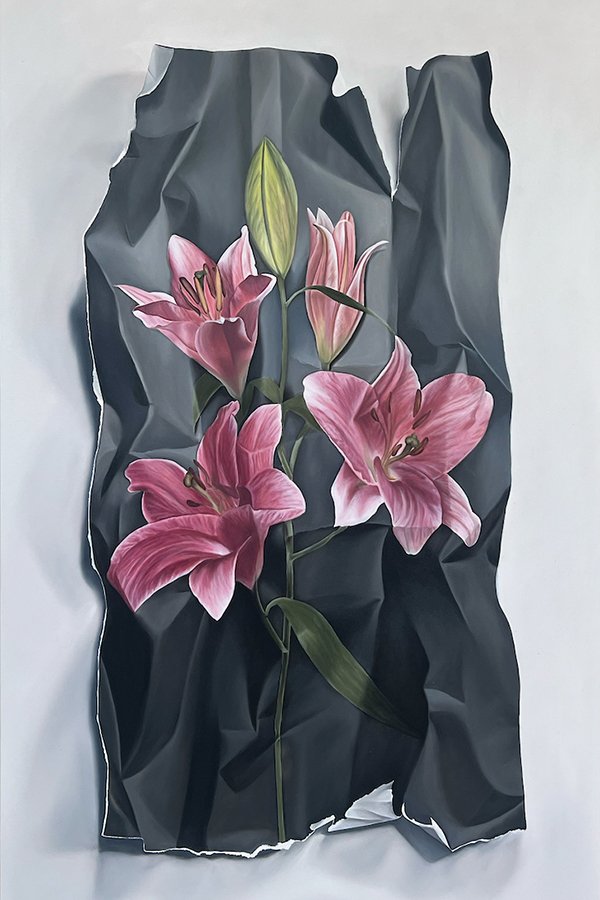
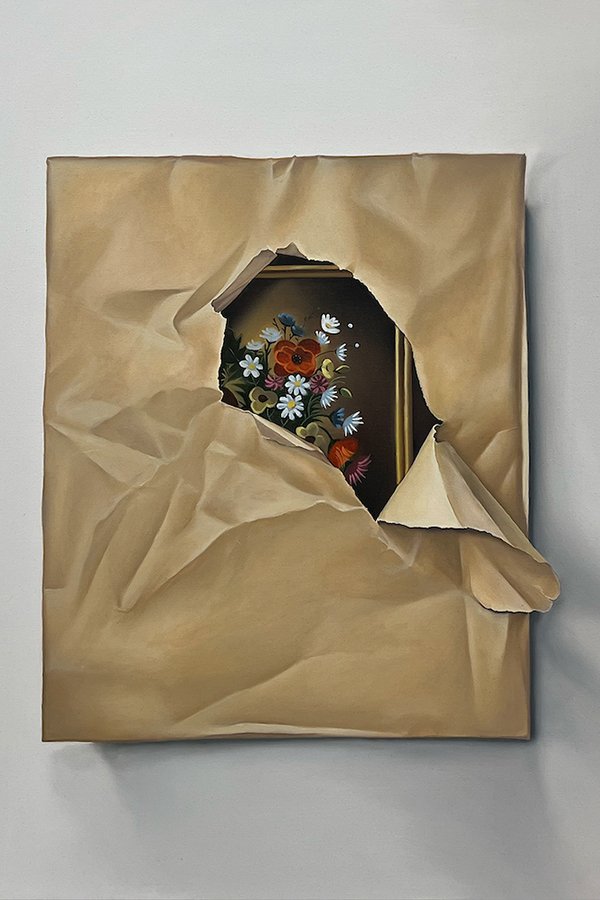
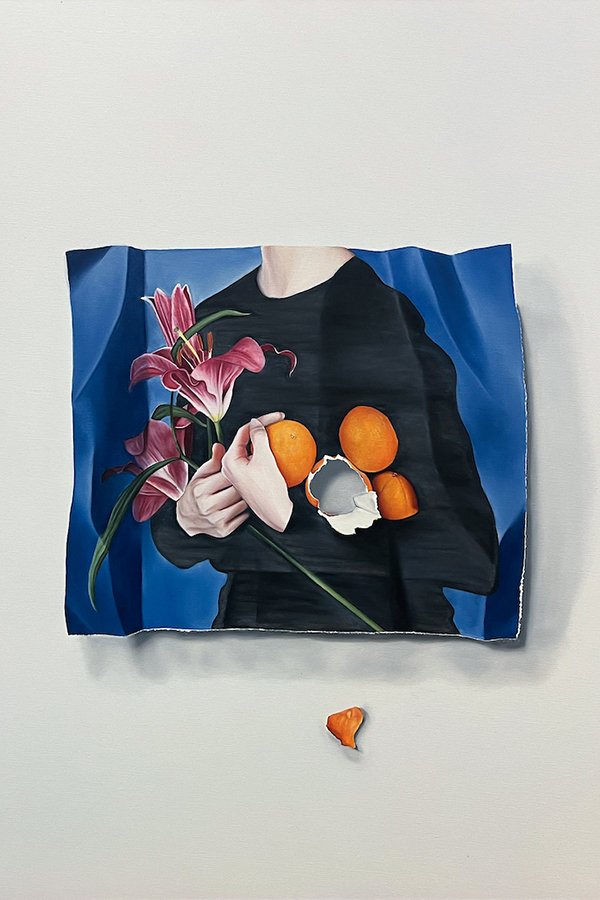
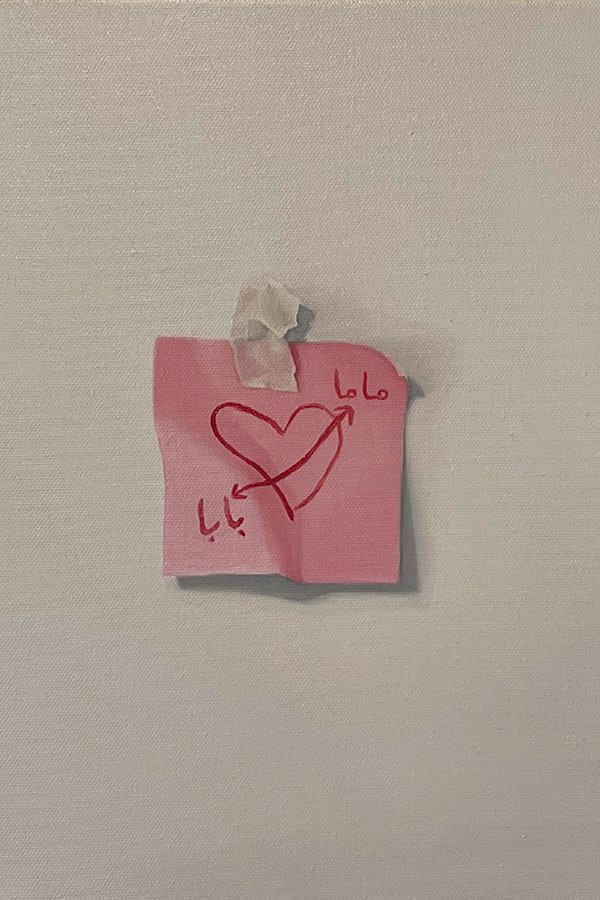
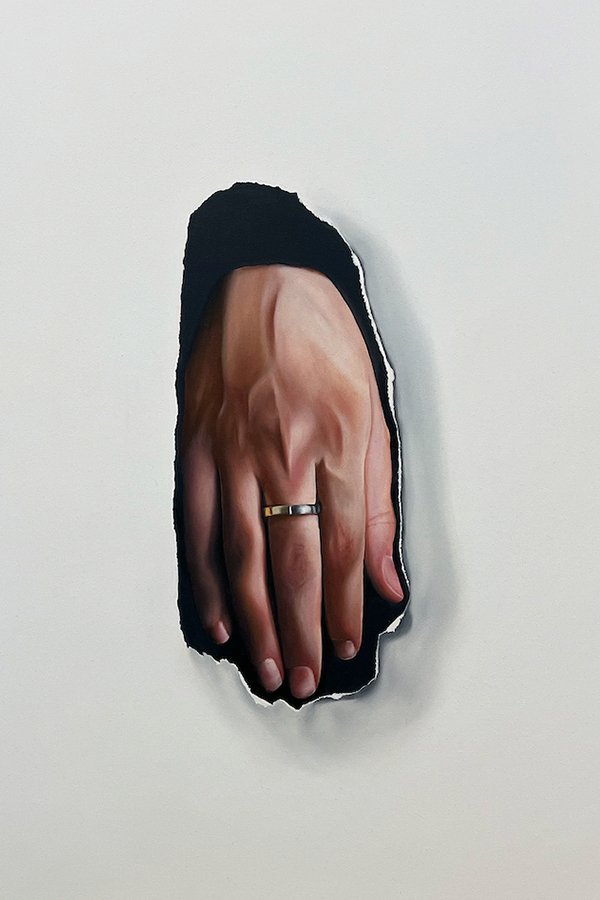
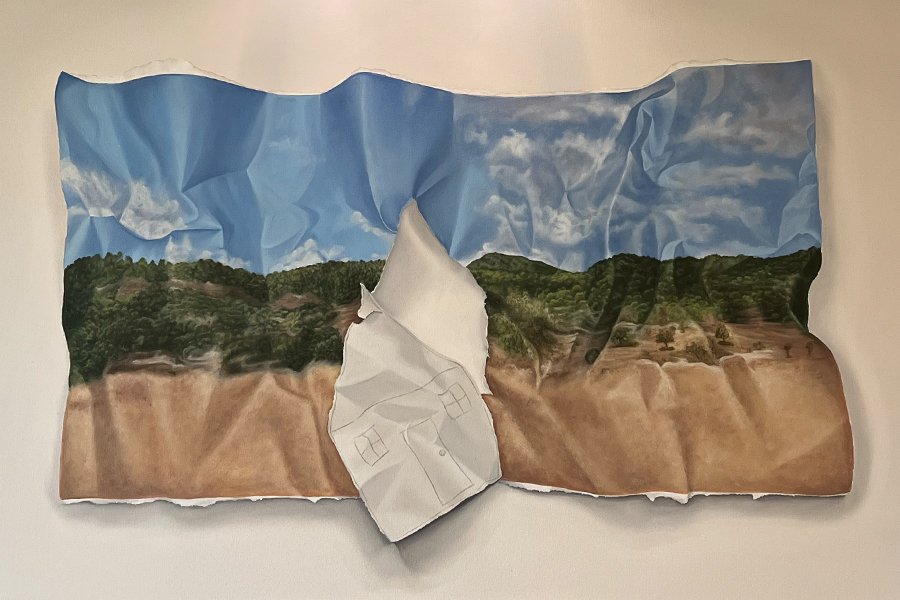
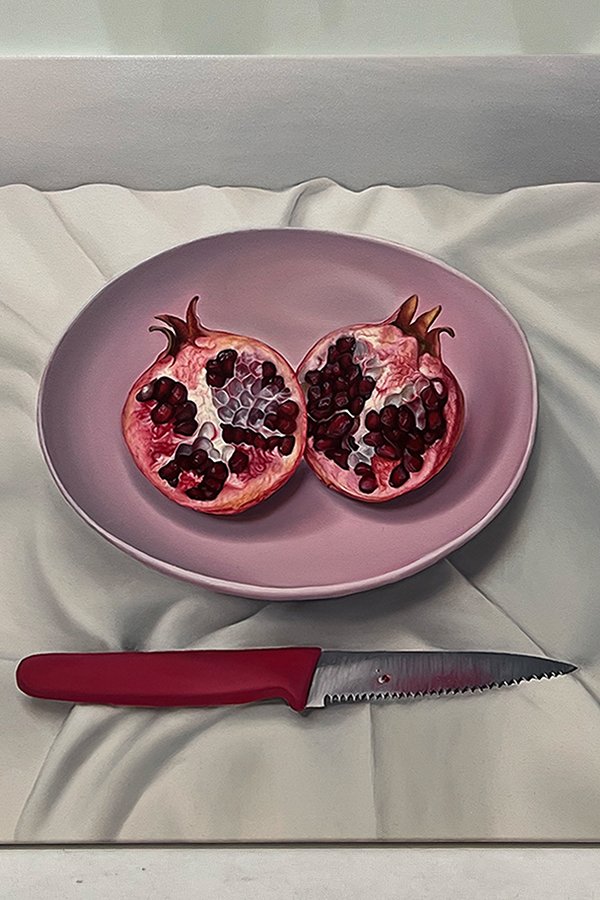
Reem: Something shifted in my artistic journey when I saw a drawing that had crying trees made by a Palestinian child. I felt a deep connection to it, and it led me into a whole series of trompe-l’œil paintings I had been wanting to create for years.
Emaho: Your paintings communicate powerful, often intimate emotions. How do you transform your inner experiences and the world around you – into visual narratives on canvas?
Reem: Through intention. Every element, color, and detail comes from something I’m feeling or remembering. Sometimes it’s as simple as ‘I feel like painting the sky today,’ and
only during the process or even after I’m done with the piece – I realize why I was drawn to it. I sit with the emotion first, then translate it slowly into a visual form without overthinking the reason behind it.
Emaho: Has creating art helped you process or communicate complex feelings related to belonging, displacement, or resilience? If so, in what ways?
Reem: Absolutely! Creating art feels like therapy sessions to me. The meditative act of painting gives me the space to release emotions without needing to explain them, while staying fully present.
Emaho: What do you feel makes painting a uniquely expressive medium for telling your story, compared to other forms of communication?
Reem: The medium I use is only part of the process. It’s slow, patient, and intentional, and that mirrors the way I would like to describe myself. The discipline and the time it takes for the vision to appear layer by layer all become part of the experience. Painting with a medium that feels like melted butter needs precision and practice, and there’s something really satisfying about that, I just love it!
Emaho: In your work, how do you engage with, reinterpret, or challenge existing narratives about Palestine and its people?
Reem: I focus on the emotional moments that come with displacement. I try to express what that experience feels like on a personal level, using illusion as a method to reflect how unstable and fragile perception can be.
Emaho: As an artist, how do you see your role in contributing to wider cultural or political conversations—both within the region and globally?
Reem: Personally, I think art is a form of resistance. It’s a way to communicate and send messages without having to speak to them. My role as an artist is to create work that hopefully resonates and connects with others.
Emaho: How do you maintain emotional clarity or grounding while working with themes that can be deeply personal and painful?
Reem: I don’t. I just do it. Whether I’m feeling low or at my highest, I still feel the need to paint, like I’m meant to be doing it. The strongest pieces I’ve made were created when I was at my lowest, and I never feel the need to control or maintain how I feel. I don’t try to change the emotion, I just paint through it.
Emaho: Looking ahead, are there new themes, techniques, or approaches you are excited to explore that may further expand the emotional reach of your work?
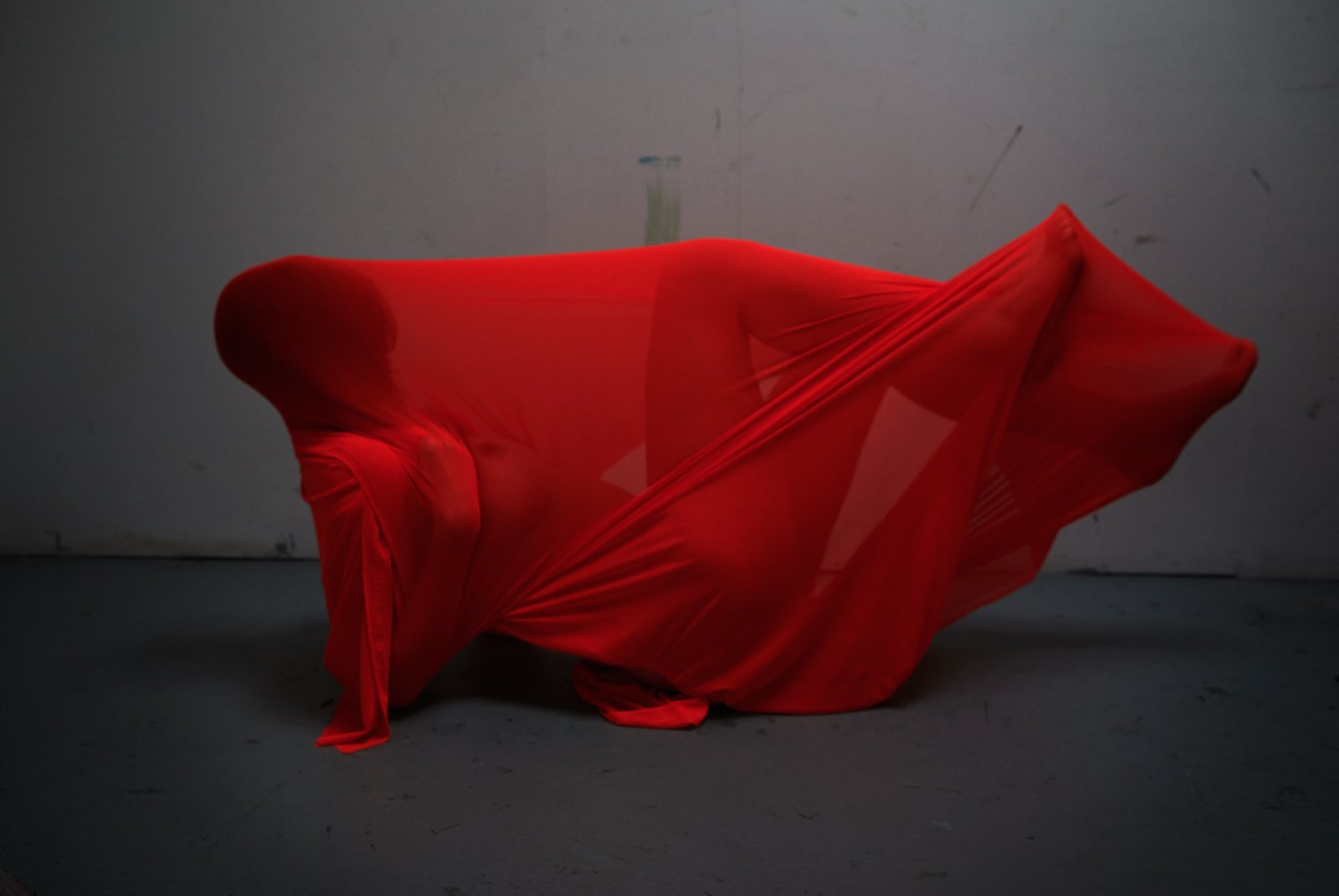
Reem: Actually, I’ve been creating paintings using a limited palette, just two colors – red and white. It started as an experiment to see how much depth I could create with only two colors. Now I’m excited to take it further and work on larger pieces to see how far I can push this limitation.