Emaho: You were born in Blackpool, did your BA in Fine Art at Leeds, and then went back for an MA in Art Gallery and Museum Studies before working as a museum registrar. Most artists avoid that side of the art world. What did you see behind the scenes of a museum, in the paperwork and the handling and the storage, that made its way into your sculpture?
Emii Alrai: I saw and learnt so much. One of my first jobs was to measure gun calibers, and so I found myself looking into the barrels of once used weapons. I got to spend so much intimate time with the past and present, and was encouraged to be curious. I think museums create a space where histories can acquire a certain sheen. Back of house is different, there you will find a lot of rot, questions in files, strange things in vials, the trace of organisations which disappeared whilst borrowing an object the museum owned. It is a place of meticulous care and order, and at the same time a place where the lives of objects leak out of cupboards and files and shelves. All the objects always felt itchy, like they knew they were being held and preserved away from the final destination of death.
You understand the permanence of object power and the authority of ownership. Sometimes it was very human, and sometimes it was cold. You read files of people whose objects are acquired, some who are thrilled an heirloom gets to have a second life in the company of other objects, others who want their objects back and regret giving them to the museum. Its quite anomalous as a process I think, that once an object enters the museum by acquisition, it is extremely difficult to get it out again. Even when the object is a tattered, forgotten husk of a thing laying in a box behind many others, it is still property.
I think my sculptural work speaks to this, giving these parched crumbs and fissures that evade conservation a voice. I am interested in hierarchies of display, who owns and who gets to see, and who imagines. In giving these objects voices perhaps, or different modes of display, comes the urge to also banish the rules and regulations of the conservation world of museums. In the studio, I am an evil registrar, one who relishes in the smashing of things, the wretched materials of our present that refuse stability, and the abolition of measurement. I still wonder if much of my work is so large due to my dislike of rulers and measuring tapes.
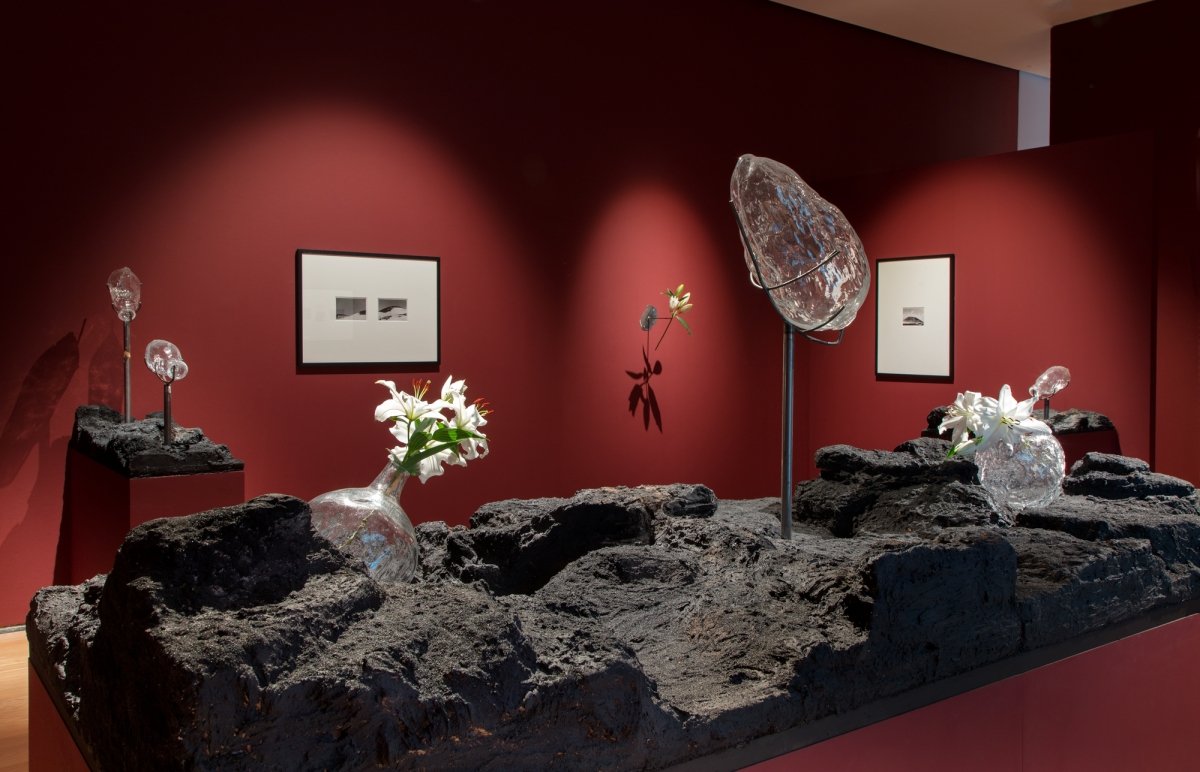
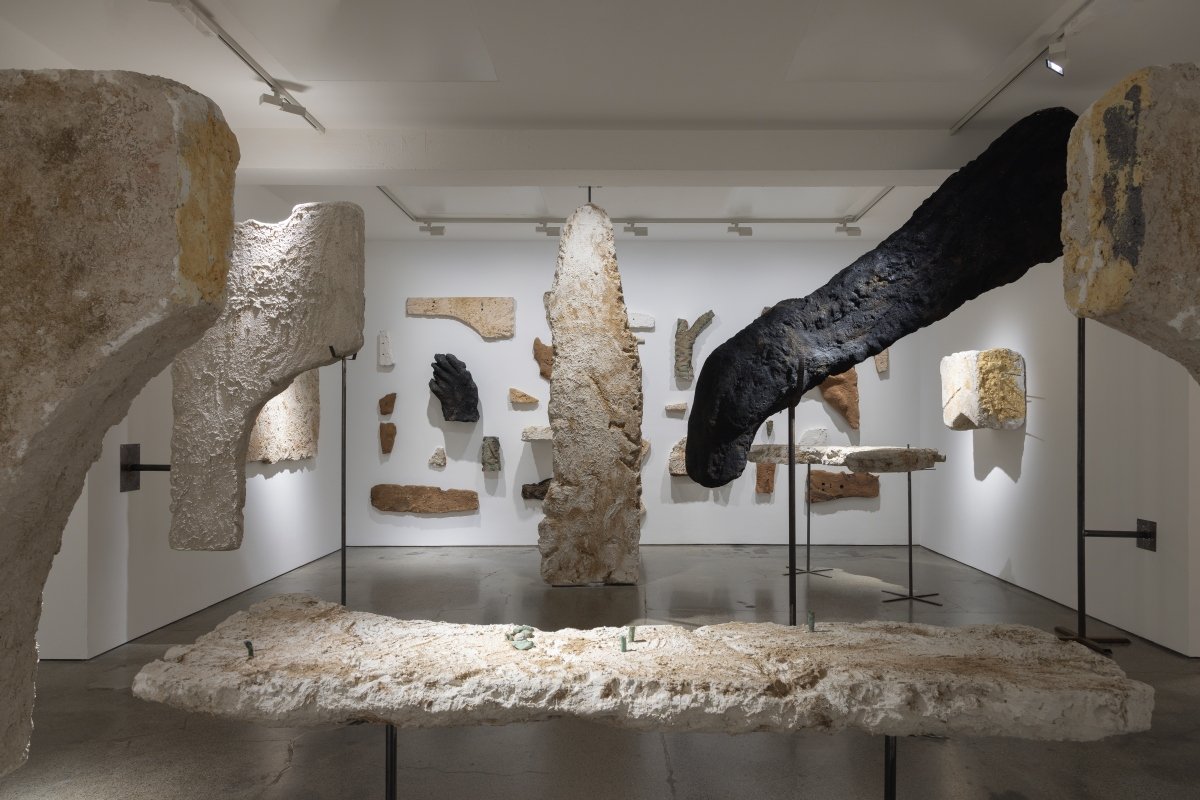
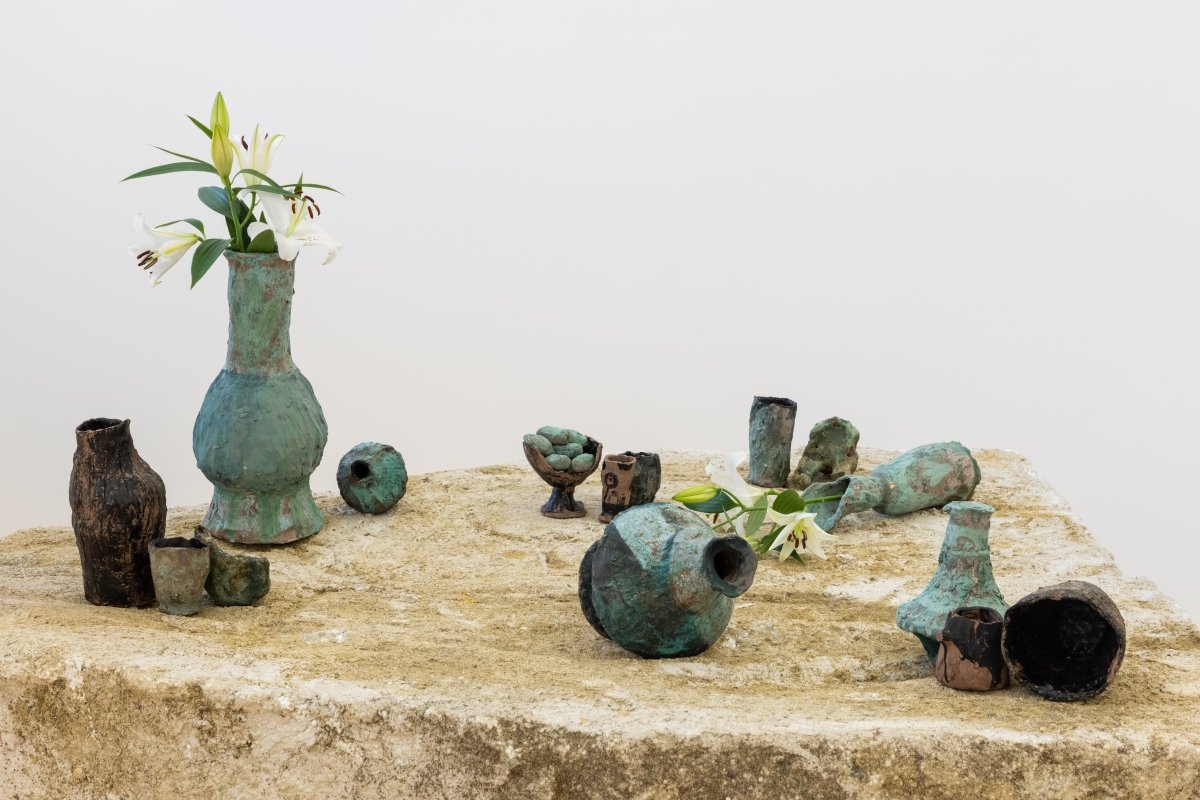
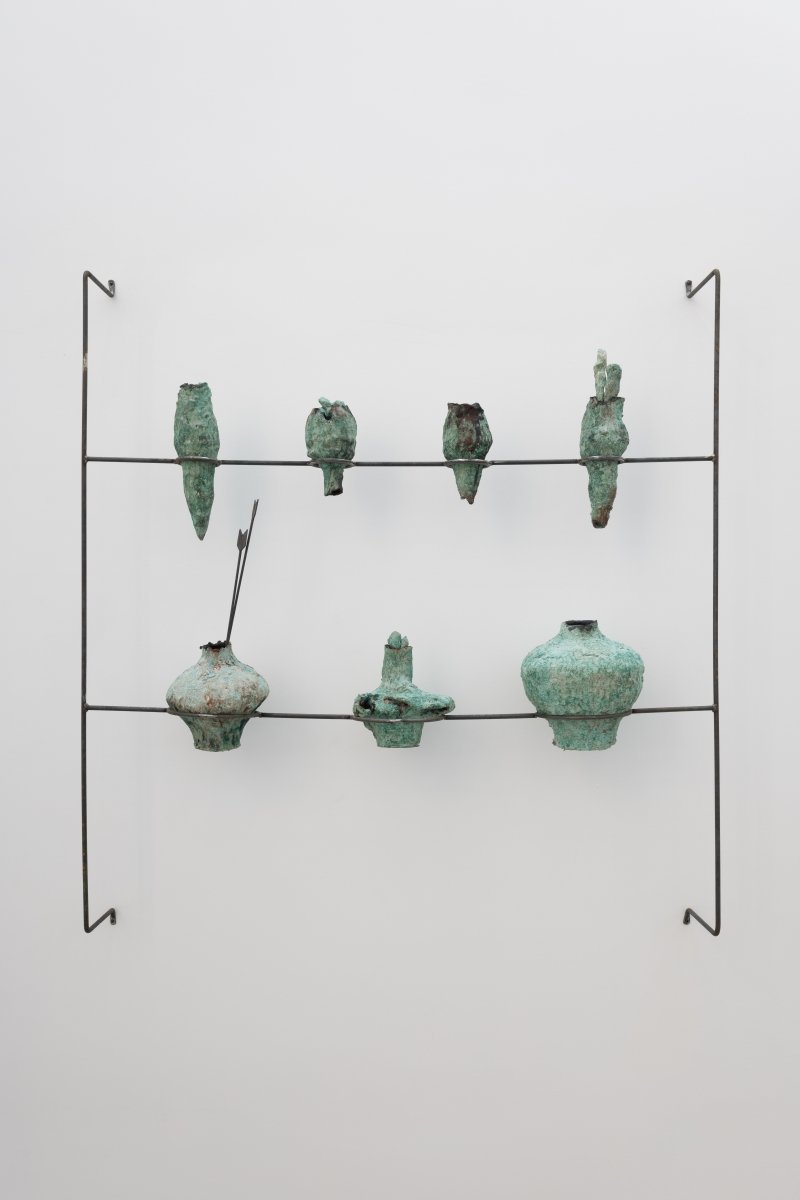
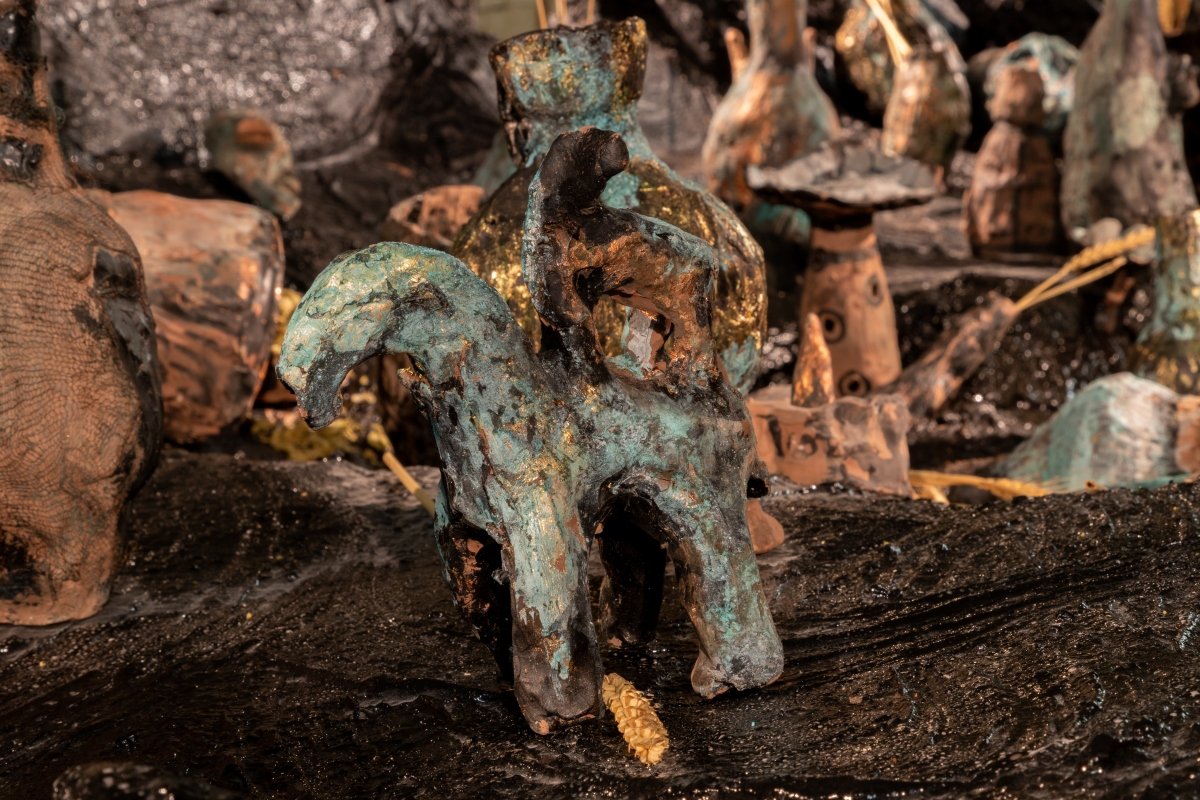
Emaho: Your sculptures are built like forgeries: hand built clay vessels patinated to look ancient, plaster and gypsum, sand, tar, steel braces and landscapes carved out of polystyrene. When you’re ageing something to look like it’s thousands of years old, how do you know it’s convincing? Has anyone ever mistaken one of your pieces for the real thing?
Emii Alrai: I think the works dance between reimagination and mimicry, playing with the ways we understand and read historical objects, and history itself. Conviction isn’t necessarily found in the accuracy of the material, but in the energy the object fosters, how it takes on the trace of a body. Materially speaking, I think the work is convincing up until the point you really start to lock in and scrutinise it.
I find that when I overwork a piece, it’s usually because I’ve started to focus too much on detailing. Suddenly, lines become tight, or you find yourself replicating a predetermined image of what something ancient should look like. I think the most convincing works are made with a kind of fervour, without too much precision. You can see the energy of the hand impressed into the clay, or in the daub marks of the patina. There’s something about that immediacy that allows the object to inhabit a space between the imagined and the historical.
I choose my materials very specifically. My simultaneous love and hatred of polystyrene comes from the fact that it allows me to achieve scale, but is also a product of oil extraction. I’m fascinated by it, a material derived from an ancient, organic substance that has fuelled so much destruction, war and greed. Petroleum itself comes from the remains of organisms that lived millions of years ago, yet from this deep geological time emerges this synthetic, deathless material, which now occupies so much of our environment and even our bodies through microplastics. I think there’s a conviction of time held within that material language, too, which creates a kind of portal through which to experience the work as historical. Many people tell me they’re immediately reminded of the ancient past when encountering the sculptures, but also of some strange future. I’m not sure anyone has ever actually mistaken one for the real thing, but people often think the polystyrene forms are made from real stone and assume I must be absurdly strong, which is quite fun.
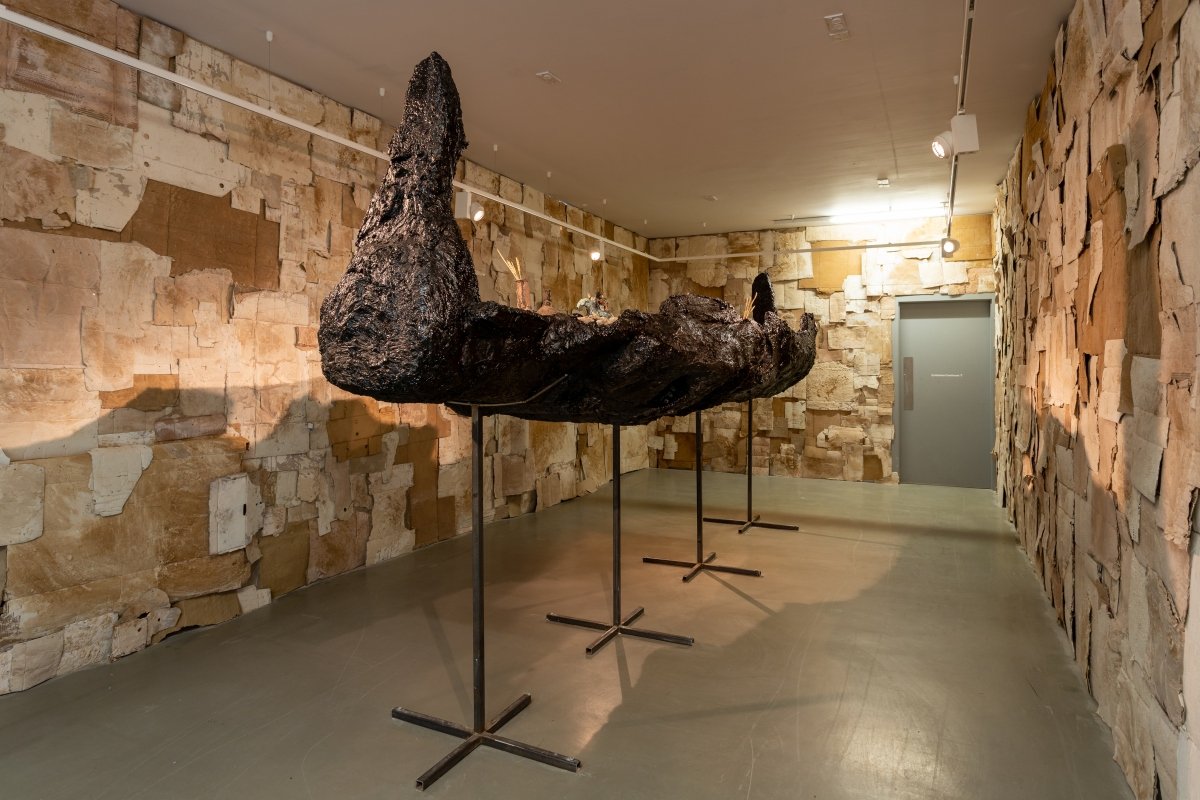
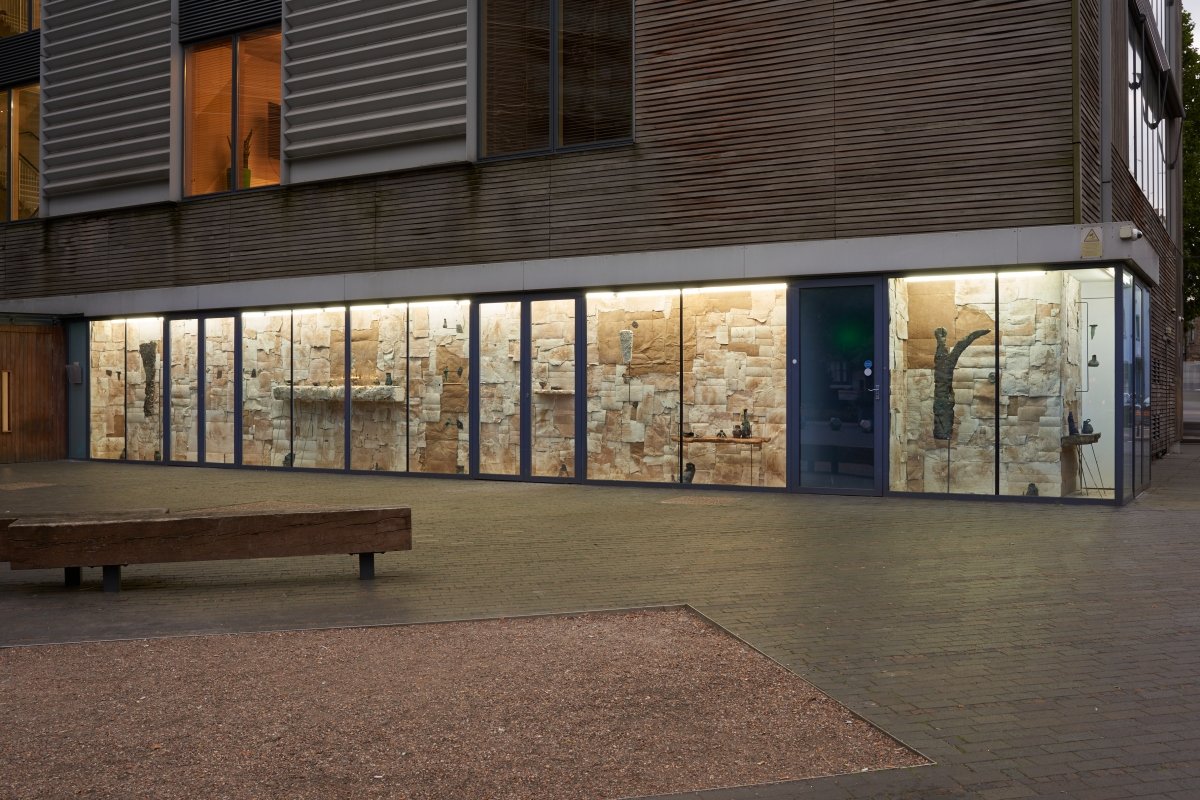
Emaho: Tutelaries, your first London solo show, was at VITRINE in 2019 and was open 24 hours a day, seven days a week. Your sculptures echoed ancient tombs, and people could walk past them on the street at any hour. What was it like to show work with no opening hours, no invigilator and no way of controlling who saw it?
Emii Alrai: I loved it. It was a perfect space for the work and I thought it spoke to the practice really well considering museum objects are under surveillance all the time. It was almost like a luxury shop display that had a certain beguile to it, but when one would approach you would find this installation with unnamed materials and formations. This way of exhibiting broke away from that hierarchy, it felt like that it lived at night on the street, both witnessing the happenings of the square and being witnessed at the same time, but also becoming a background to people’s lives. I wonder about the intimate moments people may have shared with it being caught off guard whilst waiting for a friend, or also being the background to friends walking to another engagement. It felt like a really alive installation for that reason, like it belonged to the outside world.
Emaho: As a Yorkshire Sculpture International engagement artist in 2019, you worked with community groups in Wakefield on the personal histories of refugees and migrants, linking them to cultural objects in local collections. The result ended up in a shopping centre. That same year, you visited Kuwait, and the artists you met there later came to Yorkshire. What did these exchanges teach you that the studio never could?
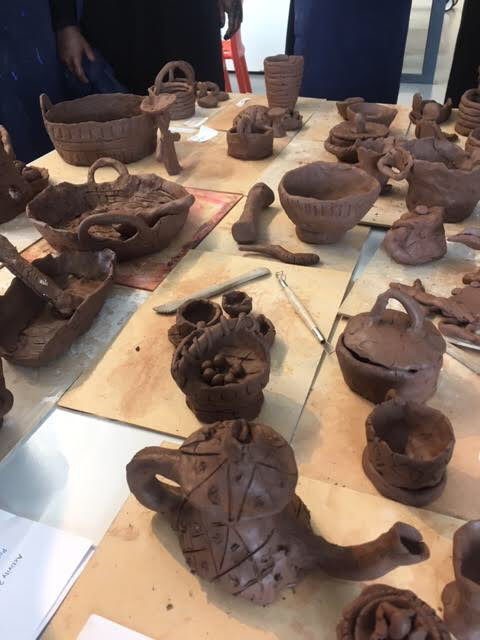
Emii Alrai: That not everything is about being isolated and productive in the studio. I learned very much from the amazing group I worked with and with Rachel Craddock and Kemi from Dominion, an organisation which specialised in English as a Second Language. I think these first exchanges of meeting people and listening and learning formed a very big part of the way that I work now, research which develops in conversation, through conversation and then into working closely with others. I feel you learn so much more and the process is much more invigorating. It was amazing to work with the group at Dominion and to host pure making workshops – we experimented a lot with clay, gilding, drawing and language. I kept every drawing the group made, then turned them into a curtain that formed the background of the unit. It was really nice to see that things the group had deemed as perhaps silly could also be given place. I also loved that when making clay, most people would make kitchen utensils as the first thing.
For the Arab British Center project in Kuwait, I was exposed to the first experience of travelling as an artist. It was wonderful, meeting people and seeing museums in Kuwait was illuminating, I particularly remember a project that the Amiricani Center had done where kids had interpreted objects from the Al Sabah collection and created an exhibition narrative based on their imagined ideas of the objects. It was really nice to see that the children’s experience was given agency over the objects. I think it set a real thirst for the possibility that you can travel for work, and collaborate and expand research and thinking with people who are in different geographies but thinking on the same axis. I would have never understood that if I was alone in the studio.
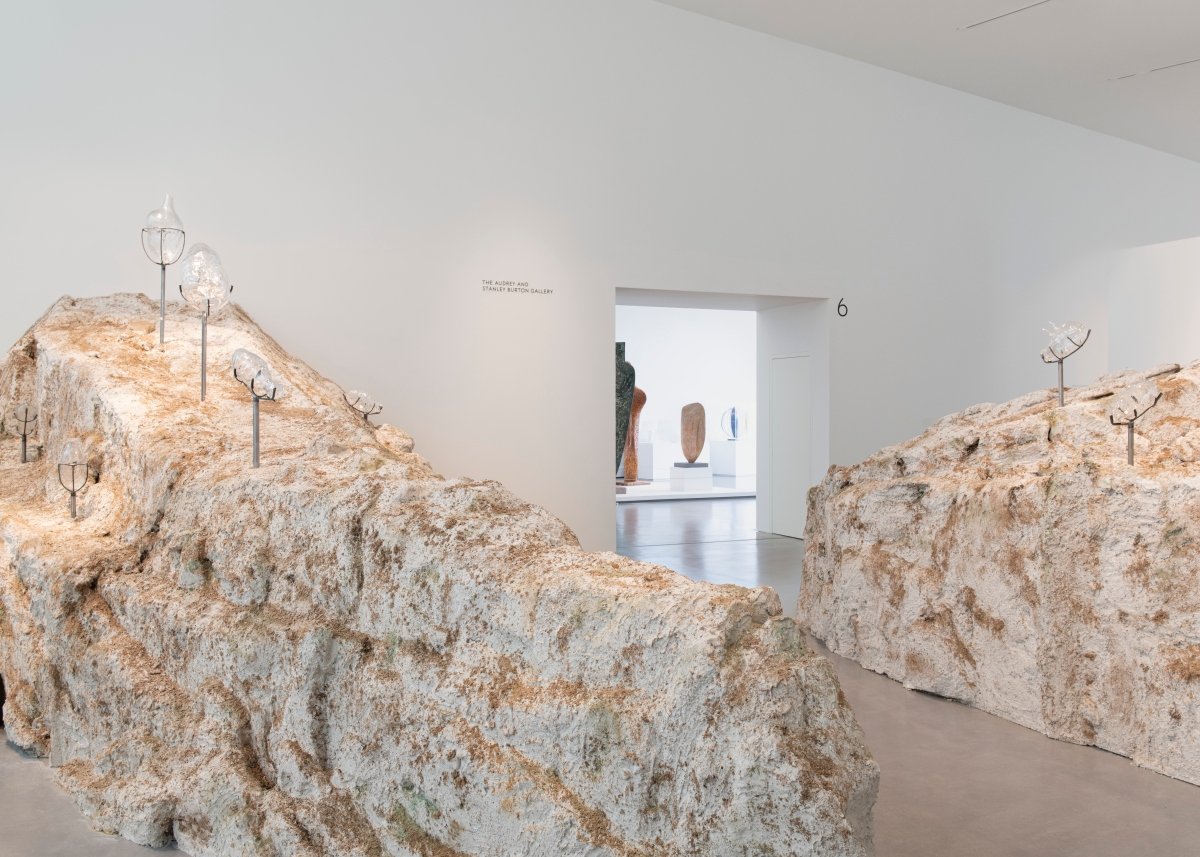
Emaho: A Core of Scar was your Future Collect commission with iniva and The Hepworth Wakefield in 2022, and you said you wanted to interrogate how we collect things. The work was acquired for Wakefield’s permanent collection. How does it feel to be collected by the very kind of institution you’re questioning?
Emii Alrai: It is peculiar. Part of me really likes the idea of works entering public collections because I know they might become challenging within those institutions. I also like the idea that some works can stop consistently entering the cycle of reappropriation in my studio, that traces of large installations can be caught and cared for rather than continually dismantled, reused or transformed.
The work acquired by The Hepworth was a fragment from a much larger installation. It’s nice to think that a part of that time can be held onto and re-exhibited, that something which was once part of a temporary, much larger environment can have another life. I suppose the difference is that I had the agency to establish the terms and conditions of its acquisition, and to think about how it might be cared for in the future.
There’s also a ghost of an accidental acquisition in the work: the faint shadows of the outlines of the three huge sculptures still remain on the gallery floor. I find that really interesting, that even after the works have left, something of them persists within the architecture. The idea of entering the very fabric of the museum in this way is alluring.
Emaho: The Courtship of Giants at Eastside Projects was your largest solo show at the time. It tangled together the legend of Gilgamesh, the Iraqi Lamassu figures held by the British Museum, medieval hunting arenas and Pre-Raphaelite wounds. The British Museum has also acquired your work. How do you carry that contradiction around with you?
Emii Alrai: I think it’s important to distinguish between how objects enter collections. The British Museum paid for my work through a contemporary, agreed transaction; the Lamassu were excavated and removed from Iraq through nineteenth-century British archaeological expeditions, within the power structures of empire. These are very different histories.
I was interested in the juxtaposition. In the BM touring show Drawing Attention , seeing my work exhibited next to a historical image depicting the excavation of the Temple of Ninurta created a conversation between two histories that might not otherwise have met. As an artist whose practice questions the British Museum’s historical collection strategies and modes of display, being able to enter into dialogue with those very collections is a rich experience. It allows me to think further about the institution’s systems of acquisition, display and authority, not from a position outside them, but through an encounter with the objects and histories that constitute them. The possibility of creating these unexpected connections is precisely what makes the relationship interesting to me.
However, an acquisition doesn’t necessarily define how my relationship with an institution develops over time. The museum’s recent removal of references to Palestine from displays exposes the infected bones of the institution – the questions about whose histories are made visible and whose are erased. Decisions like these undermine the reparative work the museum sector has been trying to undertake over the past decade attempting to address the colonial histories of their collections, rethink their relationships with source communities and acknowledge the politics of representation. I find it cowardly and shameful. Had these erasures been made at the time of the acquisition, I believe I would have made a different decision about selling the work.
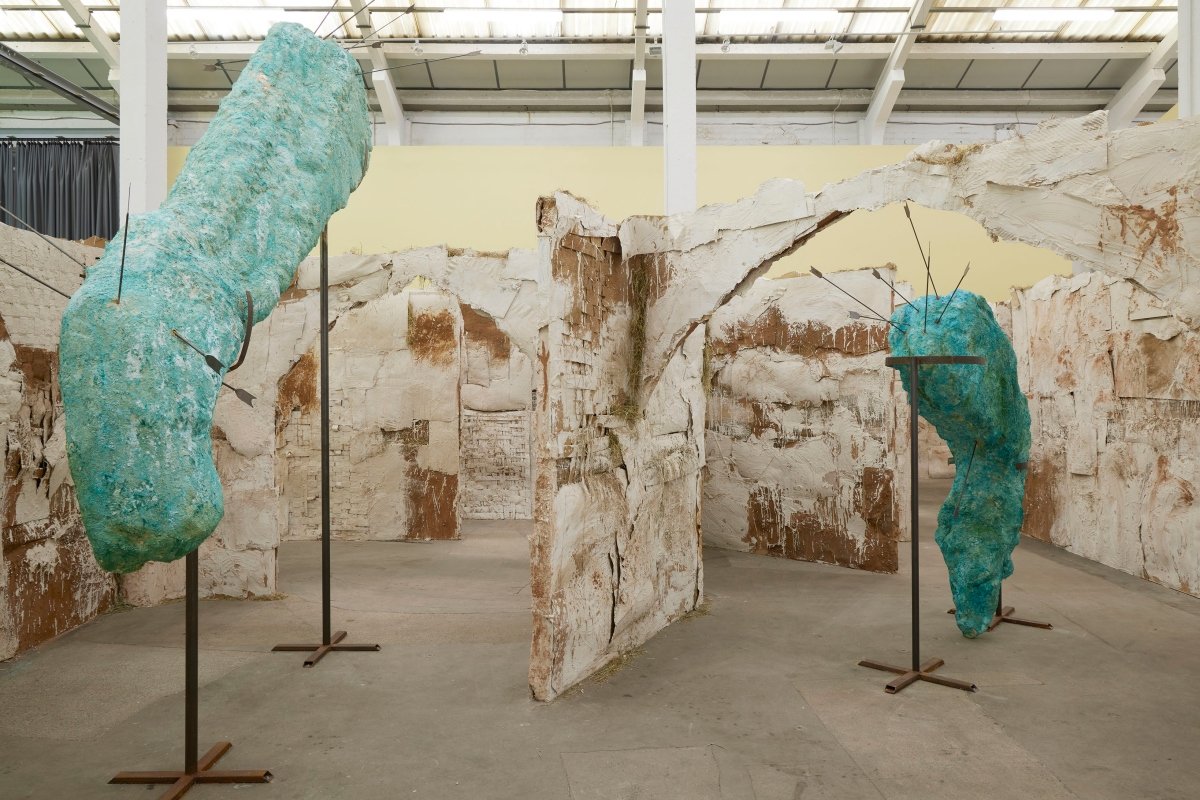
Emaho: A review of The High Dam described a sense of belonging through your family’s stories and oral traditions, alongside a feeling of being cut off from a shared past. It also described you piecing together history from fragments, to find a sense of identity in what’s left behind. When the sources are fragments, how do you know when you’re remembering and when you’re inventing?
Emii Alrai: I’m not sure the two are entirely separate, as I think memory is already a form of reconstruction. I find that it continually blurs at the edges until it becomes entirely imagined. I come from a long line of storytellers, and I think reinvention is part of the magic of a good narrative, whether through embellishment or reduction.
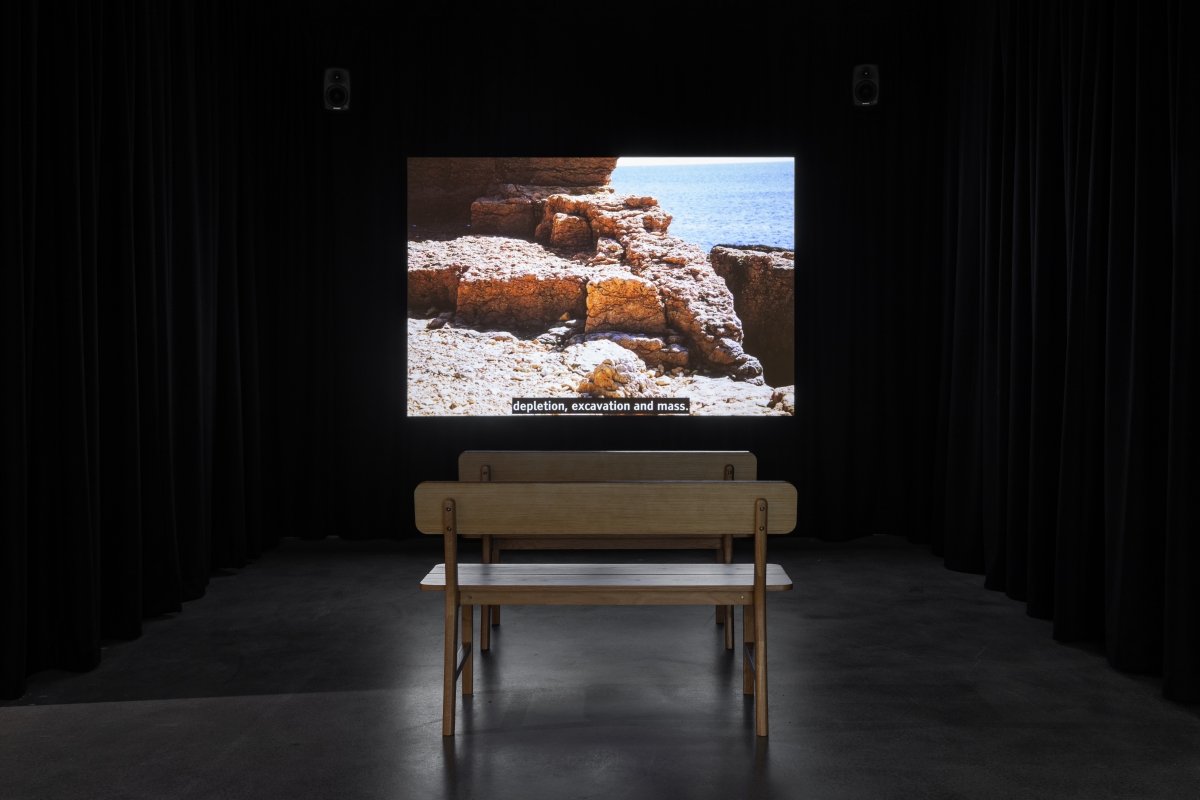
It’s why objects are so interesting to me. They are often a defined thing, even if only a fragment remains. The whole process of archaeology, particularly sherd diagnostics, relies on imagination to conjure an object’s past reality, status and use from what survives. It is impossible to reconstruct something entirely accurately, particularly when the object is incomplete. We fill in the absences, and over time we begin to believe them as truth.. I love Mahmoud Darwish’s writing on memory and nostalgia, where he describes memory as an “expert selector”, choosing to beautify a scene while omitting its pain. He gives the example of memory removing a smashed window from a nostalgic street scene and how memory remembered it as unbroken.
What I was exploring in The High Dam was the idea of inherited nostalgia, something even more blurred than memory. It is a feeling for a past you haven’t necessarily experienced yourself, but which has been passed down through family and language. It feels more like a texture, a sediment or trace you can feel in your own body, but something without a name. I feel that, in the exhibition, I was trying to weave a basket out of that shadow. I don’t think the work is necessarily about recovering a definitive version of the past. Instead, I’m interested in what we do with the fragments we inherit, and how imagination allows us to build relationships with histories we can never fully access. Those relationships aren’t only about looking backwards; they can also become a way of imagining and constructing a future.
Emaho: You’ve done residencies at Triangle Astérides in Marseille, in Calabria, at the Villa Medici in Rome and at Wysing Arts Centre, and in 2025 you received the Assetto Fellowship at the Warburg Institute, a research institute. In Calabria you saw first century Pompeii glass perfume vessels in a Naples museum and later modelled Tear Jar on them. What’s the difference between making work somewhere with a deep archive nearby and making it in your own studio?
Emii Alrai: My ideal working scenario is to have sustained time out of the studio and in archives, libraries and museums. I tend to read and gather information from all sorts of books, following traces in footnotes and ending up somewhere completely unexpected. I find it incredibly generative to immerse myself in reading and writing. It feels like gathering and building up energy, which at some point you have to let out in the studio. That’s when I feel a good flow in the making, and the studio becomes a really enjoyable place to be.
I sometimes find that relying only on what I already carry within myself to make work from can feel limiting and not generative. As someone who world-builds, I find it important to spend time in landscapes, whether that landscape is an archive or the natural world. I find I have to observe and try to understand a place before you can begin to imagine its alternative or extension.
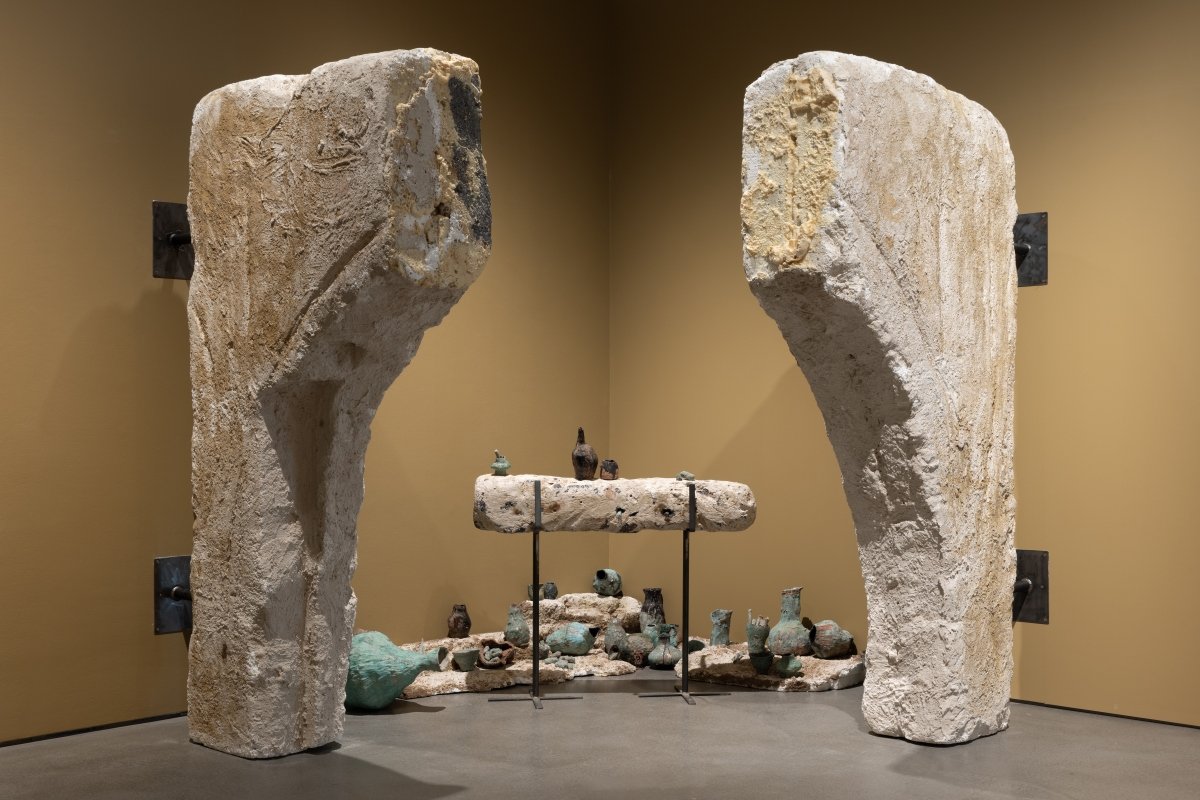
Emaho: Between 2016 and 2019, you co-founded and organised Nocturne, an artist-led crit group in Leeds, right around the time you graduated. Most young artists wait for an invitation into a room, and you built the room yourselves. What did running Nocturne teach you about giving and taking criticism, and does any of it still shape how you talk about your work today?
Emii Alrai: We really just loved doing it at the time. We felt frustrated that there was so many art schools in Leeds but no way of meeting all the arts students, so the crit group came out of a want to expand making work into building a community. I think sometimes criticism can be a really wonderful way to think through a problem, but I think that it is how criticism is given that has to change. So many arts students have had experiences where you would end up in tears, or being told you aren’t good enough, or the work is awful, which I feel is quite a dismal and archaic way of arts education. It also felt so old guard, in the sense there was a power dynamic created that didn’t fit how we wanted to make work.
Nocturne was a place to say hey! We like talking about ideas and making, thinking about solutions and references but also we don’t want to be mean and break you down. This fostered a much better environment to encourage making and to also use criticism constructively, as well as bring people together. It taught me a lot about empathy, how to ask difficult questions, how to take the work seriously while also with a pinch of salt. I hope that there is still much of this ethos in how I talk about my work today.
Emaho: In July 2025, Fragment and Form at the Henry Moore Institute in Leeds and Capture at Towner Eastbourne opened a little over a week apart, and the same year brought River of Black Stone at Compton Verney and the Warburg fellowship. You’re also a writer. After a year like that, what does the next one look like, and is there something you’ve been waiting to make that you haven’t had space for yet?
Emii Alrai: It was a full year. I am looking forward to working on a publication of my work that has been on hold for a while, and I would like to do more writing. This next year will see a few projects and commissions, which I am looking forward to which have resulted in time spent looking at the UK’s oldest Ice Age cave drawings at Cresswell Craggs.
I have been researching and learning opera for a few years now as part of a quest to integrate it into the work, so perhaps this next year is where it will finally come to fruition. I feel it is a long process, but still very much something which occupies my mind a lot. In the meantime, I’m looking forward to seeing more sunsets.
Photos © Emii Alrai