Dopeadelicz: Asia’s Biggest Slum Meets Hip Hop

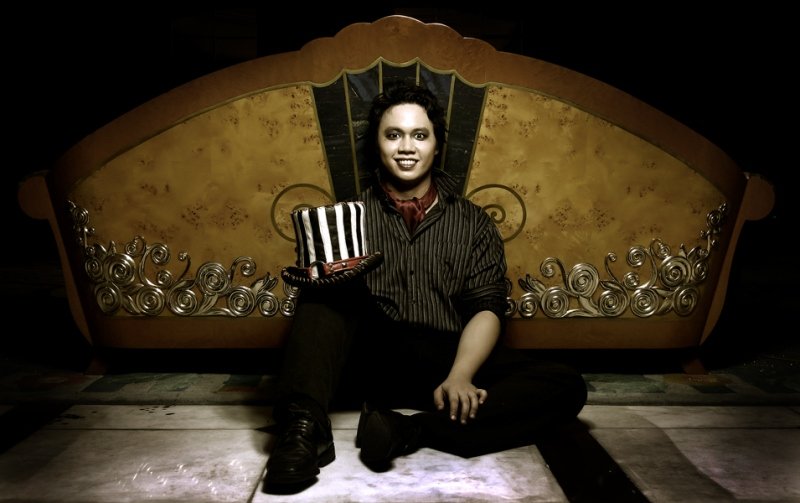
Dopeadelicz is the brainchild of Tony Sebastian, aka Stony Psycho. It was as early as 2007 when he had heard international rap artists and was interested in trying out the art form. Once he heard that there were crews in India, and especially in Dharavi where we live, he knew that he wanted to be a rapper

India – 

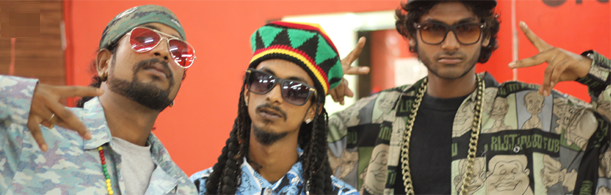
Dharavi has borne all sorts of notorious titles since the heydays of Mumbai city, but never did one imagine that a “Hip-Hop” movement will take birth here. DopeadelicZ, a documentary on the rise of the rappers Tony ‘Psycho’ Sebastien, Rajesh ‘Rac’ Radhakrishnan and Avinash ‘BenZ’ Benson, takes a dive into the labyrinths of Dharavi and digs out a a cross-cultural movement that promises to shake things up. On one hand you will find the typical ‘bambaiya tapori’ attitude being spouted out by most folks, but on the other hand, you have these hip-dressing, swag-carrying, pot-smoking, old-school hip-hoppers, huddled up in shady corners, spitting venom and wisdom alike with their freestyle cyphers.

 
Dopea
 

Their presence is limited but their influence is growing day by day. Children are singing their tracks and hounding them fanatically, like one would expect with celebrities. Locals are singing their more popularly appeasing tracks like ‘Ganpati Bappa Moriyanu Sollu’ and ‘Aai Shapat Saaheb, Me Navhto’ which reflect the changing tastes and times of what was once the underbelly of the city. They may be shacked up in matchbox houses, but their intent and desire is so enormous that their music is now attracting listeners outside of Dharavi.

 
Dopea 2
 

“If Honey Singh can make a track on four bottles of Vodka, then why can;t we drop a track – Four Joints a Day?” quips Psycho Tony. The desire to legalize marijuana is on top of their list of ‘things to rap about’. They detest drugs and alcohol, having seen its ill-effects in the society around them while growing up. Their belief is that marijuana is peaceful in comparison to any other intoxicant and recommend its usage over others (if one needs to use anything at all). But more than anything, it is their style and energy that is bringing them out on the forefront of the real ‘Indie’ scene.

Related Posts

Pooya Aryanpour: “The Beauty of Creation Lies at the Intersection: Where Tradition Meets Global Discourse”

Tehran-based artist Pooya Aryanpour, born into a legacy of Iranian intellectuals, discusses his homeschooled roots, passion for painting, and projects ...

Sunday-S Gallerist Peter Ibsen: “If I don’t understand an art work, I like to stay with it longer, read more, talk to the artist, and allow myself to be challenged”

In this Emaho Magazine interview, Sunday-S Gallery founder Peter Ibsen recounts overhauling his collection after a monochrome work defied interpretation, ...

#High #Higher #SUPERHIGH!

Germany –  Arte co-production explores nine ways to get high without drugs German artist duo Boris Eldagsen and Sabine Taeubner ...

Tsohil Bhatia: Deconstructing the Site with Performance Art

India –  An emerging artist with a strong emphasis on performative narration and form, Tsohil Bhatia’s art is for him ...

Diddo Velema : “I’m still enjoying my childhood!”

With over 15 years of experience as a designer, art director and conceptual artist, Diddo Velema’s achievement lies in breaking ...

Q: ‘It felt like love’

India –  Known for testing definitions and boundaries, Q is a uniquely transitional director filmmaker. His most recent picture adapts ...

Darius Devas : The Hippy Trail

Australia –  Never one to waste a creative opportunity, Australian filmmaker Darius Devas seized the chance to travel to Anjuna Beach to ...

The Cambodian Space Project: Jungle Boogie

Cambodia –  Hailing from different backgrounds across Europe, Cambodia and Australia, the Cambodian Space Project engages deeply in cultural treasure ...

The Mad Hatter – Philip Smiley

England- London based artist, Philip Smiley did his MA in Fine Arts at the School of Visual Arts, New York. ...

Showing Slide 1 of 10