David Favrod: GAIJIN

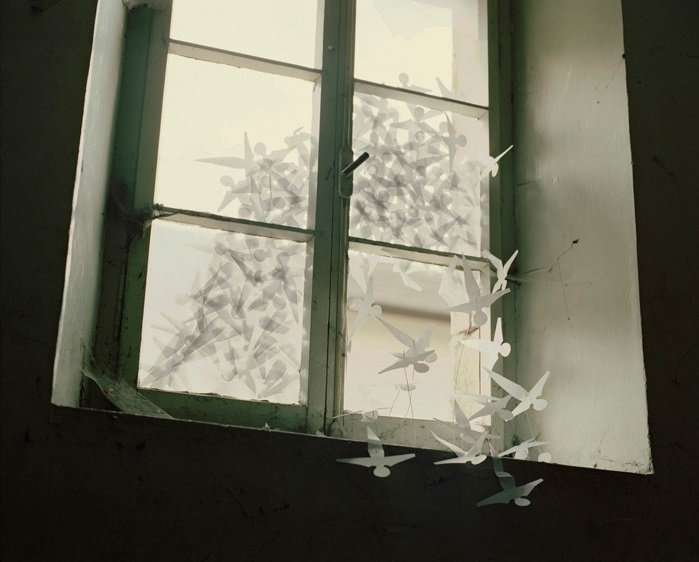
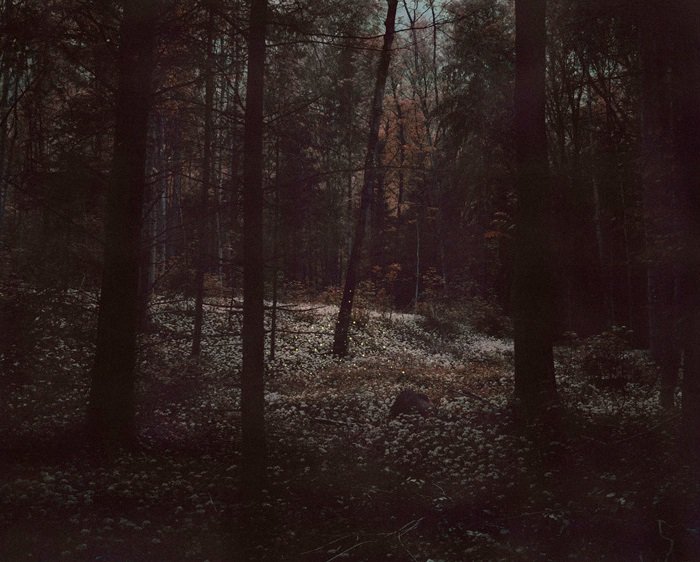
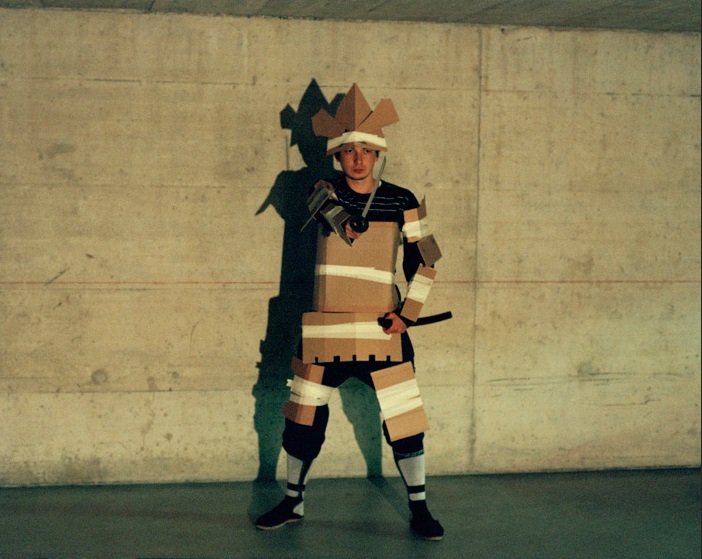
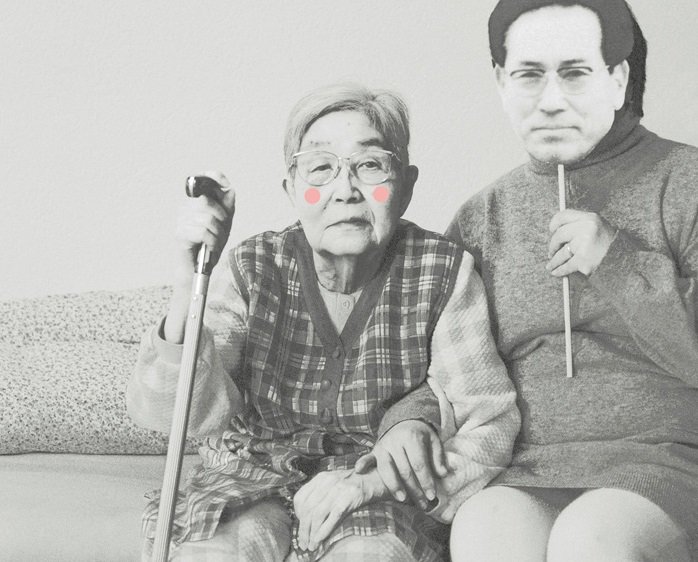
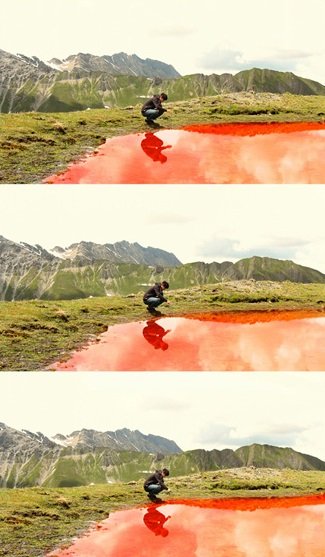
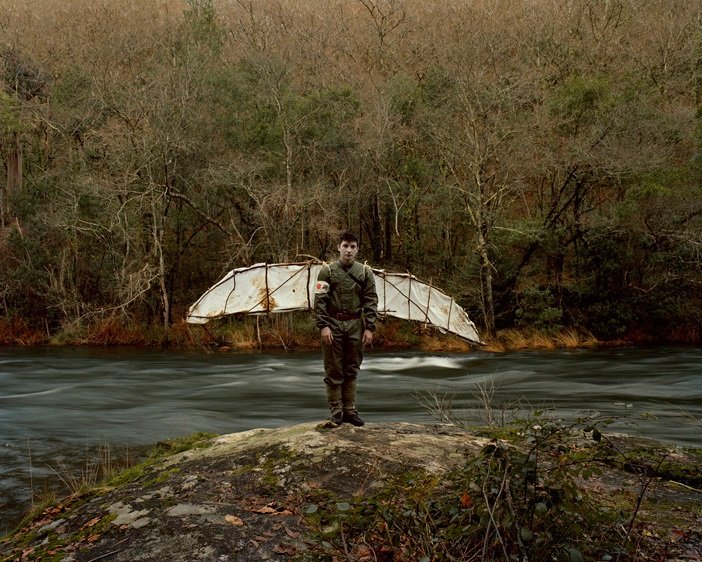
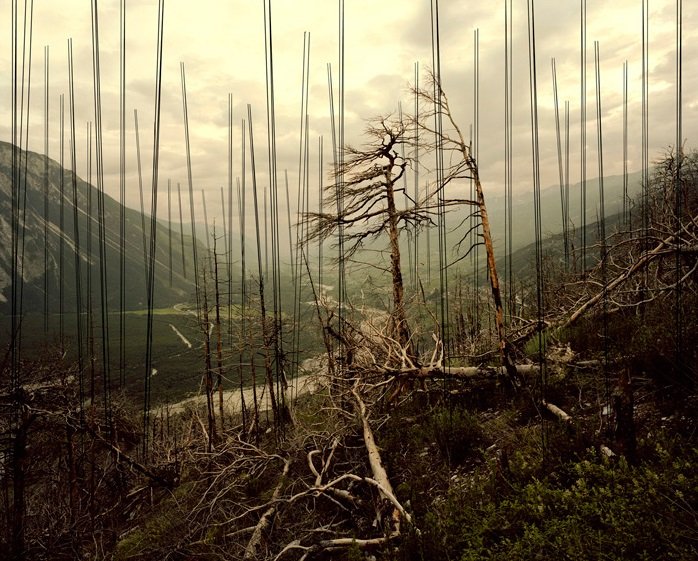
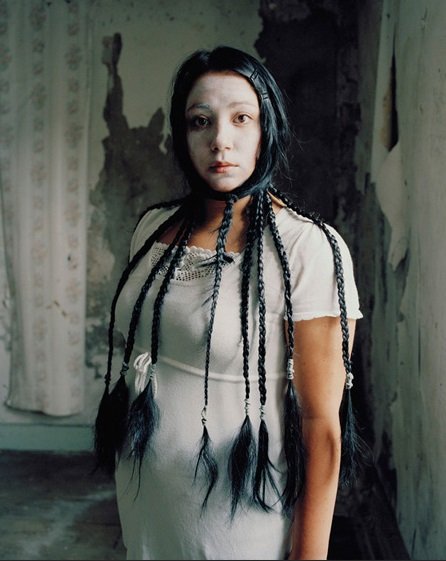
Born in Japan, Swiss artist David Favrod creates photographs, drawings, videos, and installations that combine elements of multiple cultures and genres—he often portrays his personal struggle with conflicting aspects of his bicultural identity. Favrod’s images tend toward the fanciful and turn disturbing at times. Through them, Favrod borrows from the highly stylized compositions and visual drama of traditional Japanese prints and drawings, but his work is also informed by the conceptual practices of Western contemporary artists.

Japan – 

GAIJIN – Japanese word meaning the foreigner.

My name is David Takashi Favrod. I was born on the 2nd of July 1982 in Kobe, of a Japanese mother and a Swiss father.When I was 6 months old, my parents decided to come and live in Switzerland, more precisely in Vionnaz, a little village in lower Valais. As my father had to travel for his work a lot, I was mainly brought up by my mother who taught me her principles and her culture.

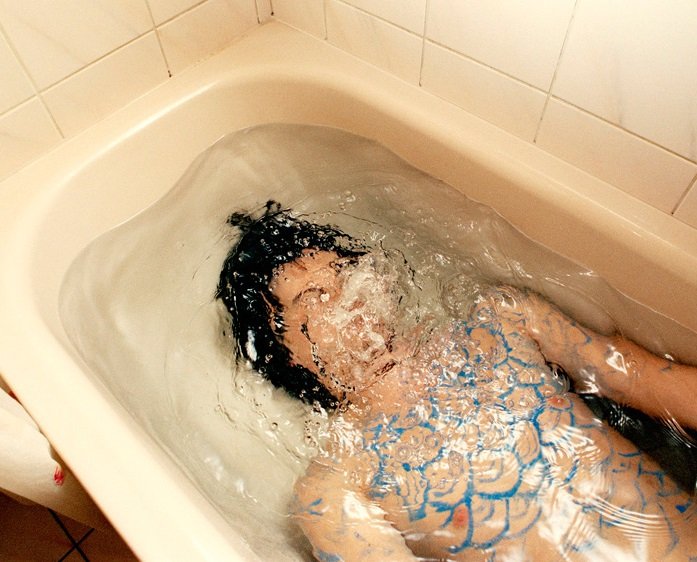
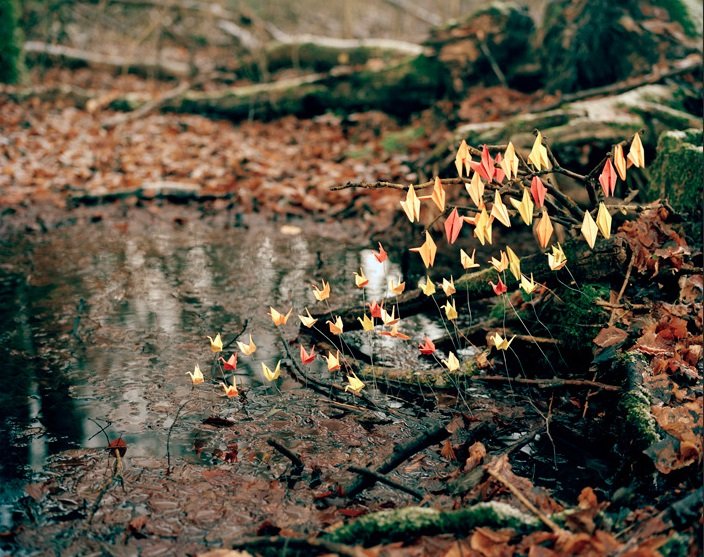
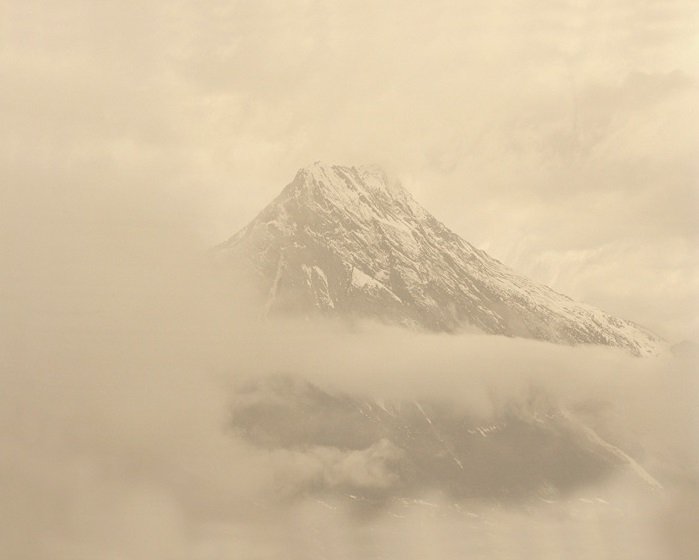
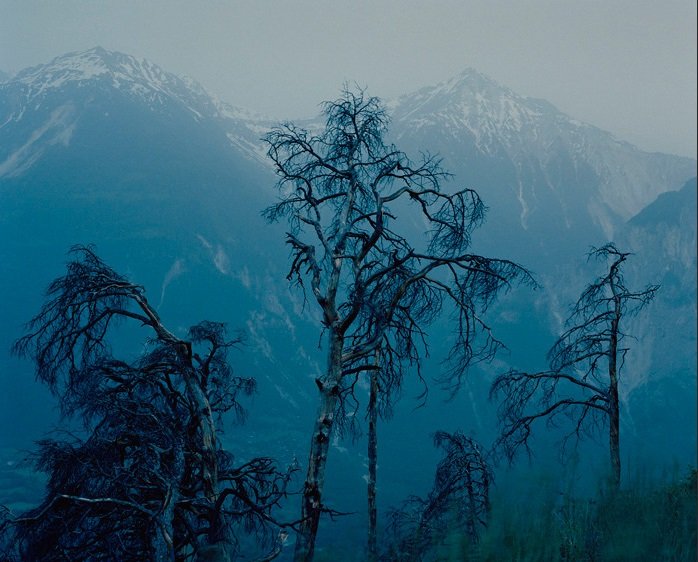
When I was 18, I asked for double nationality at the Japanese embassy, but they refused, because it is only given to Japanese women who wish to obtain their husband’s nationality.It is from this feeling of rejection and also from a desire to prove that I am as Japanese as I am Swiss that this work was created. “Gaijin” is a fictional recital, a tool for my quest for identity, where auto-portraits imply an intimate and solitary relationship that I have with myself. The mirror image is frozen in a figurative alter ego that serves as an anchor point.

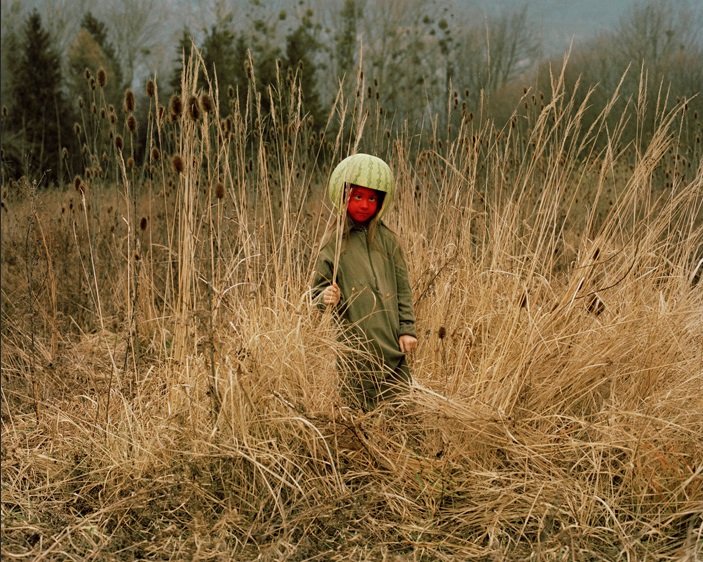
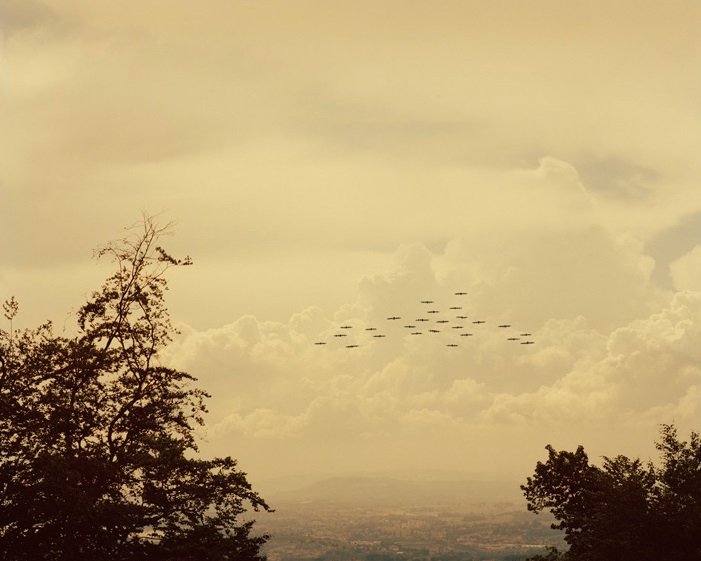
The aim of this work is to create “my own Japan”, in Switzerland, to build and shape my own memory. To reconstitute some facts I haven’t experienced myself, but have unconsciously influenced me while growing up.My grandparents witnessed the war; survivors who finally passed away and whose memories will soon be a part of history.Only once did we speak about their experiences during the war. They told me how illness can take away your sisters; the shame; the relief after the war; and the watermelons …

But after that night, we never talked about it again. As if my grandparents gave me their memories as a whisper through the air before allowing it to disappear from their minds.Somehow, I would say that I borrowed their memories. I use their stories as source of inspiration for my own testimony.


“I had recently met David Favrod at Les Rencontres Arles during a portfolio review. David Favrod’s ‘Gaijin’ is a beautiful project of his grandparents memories, memories that left a huge impact on him as a photographer. Its about his survivor grandparents and their aftermath hardships in Japan. The staged images in his series are used as a jump-off points to dive into his reconstructed memoirs. I love David’s ambition to present a fascinating series where he uses many different landscapes as a metaphor to describe his grand parent’s war-related scenes.” – Manik Katyal on David Favrod for Daylight Photo Award.

Photography

Related Posts

Colin Pantall on Ken Grant “No Pain Whatsoever”

England –   ‘It began as a way of remembering the craftspeople and laborers of my adolescence,’ writes Ken Grant ...

Vlad Krasnoshchok & Sergiy Lebedynskyy: “Euromaidan” – Rapidly Changing Ukrainian Chronicles

Ukraine –  “On the 19th of January, 2014 a peaceful protest of Ukrainian Euromaidans on the Hrushevskyi Street in Kiev ...

Tine Guns: Amoureux Solitaire

Belgium –  Two actors perform one of the most iconographic acts in film history: the kiss. ‘Amoureux Solitaire’ is an ...

Alejandro Castellote on Musuk Nolte and Leslie Searles’s PIRUW

Peru –                                     ...

Erik Kessels: “From the moment I saw Moises by Mariela Sancari, I fell in love.”

Mexico –  Many artists return to themes like love, birth, and death in their works. The best give these universals ...

Daisuke Yokota Corpus

Daisuke Yokota: “Corpus” – Fictitious Mix of Nudity and Reality

Japan –  Photography feature –  Daisuke Yokota was selected for the first OUTSET UNSEEN AWARD in 2013, and his first ...

Pierfrancesco Celada: Hitoride (Literally: By yourself, Alone)

Japan – During a brief visit to Japan in 2009 I was soon fascinated by the isolation and loneliness I ...

Zhe Chen: The Bearable & Bees

China – The Bearable (2007-2010) is Chen’s confessional photo-documentation of her self-harm history spanning half a decade. Bees (2010-2012) features a collection ...

Karen Paulina Biswell: “Against Extraction: Photography, Right to Opacity, and the Refusal to Translate”

In this Emaho Magazine interview, Colombian-French photographer Karen Paulina Biswell reflects on 14 years collaborating with Emberá-Chamí artist Maria Amilbia ...

Showing Slide 1 of 10