Emaho: Your practice is drawn to spaces on the verge of losing their function and identity, captured at the exact moment before they vanish. Growing up in Istanbul, a city that tears itself down and rebuilds constantly, was there a specific place from your childhood that disappeared before you felt ready to let it go? And is that loss somewhere in the work?
Begum Yamanlar: When we think about spatial memory in Istanbul, and perhaps in Turkey more broadly, it often seems to be shaped less through the continued presence of places than through their disappearance. Memory is written through deconstruction, rupture, and loss. We often remember places not because they remain intact, but because they have vanished or become unrecognizable.
This is something I relate to very personally. My grandfather was an architect and built many structures in the 1960s, including houses where my grandparents lived and where I also partly grew up. I later witnessed the demolition of some of them. Most probably, seeing the disappearance of those spaces that were both architecturally familiar and deeply tied to family memory had a lasting effect on me. It made me aware, quite early on, that architecture is never only physical; it also holds emotional, temporal, and intergenerational traces.
Because I grew up in a family where architecture and design were part of everyday life, I think questions around space, transformation, and memory were already present, even if it was unconsciously at early ages. Looking back, I can see that spatial memory and the shifting identity of places have been part of my thinking for a very long time, long before they became articulated in my work.
That experience is certainly embedded in my practice. I’m often drawn to places at the edge of disappearance, spaces that are still materially there, but are already beginning to lose their function, legibility, or, more importantly, the sense of permanence. What interests me is not simply loss, but the threshold itself. The unstable condition in which a place is both present and receding at the same time.
Emaho: You completed your BA in Photography and Video, your MA in Visual Arts, and are currently pursuing a PhD in Cinema and Media Research, all while maintaining an active exhibition practice and teaching at Istanbul Bilgi University. Most artists treat academia as a detour. For you, does the research sharpen the work or does it pull you away from it?
Begum Yamanlar: I always knew this risk. However, for me, academia has never felt like a detour, because the research and practice have been driven by the same concerns. Since my work has long revolved around water, nature, transformation, and more-than-human entanglements, pursuing a PhD on waterscapes did not take me away from the studio; it gave me another language and structure through which to think those questions more deeply. In that sense, theory has been deeply nourishing and inspiring for the practice.
Often, what I encounter in research directly opens up new artistic directions. Most recently, while writing an article on the fluidity of identity from a posthumanist perspective, I was
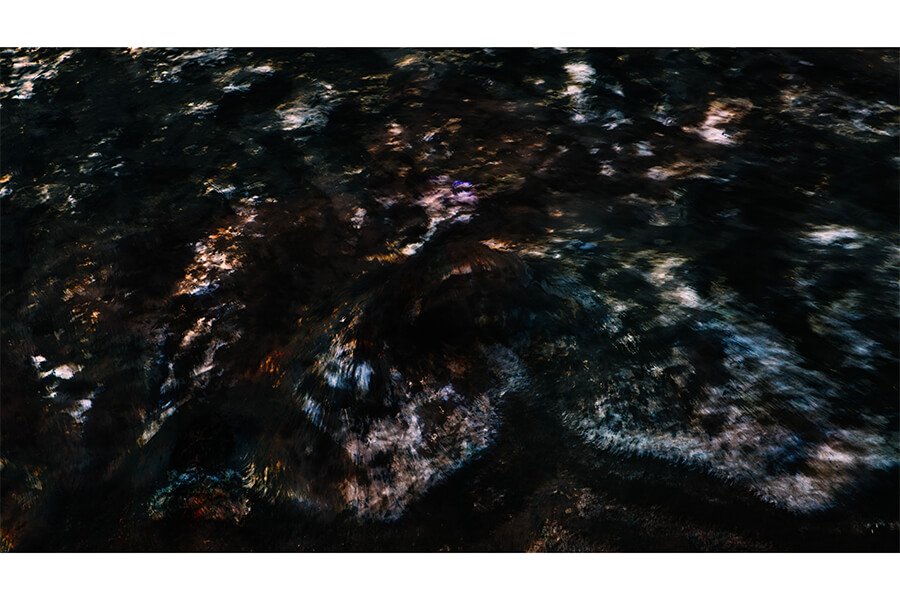
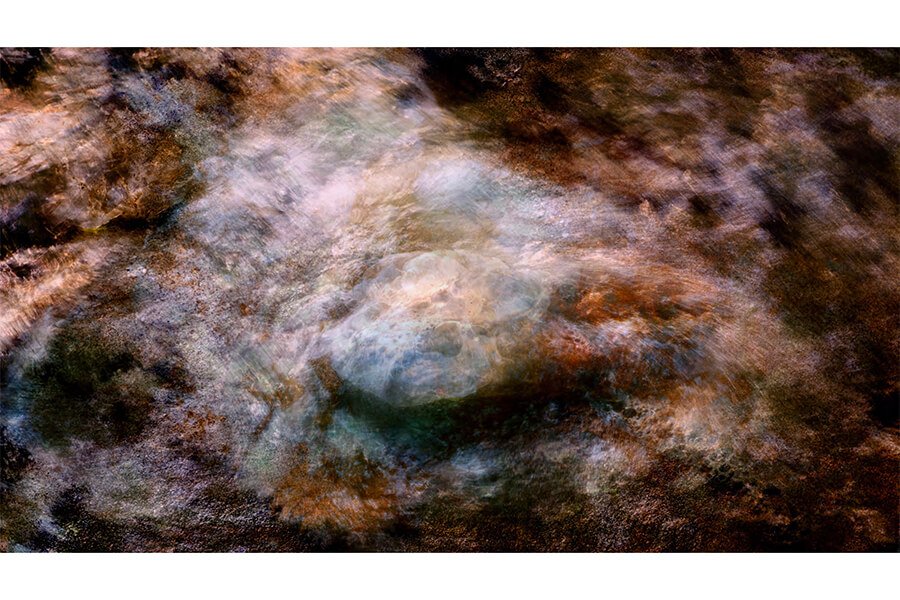
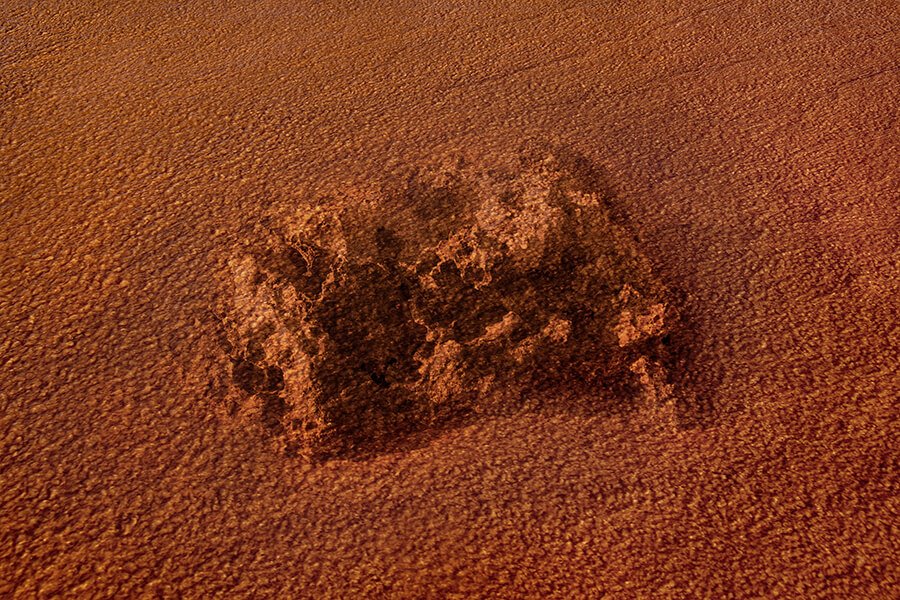
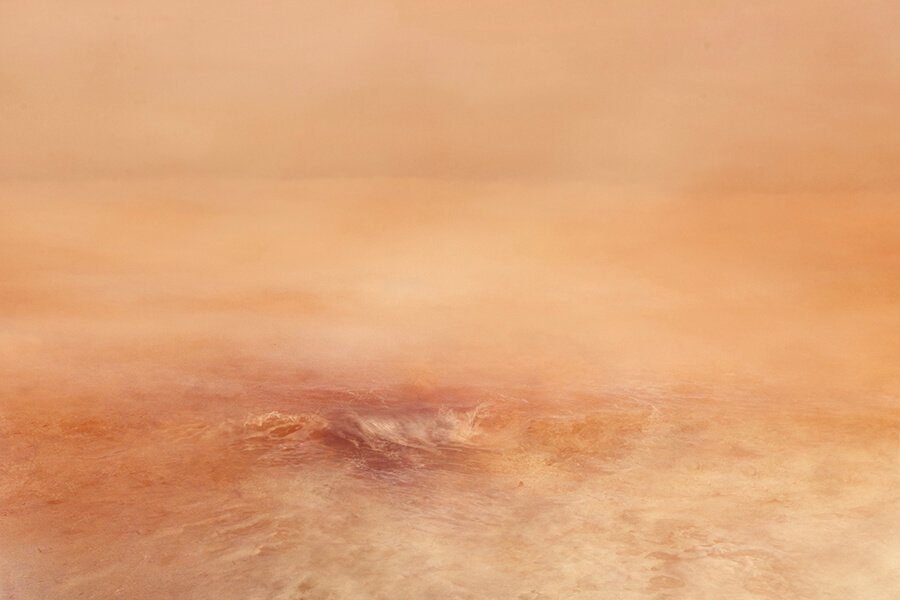
reading about the interrelated and intra-active condition of bodies, matter, and environment. Those ideas became very important in shaping the conceptual path of my recent photographic series Sedimentations. So for me, theory is not something applied afterward to frame the work; it can genuinely participate in the emergence of the work itself.
At the same time, I’m aware that there is always a risk of the work leaning too heavily on theory. That is a tension I try to remain attentive to. I never want the work to become an illustration of a concept. What interests me is a more reciprocal relationship, where thinking and making continuously challenge, complicate, and transform one another.
More broadly, I think this intersection is important. Academic spaces are often dominated by highly theoretical modes of thought, while artistic spaces can sometimes be suspicious of theory altogether. I think there is real value in occupying both, in being able to think critically and materially at once.
Emaho: In Territory, your video installation built from black-and-white photographs plays with the viewer’s perception of time to explore the human desire to possess and transform nature. That’s an uncomfortable subject, because the desire is universal and hard to condemn. How do you make work about something you’re probably not innocent of yourself?
Begum Yamanlar: In Territory, I was interested in the transformation of a natural area into a culturally shaped and domesticated space. But rather than approaching that primarily as a moral issue, I was more concerned with how large-scale environmental transformations often unfold beyond immediate perception. They happen across long durations and broad spatial scales, so we rarely experience or recognize them directly in the here and now; we sense them more than we fully see them.
A central question for me was how moving image could hold that condition: how it might evoke forms of change that are difficult to grasp, yet deeply present. So the work was less about directly demonstrating transformation than about exploring its elusive temporal and spatial character.
There is certainly an ecological dimension to it, but I think art can be more powerful when it makes these tensions perceptible rather than simply moralizing them. Unfortunately, the forces shaping such transformations are often much larger than individual intention, embedded in wider social, economic, and institutional structures.
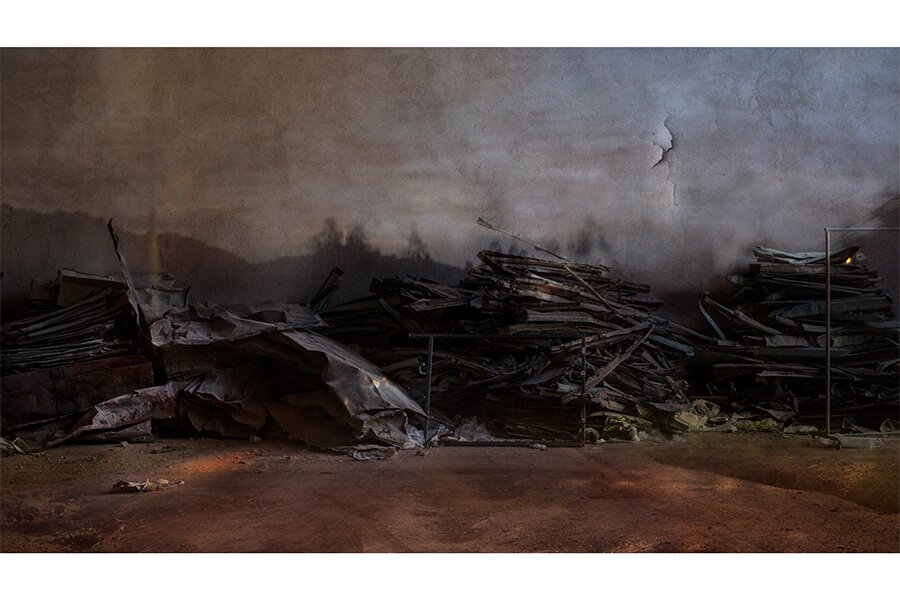
Emaho: The Scene was filmed at the Atatürk Cultural Center during its dormant period before reconstruction, presenting a derelict space detached from its own memory rather than the celebrated venue it once was. Istanbul Modern then acquired it for their permanent collection. What does it mean for a city institution to collect a work that is essentially a portrait of a city’s unresolved relationship with its own past?
Begum Yamanlar: I see it less as a resolution than as a recognition of how spatial memory is continually produced through transformation. The Scene was concerned not simply with how the Atatürk
Cultural Center was experienced, but with how it was fragmented, reconfigured, and suspended between different temporalities. As it was not actually filmed but made up of animated and composite still images of the center, the work brings together fictional and historical dimensions, reconstructing the space through fragments of its past, present, and future. In that sense, the work is less a portrait of the building itself than of a space in the process of becoming, shifting through layers of memory, material change, and temporal rupture.
The work is less concerned with how a space is experienced as a whole, and more with how it fragments, disassembles, and re-forms over time. It attends to that process of becoming, how a place shifts through layers of memory, material change, and temporal rupture.
For a city institution like the Istanbul Modern Museum of Art to collect the work feels meaningful not because it resolves that state, but because it allows that suspended condition to remain visible in the city’s cultural memory. I think these spaces continue to produce meaning precisely through that in-between state, where loss and transformation are never fully separable.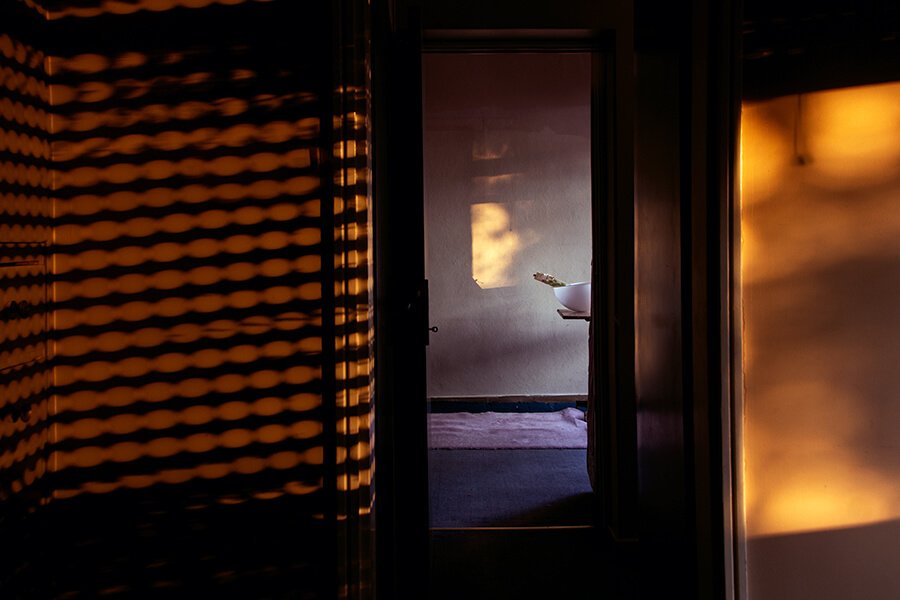
Emaho: You work across what Marc Augé called “non-places”, anonymous transit spaces with no stable identity, and deeply personal spaces tied to specific family histories. Those seem like opposite ends of the emotional spectrum. What draws you to both, and is there actually more in common between them than we’d expect?
Begum Yamanlar: What draws me to both is that, for me, they are not really opposites. Whether a space is anonymous or deeply personal, I’m interested in it not as something fixed, but as something always in process that is continually shifting, re-forming, and becoming through time.
What Marc Augé calls “non-places” may appear emotionally neutral, but I think they often carry a particular intensity precisely because they are shaped by passage, impermanence, and detachment. At the same time, personal spaces are never fully stable or self-contained either; they are also produced through memory, absence, projection, and transformation.
So what interests me is less the distinction between the two than the way both are shaped by material and spatial processes that often unfold beyond immediate perception. I’m drawn to spaces for the ways they are continuously altered by forces, durations, and transformations that may not be directly visible. In that sense, they share more than we might expect.
Emaho: Your doctoral research focuses on the sublime in waterscapes in contemporary art. Sublimity is a concept about something so vast it exceeds human comprehension. What does water do that other elements can’t, and how do you photograph something that is by definition beyond containment?
Begum Yamanlar: What draws me to water is its inherently liminal characteristics, like its fluidity, immensity, and transformative nature. It is never fully graspable or containable, but always circulating through atmospheres, bodies, landscapes, and times. Through the water cycle, it connects
distant places and temporalities, so it resists being understood as a stable or isolated presence. I think that is one of the reasons it is so closely tied to the sublime: it exceeds containment not only through scale, but through its diffuse, shifting, and relational nature.
It also holds a deeply dual character. It can generate and erode, purify and threaten, reveal and obscure. It moves between visibility and invisibility, surface and depth, stillness and force. For me, these tensions make it a particularly powerful element through which to think liminality and transformation.
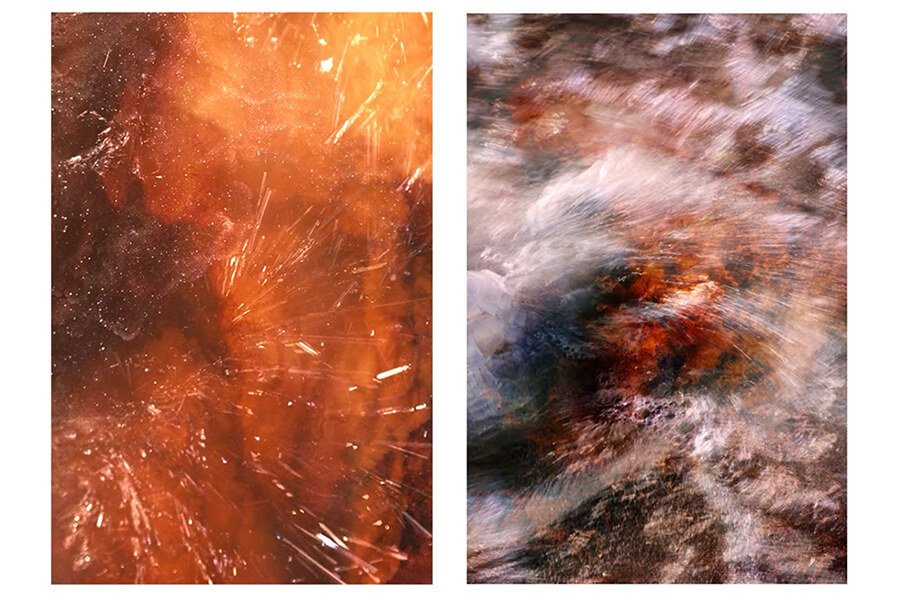
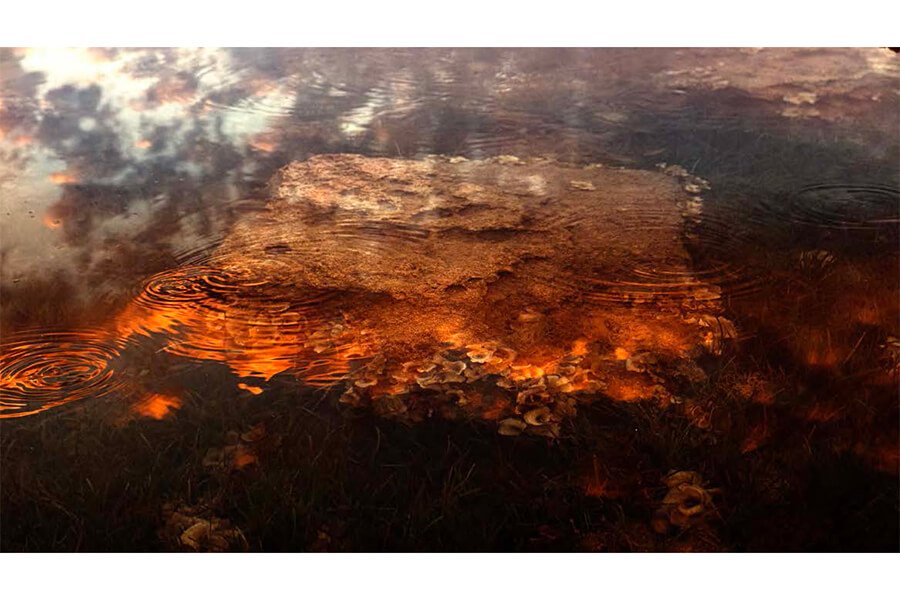
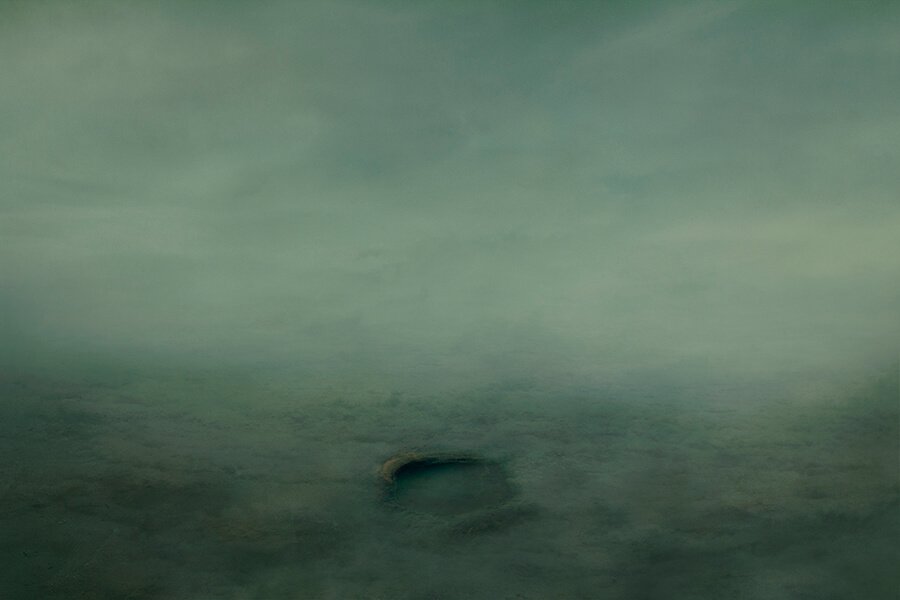
That is also reflected in how I approach photographic practice. I often construct composite images through multiple layers, combining photographs taken in different places and at different times. In that sense, I’m not trying to capture water as a singular object, but to build images that echo its own logic, dispersed, cyclical, and resistant to fixed form. The waterscapes become spaces where different temporalities and geographies can gather and overlap.
So, water is not simply a subject but a thinking environment, a formal principle, anda shared material body where time is materially recorded. In all the body of work, the material memory carried by water, the transience of light, the persistence of sediment, and the layers of time together create a permeable field between the visible and the invisible, the past, present, and speculations of future, and the human and the elemental.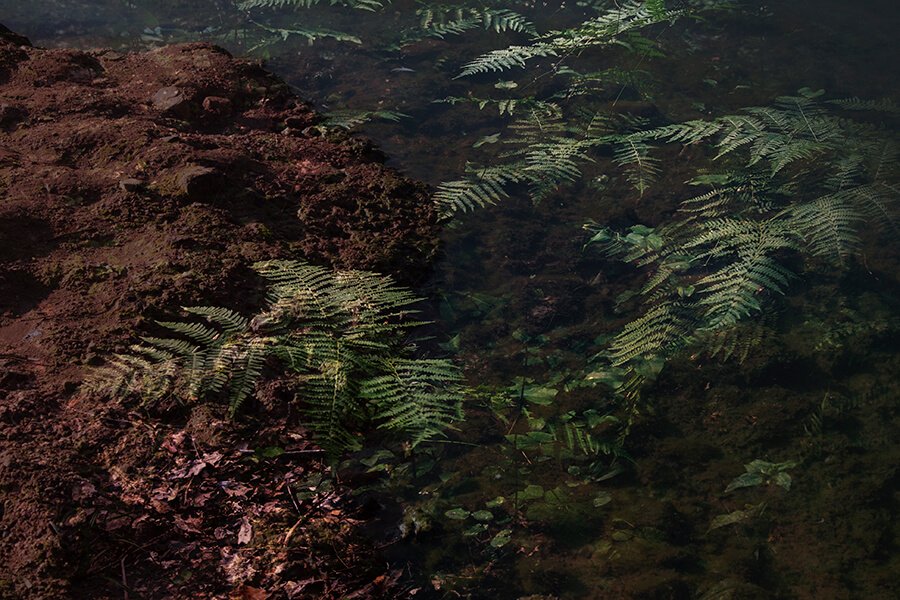
Emaho: You participated in the IKSV Cité des Arts residency in Paris in late 2025. Istanbul and Paris are both cities obsessed with their own histories. Did being in Paris change how you see Istanbul, or did it simply confirm what you already knew about the city you work in?
Begum Yamanlar: Being in Paris didn’t really replace how I see Istanbul, but it did shift the way I look. Three months isn’t a very long time, but it was enough to sharpen my attention and widen my perspective. Even for a short period, moving to a different city makes perception more alert, more searching. During my time at Cité, this was reinforced through short travels, constant dialogues, studio visits, and open studio moments, which created a context where thinking was continuously activated alongside making. Of course, spending time in another culture also changes your perspective, and lets you see the city you live in more from the outside.
Emaho: You combine fixed photographic frames with other images through juxtaposition and layering, creating a part-to-whole relationship that evokes slow motion. Photography is conventionally about the decisive moment, the instant. You seem to be systematically dismantling that idea. Was that a conscious rebellion, or did the work simply refuse to behave the way photography is supposed to?
Begum Yamanlar: I wouldn’t describe it as a rebellion, but it is definitely a conscious way of questioning the ontological boundaries of photography and video, and moreover, painting. I intend to question where one begins to move toward the other, and how their limits might be blurred, expanded, or made porous.
A lot of my work is concerned with large-scale material and spatial processes that cannot really be grasped through a single instantaneous image. So, I often work against the idea of the photograph as a self-contained “decisive moment.” Instead, I’m interested in constructing images speculatively, by layering fragments from different times, places, and historical traces. That allows the image to hold duration, transformation, and temporal instability in a way that a single snapshot often cannot.
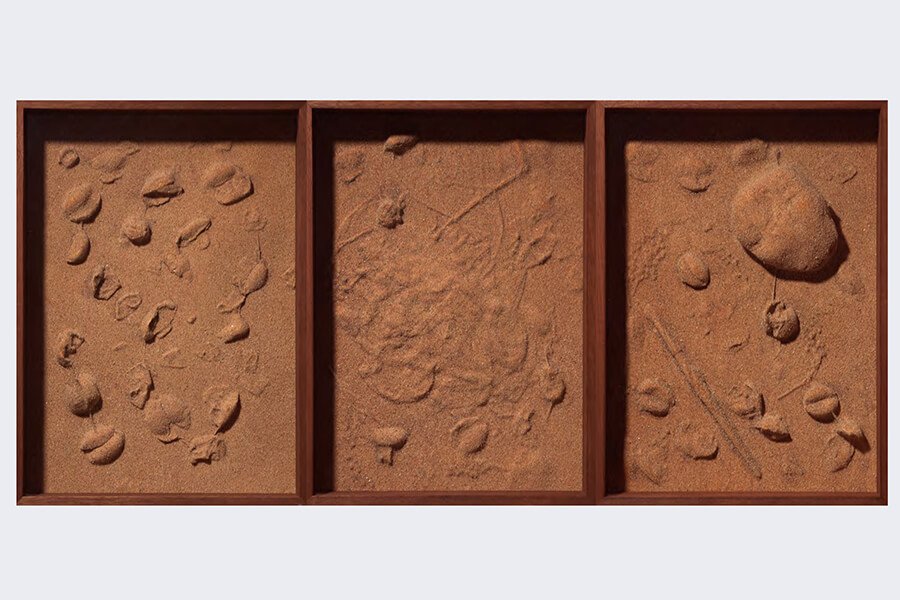
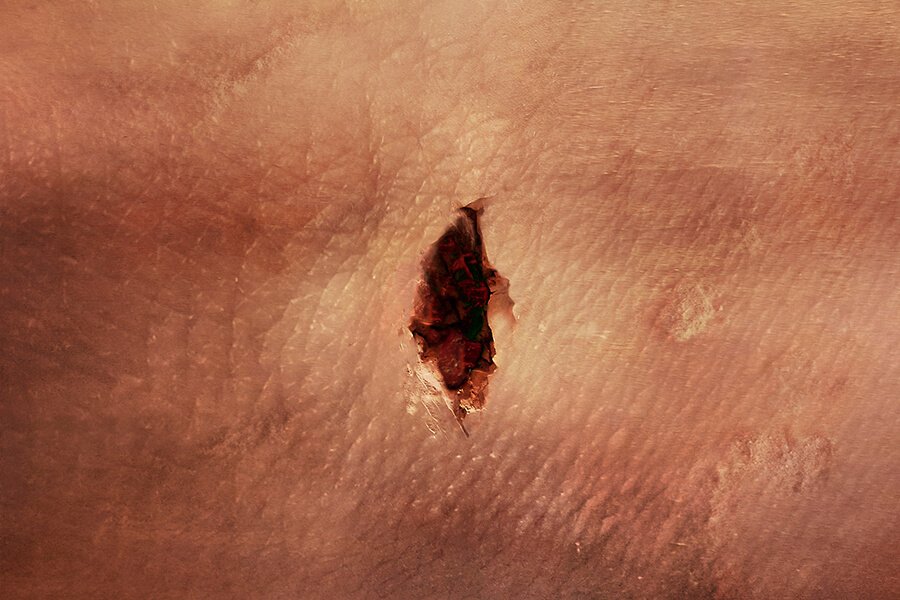
However, I’m not trying to abandon photography’s indexical force. More recently, I’ve also been working with straight photographs and with vacuum-formed imprints of objects and natural materials, which engage indexicality in a much more direct way. So I think each body of work finds its own medium or formal logic. What matters to me is not loyalty to a fixed definition of photography, but remaining open to what the work itself requires.