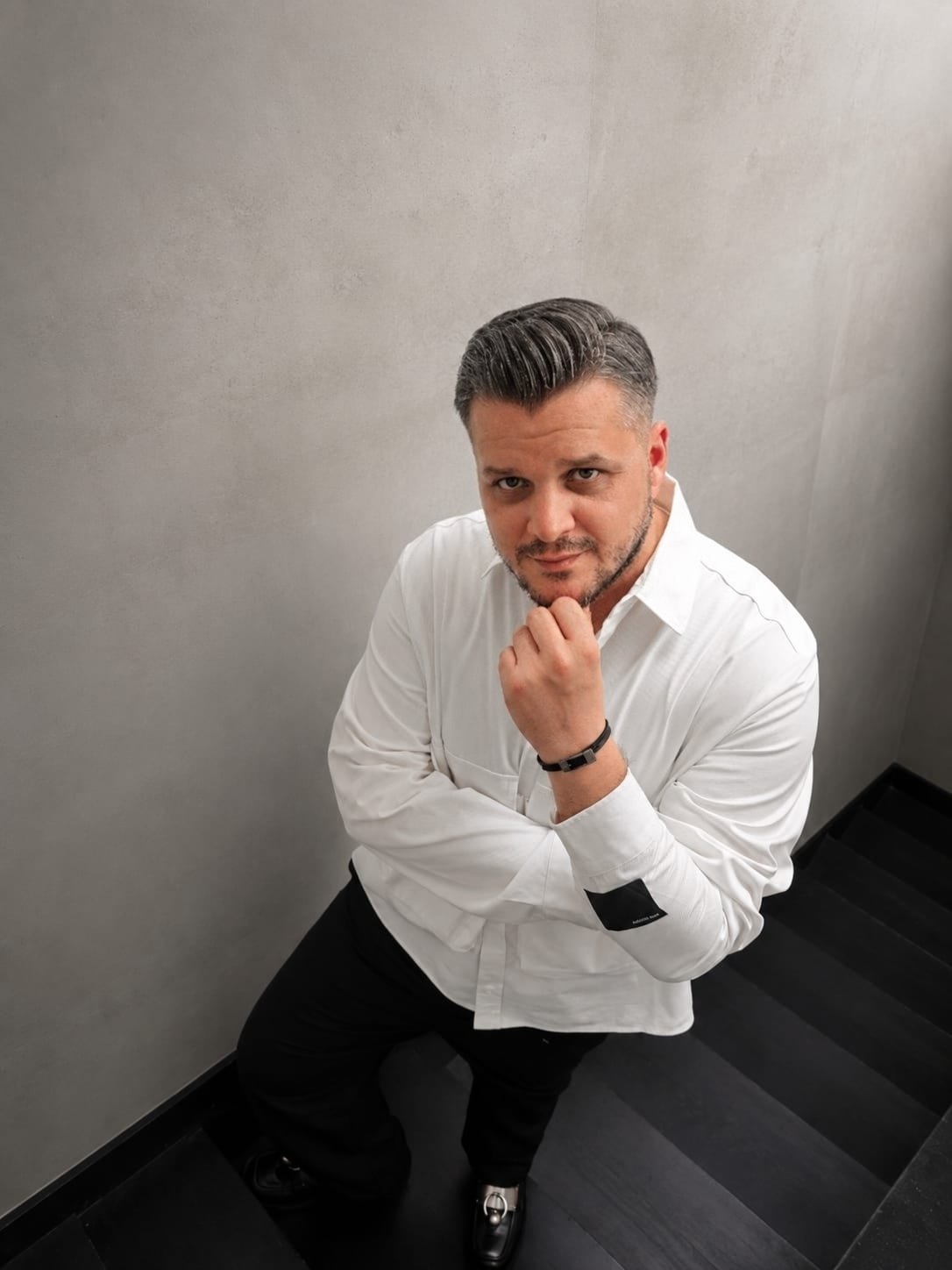
Emaho: You were born in Verona in 1985 into a family of metal artisans who had been working in the craft for several generations, and you grew up in a region that is one of the world’s most important centres of marble extraction and processing. Most designers describe their formative influences as aesthetic, a book, a building, a mentor. Yours were physical and geological. At what age did you understand that the materials in your family’s workshop and in the landscape around Verona were not simply a background to your childhood but the actual foundation of what you would eventually build?
Andrea Bonini: There was never one specific moment. Steel and marble have always been part of my everyday life, so I never saw them as something special. They were simply the language I grew up with. Over time, I realized that these materials had shaped the way I see and design. Even today, they are the materials through which I express myself most naturally. I love them because they are authentic, alive, and able to age with dignity while telling a story. I believe my approach to design comes from this respect for materials and from the idea that, even before form, it is the material itself that gives emotion and identity to a project.
Emaho: You studied Interior and Product Design at the Istituto Marangoni in Milan, began working in design studios while still studying, and in 2011 launched Studio Andrea Bonini Bespoke Interiors while simultaneously founding Diamante Design, a brand that creates accessories and furnishings in steel using an innovative patented finish you developed yourself. That is a very ambitious dual launch for a designer still in the early years of his career. What did founding Diamante give you that working inside other studios could not, and what did you understand about steel as a material that the patent was trying to protect?
Andrea Bonini: I started my own studio at a very young age because I wanted the freedom to develop my own vision. Working in other studios taught me discipline and the technical side of the profession, but having my own practice allowed me to build a design language without compromise. Looking back, I think that decision gave me confidence and responsibility very early in my career. It forced me to deal not only with design, but also with clients, business, production and every aspect of running a studio. Those experiences shaped me as much as the projects themselves. I have always believed that a designer should not only create beautiful objects or spaces, but also build a coherent vision and a strong relationship with craftsmanship. That has remained the foundation of my work ever since.
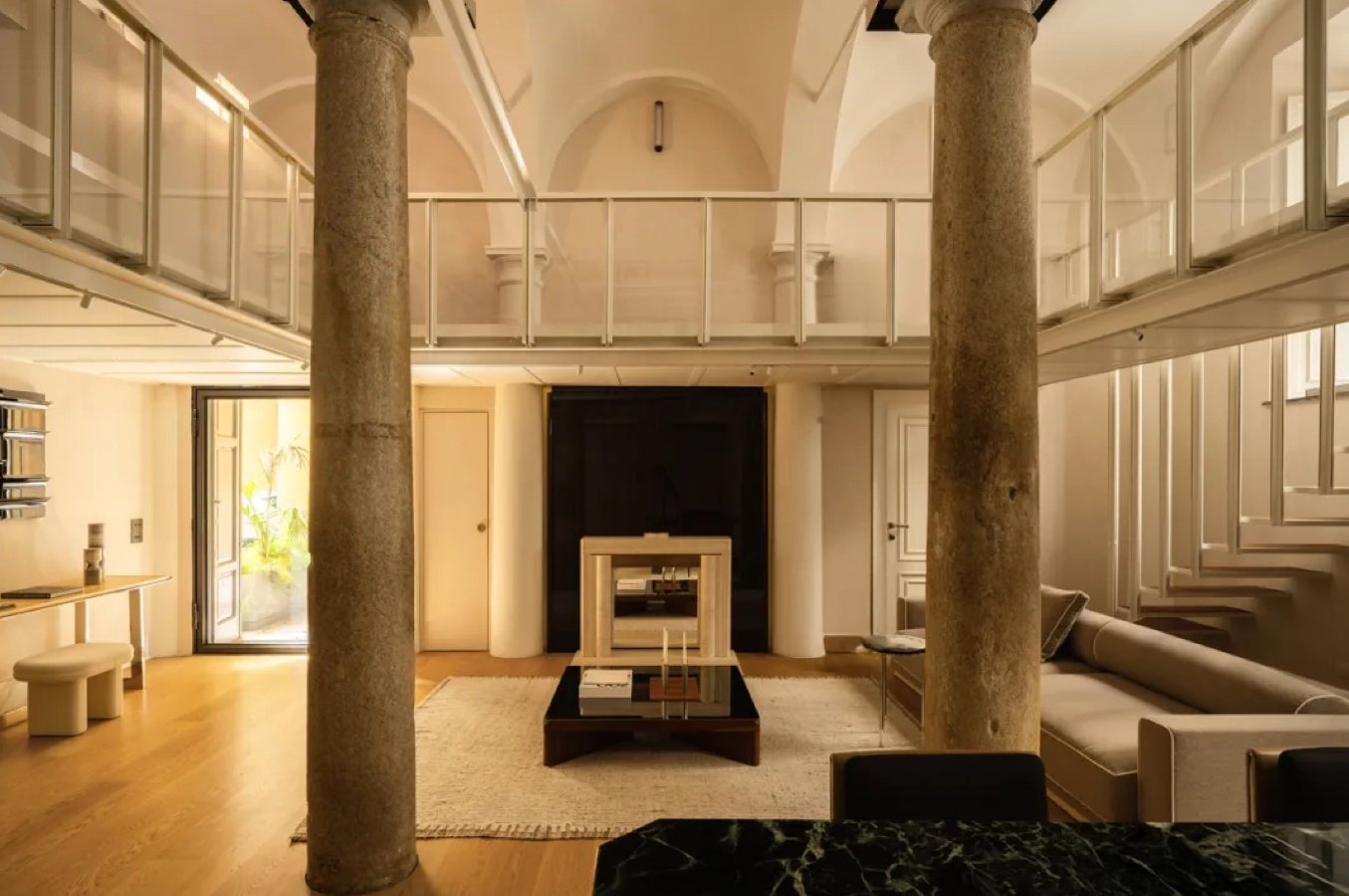
Emaho: When you moved the studio to Milan in 2014, settling in Via Montenapoleone in the heart of the fashion district, you made a very deliberate statement about the relationship between fashion and interior design. That neighbourhood is not where most furniture designers choose to plant their studios. What was the argument you were making by locating there, and has the proximity to the fashion world changed how you think about space, surface and the way objects are perceived?
Andrea Bonini: The message was very simple: I wanted to place my studio in a location that represents excellence. Via Montenapoleone is not only the street of fashion, but an international symbol of quality, craftsmanship and luxury. I felt these values were perfectly aligned with the way I wanted to build my studio. More than fashion itself, it is the lifestyle around fashion that has inspired me. The attention to detail, the quality of materials and the overall experience have influenced my work. At the same time, being so close to that world also helped me understand what I did not want to become. It taught me the difference between true luxury and unnecessary ostentation.
For me, real luxury is about balance, culture, proportion and timeless quality, not about excess or attracting attention. This constant comparison has strengthened my own design identity.
Emaho: In 2015 Turri, a brand with a reputation as one of the world’s most prestigious luxury furniture producers since 1925, approached you to produce furniture collections based on the history of Italian fashion and artisanal Italian production. Five collections followed, receiving international recognition at Salone del Mobile and coverage in publications worldwide. Being invited by an institution of that heritage to interpret Italian fashion through furniture is an unusual and demanding brief. What did working within Turri’s century-old manufacturing culture give your design language, and where did the collaboration push you in directions you would not have gone alone?
Andrea Bonini: I owe a lot to this collaboration. It opened the doors to the international market and gave me the opportunity to work with one of the most important names in Italian luxury furniture.
From the beginning I had great creative freedom. This allowed me to develop a design language that later became part of the company’s identity. Turri trusted my vision and gave me the knowledge and manufacturing skills needed to transform ambitious ideas into real products.Working with a company that has almost one hundred years of history taught me that design is not only creativity. It is also a deep understanding of materials, craftsmanship and production.
Without this collaboration I probably would not have had the opportunity to work with such an exceptional level of craftsmanship so early in my career. It played a major role in shaping my design language and my idea of contemporary luxury rooted in Italian tradition.
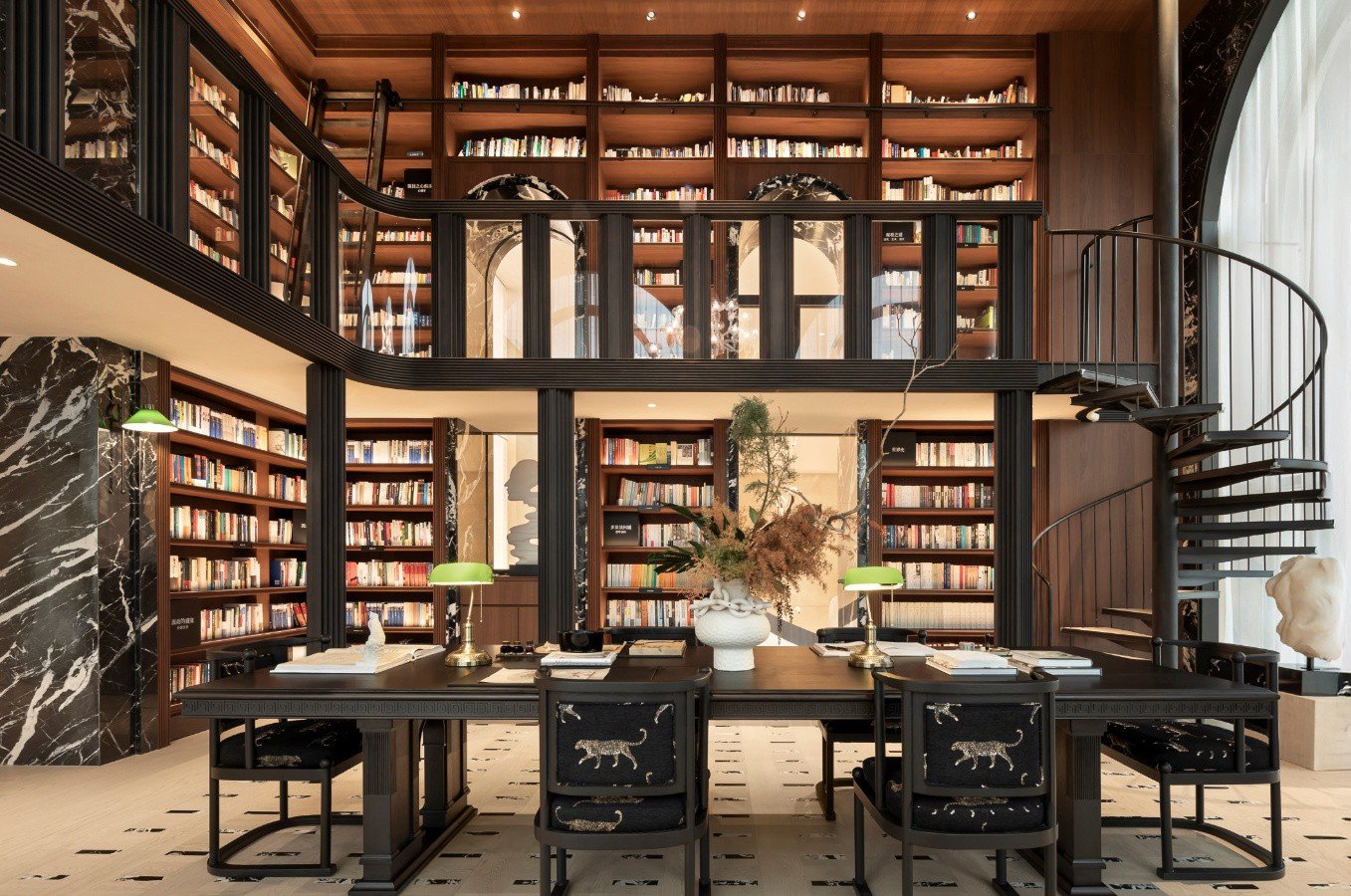
Emaho: Architectural Digest Italia named you in 2019 as one of the Seven for the Future, recognising you among the best designers under 35. That kind of institutional recognition from one of the most authoritative voices in design can change the nature of the commissions that come to you and the expectations attached to them. What changed after that recognition, and was there anything about the attention it brought that you had to actively resist in order to protect the integrity of how you work?
Andrea Bonini: It is certainly one of the recognitions I value the most, especially because of my relationship with Ettore Mocchetti, the historic Editor-in-Chief of Architectural Digest Italia. He was a remarkable figure who contributed greatly to the culture of design, and I still remember him with great respect. For me, this award had a personal meaning more than a professional one. It was confirmation that people I admired appreciated the work I was doing. At the same time, I have never believed that media exposure is what builds a career. It may open some doors, but it is the quality of your work and the trust of your clients that keep those doors open.
For this reason, I don’t think the award completely changed my career or the kind of commissions I receive. I have always preferred to let my work speak for itself rather than seeking visibility.
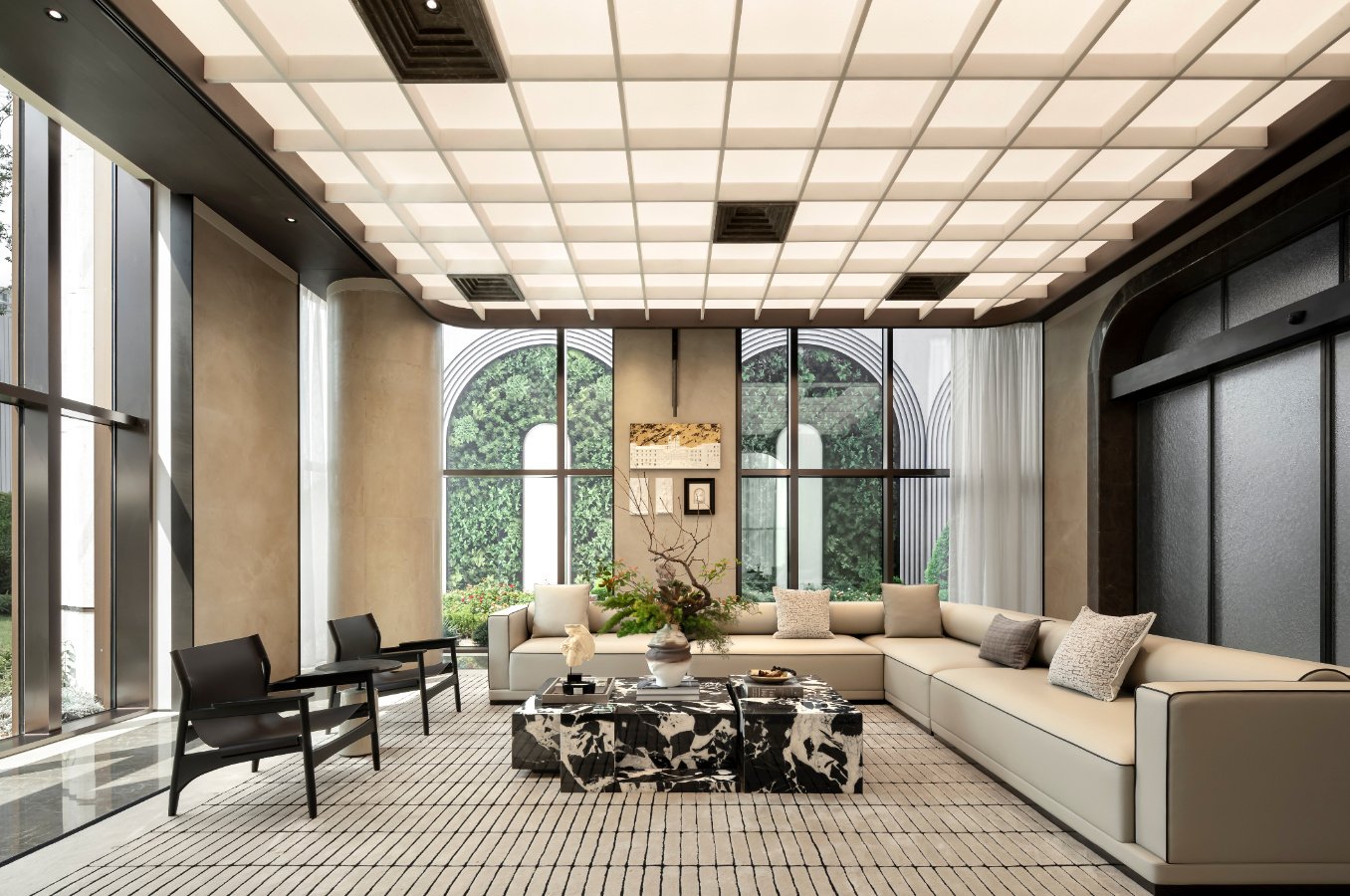
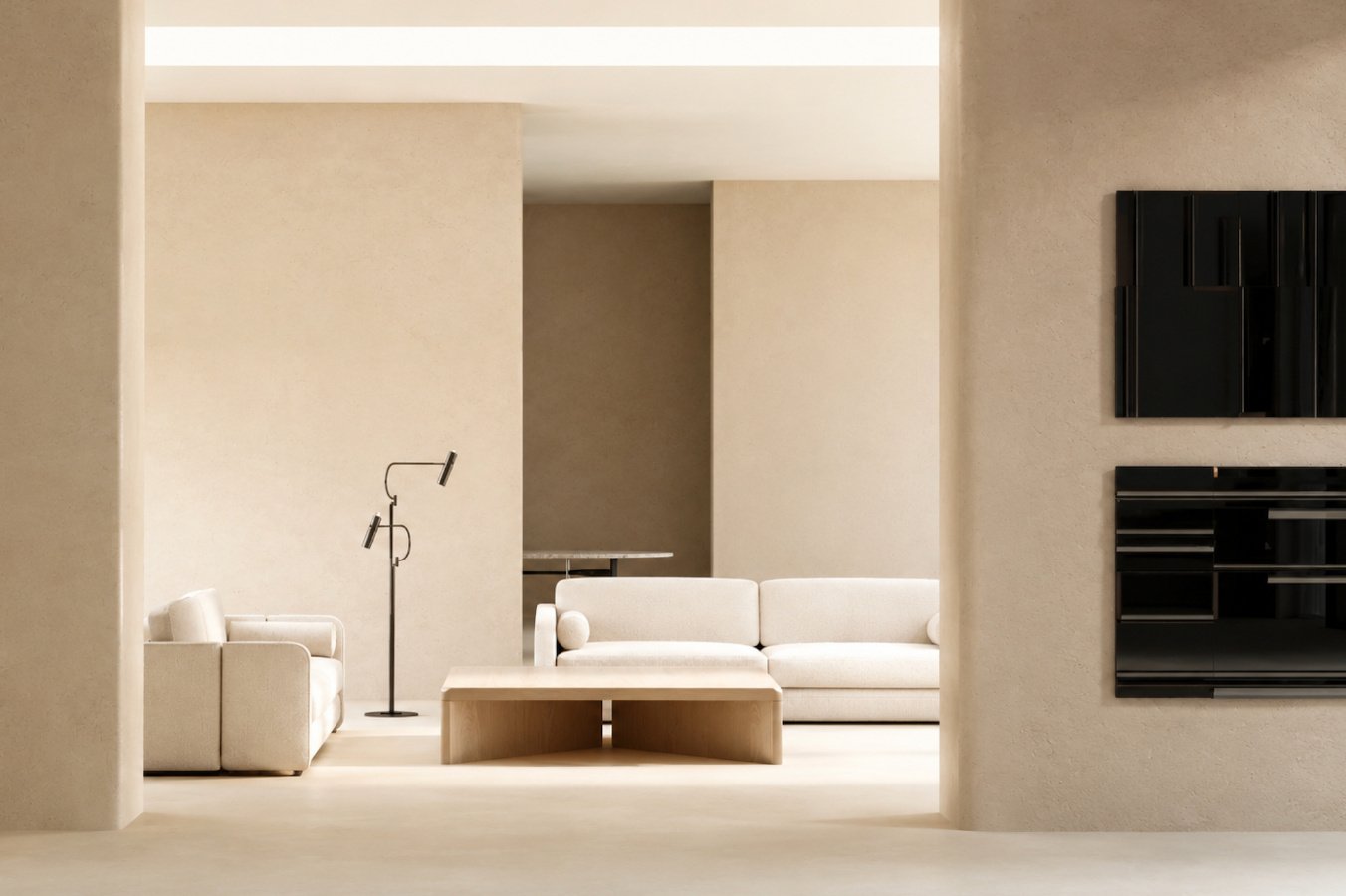
Emaho: You have described your design philosophy as aiming for sensual and luxurious atmospheres achieved through apparently simple shapes that are deeply cared for in detail, and your influences include Carlo Scarpa, Franco Albini and Christian Liaigre. Those are three very different kinds of simplicity: Scarpa’s is archaeological and layered, Albini’s is structural and rigorous, Liaigre’s is sensory and restrained. Which of those three modes of simplicity lives most persistently in your own work, and is there one you are still trying to master?
Andrea Bonini: I believe my work is a combination of all three influences. From Carlo Scarpa I admire the deep respect for materials and details. From Franco Albini I admire rigor and clarity. From Christian Liaigre I admire the ability to create emotion through simplicity. What they all share is an extraordinary commitment to quality. For them, quality was never just a detail; it was the starting point of every project. That is something I try to follow every day.
At the same time, I feel that my journey is still long. I still have a lot to learn and achieve. My goal is to express my vision more freely, without always having to compromise. Of course, the client has the final word, but every designer hopes to be chosen not only for what they can do, but for the vision they bring. That is where I hope to arrive.
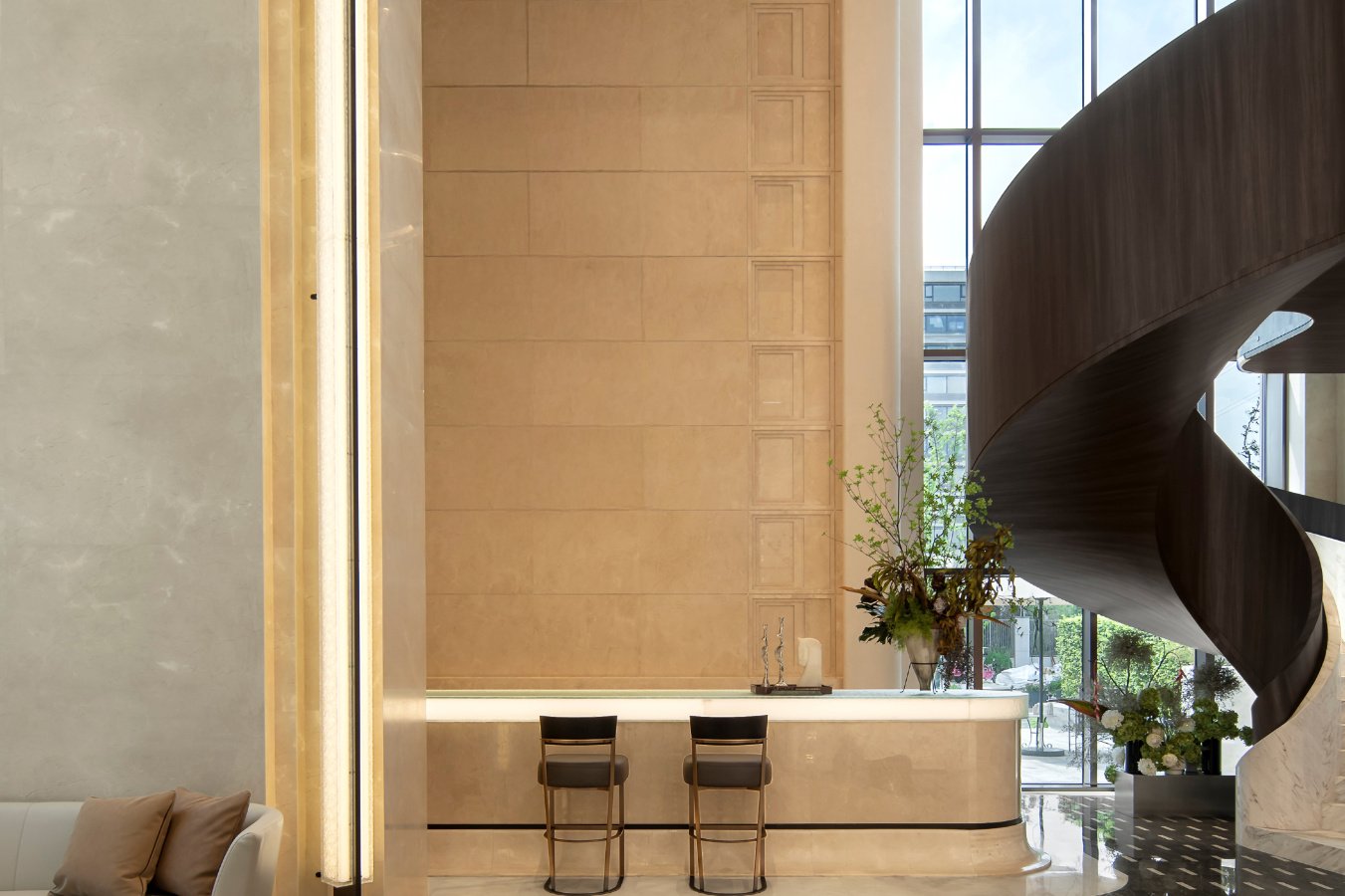
Emaho: Your projects now span Italy, China, the United Kingdom, the UAE and the French Riviera, and your studio atelier on Via Montenapoleone operates as both a workspace and a gallery where limited edition furniture pieces are displayed. Designing a private residence in Shanghai and designing one on the French Riviera are radically different cultural, climatic and social briefs. How does your Italian design sensibility adapt to those very different contexts without losing the identity that makes the work recognisably yours, and is there a market where you have felt the most genuinely challenged?
Andrea Bonini: I believe every project should begin by understanding the place where it will be built. The local culture, architecture, light, landscape and the way people live are all essential parts of the design process.
That is why I travel so much. I never like to design a project entirely from a distance. I need to experience the place and understand what the Romans called the genius loci—the spirit of the place. For me, this is essential. At the same time, today’s world is much more connected. There is an international idea of beauty, especially in the luxury market, based on proportions, quality, authentic materials and attention to detail. These values are appreciated everywhere.
My goal is not to export an Italian style, but to interpret every place through my own design language. If a project belongs to its location while remaining true to my vision, then it can be recognizable without ever becoming repetitive. Every country has taught me something. China impressed me with its openness to new ideas and its speed of development. The Middle East taught me the importance of creating spaces that offer a strong emotional experience. Every project is a dialogue, and these different cultures continue to enrich my work.
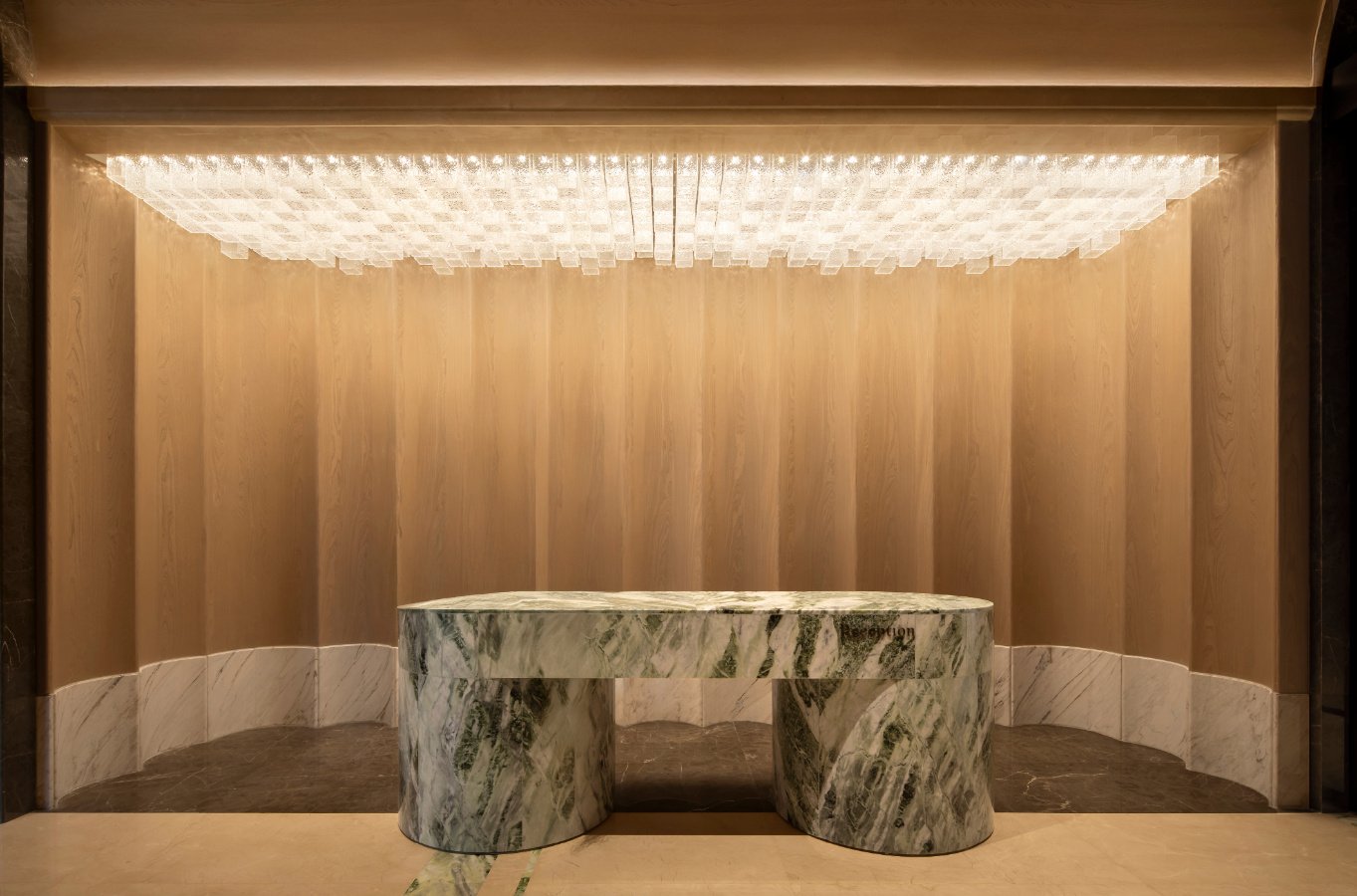
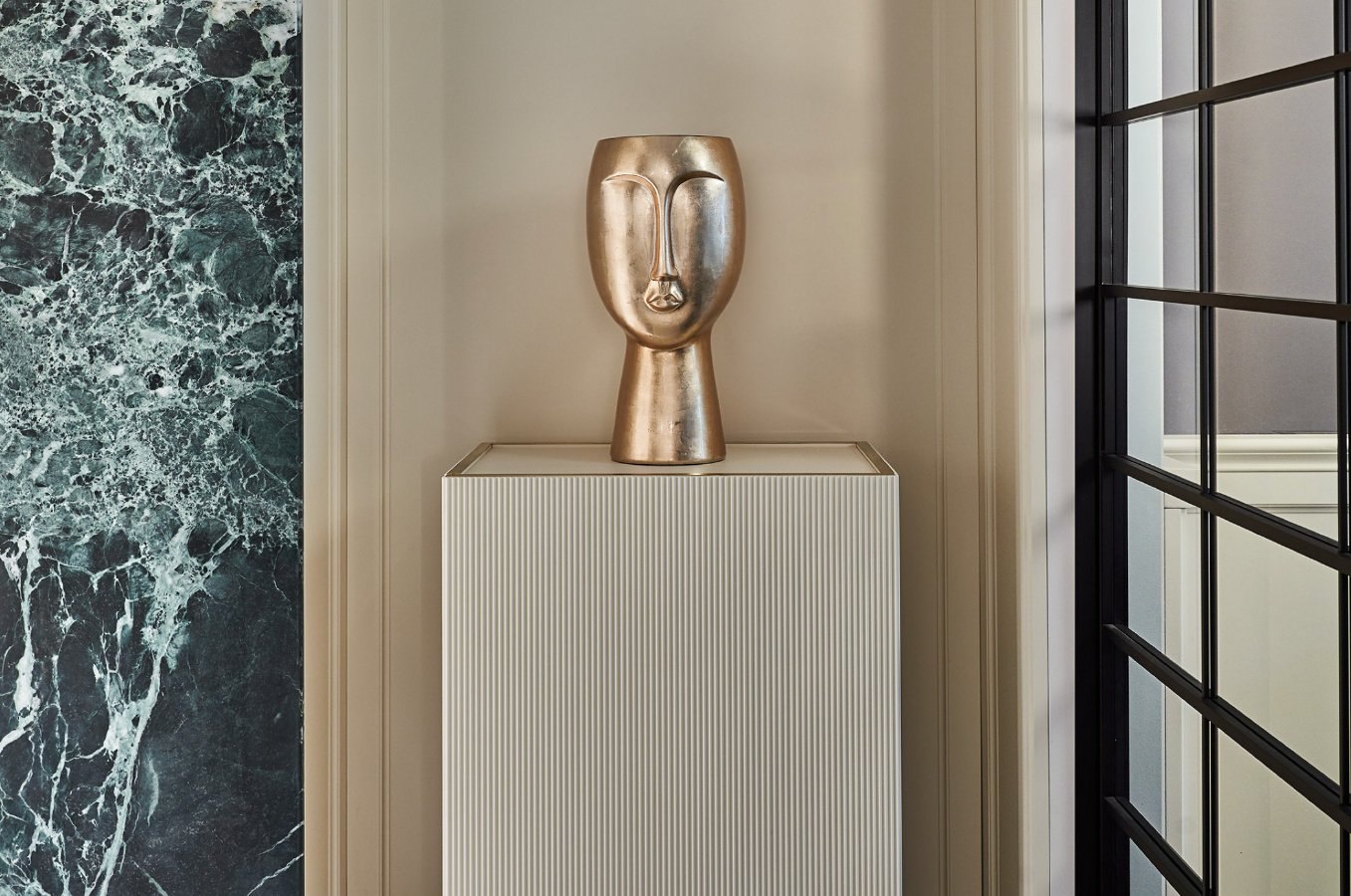
Emaho: Your work consistently combines marble and metal, the two materials you grew up with, preferring them in their authentic finishes and shades, sometimes raw, with the natural imperfections typical of those materials. In a luxury design market that often values flawlessness and total control over surface, choosing to work with the imperfection and unpredictability inherent in natural stone and metal is a philosophical position as much as an aesthetic one. How do you convince a luxury client that the flaw in the marble is not a defect to be corrected but the most valuable thing about the piece?
Andrea Bonini: Fortunately, I have almost never had to convince a client. The people who choose my studio already understand the value of authentic materials. A vein in marble, a slight oxidation on metal or a small imperfection are not defects. They are the signature of nature and time. They make every piece unique, and that uniqueness is what makes it valuable. I believe true luxury today is not about artificial perfection but about authenticity. No two marble slabs are ever the same, and no handmade object can ever be perfectly identical to another.
I am lucky to work with clients who already appreciate this philosophy. They are looking for authenticity, character and quality that no artificial material can ever reproduce.
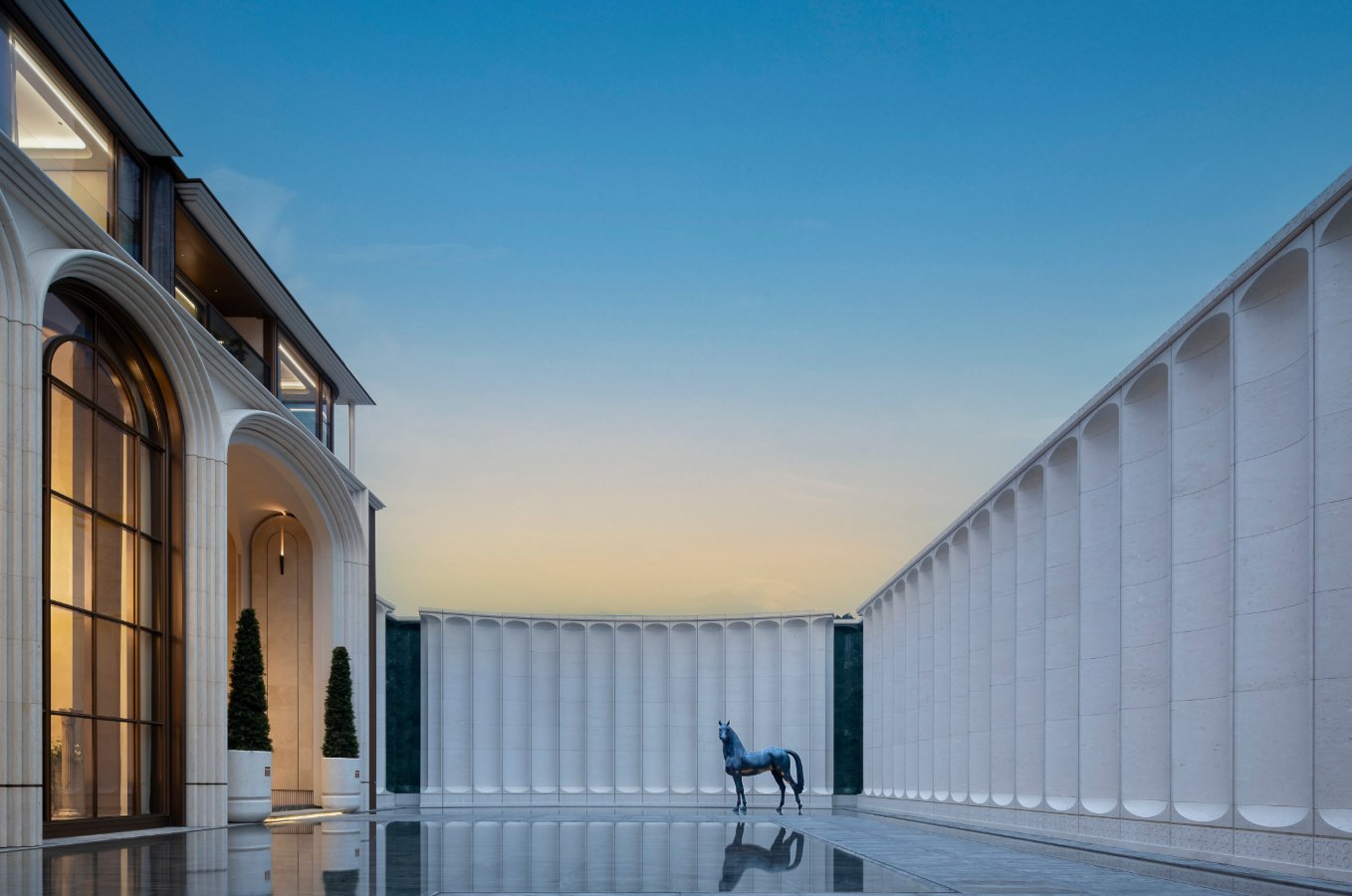
Emaho: You create limited edition pieces that are signed and numbered, combining refined Italian taste with a contemporary vision in a market where the distinction between design and art collectible is increasingly contested. That positioning asks your work to function simultaneously as furniture to be used and as an object to be collected. How do you hold those two identities together in a single piece, and has a collector ever asked you to make something that you felt crossed from design into territory that was no longer honest to what you are?
Andrea Bonini: The pieces created by Andrea Bonini Edizioni are first of all objects made to be used and lived with. I do not consider them works of art in the traditional sense. Art belongs to artists. My role is to design objects that improve everyday life and the quality of a space. If there is an artistic dimension in my work, it is found in the hands of the craftsmen who make every piece. Their knowledge, experience and dedication give each object its unique character.
For this reason, I try to stay as far as possible from industrial production. Even when several pieces are made, I want each one to preserve the value of handmade work, time and small imperfections. No collector has ever asked me to create something that felt outside my values. I think the people who choose my work understand what it represents. They are not looking for an artwork to admire from a distance, but for an authentic object to live with every day.
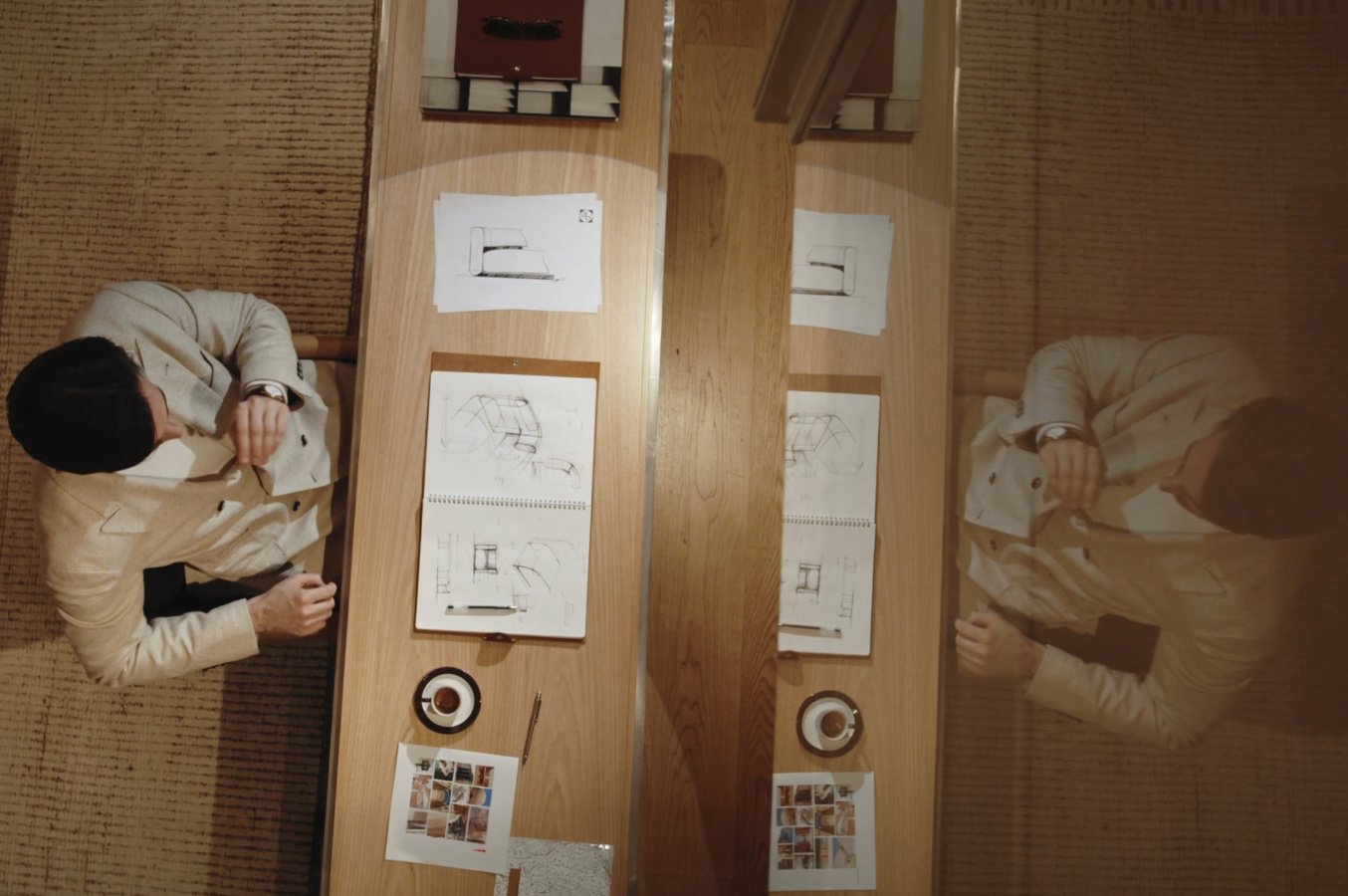
Emaho: Your studio oversees every facet of its projects, engaging directly with artisans to ensure each detail is executed with the precision the design demands. In an industry where project management, client relationships, manufacturing oversight and creative direction are increasingly delegated to teams, you have maintained personal involvement across all of those stages. What does that direct engagement with the artisan actually give the finished object that delegation cannot, and where is the point at which personal oversight becomes a constraint on the practice’s ability to grow?
Andrea Bonini: Today my Milan studio is organized as a design boutique. We have a small team, we take on a limited number of projects, and I am personally involved in every one of them. This is a conscious choice. I prefer to work on fewer projects but dedicate the right amount of time and attention to each one. Today we also have a waiting list because I believe quality cannot be industrialized. At the same time, through our joint venture in Hong Kong, we manage much larger projects across Asia. There we work together with our partner Steve Leung and his team of hundreds of professionals. This allows us to handle large-scale projects while maintaining our creative direction and design philosophy.
Working directly with craftsmen is something that cannot be replaced. It is not only about checking details, but about sharing experience and finding better solutions together during the production process.
I like projects to be completed as quickly as possible, but never in a hurry. There is a big difference between being fast and being rushed. Being on time is important, but quality always comes first. If I had to choose between delivering a few days later or compromising on quality, I would always choose quality. In the end, that is what lasts.