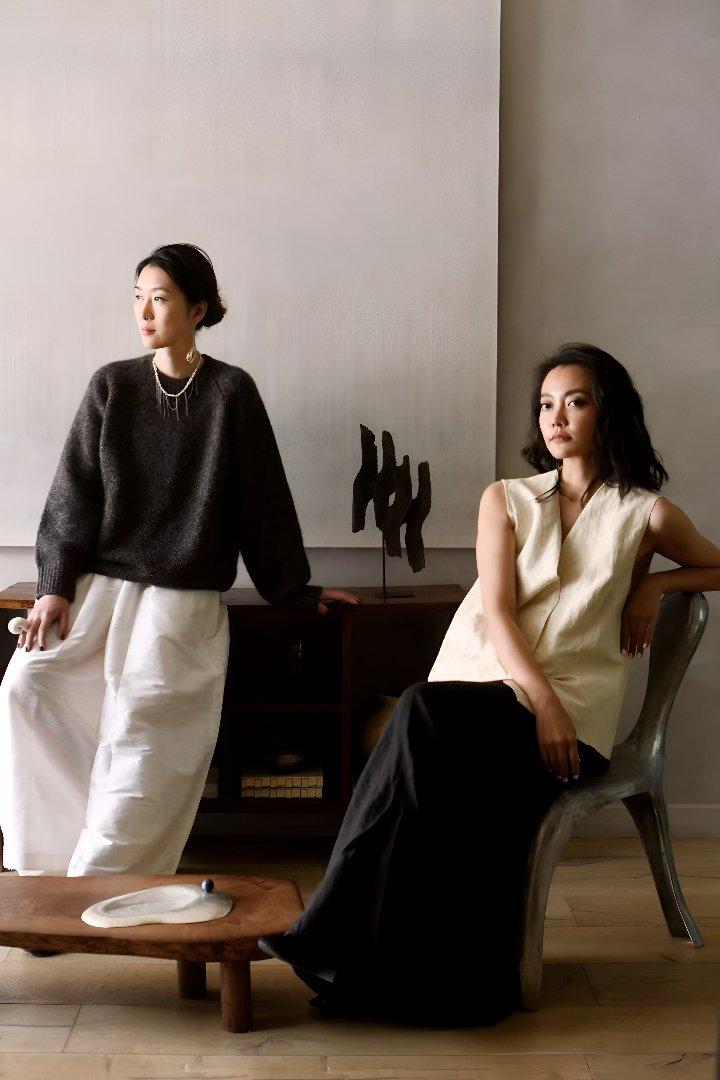
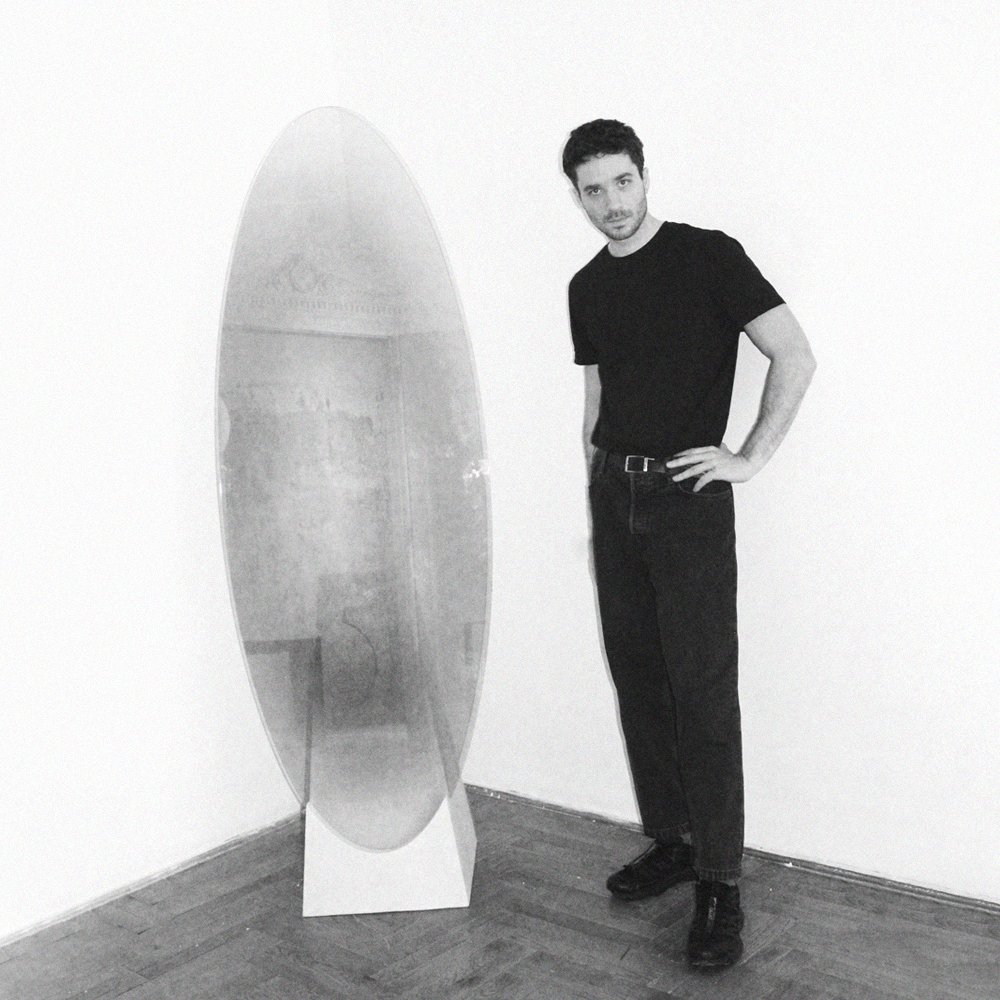
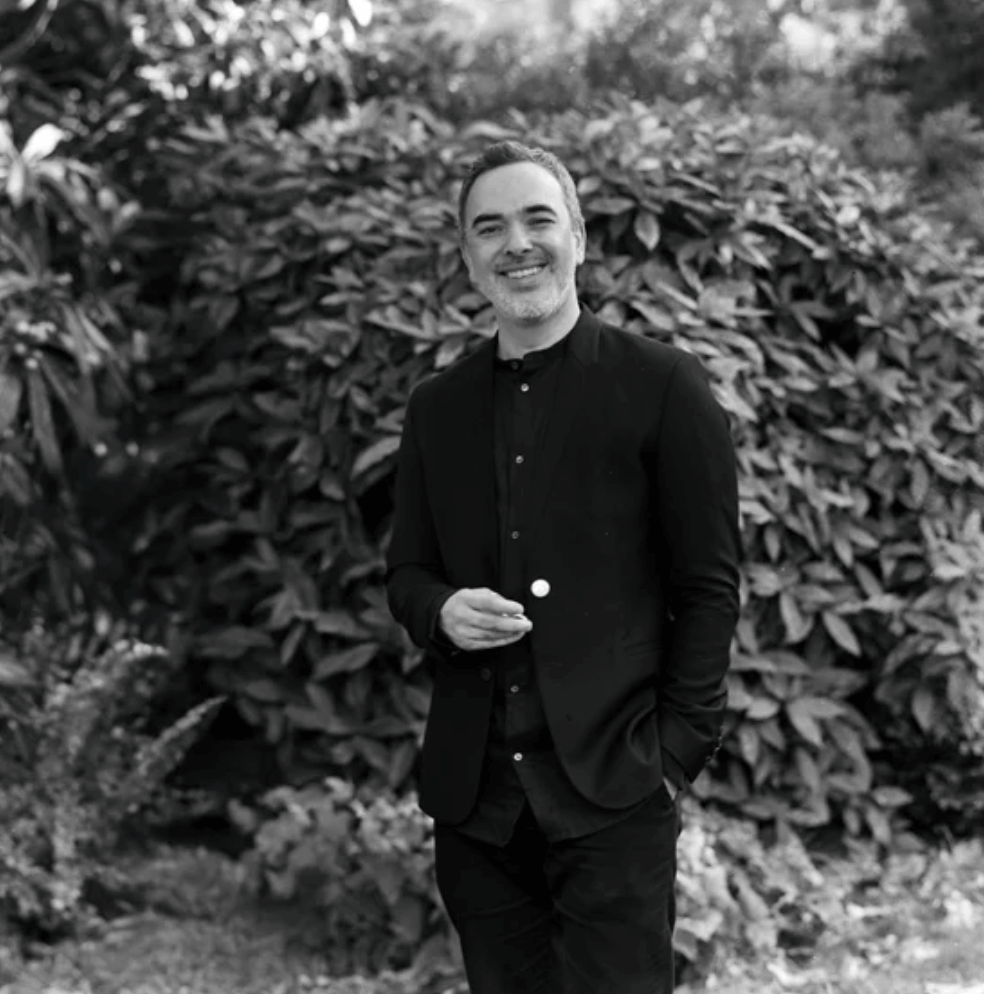
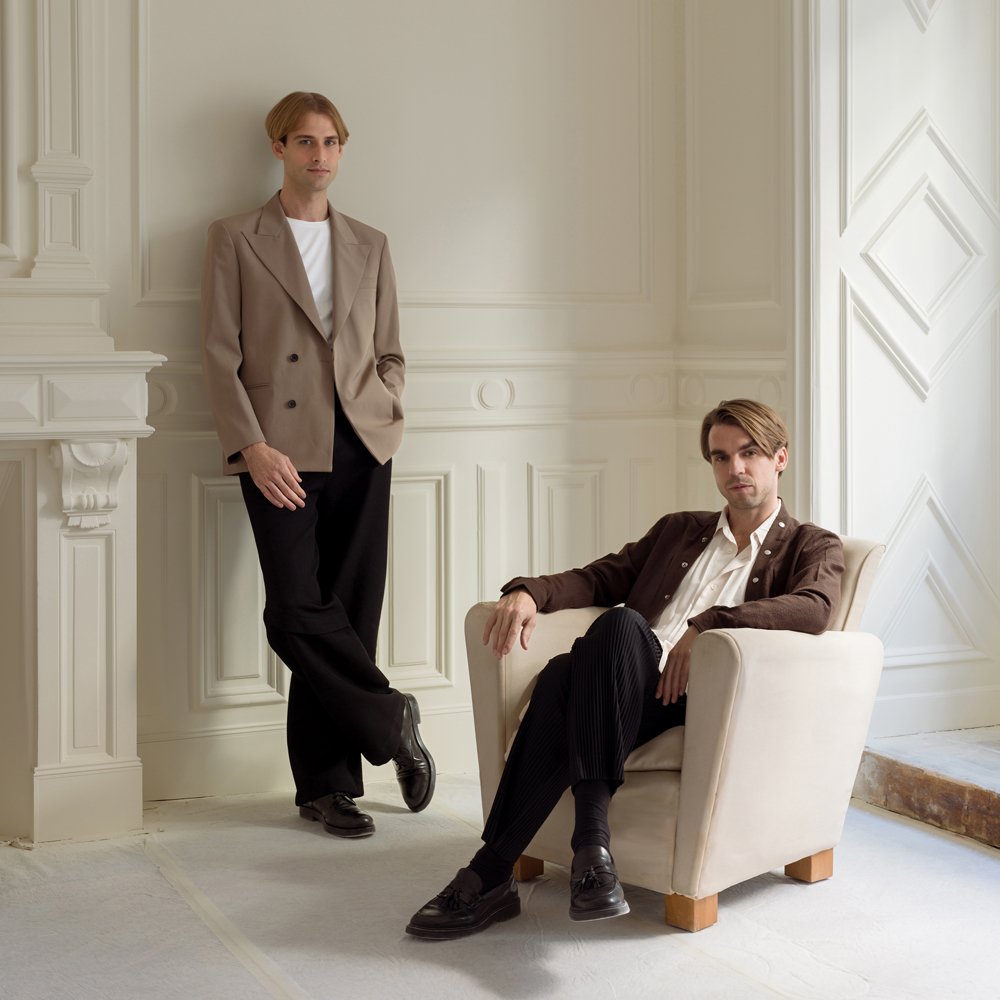
Emaho: You met in 2008 and, by 2012, you had opened the gallery together on rue de Lille. Four years is not such a long time to go from meeting someone to building both a business and a life together. What was it, during those early years, that made you realize that this story deserved to give birth to a gallery, and not simply to a relationship?
Maylis: You are absolutely right, only four years. When I speak about our meeting, I think of the moment when I discovered Charles’s apartment, with all the signs of our shared tastes: the objects, the books, the music playlist, the film collection, the atmosphere of the apartment. I felt at home.
Charles: For my part, this feeling of intellectual symbiosis was mutual, and it immediately generated endless conversations about life and art. We still laugh about them today. Living with art, surrounded by art, haunted by the creativity that surrounds us, whatever form it may take, is perhaps a philosophy of life – what we might call hedonism: the pursuit of pleasure that contributes to harmony and to a certain form of happiness.
Maylis & Charles: The eternal question of whether a couple is made up of two people who are alike or complementary – or simply both, in a search for balance. It therefore quickly became obvious that our careers should come closer together and eventually merge.
Emaho: Maylis, you started as a painter before turning to the decorative arts and building a network of craftspeople throughout France. Charles, you were already working with some of the finest artisans in the country on bespoke furniture before Galerie MAY existed. When you eventually brought these two worlds together, what first shaped the identity of the gallery: the painter’s eye or the architect’s discipline?
Maylis and Charles: An excellent observation.
Charles: Maylis brought the spirit of the painter and sculptor: a liberated gesture, inspired by a controlled form of delirium. She was leaving behind the experience of “art for art’s sake” and the questions posed by the blank canvas, to move, confidently and happily, towards what we might call “applied art”: the creation of objects, furniture, and interiors.
Maylis: Charles brought the rigor of line, drawing, and proportion — the habits of an interior architect inspired by his absolute masters of twentieth-century French design: the décorateurs ensembliers, André Arbus, Marc Duplantier, and Jean-Michel Frank. These creators were themselves inspired by an immense cultural heritage, long before the word “designer” existed. This work, conceived together, was then brought to life by wonderful artisans discovered throughout France.
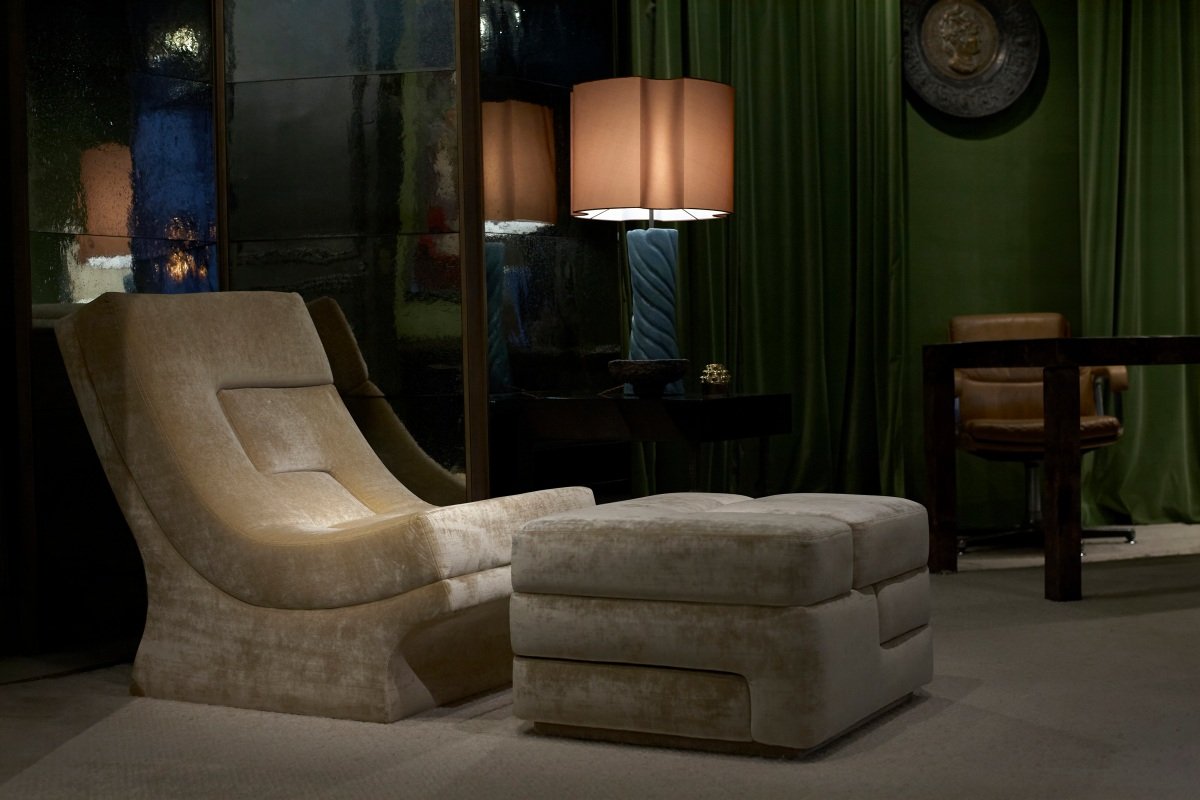
Emaho: You say that you want to revive traditional French craftsmanship such as marquetry, lacquer, and ceramics, while giving it a resolutely contemporary touch, rather than treating these techniques as museum pieces. Where, in concrete terms, do you draw the line between respecting a technique that is centuries old and transforming it to the point where it ceases to be what it originally was?
Maylis & Charles: It is somewhat the question of the artist-craftsman. In previous centuries, they were one and the same person: the craftsman, with his expertise, was also the creator. Today, this is something worth reflecting upon. With all the respect and admiration we have for the craftsman, where does the craftsman stand in relation to the artist?
Emaho: You describe your pieces as “antiquities of the future,” a contradiction that is both strange and beautiful: something entirely new to which one has already given the weight of history. When you design a new piece, do you actually think about how it might be perceived fifty years from now, or is it more of a feeling that emerges once the piece has been created?
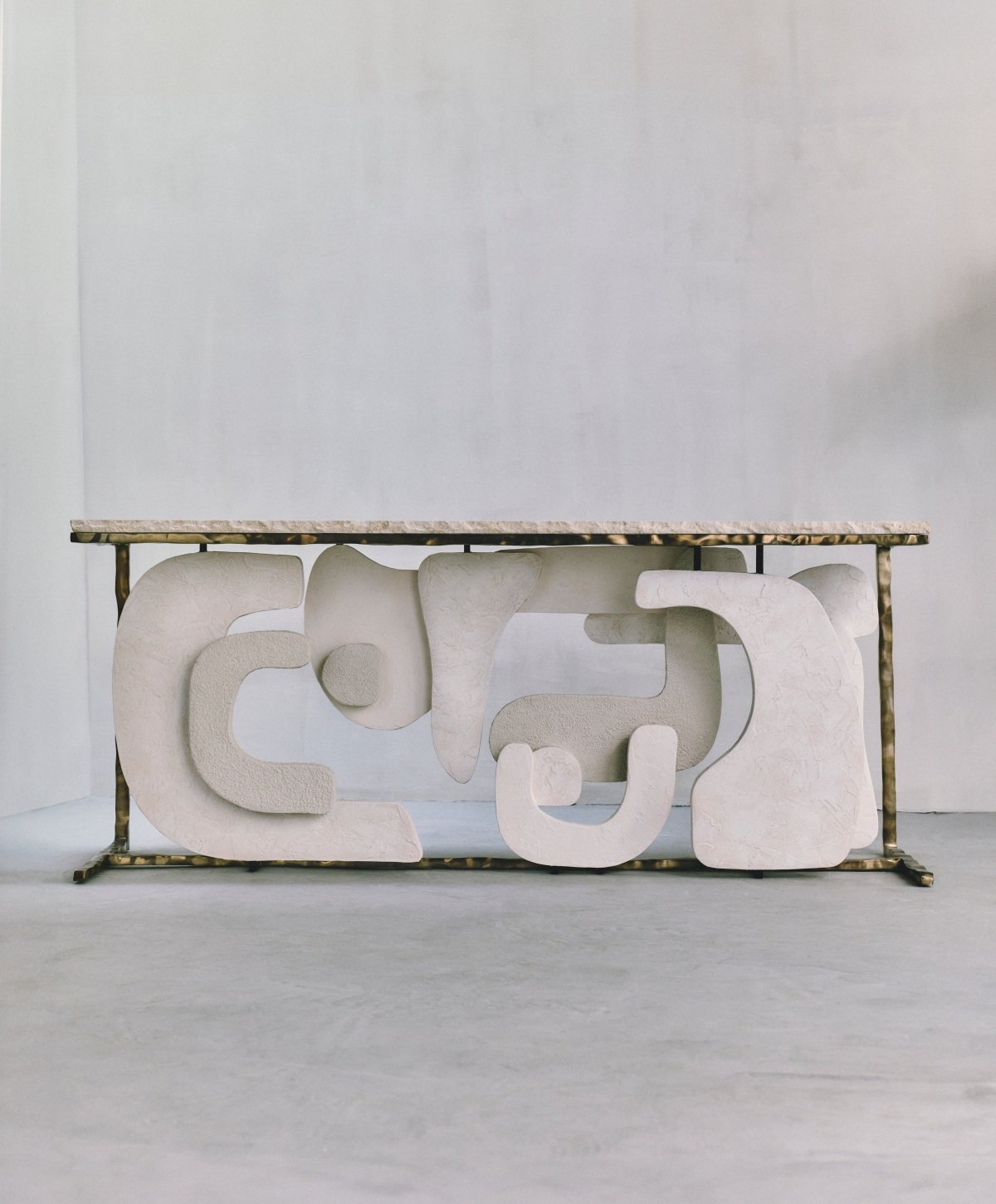
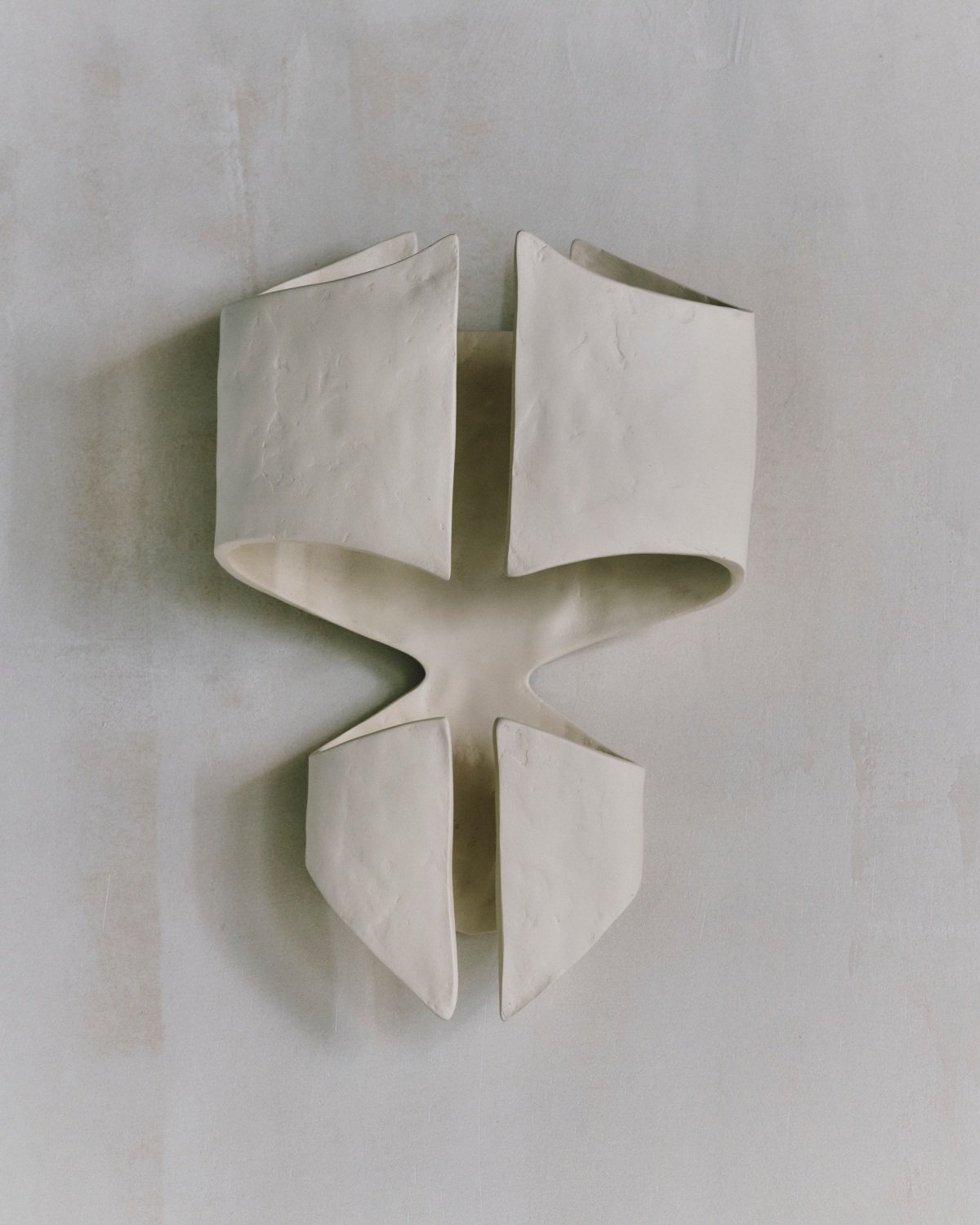
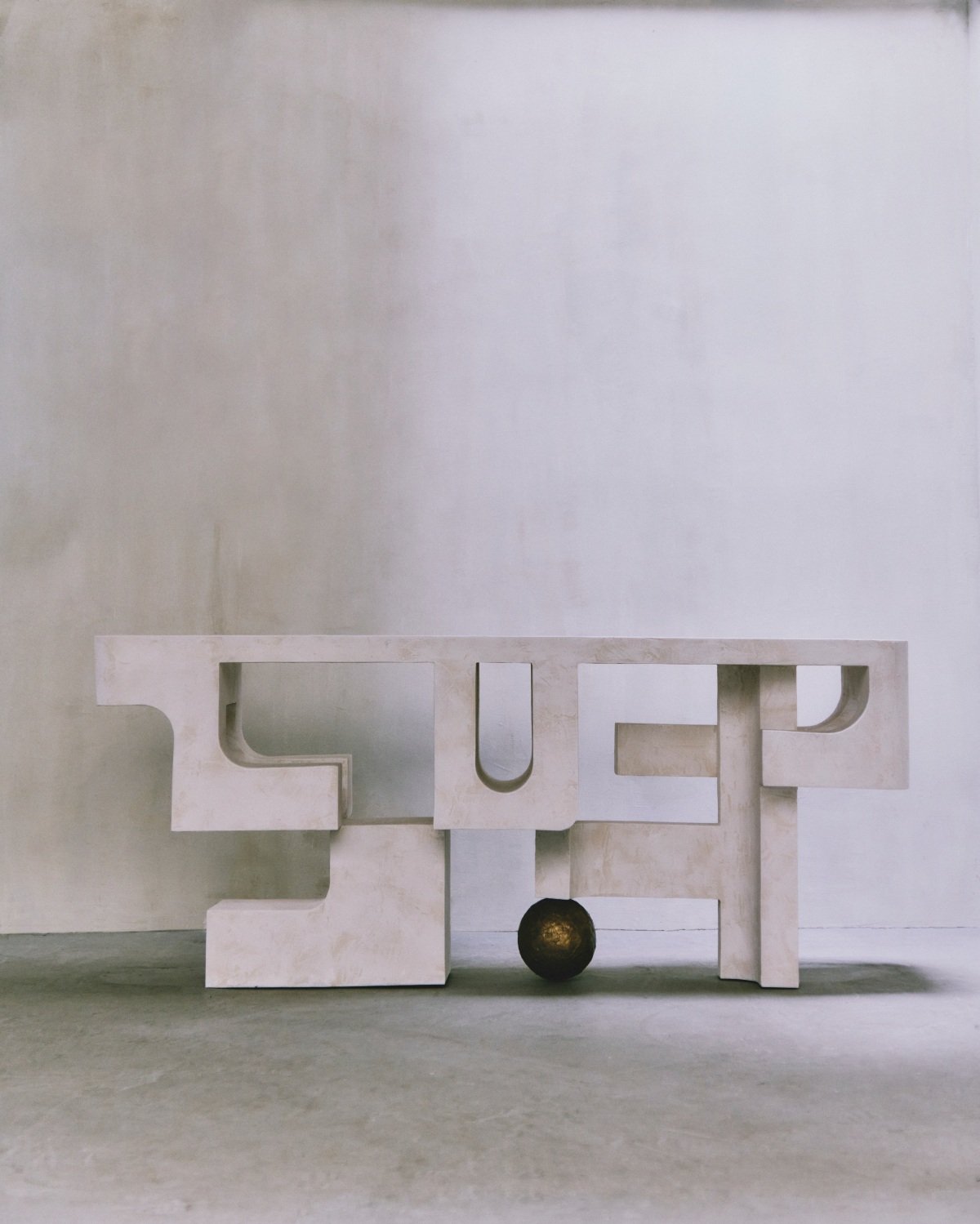
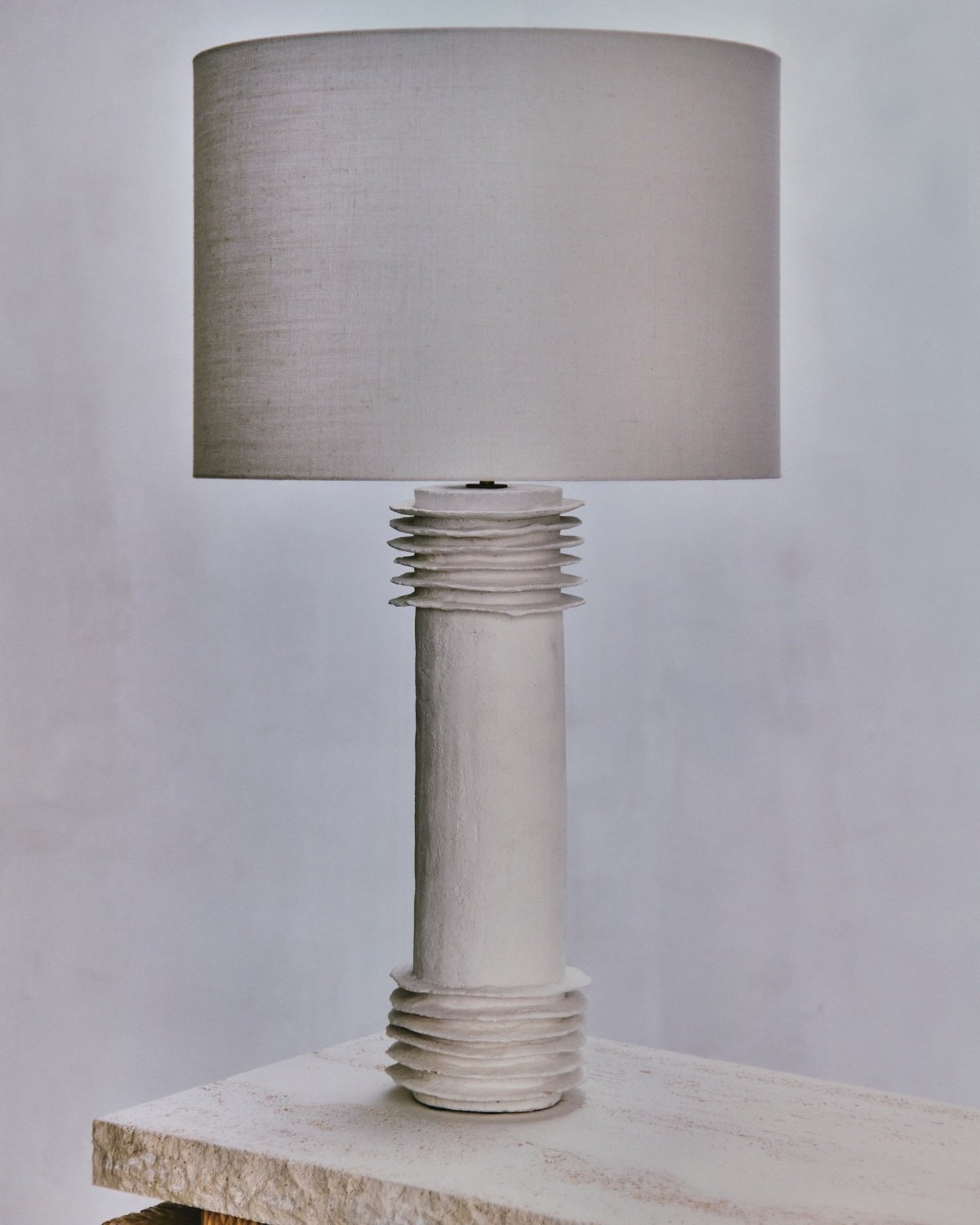
Maylis & Charles: We do not create an object for its own sake, nor for the purpose of personal recognition, but for what the object brings to an interior, in a desire for harmony. These pieces are meant to inhabit, share, and compose worlds; to contribute to what will become the soul of a place — the emotional impact that we simply call, in everyday language, an interior, with all the mystery it contains.
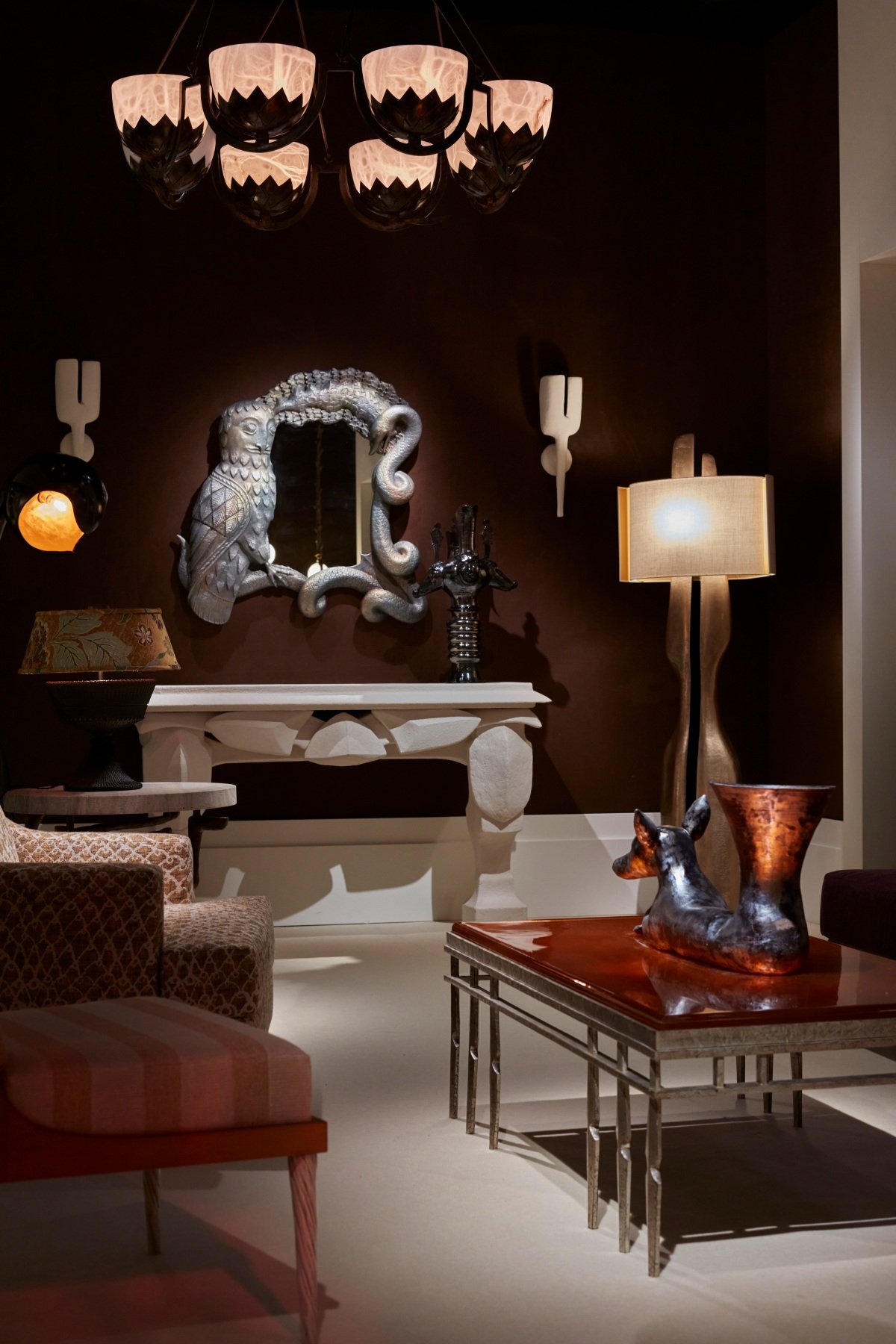
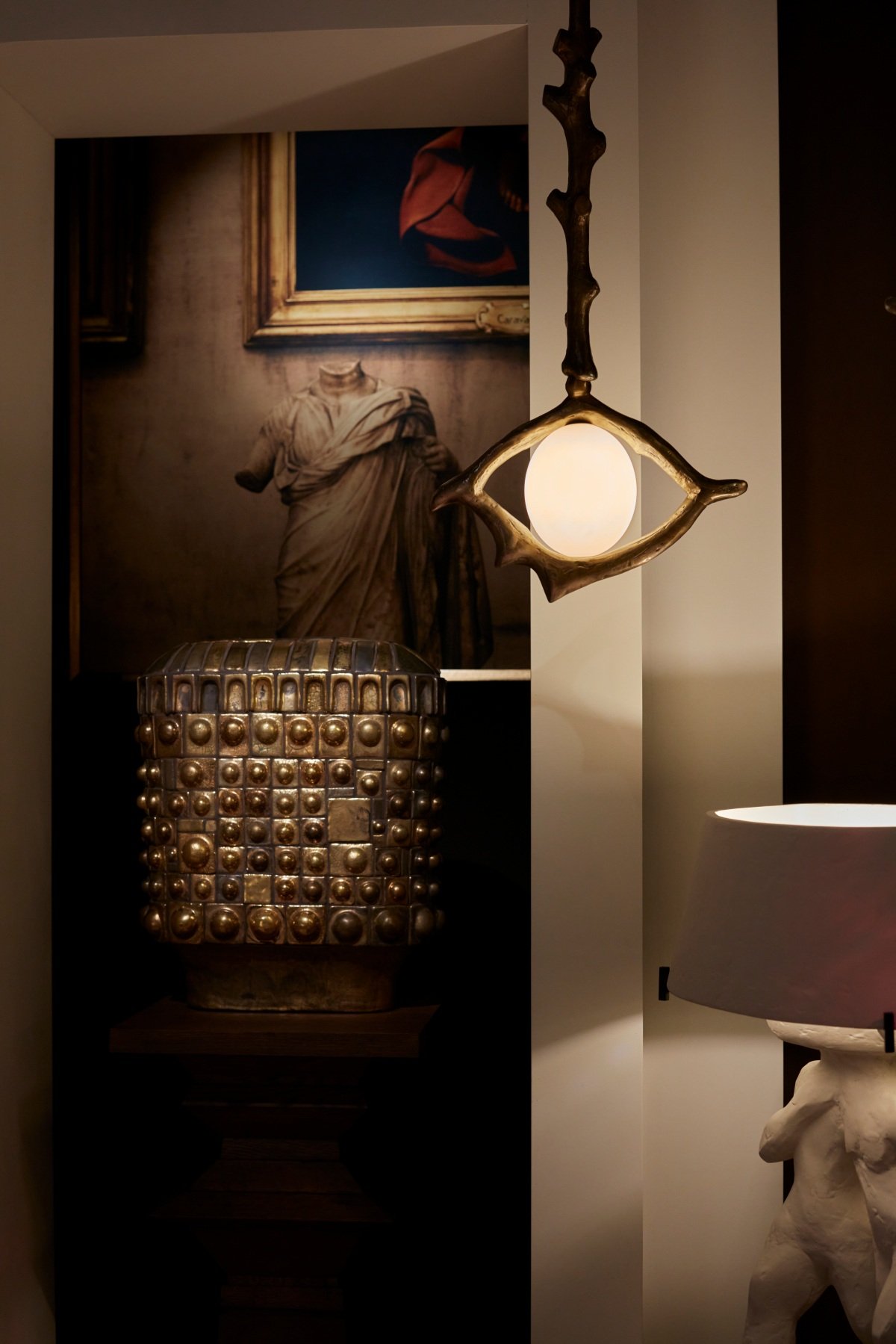
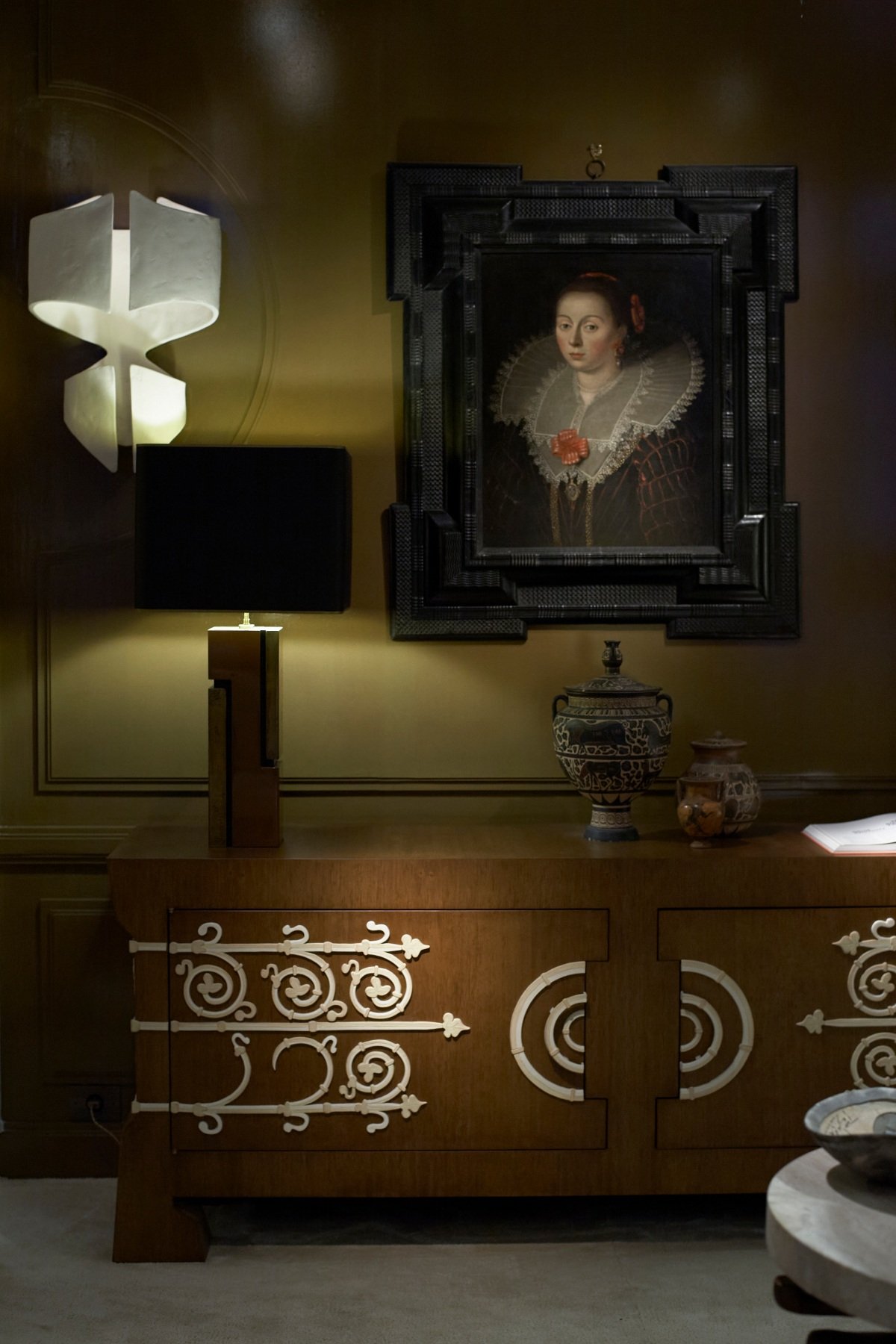
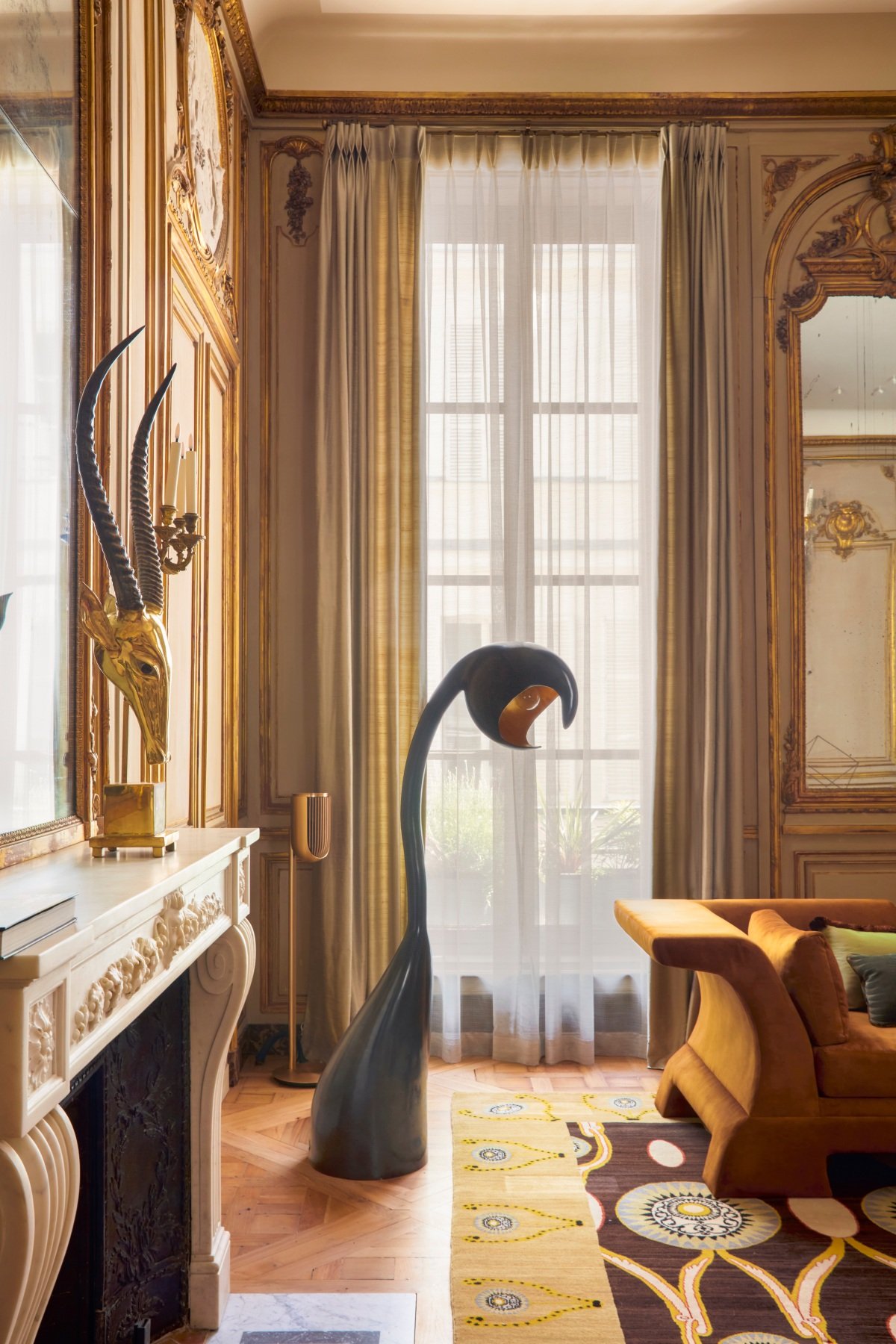
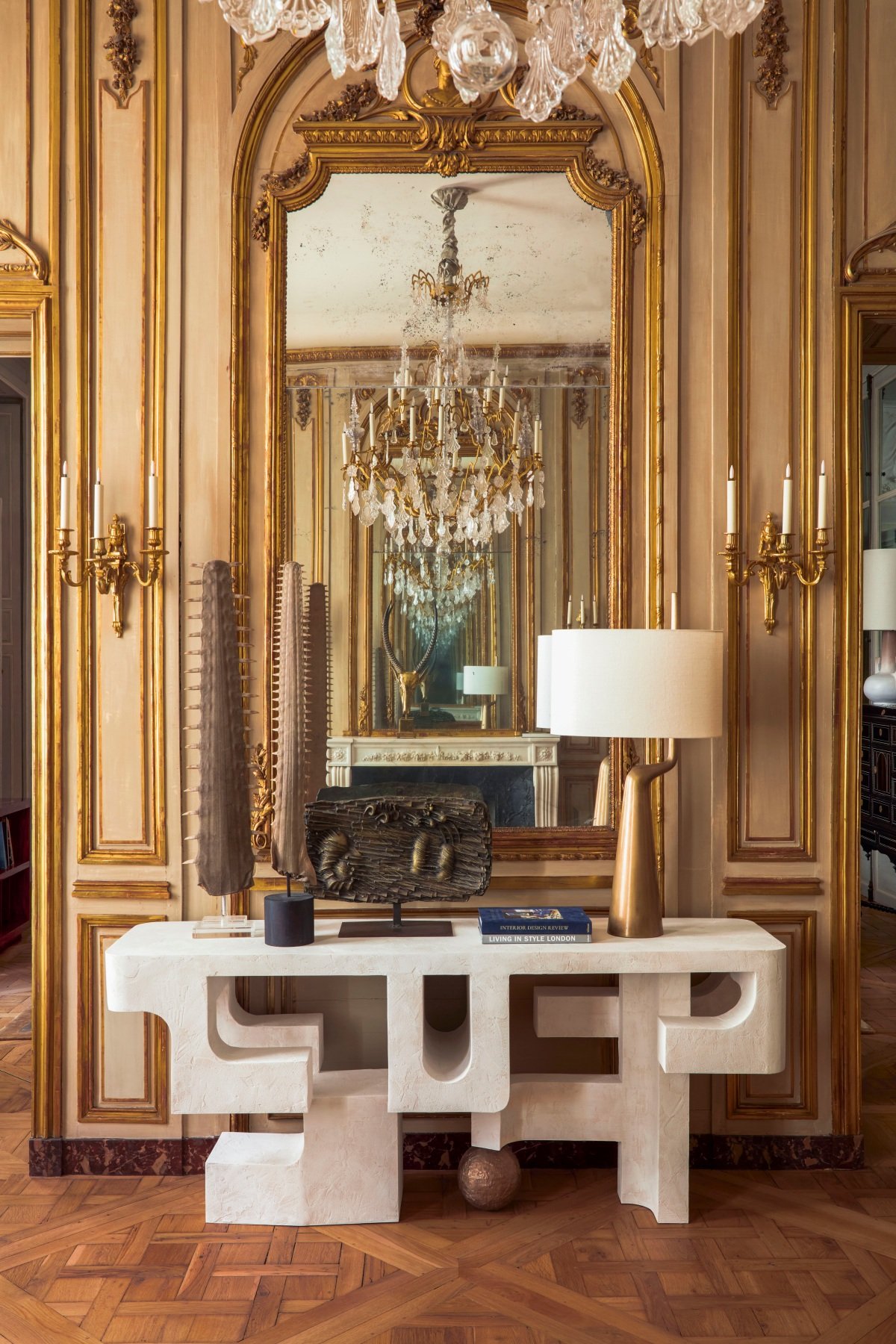
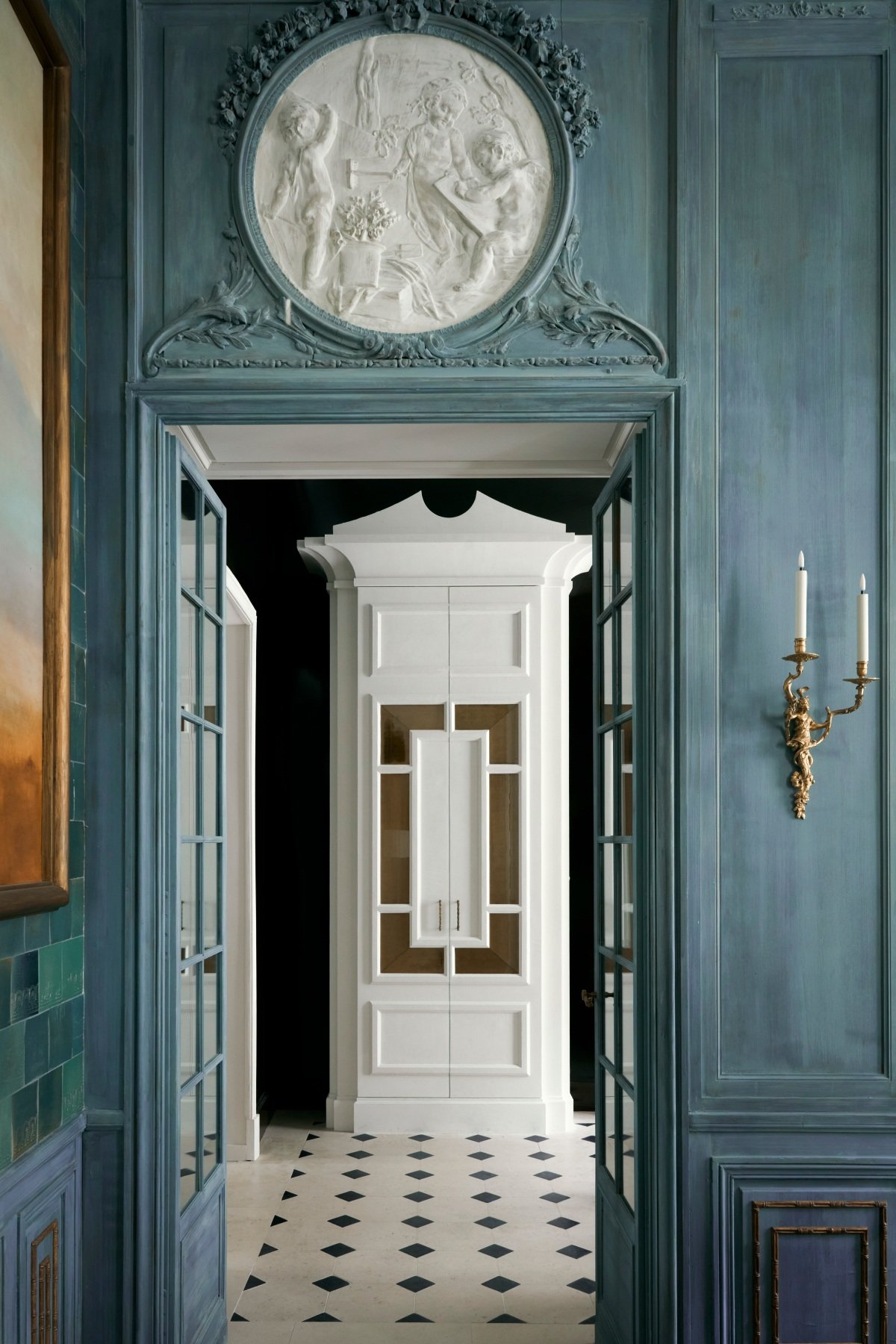
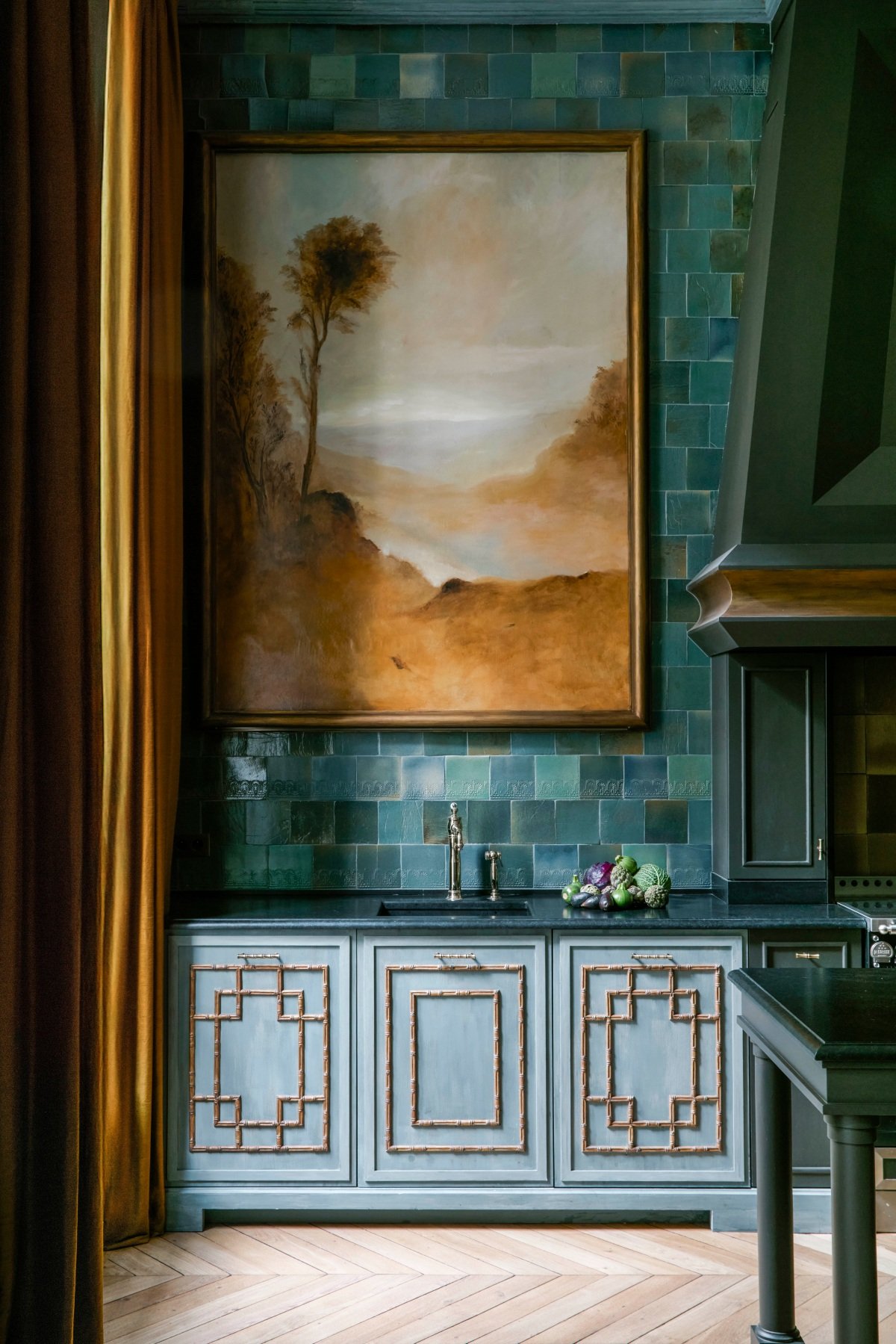
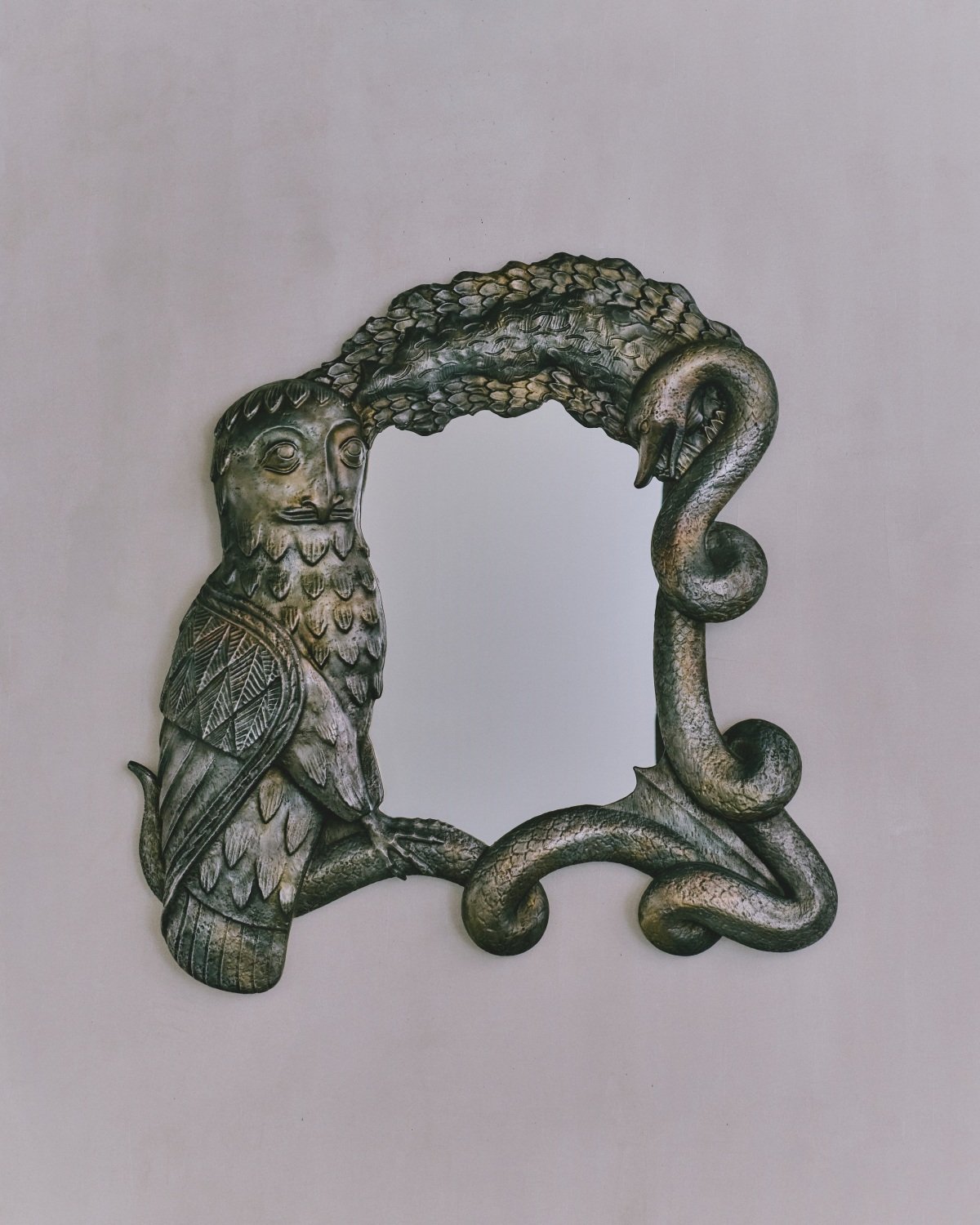
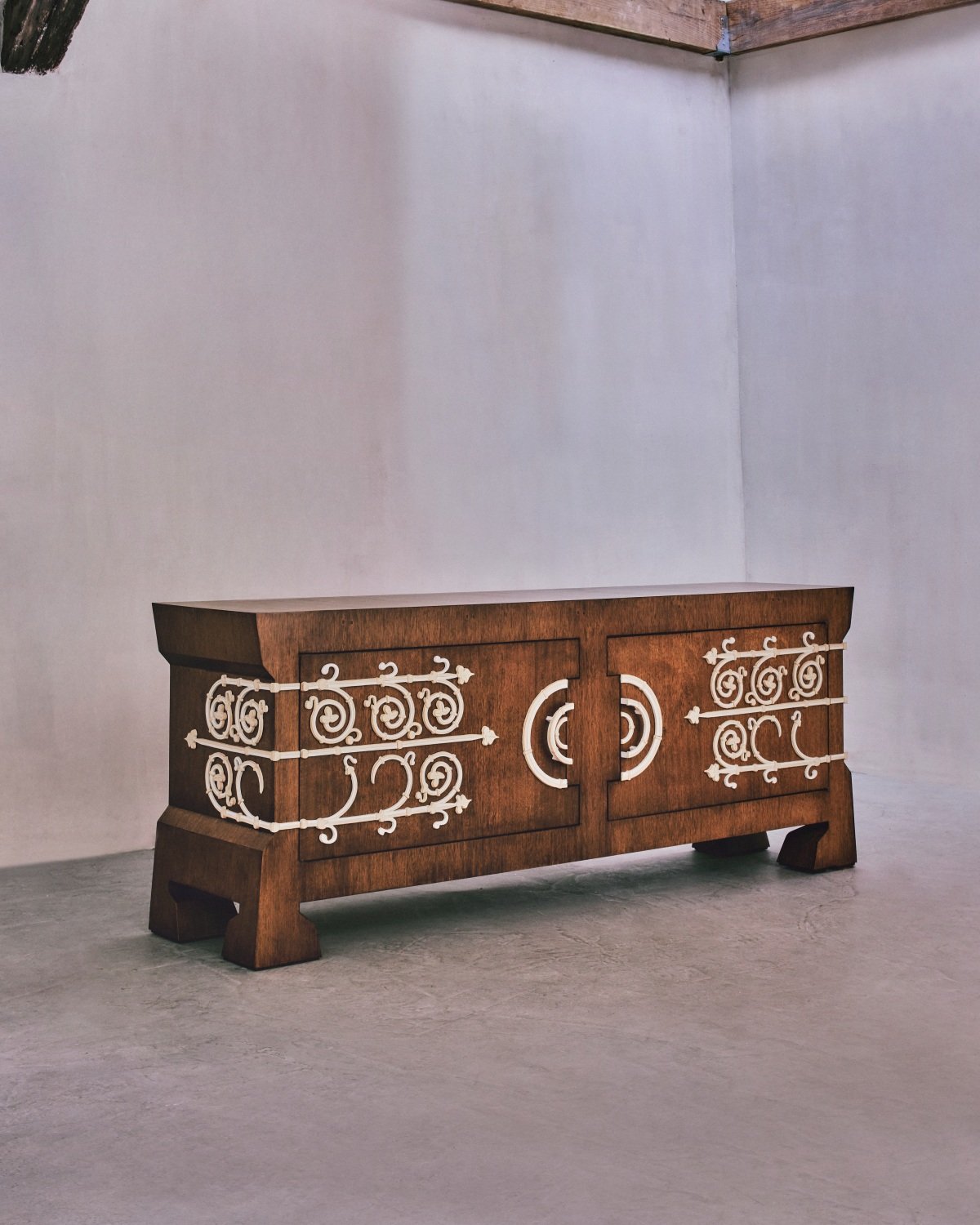
The power of the interior is the very subject of our three galleries on rue de Lille in Paris: walls treated with personality, our creations presented alongside antiques, paintings, and works by artists.
And it is fascinating to see the positively disconcerted reaction of our visitors, who discover our “antiquities of the future” without being able to precisely date these pieces, whose timeless lines follow no fashion. And we dare say that, almost magically, our pieces can exist and coexist with other styles in a London apartment, a Parisian apartment, a New York penthouse, or a Venetian palazzo.
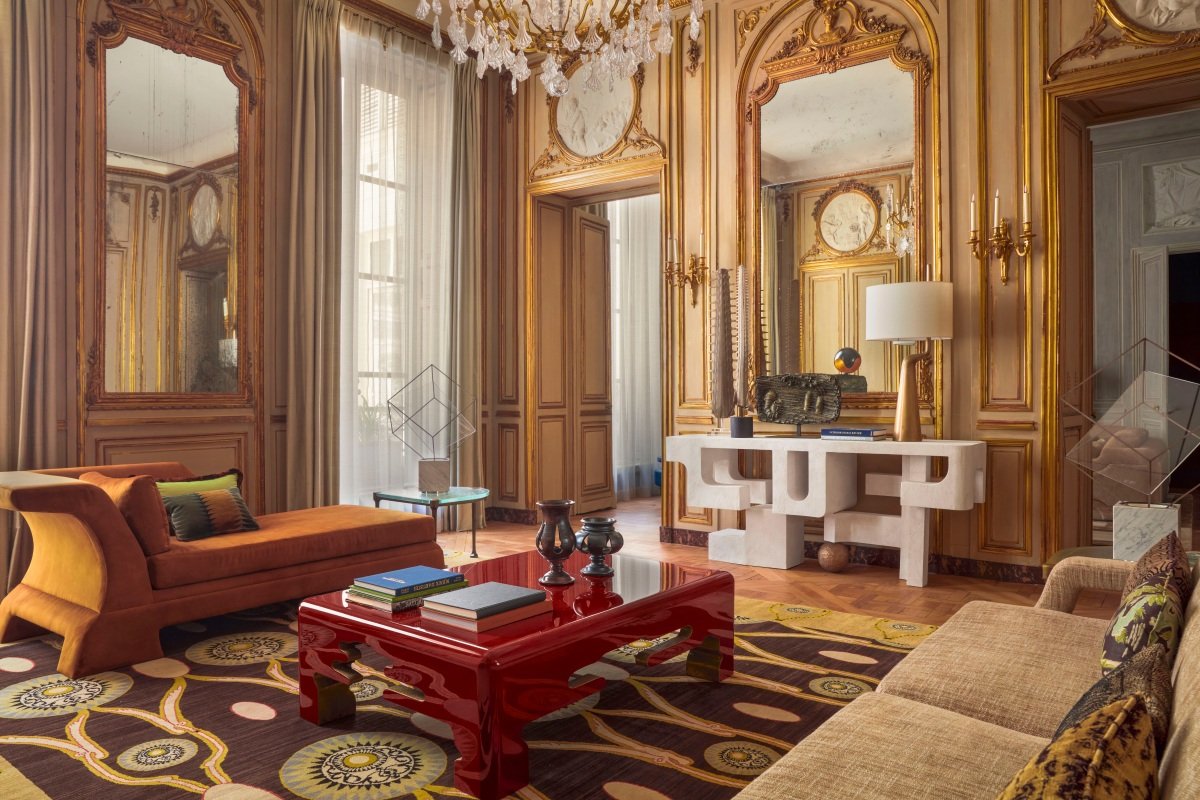
Emaho: Your work fully embraces opulence and a taste for detail, at a time when much of design has moved in the opposite direction: pared back, quiet, minimalist. What gave you enough confidence to go so directly against the current rather than follow the direction taken by the rest of the industry?
Charles & Maylis: Your description is remarkably accurate. We have always wanted to avoid the trap of the fashionable sofa, the chandelier that belongs to a particular moment in time. The minimalist movement, which was brilliant, became a lever for justifying the impoverishment of interiors over the past few decades: the abandonment of ornamentation and fantasy, the simplification of forms, the disappearance of colour in favour of white, beige, and grey, and an obsession with dark wood.
Major figures in the world of decoration achieved worldwide success by following these principles, addressing a wealthy clientele that was unfortunately lacking in cultural references, eager to furnish itself according to the spirit of the times. And, strangely enough, we now observe an incompatibility between warm, comfortable, expressive interiors and contemporary art, as though the two subjects deliberately avoided one another. New collectors rarely live in decorated interiors.
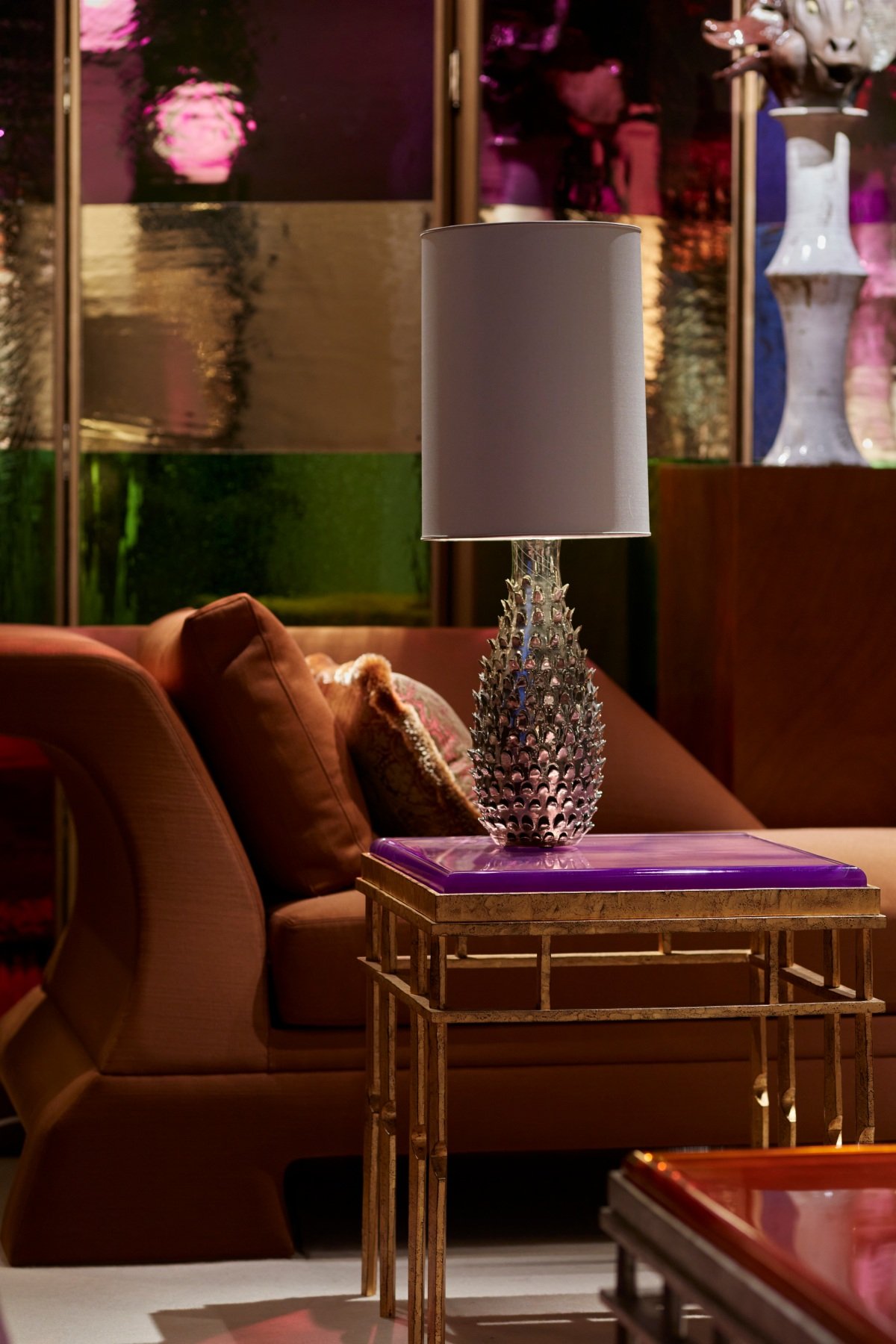
Our response, therefore, was to deliberately move in the opposite direction: to push colour, combinations of materials, forms, and opulent and varied styles, drawing on multiple sources of inspiration. Built on five pillars: classicism, rock, sexy, ethnic, art. These values reconnect with, without copying, our models from the past, such as Alain Demachy, Henri Samuel or Jean Dive in France, David Hicks in England, and Billy Baldwin, Tony Duquette and others in the United States.
Emaho: You’ve described your pieces as a blend of masculine and feminine, of curves and straight lines, of purity and boldness. Is this tension something the two of you actually discuss in the studio, with one of you pulling toward straight lines and the other toward curves, or is it a feeling each of you experiences individually within a single project?
Maylis and Charles: Another excellent question.
The bold, free forms of the woman painter naturally and spontaneously meet the curves, counter-curves and taut lines of the male architect, in search of a pairing that produces an inexplicable harmony.
We do everything we can to make the magic happen. But it often happens that an object is conceived in a joint gesture, the product of a drawing made “four-handed.”
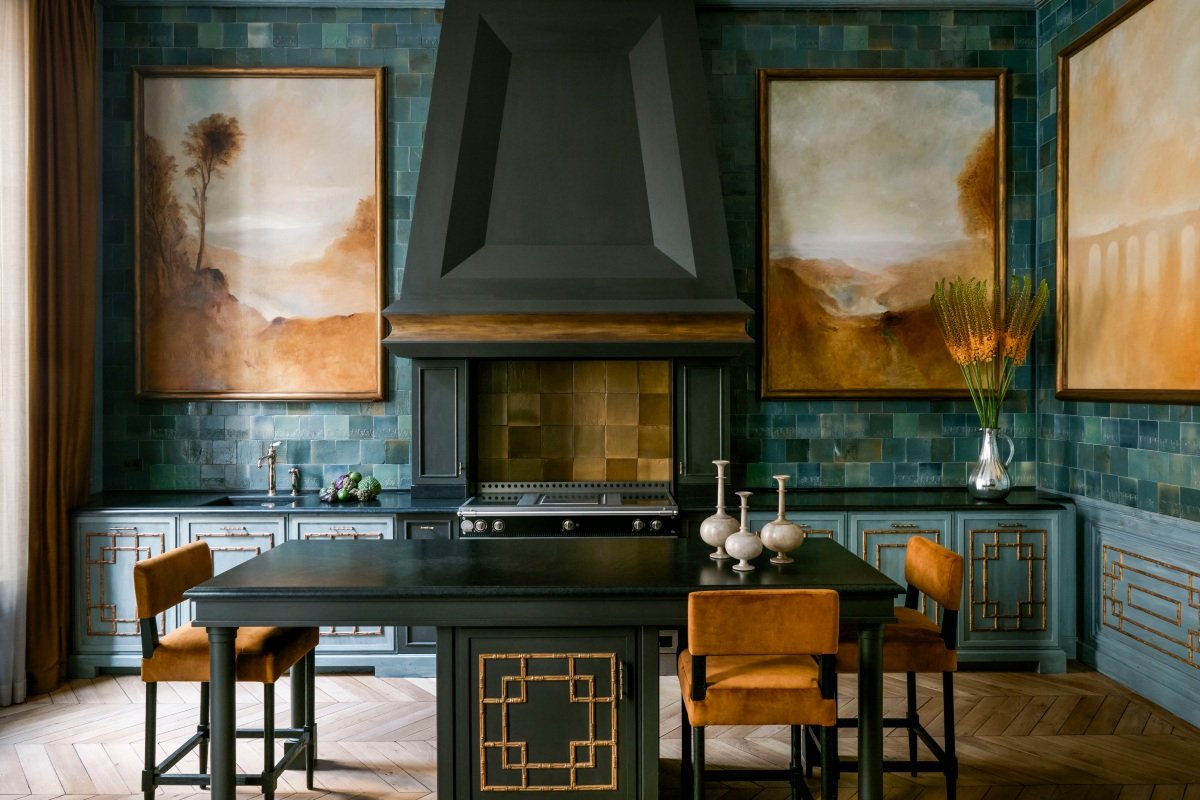
Emaho: Alongside your own furniture, you also present antiques and works by emerging artists in the same spaces, setting pieces that are centuries old in dialogue with entirely new creations. How do you decide that a work by an emerging artist truly belongs in that conversation, alongside authentic antiques and your own creations, rather than seeming to compete with them?
Maylis and Charles: According to our formula, which we offer with a wink, our ambition is “to write the pages of the decorative arts of the 21st century.”
As we were saying, our objects are meant to be part of a whole. We refuse to be self-centered in a narrow total look, and we are happy to mix things up.
Like the décorateurs ensembliers, we look for the right staging, the right balance between objects, eras and styles, in an alchemy that brings out the soul of a place in all its majesty: a waltz between the material and the immaterial, an instinctive process with no recipe or method.
Emaho: You draw heavily on 1940s design and on 20th-century decorative arts, a period many associate with a very particular idea of French elegance and its formalism. In your view, what did that era truly understand about beauty and craftsmanship that has since been lost in how furniture and interiors are designed and made today?
Maylis and Charles: This period, the 1940s, long shunned and paradoxically very productive in France despite a terrible context, brought forth incredible talents. Within the same group of decorators, it produced several quite diverse movements, which emerged in the late 1930s and lasted until the 1950s. One notices an evolution toward a certain lyricism, a certain eccentricity, and a return to ornament.
The Baroques, who, between architecture and theatre sets, imagine furniture and decors with poetry and humor in a dreamlike spirit, such as Emilio Terry or Serge Roche. The Neoclassicists, who reinterpret the French styles of the past with rigor, poetry and fantastic inventiveness, such as André Arbus, Louis Sue and Gilbert Poillerat.
The Moderns, who assert themselves through a solemn, strict and sober aesthetic, such as Marc Duplantier and Jean-Michel Frank. All of them were outstanding draftsmen, and it is essential to know their work.
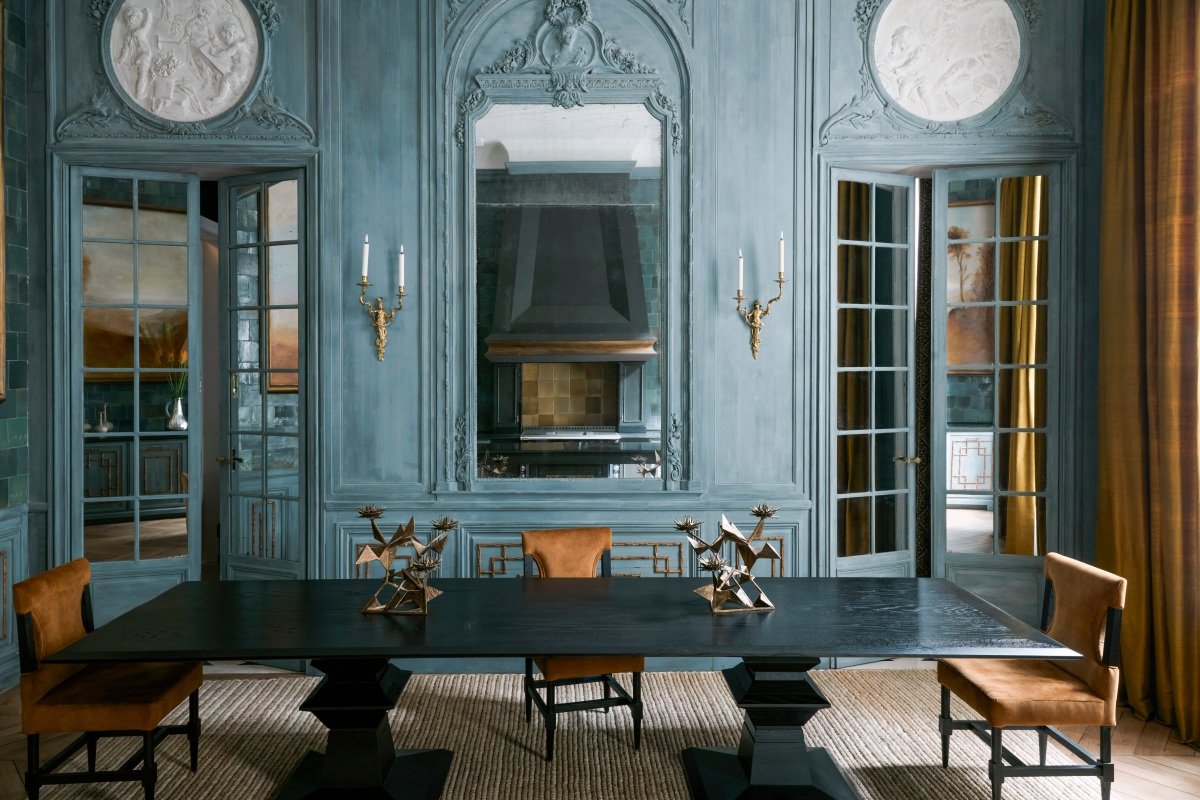
Emaho: Running a business together while being partners in life as well as in work means the two conversations are never truly separate: a disagreement over a lacquer finish can easily turn into something else at dinner. How do you concretely preserve these two relationships, the professional and the personal, so that they don’t constantly blur together?
Maylis and Charles: It’s something of a miracle. Our professional life blends into our life as a couple without any difficulty and without boundaries. Our many preoccupations and conversations are shot through with music (all kinds of music), literature, cinema, painting, sculpture; in a word, art, which pervades our lives. Our inspirations come from all these fields, in short, from what is broadly called “culture.”
Emaho: More than ten years after settling on rue de Lille, Galerie May has built a truly singular identity in a city that nonetheless has many design galleries. Looking back at the road traveled so far, is there a skill or technique that you haven’t yet incorporated into your work and that you each secretly hope to experiment with soon?
Maylis and Charles: Thank you for that wonderful compliment.
Maylis: I am perhaps more adventurous than Charles when it comes to exploring new materials. I like to use the full range offered by new technologies, which allow my wildest drawings to come to life. I would like to conclude with this marvelous page from Balzac:
The shade of the hangings, the fabrics, the hospitality of the chairs and the grace of the whole caress the eye as much as pretty smiles do. Apartments, whether sympathetic or unsympathetic, rich or poor, attract, hold or repel just like the people who live in them. They awaken or numb the heart, warm or chill the mind, make people speak or fall silent, make them sad or cheerful, and finally give every visitor an irrational urge to stay or to leave.”
Charles: Personally, I would reproach myself for not having explored high-tech materials and avant-garde techniques enough so far, which perhaps belong more to industry. I am going to look into the subject, and it is surely not incompatible with a neoclassical approach… a fascinating subject. I would like to conclude with this surrealist remark by the poet and writer Blaise Cendrars, who in the 1930s placed “the trade of interior decorator-ensemblier among the seven wonders of the world, between the internal combustion engine, the ball bearing, the cut of a great tailor, the shaved nape of a garçonne, and the furniture music of Erik Satie.”