Emaho: You studied architecture at Sharif University of Technology in Tehran, widely regarded as Iran’s most prestigious technical university, before co-founding Ravagh Group in 2013. Most architects spend years inside established firms before striking out independently. You moved relatively quickly toward founding your own practice. What did you understand about what you wanted to build that made the independent path feel more urgent than the institutional one?
Padideh Azin: I did not study architecture at Sharif University. My academic background is in mathematics with a focus on industrial engineering. After completing my studies, I pursued a second degree in Industrial Design and then entered the professional world independently. For nearly ten years, I worked on my own, leading a number of significant projects and building my experience in architecture and design. Later, I founded Rava, which grew out of that independent practice.
Throughout my career, I have preferred to work independently rather than for a company or organization, developing my own projects and pursuing my own vision.
Emaho: Ravagh Group began in 2013 with an initial focus on interior design projects, undertaking over 50 projects in that first period alone across hotels, offices, restaurants, residential flats and villas. That is an unusually wide typological range for a young practice finding its feet. Was that breadth a deliberate strategy to understand the full spectrum of how people inhabit space, or was it simply the reality of building a client base from scratch in Tehran’s competitive design market?
Padideh Azin: As I mentioned earlier, Ravagh was founded in 2013, but I had been working independently in architecture and design for almost ten years before that. My main interest has always been creating spaces that improve the way people live and work. I am not focused on a specific type of project; instead, I am drawn to projects that I find interesting and meaningful. This has led me to work on a wide variety of projects, and that diversity continues to be an important part of my practice.
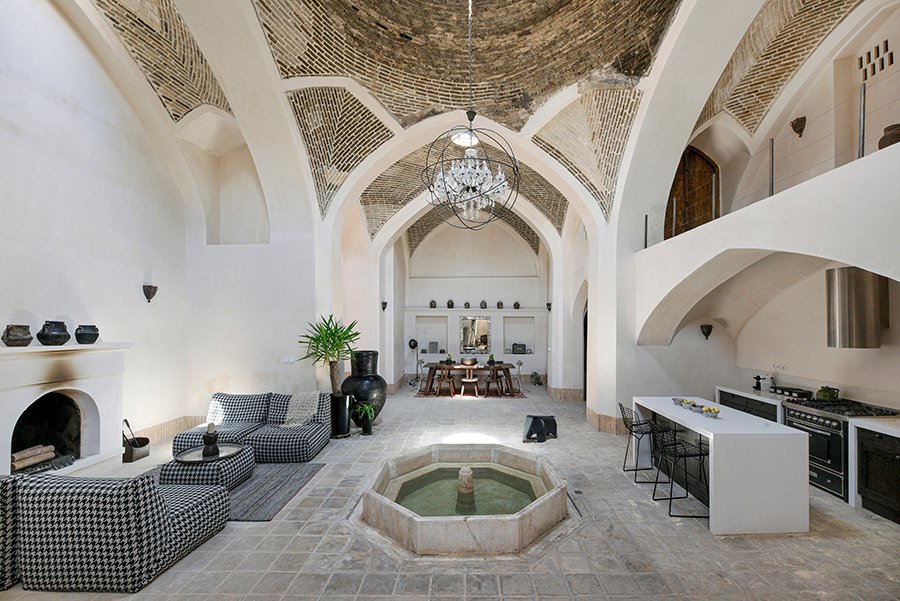
Emaho: Your work on the Azin Historical House in Kashan, a 300-square-metre conservation and renovation project completed in 2016, required you to breathe new life into a site that had served as a dye factory during the Qajar era, in a city devastated by the earthquake of 1778 during the Zand dynasty and carrying centuries of architectural memory in its remaining fabric. Working in Kashan is working in one of the most historically charged urban environments in Iran. What does that density of history ask of an architect that a contemporary brief in Tehran does not?
Padideh Azin: My approach to historic restoration is to preserve the spirit and identity of the building. A historic building should continue to remind people of its history and the era it comes from. At the same time, I believe that the way we live in these buildings should be contemporary. While the character and atmosphere of the original structure should be respected, the spaces and amenities should support modern life. For me, successful restoration is about finding the right balance between preserving the past and creating a comfortable environment for the present.
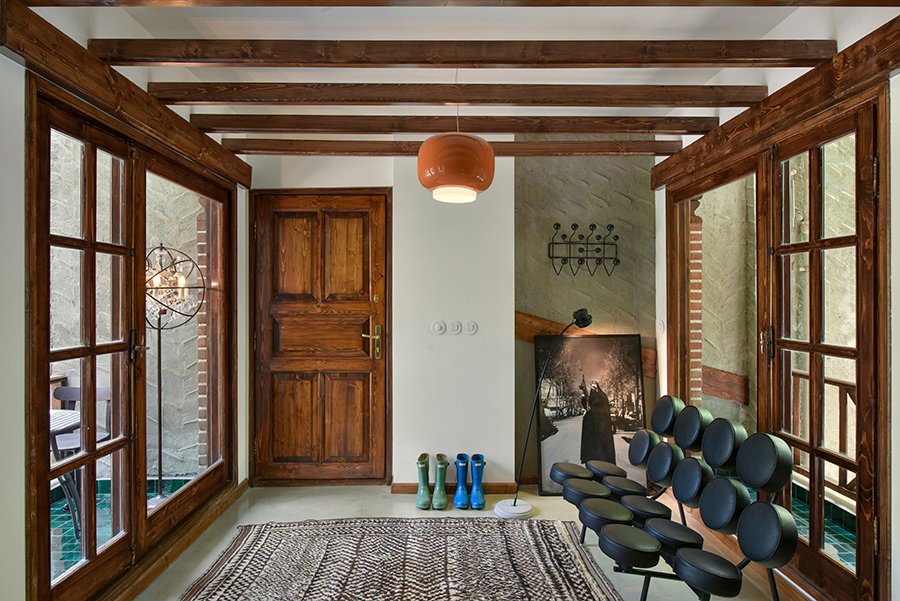
Emaho: The Weaver Loft in Kashan, completed in 2021, transformed a Qajar-era textile factory into a contemporary residential house for client Farid Akhavi, with your design team including Saba Shaboudagh, Mina Taghavi and Toktam Kouklan and landscape design by Salar Ayazkhou. You described the key challenge as preserving the spirit and original fabric of the building while injecting a contemporary feel. What is the specific moment in a heritage renovation project when you know you have gone too far, and how do you pull back from that edge?
Padideh Azin: Living in historic buildings is largely about lifestyle, and it also depends on the client’s needs and expectations. In order to make these buildings comfortable for contemporary life, some adaptations are necessary compared to the way they were originally used. The goal is to introduce changes that allow people to live comfortably while still respecting the original structure. In this sense, successful intervention is about balancing preservation with the practical requirements of modern living.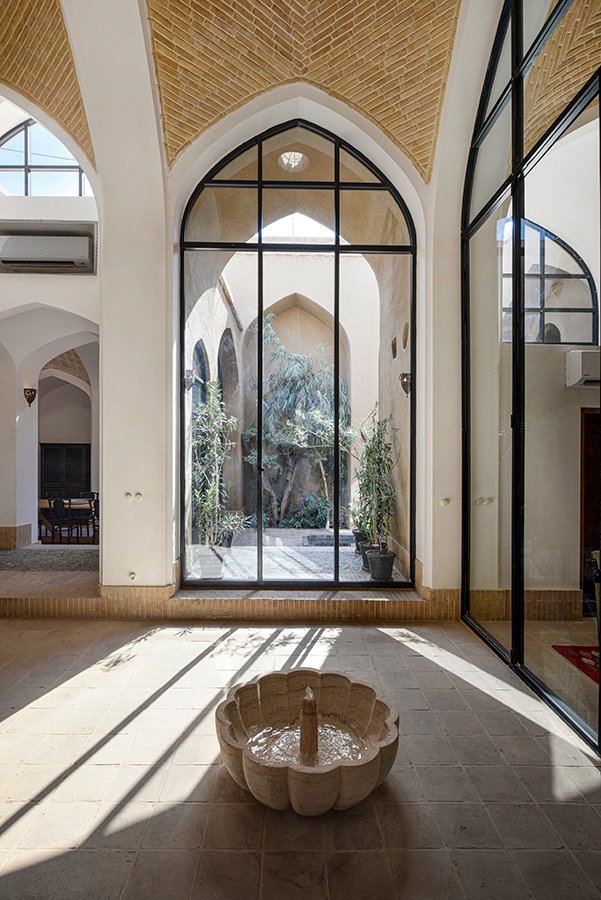
Emaho: Ravagh has established a dedicated Vitra space at Sam Center in Tehran, a partnership that places one of Europe’s most intellectually rigorous furniture and design brands inside the Iranian market. Representing an international design brand inside Iran involves navigating an entirely different set of logistical, cultural and commercial pressures than running your own architectural practice. What does bringing Vitra into Tehran require of you that designing a building does not, and what has that partnership taught you about how Iranian design culture sees itself in relation to European modernism?
Padideh Azin: To answer this question, I should first provide some context. In the partnership between Nima Teimourzadeh and myself, my responsibility was focused on architecture, interior architecture, and design, while Nima Teimourzadeh managed the overall business and represented several well-known European brands.
I have always had a strong interest in working not only in architecture but also in product design and curated collections. I always hoped that we could integrate a selection of products from brands I personally admire into our practice, both for use in our projects and potentially as standalone offerings. Having access to these products has also been very influential in my design process and has helped me a lot in developing the projects.
Emaho: You have designed the facade of a residential tower in District 22 of Tehran in the Chitgar area, a part of the city developing rapidly where the pressure to build tall, build fast and build economically is intense. Designing a facade for a tower is a very public act in a dense urban environment, one that thousands of people will look at every day without choosing to. What is your responsibility to the city in that kind of commission, and how do you hold onto an architectural conviction when the client’s brief and the developer’s timeline are pulling in a different direction?
Padideh Azin: I don’t have a project like that in my portfolio.However, I do have a clear set of architectural principles that guide my work. When there is a difference of opinion with a client, I always try to find a common ground and convince them through discussion and design. But if the difference is fundamental—if there is an ideological or conceptual disagreement—I often prefer not to take on the project.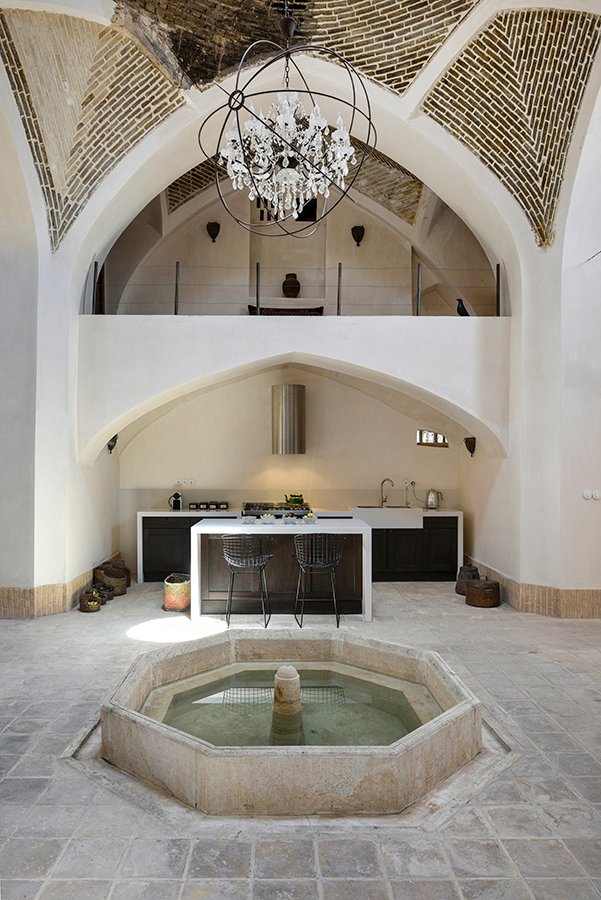
Emaho: You are a woman co-founding and leading an architecture and design practice in Iran, operating across construction sites, client negotiations, contractor relationships and international brand partnerships simultaneously. The construction industry everywhere carries deeply embedded assumptions about who holds authority on a site. What has been the most significant professional obstacle you have faced that had nothing to do with the quality of your work, and how did you navigate it?
Padideh Azin: Fortunately, throughout my career, I have not faced any professional barriers as a woman, and this has not been an issue for me in my experience. In general, I have been able to work without encountering gender-related obstacles.
Emaho: Iran has an extraordinarily rich architectural heritage spanning pre-Islamic Persian palace complexes, Safavid mosques, Qajar courtyard houses and twentieth-century modernist experiments, yet Iranian contemporary architecture remains largely invisible in the global architectural conversation compared to what emerges from the Arab Gulf or Turkey. As someone building a practice from inside that tradition, what do you think is the single greatest barrier to Iranian architecture receiving the international recognition its depth deserves?
Padideh Azin: As you mentioned, Iranian architecture has a very rich history. Unfortunately, after the revolution, a positive development that had been taking shape was interrupted, and Iranian architecture gradually shifted toward an international style that often lacks a distinct local identity. In my view, it is still very possible to create contemporary architecture that reflects Iranian identity, but this has not been explored enough in Iran. I find this situation regrettable, as I believe there is great potential to reconnect modern architecture with our cultural and architectural heritage.
Emaho: Your practice sits at the intersection of architecture, interior design and brand representation, three disciplines that require very different kinds of thinking and very different relationships with clients. When you co-founded Ravagh in 2013 did you intend to build something that moved across all three, or did the practice find its shape through the projects that came to you rather than through a deliberate plan?
Padideh Azin: From the very beginning, I was interested in all three fields—architecture, interior design, and working with products and brands. So this was a very conscious and intentional direction for me, rather than something that happened by chance or simply evolved through projects.I always wanted my practice to operate across these areas, as I see them as closely connected and mutually influential. This integration was part of my original vision when we started the practice.
Emaho: Looking at the body of work Ravagh has built across more than a decade, from heritage conservation in Kashan to residential towers in Tehran to international design partnerships, what is the project you have not yet been able to do that you feel most urgently needs to be built, and what would it say about Iranian architecture and about your own evolution as a designer that nothing you have made so far has been able to say?
Padideh Azin: My dream project is to design a small village in a beautiful natural setting in Iran. I would like the entire village to be designed by my office, guided by a clear Iranian concept that is in harmony with its natural surroundings.
For me, this type of project represents an opportunity to combine architecture, landscape, and local identity in a holistic way, creating a place that feels both rooted in its context and carefully designed as a unified whole.