Emaho: You were born in Yemen, spoke at TEDxSana’a in 2013 about the magic of street photography, and went on to complete a Bachelor of Arts in Government and International Relations from Clark University and a Master of Arts in Documentary Photography and Photojournalism from the University of Westminster, before completing a further Master’s in Photography and Society at the Royal Academy of Art in The Hague. A degree in Government and International Relations is not the conventional doorway into photography. What did that academic foundation give you about how you understand power, displacement and visibility that a purely artistic education would not have, and when did photography become the language you trusted more than policy?
Thana Faroq: That academic foundation gave me a way to look at images beyond aesthetics. It made me understand that a photograph is never innocent; it is shaped by where it is made, who makes it, who is looking, and who has the power to circulate it. It also made me attentive to the systems around people’s lives: borders, institutions, migration processes, class, language, and the unequal conditions that decide who becomes visible and who remains outside the frame.
A purely artistic education might have given me form and visual language earlier, but this background gave me a political awareness of the image. It helped me understand displacement not only as an emotional or personal experience, but also as something produced by histories, decisions, and structures. Photography became the language I trusted more than policy when I realised that policy often reduces people to categories: refugee, migrant, case, number, status.Photography allowed me to stay closer to the person, to contradiction, to silence, to the things that cannot be fully explained. I don’t see photography as separate from politics, but I trust it because it can hold complexity without trying to flatten it.
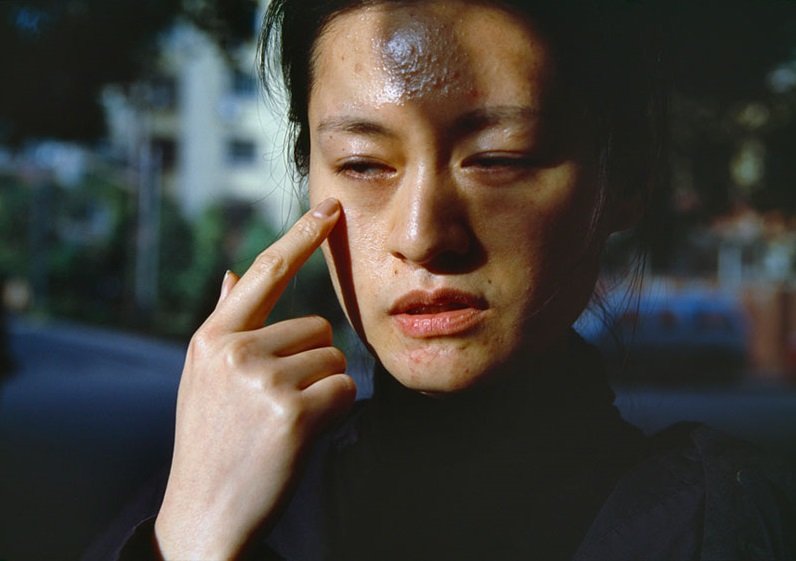
Emaho: Your first book, I Don’t Recognize Me in the Shadows, published in 2020 by Lecturis in the Netherlands, won the PhotoWien Photo Book Award in 2021 and was shortlisted for the Lucie Photobook Prize. The title itself describes a kind of dissociation, a person looking at an image of themselves and not recognising what they see. What was the shadow you were trying to recognise yourself inside when you made that book, and did finishing it change how you saw yourself, or did the not recognising remain?
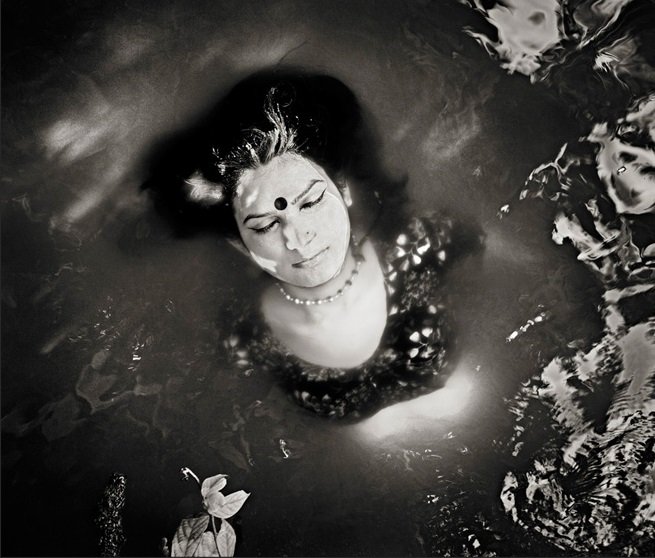
Thana Faroq: The shadow in my book was the space between the person I had been and the person I was becoming after migration. I was looking at myself through a life that had been interrupted, rearranged, and made unfamiliar. The title came from that feeling of seeing your own image, your own history, even your own body, and sensing that something has shifted beyond recognition. Finishing the book did not completely remove that feeling. I don’t think the work was about arriving at a final, stable self. Instead, it helped me recognize that identity is not fixed.
Not recognizing myself was not only a loss or a sign of uncertainty; it was evidence of growth, adaptation, and the ability to navigate different worlds without abandoning where I came from. The work allowed me to see transformation not as something to fear, but as a source of strength and possibility.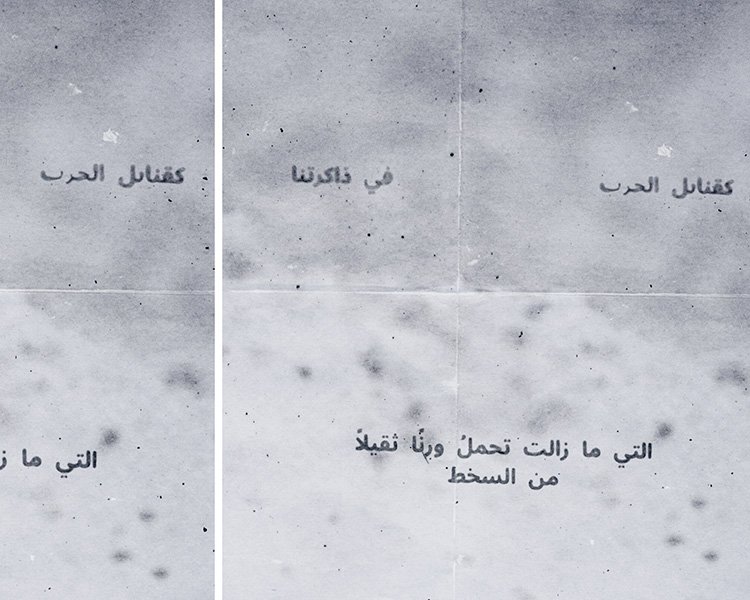
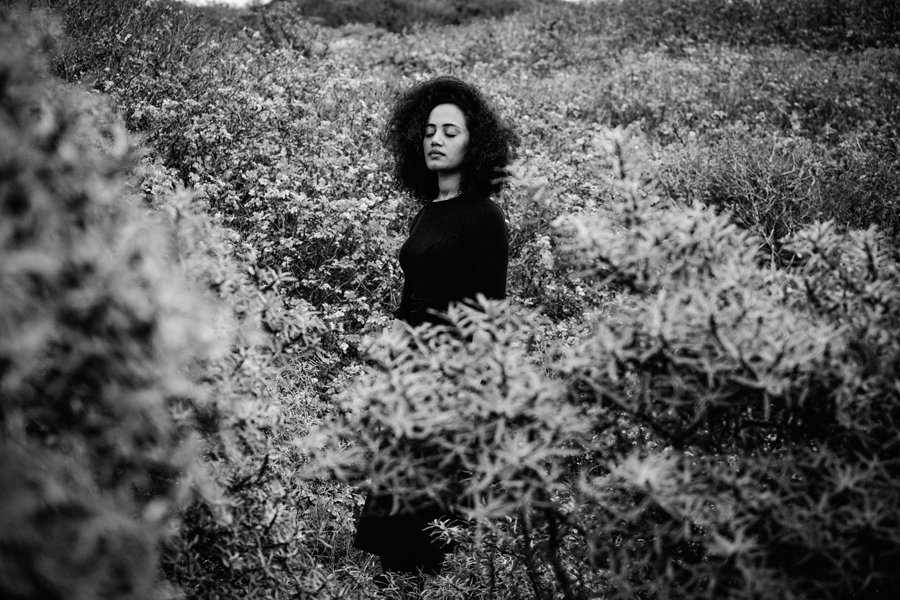
Emaho: Your ongoing project How Shall We Greet the Sun follows a small group of young women living in exile in the Netherlands, including yourself, as they construct new identities within unfamiliar cultural contexts and geographies of power, while carrying memories and nostalgic representations of the past. You have described increasingly seeking your own story in the frame. At what point does a documentary project about other women’s exile become impossible to separate from your own, and do you think that blurring makes the work more honest or does it complicate the ethical relationship with your subjects?
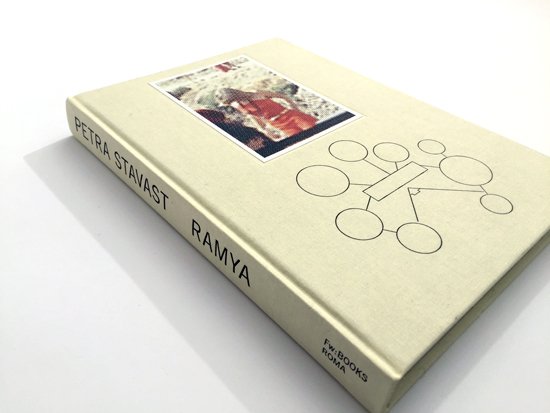
Thana Faroq: At a certain point, it became impossible to separate the women’s stories from my own. I was not looking at them from outside their experience; I was also living through questions of language, belonging, and identity. That made the work more honest, but it also required care. I had to recognize that my presence was not neutral and that the relationship mattered more than the image itself. The work became less about documenting others and more about recognizing a shared condition. Those conversations and relationships eventually shaped How Shall We Greet the Sun, which later became a published book and remains one of the projects closest to me.
Emaho: You spent several months in AZCs, asylum seeker centres in the Netherlands, where you became familiar with refugees from many different countries, each carrying their own story. Most photographers approach a refugee centre as a site to document and then leave. You stayed long enough to become familiar with the people inside it. What changed about the work once you were no longer a visitor, and is there a story from that time that you have never been able to photograph, only carry?
Thana Faroq: Once I was no longer only a visitor, the work changed completely. I was both an insider and a witness, and that shifting position changed the way I understood images and the act of photographing. The asylum centre stopped being a site and became a lived environment, full of waiting, repetition, humour, resilience, friendship, and everyday acts of care. Living there allowed me to see people not through the lens of displacement alone, but in the fullness of their humanity, with their strengths, aspirations, and dignity intact. It also made me more aware of my own vulnerability, and of the emotional landscapes we carry with us long after we leave a place.
One story I will never forget is that of a mother who lost her child during a border crossing. At night, I could hear her weeping through the walls, while during the day she carried herself with extraordinary strength and composure. Witnessing that contrast stayed with me. The depth of her grief felt beyond what any photograph could hold. There are other stories from that time that I have never photographed, only carried. Sometimes choosing not to photograph is the most respectful and honest decision.
Emaho: You have described your unique approach to working with subjects as one of continual return, going back to the people you photograph again and again to keep sharing in their journey rather than capturing a single moment and moving on. Many of the migrants and stateless individuals in your work were with you during your own transitional period. What does that long-term, reciprocal relationship demand of you that a single encounter does not, and has anyone you have returned to over years asked you to stop photographing them, and how did you respond?
Thana Faroq: A long-term relationship asks for a different kind of responsibility. You are not only taking an image and leaving with it; you are staying connected to the person as their life changes, as their relationship to their own story changes, and as they may no longer want to be seen in the same way. That demands patience, care, and the willingness to let the work shift. For me, consent is not something that happens once. It is ongoing. People have the right to change their mind, to withdraw, to ask questions, or to feel differently about an image years later. When that happens, the relationship matters more than the photograph. Returning again and again means accepting that the work belongs to a living relationship, not only to my artistic intention.
Emaho: You experiment with the textuality and physicality of the photograph itself as forms of resistance, intertwining text and image so that words function as standalone imagery rather than as captions or supplementary narrative. That is a formally unusual position, treating language as something that can be seen rather than simply read. How did you arrive at using text that way, and is there a sentence or phrase from your own work that you think carries more weight as an image than any photograph you have made?
Thana Faroq: Text entered my work because there were things the photograph could not carry alone. But I was never interested in using text simply to explain the image. I wanted language to have its own visual and emotional presence. A sentence can sit on a page like an object. Handwriting, spacing, repetition, and fragmentation can create a rhythm before the words are even fully understood. I arrived at this through my own need to make the work less fixed. Sometimes the image holds the surface, while the text holds the rupture underneath it. A phrase like “I don’t recognize me in the shadows” carries that weight for me. It is not only a title; it is almost an image in itself. It contains a body, a disappearance, and a search.
Emaho: Looking back at the early fellowships and awards that shaped your career, from the Open Society Foundation Fellowship to the Arab Documentary Photography Programme and the British Journal of Photography’s One to Watch recognition, how did that period of institutional support affect the kind of work you were able to make? And now, as your practice has expanded into books, teaching, film, and installation, how has your relationship to recognition and institutional validation changed?
Thana Faroq: Yes, I am grateful for that period of institutional recognition and for the support I continue to receive now. It has given me time, access, and the possibility to work more slowly and deeply. It allows me to return, research, edit, and stay with difficult material without having to make the work immediately productive or easily understood. This support has also helped position my personal experience within a wider artistic and political conversation. Recognition opens doors, but what matters is what I build from it: books, exhibitions, long-term relationships, teaching, and now moving further into film and installation.
Emaho: Supporting women photographers, particularly from Yemen and the wider region, has become an important part of your practice alongside your own image-making. You teach at the Royal Academy of Art in The Hague and have led visual storytelling workshops at institutions including the University of Edinburgh and the Refugee Center Utrecht. How does mentorship feed back into your own photography, and is there a younger photographer you have worked with whose way of seeing has changed how you see?
Thana Faroq: Mentorship feeds my practice because it keeps me close to the basic questions of photography: why do we make images, who are we making them for, and what kind of responsibility do we carry when we work with other people’s stories?
Teaching and mentoring remind me that photography is not only about producing work. It is also about building confidence, developing a position, and learning how to trust one’s own way of seeing. This is especially important when working with women photographers who come from contexts where self-expression is not always encouraged or easily accepted.
Younger photographers often bring a directness and urgency that I learn from. They remind me not to become too fixed in my own methods. Their questions, doubts, and courage keep my own practice alive. In that sense, mentorship is never one-directional. I may guide them through structure and process, but they also teach me how to keep looking with openness.
Emaho: Your work has appeared in Foam, Vogue Arabia, National Geographic, the New York Times Lens, Marie Claire Italy, NPR, World Press Photo, Al Jazeera, the BBC and CNN Arabic, an extraordinarily wide range of publications with very different audiences, editorial standards and ways of framing a story about migration and exile. How does the same body of work change meaning depending on which of those outlets is presenting it, and is there a publication whose framing of your work you have disagreed with but allowed anyway?
Thana Faroq: That’s a good question, and I agree that context plays a significant role in how photographs are understood. The same body of work can change meaning depending on where it appears. A newspaper, an art magazine, a humanitarian platform, and a museum audience all bring different expectations. Some frame the work through migration, others through women’s lives, politics, identity, or art. I am aware that context can either open the work or narrow it. There have been moments when I felt the framing leaned too heavily on suffering, or made the work easier to understand than it actually is.
I never accepted those interpretations, even when visibility felt important. This was also because the work is deeply personal to me. I have always tried to protect its complexity and resist narratives that reduce people to symbols of hardship. At the same time, I have been fortunate to work with editors and curators who valued that complexity as well and who supported presenting the work in ways that preserved its nuance rather than simplifying it.
Emaho: Can you tell us about your debut film, Imagine Me Like a Country of Love, and where the project stands now?
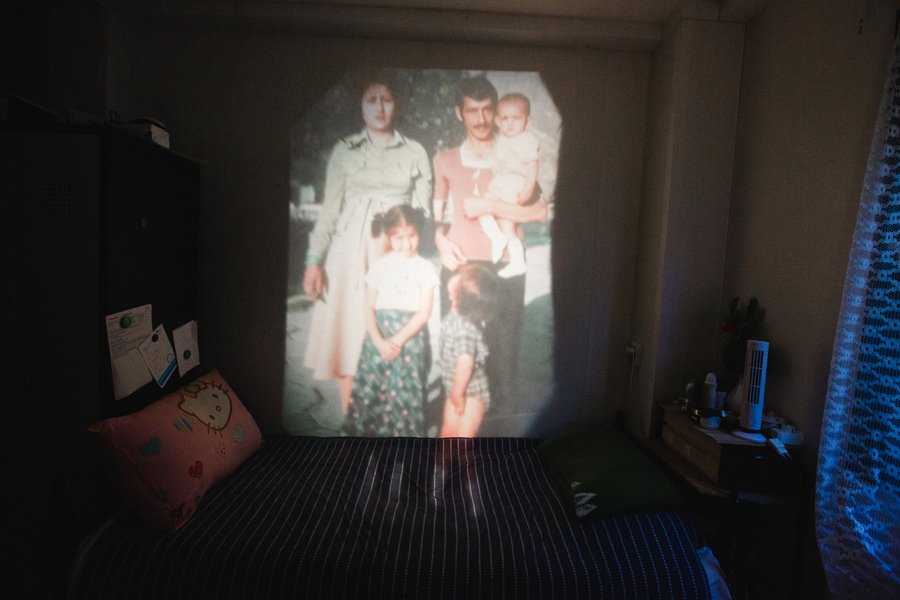
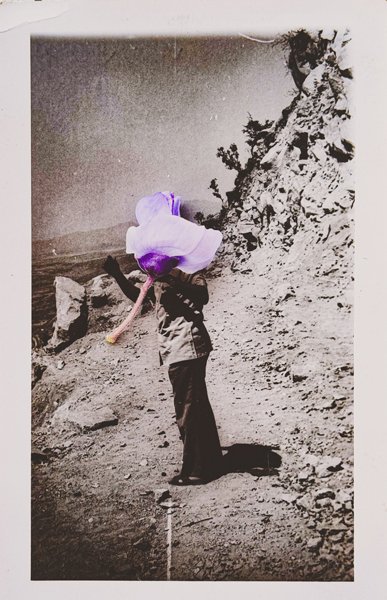
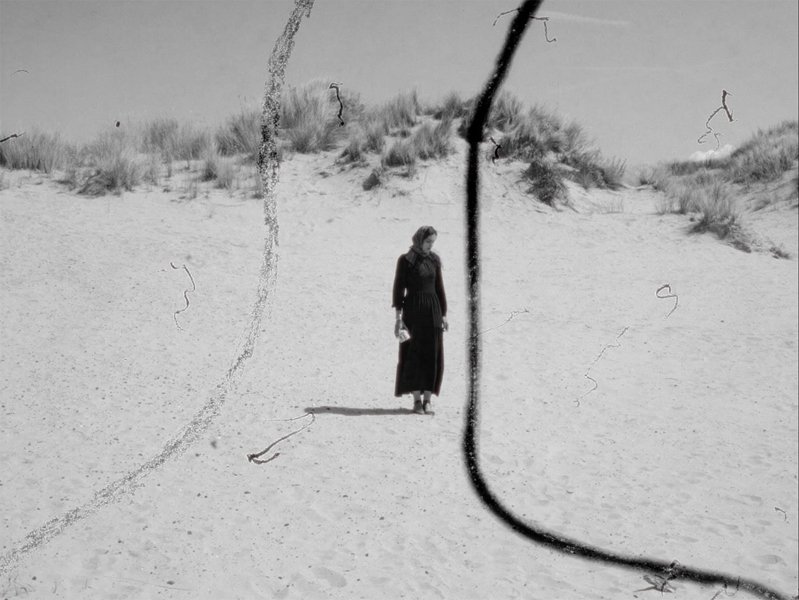
Thana Faroq: Imagine Me Like a Country of Love is my debut film, and in many ways it grew from the questions I have been carrying for years around memory, migration, family archives, and the feeling of returning to a place that has changed in your absence.The film began after I returned to Yemen after many years away. I was interested in what happens when we disturb the memories we left behind, and when the archive no longer feels like something stable or nostalgic, but something alive, wounded, and changing. The film brings together moving image, family photographs, text, voice, and sound in a fragmented form.
I did not want to make a linear story. I wanted the film to feel closer to how memory works: incomplete, emotional, sometimes beautiful, sometimes difficult to hold.The project is now moving through festivals and exhibition contexts, and I am also thinking about how it can exist as an installation. For me, this film marks an important expansion of my practice. It allowed me to work with time, voice, rhythm, and silence in a way that photography alone could not fully hold.
All the photos © Thana Faroq. Courtesy of the artist.