Nepal –
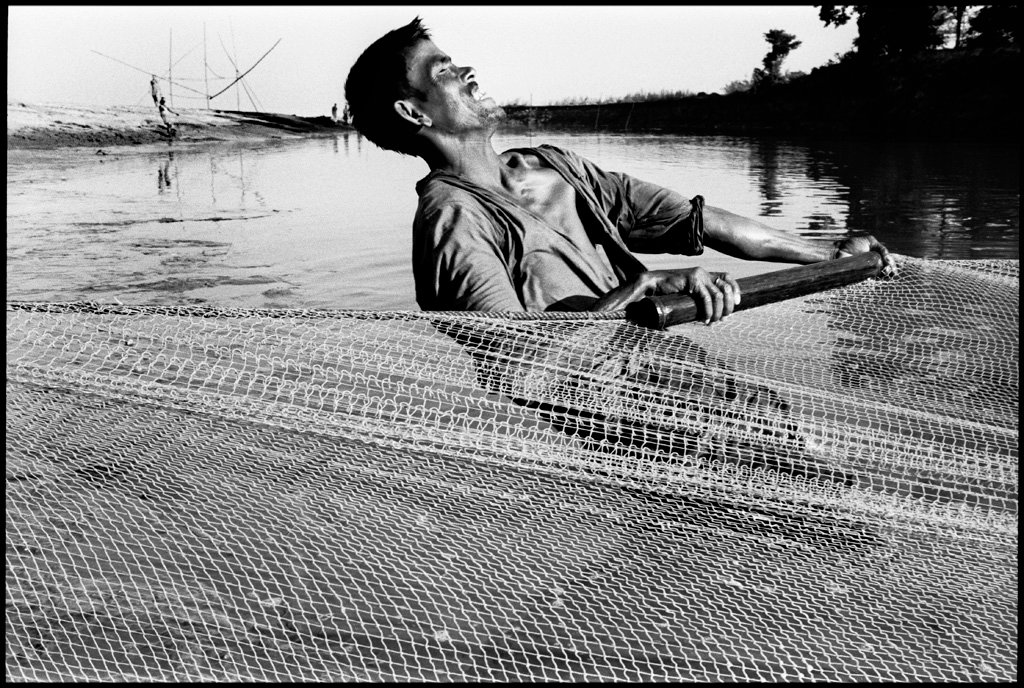
The first time I arrived in Susta, I had to walk around 3 minutes from the river across the sandy bank to get to the village. I saw two small huts and there people were selling tea and fish. I sat there talking to them for a while. The next time I went, I didn’t see the huts. I asked someone where the huts were. Pointing towards the river she calmly said, “Somewhere there, can’t be sure”.

© Prasiit Sthapit
Susta was once perched firmly on the west bank of the Narayani River, which has long been considered as the border between Nepal and India. But with the river changing course due to climate change, and cutting persistently into Nepali territory, the village today finds itself on the east of the Narayani. India maintains the new course of the river as the boundary while Nepal disagrees, making Susta a contested portion of Nepal within India, surrounded on three sides by India, and on the fourth by the Narayani. It is estimated that 14,860 hectares have come under Indian encroachment thus far.
The Himalayan Times on 30th June 2011 reported that the Narayani had breached 135 hectares of farmland during the monsoon in Susta. The locals presume that the river has breached around 100 mts. of land inwards this year alone. This has been occurring at an accelerated rate for almost a decade now. “Now its just the farms but in 2 years time the river will start eroding the village if nothing is done”, exclaims Rampyare Kurmi, a local.
“There is the ‘Save Susta Campaign’ (a local movement established to protest against Indian advancement into their land) on one side and also the resistance with the river,” Laila Begum, a local, states, “How many battles must we fight?” But what are the issues that will be left to resolve if the land itself doesn’t exist anymore?
This is a petition to the people of Nepal and the world for change in Susta, resolution of the dispute between the two countries, building of retaining walls along the bank of the Narayani. This is a poem dedicated to the people of Susta, their sorrow, their grief, their determination, their resistance, their persistence, their isolation.
“A petition is a poem, a poem is a petition.” (The Dreamers, Bernardo Bertolucci).

© Prasiit Sthapit
Our Susta
Purna Bahadur Tamang
We once were Susta and Susta we stayed
But lately we feel more like an outsider
Narayani blows a whistle and grants us neither
Shawl nor shame, all the same, we feel betrayed.
This July we received a guest from the capital
We’re relaying a message to the state through him.
We may align the stars Sir, but the progress path is too grim
White silt of Seti, gushes down with Kali, then turns Trishuli dull
All of which sinks further into the Bay of Bengal.
In the past we’ve asked help from the King and his palace
But it came to a sudden halt at Thankot and turned callous
In 2052, when a Rolpali stood for us we believed in him too.
He now rides the land cruiser or Prado,
Hides behind the shaded glass
But we can still make out his shadow.
The situation here at Susta is a show and tell
No houses to lodge or live
No food to hand out or give
No field for farmers to earn from
As Narayani turns the land into a ghost town
Only sand and boulders here to cash and sell.
We hear that Koshi and Mahakali might join the ranks of us soon
When droughts or floods force villages to move every monsoon.
Can someone please give us a heads up?
So we can use the time and treasure to usurp.
For who could revive the laws of Susta around here?
Resurrect the plinth of borders that have fallen from fear?
We, the people of Susta are slow like retards,
We don’t get politics, yet guard their house of cards.
We once were Susta and that’s how we are to stay
But lately we’ve turned into a stranger
Narayani whistles and demands us danger
Our shawl becomes threadbare, our shame unfair
Susta, soft and slow we thrive in daily delay.
Translated to English by Pooja Gurung
Written and Photography by Prasiit Sthapit