Oscar Monzon: KARMA

Óscar Monzón (Málaga, Spain – 1981) lives and works in Madrid. He is a member of BlankPaper collective from its foundation date in 2003, and from that year he develops different projects. He has been awarded a Visual Arts and Photography grant from the Spanish Ministry of Culture to work at Colegio de España in Paris (France), a grant from Fundación Temas de Arte, has been selected for Descubrimientos PHE and was finalist at the First Book Award 2013.

Spain – 

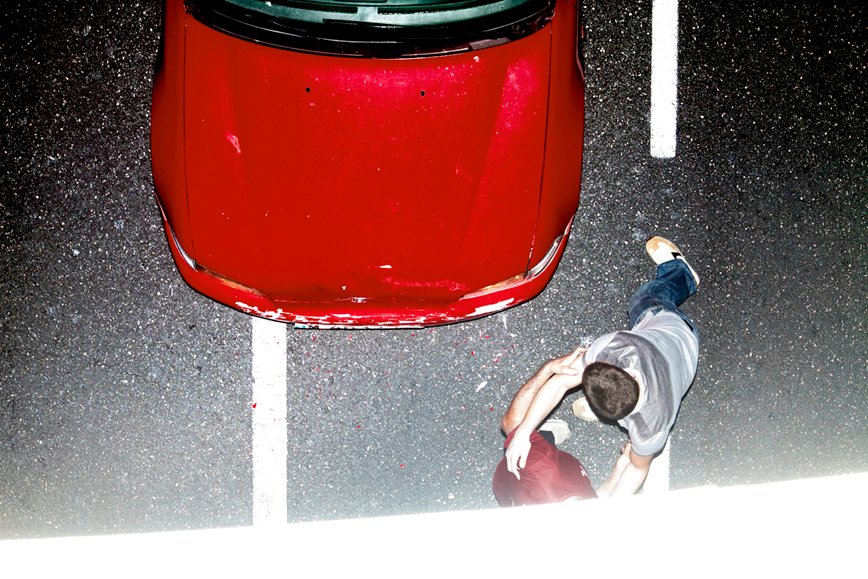
In Karma, a project developed in Madrid between 2009 and 2013, Óscar Monzón focuses on the car as a means of transportation that is not entirely distinct from the person who inhabits it, for the vehicle is in itself a product of the wheel that endlessly spins inside us.

Karma explores a range of unconscious human behaviours imprinted on our memory. In terms of the relationship we establish with the car, these forms of conduct materialise in specific ways: detachment, competition, aggressiveness.


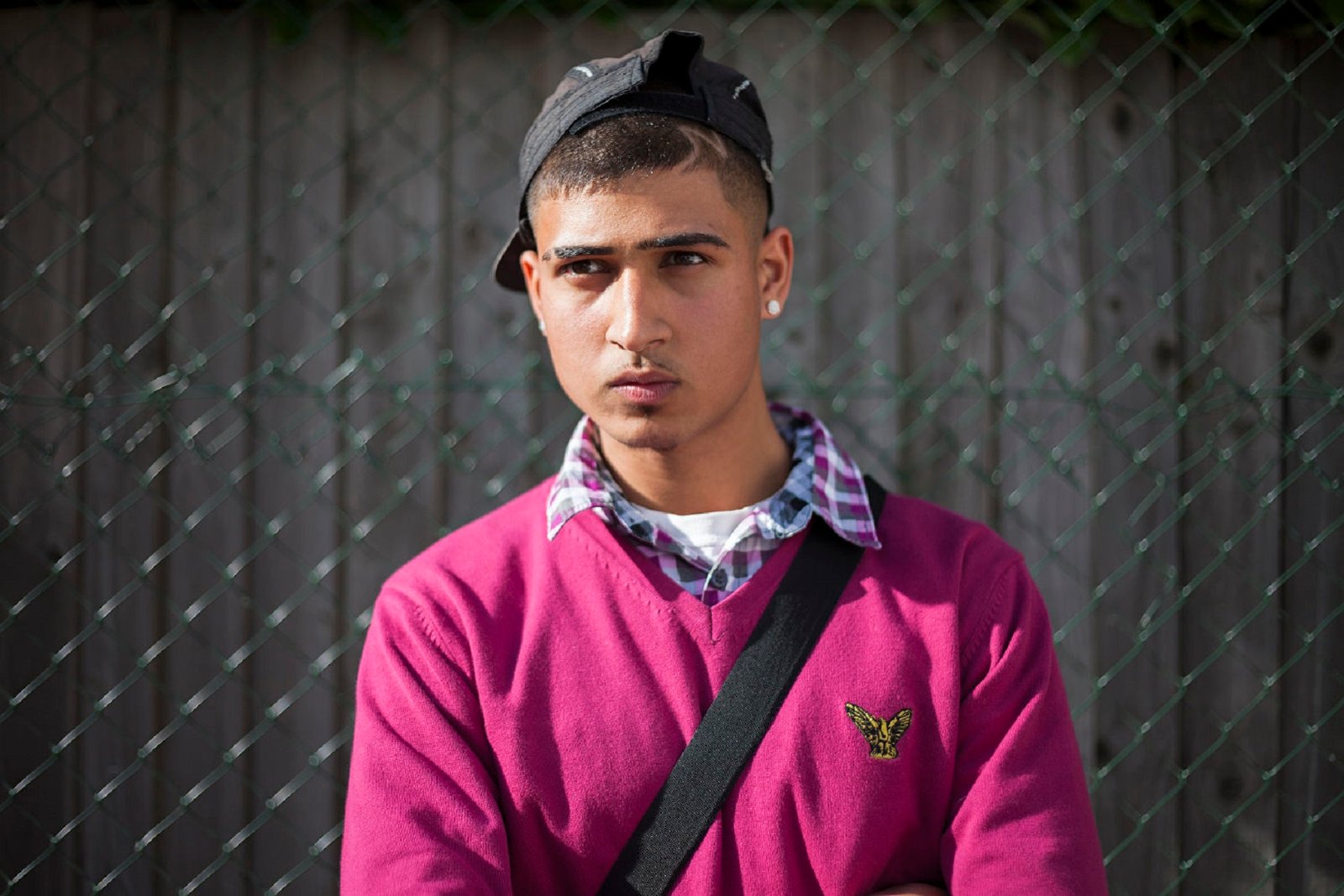
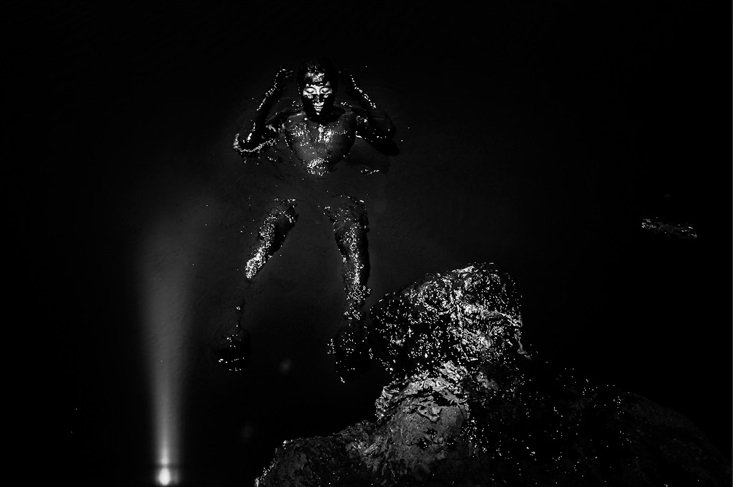
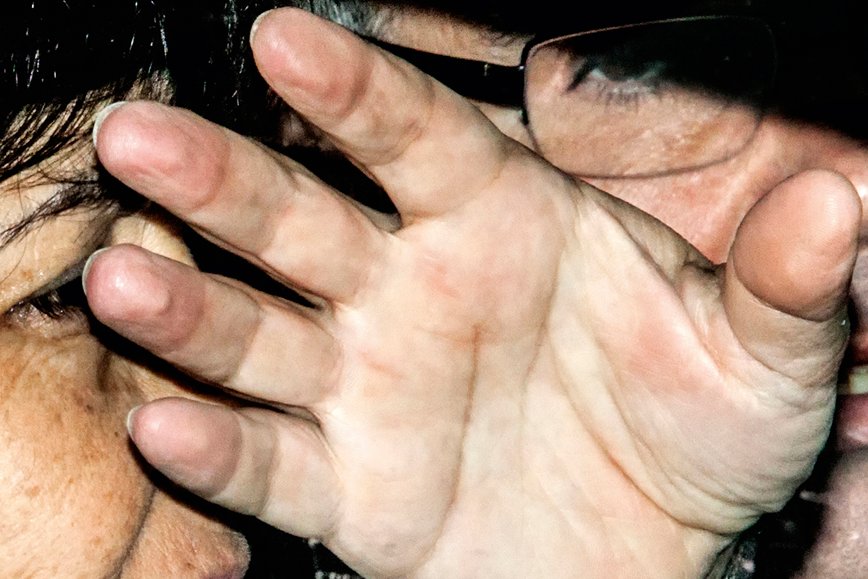
Applying a visual language that eliminates the illusion of depth and emphasises abstraction, Karma brings us up close to the paradoxical intimacy provided by the car within public space, reflecting its occupants’ attitudes. The sequence of images combine human skin with aggressively designed bodyworks; headlights in the night conjure the image of wild animals; close-up flashes confront the people portrayed.

Ultimately, this work reveals the social and aesthetic evolution of humankind, driven by our abiding desire to attain the perfection of a machine.

“Karma is a brilliantly crafted mess of pictures taken from different angles between 2009 and 20013, is a book by Spanish Photographer Oscar Monzon about the relationship between vehicles waiting on the traffic light at night and people inside it.” – Manik Katyal

ISBN 979-10-90306-18-9

RVB Books/Dalpine, 2013

Editorial coordination: Gonzalo Golpe

Design: Eloi Gimeno

Prepress: Víctor Garrido

Softcover

128 pages

21 x 29,7 cm

Photography

Winner of The Paris Photo-Aperture Foundation First Photobook Award 2013
Related Posts

Diana Matar: “Evidence” – Photographing Six years of Political Disappearance

Libya –  Years ago Photography feature –  Diana Matar‘s father-in-law, a Libyan opposition leader, was kidnapped by the Egyptian secret ...

Establishment Earthquaker : Shahidul Alam

Bangladesh –  Emaho got into a free-wheeling tête-à-tête with the legendary award-winning Bangladeshi photographer, Shahidul Alam to pry beyond his ...

You Get Me – Mahtab Hussain

England – You Get Me is a series that has taken four years to complete and addresses the changing identity ...

Michelle Loukidis: “Shaping Africa’s Photographic Future: Mentorship, Tombe, and Transient Childhoods”

From capturing childhood's vanishing essence on film to radicalizing her view at Johannesburg's Market Photo Workshop, Michelle Loukidis now shapes ...

Alejandro Castellote on Musuk Nolte and Leslie Searles’s PIRUW

Peru –                                     ...

Asger Carlsen: From Crime-Photography to Mutilated, Disfigured Human Form

USA – Asger Carlsen’s images consist of mutilated, disfigured and distorted human forms with a typical obscure quality to them. He ...

Lost Territories: Support Sputnik Photos project on Post-Soviet Countries of Central Asia

Poland –  Twenty-five years after the fall of the USSR five Sputnik Photos photographers are setting out on a journey ...

Diego Saldiva: Momentos e Maculas

Brazil – Besides being a shelter, the house is as well a home, an emotional and intimate place, a private ...

David León Rodríguez: Decency

Spain –  “LA DECENCIA” …there are two races of men in this world, but only these two: the ‘race’ of ...

Thabiso Sekgala : Second Transition

South Africa –  ‘Second Transition’ is the series of images that I’ve photographed in the areas around the mining town ...

Rafal Milach: The Winners

Belarus –  ‘The Winners’ published by GOST, is dedicated to winners of various state and local competitions held between 2010-2013 ...

Erik Kessels: “Photography is definitely not dead. Quite the opposite: the overwhelming abundance of images forces artists to think differently”

Erik Kessels, renowned Dutch artist and curator, discusses the dynamic evolution of photography in the digital age. He asserts that ...