Emaho: You showed early interest in doodling, objects, and production long before studying formally. Can you describe how those early artistic impulses in China matured into a sustained pursuit of art, and how studying abroad expanded that curiosity?
Meng: My curiosity about the world has never been confined to a single system of rules. At times, I prefer to position myself as an observer rather than a participant. This perspective—rooted in an Eastern sense of balance and reconciliation—gradually unfolded during my studies in the West.
Living and studying in the UK, along with traveling to different parts of the world, deeply satisfied my desire for exploration and discovery. Through these experiences, I began searching for a sense of shared universality: a common familiarity with nature, a collective imagination shaped by fragments, and an openness to infinite possibilities. Despite their diverse forms, these perceptions ultimately stem from the same origin.
Emaho: Moving alone from China to London to study at the Royal College of Art marked a significant transition. What were the most formative lessons you learned during that period—about art, independence, and your evolving creative identity?
Meng: Moving alone from China to London marked a critical shift in how I understood both art and independence. I experienced a strong sense of freedom there, and began to see art not simply as production, but as an extension of independent thinking—a way of relating to the world that carries responsibility, especially as audiences generate multiple interpretations and positions through their readings of the work.
The school offered a very open and flexible environment, which allowed many ideas to emerge. At the same time, I became aware of its limitations. The looseness of art education in the UK, combined with strong commercialization, does not necessarily prepare every student to enter society or sustain a practice after graduation. In that sense, I consider myself fortunate—to have been able to continue working and developing my practice beyond the institutional framework. This realization shaped my understanding of independence, not as freedom alone, but as something that also requires resilience and self-navigation.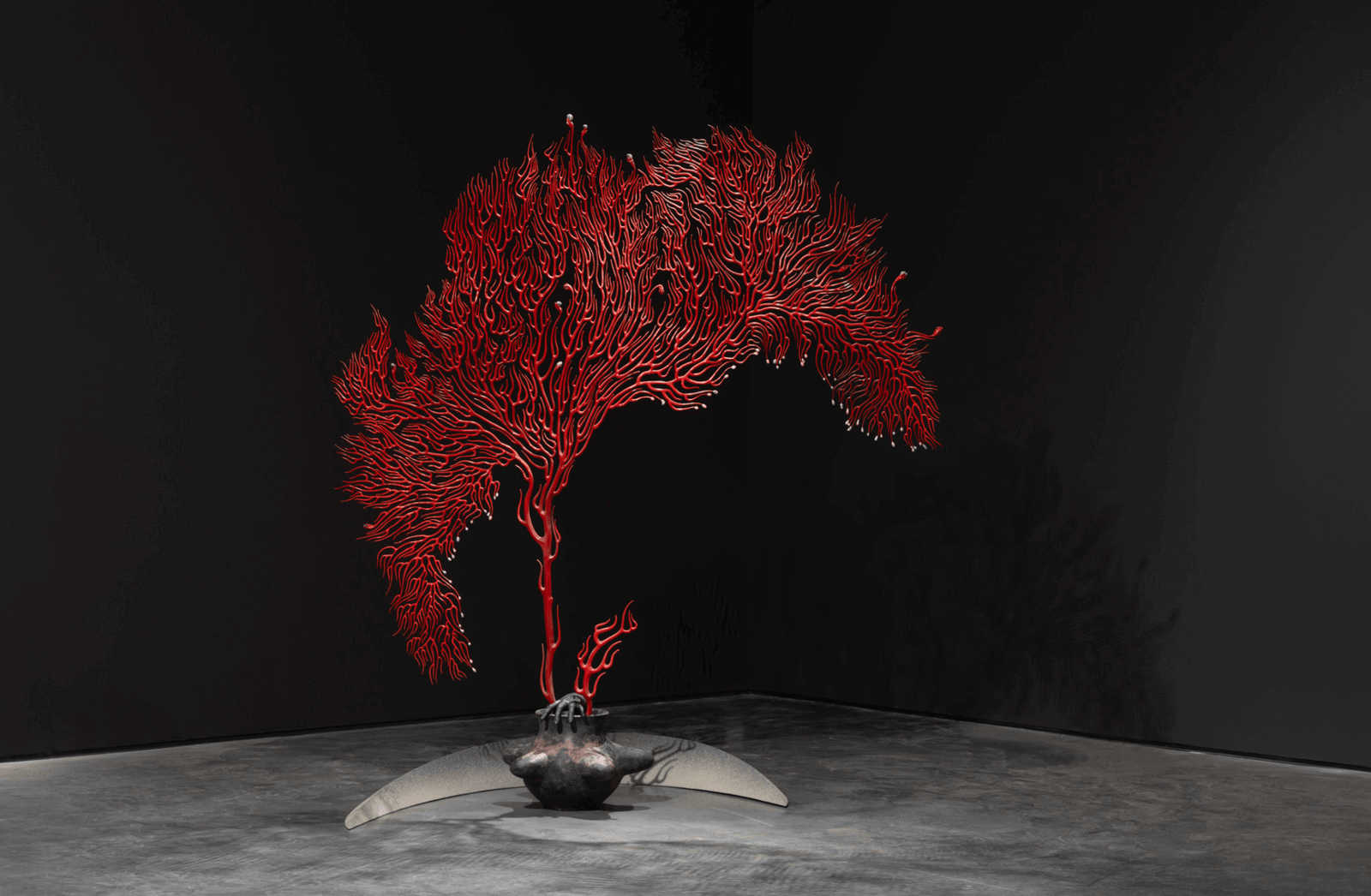
Emaho: Your practice frequently incorporates natural and unconventional materials such as meteorites, shells, burnt wood, ink, and mineral powders. How do you select your materials, and what conceptual roles do they play within your work?
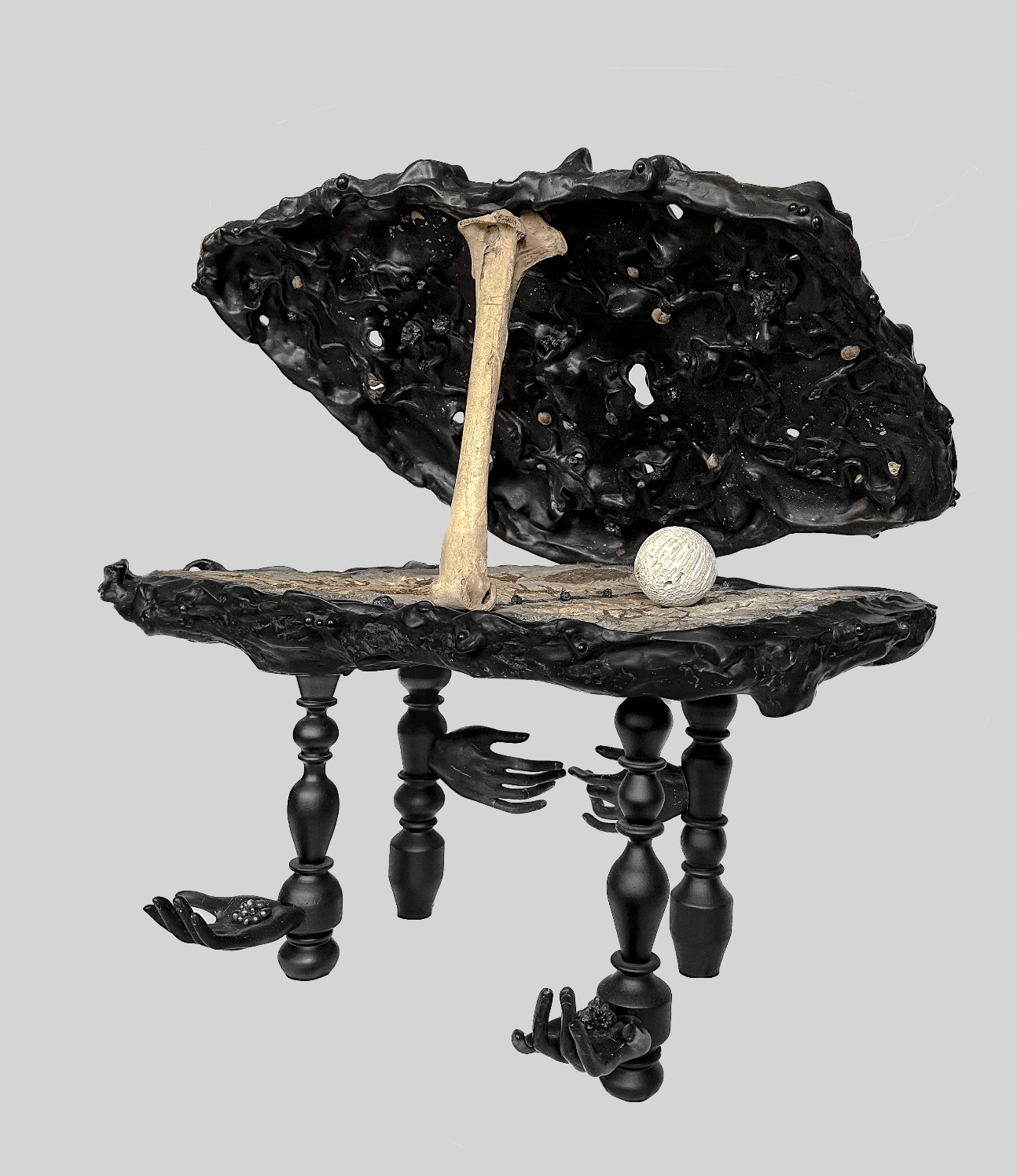
Meng: My material choices form a personal archive shaped by past experiences, interests, and ways of learning—from studying mask-making and mineral pigments in Japan, to collecting fossilized shells in the Sahara, and observing Mayan architecture in Guatemala. Each material carries its own memory and worldview, embodying different temporalities and relationships between humans and nature. I see my work as a window onto a vast world, one that invites viewers to rediscover curiosity and feel encouraged to explore unfamiliar territories beyond their own experience.
Emaho: Your solo exhibition Il Trovatore in Munich unfolded as a narrative journey across multiple rooms. How did travel, memory, and the relationship between time and experience shape the spatial and symbolic structure of that exhibition?
Meng: When I tell a story about travel while living and working as a foreigner in different countries, art becomes a form of poetry for me. I think of it as a practice similar to that of ancient troubadours – carrying stories from place to place, exchanging experiences through images and materials. In Il Trovatore, the exhibition space unfolded as a linear journey, guiding the viewer through multiple rooms as if moving through time and memory.
Each space marked a different moment along this journey, where memories were shaped through encounters with specific objects and materials. Stones and shells acted as vessels for recording stories and experiences, while pearls transformed into threads of time, subtly connecting matter with life. Together, these elements wove a narrative that felt both familiar and unfamiliar, allowing personal memory, travel, and lived experience to merge within the spatial structure of the exhibition.
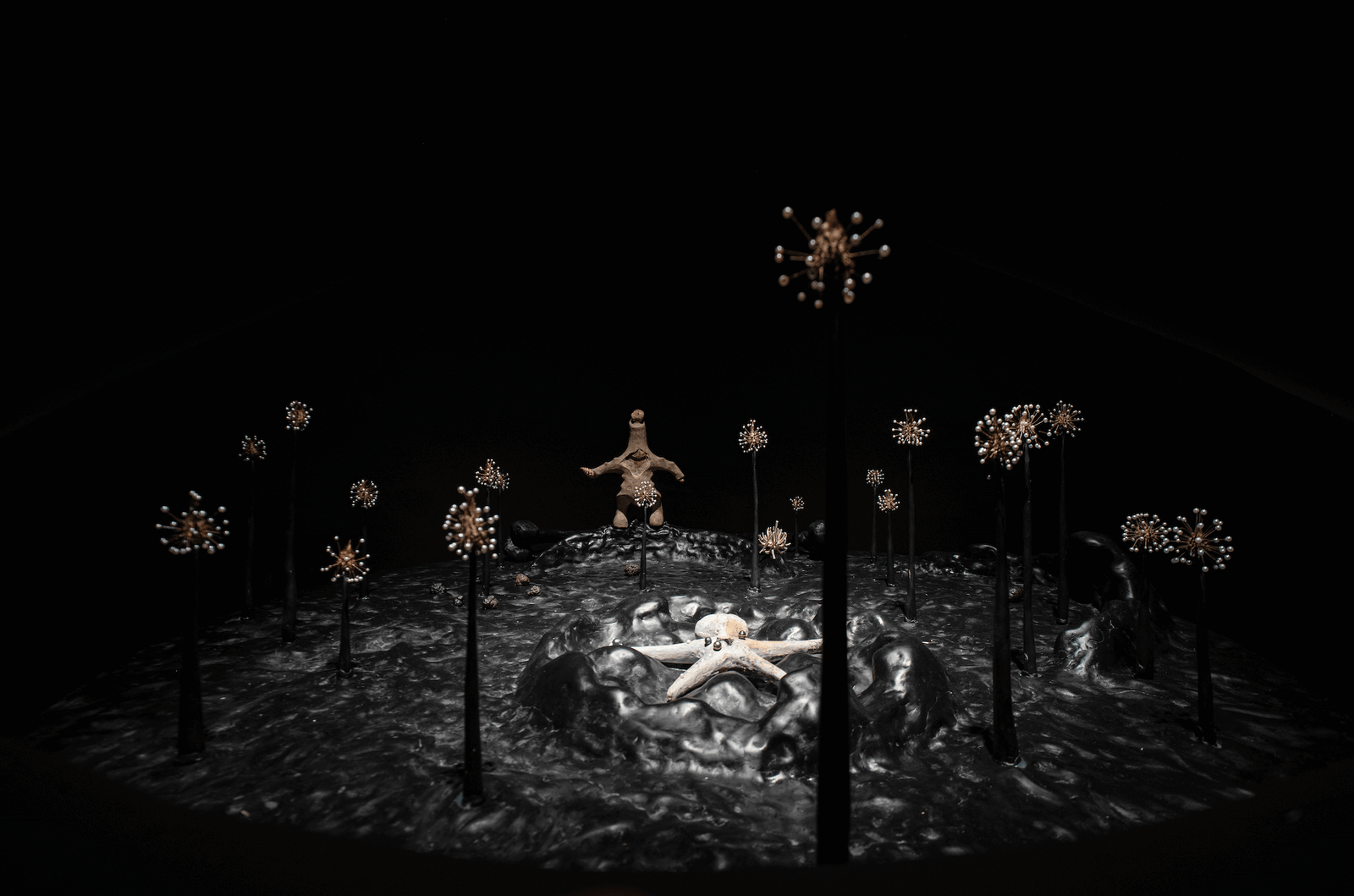
Emaho: In Il Trovatore, processes like burning, erosion, and natural transformation are visibly present through materials such as weathered shells and burnt wood. How do these processes function simultaneously as technique and metaphor in your practice?
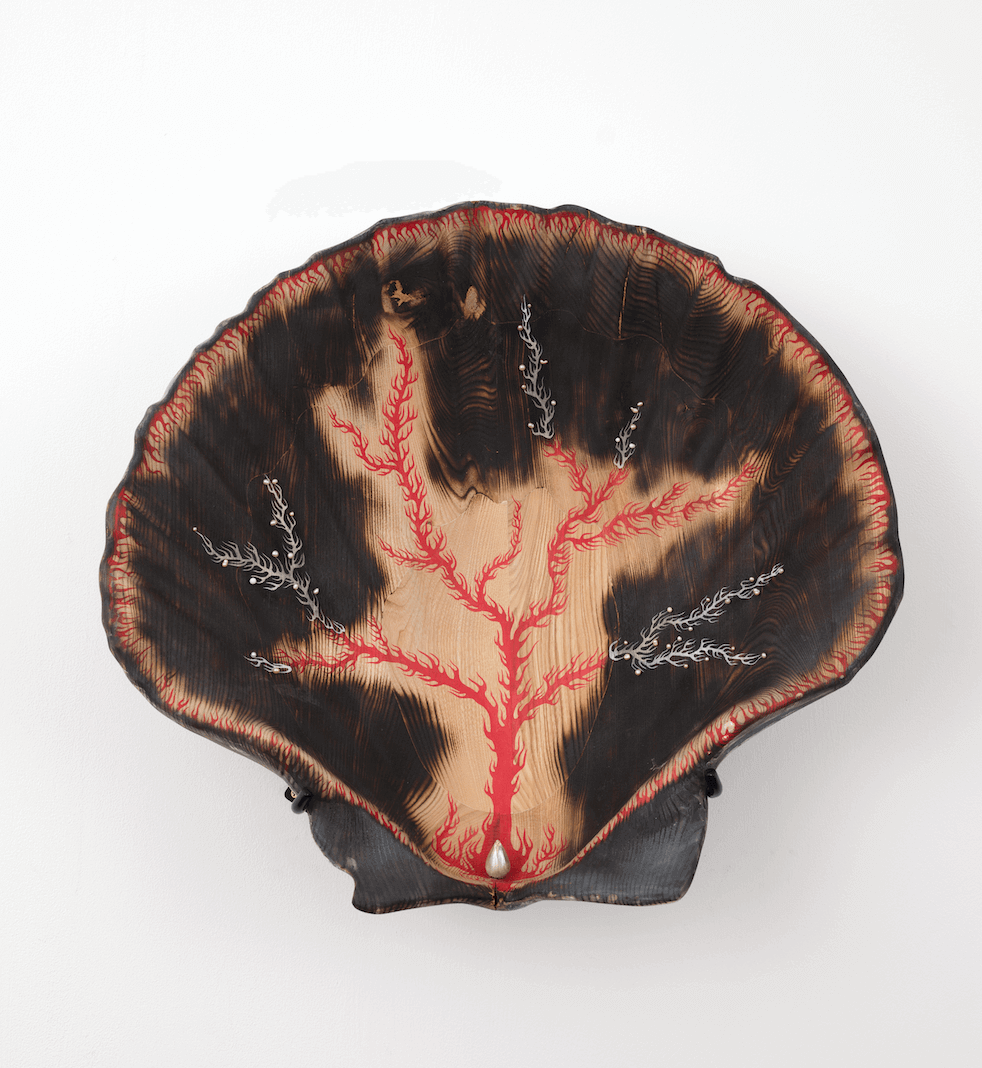
Meng: For me, the canvas is not the only page where stories can be written. In ancient times, shells were used as currency, as a way of recording value and exchange. I carve wood into the shape of shells to record stories in a similar way. Burning, erosion, and weathering are not just techniques—they feel like time itself passing through the material. Burning carries a sense of aging, of traces left behind by experience.
These processes allow the work to continue growing from my earlier records and memories. Materials change, just like experiences do, and through these transformations the narrative expands. In this way, material becomes a witness to time, connecting objects, memory, and lived experience rather than fixing them in a single moment.
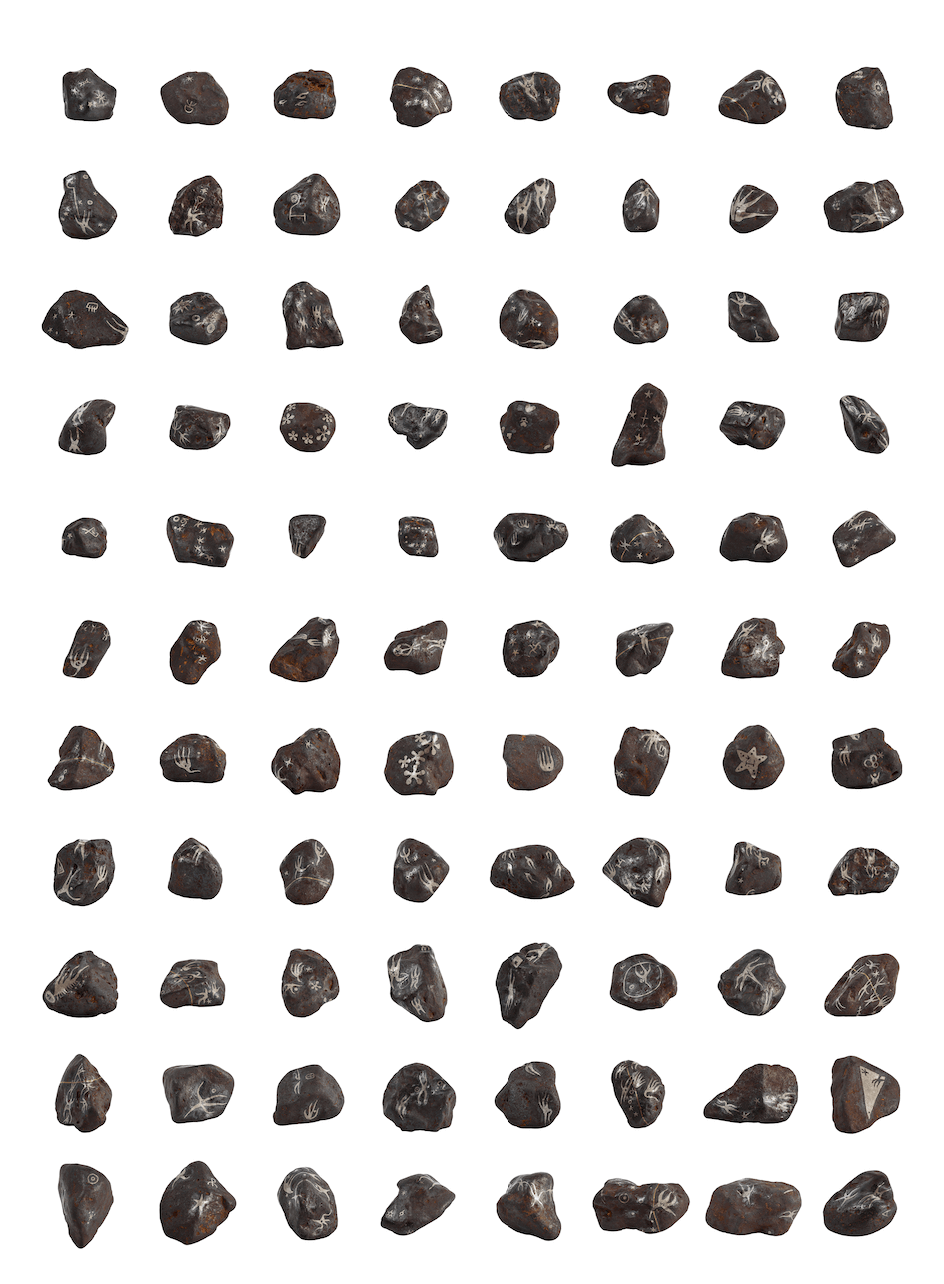
Emaho: Your presentation at Taipei Dangdai featured the Star Chart mural with embedded meteorite fragments. What does the constellation motif represent for you, and how does placing meteorites within a cosmic map shape your dialogue between humanity and nature?
Meng: The work takes the form of a miniature universe. The 88 constellations represent how humans currently map and understand the world. Each meteorite fragment is placed within a constellation chart, rendered in a style that echoes ancient murals and reworked with silver, so that the surface catches and reflects light. This creates a quiet sense of shimmer—almost like a form of deep, primal reverence for the cosmos.
For me, the constellation motif is a way of thinking about both infinity and limitation. Star charts are tools of knowledge, but they are also projections of human imagination. By embedding meteorites—material that comes from beyond our world—into this cosmic map, the work reflects on our position in relation to nature and time. We exist both outside the map and within it, just as we are always standing inside time itself.
Emaho: You have described your artistic logic as exploring the dialectic between natural ecology and human heritage. How do you see your role as an artist in bridging cultural history, myth, and ecological awareness?
Meng: I’m not entirely sure where I stand, and I think that uncertainty shapes my role as an artist. Society often carries its own expectations, and each culture holds different desires and narratives. Moving across many lands and stories, I don’t feel rooted in a single place. Instead, I see myself as a wandering poet, traveling between cultural histories, myths, and landscapes. I don’t position myself as an activist, but I do believe art can hold responsibility through care and attention.
At the same time, I am an emotional individual. When war or injustice unfolds in front of me, it is difficult to remain silent. In response, I have developed works such as the Hero Game series, where meteorites are refined into iron, iron is shaped into weapons, and weapons are transformed into games. Arrowheads become gestures from rock–paper–scissors. Through this process, I try to redirect conflict into play, imagining forms of resolution that are less violent—where there is no single victory, only shifting positions and shared responsibility.
Emaho: Humor, play, and audience interaction—such as the use of curtains—occasionally appear in your drawings and installations. How important are ambiguity and viewer agency in the way you construct and activate your works?
Meng: I grew up alongside computer games, so I carry the spirit of play that belongs to my generation. That sense of play naturally finds its way into my work. I don’t want viewers to feel like they’re reading a dry academic text—encountering art can be a lively, open experience, where curiosity and movement are encouraged.
Ambiguity and viewer agency are important because they allow the work to stay active. Humor, gestures like curtains, or moments of interaction invite viewers to decide how close they want to get and how they want to engage. Studying in the UK also shaped this sensibility; I was deeply influenced by a very dry sense of humor. In the end, I think artists are inevitably shaped by their environments —our works are reflections of where and how we live, and play becomes a way to stay honest within that condition.
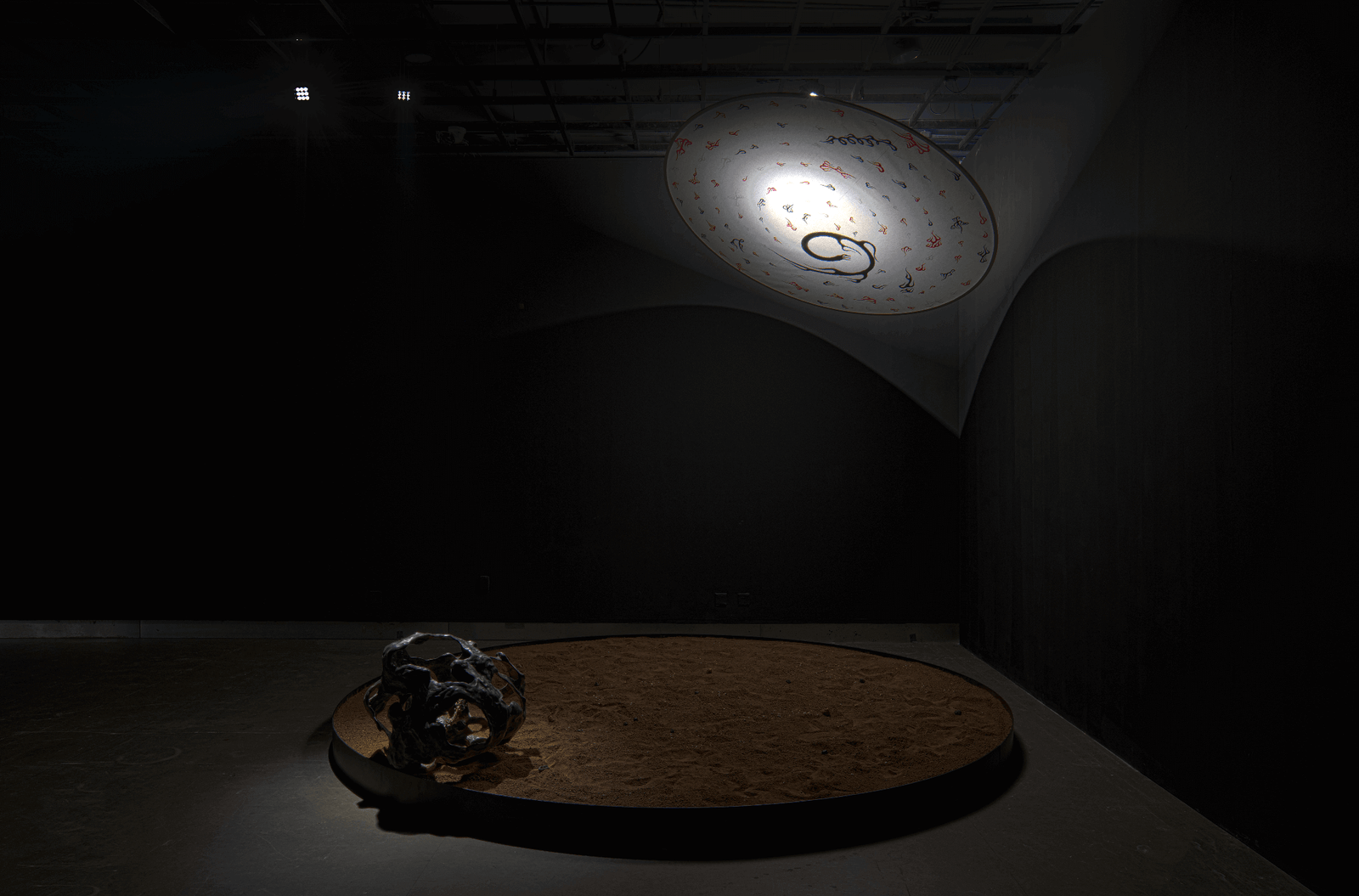
Emaho: Dust to Dust reflects on erosion, impermanence, and the quiet cycles of matter returning to itself. In this series, how did your material choices and physical process become a way of thinking through time, decay, and transformation rather than simply representing them?
Meng: Dust to Dust grew out of experiences I had in the Sahara, where I witnessed drastic shifts of time compressed into a single landscape—marine fossils scattered across the desert, traces of oceans where there is now only sand. At night, people gathered around fires, dancing in the Gobi, while meteors crossed the sky. Those moments made me think about how life moves between states: from inorganic matter to organic life, back into the environment as fossils, sand, or stone—and possibly returning again as life.
In this sense, material choice and physical process became a way of thinking rather than representation. Erosion, decay, and transformation are not symbols I apply to the work; they are conditions the materials already carry. I’m interested in how everything—human bodies, landscapes, fossils, even meteorites—exists as part of the same continuous cycle of matter and time. Each particle of dust holds an endless story. Nature, humanity, and the cosmos are not separate entities, but different expressions of the same vast material process.
Emaho: In Keeper of the Fire, fire appears not only as an element but as a carrier of memory, ritual, and continuity. What does it mean for you, personally and culturally, to position the artist as a “keeper” rather than a creator, and how does that shift the responsibility of making work today?
Meng: In Keeper of the Fire, fire functions as a carrier of memory, ritual, and continuity. Seeing myself as a “keeper” rather than a creator reflects how I understand the role of the artist today. Compared to social power or policy, the influence of art can feel very small. Yet art continues to connect history, humanity, and imagination, quietly evolving across different eras.
I don’t know how long an artwork or a piece of information will remain alive. What I can do is gather materials and stories that feel meaningful, and allow them to continue burning. Being a keeper is not about authorship, but about responsibility—protecting the flame, passing it on, and letting it transform over time.
Emaho: Mythology and folklore recur throughout your practice, often blending Asian traditions with contemporary narratives. What draws you to mythic structures, and how do they help you address ideas of transformation, origin, and human agency?
Meng: I’m drawn to mythology because, in many ways, it was the science of its time. Before formulas and data, people used stories to explain what they couldn’t understand—the sky, nature, life, and fate. That already feels very artistic to me.
Myths are flexible, slightly irrational, and open-ended. They allow things to transform, collapse, and be reborn without needing a clear explanation. That’s why they’re useful to me. By mixing Asian mythological traditions with contemporary narratives, I’m not trying to retell old stories, but to borrow their logic—or sometimes their lack of logic. Myth gives me a way to think about origins, transformation, and human agency with a bit of humor: how we try to control the world, how much we imagine, and how often we’re just making sense of things as we go.
Emaho: You balance travel, extended retreats, and intensive studio time. How do periods of solitude and exploration feed your creative process, and how do you maintain continuity across projects shaped by such diverse contexts?
Meng: I often think of myself like a smartphone loaded with many different apps—games, notes, recordings, diaries. At different moments, I switch between different modes. When I’m making work in the studio, it’s like turning on “Do Not Disturb.” When I’m traveling or exploring, it feels more like entering an app store, searching for new functions and updates.
These shifts don’t feel disruptive to me. If certain ideas become too noisy or distracting, I treat them like apps—I delete them for now, or leave them aside. I think contemporary life itself is about coexisting with multiple tasks and inputs, and over time I’ve developed my own survival logic within that condition. Continuity doesn’t come from staying in one place, but from how experiences are filtered, stored, and reactivated across different modes of living and working.