Emaho: You were born in 1995 and grew up mostly in the Czech Republic, visiting China every summer. That is an unusual childhood geography – summers in one culture, the rest of the year in another, two languages, two visual worlds, two ways of being in a body. Before you ever picked up a camera, how did that split upbringing shape the way you noticed things, and do you think you would have become a photographer if you had grown up wholly in one place?
Linda Zhengová: Growing up between the Czech Republic and China definitely shaped the way I perceive the world. I think that not completely understanding a language, culture, or environment as a child pushed me to develop my imagination very strongly. When you don’t understand something, you begin to observe differently — you imagine meanings, gestures, atmospheres, tensions. You realize that the same thing can be perceived completely differently depending on where you are and who surrounds you.
Even before photography, I was already “capturing” images mentally. As a child, I would consciously memorize certain moments, faces, or situations, almost like internal photographs that I could later return to in my mind. I think it was partly a way of coping with distance and missing my Chinese family after returning to Europe every summer, creating a personal archive that allowed me to bring people and moments back to me emotionally. In a way, I still do this today. Sometimes when I don’t have a camera with me, or when a moment happens to be too intimate or fragile, I prefer to keep it only in my memory.
Constantly moving between cultures taught me to approach people with openness and without immediate judgment. When you grow up between different realities, you understand very quickly that there is no single “normal.” I think this deeply informs the way I photograph people as well.
I honestly don’t know whether I would have become a photographer if I had grown up in only one place, but I think I would have ended up somewhere within creativity regardless. Since childhood, I loved painting, music, and creating imaginary worlds. Photography simply became the medium through which I could hold together memory, emotion, and observation most naturally.
Emaho: Your parents met in Moscow in the 1980s, were forced apart when the Soviet Union collapsed, exchanged hundreds of letters and photographs dreaming of reunion, and have since lived largely separate lives while remaining married. You turned that story into KULISHEK in 2018, one of your earliest university projects. Most photographers wait years before turning their most intimate family material into work. What gave you permission to go there that early, and what did making that project clarify about what photography could do that conversation with your parents could not?
Linda Zhengová: KULISHEK started very unexpectedly. One day, I found a pile of old letters and photographs in the attic — hundreds of traces of my parents’ relationship, exchanged during years of distance and uncertainty. Until then, I never really understood the emotional complexity of their story. The project became an excuse to ask questions I had never dared to ask before, and I was actually very surprised by how open both of my parents were in their responses. Through these conversations, I also began to understand my own position within their history more clearly.
Making the work helped me realize how deeply political systems, migration, cultural fragmentation, and emotional distance shape personal identity. It humbled me in a way, because it made me understand where I come from more profoundly. Photography allowed me to approach my parents not only as my parents, but also as individuals with their own fears, desires, and unrealized dreams. For me, the camera has always been a tool to get closer to people — to access stories, secrets, and emotional spaces that might otherwise remain unspoken. In this case, it simply happened to be directed toward my own family.
Emaho: Your parents gave you a camera at 15 but discouraged you from studying photography. You moved to the Netherlands, completed a BA in International Studies at Leiden University in 2018 and then an MA in Media Studies specialising in Film and Photographic Studies, also at Leiden, with distinction in 2019, all while simultaneously pursuing a Photography BA at the Royal Academy of Art in The Hague where you graduated in 2020. You have described that period as feeling like you were missing a limb. What does it tell you about your relationship to photography that you pursued it in parallel with an entirely different academic and professional path rather than simply choosing it?
Linda Zhengová: When I was only studying International Studies, I remember a sense of a very deep internal emptiness, as if my life had suddenly stopped having meaning. Rationally, everything looked “correct” as I was studying at a good university and following a stable path, but emotionally it felt unbearable. My mind and body were moving in a direction that was disconnected from who I actually was. As dramatic as this may sound, photography was not simply a hobby for me; it felt existentially necessary.
At some point, I discovered that in the Netherlands, studying two degrees simultaneously meant paying tuition for only one. I remember experiencing it as a sign from the universe to finally pursue what I genuinely wanted. Looking back, I actually do not regret taking both paths at all. International Studies and Media Studies gave me a framework that still deeply informs my artistic practice today. The art world is, in many ways, very connected to diplomacy, cultural exchange, power structures, and human relations. So even though those studies initially felt separate from photography, they eventually became intertwined in the way I approach both images and people.
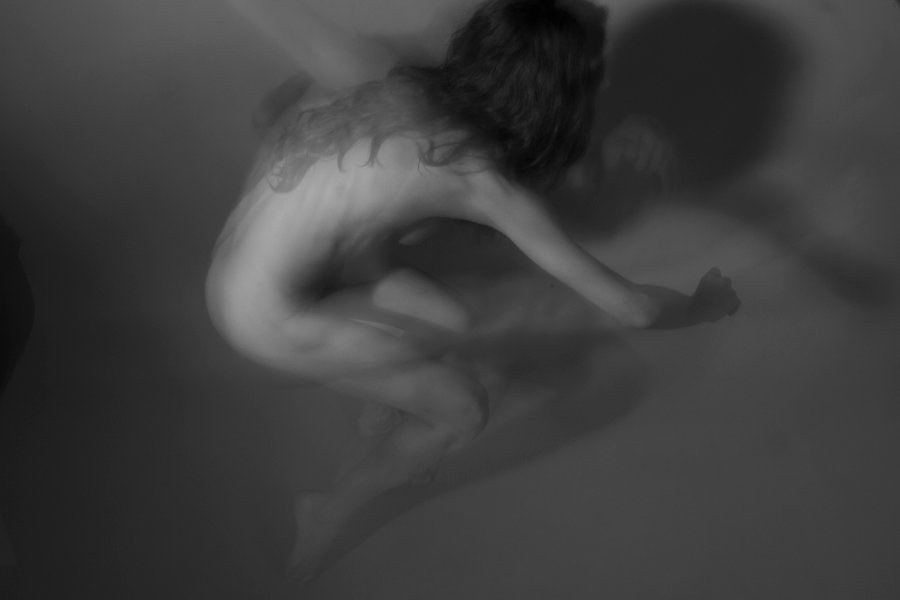
Emaho: Your graduation series Catharsis at the Royal Academy of Art confronts a suppressed childhood trauma that began resurfacing after twelve years as nightmares, flashbacks and panic attacks. Your bachelor’s thesis, The Ambiguity of Visual Representations of Trauma, had already asked the theoretical question: how do you represent something visually that is by its very essence unrepresentable without trivialising or spectacularising it? What answer did you arrive at through the actual photographic work that the theoretical research had not given you?
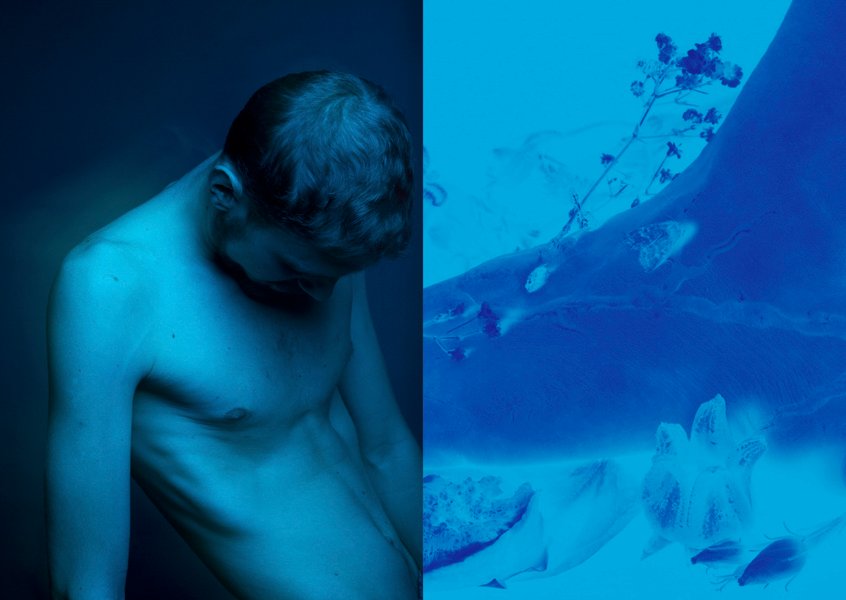
Linda Zhengová: Through both the theoretical research and the making of Catharsis, I realized that ambiguity and in-betweenness are perhaps the closest we can get to representing traumatic or emotionally complex experiences. Some feelings simply cannot be translated directly into words or literal representations. What interested me was that photography, precisely through its inexactness, can create emotional spaces where people begin projecting their own memories, fears, and experiences onto an image. I think this is one of the greatest powers of the medium — not necessarily to explain, but to resonate.
The theoretical research gave me a framework to understand the ethical and visual complexities of representing trauma, both as a writer and as a photographer. But the photographic work itself taught me something much more intuitive: if you create from a place of genuine emotional truth, something deeply personal can unexpectedly become universal. I also often feel there is still a large gap between academia and artistic practice. I wish these worlds would intersect more — academia becoming more connected to lived emotional experience, and art becoming more conscious of its historical, political, and ethical implications. Academia often lacks access to feeling in the sense of presence, instinct, eroticism, or emotional ambiguity, things that cannot always be calculated or explained, but still deeply shape human experience.
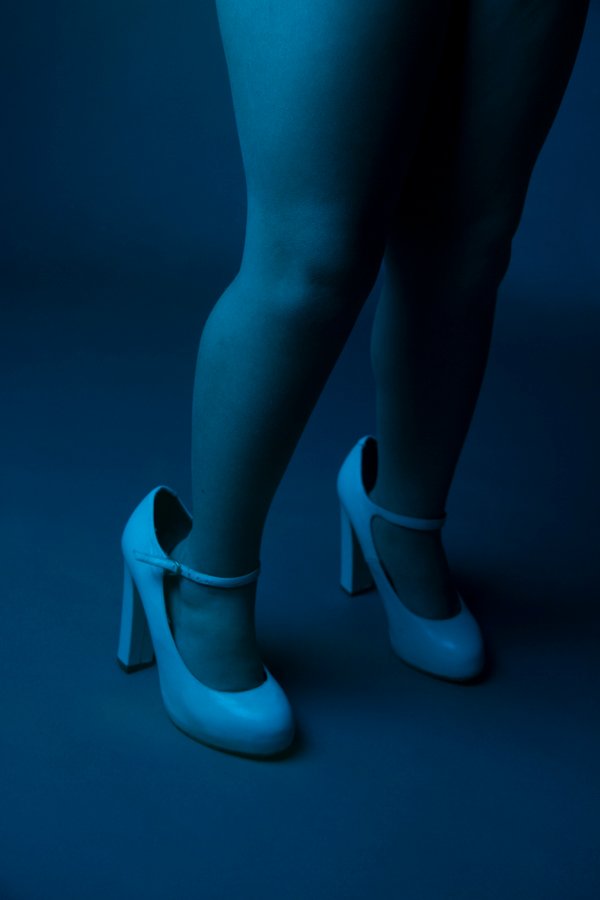
Emaho: The turning point in your practice came when a close friend told you that whenever she was photographed, she felt like a piece of furniture, something to be looked at, not seen. You asked her to show you how she wanted to be photographed, and in that moment, you saw something incredibly raw and pure that became your signature and your obsession. How do you create the conditions for that kind of trust with strangers, and where is the line between building a safe space and directing an image?
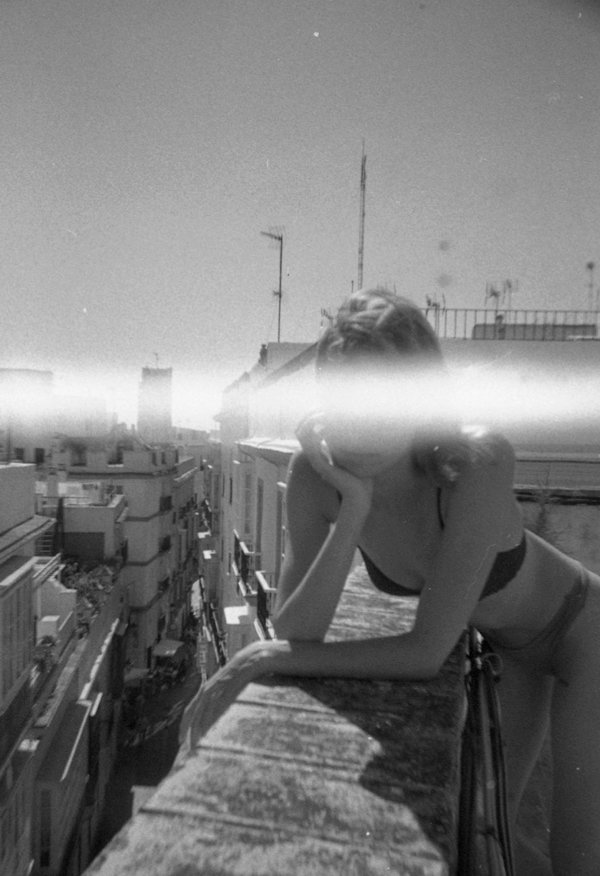
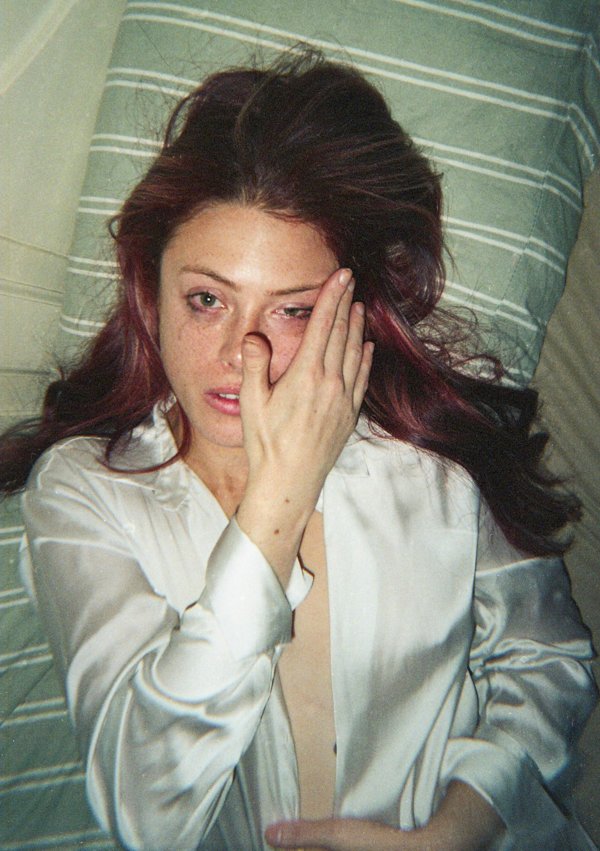
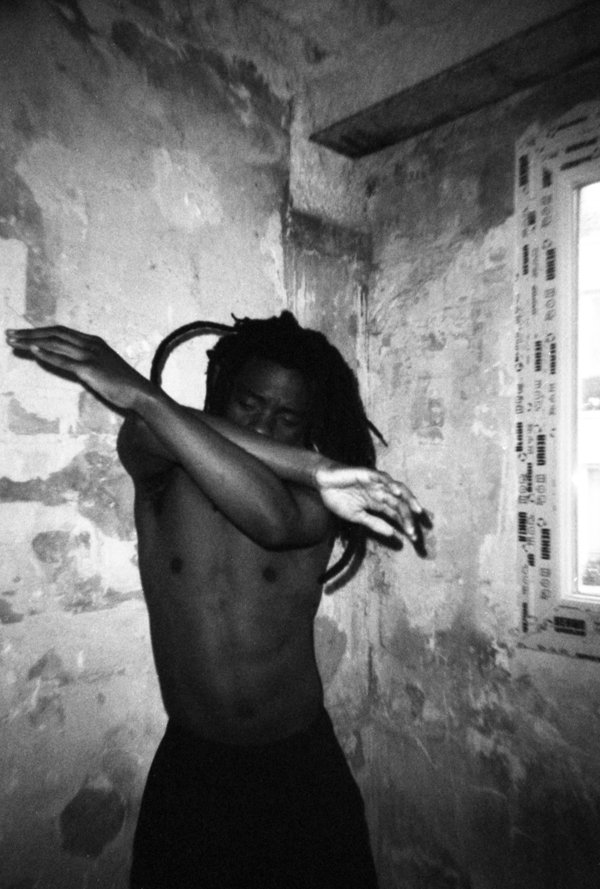
Linda Zhengová: Creating trust begins with removing hierarchy. I do not approach people as subjects to control or shape into an idea I already have in my head. I try to create a space without judgment, expectation, or performance, where both me and the person I photograph can exist vulnerably and openly. We live in a world where most people are constantly suppressing their authentic selves in order to function socially, so when someone suddenly feels genuinely seen without being judged, something very primal, raw, and explosive can emerge naturally. The world is constantly telling you who you are, and most of the time, we face our own false selves and those of others. This is something opposed to spontaneous expression. Many of my photographs happen simply because I allow people to express themselves freely, without over-directing them. We sink in the pleasure of merely being.
I rarely use moodboards or rigid concepts because I feel they can easily become projections that block spontaneity and authentic presence. Prior to photographing, I do my research, I overthink and dream about the images I am about to make, and that is enough for me. During the actual shoots, I prefer spending time with people, listening to them, learning about their histories, desires, fears, or contradictions. The images themselves become secondary to that encounter. Sometimes I do not even take out the camera, and I think that is important too, as not every meaningful moment needs to be transformed into an image.
My idea of a safe space is not necessarily comfort, but rather creating a temporary freedom from the shame of being fully oneself. Especially when photographing women, I oftensense there is an intuitive bodily understanding that allows us to move through that space together more fluidly. The line between safety and direction is very delicate, but the moment I impose too much control, the image stops belonging to the person in front of me and becomes merely a projection of myself.
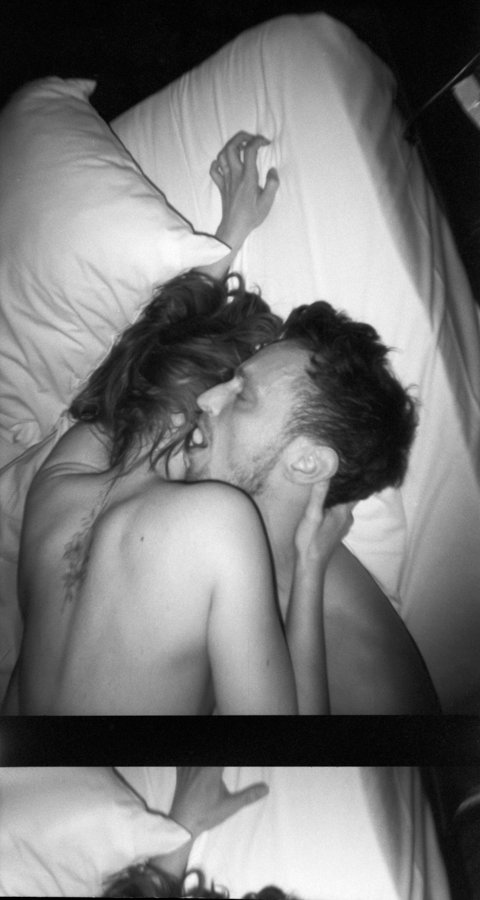
Emaho: You have authored publications including Catharsis (2021), Katabasis (2023), Strangers (2024) with Éditions Bessard, Heist (2025) as a riso zine with Ronin de Goede, as well as Traveling Model and Oxymoron, both in 2025. Writing and photography are both forms of testimony in your practice but they work through very different logics. In Strangers you wrote “this wasn’t sex, this was naked poetry.” What does writing allow you to say about your images that the images themselves cannot, and does the text ever risk closing down what the photograph was trying to leave open?
Linda Zhengová: My texts are usually very fragmented. Sometimes they take the form of prose, diaristic notes, essays, or free streams of consciousness that accompany the images rather than explain them directly. I do not see writing as something that closes the meaning of a photograph, but rather as another emotional or conceptual layer that exists alongside it. In my books, I actually like giving readers the freedom to either engage with the text or completely skip it. Depending on that choice, the work can live in very different ways, and I think that openness is important. I never want the experience of moving through a publication to feel overly didactic or fixed.
For me, text and image coexist almost symbiotically. The writing can express thoughts or contradictions that cannot emerge visually, while the photographs carry emotional ambiguities that language alone cannot contain. They operate through different logics, but they continuously influence each other. At the same time, once the work leaves my hands, its interpretation no longer belongs to me entirely. What people project onto the images and texts is ultimately beyond my control, and I have learned to embrace that uncertainty rather than resist it.
Emaho: You used to curate the XXX section of Discarded Magazine dedicated to contemporary erotic photography, and now contribute editorially to GUP Magazine, FRESH EYES and Extra Extra. Curatorial work involves making arguments about what other people’s images mean when placed in proximity to each other. How does inhabiting someone else’s work as a curator change how you think about your own images, and has curation ever produced a realisation about your practice that the practice itself could not have given you?
Linda Zhengová: Curating photography often is a bit like solving a Rubik’s cube — constantly shifting images, meanings, and rhythms until something suddenly clicks together intuitively. What fascinates me most is that curation is never truly objective; it always reveals the personal taste, obsessions, and worldview of the curator. Especially through projects like the XXX section at Discarded Magazine or my work with Fresh Eyes, I became very aware of recurring visual trends, cultural aesthetics, and collective desires. Sometimes, entire countries seem to produce very distinct visual languages, or certain motifs begin appearing repeatedly across different artists and contexts. I find these patterns incredibly revealing of the historical and emotional atmosphere we are living in.
Curating erotic photography was particularly interesting because it showed me how differently intimacy, sexuality, and desire are experienced and represented depending on cultural context. It actually made me realize how specific and subjective my own perspective is — that many emotional or bodily experiences I considered universal are in fact deeply shaped by my own background and psychology. Simultaneously, curating allows me to zoom out beyond my own practice and observe photography as a reflection of broader social shifts. Whether it was the release of sexual energy during and after COVID, or the growing sense that photography as a medium is becoming oversaturated and increasingly detached from physical reality, curation helped me understand that images are always symptoms of a particular historical moment, not isolated objects.
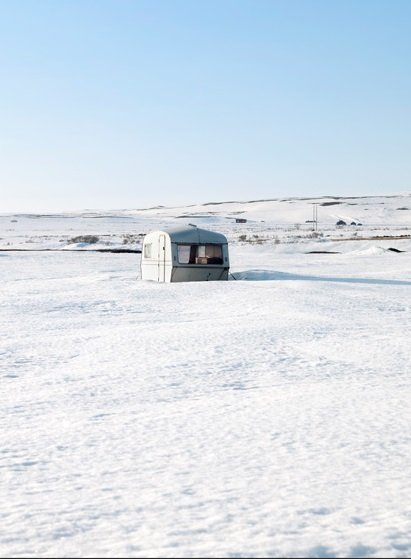
Emaho: Your long-term project Maybe, Happiness Is…, shot all over the world since 2022, is a departure in tone from the more psychologically charged territory of Catharsis and Katabasis. The BJP described it as capturing fleeting moments of pure happiness, which sounds almost deliberately simple for an artist whose practice is built on complexity and discomfort. What made you want to make work about happiness, and is happiness as difficult to photograph honestly as trauma is?
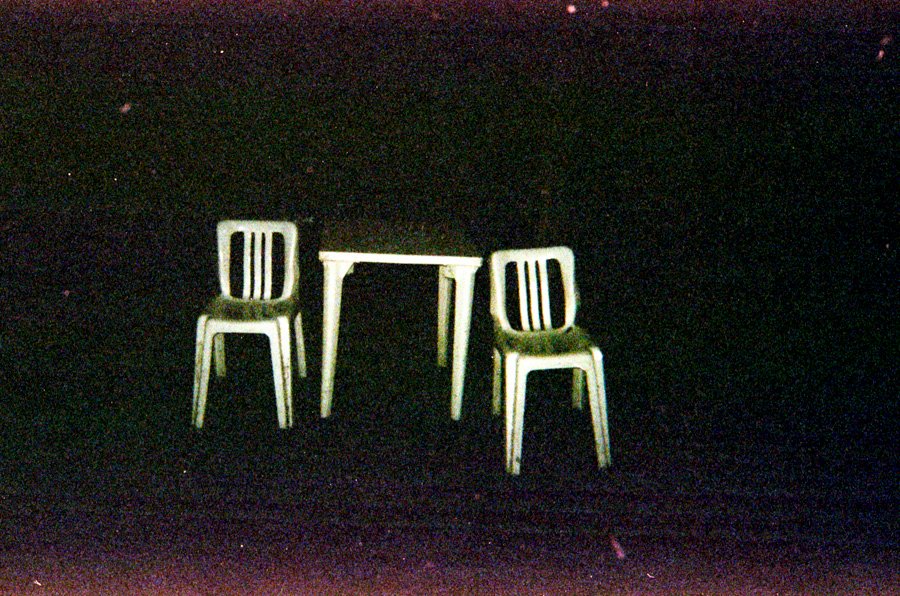
Linda Zhengová: Maybe, Happiness Is… actually comes from quite a dark place. It began more as an existential search than as a celebration of happiness itself. At a certain point, I realized how deeply negativity, anxiety, and disillusionment had begun shaping not only my work, but also the way I perceived everyday life. The project became a reminder to myself to start noticing again the small things that make life worth living — fleeting encounters, tenderness, absurdity, presence, lightness. In a way, it was an attempt to resist emotional numbness.
At the same time, I do not really see happiness and trauma as opposites. I think they constantly coexist and define one another. Without experiencing pain or absence, it becomes almost impossible to recognize happiness fully. This contradiction interests me very much — that odd balance between heaviness and lightness that Milan Kundera writes about in The Unbearable Lightness of Being. So even though the project may initially appear softer in tone, for me it still emerges from the same emotional territory as my previous work. And honestly, I think photographing happiness truthfully can be just as difficult as photographing trauma, because both disappear the moment they become too performative or self-conscious.
Emaho: You have been named a British Journal of Photography 2025 Ones to Watch, selected for Artpil’s 30 Under 30 Women Photographers, and published in Zeit, Fisheye, Der Greif, the BJP, Slanted and Figures. You have also worked commercially with clients including Leica, Patta and Oppium Paris. The distance between a personal project on suppressed trauma and a commercial campaign for a luxury brand is considerable. How do you protect the register of your personal work when commercial visibility is also part of what sustains the practice?
Linda Zhengová: It is something I am still actively trying to navigate. I see commercial work as a challenge — how to enter larger productions and collaborative environments without losing my own integrity or sensitivity. The dynamics are obviously very different from my personal work. Personal projects are usually intimate and instinctive, while commercial shoots involve many voices simultaneously: the client, stylist, makeup artist, art director, producer, and so on. All these perspectives deserve space, and I actually find that negotiation fascinating.
Simultaneously, I try to bring elements of unpredictability and spontaneity from my personal practice into commercial settings as well. Recently, during an editorial shoot, I brought an old technical camera that I had not used in almost ten years. I literally watched YouTube tutorials on the toilet during shooting breaks because I had forgotten how to operate parts of it. I wanted to introduce an element of risk and possible failure into the process, because those things feel very alive to me creatively. The films are still at the lab now, and honestly I have no idea whether the images will be beautiful or completely terrible. But that uncertainty is exactly what keeps photography exciting for me. If everything is controlled, if the industry strives for perfection, I find that a bit boring. Maybe that is also why some commercial clients hesitate to hire me…
Emaho: You are now based in Paris, having previously worked between Prague, The Hague and Amsterdam. Each of those cities has a very different relationship to erotic imagery, to the body, to what photography is for and who it belongs to. Has Paris changed what you are making, and is there something specific about the city’s visual culture that you are working against rather than moving with?
Linda Zhengová: Paris has definitely changed me, although perhaps not always in the ways I expected. What surprised me most was the amount of censorship and discomfort surrounding the body and eroticism, especially considering the city’s historical relationship to literature, cinema, and art. For instance, I am now not allowed to take pictures in my apartment because my neighbours complained that they see naked people through my balcony. I find that quite funny; it’s amusing to work with such obstructions. It certainly brings out new types of creative solutions.
This is not only a Parisian phenomenon. In general, I sense that society has become much more prudish and morally anxious in recent years. I often hear that my work is “too much,” too intense, too erotic, too male-gaze, or somehow not aligned enough with certain ideological expectations. But I think this is the price of expressing yourself freely. The moment your existence or work no longer fits neatly into socially acceptable categories, it begins making people uncomfortable. If I become “less,” I am making it easier for others while the social order remains intact. I prefer if my expression violates expectancy.
I do not want to sound pessimistic because Paris also gave me an enormous sense of freedom, and I am very grateful for it. I love the fleeting nature of the city — people constantly passing through from different countries, unexpected encounters, spontaneous collaborations. Many people contact me while briefly visiting the city and ask me to photograph them, and I think this temporary intensity deeply inspires me. Paris also pushed me outside my comfort zone creatively. It made me work more intuitively, approach strangers more openly, collaborate with dancers, and test the boundaries of what I am emotionally and visually capable of exploring. I think meaningful creative work often happens precisely at the edge of systems, expectations, and comfort zones. And once you cross that threshold, there is no limit.