Emaho: You were born in Tehran in 1990, and your relationship with Homa Gallery goes back to your first solo show there, “Chainsmokers,” in 2018, followed by “We Know, Yet We Don’t Know” in 2021, and more recently “Leviathan.” Staying with one gallery across multiple solo exhibitions over the better part of a decade is unusual in an art world that often pushes artists to diversify representation. What has kept you loyal to Homa specifically, and has your working relationship with them changed the way you approach a body of work compared to your earlier shows?
Ghazal Marvi: Honestly, this is quite common at a professional level. It’s really only in a field known for its amateur painters that people find it strange to stay with one gallery, instead of showing a different place every time. You need a representative, an agent, much like an actor or a costume designer needs one, someone you can hand the logistics, the practical matters, and the money to, so you can just keep painting.
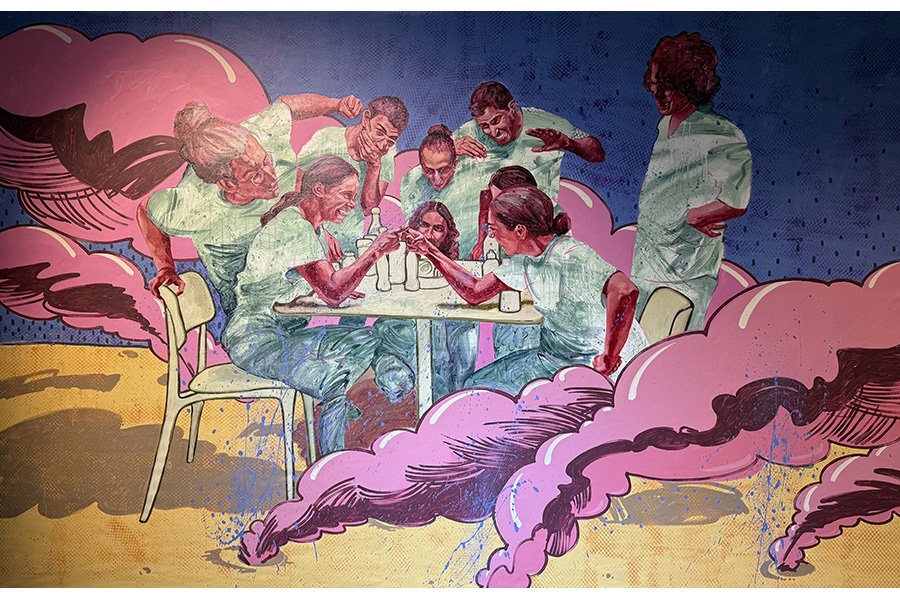
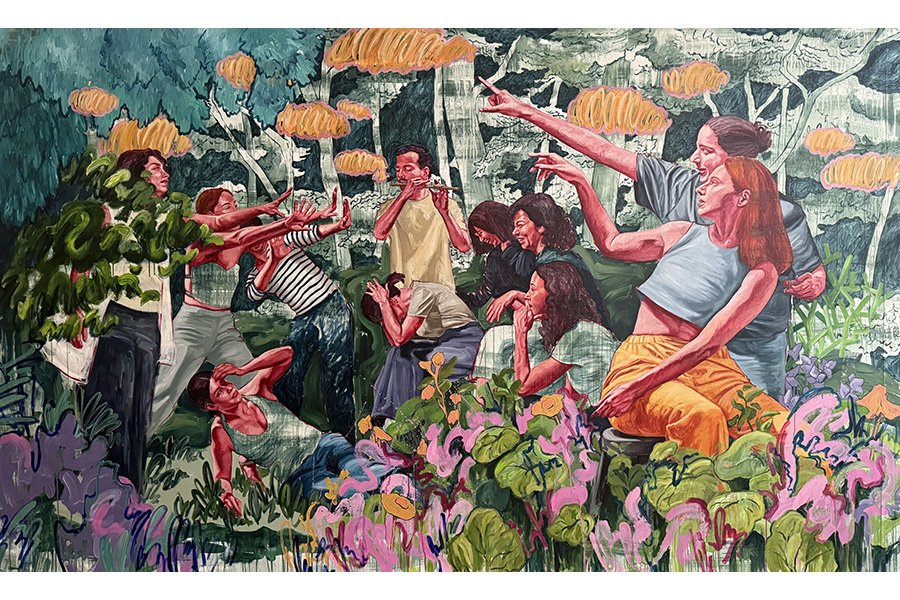
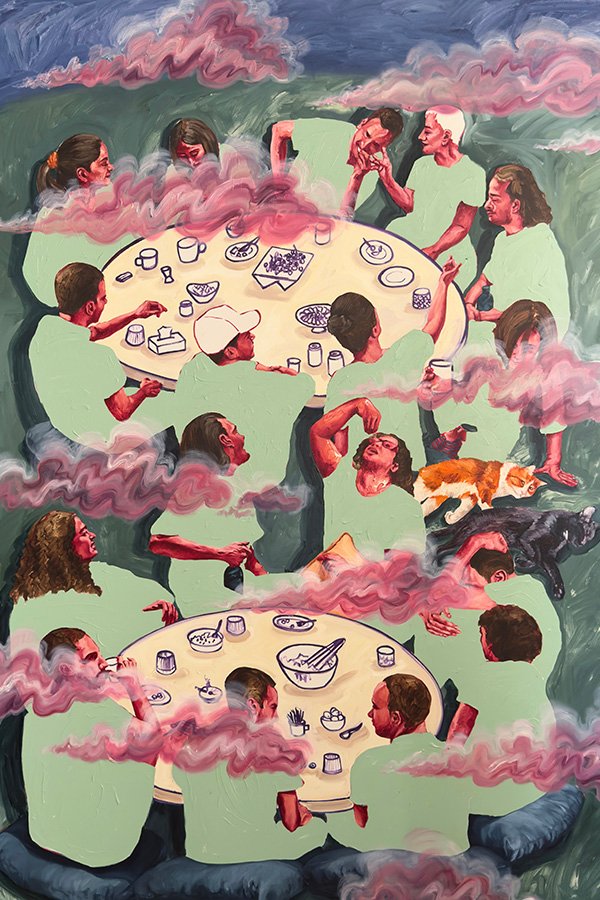
Emaho: Homa Gallery describes you as a magical realist painter who combines surreal elements to depict the reality of life in Tehran, with female subjects who appear as spirited, playful characters coexisting with immature male counterparts. That’s a very specific dynamic to keep returning to across multiple bodies of work. Where did that particular tension between your female and male figures first come from, and has the way you depict it shifted at all since your earliest shows?
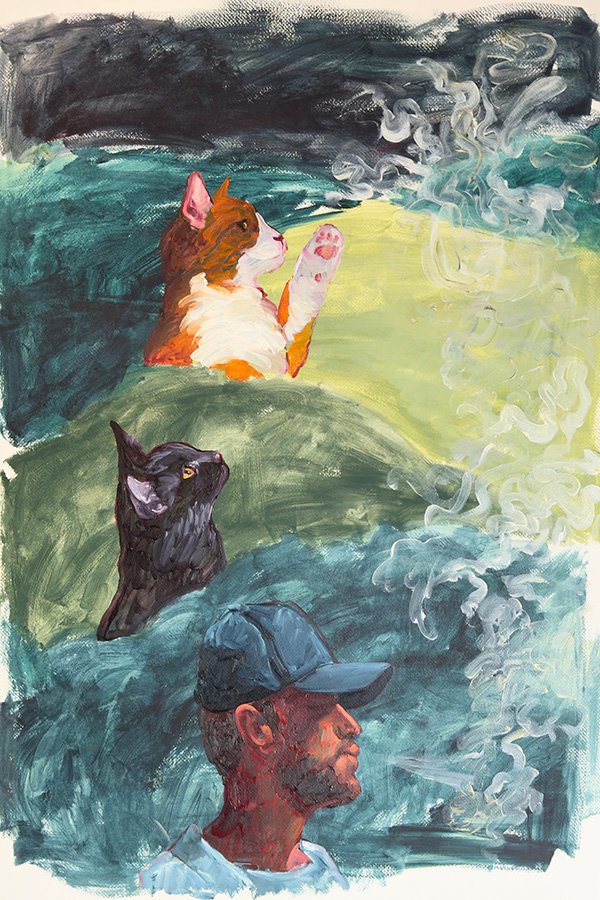
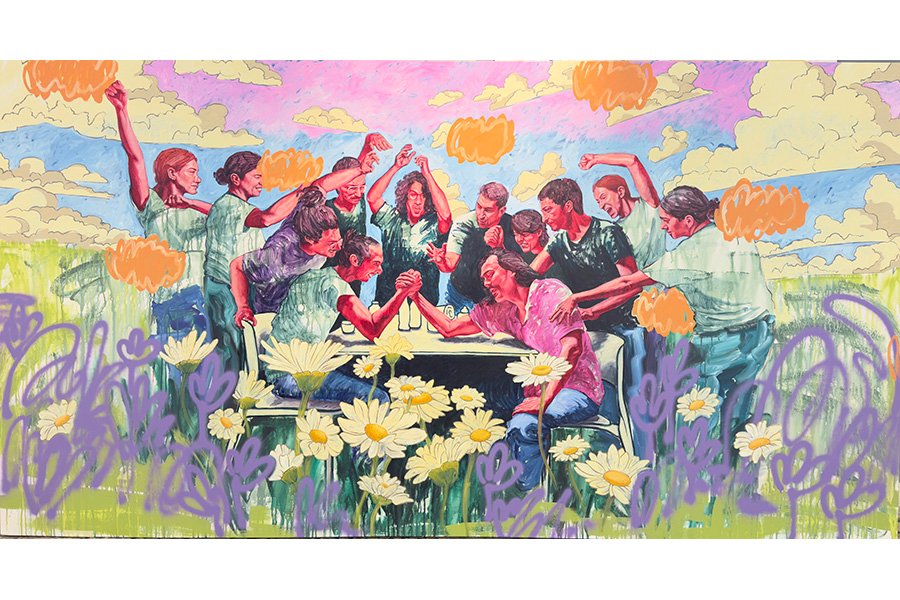
Ghazal Marvi: My concern was never men and women, or gender at all. I started painting a younger generation at a time when simply living freely in Tehran was still taboo, and it made no difference whether that person was a girl or a boy. Since 2022, people keep telling me the same thing: “The girls and boys in your paintings have come to life, they’ve stepped right out into the streets!”
Emaho: Your show titled “Chainsmokers” in 2018 and later “We Know, Yet We Don’t Know” in 2021 both carry titles that suggest something withheld or repeated rather than a straightforward description of the imagery inside. How do you usually land on a title for a body of work: does it arrive before you start painting and shape the direction of the series, or only once the paintings are finished, when you can finally name what they were about?
Ghazal Marvi: The first title actually belonged to a music band. The second one came from my own state of mind at that point in my life, when a lot had shifted and I felt the need to put it into words. That whole period reads like a diary to me now. Even so, I don’t feel any pull to go back and paint those subjects again.
Emaho: You began showing publicly in group exhibitions, including “Postcardese” at Aknoon Gallery in Isfahan in 2017, before moving into solo shows with Homa the following year. What did that early exposure in a group context, sharing wall space and attention with other artists, actually teach you about your own voice before you had a show that was entirely your own?
Ghazal Marvi: Ending up in Isfahan was really an accident. It’s a conservative, closed-off city, and even once I was there, painting wasn’t exactly my plan. I was just playing around with color, working with whatever I already knew, and attention found me on its own. Around the time of that show, I even pictured myself teaching painting one day, but I quickly understood that’s not who I am. My life moves at a pace that doesn’t leave room for standing in front of a classroom making grand statements.
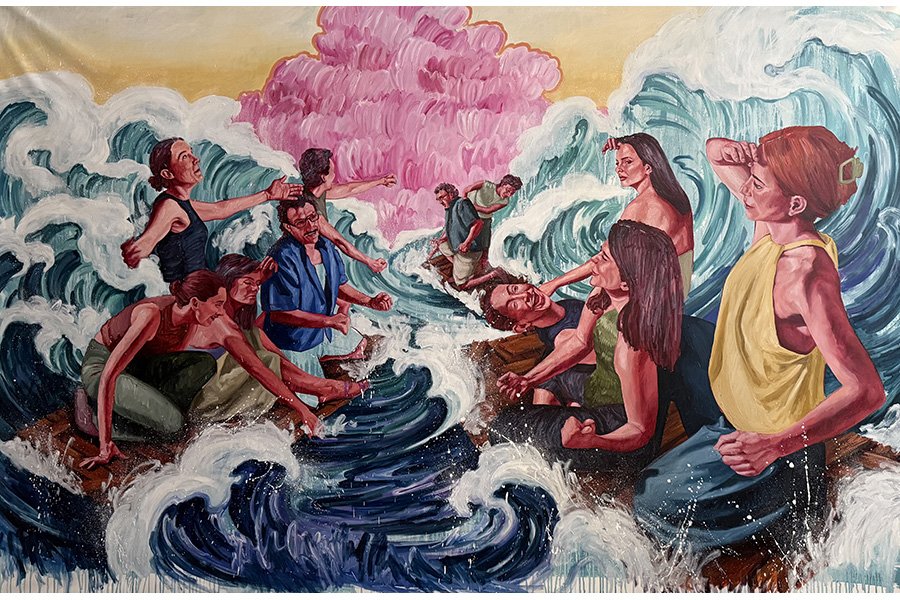
Emaho: Magical realism as a genre asks the viewer to accept surreal elements sitting inside an otherwise recognizable, real setting — in your case, daily life in Tehran. When you’re building a new painting, how do you personally decide how far into the surreal a piece can go before it stops feeling like it’s describing Tehran at all and becomes pure fantasy instead?
Ghazal Marvi: It was Homa Gallery that first put that label on my work. I don’t take the categorizing of it very seriously myself. I reach for imagination wherever the painting calls for it, and elsewhere I let it stay expressive. Explaining the technical mechanics behind that isn’t really the painter’s job.
Emaho: Your work has also traveled outside Iran, including being shown by Kashkan Gallery at the Armenia Art Fair in 2022. Presenting work rooted specifically in Tehran’s daily life to an audience outside that context changes what viewers actually bring to reading the painting. Do you find international audiences respond to the surrealism in your work, or to the specifically Iranian texture underneath it, and does that difference change how you think about a piece once it’s leaving Iran?
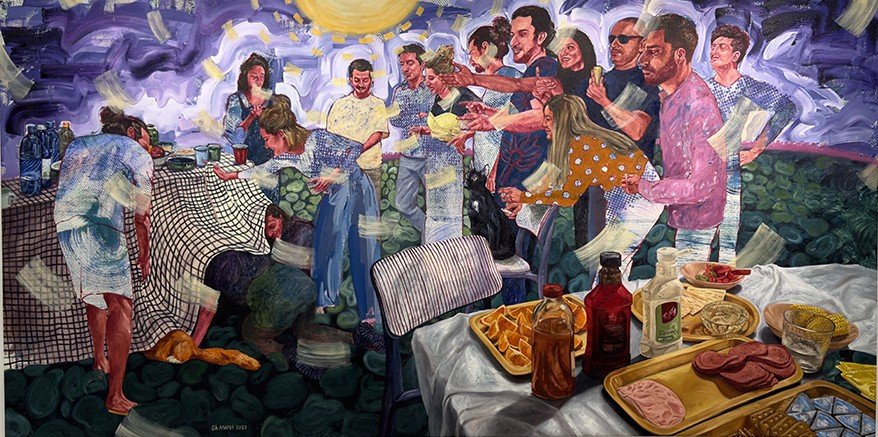
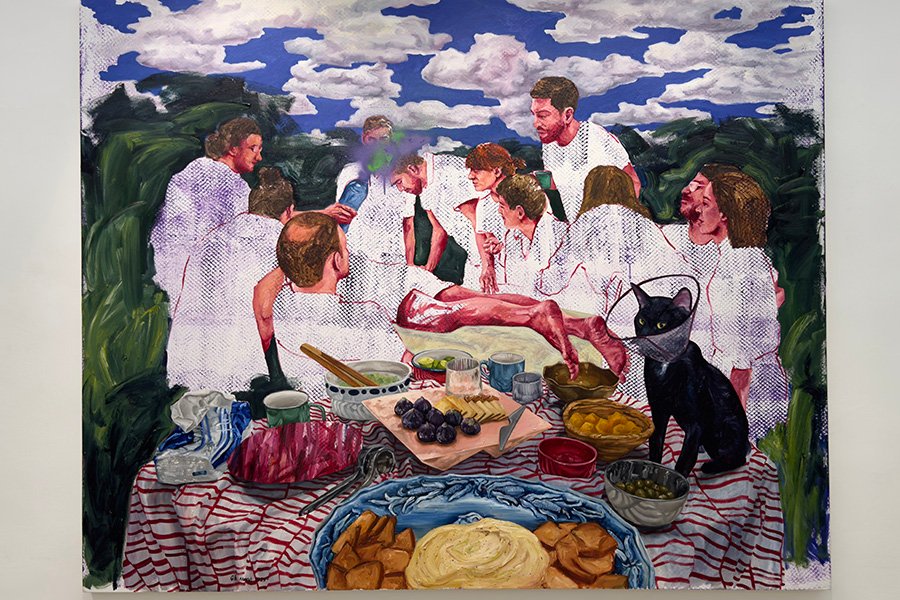
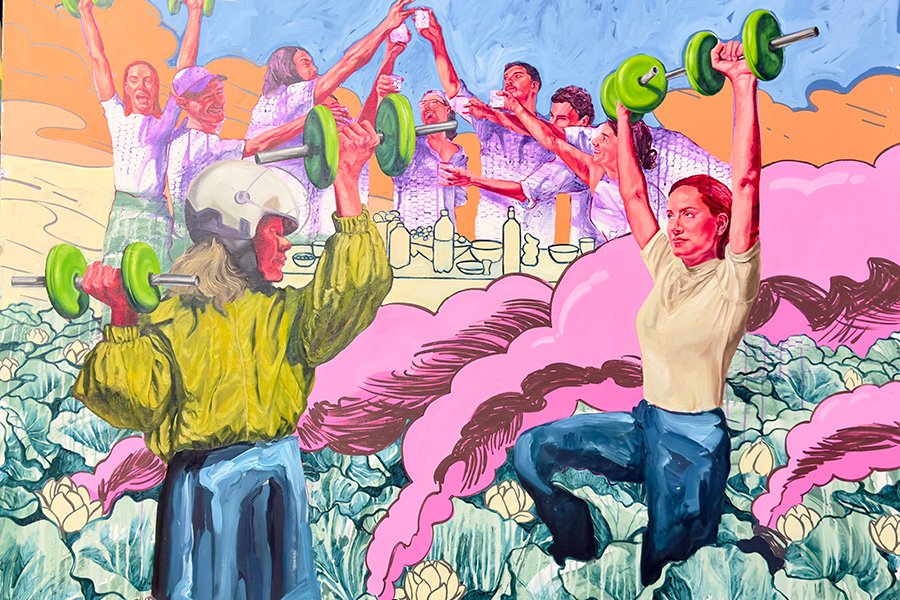
Ghazal Marvi: Honestly, it makes no difference to me. Youthful energy takes shape in Yerevan, New York, Damascus, Seoul, anywhere, and if you know how to enjoy life, it hardly matters where you’re standing. For me, living with that kind of hunger is a way of pushing back against death and boredom. You can see the same impulse in European Baroque painting, especially in the party scenes, and that’s really where it clicks that living joyfully is a philosophical stance, not just a way of burning through time and youth.
Emaho: You’ve participated in group exhibitions that bring together dozens of Iranian artists alongside a handful of international names, presenting a specific slice of contemporary Tehran’s art scene to broader audiences. What do you think a show format like that actually communicates about where Iranian art stands right now that a single-artist show couldn’t?
Ghazal Marvi: I’m just not a group-exhibition kind of painter. The only person I’d ever want to share a two-person show with is Mo Jalili, who I’ve lived and worked alongside for the past ten years. He’s been deeply present in my work, and I’d like to think I’ve been just as present in his, though you’d have to ask him that. A lot of what we share, manga, fashion, sports, games, grew between us over time, and he shows up in my paintings as something beyond a friend or a blood relative. I don’t draw a very clean line between those feelings and the forms they become.
Emaho: Your practice has stayed rooted in painting across every show you’ve had, even as many contemporary artists diversify into installation, video, or mixed media fairly quickly. What has kept you committed to painting specifically as your primary language, and has there ever been a subject or idea you felt painting genuinely couldn’t hold, that pushed you to consider working differently?
Ghazal Marvi: Figurative painters, in general, don’t drift toward other mediums easily. I’ve had sculpture on my mind for a few years now, but the constant stream of commissions hasn’t left me the time to actually pursue it, so I haven’t really had the chance to explore anything beyond paint. Not long ago I finally managed to cast molds of some of my models’ faces, but the results didn’t satisfy me. The energy and expression of one of them, Melika, simply didn’t survive the translation into silicone. I even brought in makeup artists to work on those faces afterward, and that didn’t get me any closer either.
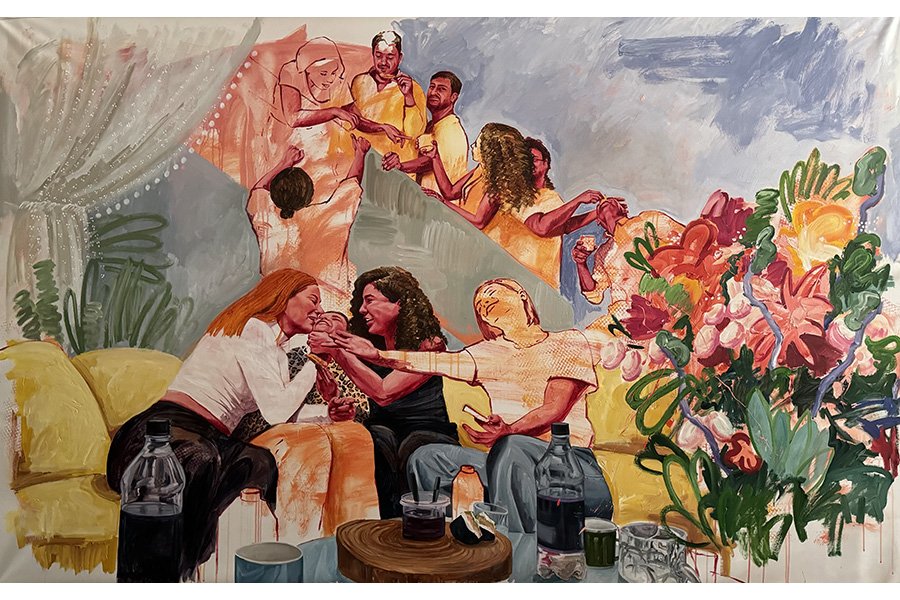
Emaho: The playful, spirited female characters that recur throughout your work and their immature male counterparts suggest an ongoing narrative or worldview you keep returning to and complicating rather than treating as a single, closed idea. Do you think of your body of work as one continuous story that’s still being told, or does each show represent a genuinely fresh start with new characters and no obligation to the ones that came before?
Ghazal Marvi: I simply don’t understand immature men! What I have committed to is never using children as models, and treating childhood itself with real caution, because I see it as such a fragile, vulnerable stretch of a life. My own childhood was a happy one, spent in a small family in one of Tehran’s oldest neighborhoods, the kind of place where everyone, from the smallest child to the oldest neighbor, lived side by side.
Emaho: Nearly a decade into showing publicly, from your first group exhibition in Isfahan to your recent solo presentations at Homa, where do you feel your work still has room to change that it hasn’t yet, and is there a subject or an idea about life in Tehran you’ve been circling in your paintings for years but haven’t fully addressed head-on?
Ghazal Marvi: As long as I’m painting, I consider myself the real subject of my work. The day I get tired of myself, I’ll go open a small restaurant somewhere in the middle of the city; I know how to bring people together. Right now, painting is the excuse I give people to gather and enjoy themselves. I’ve gone to parties more than once and felt genuinely happy just watching the whole room filled with my work. The day I stop feeling that happiness is the day I’ll put my brushes and paints away in storage.