Emaho: You have two main passions in life: travel and contemporary art. After ten years in consulting, you chose to go toward both of them by creating a gallery concept that offers a tour du monde of art. Ten years in consulting before founding a gallery is a long preparation. What were those years actually giving you that you could not have known at the time you would need, and was there a single trip or a single encounter during that decade that made you finally decide the consulting world was not where you were going to spend the rest of your life?
César Levy: We live in an era where careers are fluid; the necessity to adapt, pivot, and reinvent ourselves is only going to accelerate, especially with the AI revolution.
Travel has always been my greatest source of inspiration. Whether exploring Asia, the Caribbean, or Africa, these journeys have been the most transformative experiences of my life. Immersing oneself in a new culture—through its people, cuisine, architecture, and art—is the ultimate way to broaden one’s perspective and appreciate the complexity of a globalized world.
After a decade in strategic consulting—which served as an incredible masterclass in business operations, strategy, and problem-solving—I felt a strong pull to channel those skills into a path aligned with my true passions, and that’s how 193 Gallery was created.
Emaho: You hold a Masters degree in Intelligence Economique from the Ecole de Guerre, an institution that trains military and civilian leaders in strategic analysis. That is an unusual academic formation for a gallerist. What does the discipline of economic intelligence, the ability to gather, analyse and act on strategic information about complex systems, actually give someone building a gallery focused on the Global South, and is there a decision you have made about the gallery’s direction that came directly from that kind of analytical thinking rather than from aesthetic instinct?
César Levy: I’ve never believed that a degree defines a person’s path. My most valuable lessons have come from hands-on experience: traveling, experimenting, making mistakes, trying again and engaging in candid conversations with more senior gallerists, curators, and collectors who generously shared their wisdom.
That said, a gallery is ultimately a business. It requires team management, data analysis, sales strategy / skills, and the ability to craft a seamless collector experience. My background in strategy provided a rigorous framework for those operational realities.
However, our core decision to champion artists from the Global South was not driven by cold market analytics; it stemmed from a deep-seated desire to decentralize the contemporary art narrative and give a platform to underrepresented, diverse voices.
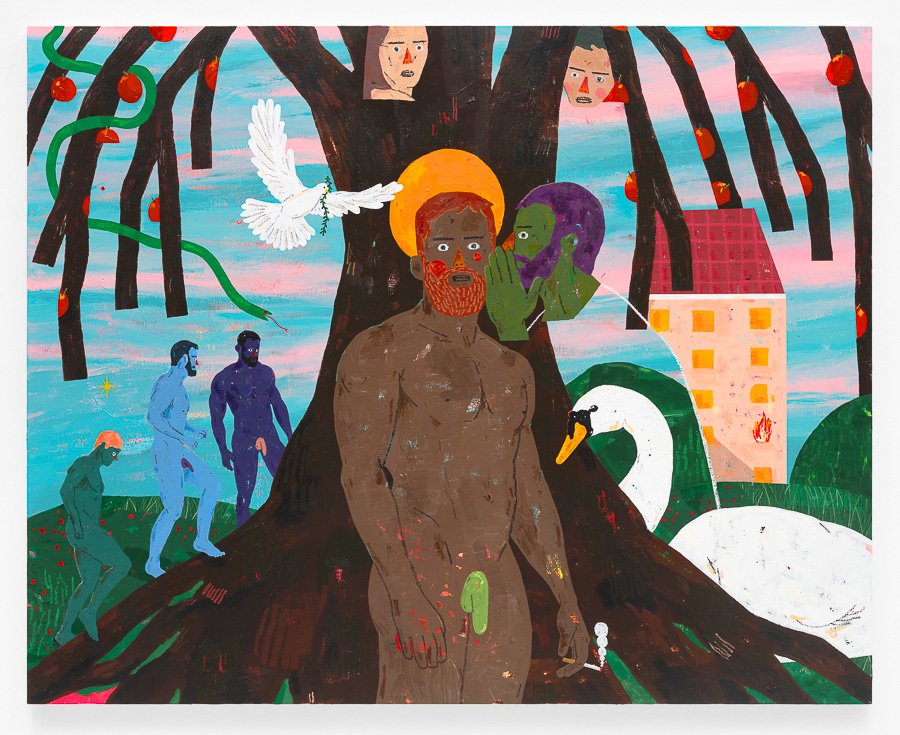
Copyright: Hyangmok Baik & 193 Gallery
Emaho: 193 Gallery was co-founded in 2018 with Linda Franco and born of the desire to promote artistic diversity with a particular focus on the Southern art scenes: the Caribbean, Africa, Latin America and Southeast Asia. The name 193 is widely understood to reference the number of countries in the United Nations, which is itself an argument that art should be as geographically inclusive as the community of nations. That founding principle sounds expansive but is genuinely difficult to execute. How do you build the knowledge, the relationships and the trust needed to programme across that many artistic ecosystems, and where have you found the gaps in your own understanding most humbling?
César Levy: From a purely economic perspective, our model is not rational. As a young gallery, operating across Latin America, the Caribbean, South Asia, and Africa incurs massive logistical and operational costs. But we simply do not believe in the outdated, Eurocentric Art Market Map. Our promise to our artists is to build bridges—showing their work in India, Mexico, the Middle East, Japan, and the Caribbean through fairs, biennials, and museum exhibitions.
To align with today’s geopolitical reality, you have to invest beyond the historic US–European axis. While our internal team is intentionally international with members coming South Africa, Asia, the Caribbean, or Africa—no single team can claim total expertise over such a vast geographic footprint.
That is why we actively collaborate with guest curators who challenge and expand our vision. Over the years, we’ve worked with brilliant curators from Cameroon, Colombia, Nigeria, India, Angola, and El Salvador. For instance, our upcoming autumn exhibition at our Paris flagship will be curated by Azu Nwagbogu (Nigeria) and Nkhensani Mkhari (South Africa).
Emaho: 193 Gallery now operates across multiple spaces in Paris, Venice and Saint-Tropez, with your Paris flagship at 24 Rue Béranger in the 3rd arrondissement. Three very different geographies for permanent spaces: a Paris art district, a historic canal city and a Mediterranean resort town. What does each of those locations give your programme that the others cannot, and how does the meaning of the same work change when it travels between those contexts?
César Levy: Each space serves a distinct strategic and experiential purpose:
- Paris: Our 450-square-meter flagship allows us to create ambitious exhibitions. Paris has solidified its position as the vibrant capital of the European art market, and providing our artists with a big and well-located space here is fundamental.
- Venice: Venice is both the hometown of our co-founder, Linda Franco, and home to the world’s most prestigious Biennale (even if we could easily say that Global South Biennales like Kochi, Sharjah or Sao Paulo start to have almost the same impact for art professionals). Beyond that, Venice possesses an unparalleled, historic energy. Because so many of our international collectors visit every two years, it offers our artists a unique, highly visible canvas. Also we are a french italian gallery doing the two most important italian fairs for years (Artissima and Miart), and Italy is facilitating the development of the art market, through VAT and tax incentives.
- Saint-Tropez: Here, the focus shifts entirely to intimacy and collector experience. Linda, who has lived in Saint-Tropez for 10 years, hosts private dinners, drinks at the gallery, exclusive sunset boat tours or beach lunches in Ramatuelle with our collectors. We firmly believe that the relationship between a gallerist and a collector should transcend transactional exchanges. Sincere, lasting trust is built over shared moments and real conversations. And nothing has been stronger than a nice dinner to strengthen a relationship.
- We apply the same rigorous curatorial standards across all three locations, while giving our artists and curators full freedom to adapt their work to each unique context. For example Modou Dieng Yacine created in 2025 an exhibition in our Venice Space that examines traces of Black history in Venice through his photographic-based paintings of social and architectural environments
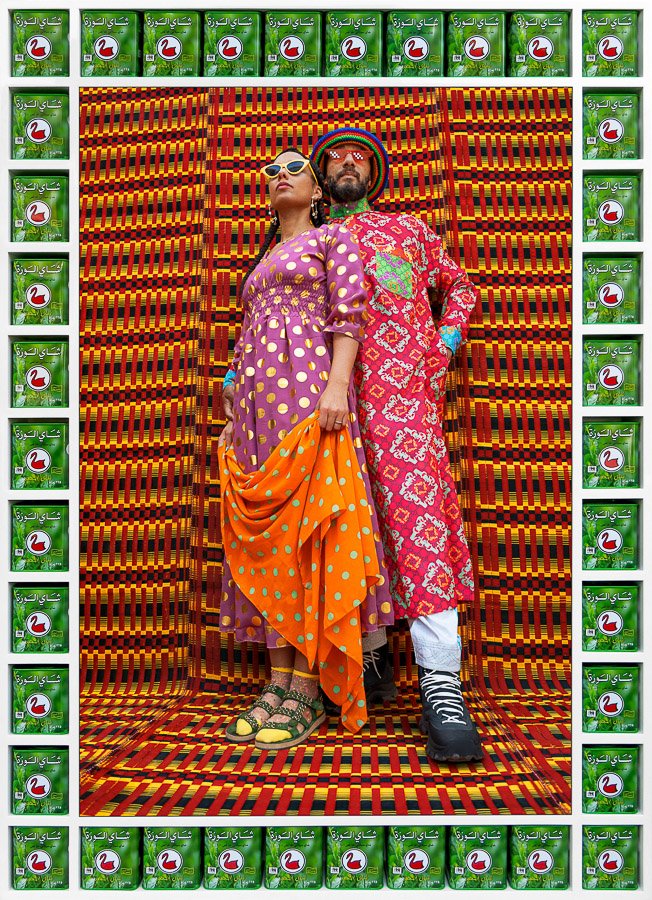
Copyright: Hassan Hajjaj & 193 Gallery
Emaho: 193 Gallery regularly participates in international art fairs including ARCO Madrid, Zona Maco, the Armory Show, Artissima and India Art Fair, and actively supports its artists’ presence in biennials such as Kyotographie in Japan, the Havana Biennial in Cuba and Passengers in Transit, a collateral event of the 60th Venice Biennale. That is a deliberately non-Eurocentric fair programme. What has showing at Zona Maco or the Havana Biennial taught you about the relationship between where an artist’s work is shown and how it is understood, and is there a fair you have shown at that fundamentally changed your understanding of a specific artistic scene?
César Levy: We consciously challenge traditional market playbooks, and we like sometimes to do exactly the opposite of the market best practice. Then rather than exhibiting artists primarily within their home countries, we deliberately cross-pollinate cultures—bringing Caribbean artists to Africa, Asian artists to Latin America, or African artists to Asia.
We never reduce an artist to its geography, but we use our platform to foster cross-cultural curiosity. Many of our artists explore themes of multicultural identity, migration, and the shifting maps of globalization. Building a market for an artist in an entirely new territory is challenging and requires a long-term commitment, but creating those unexpected dialogues is precisely what we want to do.
Emaho: Your exhibitions have taken audiences through radical changes of mediums and aesthetics, moving from tribal art from Papua New Guinea to light and digital art from Chile, from abstract Thai painting to Mexican minimalist art. That is an extraordinary range of aesthetic languages to hold simultaneously under one gallery identity. What is the thread that connects a Papua New Guinean tribal object and a Chilean light installation in the mind of a collector standing in your space, and how do you maintain a consistent curatorial position when the works you present have so little formal or stylistic relationship to each other?
César Levy: The unifying thread of 193 Gallery is a shared conceptual commitment rather than a uniform aesthetic style. We champion artistic voices that explore identity, hybridity, and the human condition in a changing world.
Many of the artists on our roster work across multidisciplinary media to unpack these narratives. While the formal outcomes differ—ranging from abstract painting to light installations—the underlying inquiry into multi-layered cultural identities remains constant. That intellectual rigor is our gallery’s true signature.
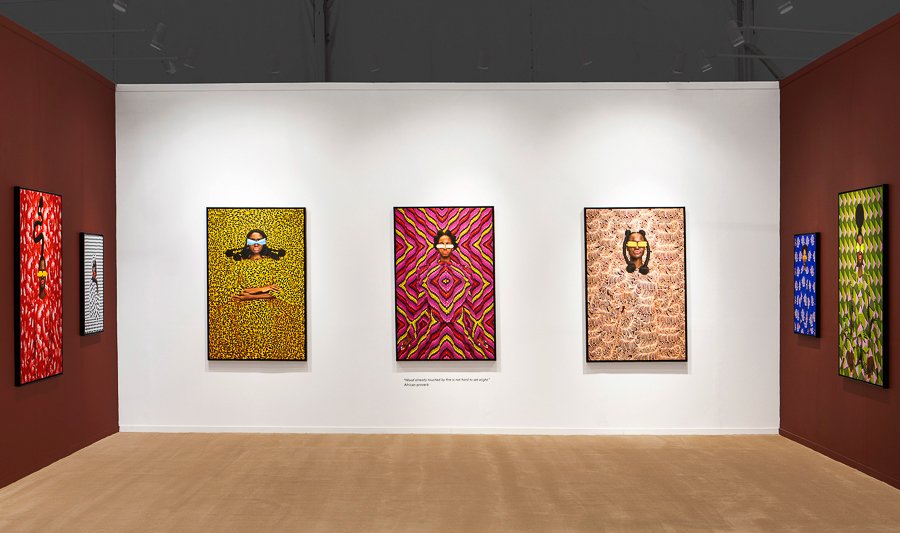
193 Gallery at India Art Fair 2025
Emaho: Your roster includes Hassan Hajjaj, Thandiwe Muriu, Joana Choumali, Adler Guerrier from Haiti, Ben Arpéa and Aldo Chaparro, artists from Morocco, Kenya, Ivory Coast, Haiti and Chile. Several of them have since received significant international recognition. You were working with some of these artists before the global art world had fully discovered the contexts they came from. What does it feel like when the world catches up to something you believed in early, and is there a curatorial risk that success of that kind creates for a gallery whose identity is built on discovery?
César Levy: Our roster has always balanced established, museum-recognized artists like Hassan Hajjaj, Joana Choumali, with emerging talents like Ben Arpéa, Shinji Nagabe, Sesse Elangwe or Thandiwe Muriu, who grow alongside the gallery.
The rising interest for the Global South, the continuous development of great collections and biennales in these territories are of course a great news.
I constantly encourage my art colleagues to look closer at dynamic markets like Mexico or India; the talent and collectors there are extraordinary. For us, institutional success doesn’t stifle discovery—it simply gives us a stronger foundation to keep championing the next generation.
Emaho: The Global South is now one of the most discussed frameworks in contemporary art discourse, with major institutions, biennials and collectors paying unprecedented attention to artistic production from Africa, Latin America, Southeast Asia and the Caribbean. You have been building a programme around those geographies since 2018, before that attention arrived. What has the mainstreaming of that discourse changed for 193 Gallery practically, and what concerns you about how the international art world is now paying attention to the Global South that you feel is not being said clearly enough?
César Levy: Globalization is not a new topic; pioneering galleries have been highlighting non-Western scenes for decades. However, we are witnessing a genuine shift, particularly in Paris, with dedicated fairs like Menart (Middle East), Asia Now, AKAA (Africa), and the last one, MIRA (Latin America), a new beautiful art fair dedicated to Latin American artists.
But the most important, years after years, artists from the Global South have a better representation in top fairs (Art Basel for example is leading the way in the term of global representation of artists, curators and galleries ) and in museums
But let me be realistic, a significant structural imbalance remains. Look at the top decision-makers: museum directors, board members, high-level trustees, and major gallery founders across Western capitals still lack true diversity. Genuine progress cannot just be about what is on the walls; it must extend to who holds leadership and institutional power within the art ecosystem.
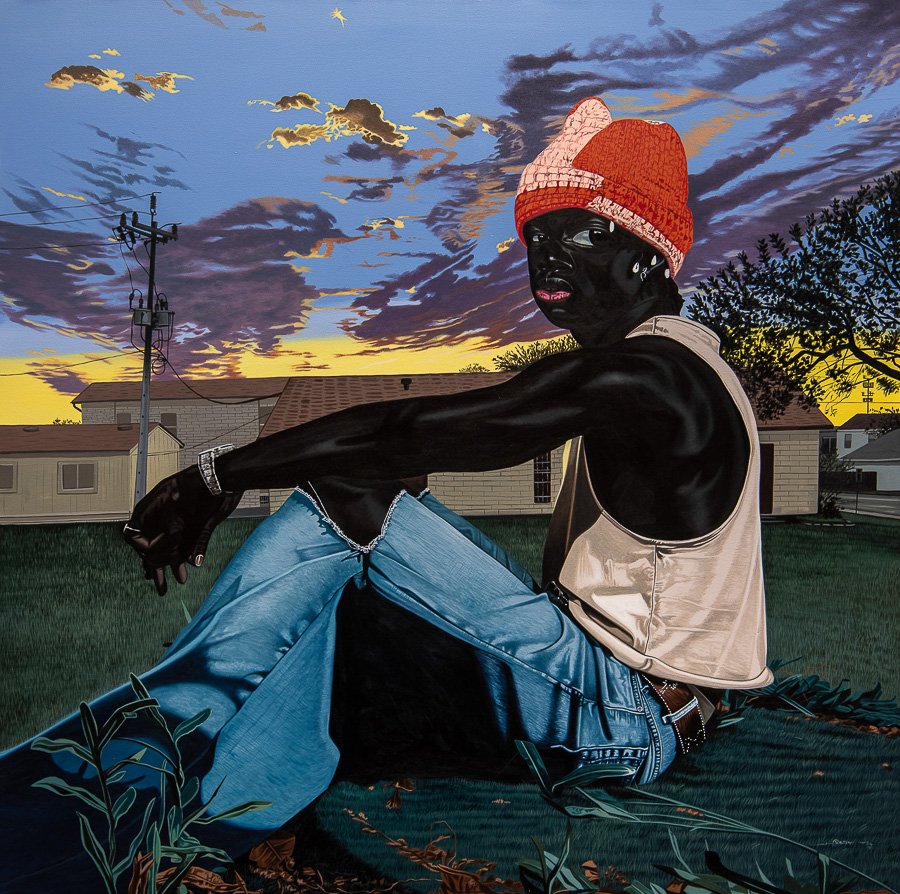
Copyright: Sesse Elangwe & 193 Gallery
Emaho: You collaborate with artists and curators from around the world to champion a pluralistic contemporary vision of art that goes beyond traditional Western frameworks. Yet the gallery itself is based in Paris, one of the most established centres of the Western art world, and shows at the Armory Show and Artissima. How do you think about that structural tension between your stated mission and your institutional position, and is there a way of being simultaneously inside the Western art system and genuinely challenging it, or does one always compromise the other?
César Levy: We navigate this by maintaining a genuinely active presence on the ground worldwide. Every year, we participate in multiple fairs across Latin America and Asia. In 2027, we are planning to do one fair in Africa and one in the Middle East.
Furthermore, we are working toward opening a permanent gallery space in Mexico City within the next two years—a scene we’ve been actively engaged with for over five years through Zona Maco.
While a significant portion of commercial transactions still occurs within European and US hubs, we reinvest those resources directly into emerging regions. Taking the risk to invest long-term in non-Western territories isn’t just a philosophical choice for us—it’s an operational reality that pays off.
Emaho: You have described the gallery as an invitation to go further than the encyclopaedic definitions and the few names around which artistic movements are constructed. That is a curatorial ambition that resists the canon rather than adding to it. But canons are also how markets work, how institutions make acquisitions, and how collectors build confidence. How do you sell the work of an artist whose context and tradition are genuinely unfamiliar to a collector trained by decades of art market infrastructure to trust the names they already know, and what is the most important thing a collector needs to understand before they can genuinely receive an artist from a scene they have never encountered?
César Levy: That challenge is precisely what energizes us every day. We are passionate advocates for our artists, and we’ve found that most of our collectors are inherently curious—they want to discover new perspectives, techniques, and narratives rather than simply buy recognizable brands.
We believe in a pluralistic, interconnected world. In today’s complex political climate, using art to build cultural bridges and expand horizons is our way of making a meaningful contribution.
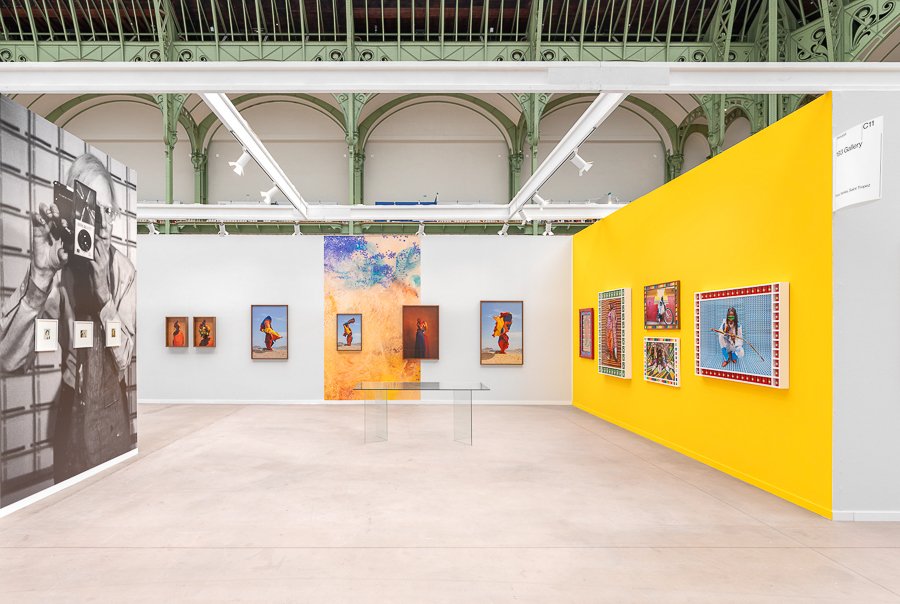
193 Gallery at Paris Photo 2025