Emaho: You grew up in the Netherlands before eventually finding your voice behind the camera. Looking back, what parts of your early life do you now recognize as the first sparks of your photographic instinct?
David: I was born and raised in Amsterdam in a family of artists. My grandfather was a well known graphic designer, my grandmother a textile artist, my father a painter, and my mother a mixed media artist. So first and foremost it was my direct family that influenced and inspired me. I think that environment shaped a certain way of looking at things, and more specifically of looking into and behind things. It created a deep interest in the history of places and objects. I wanted to be an archaeologist when I was little, and I still suffer greatly from Stendhal syndrome.
Emaho: Street photography has become a defining thread in your work. What drew you to the streets in the first place, and how do you manage to catch those fleeting, in-between moments that hold so much atmosphere?
David: I started street photography when I was still working as a musician. I brought my father’s old camera with me and wandered the streets of wherever I was touring at the time. Very quickly those walks became something I looked forward to more than the actual gigs. When a close family member died in 2015, I grabbed the camera as a strange form of therapy. I
could observe people and places and freeze a moment along with the feeling I had while capturing it. It gave me a sense of being present, which I really needed then, because I was struggling with the world continuing as usual while I felt stuck in a kind of limbo after the loss of my brother-in-law. I stopped working as a musician in 2020 and fully entered the world of visual arts after that. I see the streets as my photography school. I am self-taught, and that space allowed me to develop my eye, always navigating between moods and ways of portraying the passing of time, both subtly and more overtly.
Emaho: Your images often drift between reality and something dreamlike, almost surreal. How did this visual language evolve? Was it a conscious build or something that emerged intuitively?
David: It emerged slowly, although it was already present from the beginning and has gradually taken over more completely. I try to enhance the surreal feeling of life itself and its absurdity. I let imagination take the lead and invite the viewer to decipher the image in their own way. I am drawn to moments that feel like they are on the verge of disappearing. I like images that feel
unstable, that hold tension, where what is visible is only part of the story. I try to layer and obscure reality, making it feel more poetic than realistic.
Emaho: Beyond Metropolitan Melancholia, which projects do you feel most connected to today, and what inner questions were you navigating through them?
David: At the moment I feel very excited about a new body of work that Sarah and I are developing and plan to release next year. It is a much deeper dive into the world of time and timelessness, moving further into mixed media and abstraction. In many ways it feels like an extremely abstracted and more conceptual version of Metropolitan Melancholia. It is a work about time itself and the layers we live on, both physically and metaphysically.
Emaho: Your photographs feel grounded in everyday life, yet they hold a conceptual depth that goes beyond simple observation. How do you maintain that balance?
David: I think it mostly comes from creating a sense of mystery in the work. Something that suggests narrative or a human presence while remaining elusive. It is about layering rather than explaining. I am not very concerned with maintaining a balance anymore. In fact, I am moving more and more toward a place where the documentary aspect dissolves entirely. I am increasingly interested in creating a world anew rather than documenting the existing one.
Emaho: Many of your long-term projects unfold across different cities and environments. When you enter a new place, how do you sense its rhythm and allow a project to take shape?
David: Ideally I like to spend a longer time somewhere to really settle into its rhythm, but that is not always possible. Because of that, my way of working has become faster and more intuitive. Since I am not focused on portraying a documentary reality, I carry an inner world with me that guides what I recognize and respond to. I look at places conceptually. Sometimes I am surprised by the people or countries I visit, but ultimately something has to click with that inner world that is already there.

Emaho: Photobooks play a meaningful role in your practice. What does the book format allow you to express that other platforms cannot?
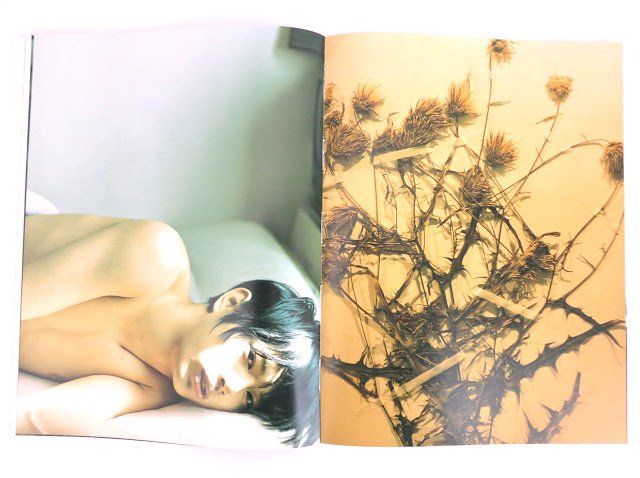
David: In short, the physicality of it. Even though I have only released one book so far, it completely changed the way I look at my work and how I develop it. It pushed me toward thinking more conceptually and less like a street photographer. I began working more in series and narrative sequences rather than isolated fragments. I am very much looking forward to making more books in the near future.
Emaho: Melancholy and solitude run through much of your work, even when the subject matter shifts. How do these emotional undercurrents influence your approach?
David: I do not treat melancholy or solitude as subjects. They are more a state I am in. They naturally affect how I look at things, even when the theme changes. I notice what is left behind, the moment after something has passed. Even lighter scenes carry a sense of time slipping and of moments already becoming memory.
Emaho: You have collaborated with curators, editors, and fellow artists throughout your career. How have these collaborations shaped your work?
David: They have shaped it greatly. For example, Misha Kominek’s very grounded and honest approach during the making of Metropolitan Melancholia was incredibly important and educational. He was brutally honest about the first edit Sarah and I sent, and we loved that. The book became much stronger because of it. In hindsight, we should have listened even more closely and left out some additional images he pointed out at the time. Of course, the most important collaboration in my life is with Sarah van Rij. She has been my love since 2012, and our way of working together is the most special thing I could wish for. We inspire and critique each other constantly. It creates a fluid and ever-changing environment that influences both our collaborative work and our individual projects, always pushing us toward something new.
Emaho: Looking ahead, are there themes or visual strategies you feel drawn to explore next?
David: Investigating time itself has become a very clear focus in my work. The passing of time, the layers it leaves behind and continues to build, is an endlessly fascinating subject for me. It opens up countless directions and side paths to explore as an artist. At the same time, I am moving through time myself, accumulating experiences both good and bad. Those experiences shape me as a human being and inevitably enrich the questions I am trying to explore through my work. As my late father’s favourite poem by Baudelaire says in its final line, into the depths of the Unknown, to find something new.