Emaho: You studied at the École nationale supérieure des Arts Décoratifs in Paris and then at the School of Visual Arts in New York. Growing up, was there a specific object, building or material that made you feel that design was something you needed to understand from the inside?
Sophia Taillet: If I were to identify an early spatial reference that shaped my approach to design, I would point to playgrounds. They function as open systems structured yet indeterminate environments that invite movement, interaction, and informal experimentation. I was drawn to how simple elements – metal bars, tension, balance – could generate a wide range of uses and behaviors.
This interest naturally led me toward materials and processes. I began working extensively with metal, later expanding toward glass, notably through collaborations with glassworks such as Meisenthal, Cirva etc. These experiences grounded my practice in making.
Rather than starting from form, I work from the properties of materials—their constraints, resistances, and potential for transformation. Form emerges through this dialogue. Making becomes a way of thinking, where each test, each adjustment, slightly shifts the direction of the project.
Emaho: You graduated from ENSAD in 2017 and within a year your Helik light in flexible steel was shown at the Venice Biennale of Architecture 2018. Most young designers spend years searching for their first real platform. What was the work behind that piece that nobody saw, and what did that moment of recognition actually feel like at the very beginning of your practice?
Sophia Taillet: The Helik light developed from an ongoing investigation into tubular metal and its ability to move beyond rigidity. I was interested in how a structural element could bend, twist, and hold tension without losing its integrity.
The final piece is only a fragment of the process. Much of the work took place through repeated tests – bending, adjusting, sometimes failing – until reaching a point where the material could both resist and yield.
Its presentation at the Venice Biennale of Architecture 2018 marked an important shift. It allowed the work to operate at a larger scale and in relation to space, where light, movement, and perception became inseparable from the object itself.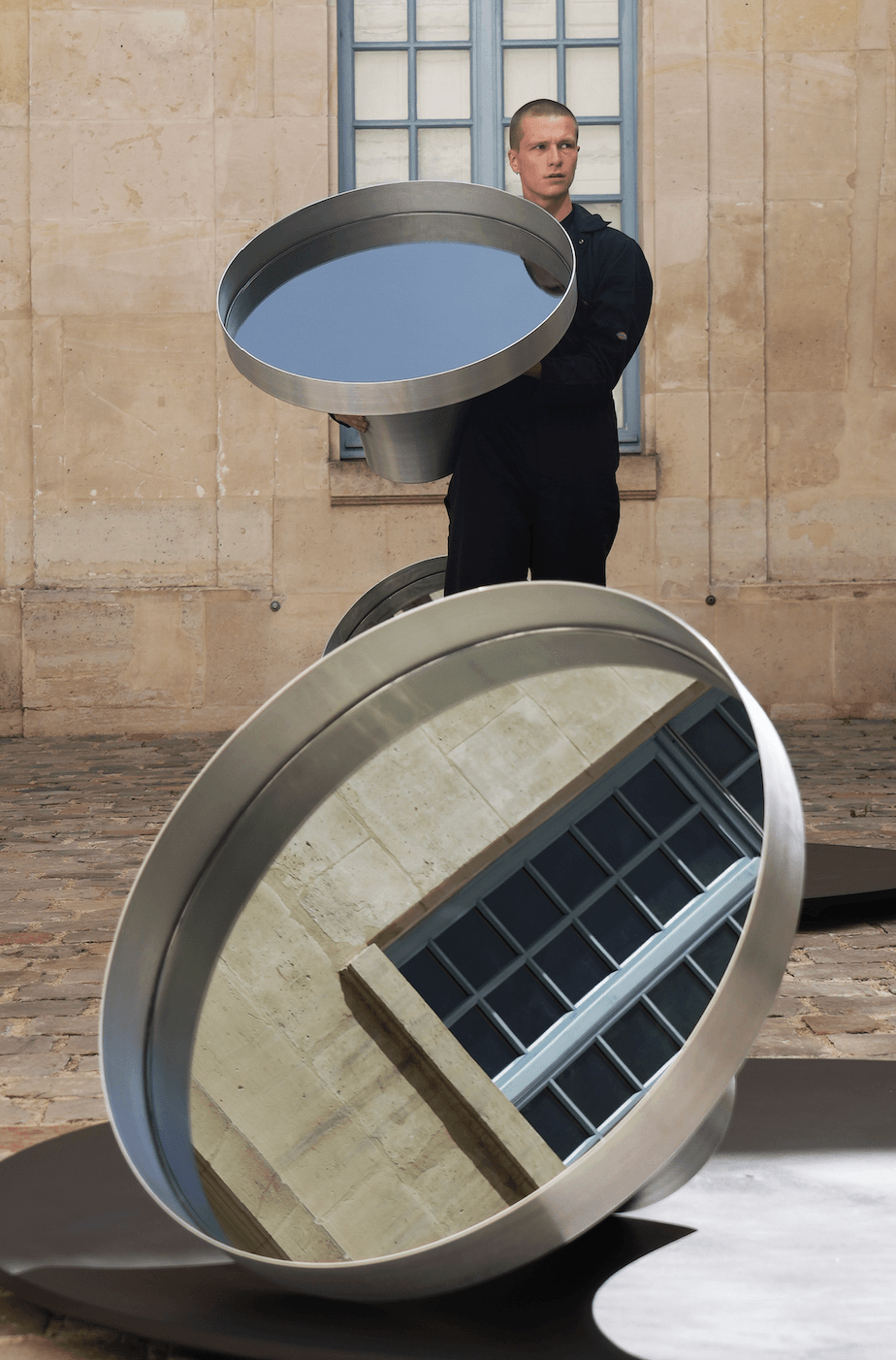
Emaho: In 2019 the Frac d’Auvergne gave you a six-month residency inside a glassblowing centre in Yzeure, in total immersion with the material and the craftsmen. Most designers work from drawings and send them out to be made. You went the opposite way, living inside the process. What did glass teach you about itself that it would never have revealed from a distance?
Sophia Taillet: The residency with the Frac d’Auvergne marked a turning point in my relationship to glass. Glass behaves in a very specific way – it moves, collapses, stretches, but only within certain thresholds. You don’t impose form onto it; you work with timing, temperature, and gravity. Working both with industrial processes – thermoforming, fusing, lamination and alongside glassblowers made this very clear. On one side, precision and control; on the other, gesture, rhythm, and experience.
What changed was my position in the process. Instead of projecting an idea, I started building it from within the material itself. Certain forms only appeared because I was physically present at each stage, adjusting in real time.
Emaho: Your work has been in the collection of the Mobilier National since 2024, a significant institutional recognition for a practice that began as experimental object-making. What does it feel like to see something you made by intuition become part of a national heritage collection, and does that kind of permanence change how you approach the next piece?
Sophia Taillet: The inclusion of my work in the Mobilier National situates the practice within a broader historical continuity. It introduces a different scale of time. The work is no longer only part of a current context—it becomes something that is meant to last, to be transmitted. Rather than stabilizing the practice, this perspective pushes it further. It encourages me to refine a vocabulary that can move across materials and contexts, while remaining precise in its intentions.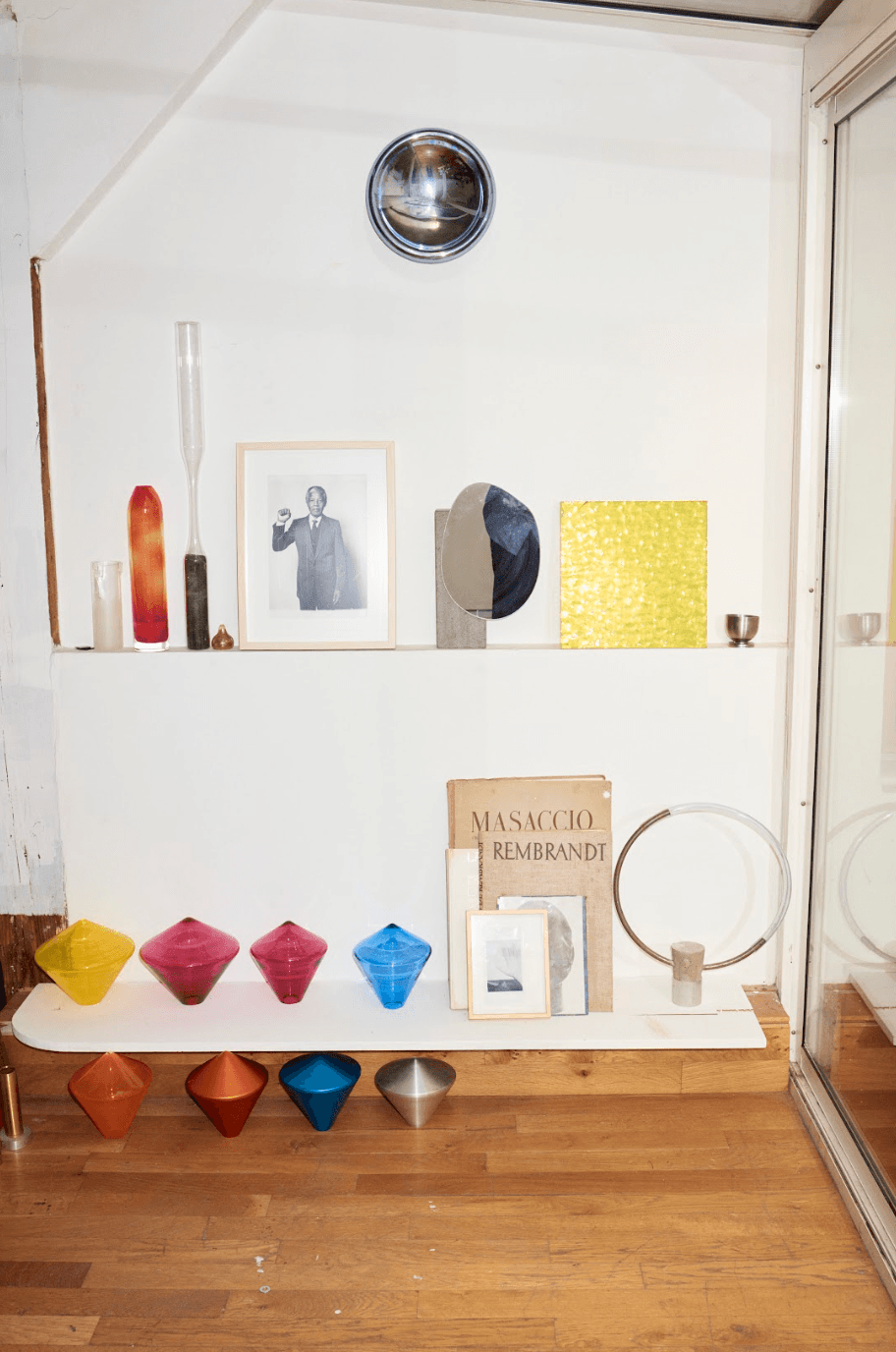
Emaho: The Mondes Nouveaux grant from the French Ministry of Culture led you to a transdisciplinary research project connecting design, craft and dance, resulting in the performance Time Erosion at the Fondation Pernod Ricard with dancer François Malbranque and composer Matthieu Gasnier. Most designers stay within the boundaries of the object. What made you willing to invite a body and a score into your practice, and what did that collaboration change in how you think about making things?
Sophia Taillet: The Mondes Nouveaux project led me to expand the work toward a more transdisciplinary field. Collaborating with François Malbranque and Matthieu Gasnier introduced time, movement, and sound as active components.
Working with a dancer shifted the way I approached form. Instead of something fixed, it became something that could appear, disappear, stretch, or repeat. The body was no longer a reference – it became part of the process. This introduced a different kind of attention, more sensitive and more immediate, where gesture and rhythm could generate form as much as material does.
Emaho: Spinning Around, your installation of rotating mirrors presented at the Musée de la Chasse et de la Nature during Paris Design Week, was also adapted into an exclusive collection for the Grand Palais boutique. The installation transforms a historic space through reflection and circular motion. How do you design something that is primarily about what it does to a space rather than what it is as an object?
Sophia Taillet: This project operates through what it produces in space rather than as a self-contained object. It developed from simple properties – rotation, reflection, instability – and from the way these could alter perception. As the mirrors move, they fragment the space, multiply viewpoints, and continuously shift what is visible.
An early presentation in the courtyard of the Bibliothèque historique de la Ville de Paris made this particularly evident. The installation didn’t just sit in the space – it activated it, catching fragments of architecture, light, and movement, and recomposing them in real time. In that sense, the object becomes a dispositif: something that produces relationships rather than existing as a fixed form.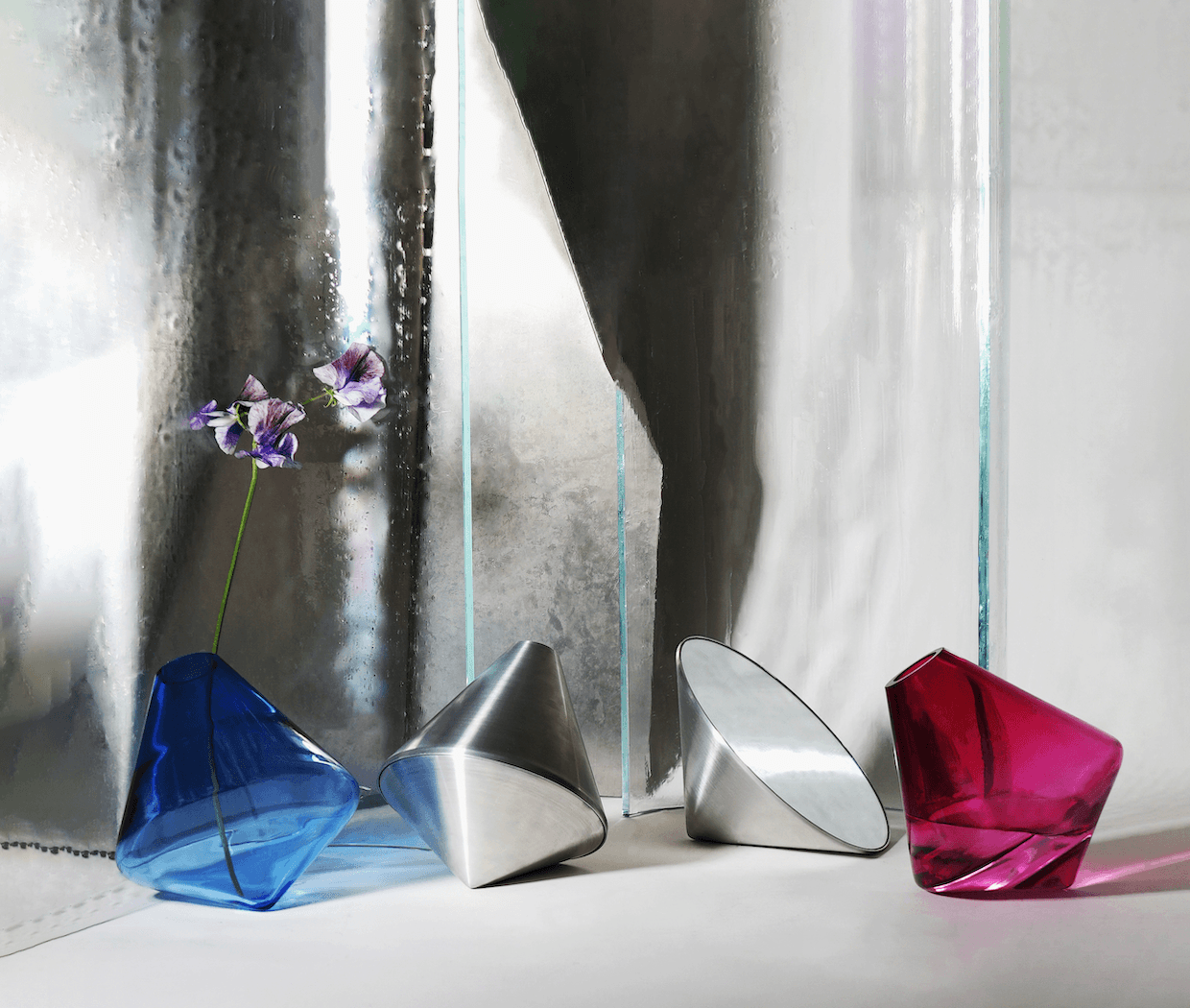
Emaho: You were awarded the French Design 100 prize, described as the only design award in France that rewards influence beyond the country’s borders. Your practice moves between blown glass, flexible steel, stone, choreography and sound. Does being recognised by an institution change how free you feel to keep moving between those things, or does any prize carry a risk of fixing an identity you are still building?
Sophia Taillet: Being awarded the French Design 100 on two occasions reflects a direct engagement with the work, each time in a different context ( venus light then the spinning mirror ). It supports a practice that moves between materials – glass, metal and across formats, from objects to installations.
Rather than defining a position, this recognition reinforces a direction. It confirms the possibility of keeping the work in motion, while maintaining a coherent line through different projects.
Emaho: In 2026 you are a Villa Albertine resident in New York, in partnership with WantedDesign, developing a project that reads the city as a living organism in motion, echoing the way Steve Reich composed City Life from urban sounds. New York and Paris are both cities in constant motion but they move very differently. What are you listening for in New York that Paris could never have given you?
Sophia Taillet: The residency at the Villa Albertine, in partnership with WantedDesign, is still unfolding. New York operates through a particular intensity. Sounds overlap, movements intersect, and everything seems to happen simultaneously. What interests me is this layering—how different rhythms coexist and create a continuous flow.
During this period, I also spent a week in residence at the Corning Museum of Glass, in upstate New York. This offered a very different environment—more focused, more contained—centered on material experimentation and exchange around glass. In parallel, I will be part of a collective exhibition during Design Week, scenographed by Crosby Studios. This presentation runs alongside the residency rather than resulting from it.
The project itself is still forming. It develops gradually through observation, encounters, and shifts in perception.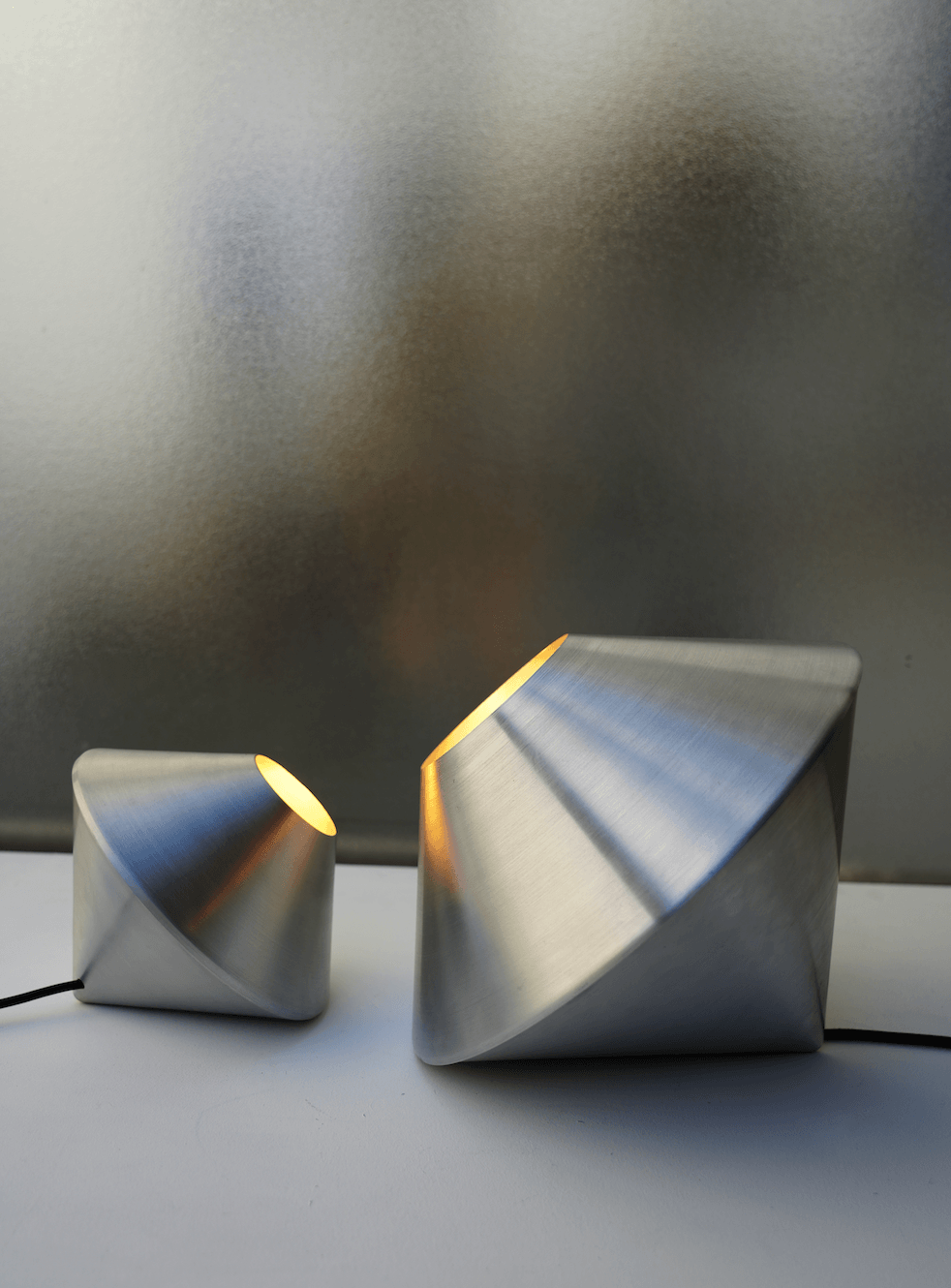
Emaho: You describe your practice as being at the crossroads of art, design and craft, and you have said that the artisanal gesture and the choreographic gesture are not so different. As you look ahead, what is the project you have not yet made that keeps returning to you, and what are you still waiting to understand before you can make it?
Sophia Taillet: There are strong affinities between artisanal and choreographic gestures. Both rely on repetition, precision, and a constant awareness of the body. This dimension continues to guide my work and opens new directions.
At this stage, I am developing several lines of inquiry in parallel. Some are moving toward larger-scale interventions, particularly in public space, while others explore more subtle interactions between material, movement, and perception. Rather than defining a single project, the focus is on allowing these directions to evolve and take form over time.