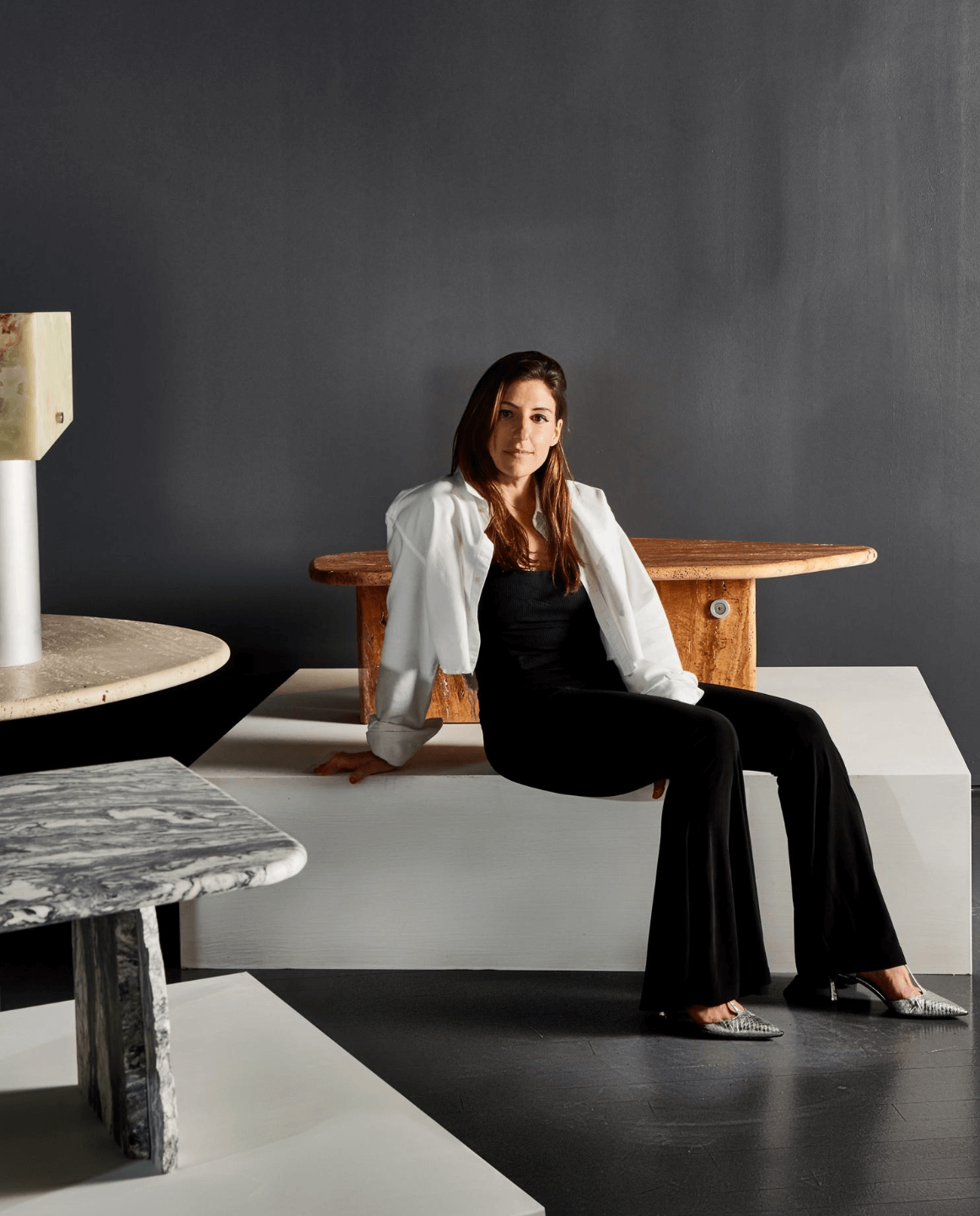
Emaho: Cinema taught you framing and timing. How do those instincts translate into the stillness of steel and glass?
Pauline: cinema taught you framing and timing. How do those instincts translate into the stillness of steel and glass?
The principle is ultimately the same. Cinema taught me to give complete space to creativity not to feel blocked by technique or to assume something is impossible. Constraints exist, of course, but they should never become mental limits. I like to push boundaries, to find myself at the edge of the precipice that moment of doubt where you have to invent, to trust, to go further.
But that freedom always exists within a framework. A rhythm of life, of gaze, of trust and communication. As in cinema, everything is about tempo: tension, silence, breathing.
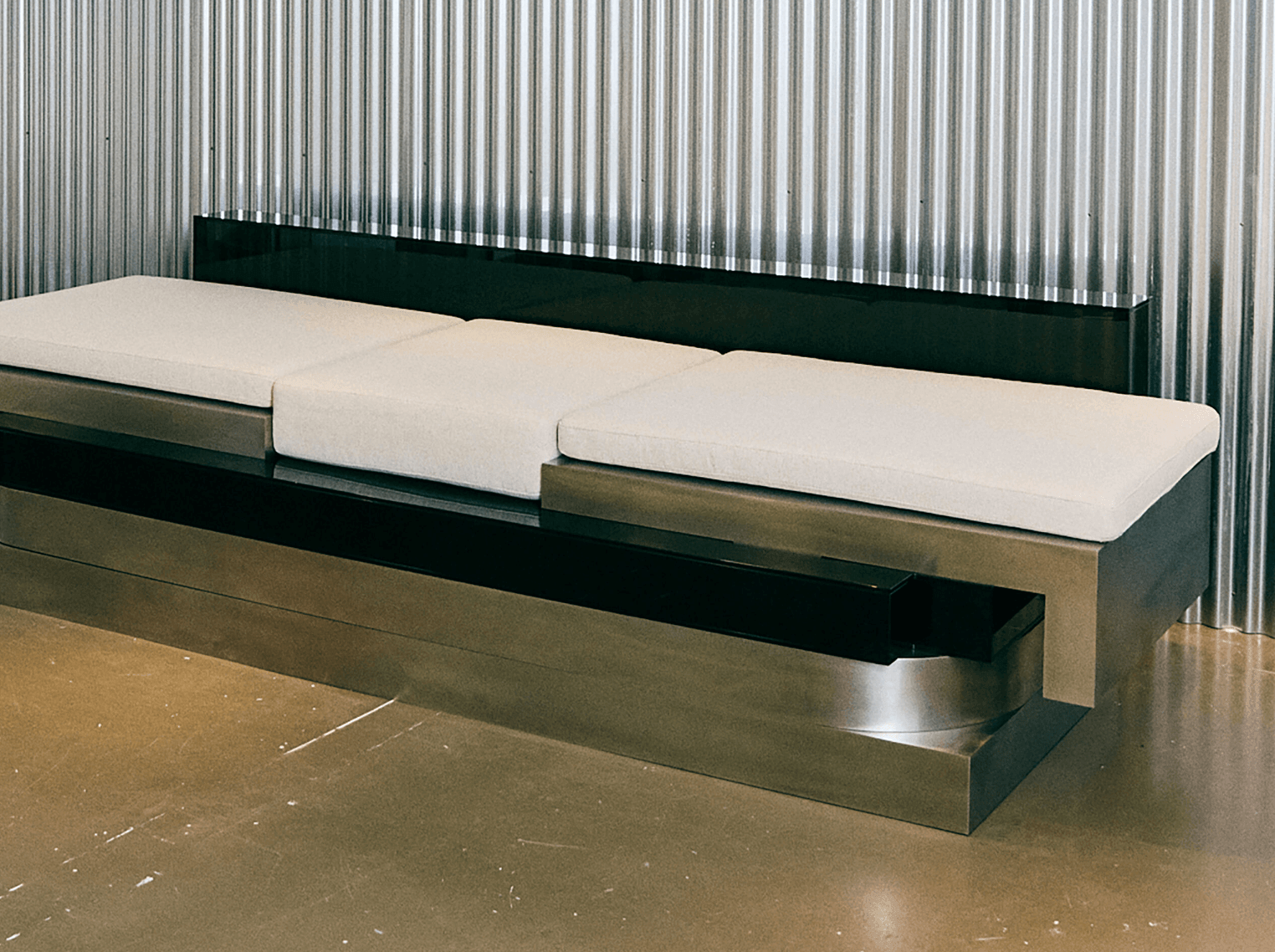
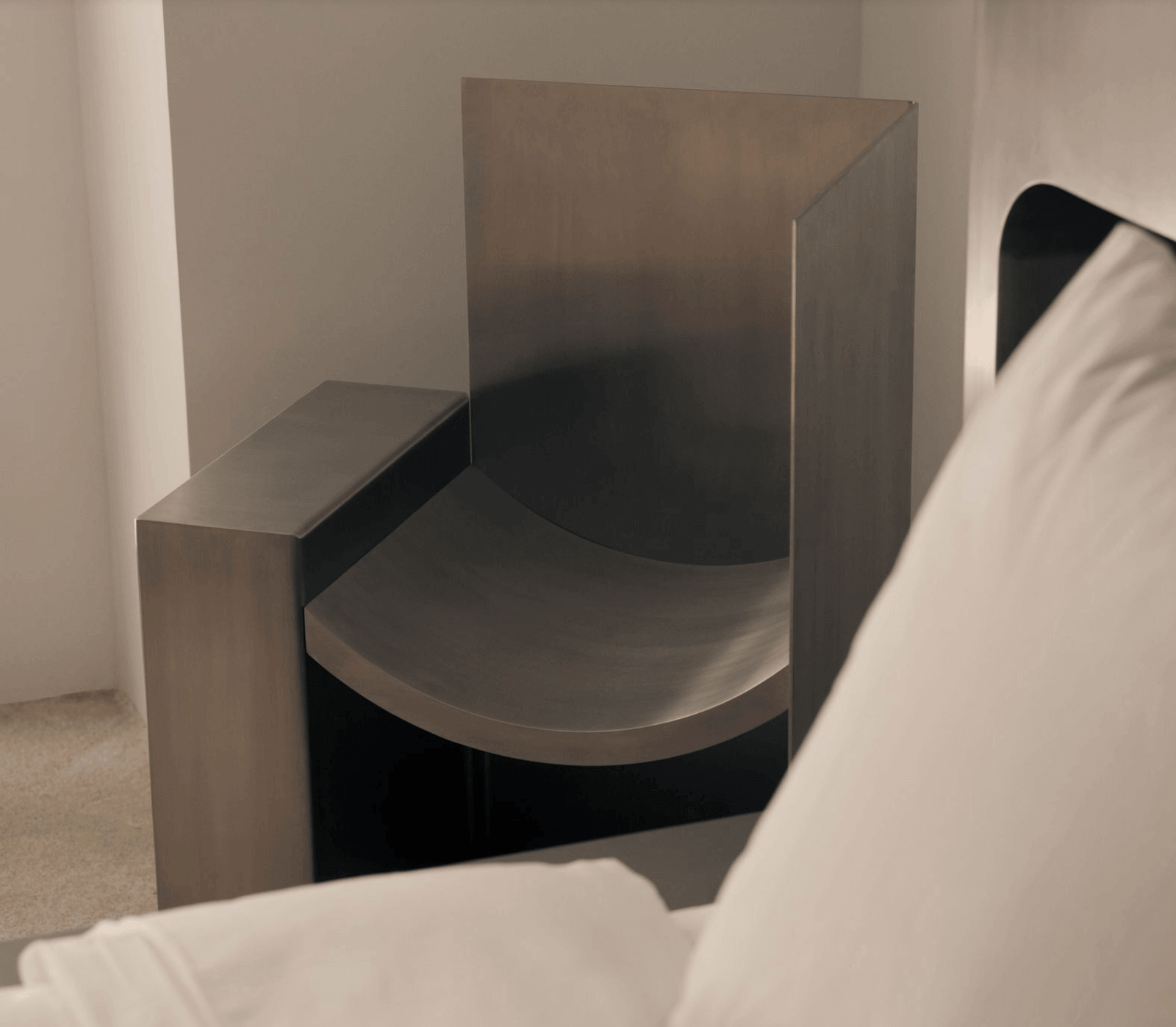
I compose spaces the way I once composed images by framing moments that move and affect me. Steel and glass are not still; they capture light, they reflect, they vibrate. Their apparent coldness becomes a surface for emotion. I dislike artifice. I prefer to hide nothing not the structure, not the materials, not the emotions. To remain in a form of truth. For me, that sincerity is what gives strength to a space, just as it gives strength to a cinematic frame.
Emaho: Your Marais studio blends Bauhaus geometry with cinematic emotion. How do you balance structural rigor with poetic narrative in works like The Steidz metallic series?
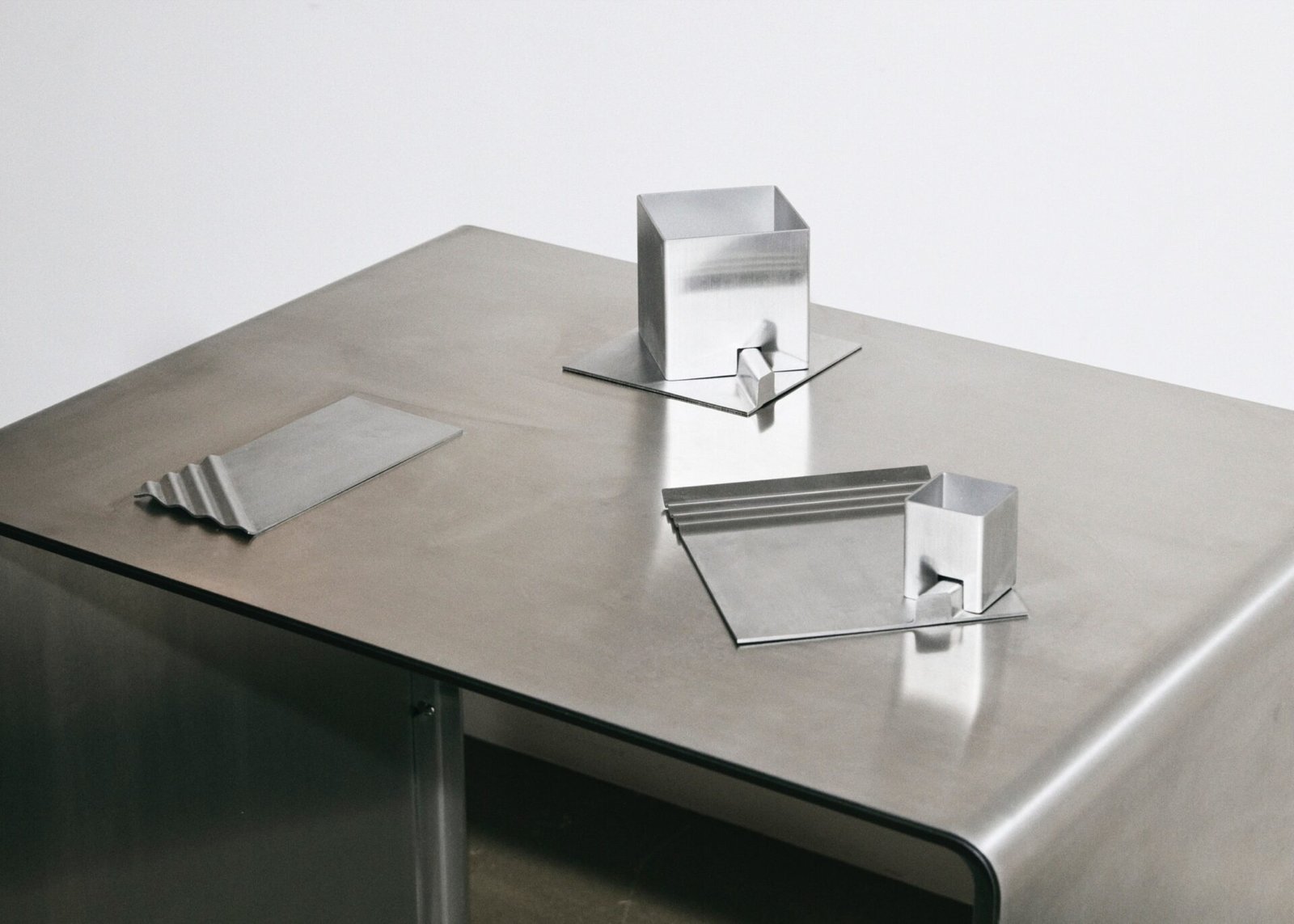
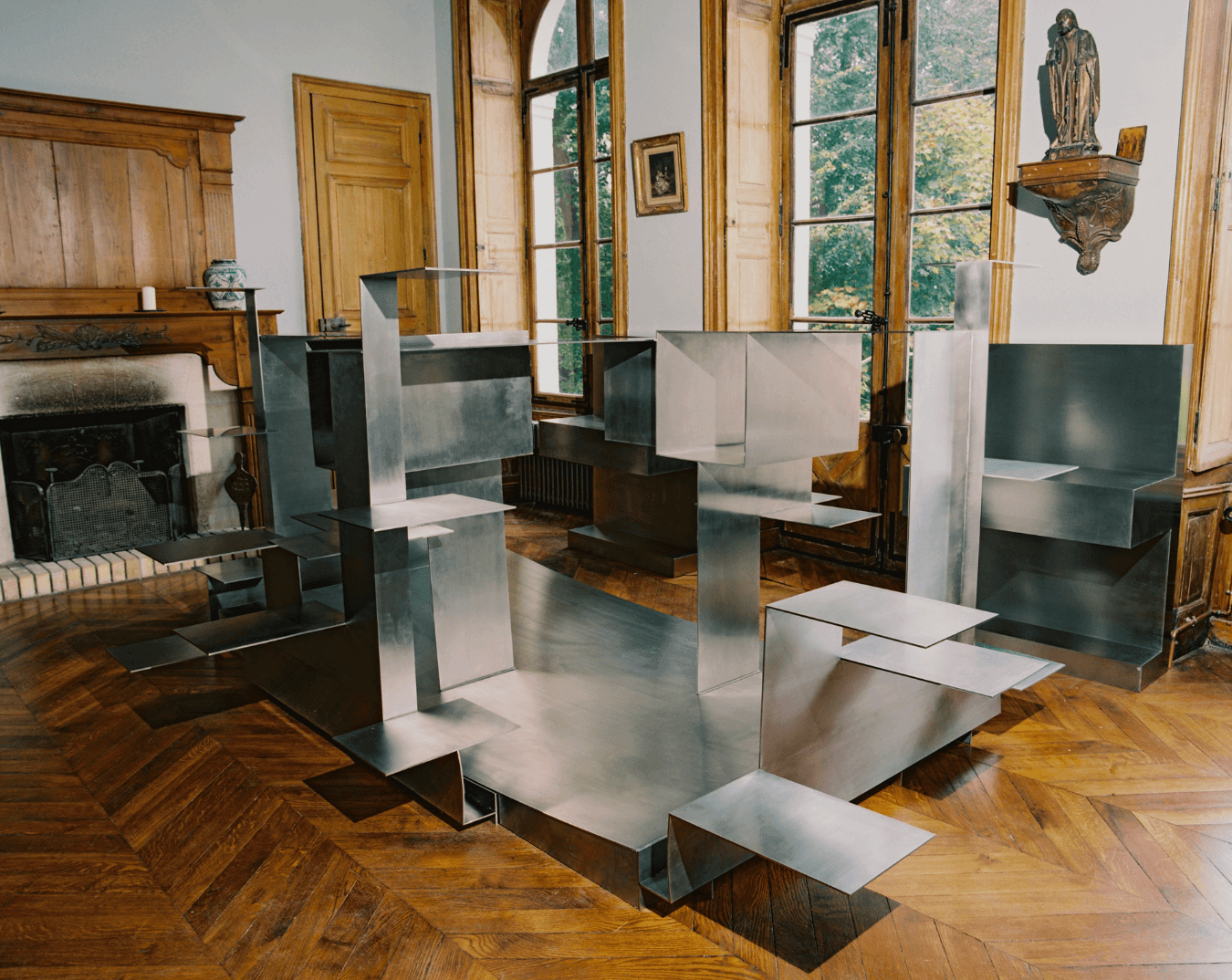
Pauline: This series, Primal Lien, begins with a personal question. From there, I imagine the object. Material is part of the emotion; it structures my drawing. It is a balance between two forces intuition and construction.
I like to draw in order to create living spaces where the object itself becomes a question, a sensitive point of tension that invites both reflection and feeling.
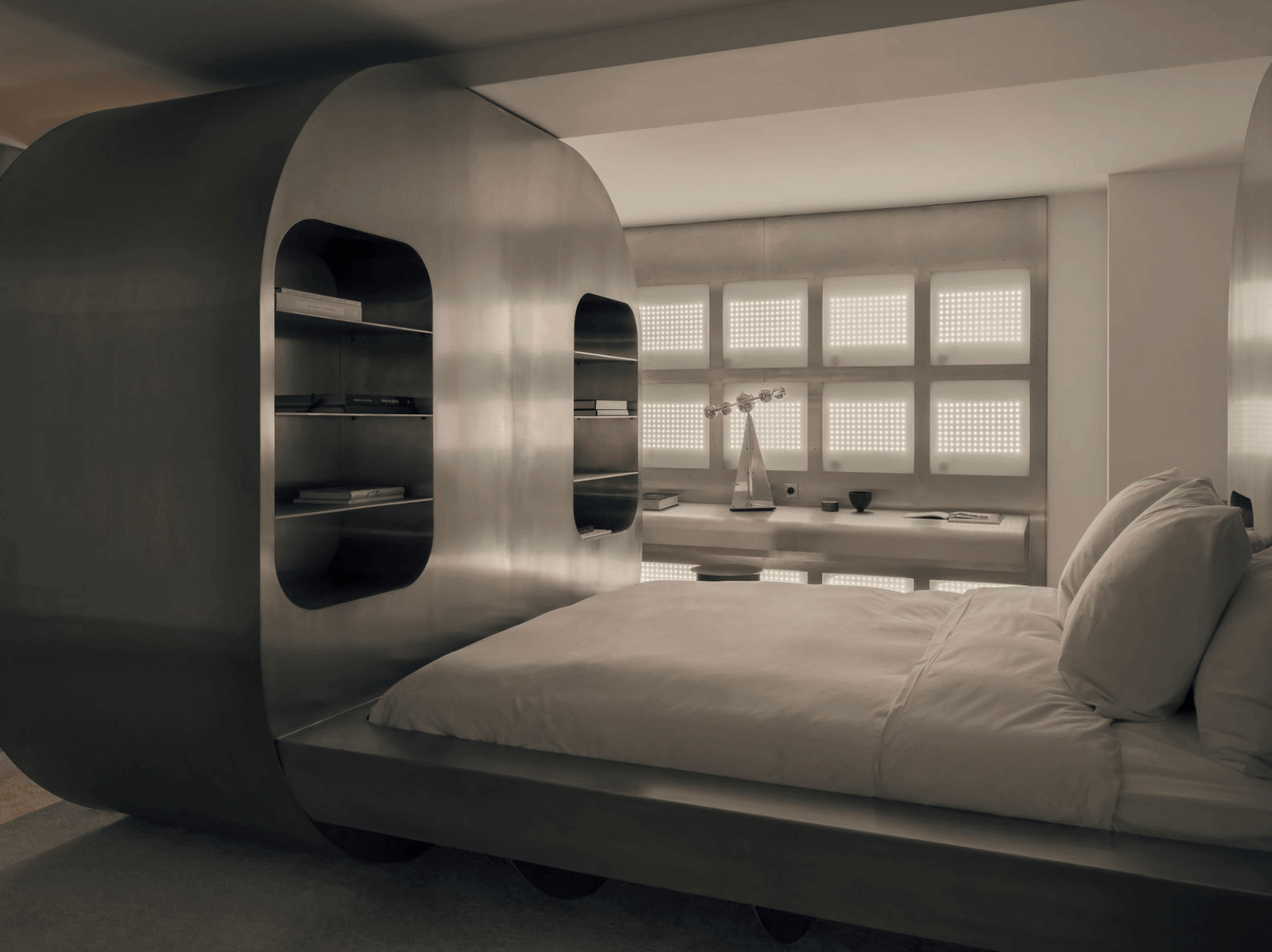
Emaho: Polished steel, glass, and corrugated textures dominate your material language. What draws you to their stark honesty?
Pauline: I love raw materials though I would say pure rather than raw.
Because they are pure and essential, they allow me to imagine and draw a language. They give me the possibility to push certain technical limits, to play with a false simplicity that conceals an invisible complexity. The strength of these materials lies in their almost infinite creativity and feasibility: they open up an endless field of experimentation, where an idea can always find a concrete form.
Emaho: You’ve described design as translating constraints into desire. How does collaboration with fabricators elevate a sketch into sculptural inevitability?
Pauline: It is a four-handed process, grounded in trust, listening, and dialogue.
I could never create without the artisans who work behind the scenes. We are a team, almost a family and this bond goes beyond technical execution.
Collaboration becomes a space for thought. The sketch is not an end, but a living hypothesis. Through exchange, the material responds, sometimes resists, sometimes proposes something else. It is within this fertile tension that the drawing transforms, gaining precision and necessity.
Together, we are not only pushing technical limits; we are exploring how far material can go, how far an idea can travel without betraying itself. It is this continuous dialogue that elevates a sketch into something almost inevitable as if it had always existed, and we were simply revealing it.
Emaho: Sustainability underpins your practice. How do you reconcile ecological responsibility with avant-garde minimalism?
Pauline: By looking to the past, observing the present, and imagining tomorrow.
I believe ecological responsibility is not projected solely into the future it is rooted in memory. The past teaches us patience, precision of gesture, and the value of enduring materials. The present compels us to be lucid, to reduce, to refine, to keep only what is essential. And the future asks us to dare but with awareness.
My minimalism is not a search for emptiness, but for permanence. To create less, but to create with necessity. To draw forms that endure through time rather than ephemeral objects.
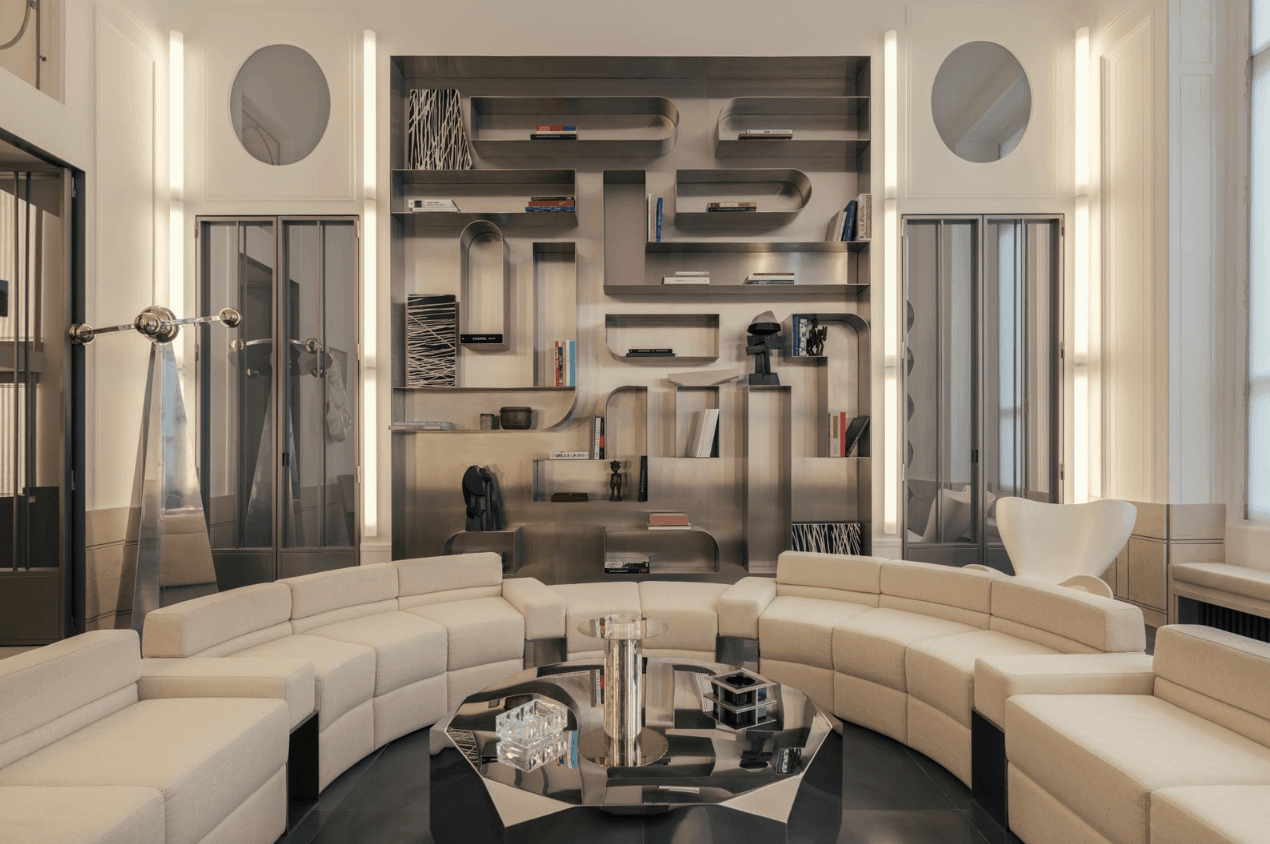
Emaho: While reimagining Karl Lagerfeld’s rue des Saints-Pères apartment—balancing stainless steel interventions with his Art Deco collection (Ettore Sottsass, Baccarat) – how did you honor his legacy while asserting your own vision?
Pauline: Reinterpreting Karl Lagerfeld’s apartment on rue des Saints-Pères was a silent conversation across time. His universe already carried a rare tension between erudition and radicality. I introduced a contemporary presence, almost like a breath: steel, clear and precise, lightly touching the Art Deco elements without ever erasing them.
To honor his legacy was to embrace the shadow in order to better reveal the light to inscribe my vision as a resonance, not as a rupture.
Emaho: Amid the spectacle of Paris design fairs, how does your stripped-back vocabulary create emotional depth and looking ahead, what material tensions are you most excited to explore?
Pauline: Sharing, transmission, and listening are the fundamental points in my vision today.