EMAHO: Can you share a bit about your early life in Iraq and how it influenced your journey toward becoming an artist?
TM: My early life was deeply shaped by war; yet my adolescence in 2007 was the hardest — a time of sectarianism and killings based on identity. I would go to school and witness scenes of real death, then return to write in my diary and draw everything I saw. The scenes were not beautiful; pen and paper were my way of understanding what was happening around me. Since then, art has not been a hobby for me — it has been the only path I felt could preserve our humanity and, for me in particular, give me an inner light.
EMAHO: What sparked your passion for working with clay and ceramics, and how did you develop your unique style in this medium?
TM: I learned clay and ceramics in a formal, professional setting during my art studies, and I was drawn to its tactile presence and the way it could transform in my hands. Later I realized my energy was moving toward larger-scale works that require more space and freedom of movement. So I didn’t continue working much in ceramics, yet it has remained part of my artistic memory and how I understand and work with material. In the future, I may create large-scale sculptures in collaboration with an institution or within a setting that allows that opportunity, because I love working with three-dimensional forms and often feel that, even when I paint, I am carving into the canvas.

EMAHO: How do you blend traditional Iraqi art forms with contemporary expression in your pieces?
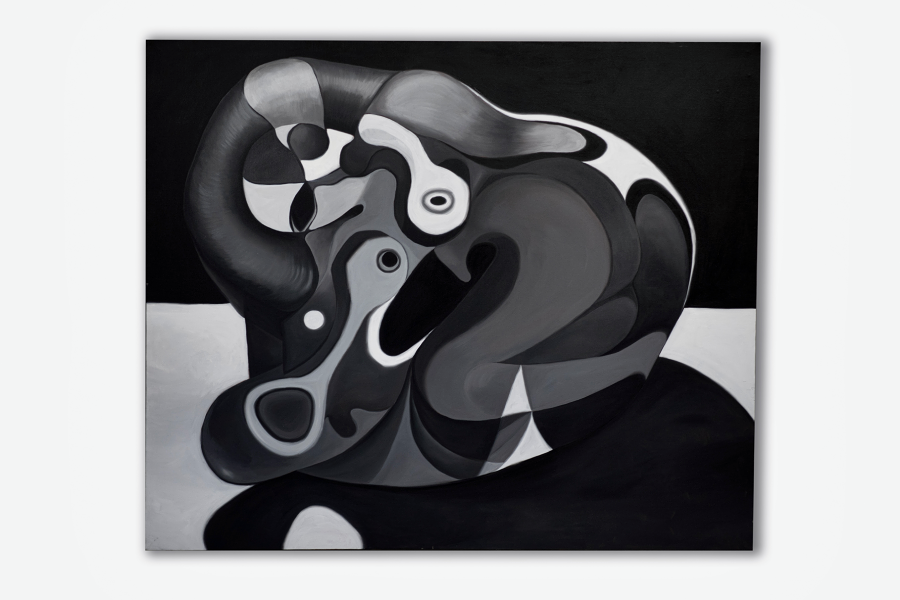
TM: I don’t use traditional Iraqi symbols literally. My Iraqi sensibility lives in the forms I create, and viewers often sense it. I rework ancient signs—such as the Sumerian eye—through my own vocabulary, so they become contemporary shapes that still carry the memory of the past.
EMAHO: Your Instagram showcases a variety of your works and creative process. How important is digital presence for artists working in Iraq today?
TM: Digital presence is very important for artists in Iraq. Opportunities to present work inside the country are limited—almost nonexistent for me. Instagram has become the space where I show my work; I treat it as an artist’s website. Through it, I can reach a wide audience in Iraq and abroad.
EMAHO: Can you describe the current art scene in Iraq and how it supports or challenges emerging artists like yourself?
TM: I’ll be honest, as always: the reality in Iraq is difficult for contemporary art. There isn’t real attention to festivals or platforms that give young artists chances to show their work, nor grants, residencies, or study opportunities in the arts. A few galleries in Baghdad support some young artists, yet this is very little compared to the amount of talent, so we end up helping ourselves. There is no art market and no professional exhibition system; everything is still in a pre-development stage. The biggest challenge is to keep going and create within an unsupportive environment.

EMAHO: How do themes of heritage, environment, or community appear in your creations?
TM: Everything I paint grows from what I feel in this community and environment. My works speak to it in different ways—through color, form, and symbols that reflect the spirit of life around me. At the same time, art is a universal language. I want my work to travel freely and join a global conversation, rather than be confined to one place or theme.
EMAHO: What role do you think contemporary Iraqi artists play in reshaping cultural identity amid social and political change?
TM: I still believe that a sensitive artist alone cannot change a society exhausted by wars, and that shifts in values have been driven by corrupt political structures. I also believe art is a quiet form of resistance: it preserves our humanity, safeguards memory, and plants the idea of change. Through it, we come to understand our society and culture more deeply—and keep the door open to what they might become.
EMAHO: What advice would you give to young artists in Iraq who want to build a sustainable practice amidst ongoing challenges?
TM: My advice to young Iraqi artists is not to wait for perfect conditions—they may never come. Observe the world, culture, and art beyond national borders, and keep your ambitions large; the world has room for all of us. Most importantly, make art with a truthful spirit, keep giving, and believe in what you do.
EMAHO: Looking forward, what new directions, ideas, or collaborations are you most excited to explore as you continue your artistic journey?
TM: I’m currently working on a new series that reflects both myself and the world around me in a surreal, deeply personal way. Looking ahead, I hope to collaborate with galleries and art institutions that truly resonate with my vision. My dream is to exhibit internationally and tell stories in my own voice.