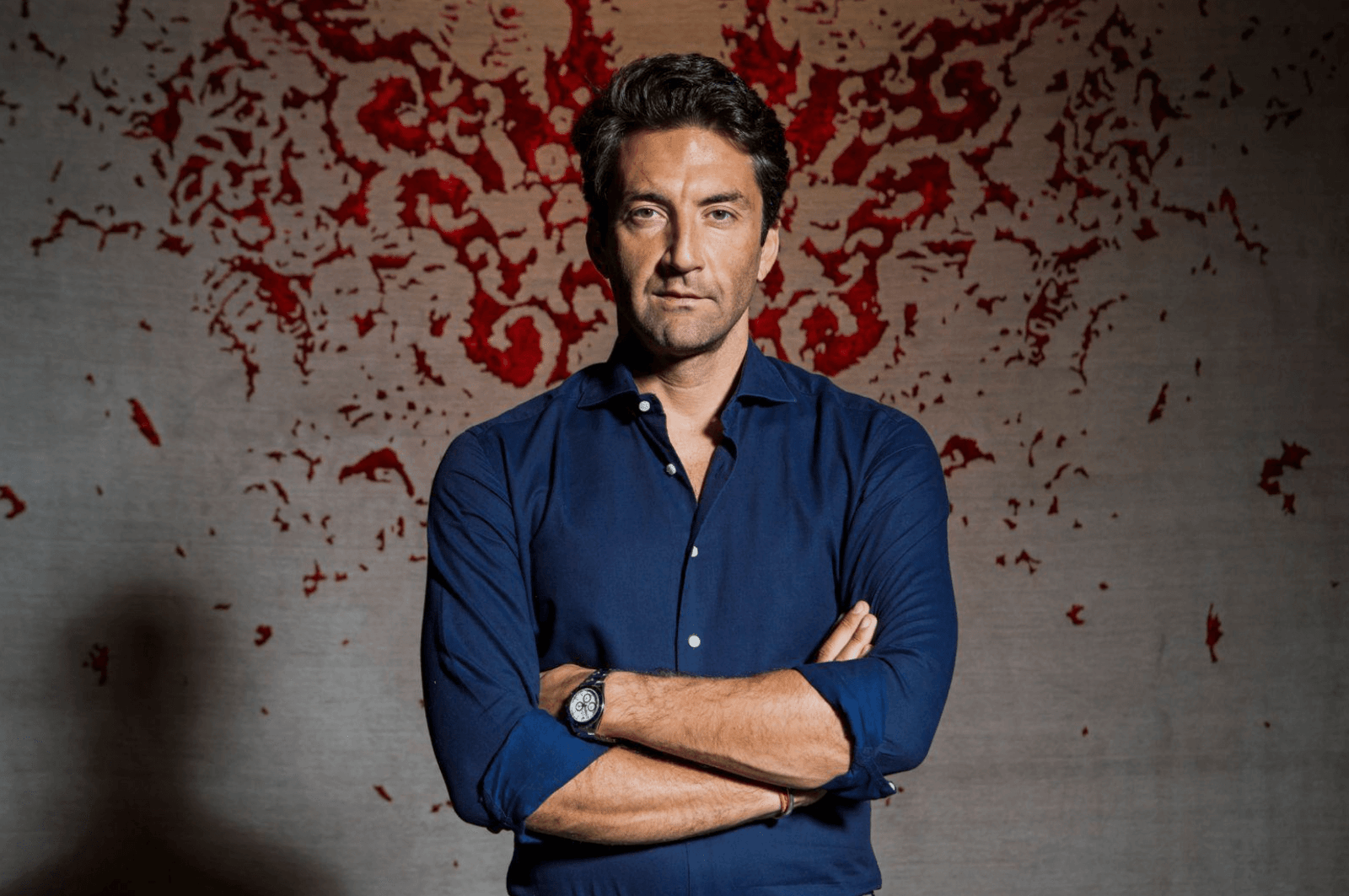
Emaho: Can you tell us about your early life in Australia and how your interest in interiors, furniture, and eventually stone began to take shape?
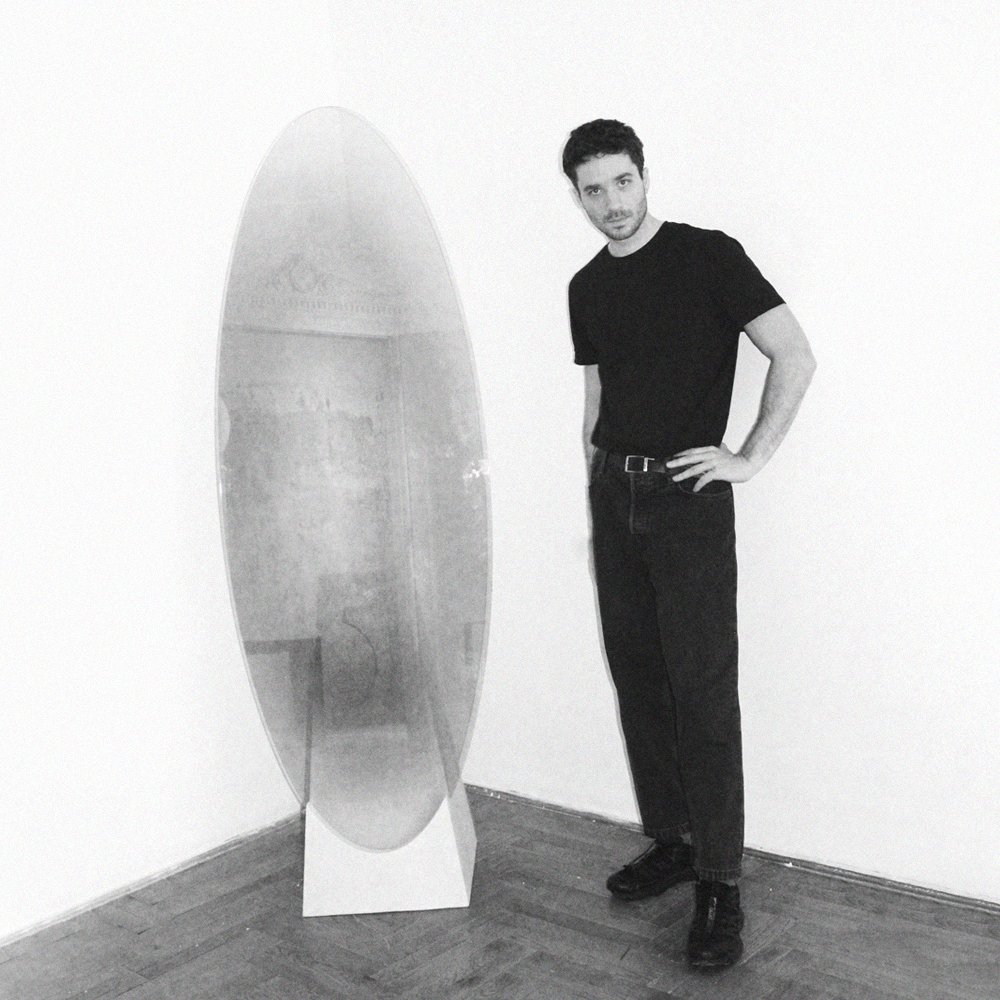
Sam: My first interests were borrowed. Whatever my older brother was into at the time usually became mine too. But quite early on, architecture took hold. I was constantly sketching growing up, trying to understand how spaces functioned over how they looked. Interior design was a natural progression, but when I graduated, I realised something was missing. My education was highly conceptual, which I value deeply, but I had very few technical skills. That gap led me to take an apprenticeship in timber furniture making, and that felt right. I fell in love with the human scale of furniture and the immediacy of making something you can touch, sit on, live with. That physical connection to the process has stayed with me ever since.
Emaho: Before founding Agglomerati, you worked at DZEK in London, where you were first introduced to marble. What was it about stone that compelled you to build an entire practice around it?
Sam: Stone felt surprisingly familiar. The processes are reductive, physical, and precise, not unlike timber, and many of the techniques and machinery overlap. At DZEK, I worked closely on Marmorial by Max Lamb, a composite of different stone varieties, and that project opened the door. It showed me how little of the material’s potential I actually understood. What followed was a deep dive. Stone has endless variation. in colour, density, behaviour, and cultural meaning, and a history that’s impossible to ignore, particularly once I began working in Italy. The material carries time in a way few others do. That combination of technical challenge, historical weight, and expressive potential made it impossible to treat stone as just another medium.

Emaho: Agglomerati is described as a collaborative stone studio creating distinctive, timeless furniture. How would you define your fascination with stone craftsmanship, and what keeps the material creatively energising for you?
Sam: What keeps it energising is that stone is never exhausted. Manufacturing techniques continue to evolve, and at the same time, I’m constantly learning through the designers I work with. Each designer approaches form, structure, and intention differently, and I’m fascinated by how those methodologies can be translated, reinterpreted, or rescaled through stone. The challenge is always the same: how to remain faithful to a designer’s language while allowing the material to assert itself. Stone doesn’t tolerate superficial gestures. It demands clarity. That tension,
between adaptation and resistance, is where the work becomes interesting.
Emaho: You launched Agglomerati in 2019 with collections like MASS and later BARAAHP. Which pieces or series most clearly express your design philosophy, and why do they feel pivotal in your trajectory?
Sam: MASS and BARAAHP sit at opposite ends of a spectrum, but that’s precisely why they feel foundational. MASS is rooted in stone engineering; complex structural thinking, heavy material presence, and precision-led fabrication. BARAAHP, by contrast, works with standard 3cm slab material, something very common, but pushed to its conceptual and formal limits.
Both appear simple, almost understated, but that simplicity is deceptive. The time is spent in refining execution, not adding complexity. Across both, there’s a quiet narrative thread, not overt storytelling, but something embedded in proportion, weight, and material choice. As a curator, that subtlety is intentional. I’m less interested in explanation than in resonance.
Emaho: Most of your work is fabricated in Carrara, with clients personally involved in selecting each block of stone. How essential is this intimate, material-driven process in shaping the final character of your pieces?
Sam: It’s fundamental. The block selection can completely alter how a piece is read. Veining, movement, density, these aren’t cosmetic details; they’re expressive tools. Whether I’m working directly with a client or independently, I’m very particular about this stage. I work closely with quarries and suppliers to find material that carries the right tone and intention for each design. That process determines the final character of the work as much as form does. Without it, the object risks losing its emotional precision.

Emaho: You and Holly Lucas recently co-founded BOI, the Bureau of Innovation. How did this collaboration begin, and in what ways do your backgrounds strengthen the partnership?
Sam: The collaboration began through conversation rather than a fixed plan. It became clear early on that we were approaching similar questions from very different angles. My focus has always been on material, fabrication, and working directly with designers. Holly comes from hospitality, luxury branding, and cultural programming — thinking about how spaces are experienced, how atmosphere is constructed, how people move through and remember environments. BOI exists where those perspectives intersect. It allows objects to be materially rigorous while being presented within highly considered contexts. That balance strengthens the platform and pushes both of us beyond what we would do independently.
Emaho: BOI positions itself at the intersection of gallery, cultural salon, and digital curator. What is the core vision behind this platform, and how does it extend or challenge your work with Agglomerati?
Sam: BOI is an authored platform. It’s not a neutral gallery or a purely commercial showroom. The core vision is to create context first (cultural, emotional, spatial) and allow objects to exist within that framework. In that sense, BOI extends my work with Agglomerati by widening the lens. Agglomerati is deeply material-specific; BOI is medium-agnostic. It challenges me to think beyond stone and consider how different practices, objects, and narratives can coexist within a shared curatorial language. As someone based in London but deeply connected to Italian fabrication, how do you view the current London design landscape?
I think London is at its strongest when it leans into material intelligence and critical thinking rather than trend cycles. There’s a growing appetite for collectible furniture and studios that foreground process, authorship, and material depth. That said, the landscape is fragmented. What’s missing sometimes is context – not more objects, but better frameworks for understanding them. That’s where platforms like BOI become important.
Emaho: Looking ahead, what can you share about BOI’s upcoming projects and your broader ambitions for both Agglomerati and this new curatorial venture?
Sam: There’s a stronger focus on the Middle East and Australia, something that’s always been part of the long-term vision but is now becoming tangible. New projects and collaborations will be announced soon.
For Agglomerati, I’ll be presenting work at Melbourne Art Fair through Future Objekt, which feels meaningful bringing the practice back home alongside a show running in parallel with Melbourne-based Oigall Projects. There are also new works in development with designers including Soft Baroque, Christopher Stuart, Maria Scarpulla, Adam Goodrum, among others.
Ultimately, the ambition is coherence rather than scale: building a connected ecosystem where objects, designers, and contexts reinforce one another over time.