Emaho: Can you share a little about your upbringing in Australia and how your early experiences shaped your passion for design and creativity?
KYM: I grew up in Perth, which is one of the most isolated cities in the world — and in many ways, that solitude was a gift. It gave me the space to dream. My mother was an art teacher and painter, so our home was full of creativity. I was encouraged to make things from an early age, whether it was painting, photography, or garments. The remoteness also gave me a deep appreciation for form and light. The way the sun hits a brutalist building in late afternoon still gives me the same feeling I had as a teenager discovering Le Corbusier.

Emaho: What led you from studying at Central Saint Martins and working in magazines to founding your own design label?
KYM: Saint Martins gave me a sense of intellectual freedom — but it was in publishing, at Russh magazine, that I understood the power of visual storytelling. Founding my own label felt like a natural convergence of these experiences. I wanted to build a world, not just a wardrobe — one that brought fashion, design, art, and architecture into dialogue. I’ve always seen clothing as a form of sculpture, something that lives on the body, in motion.
Emaho: How would you personally define “design” and “fashion” in today’s world? What do these concepts mean to you?
KYM: To me, design is problem-solving with poetry. Fashion is the emotional extension of that — it’s design worn close to the skin. Both are visual languages, but today, I think we’re shifting away from consumption and moving towards connection. I’m more interested in timeles objects that hold meaning than in trends that expire before they’ve even arrived.

Emaho: Your work is known for strong sculptural shapes and a unique visual language. What inspires your design aesthetic, both in clothing and furniture?
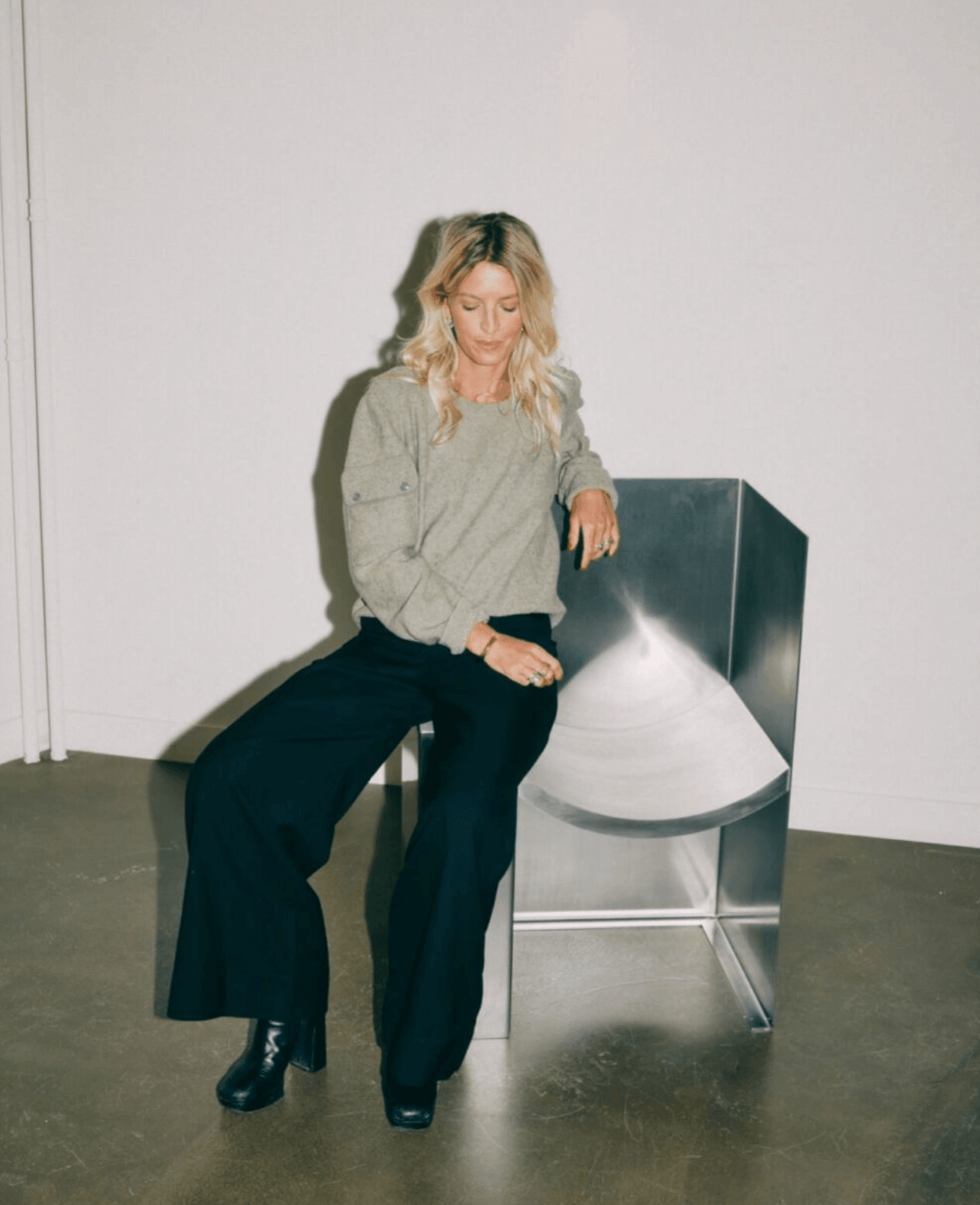
KYM: I’m drawn to the tension between softness and strength, lightness and weight. That’s why metal is such a compelling material for me: it can be brutal or tender, depending on how it’s handled. I’m inspired by the works of John Chamberlain, Maria Pergay, and even Louise Bourgeois — artists who used form to speak to feeling. I also find great inspiration in architecture, especially the unexpected.
Emaho: Can you describe your creative process, from concept and inspiration to execution?
KYM: It usually begins with a feeling, something visceral, like a shape in my mind or the mood of a space. Then I sketch, write, sculpt. I work in layers. I often start with a material in mind, and I let its limitations inform the form. I collaborate closely with artisans, particularly metalworkers in France and Spain. There’s a constant exchange between the digital and the handmade. I like working with people who aren’t afraid to try something technically challenging. That’s where the magic happens.
Emaho: How does living in Paris influence your work and your perspective on art, fashion, and design?
KYM: Paris has a gravitational pull. It’s a city of layers, of contradictions, of permanence. The history is palpable here, but so is the reinvention. I’m constantly inspired by the galleries, the ateliers, the things hidden behind Haussmannian façades. There’s also an incredible respect for craft here, not just in fashion or art, but in how people live. Even the way the vegetables are stacked at the market has intention. That kind of care gets into your work.