China – The Shiny Black Book
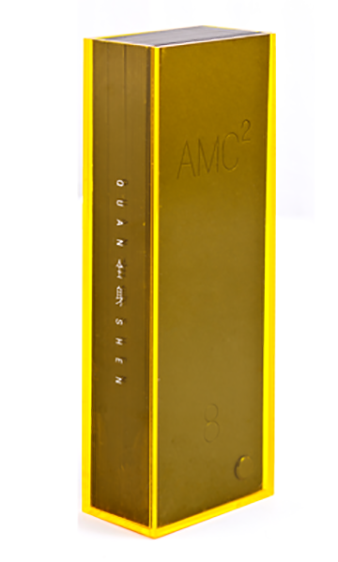
Quan Shen is the latest collection of pictures from Thomas Sauvin’s Chinese archives, a publication that also doubles up as the Archive of Modern Conflict’s Journal Issue 8 – or amc2 Journal Issue 8. That’s an ugly title for something that is so lovely.
I’ve had the book for a week now and every time I meet somebody who hasn’t seen it, I whip it out and pass it over to them. It comes in a yellow Perspex box, so the first reaction is puzzlement. “What’s this?” they say. Then they tip the contents of the box out and out comes a beautiful fan of pictures. They open it up and the next universal reaction is. “Ooooo, that’s nice.”
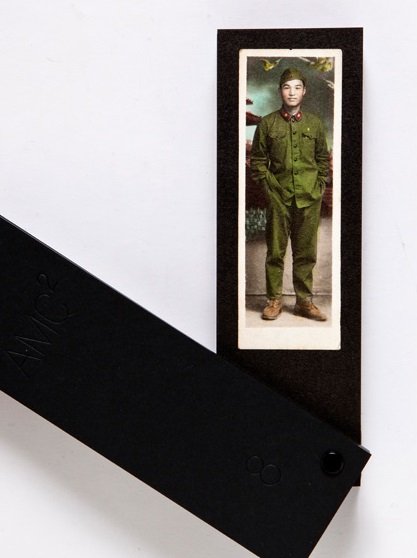
That’s because it is. It’s gorgeous. The fan is attached with a metal screw on which the charcoal coloured pages are attached. It feels solid, like a block of scorched wood, its unopened edges are smooth as ebony with a sheen to match. Open up the book and you see the pictures – Chinese studio portraits that Sauvin and his gang of photo-hunters have collected from the defunct studios, photo-dealers and antique stores around the country.

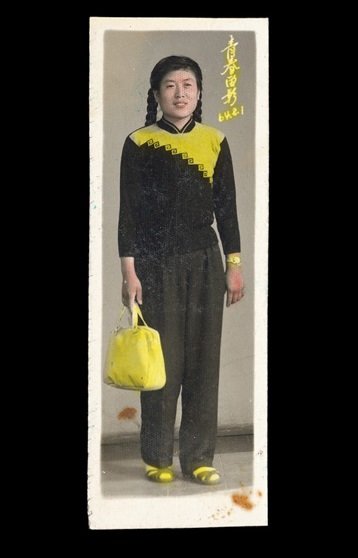
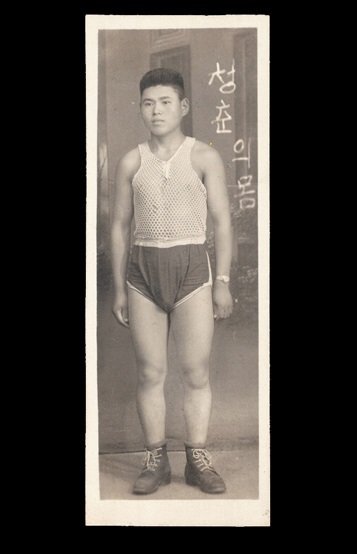
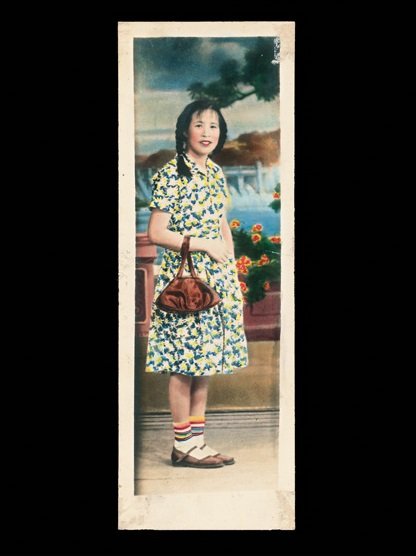
The pictures in the book are all a similar size, 7cm and 2.5cm wide; long and thin because that was the cheap way to get a portrait made. They’re tiny elongated things, ‘photographic coffins’ where the subjects are obliged to stand straight with their hands by their sides. It’s a fan but it could also be a spread of paint samples; but instead of paint we get fashion samples from the 1930s on.
The first picture is of a worker in a Mao suit and cap. He’s red-faced and retouched, hand-tinted, and there’s a tension between his open optimism and the era he found himself in, an era which might, by the looks of the strap on his bag, be the 1970s.
The first black and white portrait shows a man in slacks, probably from the 1930s, while another hand-tinted one, this time from the 1980s perhaps, shows a woman in a knee-length skirt and polo shirt.
It’s a timeline of fashion, accessories and pose. And for the biggest accessory of all, Quan Shen does not disappoint. There’s a slew of pictures from the 1960s showing people clutching their little red books, most of which are appallingly tinted with great big splodges of red. Pistols, machine guns and posters of Chairman Mao all figure as do handbags, telephones and spanners.
Part of the fun of the book is trying to guess when the pictures are from and at times it gets difficult as pre-communist merges with post-Mao. Who’s the man in the blue shoes for example. Is he some kind of 1950s beatnik destined for re-education and self-criticism or is he a 1980s fashion icon. The soldiers, the sailors and the airforce men. When are they from and who did they fight for. The back sides of the pictures are shown and sometimes they have Chinese writing on which might tell you the answer (even if most of the time it is obvious).
And that’s Quan Shen. It’s a book that begs to stay black and shiny and pristine as a beetle in a box, but the pictures are so entrancing that it begs even harder to be handled and shuffled through. Mei Luzhi’s beautiful design combines with pictures where dress, ideology and pose are all part of a larger whole, a whole that is both stylish and heart-breaking in equal measure.
Colin Pantall is a UK-based writer, photographer and Senior Lecturer at the University of South Wales, Newport.