Anthony Friedkin: The Gay Essay

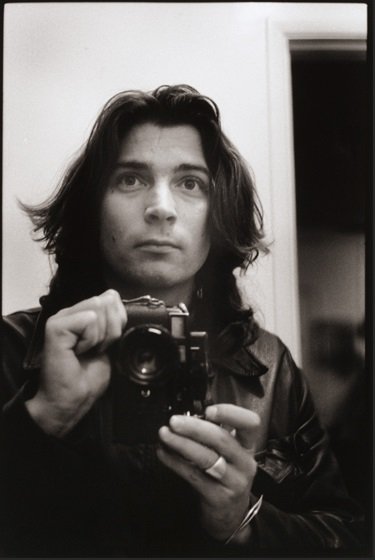
Anthony Friedkin is an American photographer whose works have chronicled California's landscapes, cities and people. His topics include phenomena such as surf culture, prisons, cinema, and gay culture. Friedkin’s photographs have been exhibited in the Los Angeles County Museum of Art and the J. Paul Getty Museum.

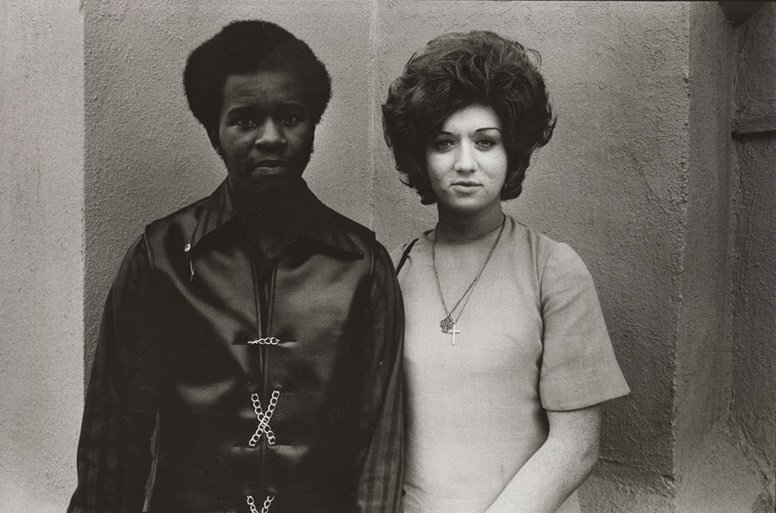
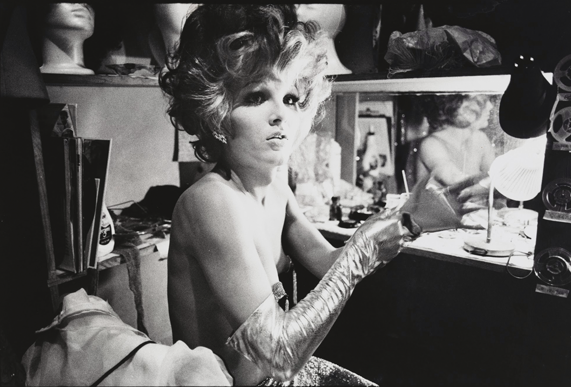
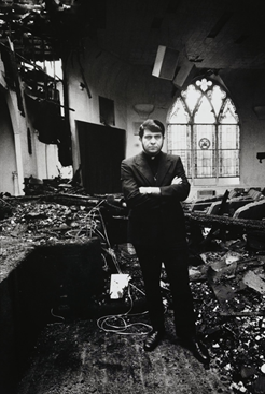
USA – The Fine Arts Museums of San Francisco are pleased to present Anthony Friedkin: The Gay Essay, a photographic series of more than 75 vintage prints that chronicles the gay communities of Los Angeles and San Francisco from 1969 to 1973. Coinciding with San Francisco’s annual Pride events and the 45th anniversary of the Stonewall riots in New York City, this exhibition will be on view at the de Young from June 14, 2014 through January 11, 2015. For more than 40 years, American photographer Anthony Friedkin (b.1949) has documented people, cities and landscapes primarily in his home state of California. The Gay Essay, created during the culturally tumultuous years of the late 1960s and early 1970s—a turning point in the history of political activism in the gay community in the United States—offers an expressive visual chronology of a vital moment of historic change in our culture. “We are proud to present The Gay Essay in its full depth and range for the first time. It accords with our goal of bringing to light important, and sometimes neglected or overlooked, bodies of work that enrich the history and study of photography, a medium that is central to art and society today,” said Colin B. Bailey, director of the Fine Arts Museums of San Francisco. “We are delighted that 94 vintage prints from The Gay Essay are now part of our permanent collection, thanks to the generosity of donors Dan and Mary Solomon and Nancy Ascher and John Roberts.”  
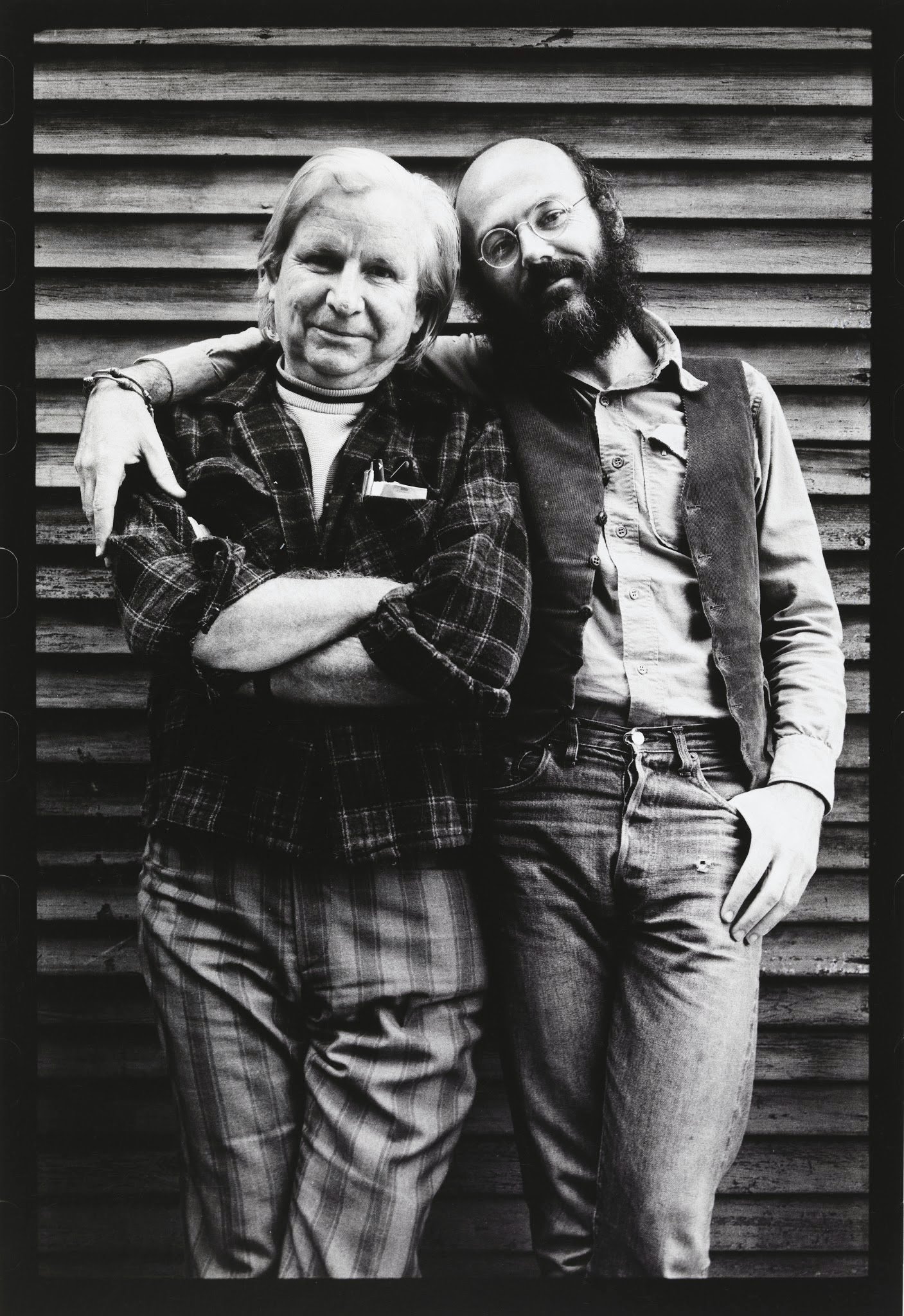
Shot in studioDon Kilhefner and Morris Kight at the Gay Community Services Center, Los Angeles, 1972 © Anthony Friedkin
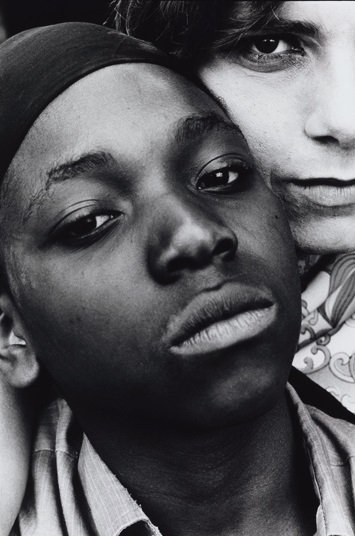
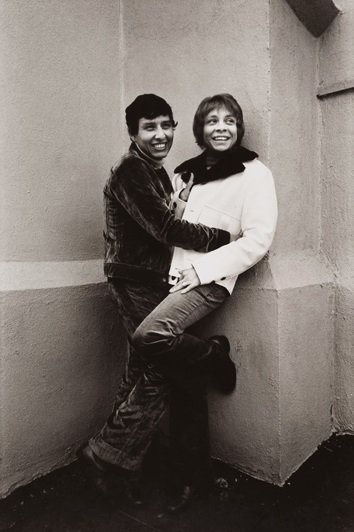
  A native of Los Angeles, Friedkin began taking photographs at age 8 and was developing film in a darkroom at age 11. The artist formed a deep connection to the medium and later sought to combine a photojournalistic tradition with an individual statement. In the spring of 1969, when Friedkin was 19 years old, he embarked on The Gay Essay as a self-assigned project. His goal was to create the first extensive record of gay life in Los Angeles and San Francisco, and to chart the emerging and shifting visibility of the gay communities in California. Influenced by the work of Henri Cartier-Bresson, André Kertész and Josef Koudelka, among others, Friedkin found his place in an approach that retained the outward-looking spirit of reportage combined with individual discovery. As an extrovert with an avid curiosity, he developed close relationships with his subjects that enabled him to create portraits that are intimate and devoid of judgment. He did not aim to document gay life in Los Angeles and San Francisco slavishly, but rather to show men and women who were trying to live openly, expressing their individualities and sexualities on their own terms, and improvising ways to challenge the dominant culture. Whether photographing in city streets, motels, barsor dancehalls, Friedkin approached his subjects with an open and inquiring mind to achieve empathic portraits that celebrate pride, dignity and the expression of love between people of the same gender.  

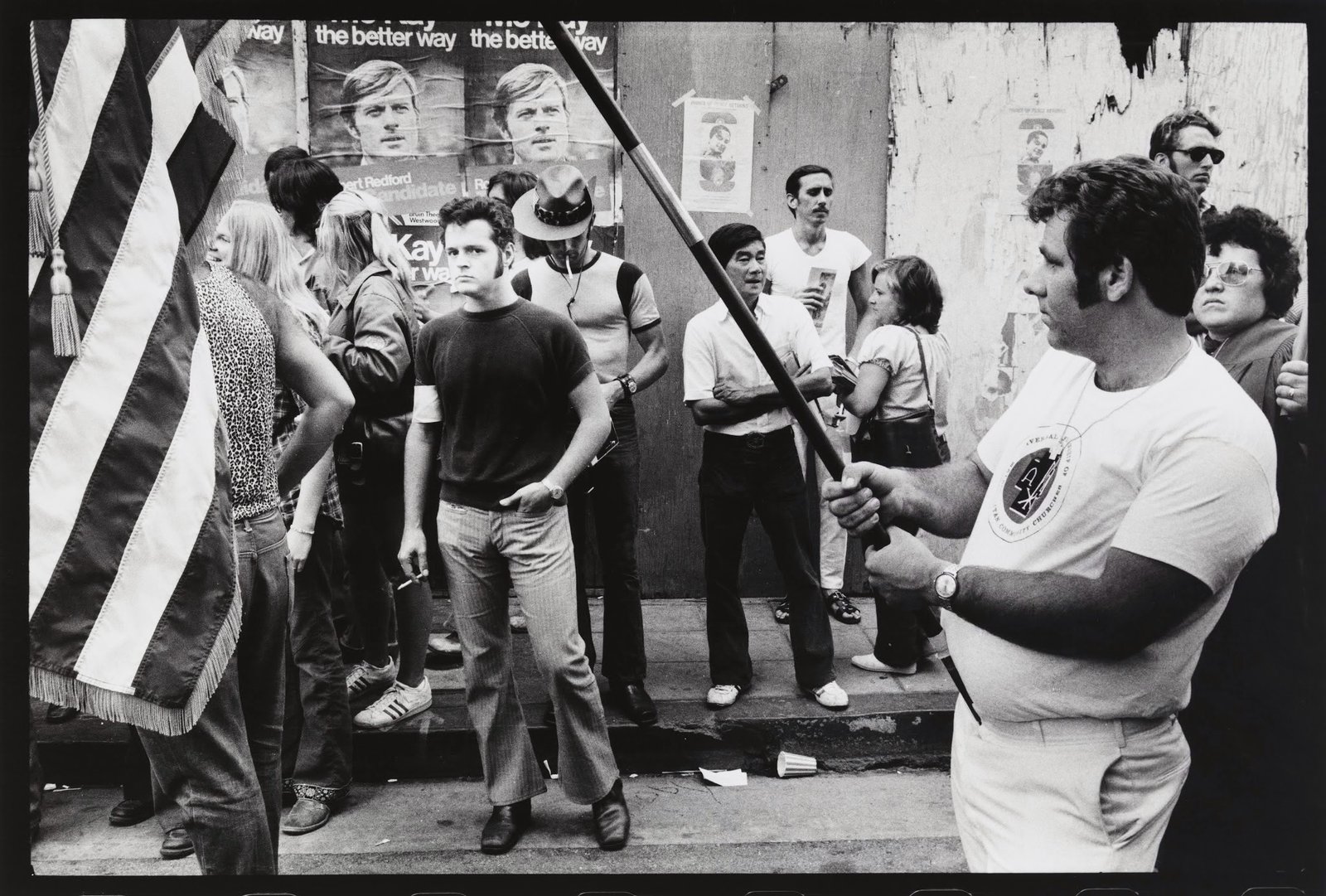
Shot in studioGay Liberation Parade, Hollywood, 1972 © Anthony Friedkin


More than four decades after this work was created, The Gay Essay stands as both a record of historic change in our culture and an eloquent testimony to Anthony Friedkin’s passion for the art of photography,” said Julian Cox, curator of the exhibition and chief administrative curator and founding curator of photography at the Fine Arts Museums of San Francisco. “We are left with a beautiful, sensitive record fit for the ages.” While selections from The Gay Essay have been on public display in museums and galleries in the past, the entire scope of the series will be shown for the first time at the de Young. Accompanying the original full-frame black-and-white prints will be contact prints, documents and other materials from the photographer’s archive and loans from the San Francisco Public Library and the San Francisco Gay, Lesbian, Bisexual, and Transgender Historical Society that provide valuable historical context and insight into the conception and execution of the work. The exhibition opened on June 14th. 2014 and continues till 11th January, 2015.

Related Posts

Fabien Chaurau : Ways of the Road

“Ways of the Road” was created during 3 week artist residency held in the village of Partapur in Rajasthan. The ...

Wasma Mansour

Saudi Arabian Photographer Wasma Mansour Takes Over Emaho Instagram Handle

Saudi Arabia –  Wasma Mansour is a Saudi photographer based between Saudi Arabia and the UK. Her photographic practice sometimes ...

Ziro Festival of Music 2014

  India –  The third edition of Ziro Festival of Music (ZFM) is set to commence this September with off-the-block ...

Les Photaumnales 2014: Rock’n’Roll

France – The 11th edition of the Photaumnales Festival, organized by Diaphane, will be held from September 27th, 2014 to January 11th, 2015 in Picardy. Les Photaumnales 2014 suggests revisiting the history of Rock’n’Roll through ...

Magic in the Sands – Ragasthan 2012

Ragasthan 2012 in India- A place where the myriad colours of the world comes together, forming a melodious harmony of ...

Winner of Photographic Museum of Humanity 2013 Grant – Cihad Caner

Turkey – 22 years old photographer Cihad Caner won the PMH 2013 Grant for his documentary series “Remaining” and his ...

Finding Your Voice: A Sicilian Masterclass with Ernesto Bazan

Italy –    Organized by Emaho Magazine   2015, Sicily, Italy “Sicily, the island where I first saw light, the ...

DWIH Horizon: Art Meets Science

India –  The German House for Research and Innovation (DWIH), New Delhi is organizing a Photo Exhibition titled ‘DWIH Horizon: ...

Eamonn Doyle Photography

Irish photographer Eamonn Doyle takes over Emaho Instagram Handle

Ireland –  Eamonn Doyle started photographing in and around Dublin city centre in the late 1980s, but he took something ...

Showing Slide 1 of 10