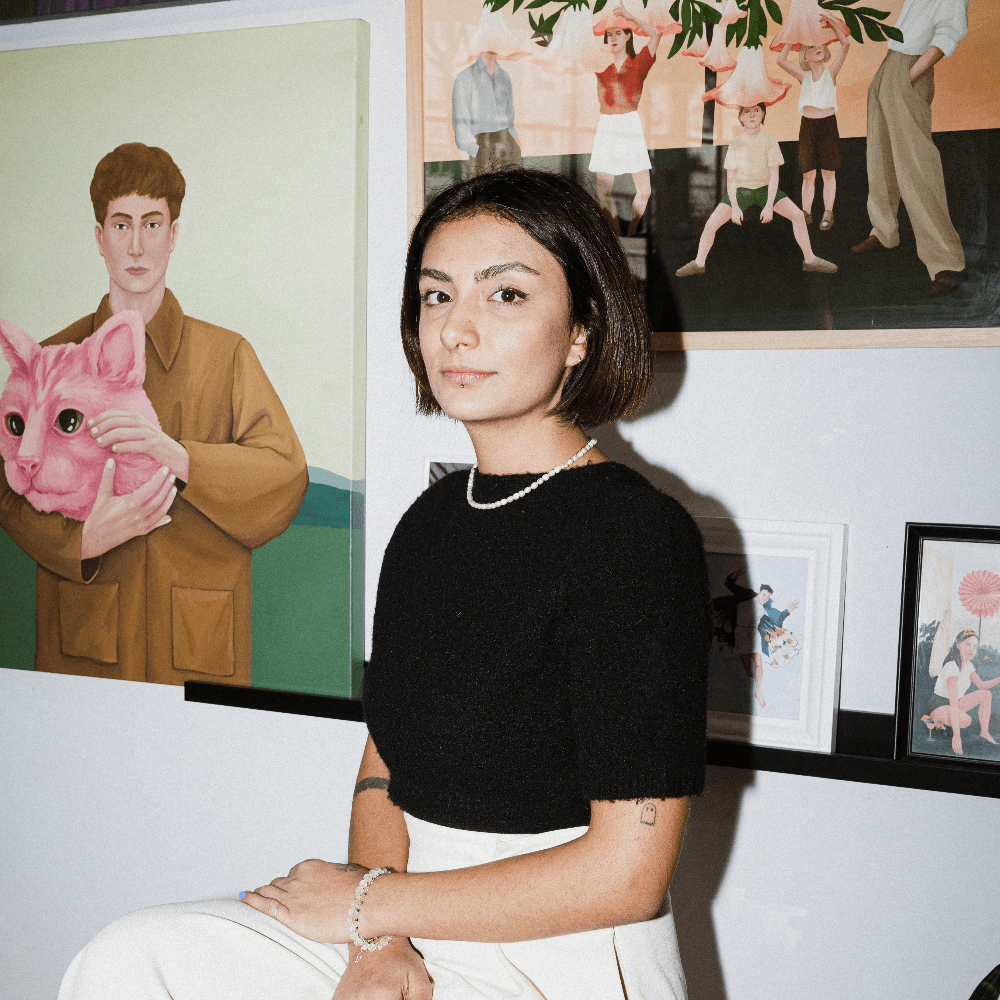
Emaho: You’ve described yourself as a shy, quiet kid in Tehran who studied art and spent hours in her room with paper, cameras and colours. What were you actually making in there, and do you remember the first thing you made that you were proud of?
Mandana Karimi: I was a very reserved child, the kind who sat in a corner in big glasses and shied away from everything. I loved my friends and the people around me, but I never quite felt like I fit in, and I often wanted to be alone. A lot was happening around me that I was trying to avoid, and making things was my escape.
Near my school there was a park where I would collect leaves. I’d bring them home and cut them into shapes, build collages, plan my dream bedroom, and design little photo frames. It looks small now, but it was how I built a world of my own, one where I felt safe and could imagine freely.
The first thing I was truly proud of was a black-and-white photograph. I took it, then developed it myself in a darkroom. I watched the image slowly appear, and for the first time I felt that something I saw and felt could exist in the world. That quiet, shy girl had found her first voice.
Emaho: You modelled in different parts of the world before acting ever came into the picture. You loved cameras as a kid, and then you ended up as the person in front of one. What did modelling teach you about the camera that you couldn’t have learned from behind it?
Mandana Karimi: I have always loved the camera, and I loved capturing the moments that mattered to me. In high school in Iran I studied photography, and I was good at both black-and-white and colour. But standing in front of the camera taught me something no lens ever had: how to be free. It taught me to express myself and to appreciate who I am and how I look.
For most of my life I disliked my nose and wanted to change it. Modelling taught me to love what I was born with. For a girl who grew up in a society that constantly tells women what to fix, that was a quiet revolution.
I never dreamed of the fashion industry. A photographer once told me I didn’t even look like a model, so I never had a map. But I was always observant and always wanted to express myself without having the chance. The camera gave me that chance. I spent years behind it capturing moments, then years in front of it, and each side taught me more about who I am.
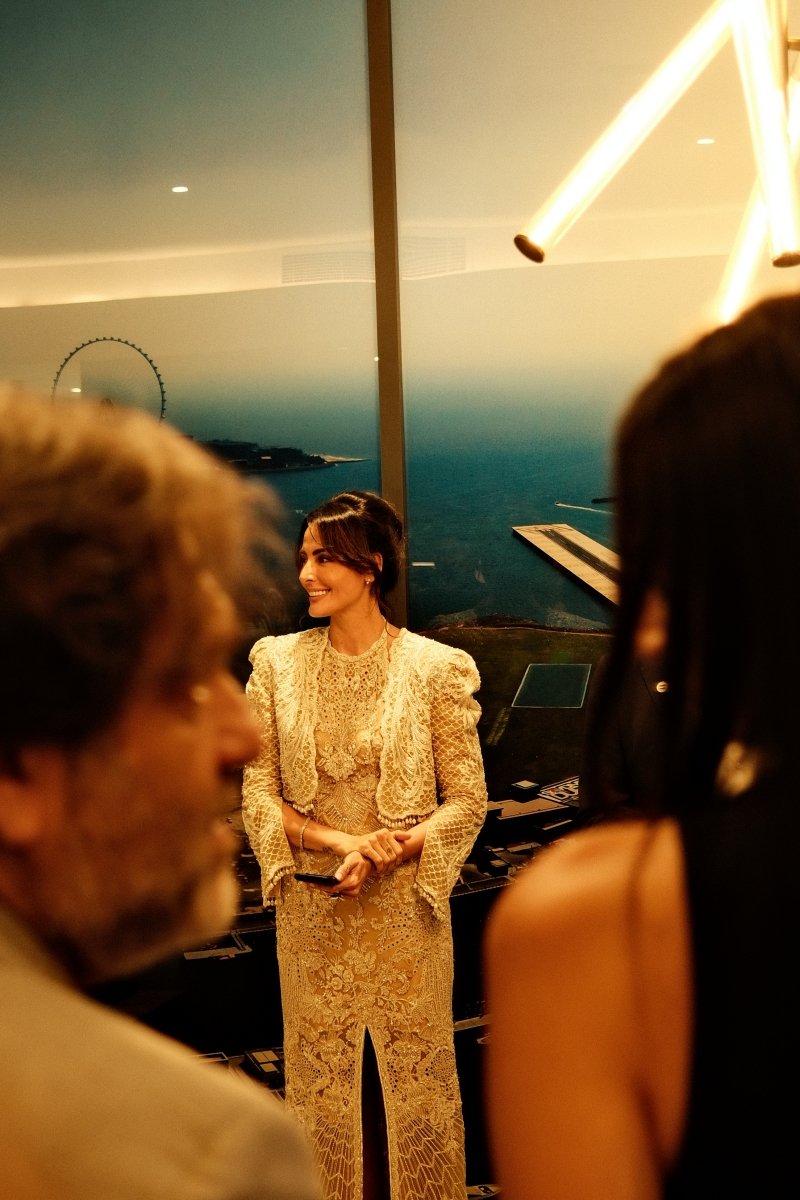
Emaho: You first came to Mumbai in 2010 for three months on a modelling contract, and in 2013 you decided to move there and try acting. A lot can change in three years. What was happening in your life between that contract and the move, and what did you pack?
Mandana Karimi: The timeline is a little different from how it’s usually told. I moved to India in 2011. Before that, I shot a commercial with Virat Kohli, which introduced me to the Indian market. I was based in Hong Kong then and came to Delhi for a few fashion weeks. Afterwards, my agency told me India could be the next big thing for me.
Asia was never my main market. I had worked in Hong Kong, New York, Thailand, Singapore, Indonesia and a little in Dubai, and I travelled constantly. But India felt different. From 2009 to 2011 I kept travelling across Asia while we worked out contracts and how to make the move possible. I had never imagined living in India, yet from the moment I first came to Delhi it felt like it could be home.
One thing touched me deeply. People there called me by my real name, Mandana. It’s my given name, though it isn’t in my passport, and many people assume I changed it when I moved. I never did. In India I felt seen as myself. I can’t tell you exactly what I packed, but I arrived with an open heart, and within a year I had my first film.
Emaho: You speak Persian, English and Hindi. Which one do you think in when you’re alone, and do you feel like a slightly different person in each?
Mandana Karimi: I learned English not in a classroom but by living it: talking to people, watching films, listening to music, and pushing myself to speak even when it was hard. Slowly, English moved from the language I spoke into the language I dreamed in. I had always thought in Farsi, then English joined it, and when I moved to India I began learning Hindi.
So now there are three languages inside my head at once. Sometimes I’m a little slower to answer, not because I’m not listening, but because I’m listening in three languages. In the middle of an English sentence, a Hindi or Farsi word will arrive first. My accent shifts too. With English speakers it carries a European or Persian note, and with Hindi speakers a touch of Hindi. Sometimes I even dream in Hindi, which sounds strange, but it is what it is.
I think each language holds a different chapter of my life, and together they make me who I am. Having three languages also means I can speak with many more people and hear their stories, and that matters deeply to me.
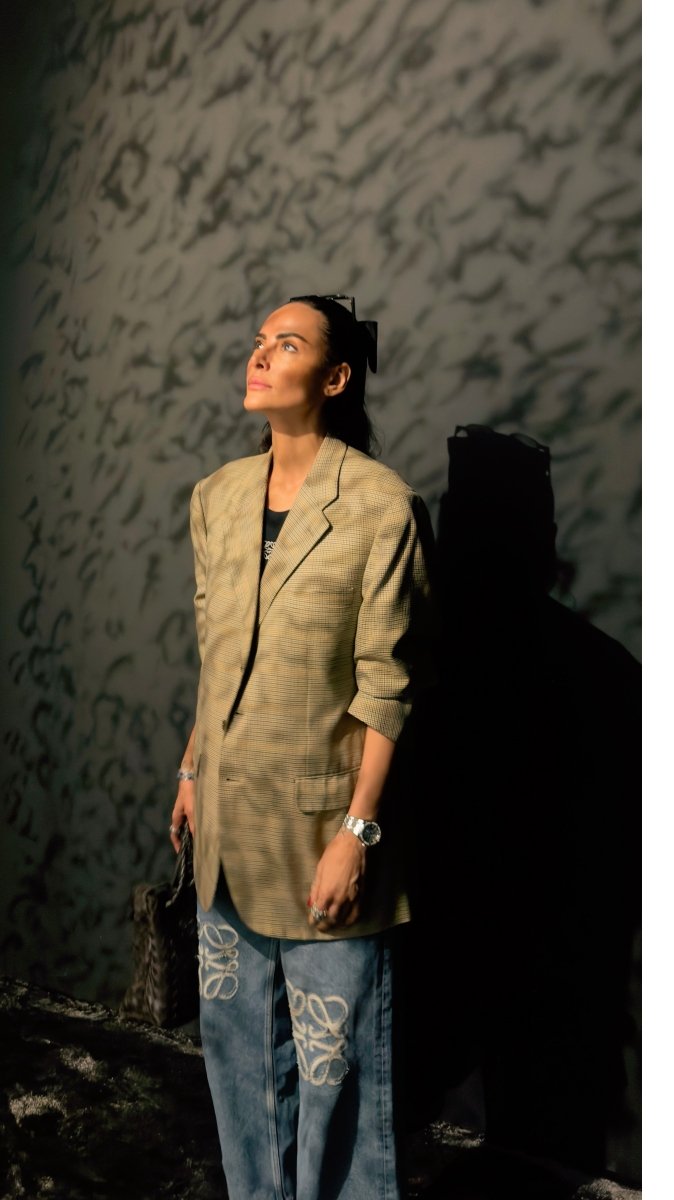
Emaho: You’ve said the first film you ever watched was Sholay, when you were eight or nine. What does a kid in Tehran take away from a film like that? Do you remember a scene that stayed with you?
Mandana Karimi: Sholay is the first Hindi film I remember. I was about nine, and I wasn’t even allowed to watch it. My cousins and I sneaked it.
The scene that stayed with me is Basanti dancing on broken glass. I had so many questions. Why was a woman made to dance on glass? Men were clapping and tormenting her, and she was upset, but she was also powerful. As a child you don’t fully understand what you’re watching, but you feel it, and I felt it in my body. It made me deeply uncomfortable.
I had grown up watching films like this with my mother and the women around me, and I think that scene planted something in me. My discomfort with how women are treated in many of the societies I’ve lived in began there, long before I had words for it. Looking back, it was the start of the woman I became: someone who cannot stay quiet when a woman is being made to suffer for others’ entertainment or control.
Emaho: In Main Aur Charles, you played Liz in a film about the criminal Charles Sobhraj, and it was one of three films you made in 2015. Which of those roles taught you the most about acting, and what surprised you about being on a set as opposed to a photo shoot?
Mandana Karimi: Main Aur Charles was shot around 2013 and released later, so it was my first release, though not the first film I shot. That was Bhaag Johnny, where I spent 35 days on set playing opposite Kunal Kemu and Zoa Morani, directed by the wonderful Shivam Nair. It was thrilling, because for the first time I had lines and had to speak in front of the camera.
That was the biggest surprise. In a photo shoot you don’t talk. You express through your eyes and your body language, and you’re selling a product. On a film set there is so much more: real emotion, dialogue, awareness of your co-stars and your surroundings, and the rhythm of “action” and “cut.” Everything was new and exciting.
I was lucky to learn from phenomenal actors, including the lead in Main Aur Charles, and from the entire cast and crew. They taught me that acting means listening, being present, and being vulnerable. I took in everything I could.
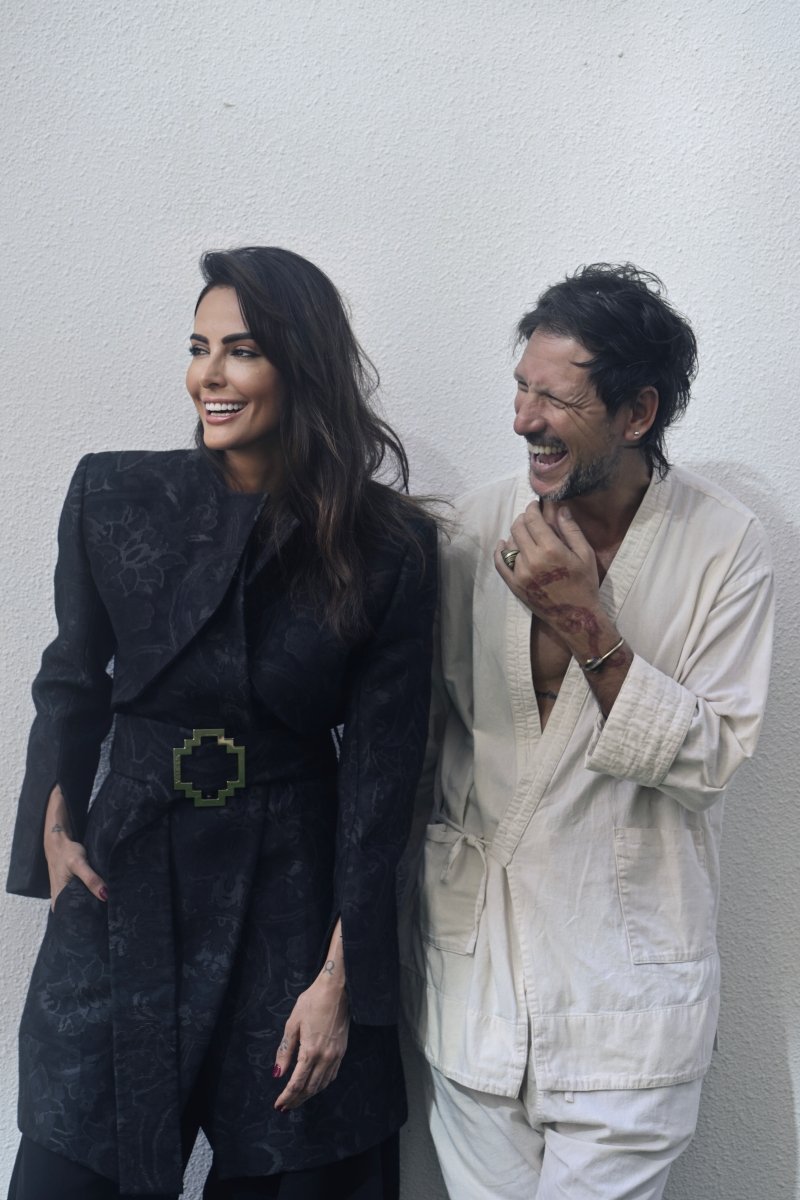
Emaho: You spent 105 days inside the Bigg Boss house and finished as second runner-up. Months of living with strangers and cameras with no way out is a very different test from any film set. What did you learn about yourself in there that you hadn’t known before?
Mandana Karimi: I went in like any other foreigner, thinking I’d enjoy the show and stay a couple of weeks. My Hindi was limited, and I knew very little about the show. I was told, “Don’t worry, you’ll be fine.” The next thing I knew, I had stayed until the end.
It was very hard. You’re watched twenty-four hours a day by millions and millions of people, in conditions that push you into survival mode. And in there I was completely myself, because there was nowhere to hide.
It taught me to believe in myself no matter what people say or push you to do. It taught me to trust my gut, stay alert, be kind, and still fight for my rights and never accept disrespect. Survival pushed me to learn Hindi and to communicate with people, and it pushed me out of the shadows I had been hiding behind for so long. The show made me a household name in India, but what it really gave me was a deep knowledge of my own resilience. I learned I can achieve anything I set my mind to.
Emaho: You’ve moved into design consulting, and at Art Mumbai in 2025 you were at the fair looking for a piece for a private client. Choosing art for someone else’s home is a different job from choosing for your own. When you walk through a fair, what makes you stop at one work and walk straight past the next? And does the kid who loved art and cameras in Tehran still have a say in what you pick?
Mandana Karimi: I moved into art and design not in 2025 but just before COVID, when I stopped acting in films and stopped modelling. I started in design, worked with a design firm, did styling, and studied at Marangoni. Three years ago I founded my own practice, OCD. It began with wardrobe consulting, home styling and closet organisation. Since last year it has grown into art consulting, helping private clients find pieces and helping artists come to India and the UAE. I never spoke about this publicly, so there was a lot of speculation about why I’d stepped away from movies. I didn’t feel the need to explain. I was simply growing into who I wanted to be.
When I go to a fair, I always spend a day or two alone, with no clients and no friends. I walk, I read, and I inhale everything I see. What I choose for myself and what I choose for a client are very different, and I work hard to leave my own likes and dislikes out of it. A client’s space should reflect them.
But the kid from Iran is always there. She studied photography, and she comes from a culture of poetry, cinema, music and photography that runs in our blood. I’ve also lived in many countries and societies, travelled to the most prestigious art fairs in the world, and met collectors, advisors, consultants and gallery owners. All of that has shaped the unique eye I bring to every space I curate. For me, art is also a voice, especially for people who haven’t always been allowed one. So yes, the girl behind the camera in Tehran still has a loud say in everything I choose.
Emaho: You’re often described as an actor, a model and an entrepreneur. When you meet someone new and they ask what you do, which of the three do you actually say first?
Mandana Karimi: I have never liked being put in one box. None of us is only one thing. There’s the job you do, the hobby you have, and the work you love, and they can all be different parts of you. When someone asks what I do, I say: I connect art, people and spaces. That is the heart of what I do, and then I unfold the rest.
People are often surprised that I’ve been part of so many industries, but everything I’ve done is intertwined. The child behind the camera became a model, then an actress, and now a curator. Through every chapter I’ve been learning, and expressing myself through some form of art. Society often wants you to be one thing for the rest of your life. I’ve always run from that, because the moment we accept a single label is the moment we stop growing.
The same belief drives the rest of my life. I’ve spent years standing up for women and for human rights, and working with NGOs, because I believe everyone deserves the freedom to be more than what others expect of them. Art simply gives me another way to do that. I’m just exploring another side of it, and I love it.
Emaho: You studied art and grew up loving cameras. Do you still make things with your hands, and if you had a year with no auditions and no schedule, what would you want to make?
Mandana Karimi: I haven’t had an audition in years, because I stopped acting before COVID. My days now are full of client meetings and art curation. I recently opened my first show in Dubai, which took three months of work. I represent a beautiful artist from Tulum, and we’re now making a book of his work in Dubai. I’m also travelling to Art Basel to deliver a piece to a client who bought it from us.
So I may not always be making with my own hands, but I am always creating. I’m deeply involved in every step: installing the show, producing the photography, making the books, even the framing of the artworks. I’m very proud to be part of the whole process, from the first idea to the final piece on the wall.
And if I had a year with no schedule, I would want to keep making work that gives people a voice, especially women, and tell the stories that deserve to be seen.