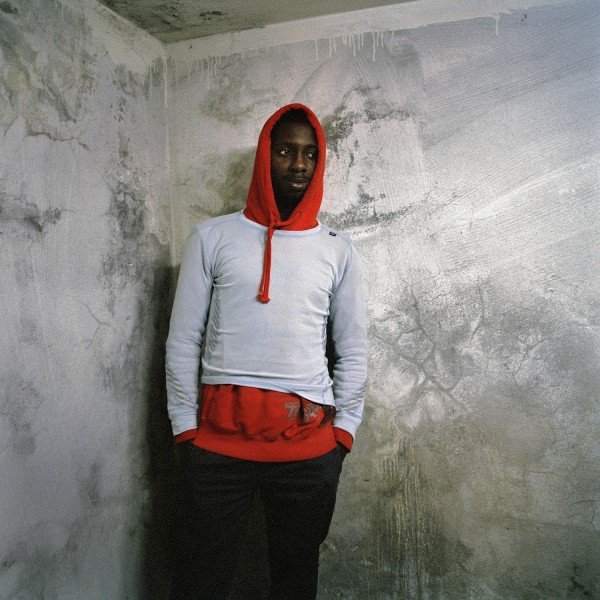
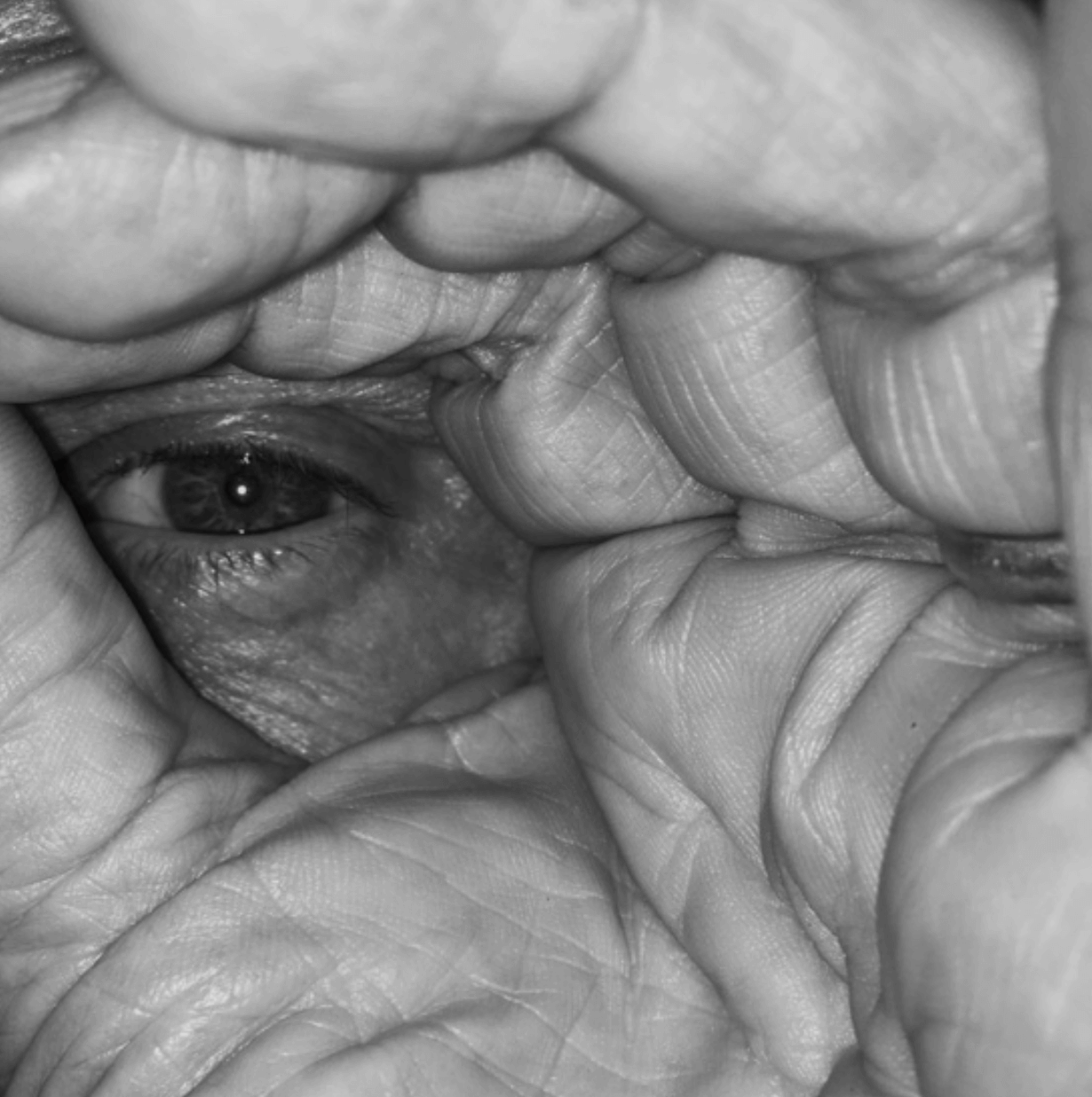
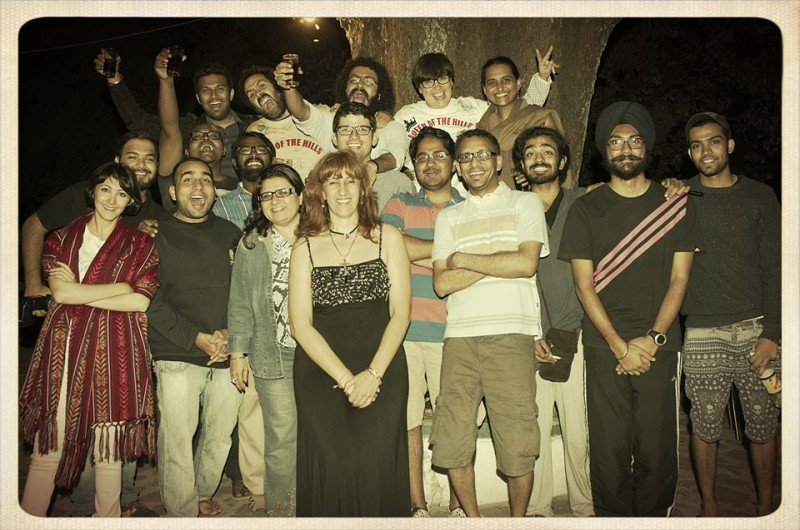
Emaho: You were born in New York City in 1957, graduated from Syracuse University’s S.I. Newhouse School of Public Communications in 1979 with a major in photojournalism and minors in English and Religion, and have been making images and telling stories for over four decades. You have said you take on issues that stir your passions about the state of humanity and that you deeply believe in the power of still images to change people’s minds. Four decades is a long time to sustain that belief in a media landscape that has been declared broken, disrupted and irrelevant several times over in the years you have been working. What has kept the conviction intact, and has it ever seriously wavered?
Ed Kashi: My belief in the importance of the media has never wavered, however I have never been more concerned about the state of the media. Since cable news came about in the early 1980’s it’s influence on print media, especially newspapers, has been negative. The 24/7 news cycle started the decline of media quality, but then with the internet and now social media, the impact is deleterious on the quality and sobriety of the media. Having said all that, I am still committed to the survival and importance of media to keep the public informed and to hold power accountable. As for my own work, as a visual artist and storyteller, I know humanity will always want stories and I can see and feel the impact of great images and storytelling on the public, on individual minds and critically important, on those in power. My conviction is both personal and public. I personally continue to never feel more alive than when I’m engaged with people, issues and the everyday moments of life. Professionally, there is still a sense of purpose and meaning to producing powerful work on important issues and I see it as a public service.
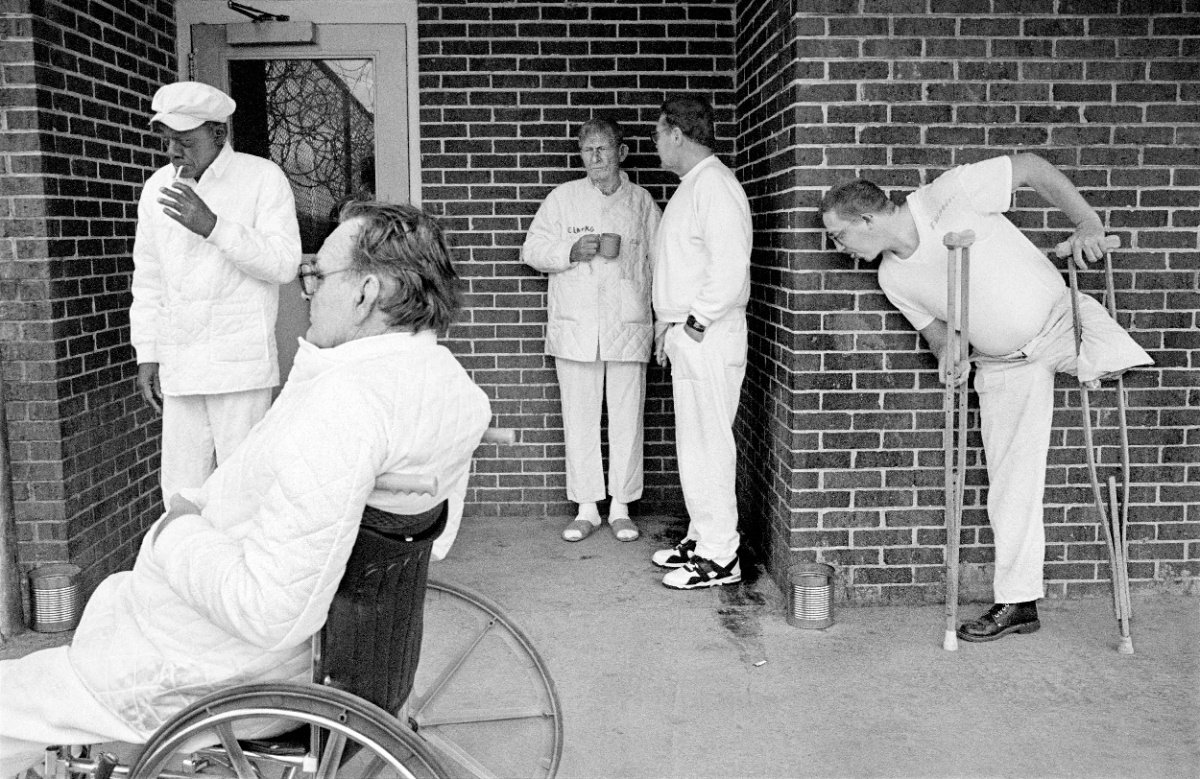
Emaho: Your eight-year project Aging in America: The Years Ahead, co-created with your wife Julie Winokur and originating as a New York Times Magazine story, created one of the most extensive visual archives on aging in the United States, becoming both a book and an exhibition. Aging is a subject that most photojournalists avoid, partly because it resists the conventional structures of conflict, crisis and urgency that typically justify the form. What drew you to spend eight years inside that particular subject, and what did the long duration of the project teach you about the difference between visiting an issue and actually inhabiting it?
Ed Kashi: At that point in my life and career I was looking for an issue that would be one of the great themes of my lifetime in America. After having worked abroad for a number of years I wanted to turn my camera on my own society. Aging was an issue that kept on coming up and it also allowed me to focus on qualities that attract me; intimacy, social issues, the human condition, empathy, struggle, death but also vitality, cutting edge solutions and the joys of an extended life. This project made me a better human being. It actually changed the trajectory of my family’s life. We moved from San Francisco to New Jersey to take care of my ailing father in law. Working on long term and in-depth approaches are what I prefer. Returning to subjects, pushing to find new ways or angles to look at an issue, these are all the lifeblood of my work.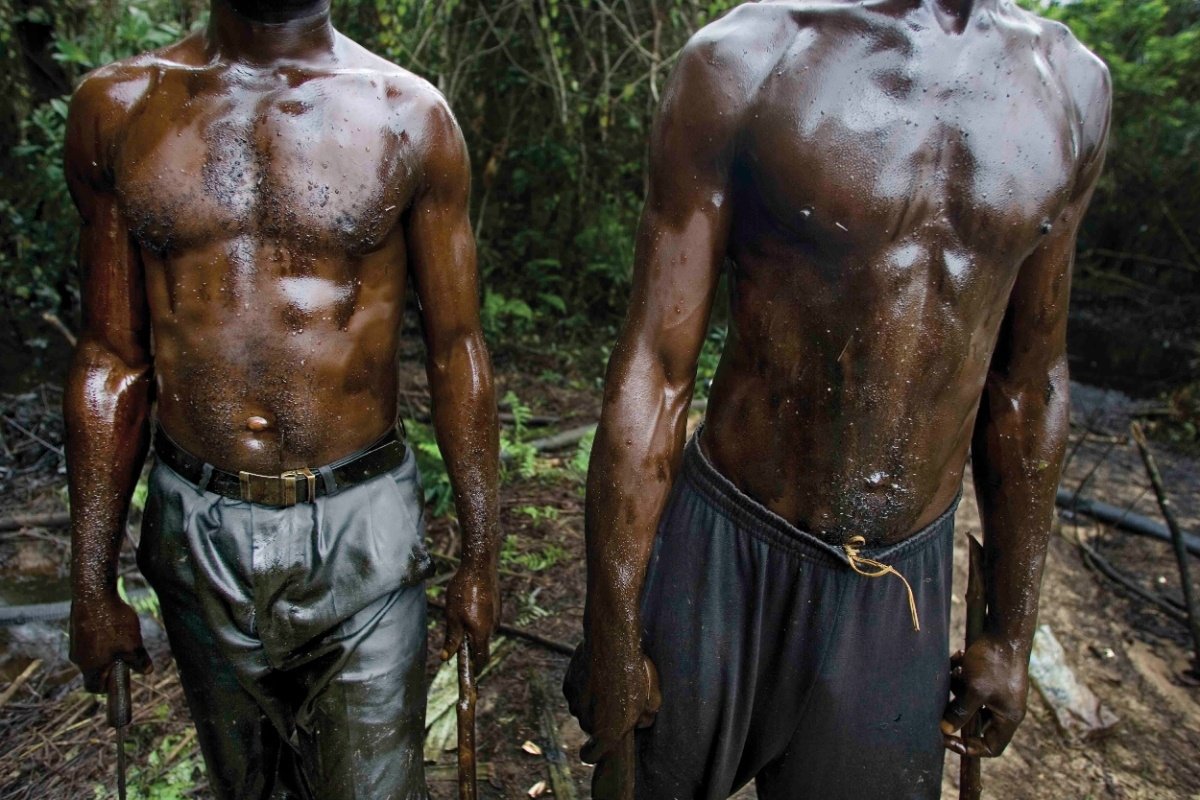
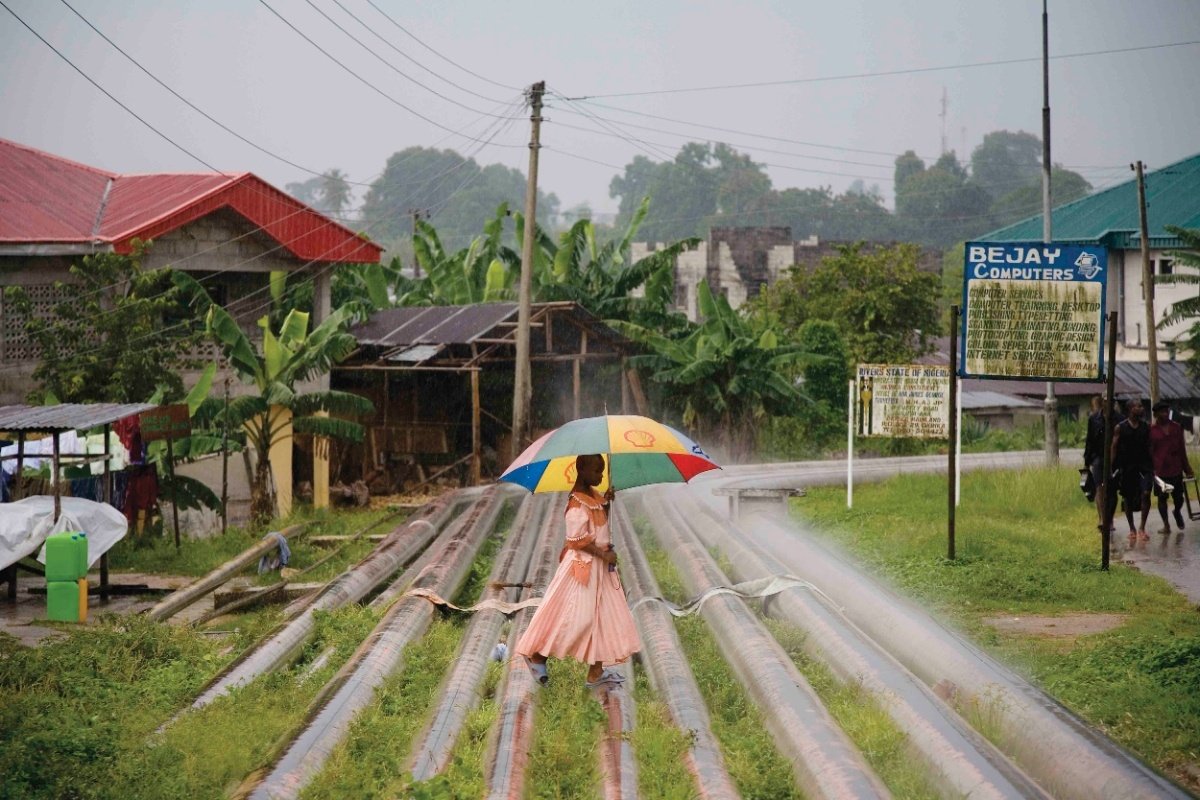
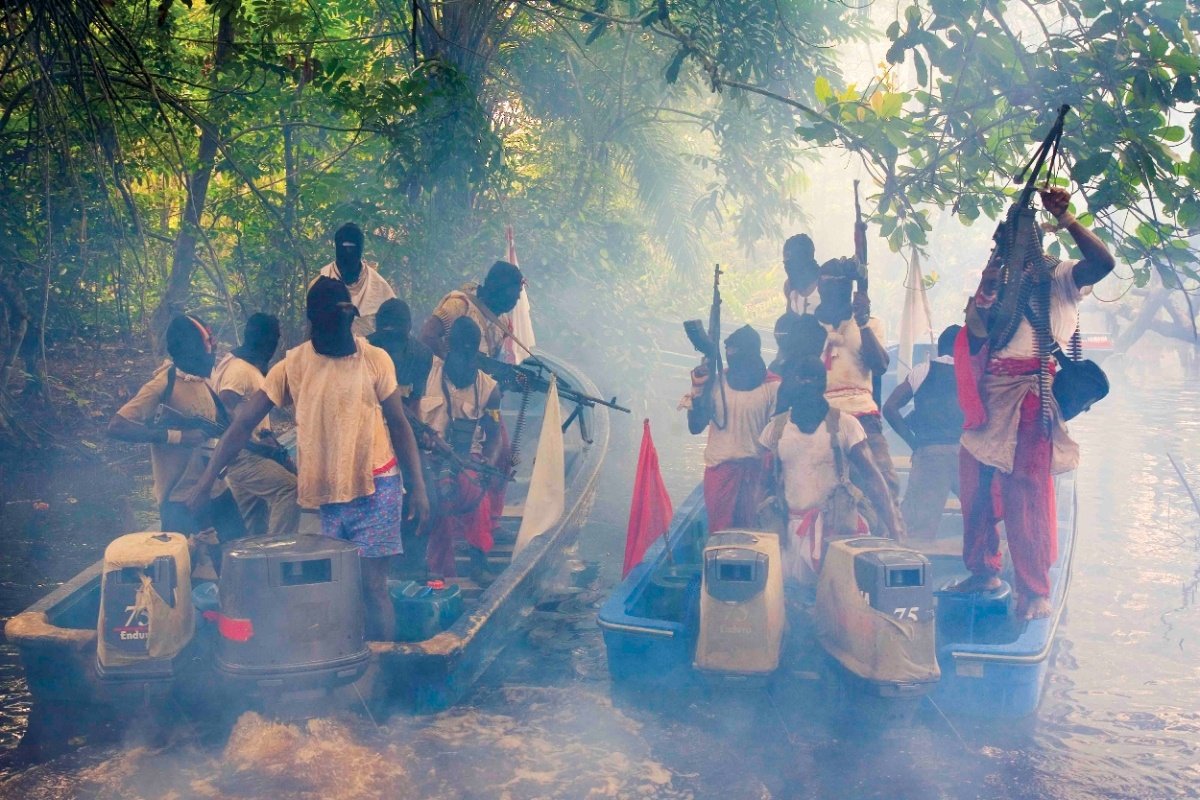
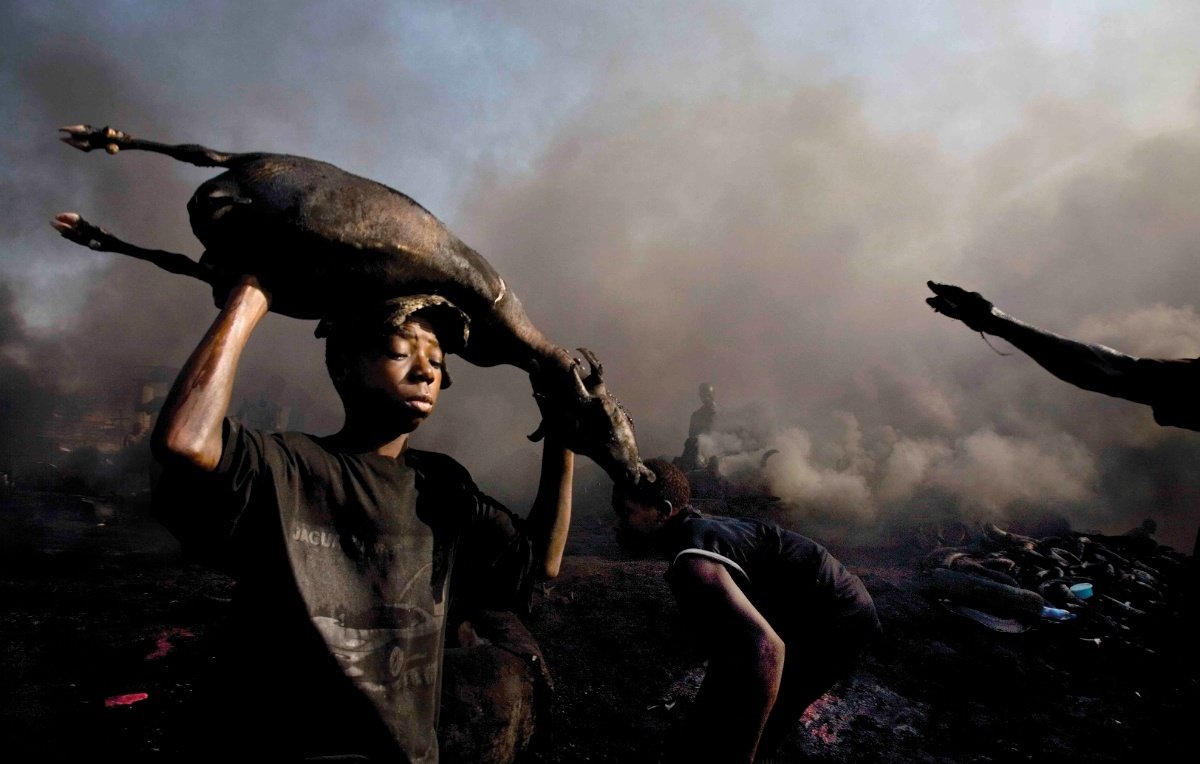
Emaho: Curse of the Black Gold: 50 Years of Oil in the Niger Delta, published in 2008, followed your National Geographic story in February 2007 and became one of the defining works of documentary photography on environmental destruction and its human consequences, covering a region whose oil wealth generated extraordinary suffering for the communities living above it. What does a photographer owe to the people who give you access to their suffering, and how do you think about the gap between the exposure a photograph creates and the change it may or may not produce?
Ed Kashi: Iraq led me to the Niger Delta, and in a sense, that trajectory tells you something about the kind of photographer I am. I follow the story wherever it demands to go, even when the going is brutal. But the question of what I owe the people who let me in is one I carry with me always, and I’m not sure I ever fully resolve it.
The acknowledgments at the back of that book say more than they might appear to. I thank the people of the Niger Delta first, before editors, before institutions, before anyone, and I deliberately don’t name the NGO workers, the human rights lawyers, the local journalists who made the work possible. That’s not an oversight. That’s because their safety is still a concern. The exposure that a photograph creates doesn’t end when the book closes or the magazine hits the stands. It continues, and for some of the people who trusted me, continued exposure means continued risk.
What I owe them is honesty, about what I can and cannot promise. I can promise to work with integrity, to not sensationalize, to treat their lives and suffering with the gravity they deserve. What I cannot promise is change. I learned that the hard way. There’s a real danger in believing that making the picture is enough, that getting the story out somehow discharges your responsibility to the people in it. It doesn’t. There is also the hard work of advocacy, usually involving partners whose vocation is activism, change and having the ability to use my storytelling to make change.
The emails with Jomo Gbomo taught me something important about the nature of that relationship. He wanted the story out as badly as I wanted to tell it, maybe more. MEND understood the power of the media, and they used it consciously and strategically. So, in one sense the exchange felt mutual. But when trust broke down over something as simple as a shared email, I was reminded very quickly of just how precarious my position was, how little I controlled, and how much damage a careless moment could do to people whose stakes were far higher than mine. I was going home. They weren’t.
As for the gap between exposure and change, I’ve had to make a kind of peace with that. You pour years of your life into a project like this, you get arrested, you navigate armed militants through encrypted emails, you lie in dark sweating rooms in Port Harcourt wondering if you can go on and then the book comes out, the magazine story runs, and the oil keeps flowing and the gas flares keep burning and the communities keep suffering. That gap is real and it is painful. But I’ve come to believe that the alternative silence, invisibility, the world not knowing, is worse. Witness matters, even when it doesn’t immediately produce justice. What I can do is shed light into the shadows. What happens next is not entirely in my hands.
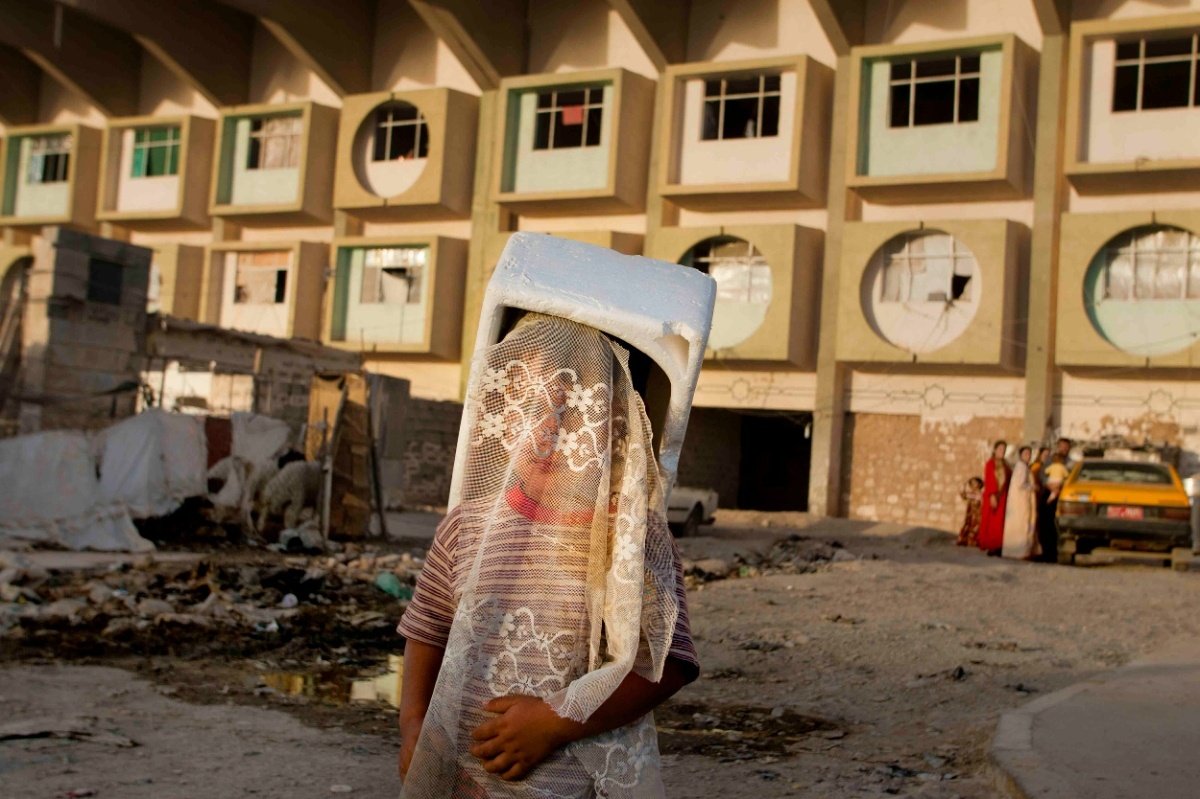
Emaho: Abandoned Moments: A Love Letter to Photography, your 40-year collection published in 2022 that won you the International Photography Awards Book Photographer of the Year, is built around a concept you set against Cartier-Bresson’s decisive moment. Where the decisive moment reflects reality in perfect alignment with the photographer’s intuition, the abandoned moment is the fractional instant of surrender, the chaos of everyday life caught in its imprecision. That is a genuinely philosophical counter-proposal to one of photography’s founding ideas. How did you arrive at it, and do you think the decisive moment has been more limiting than liberating for how photojournalism understands itself?
Ed Kashi: The decisive moment always felt like someone else’s idea of what photography should be — too clean, too intentional, too certain. What drew me to photography in the first place was the opposite of that: the mess, the imprecision, the moments that slip past your control before you even know they’ve happened. After forty years of working, I realized I’d been collecting a different kind of image entirely — pictures made when I wasn’t even looking through the viewfinder, when I’d surrendered to the chaos rather than tried to master it. I call them abandoned moments because that’s what they are — instants where I let go rather than held on. And yes, I think the decisive moment has been limiting for photojournalism, because it implies that the photographer is always in command, always the author of what appears in the frame. That’s a kind of mythology. Some of my most honest images came from conflict zones where raising a camera would have gotten me noticed or hurt. Shooting from the hip kept me protected and produced something truer — pictures that caught life in its actual state, unposed and unaware. The imperfections are the point. They always were. Yet I still work in this hydrid visual approach. I have a variety of tools to work with depending on the project, assignment, my mood and the situation.
Emaho: Your book Witness Number 8: Photojournalisms, published in March 2012 by JGS/Nazraeli Press, is a compilation of journal writings to your wife Julie Winokur over nearly 20 years, a pattern of recording that was firmly established even before you married in 1994. That is a very intimate document made public, and it sits in an interesting relationship to the photographic work: one outward-facing, made for the world, the other inward-facing, made for one person. What made you decide to publish something so private, and what do those writings reveal about the photographic work that the photographs themselves cannot?
Ed Kashi: These journals were never meant to be published. They were written for one person — Julie — and that was the only audience I ever had in mind when I was sitting alone in some dark, difficult corner of the world needing to connect to the person I loved most. That need was urgent, almost physical. It wasn’t romantic in the conventional sense. It was survival. What made me decide to publish them was the realization that the private and the public were always entangled in this work. The photographs face outward, made for the world, for editors, for history. But behind every image is a human being who just witnessed something shattering and needed somewhere to put it. The journals are that place. They reveal the emotional wreckage and the longing and the doubt that the photographs, by their nature, cannot show. I am not a cowboy or some macho character. I am a sensitive, emotional and sometimes fragile human being. I wanted to highlight that element of doing this work. As photojournalists and documentarians, we’re always trying to humanize the people whose stories we tell. This book was an attempt to humanize the creator. Photography demands a kind of external composure. The journals demanded nothing just honesty. And there’s something else. Moving from handwritten pages I carried like a companion through the field, to emails fired off instantaneously that shift changed the intimacy itself. I gained connection and lost something quieter. Publishing this book was my way of asking whether anyone else felt that loss too.
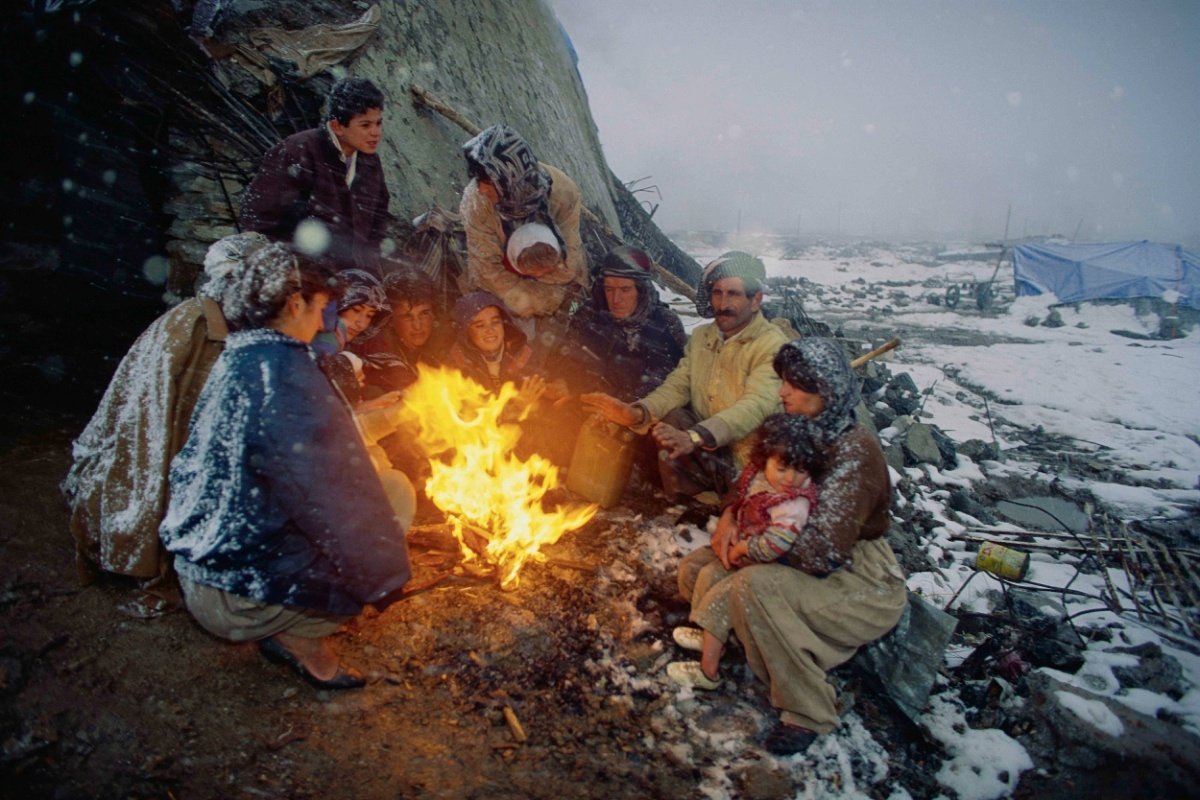
Emaho: Since 2000 you have pioneered the movement into multimedia and filmmaking within photojournalism, producing the Iraqi Kurdistan Flipbook with MediaStorm in 2006, shown at Silverdocs in 2007 and the Tiburon International Film Festival in 2008, doing real-time Instagram coverage of Hurricane Sandy for TIME Magazine in 2012, and being named POYi Multimedia Photographer of the Year for both 2014 and 2015. You also co-created The Enigma Room, an immersive multimedia installation that premiered at Photoville in New York in 2019 and has since been shown in Israel, the Netherlands, South Korea and New Mexico. You embraced the hybrid form earlier than almost anyone in your field. What did you understand about where photojournalism needed to go that your contemporaries were slower to see?
Ed Kashi: It was during the creation of the Aging in America project that I realized the a simple truth. If I could bring the voices of my photographic subjects to life through interviews, instead of captions from notes made in my practice of photojournalism, I would have much richer and authentic work. It was from that simple notion that my multimedia and now documentary filmmaking organically sprouted. What began with a naïve idea has now developed into a much fuller, more deeply engaged way of working. My approach to new projects is to make a film and produce a photo essay. In this way I can create media materials that serve the full gamut of media outlets and channels, from print to social media.
Emaho: You are a founding member of the EverydayClimateChange Instagram collective, which brought together photographers from around the world to document climate change in real time on a shared feed, and in 2002 you co-founded Talking Eyes Media with Julie Winokur, a non-profit multimedia company that produced award-winning short films and multimedia pieces on significant social issues including Denied: The Crisis of America’s Uninsured and The Sandwich Generation. What did building both a collective and a non-profit teach you about how photojournalism functions as a community and a civic act rather than simply as a collection of individual practices?
Ed Kashi: Photojournalism can be a brutally lonely profession, and if I’m honest, its culture of individualism has always sat uneasily with me. The mythology of the solitary photographer- lone witness, singular vision, decisive moment- that’s not who I am or who I’ve ever wanted to be. It goes against something fundamental in my nature, which is a deep desire to collaborate, to build, to create community around the work rather than just the work itself. Co-founding Talking Eyes Media with Julie was a direct expression of that and a desire to control our destiny, be able to apply for grants directly and not have to pay taxes on monies that were generated to create work. We wanted to expand the conversation beyond the single image, to bring writers and filmmakers and subjects into a shared creative space where the story was bigger than any one person’s vision of it. The same impulse drove EverydayClimateChange, the idea that a global crisis required a chorus of voices, not a single photographer parachuting in for two weeks. As a point of clarification, I was an early contributor to ECC but James Whitlow Delano was the founder of that feed.
What both taught me is that photojournalism is most powerful when it functions as a civic act — when it builds something beyond the individual frame. A collective holds you accountable to a community. A non-profit forces you to articulate your values publicly and live by them. The loneliness of this profession is real. Community is the answer I keep returning to.
Emaho: You have been a contributing photographer to National Geographic since 1990, producing 17 features, worked for clients including The New Yorker, TIME, Human Rights Watch and the Open Society Foundations, and have now published 13 books including Visual Riffs in 2025, a reimagining of 45 years of work across 100 countries published by Eyeshot, and A Period in Time: Looking Back While Moving Forward 1977-2022, a retrospective published by the Briscoe Center. You are a member of VII Photo Agency and are represented by Monroe Gallery in Santa Fe. After 13 books and over four decades, what is the question about your own archive that you find most difficult to answer?
Ed Kashi: Probably the most difficult question to broach about my archive is how to manage it and prepare what will be hopefully 60 or more years of work, so that it can be available for future generations of researchers, storytellers, archivists, curators and editors to access and easily navigate. I have done a great job so far in enabling that and now the task is to continue to grow the work and keep it well organized. The metaphysical question, which pertains to life itself, is will it really matter over time? Is some ways I take solace in knowing I will never know the answer to that question.
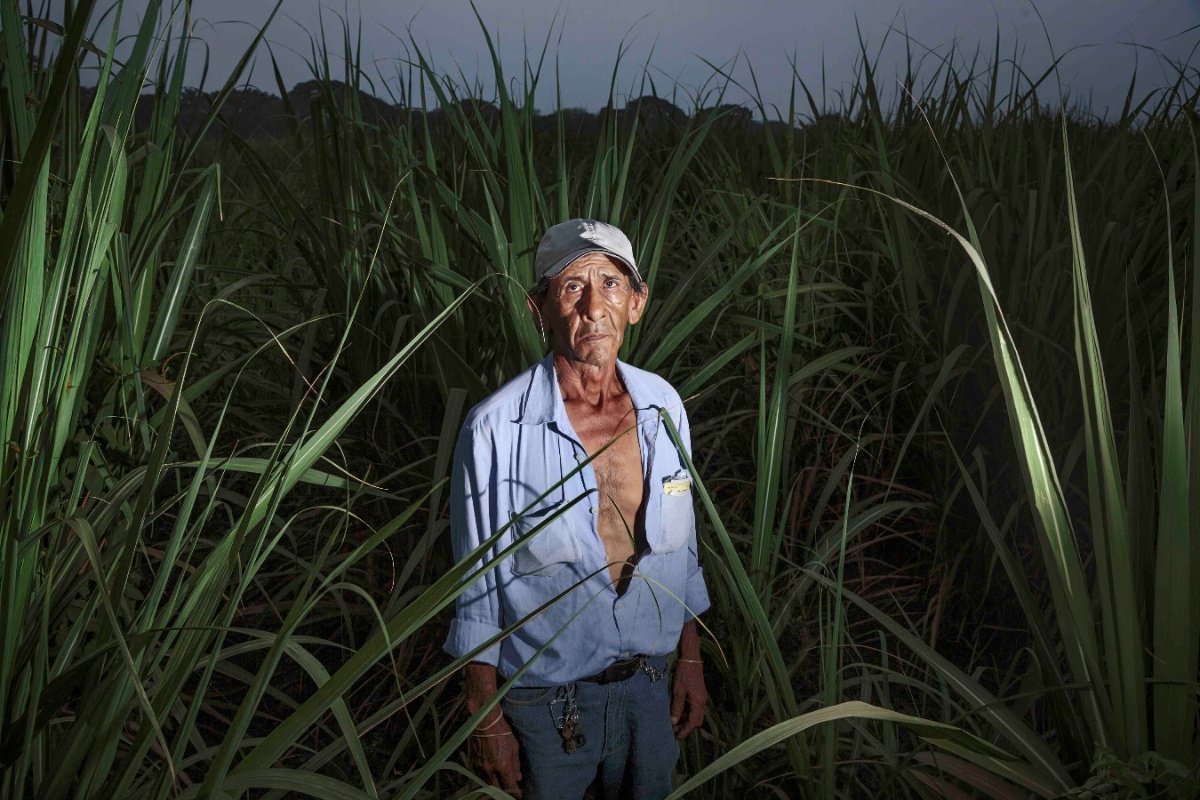
Emaho: Your most recent major project documents Chronic Kidney Disease among agricultural workers, a global epidemic directly connected to climate change, occupational heat exposure and agrochemical use, disproportionately affecting the poorest farming communities in Central America, South Asia and Sri Lanka. That is a subject with almost no visual archive and very little public awareness. What does a photojournalist do when the story they are telling has no existing framework in the public imagination to receive it, and how do you build an audience for a crisis that has no dramatic single event to organise around?
Ed Kashi: When there’s no existing framework in the public imagination, you must build one image at a time. That’s both the challenge and the responsibility. CKDnt — Chronic Kidney Disease of non-traditional causes — is killing agricultural workers across Central America, South Asia and Sri Lanka and beyond, people who grow the sugar, rice and coconuts that end up on our tables at prices we never question. They should not be getting sick and dying from their hard work. That’s not acceptable to me, and it’s not acceptable to say the world doesn’t care simply because the story hasn’t broken through yet. The absence of a single dramatic event is actually the point. This is a slow catastrophe, a grinding, invisible epidemic that unfolds in the bodies of the poorest and most vulnerable workers on earth. My job is to make that visible, to give it a face and a place and an urgency that statistics alone cannot.
Advocacy and impact are the cornerstones of everything I do. You build an audience for a crisis like this through persistence, through partnerships with organizations like the La Island Network, through collaborations with journalists like Julie Winokur or Aryn Baker, through every platform and publication willing to carry the work forward. This is a human rights issue. And human rights issues don’t wait for dramatic moments. They demand witnesses.