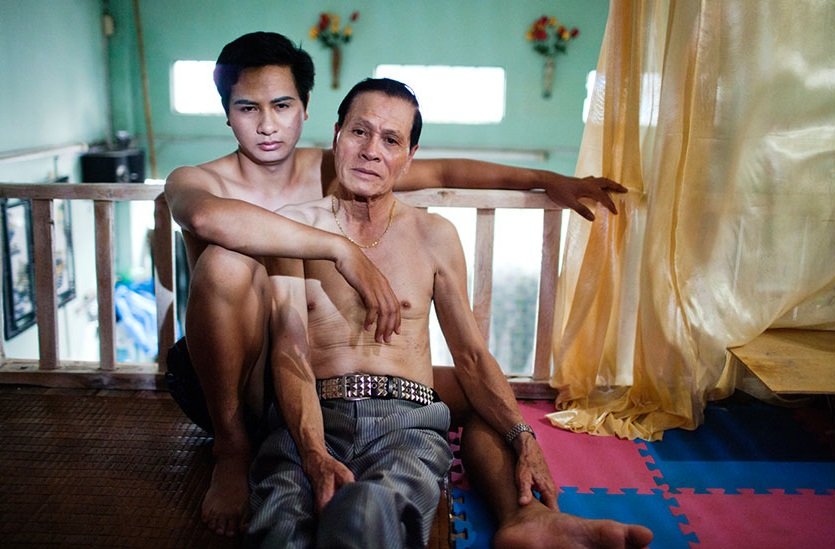
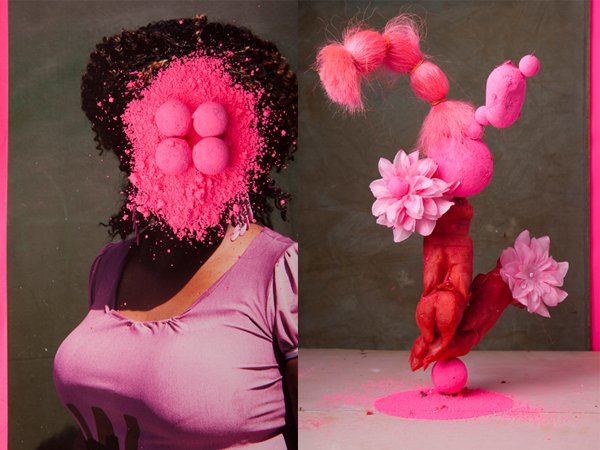
Emaho: You began your career covering the Israeli-Palestinian conflict for *Haaretz*, before moving through Georgia, Afghanistan, Haiti, Libya, and the Central African Republic. At what point did you realise that surviving the assignment wasn’t the same as the story surviving – and that images often disappear the moment they’re filed?
Pierre Terdjman: I don’t think stories necessarily disappear. On the contrary, our role is to archive them, to preserve and anchor them in time. But once you send your images, they no longer fully belong to you. Editors and publications decide how they are used—that’s part of the profession, and you accept it. What truly matters is survival. A dead journalist is a bad journalist, as an old photo editor once told me, because they can’t file their story. You learn to measure risk and find a certain equilibrium within chaos. That was my experience. At the same time, you have to remain clear-eyed about impact. Sometimes an image goes viral—like the photograph of Aylan Kurdi on the beach—and travels the world within hours. But attention fades just as quickly. The images remain, but public attention is always fragile.
Emaho: Dysturb began, in your own words, as “a very selfish idea”—you simply wanted your photographs from the Central African Republic to be seen. How do you view that origin now? Is the most honest form of activism often rooted in something personal?
Pierre Terdjman: Dysturb was born out of frustration—not just from a lack of publication, but from the feeling that I was speaking only to audiences who were already convinced, whether through *Paris Match* or *The New York Times*. At first, it was indeed quite personal. I wanted my images to be seen. But very quickly, I realised the project would be far more powerful if it opened up to other photographers and perspectives. That shift is what made it meaningful—and impactful in public space. I wouldn’t necessarily call activism selfish, but photojournalism certainly can be. We leave, we travel far, often alone, and we can’t always reassure those close to us. It’s a demanding and, in many ways, self-centred profession. I began questioning that more deeply when my son started growing up – it changes everything.
Emaho: You and Benjamin came from skateboarding and graffiti cultures before becoming conflict photographers. These worlds are often seen as opposites—one rooted in rebellion and play, the other in documentation and witness. Yet Dysturb seems to merge them. Was that fusion intentional from the beginning?
Pierre Terdjman: We weren’t really part of a defined Paris “scene,” but we were immersed in skate culture, graffiti, and a broader visual language influenced by the US. What shaped us most was our relationship to the street and public space—the idea of leaving a mark, of making something visible. That instinct directly informed Dysturb. The real turning point came in the Central African Republic. During the war, I saw newspaper vendors pasting pages onto walls so people who couldn’t afford papers could still access the news. It was simple, direct, and incredibly powerful.
We wanted to combine street codes with the visual language of advertising to capture attention. At the time, it was unconventional—some photographers didn’t understand why we were self-publishing in public space. But over time, its impact became clear. Bringing news into the street creates a direct connection, especially with audiences who don’t engage with traditional media.
Emaho: Advertisers occupy city walls without consent, yet news photography in the same space is often seen as transgressive. What does that double standard reveal about the kinds of stories cities are designed to accommodate?
Pierre Terdjman: In reality, we’ve encountered very few issues with authorities—partly due to knowing how to operate discreetly, but also because of the nature of our work, which is social and informative. In some parts of Paris, for instance, advertising is less well received than what we do. That says a lot. We’ve always been careful not to vandalise or damage spaces, and to remain respectful. We’re also mindful that our images are seen by everyone—children, passersby, all kinds of audiences—so image selection is crucial. For me, cities are an open playground for artists working in public space. We never questioned our legitimacy—we simply used the opportunities available to us.
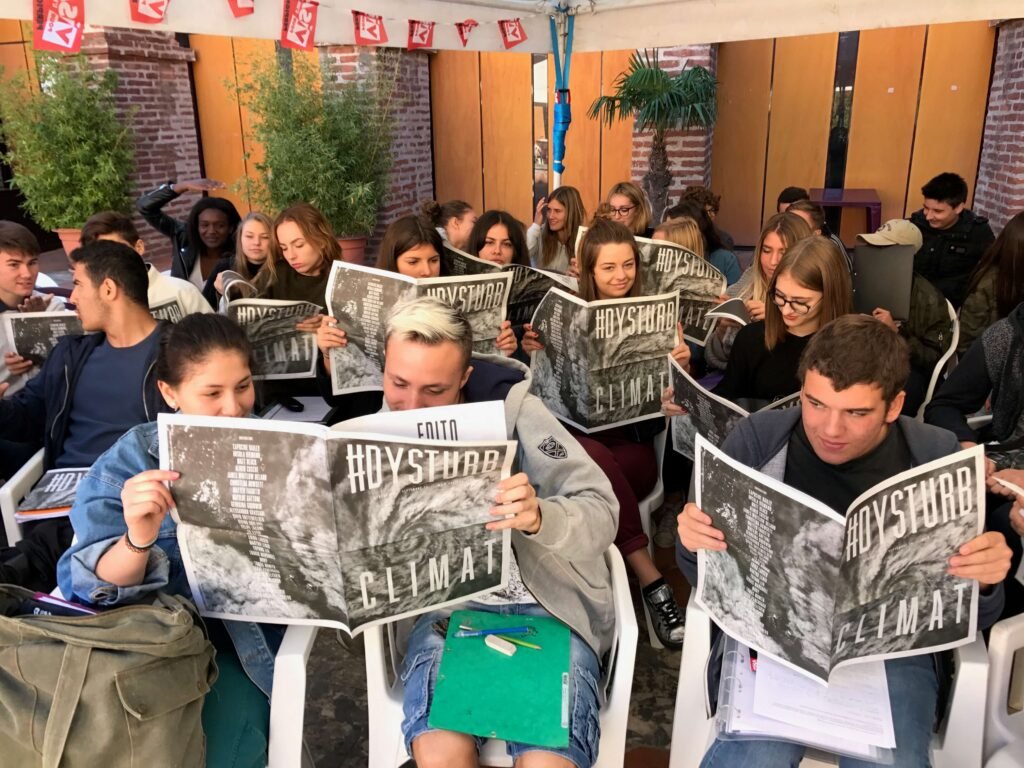
Emaho: Dysturb has now reached hundreds of schools, universities, prisons, and hospitals. What happens in a prison when you present images of conflict—what kind of conversations emerge there that wouldn’t in a classroom?
Pierre Terdjman: Over the past decade, we’ve worked with far more than 130 institutions, always driven by the same goal: to emphasise the importance of a free and plural press, and to help young people navigate information critically, especially in the age of fake news. In schools, students often participate in selecting the images, which creates dialogue across the entire institution. In prisons, the conversations are more focused and intense. We talk a lot about democracy, press freedom, and sometimes take part in deradicalisation programmes. The discussions aren’t always easy, but they are necessary.
Emaho: You were awarded the Napoleons Philanthropy Award in 2022. Journalism and philanthropy can be uneasy companions—one seeks to reveal uncomfortable truths, the other often aims to support. How do you ensure funding never influences your editorial independence?
Pierre Terdjman: Money has never dictated what I photograph or say. Even on assignment, you must maintain control over your narrative. Philanthropic support can be helpful, but in our case, the Napoleons’ contribution was more about network than funding. We’ve always prioritised paying photographers and collaborators—sometimes through external support, sometimes through our own resources. Editorial independence remains non-negotiable, even if it comes at a cost. We’ve turned down opportunities when there were attempts to influence our content.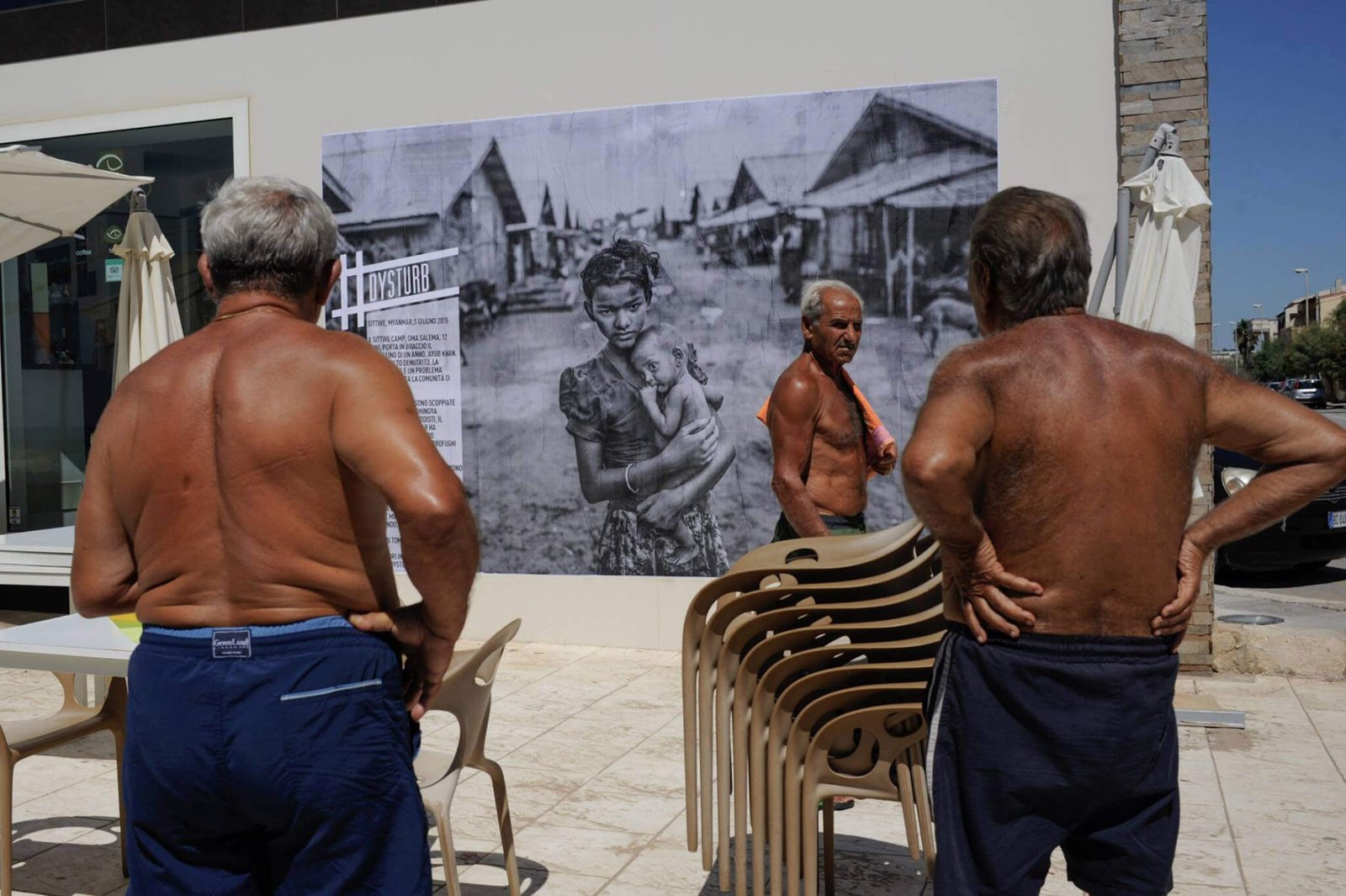
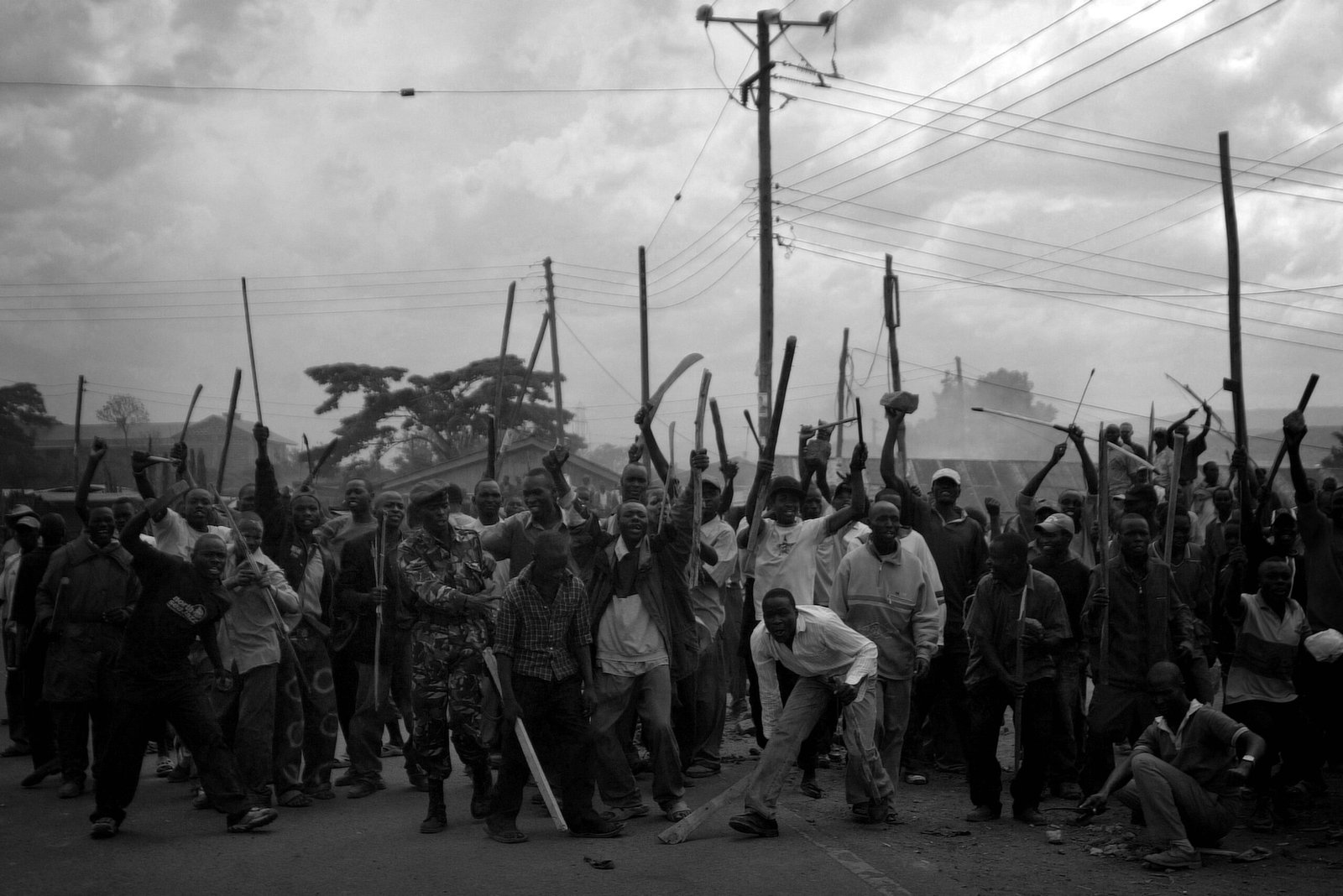
Emaho: You documented the fall of Mubarak, Ben Ali, and Gaddafi in quick succession. Looking back, do you feel any responsibility for what unfolds after the images are made?
Pierre Terdjman: I don’t feel responsible for what happens afterward—just as I’m not responsible for events while I’m covering them. Those revolutions had complex outcomes, but looking back fifteen years later, the overall trajectory is often disappointing. Political change has been limited, and in many cases, repression persists. My responsibility is to report facts accurately and represent them with dignity. What follows is beyond my control. It’s important to remember that journalists don’t start revolutions—we arrive once they are already underway.
Emaho: Dysturb has evolved into a creative studio working between Paris and New York, moving from guerrilla interventions to institutional collaborations. What have you had to protect most to ensure it doesn’t become what it once resisted?
Pierre Terdjman: The studio developed naturally as an extension of the non-profit, allowing us to work with institutional clients like the UN. In many ways, it sustains the non-profit. Having a commercial arm allows us to self-fund projects and maintain independence. Today, our only public funding comes from the French Ministry of Culture. We choose our collaborators carefully, ensuring alignment with our values. At the same time, we remain adaptable—our experience in conflict zones has made us resourceful, fast, and flexible. This model is something we’re proud of. It allows us to continue developing independent projects while maintaining editorial freedom. And ultimately, we are driven by a need to constantly create, produce, and innovate.