Emaho: Can you tell us about your early life in Morocco and the experiences that first sparked your interest in art, architecture, and creative expression?
Amine: Morocco trained my eye through light, proportion, and the quiet authority of craft. No one in my family was an architect, but I was the child who noticed space instinctively—thresholds, courtyards, and how tradition lives inside everyday design. Very early, I knew what I wanted. I’m rooted in that Moroccan sensibility, in the power of the heritage, but I’ve always been drawn to modernism and, later, minimalism—not as absence, but as precision: a way to distill heritage into something contemporary and clear.
Emaho: Your practice moves fluidly between architecture, curation, and scenography. How did these disciplines begin to intersect for you, and when did you realise that working across fields was essential to your voice?
Amine: Architecture practice makes you learn that buildings are never just buildings. They’re social instruments, frameworks for how people encounter each other and ideas.
I started curating because I wanted control over the complete experience. Working with artists in Paris, and worldwide, I’d redesign spaces while programming exhibitions, treating architecture and content as one decision. Scenography came through Opera, especially my work with Sidi Larbi Cherkaoui, who became a friend and a mentor in that field. Choreographers understand what architects often forget: space doesn’t exist until bodies activate it through movement and time.
Around 2015, these practices converged. I was designing a galeries and concept stores, curating an exhibition, and developing scenography simultaneously. Each informed the others. The architecture became more temporal. The curation more structural. I realized then that working across disciplines wasn’t dilution, it was the methodology itself.
The questions I care about don’t fit single fields. How does space produce culture? How do we build institutions that are contemporary and rooted at once? These require multiple entry points, different scales of intervention. Moving between architecture, curation, and scenography isn’t versatility. It’s necessity.
Emaho: Your work on Memento Mori at the Monte Carlo Opera with Sidi Larbi Cherkaoui was a significant milestone. What was your role in shaping the scenography, and how did that collaboration change the way you think about space, rhythm, and movement?
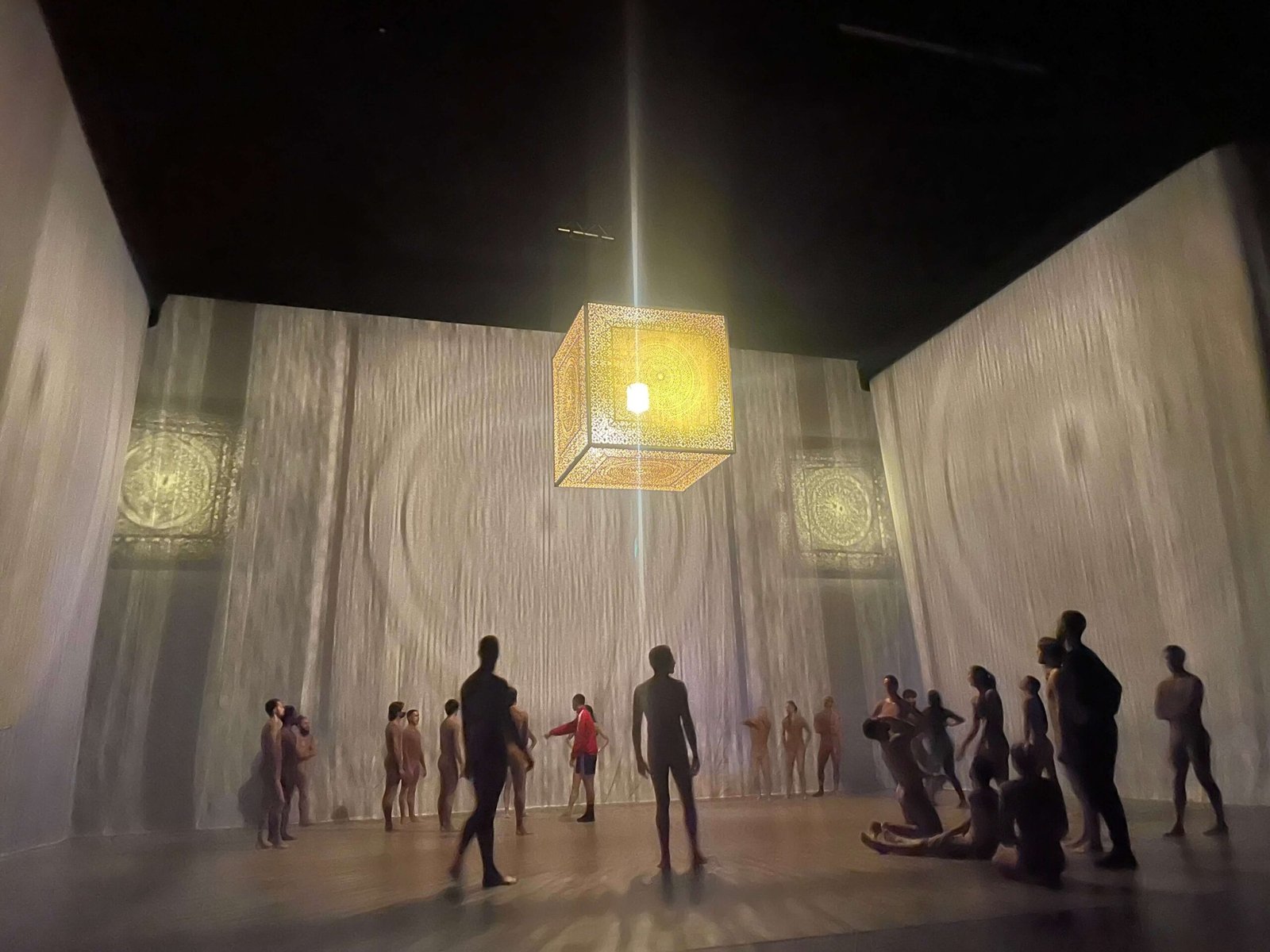
Amine: After Marina Abramović’s Boléro, Sidi Larbi Cherkaoui asked me to conceive the scenography for Memento Mori in Monaco than worldwide, and that was both deeply honouring and genuinely rewarding. It was my first time designing for an Opera at that international level, and it forced me to articulate a response that felt personal rather than purely functional.
Instead of multiplying elements, I wanted to crystallise the entire spirit of Memento Mori into a single gesture: light. I built the scenography around a light ceiling something I conceived less as a technical device than as an artwork in itself, a suspended presence that could hold tension, fragility, and silence while moving with the piece’s inner rhythm.
At that moment, I was also producing a lot of my own artistic work, and that mattered. The collaboration didn’t just change how I think about stage space it changed how I think about composition over time. I came out of it understanding that rhythm isn’t only choreographic; it’s spatial, emotional, and luminous.
Emaho: You co-founded Artspace Casablanca, which quickly became a vital platform for African artists. What was the original vision behind the space, and how do you feel it has shaped or supported the regional art scene?
Amine: Artspace Casablanca began with my sister Hind Amharech. Fresh out of Beaux-Arts, she was determined to open a gallery. It quickly became a family project, where Nawal Amharech directed this galery, shaped by our different languages: architecture, curation, photography. From the start, it felt less like a “space” and more like a framework.
Our aim was simple: champion Moroccan artists while placing them in the same room, literally and intellectually, with international voices, without hierarchy. I played the role of conductor or curator, keeping the whole ecosystem in rhythm. And the surprise was the speed: within six to nine months, Artspace Casablanca had found a serious position, emerging as one of the notable platforms in North Africa proof that the region was ready for something both rooted and globally fluent.
Emaho: Is there an artist working today whose practice you feel particularly connected to? What about their approach or ideas resonates with you at this moment?
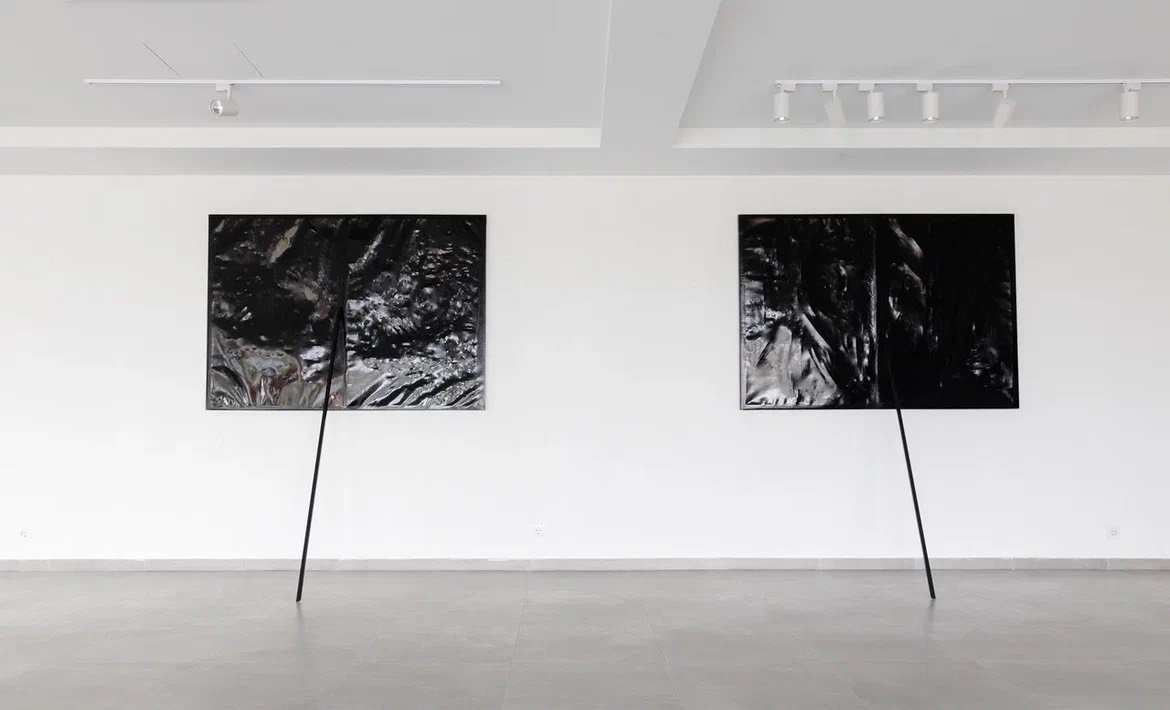
Amine: Anish Kapoor, his side that remains mostly offstage: Kapoor as a art « collector » quietly formidable, with an eye that’s as uncompromising as his work. I’ll be honest: I’m an unconditional admirer. I’m deeply, almost obsessively, drawn to his vision, to the precision of his gestures, to the way his work turns space into emotion.
Or, Patrick Fourtin, the art and collectible design galeriste:
There’s something I deeply respect in his long view: a gallery built patiently over decades, close to Palais-Royal, guided by extreme taste, expertise, and restraint an approach that’s increasingly rare in a market addicted to noise.
Emaho: You have said, “I curate exhibitions as an act of resilience,” framing them as psychological interventions rather than aesthetic encounters. How did this philosophy concretely shape projects like Peculiar Mythology: Paradigm & Personae, particularly in how space was used to confront identity and self-perception?
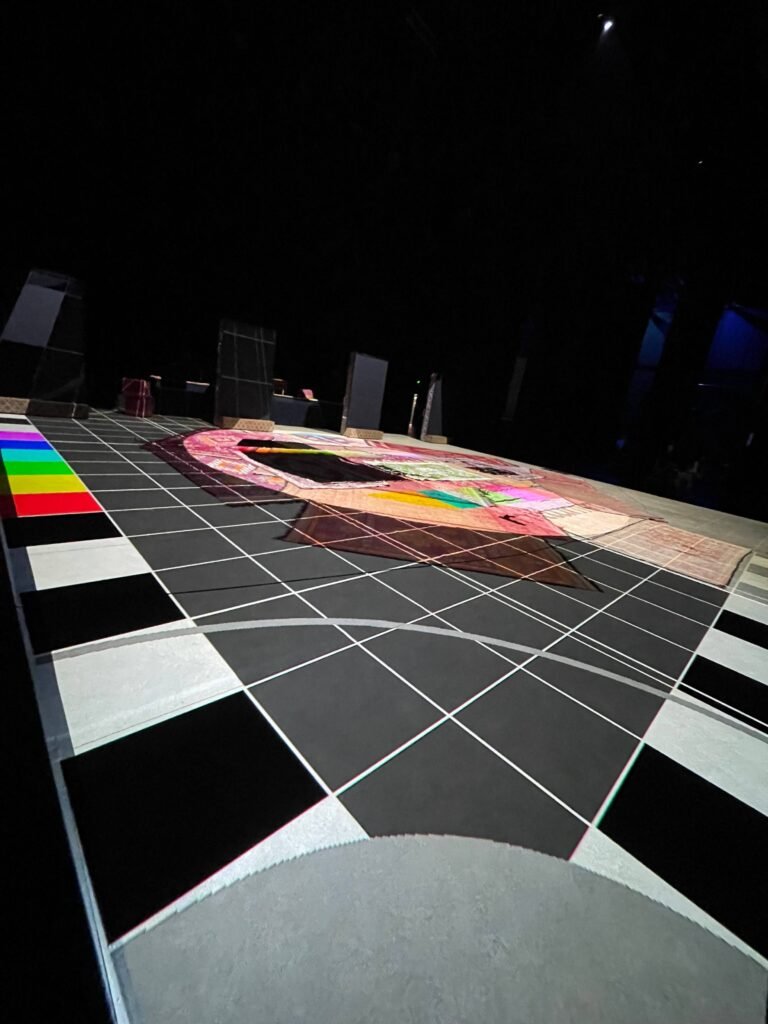
Amine: When I say that I curate exhibitions as an act of resilience, I’m speaking about a practice that goes beyond aesthetics. For me, an exhibition is not a neutral display but a psychological structure a space that shapes how we perceive, move, and confront ourselves. In Peculiar Mythology, the environment is designed to act on the visitor, creating moments of friction, proximity, and self-awareness where perception is gently destabilized.
My work operates precisely in that unstable territory, where identity is not fixed but continuously constructed and performed. The “mythologies” in the exhibition are not only collective narratives, but intimate ones stories we inherit or invent in order to protect ourselves. And the personae we adopt are not masks to be stripped away, but survival strategies, forms of adaptation that allow us to exist within complex social and emotional systems : for example the African Mask and how they are perceived !
Resilience, in this context, is not about endurance or spectacle. It is a quieter process: the ability to recognize one’s own projections, to sit with uncertainty, and to allow perception to shift. If the exhibition succeeds, it’s because it offers that space, where vulnerability becomes a form of strength.
Emaho: Your thesis The Eon Space at SCI-Arc investigated sensorial architecture and the full spectrum of human perception. How does this research translate into your curatorial decisions today, especially when working across regions where the body, ritual, and space are culturally experienced in very different ways?
Amine: The Eon Space trained me to think of architecture and by extension exhibitions, as systems that engage the body before the intellect. At SCI-Arc, my research focused on how perception unfolds across time, movement, sound, light, and rhythm, rather than through form alone. That approach carries directly into my curatorial decisions today: I start with how a space will be felt, not read. How the body slows down, hesitates, or becomes alert is as important to me as the works themselves.
In that sense, curating is still architectural for me. It’s about constructing frameworks for experience, ones that respect difference, invite attention, and allow meaning to emerge through presence rather than explanation.
That’s it.
Emaho: Your practice operates between Europe and the Gulf, two regions with distinct institutional histories and market dynamics. How do you recalibrate a project conceptually when presenting work in Paris versus Dubai, without reducing either context to a curatorial trope?
Amine: Ethnology comes first. Because the context is so different, I don’t “recalibrate” my projects in the usual sense. I don’t adjust them to geography as if place were a brief. If anything, the distance between contexts pushes me to experiment more, and to go deeper into the ethnology of the project itself, so the response I build is accurate rather than performative.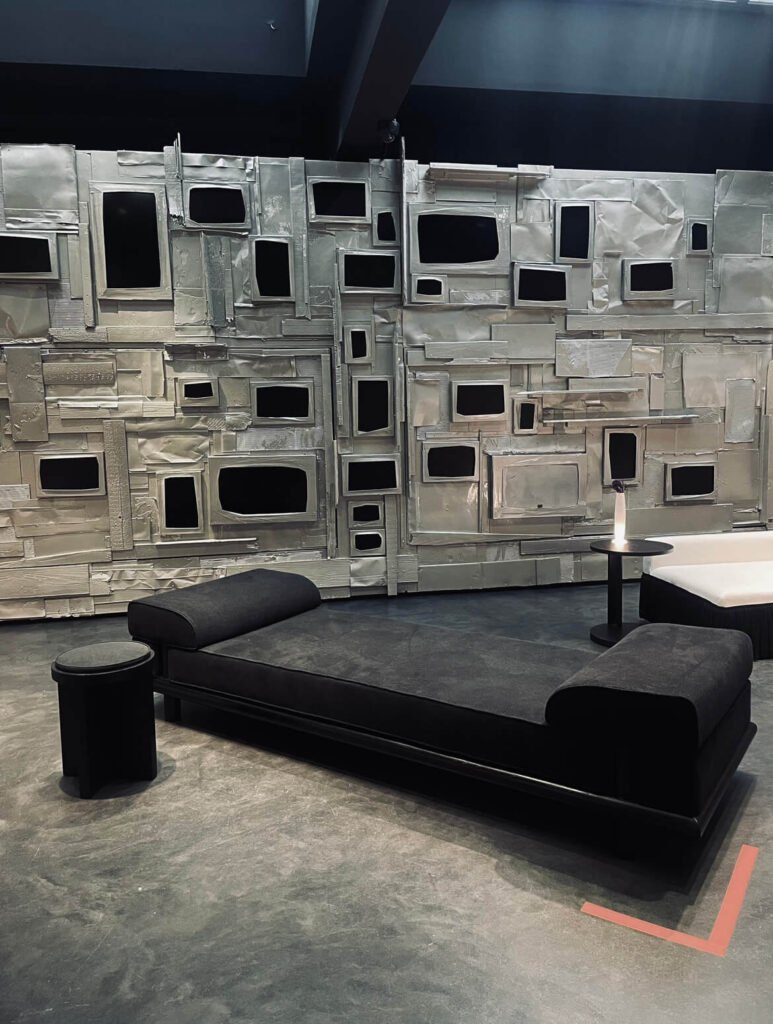
Emaho: In projects such as Tables: From Surface to Volume, you deliberately entered the art–commerce intersection during Paris Design Week. What interests you about this hybrid territory, and how do you prevent spatial design from becoming purely decorative when working within luxury or retail frameworks?
Amine: I don’t really approach these projects through the lens of luxury, or even through ideas of beauty and their opposites. Those categories aren’t very operative for me. What matters is creating a dialogue between elements, between gesture and material, drawing and volume, intention and use.
This is, for me, the essence of what collectible design can be. It’s not about rarity or refinement alone, but about making visible the depth of the work of artist, the artisan, the designer. My interest has always been to foreground that continuum, and to push it beyond display into a space of understanding.