Emaho: You both come from culturally layered East Asian backgrounds. Before founding UMA Studio, what formative experiences shaped your shared spatial language? Was there a moment when you recognized a common aesthetic or philosophical alignment?
Amber & Michelle: We both grew up in East Asian cities where space is layered, dense, and often negotiated rather than declared. That shaped how we think about interiors — not as objects, but as transitions. Sliding panels, filtered light, compact rooms that adapt over time.
When we started working together, we realised we weren’t aligned because of style, but because of attitude. We both value restraint. We’re comfortable with quietness. That shared sensitivity naturally became our spatial language.
Emaho: UMA Studio’s work is often described as restrained, atmospheric, and materially grounded. How do you define your design language beyond the vocabulary of “minimalism”? What makes it distinctly yours rather than generically contemporary?
Amber & Michelle:We don’t really identify with the word minimalism. It can feel purely visual — like reducing things for the sake of appearance.
For us, it’s more about clarity. Every line, junction, and material choice needs a reason to exist. Our work may look restrained, but it’s actually very deliberate. It’s less about removing things and more about refining them.
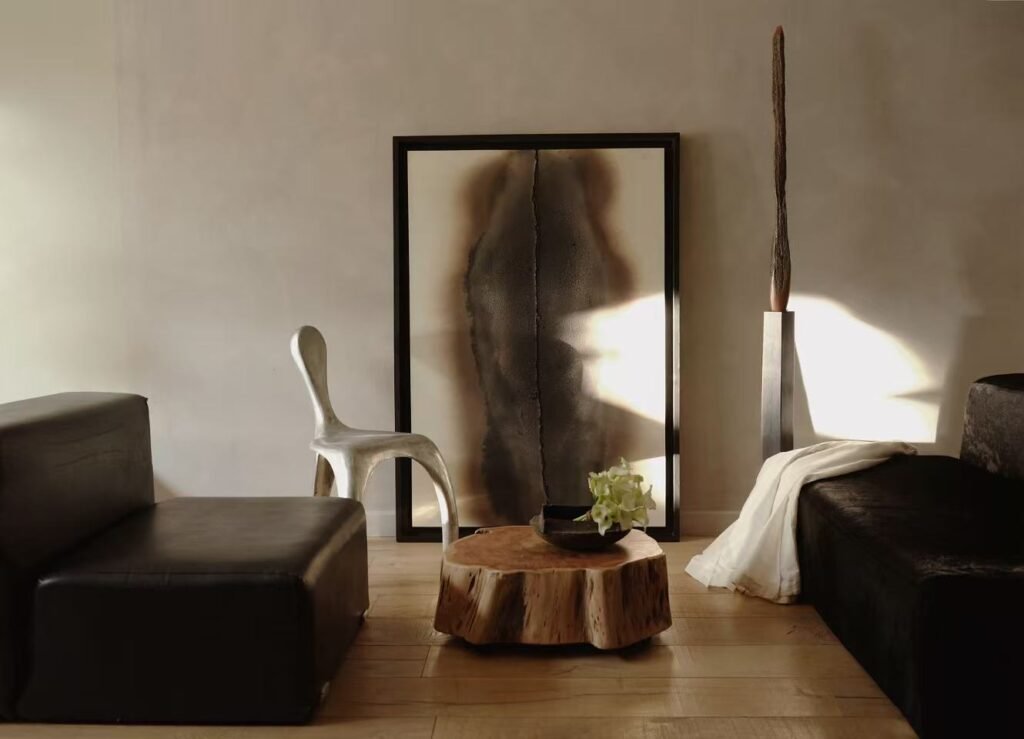
Emaho: In several of your residential projects, light is treated almost as a primary material rather than a secondary condition. How consciously do you choreograph daylight as a structural and emotional element within a space?
Amber & Michelle: Light is one of the first things we think about. Before finishes, sometimes even before layout.
We study orientation carefully. Where does the morning light enter? How does winter light differ from summer? We design openings and surfaces to shape shadow as much as brightness. Shadow gives depth; it slows the space down.
In many ways, light defines the emotional tone of our projects.
Emaho: Eastern spatial philosophies often privilege emptiness, interval, and pause. Do concepts such as ma, wabi-sabi, or void-space inform your process explicitly, or do they operate more intuitively within your design decisions?
Amber & Michelle: Concepts like ma — the space between — are definitely part of our thinking, but not in a literal way.
We don’t consciously say, “Let’s apply this philosophy.” It’s more instinctive. We’re comfortable leaving space empty. We don’t feel the need to fill every corner. That sense of pause is something we both grew up with.
Emaho: Your interiors avoid overt ornamentation, yet they feel deeply textured. How do you approach material selection so that tactility replaces decoration as the central expressive tool?
Amber & Michelle: Because we avoid decoration, materials have to work harder. We’re very sensitive to how something feels — not just visually, but physically. The grain of timber, the softness of plaster, the weight of stone. We often choose materials that age well, that become richer over time.
Texture replaces ornament. It creates depth without noise.
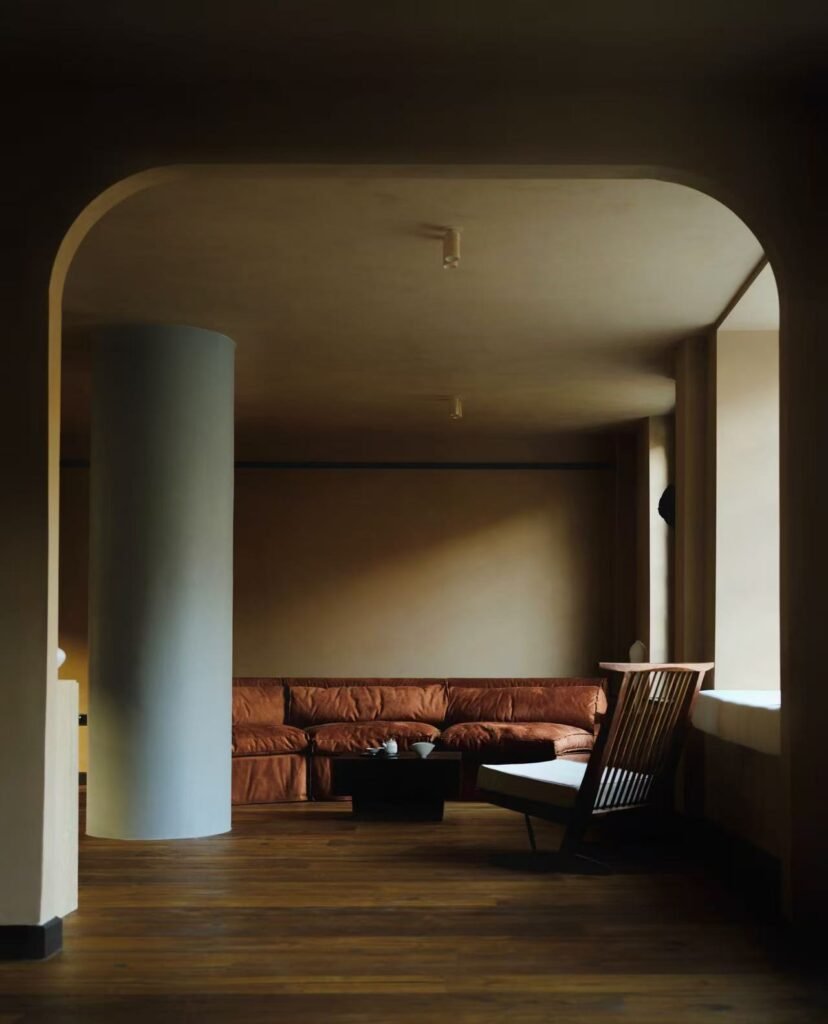
Emaho: As a collaborative studio, how do your roles differ within the design process? Is there a productive tension between intuition and strategy, or between artistic instinct and project management?
Amber & Michelle: We approach projects slightly differently. One of us tends to focus more on spatial logic and long-term clarity; the other is more immersed in atmosphere and material expression.
There’s a healthy tension between those perspectives. It keeps the work balanced — not overly strategic, not overly intuitive.
Emaho: Many of your projects emphasize inwardness and privacy rather than spectacle. In an era when architecture is often designed for digital visibility, how do you resist designing primarily for the camera?
Amber & Michelle: We’re very aware that architecture today is often consumed through images. But we try not to design for Instagram.
Many qualities we care about — peripheral light, acoustics, gradual transitions — don’t translate easily into photos. We prefer spaces that unfold slowly in real life rather than perform instantly on screen.
Emaho: Your work frequently integrates custom millwork and bespoke elements. At what point does interior design become architectural authorship? Do you see UMA evolving toward ground-up architectural practice?
Amber & Michelle: When you start redefining ceilings, openings, and circulation, the line between interior and architecture becomes blurry.
Our custom millwork often shapes how space is experienced structurally. We’re definitely interested in expanding toward more architectural-scale projects in the future.
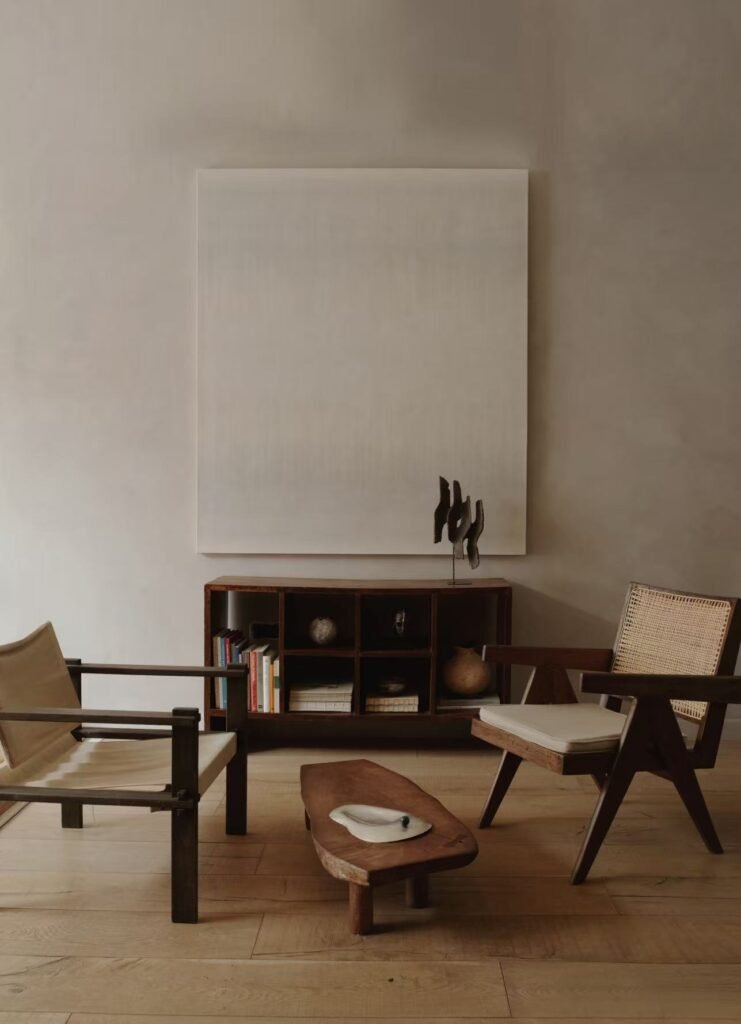
Emaho: The idea of “Eastern aesthetics” can sometimes become stylistic shorthand in global design culture. How do you engage with heritage responsibly without reducing it to aesthetic tropes?
Amber & Michelle: We’re cautious about that label. It can easily become a visual cliché.
For us, heritage is more about mindset than imagery — proportion, restraint, sensitivity to nature, and respect for craft. We try to translate those values into contemporary construction rather than referencing them literally.
Emaho: Looking ahead, what intellectual or material territories feel urgent for UMA Studio to explore? Are you moving toward research-led practice, cross-disciplinary collaboration, or more experimental spatial investigations?
Amber & Michelle: We’re interested in going deeper rather than bigger.
More research into materials. More collaboration with lighting designers and craftspeople. Possibly smaller, more contemplative projects where atmosphere really matters.
For us, evolution isn’t about scale — it’s about refinement.