Emaho: You were born to Colombian parents and grew up between different cultural contexts, later living and working between Paris and Bogotá. How did this early sense of movement and in-betweenness shape the way you see identity and belonging today?
Karen: It took me time to accept that my identity cannot be related to a single territory. French is my language of study, and my body is Colombian. I could never say that I belong to one territory more than another, or that my identity refers to a specific culture rather than another. For a long time, it was a struggle not to have this refuge, this anchored territory, this motherland.
But growing up in between two continents and opposite cultures liberated me from having to carry or represent an ideal—and I had to understand that this in -betweenness is a productive force, and a perpetual process of becoming rather than being.
I wonder if this protocol of assigning us to a fixed identity is precisely what submits us to the power of others. My illusional freedom lies in being able to feel more French today and more Colombian tomorrow—or neither, or both simultaneously.
I feel identity is shaped by what we experience, by the different episodes of our life—intensities and encounters rather than origins. And perhaps the real power is precisely this—to refuse to define our identity through territory and culture, beyond the control of those who lock us into stereotypes, and to be able to belong only to ourselves, and accept that we will always be in the quest for the self.
Emaho: Before photography became your primary medium, what initially drew you toward making images as a way of understanding the world? Was there a particular moment when photography shifted from observation to necessity?
Karen: As a teenager, I was passionate about cinema and wanted to become a filmmaker. When I couldn’t be admitted to the preparatory program for film school, I studied art history instead. Photography was never really a necessity for me—it’s more of a tool that ended up in my hands by luck.
More than producing images, my obsession has been understanding their mechanism—their power to instill dominant narratives, mythologies, and fairy tales in us. That’s what interests me most: how images work, how they shape us. And then, how to produce images that subvert that mechanism.
Emaho: Your work often resists the idea of photography as a purely documentary or extractive tool. How did you arrive at a practice rooted in collaboration, listening, and reciprocity rather than authorship alone?
Karen: When I met Lindelia in 2010 in Bogotá—part of the Emberá community—she was living with her family in terrible conditions, victims of forced displacement because of the armed conflict in their territory. My first gesture wasn’t to photograph. It was to find economic support for her and her family.
I have always found it difficult to photograph people enduring despair. Photography can install distance and documentary photography even more.
Given their circumstances, I wanted to find a way through photography to empower them instead of exposing them. And thinking about the historical representations of indigenous people, the only way to avoid the extractive gesture is through collaboration and reciprocity.
I guess art is about awareness and not calculation. Our reciprocity also grew from mutual curiosity—a desire to discover each other’s worlds. I traveled to their territory in the tropical Andes of Risaralda, and they traveled to the Caribbean coast where my family lives. We shared life experiences and exhibition spaces. It wasn’t about documenting them for a Western audience, but building something together.
Emaho: You have been working for many years with Maria Amilbia Siagama Siagama and the Emberá-Chamí community. How did this relationship begin, and how has the longevity of that collaboration reshaped your understanding of time, trust, and artistic responsibility?
Karen: My relationship with Maria Amilbia began when in 2010, I met her daughter, Lindelia, who, like many Emberá families, was selling their handmade crafts in the streets of downtown Bogotá.
I feel this relationship is based on acceptance. I had to accept that I’m not neutral. As a woman educated and living in the West, I carry certain representations. The Emberá-Chamí have been one of the most affected communities by the armed conflict. Given my position and the present and the past history of betrayal by the foreigners arriving in their territory, photographing them and disappearing would have reproduced the same extractive patterns.
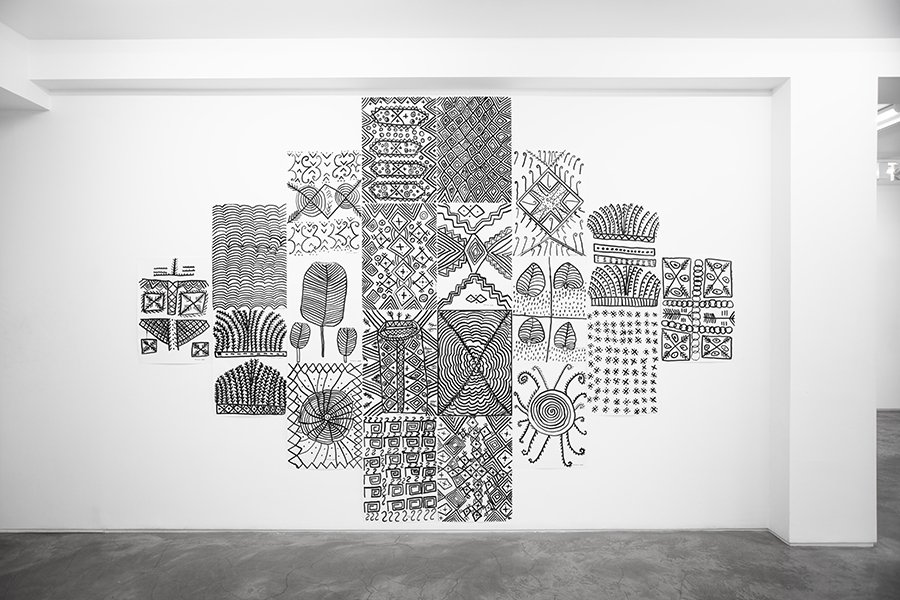
Organically, this relationship became a long-term commitment. Over time, our artistic practices have evolved together. She brings subjects, ways of seeing. We explored how her drawings and my photography could coexist and create equivalences. Trust was built not just through time, but also because Maria Amilbia earns money from our projects. I became a resource for her, as she is for me—but this also creates expectations and difficulties.
What I’ve learned is that responsibility means staying, accepting that our relationship will always be shaped by differences and misunderstanding, and navigating this tension the best we can.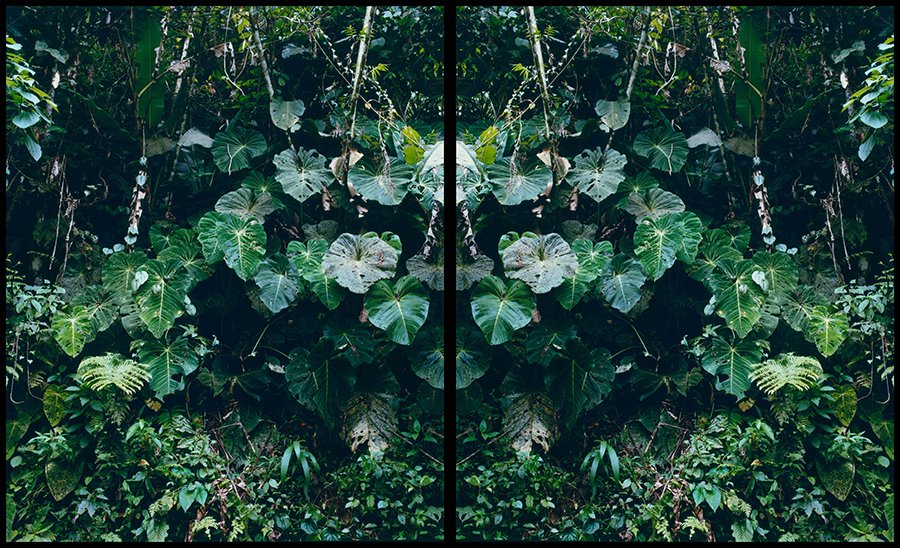
Emaho: In projects such as Nama Bu, Kima, and Adua, the images emerge from a shared visual system rather than a single gaze. How do you navigate authorship when the work is built through dialogue rather than direction?
Karen: I think to share the authorship is above all a protocol that creates equivalence and allows us to share a creative process and to protect ourselves. It’s not a question of who looks or who speaks, but of affirming that without one or the other, this project wouldn’t exist.
Maria Amilbia doesn’t really understand the Western concept of “artist.” For the Emberá, art and culture are the same word, the same thing. Everything is art, everything is culture. There is no separation between the real and fiction, the world and art. Our goal is to create a form together—and perhaps it’s this new form, new displays that provisionally save us from this sordid history: colonialism, white hegemony, and the violence of their present reality.
In the display “No Libero Embera,” Maria Amilbia intervenes drawing in school textbooks that disseminate narratives of white hegemony—science, language, religion. By drawing on these books, she opens a space for imagination and other propositions.
Emaho: Your work often engages with ideas of ritual, healing, and vulnerability without turning them into spectacle. How do you ensure these elements remain grounded in lived experience rather than symbolic abstraction?
Karen: I am not sure that I am not producing symbolic abstractions. I feel those elements have to be a mix of lived experience and symbolic abstraction. I try to avoid spectacle by refusing to create performances or position myself as a bridge or translator. I see a tendency to stage rituals, create altars, or improvise performances around indigenous themes — even when the intention is to decolonize or reclaim, this often reproduces the spectacle we’re trying to critique.
I am more interested in finding a form or displays to relate agencies — des agencements — assemblages where no single element or meaning dominates the narration. It all depends on where you place narration and how you produce it.
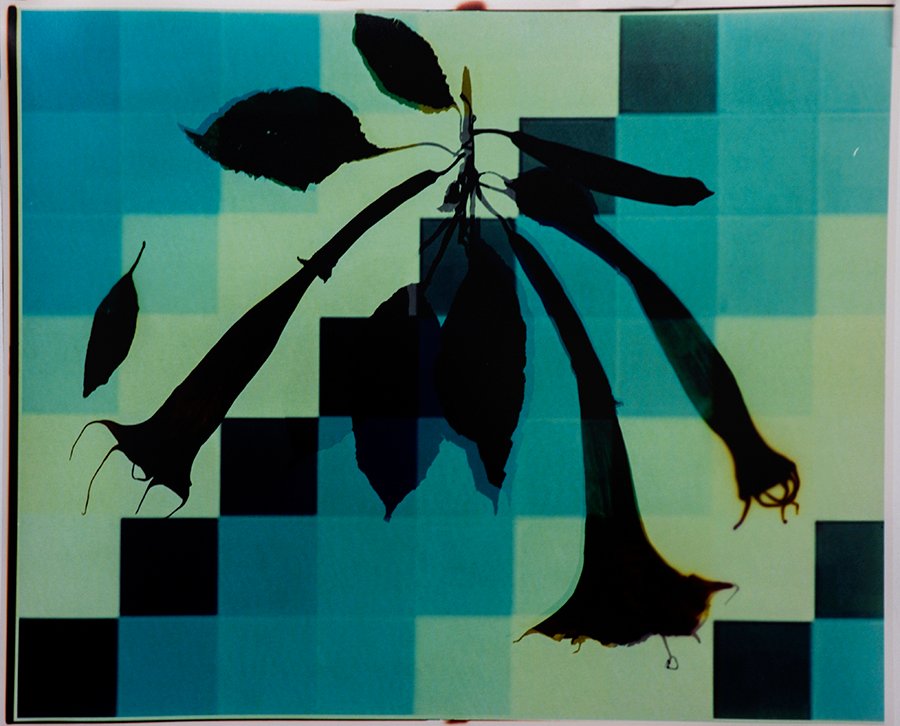
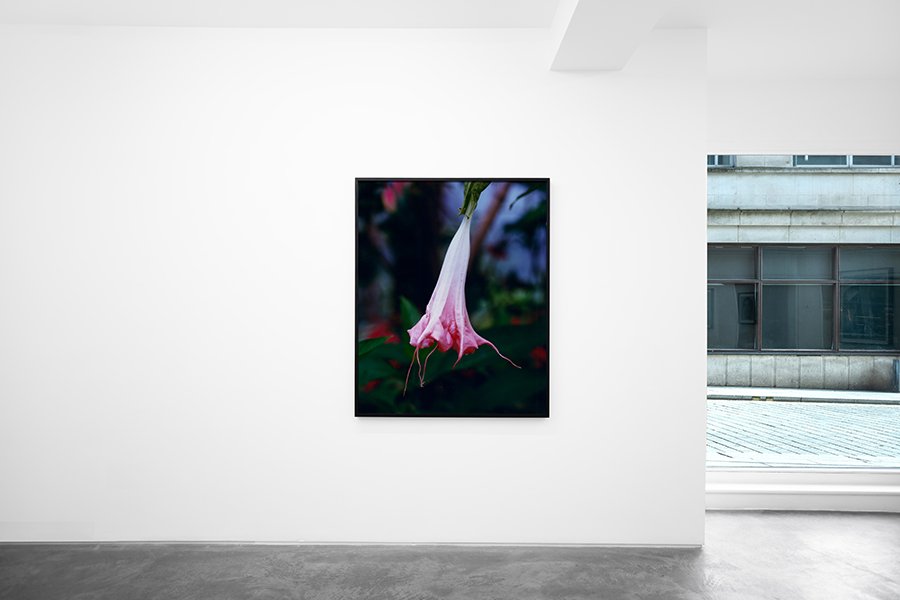
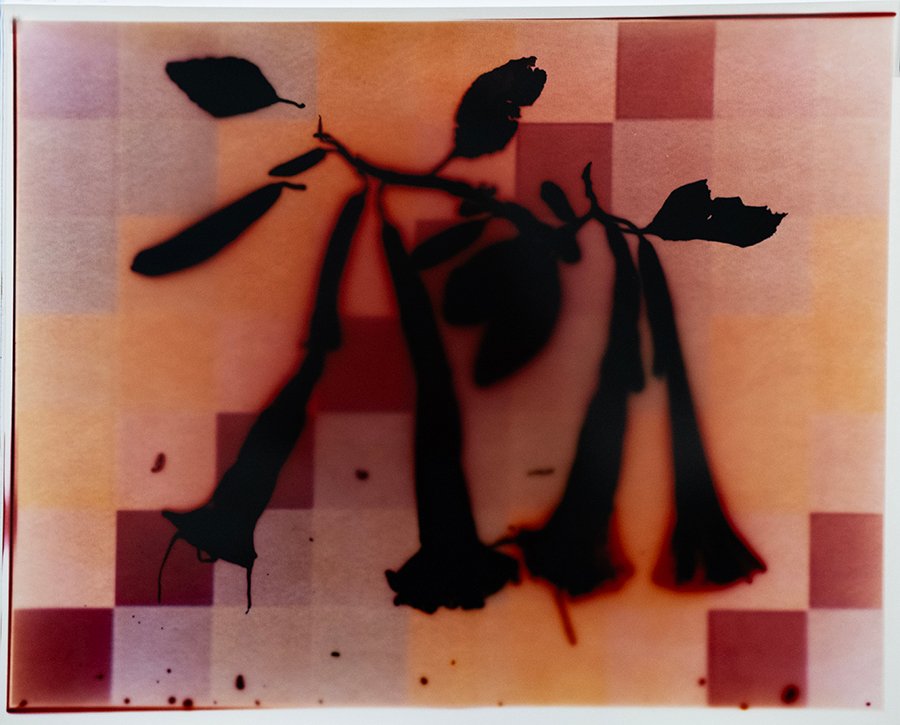
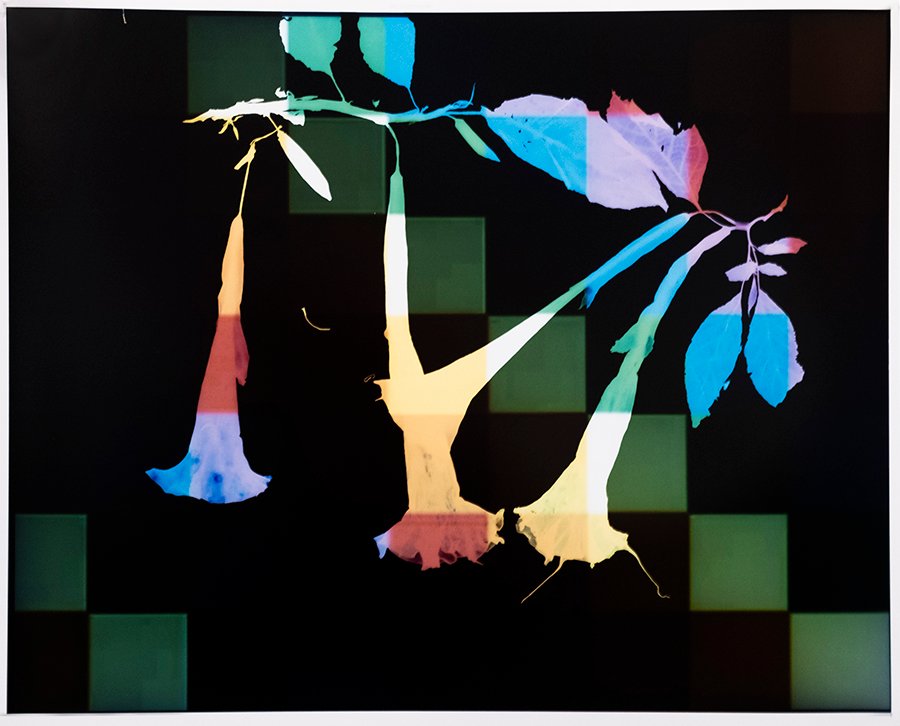
My conversations with María Amílbia brought me to the Benakúa ceremony, where the men of knowledge drink from the Brugmansia flower and travel to the underworld. For the Emberá people, getting drunk equals dreaming — seeing and dreaming are the same experience. What interested me was the experience of “knowing through forgetting”. Why not apply this to interrogate dominant narratives — at least for me, to forget about myself to open myself to others, to be aware of dreaming as a way of seeing?
Working with visionary plants such as the Brugmansia, it’s not about studying plants from academic distance, but establishing relationships that recognize their agency, their capacity to affect and be affected.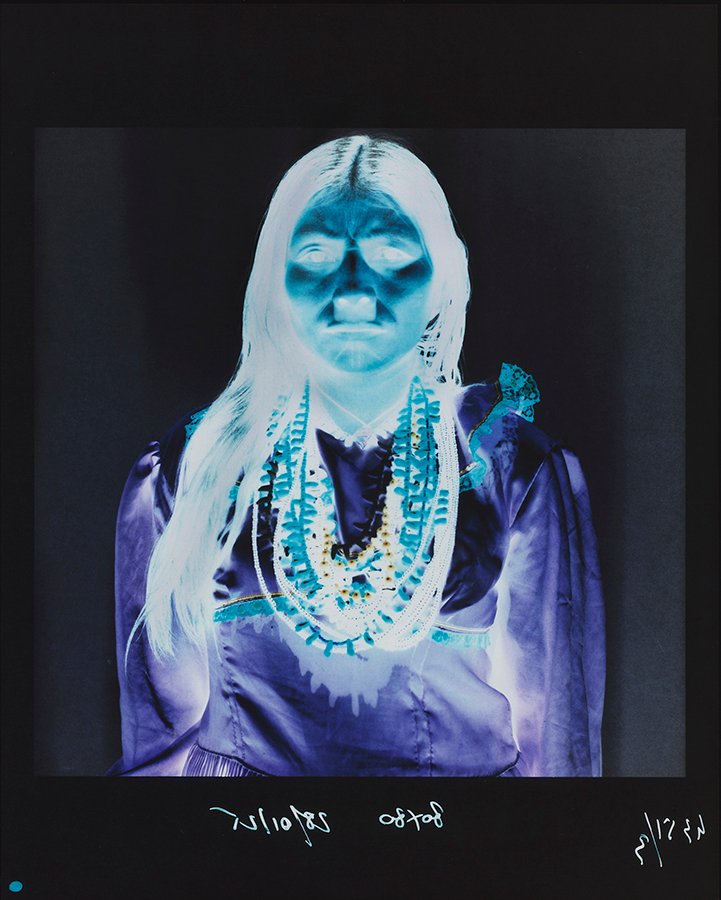
Emaho: Photography has a long colonial history, particularly in relation to Indigenous communities. How consciously do you position your work in dialogue—or tension—with that legacy?
Karen: We cannot deny that photography has been a tool of perversion, establishing hierarchies of power between the photographer and their subjects — and I had to confront that in myself. Photography was born into the colonial project — scientific progress, anthropological practices, Darwin’s theories— it was one of the primary tools for producing visual evidence of racial hierarchy, for making the colonial order look natural and inevitable. It was the beginning of racism mixed with a scientific approach that validated dispossession, extermination, and forced assimilation… When you cannot endure the world you live in, your art becomes political, and you act with consciousness.
Michael Taussig writes about how the West has always needed the figure of the shaman and the wild man — the indigenous healer as a screen for its own fantasies and fears. But this wasn’t just romantic fantasy. It was the ideological infrastructure that made colonialism legible and justifiable. My first attraction to the Emberá, beyond curiosity and guilt, was fed by exactly that — idealized images and exotic narratives. I had to recognize that in myself before I could work against it.
In a context where representation continues to operate as a device of control and classification — what Taussig would call the magic of the state, the need to make everything visible, legible, knowable — I refuse to position myself as a bridge or translator between the Emberá and a Western audience. That position would reproduce the same colonial gesture: the Western subject who explains or gives voice to Indigenous people. Instead, I work in tension with this legacy through shared authorship with María Amílbia — affirming that without one or the other, this work wouldn’t exist. It’s not about documenting the Emberá people for anthropologists or making their reality legible to the West. It’s about creating equivalence and mutual protection through the work itself, and creating spaces where mystery and opacity can resist appropriation.
Perhaps, as Patrick Chamoiseau says, what we are trying to do is simply attempt the encounter that never happened — la rencontre qui n’a jamais eu lieu. Not to repair history. Not to reconcile. Just to create the conditions for a meeting that was structurally prevented. We don’t know if we succeed. But that is what we are trying.
Emaho: In recent exhibitions such as Adua, you’ve explored analogue processes and non-traditional uses of the photographic negative. What does working against photographic “clarity” allow you to express that conventional image-making does not?
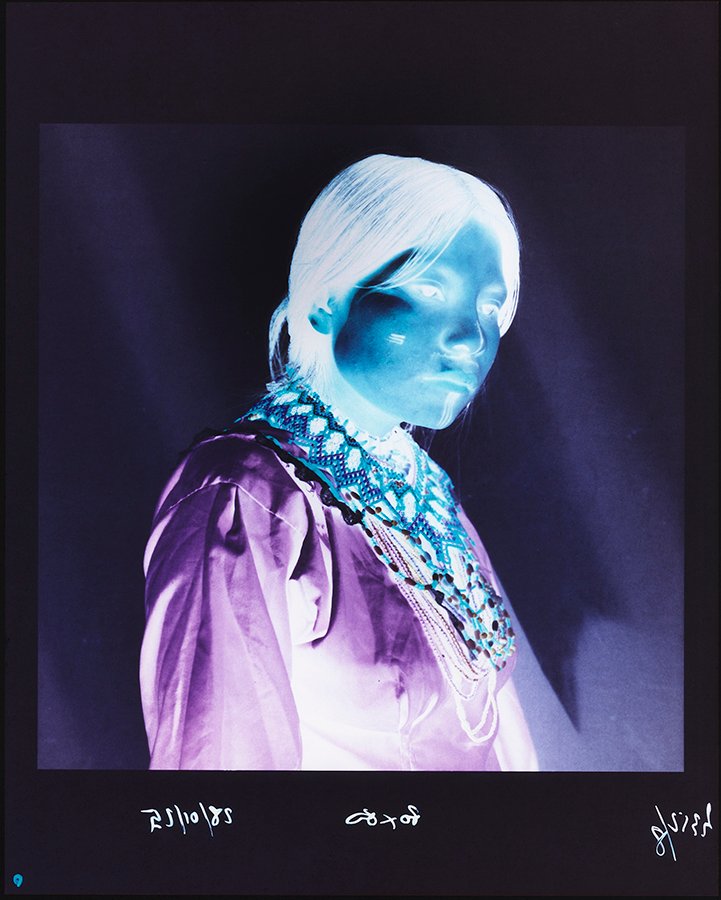
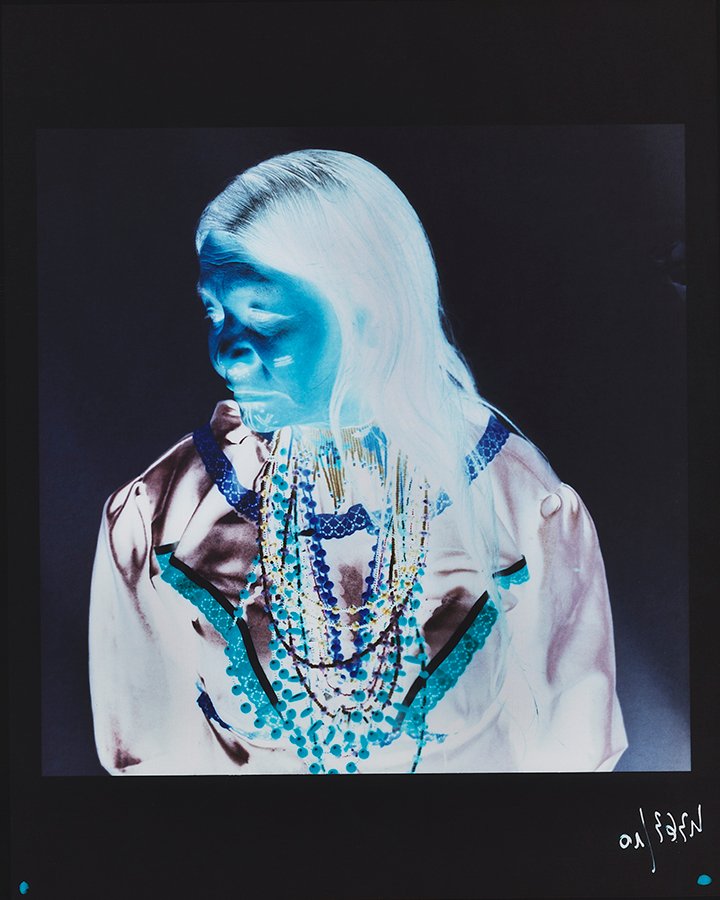
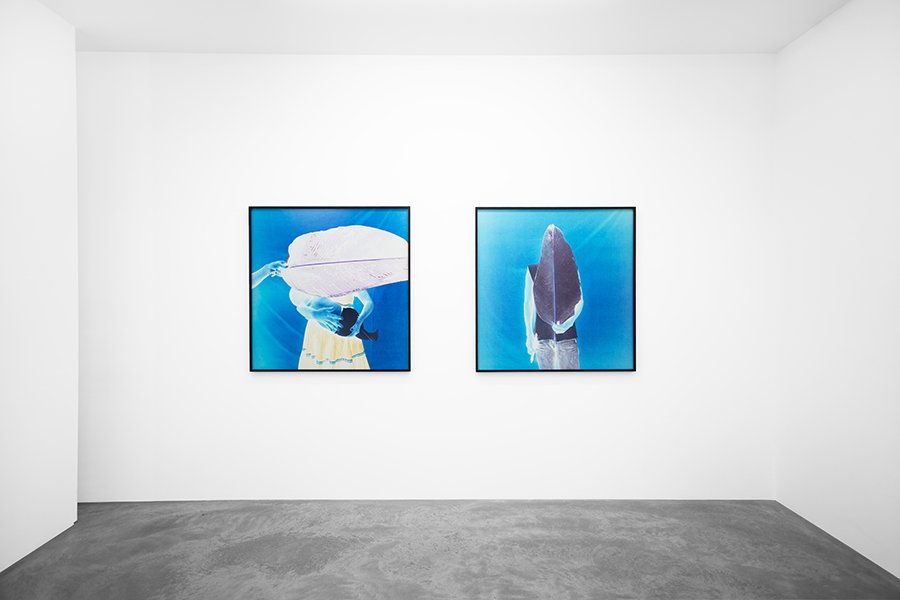
Karen: I had shot a series of 40 portraits of the Emberá community in Bogotá in 2012. Mostly women. They are 6×6, well-produced, and classical portraits, but I never showed them properly. I felt they weren’t challenging anything.
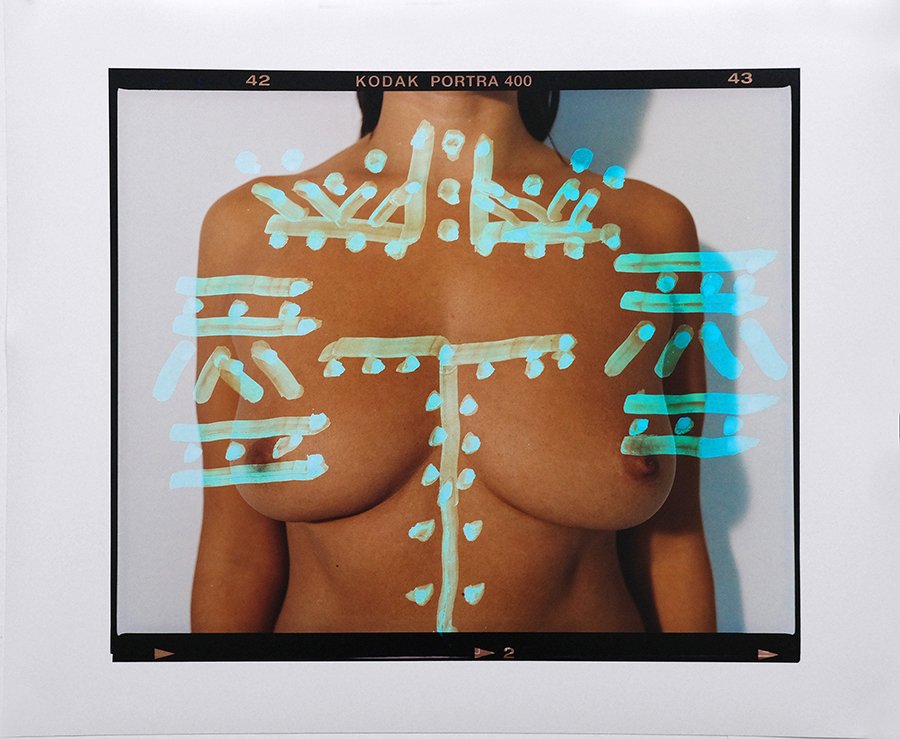
So for my last show in London, Adua, I decided to reverse the process and present part of those portraits — using a print as a positive to project a negative image on the enlarger in the darkroom.
I found beauty and poetry in that process. The negative offers you millions of interpretations to reveal it. It’s equivocal. There is no single perspective, rather a multitude of perspectives. And even if you can feel the shape of a face or the body of someone, you cannot recognize them or identify them at 100%. There is always doubt that remains.
Further, working with photograms inverts the usual representational logic — the familiar becomes strange. These aren’t representations but traces, luminous imprints created through physical contact between plant and photosensitive surface.
Through this perspective, I wanted to propose images that challenge the idea of a single interpretation of an image or an absolute truth. Adua in Embera means I don’t know.
Emaho: When your work enters institutional or gallery spaces in Europe and elsewhere, how do you think about translation—both cultural and emotional—for audiences encountering these narratives for the first time?
Karen: By insisting on translating everything, on understanding everything, we have imposed power over others. At a certain point, the demand for transparency becomes violence. Édouard Glissant talks about the right to opacity — le droit à l’opacité — and I want to preserve that. Not everything needs to be made legible for an audience. Not everything should be.
Perhaps being in a state of misunderstanding is productive. It brings questions, doubts — and that helps us remain with the work rather than consume it and move on.
And if there is something that should remain without translation, it’s emotion. Emotion is about interconnection, being connected with an instant feeling. It’s not about vocabulary, transcription, or translation. The body knows and feels things that language cannot always convey. What matters is not that an audience understands the Emberá cosmology, but that they feel something in the presence of the work — a recognition without words.
Emaho: Visibility can be both empowering and dangerous. How do you decide what should be shown, what should remain private, and what belongs only within the community itself?
Karen: This body of work is a fiction, so this question becomes irrelevant in our process. It is not a documentary — it doesn’t claim to represent the Emberá community as they “really are.” So it’s not about revealing but constructing something together, a new story.
Even anthropology, even documentary, is fiction. Subjectivity is in every narrative. María Amílbia naturally keeps and doesn’t reveal everything to me. I am aware that many things belong to the Emberá, and I don’t know about them.
Sometimes she creates a fiction herself, and it’s a way to protect herself and her people. Most people believe in those fictions. The white man has always believed all the tales they were told, but never asked himself if it was reality or pure fiction.
Emaho: Rather than offering answers, your work seems to open questions around identity, care, and coexistence. What do you hope viewers carry with them after spending time with your images?
Karen: I don’t want viewers to leave with answers. I want them to leave with questions, maybe even with a misunderstanding. I want the work to provoke uncertainty, confusion, a productive state of not-knowing that keeps them asking.
Perhaps questions are the answers we are looking for. At a time when everything demands to be immediately legible, when technology promises total clarity and artificial intelligence claims to explain the world, uncertainty is a form of resistance. What we need isn’t more answers, but the courage to remain in the question and to challenge them.
And if we have to evoke questions, for me, those would be the ones my relationship with María Amílbia keeps on: How do we build trust with one another? How do we sustain collaboration over time? How do we nurture compassion across differences?
Emaho: As your practice continues to evolve, what questions—conceptual, political, or personal—are you most urgently interested in exploring through photography and collaborative creation?
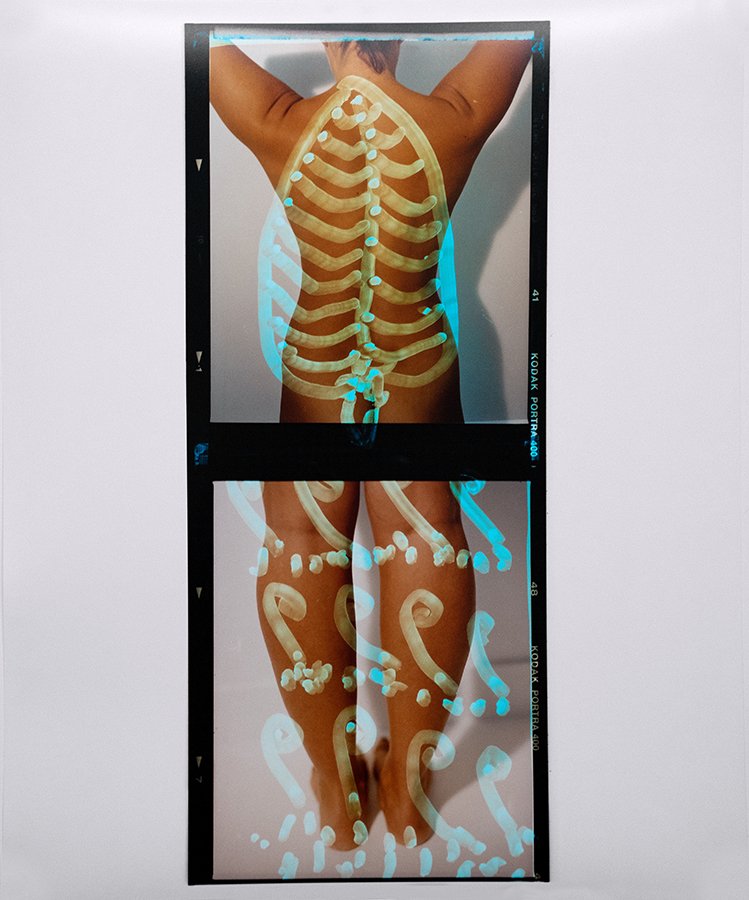
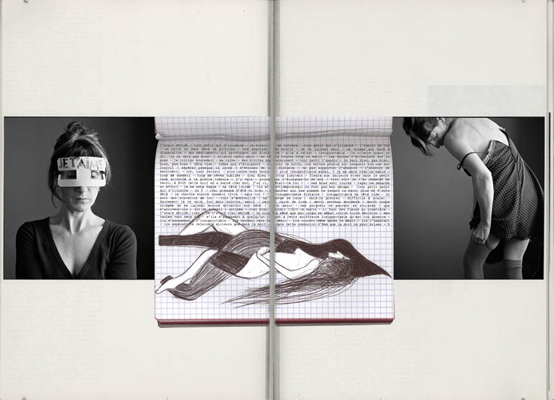
Karen: I’m interested in how we can interrogate representations through the medium of photography itself — how photography can create counter-narratives about femininity and the margins, how the body can question representations, and how we can find equivalences with the subjects we collaborate with.
I think my questions remain the same, but I am more interested in the search for new forms to explore them.
Karen Paulina Biswell’s Website