The English Islamophobia and 2041’s Burqa Fetish

A burqa or a burka, also known as a chadaree in Afghanistan or a paranja in Central Asia, is an enveloping outer garment which covers the body and the face that is worn by women in some Islamic traditions. The Arab version of the burqa is called the boshiya, and it is usually black.

England – 

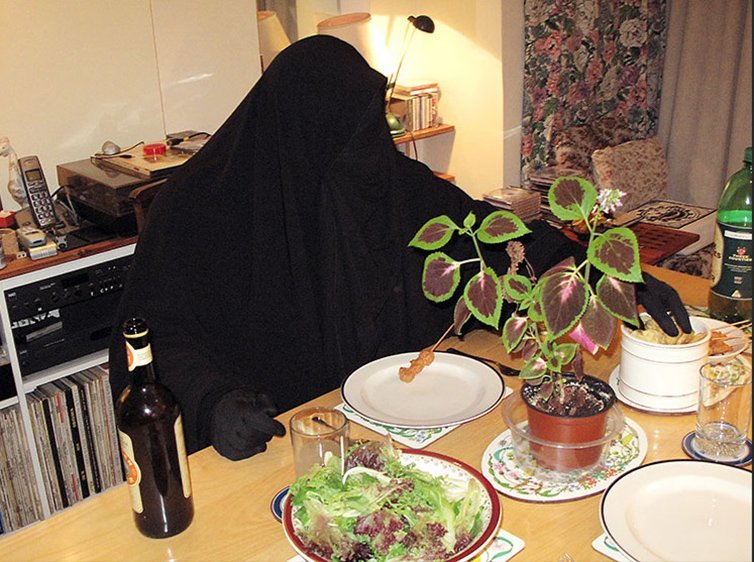
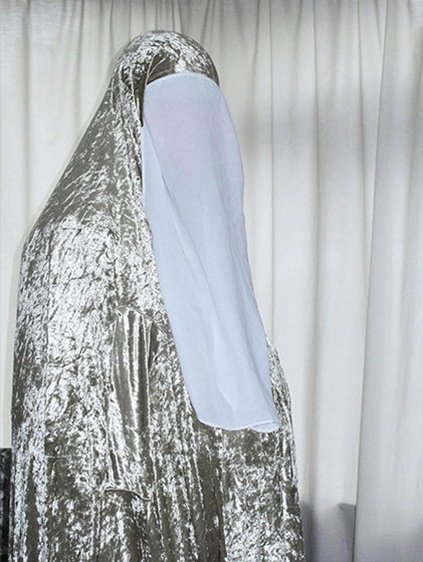
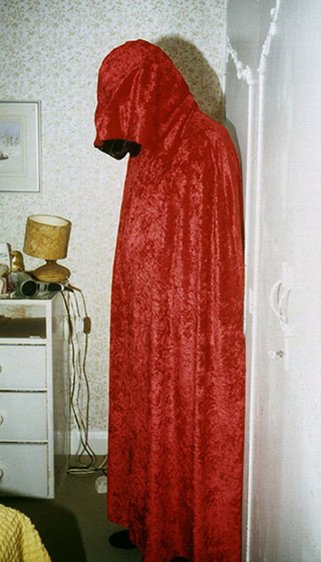
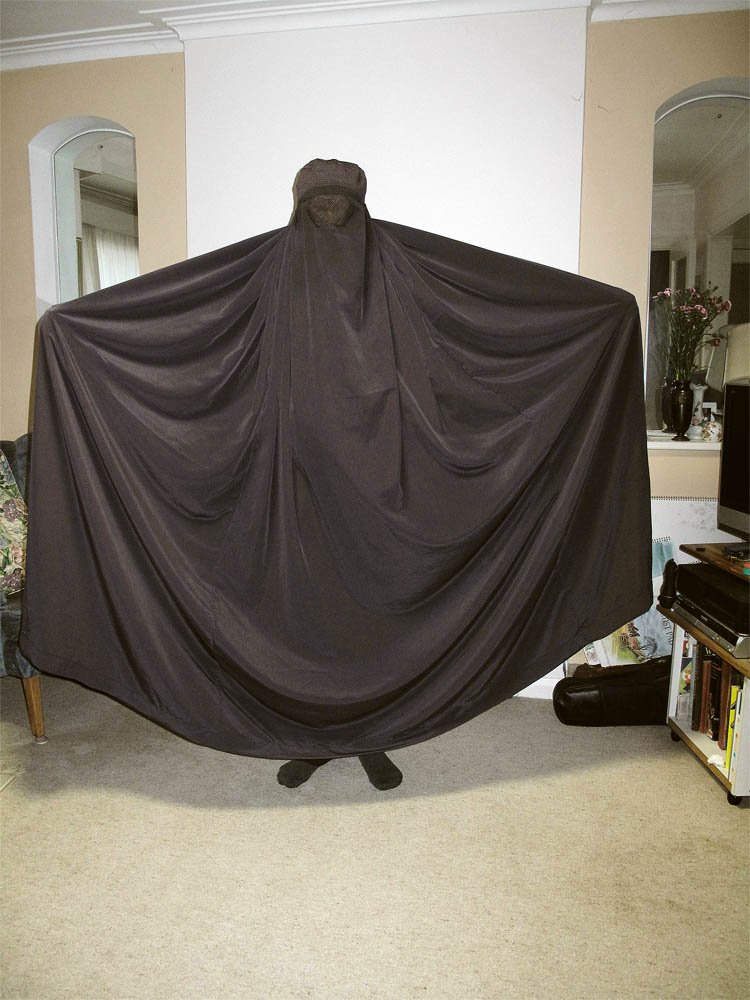
2041’ is an eponymous collection of self-portraits, concealed beneath various forms of burqa or niqab. Using the camera to articulate a passion he has secretly indulged for decades, the artist appears dozens of times without ever disclosing his image or identity.

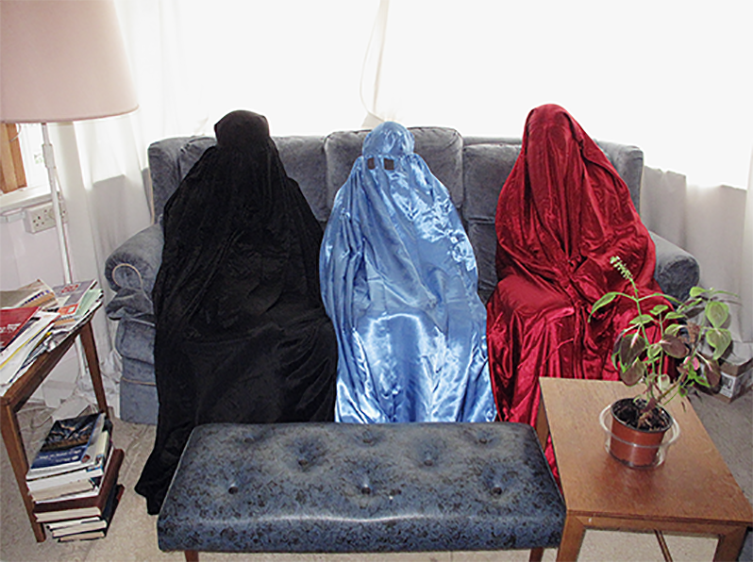
Long before 2041 bought his first real burqa online, he began crafting his own versions from draped and folded fabrics in a rich array of textures and colours. By photographing himself in these costumes – ranging from the traditional to the theatrical – he adopts multiple personas, but always remains anonymous.

1301_6396724631_o-b

2041’s first memories of the pleasure of being enveloped in swathes of cloth are from his days as a choirboy. As an adult, he developed an interest in more complete coverings, but it was only ten years ago that he first bought a computer and found an online community that shares his passion.

The photographs in 2041 were selected from thousands that he made to share with these fellow enthusiasts. Anonymised by both the internet and the veil, these men and women, Christian, Muslim and without religion, post their pictures and thoughts from locations spanning Western Europe and the Gulf States.

For many, including Muslim men, the practice is driven by what one Christian woman describes as her ‘insatiable desire for extreme modesty.’ What almost all seem to crave is transcendence of the physical self – or at least being judged on the physical – coupled with the excitement of observing the world unseen, safely cocooned in luxuriant fabrics. This is the burqa seen in a celebratory light.

Photography

Related Posts

Juan Cristóbal Cobo: “I’m interested in discovering new ways of translating the everyday, in finding poetry in seemingly insignificant moments, and in allowing photography to surprise me again”

Colombian photographer Juan Cristóbal Cobo speaks about finding poetry in everyday life, transforming seemingly insignificant moments into powerful visual stories. ...

Cristina De Middel Nigeria

Cristina de Middel: ‘This Is What Hatred Did’ – The Nigerian Escapade

Nigeria –  In the 1960s, a five-year-old Nigerian child’s village was attacked by soldiers. His mother had left him home ...

Pierfrancesco Celada: Hitoride (Literally: By yourself, Alone)

Japan – During a brief visit to Japan in 2009 I was soon fascinated by the isolation and loneliness I ...

Adam Lach: Stigma

Poland –  “STIGMA” tells the story of 60-person family of Romanian Romas living in the encampment in Wroclaw. This is ...

Thomas Sauvin : Silvermine

China – Silvermine is a set of five photo albums each containing 20 prints. The negatives were salvaged from a ...

Manik Katyal on Momo Okabe “Bible”

Japan –  “With a crimson red cover, Bible for me is a very dream-like journey of Japanese photographer  Photography feature ...

The Forgotten Cowboys – John Ferguson

U.S.A. – As a ten-year-old boy playing cowboys with friends at school in England, I was never allowed to be ...

Yaakov Israel: “The Quest for the Man on The White Donkey” – Powerful Photos of Israel/Palestine

Israel – As per the Orthodox Jewish tradition, the Messiah (the Prophet) will arrive riding on a white donkey. A ...

Tsutomu Yamagata: Thirteen Orphans

Japan –  One day an old man in a plain suit sat next to me by a pond in a ...