Emaho: You earned a degree from the University of Benin in 1997 and later a Master’s in Public Health from Cambridge in 2005, training in a field with no direct link to curating or the arts, before founding the African Artists’ Foundation in 2007. What did a public health background actually give you as a curator that a traditional art history or curatorial studies degree wouldn’t have, and was there a specific moment you decided the arts, not public health, were where you needed to build your life’s work?
Azu Nwagbogu: Public health taught me to think about the collective before the individual. Epidemiology is the study of patterns: how something moves through a population, what conditions allow it to spread or be contained, and who is missing from the data. When I came to the arts I found I was asking the same questions of images and institutions. Who has access? Who is counted? Where does the resource actually land? A curatorial studies degree would have given me a canon to respond to. Public health gave me a method for looking at systems, and an impatience with interventions that look good in a report but change nothing on the ground
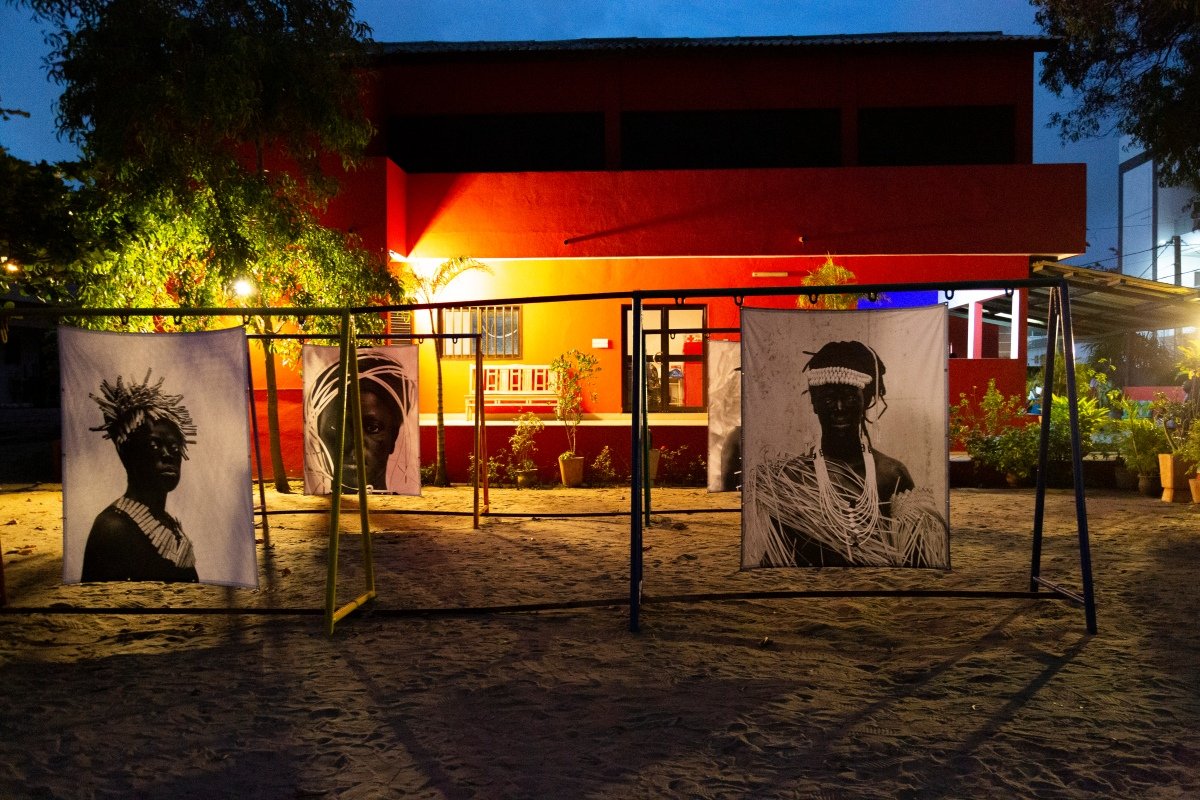
It also gave me respect for the community as the unit of care. You cannot heal a population from a conference room in Geneva or London, and I would say the same about culture. The work has to happen where people live. That conviction sits underneath everything we have done, from LagosPhoto putting photographs on the streets of Lagos to Dig Where You Stand.
As for the decision, it was less a single epiphany than a slow recognition that the questions I cared most about, around dignity, representation and who gets to tell the story of a people, were being answered most honestly by artists. Health statistics could tell you how a community was dying. Artists were telling us how it was living, what it remembered and what it imagined. I wanted to build where the imagination was, because I believe imagination is itself a form of public health.
Emaho: You founded Lagos Photo Festival in 2010 under the African Artists’ Foundation, and it’s grown into the largest international photography festival in Nigeria, drawing over 20,000 visitors annually. Announcing its recent 15th edition, you made the decision to shift LagosPhoto from an annual to a biennial event, saying you wanted to allow for a deeper, more inclusive experience for artists and audiences. What did fifteen straight years of annual programming actually teach you about the cost of that pace, and was there a specific edition where you first felt the format itself was working against the work?
Azu Nwagbogu: The truth is the urgency of the medium of photography is ideally suited to an annual festival for maximal thematic engagement in terms of exhibition making. But there is something to be said for the decelerated approach that allows LagosPhoto support artists, photographers and storytellers in the off year through other means of artistic and curatorial engagement.
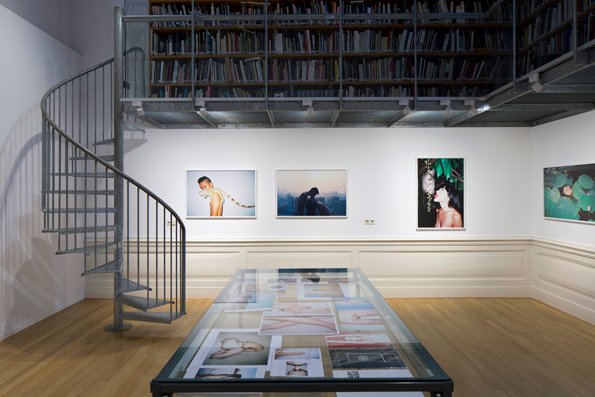
To be candid, there was no single edition where it broke. Each edition had its singularity and for different reasons, their defining moment for what it meant for LagosPhoto. The first edition is unique but also for me the 2013 edition will always stand out because of the circumstances surrounding that particular edition and how the team rallied to pull it off. But the entire journey has been cumulative aggression of learning and evolution. Fifteen years at that pace means you are always building the next festival while the current one is still on the walls, and the first thing that suffers is the relationship with the artist. It is very emotionally tasking and requires rigorous research to really be at pace or slightly ahead of the curve. The pandemic years were for all of us a steep learning curve and we did our best to make it work despite the restrictions. When we could not gather, we had to ask what the festival was actually for beyond the opening night, and the answer was the long relationships, the mentorship, the archive, the conversations that continue after the prints come down. The biennial format protects that. Incarceration, our 2025 edition across Lagos and Ibadan, was the point of transition, and I wanted what comes next to have room to breathe
Emaho: You served as Interim Director and Head Curator of the Zeitz Museum of Contemporary Art Africa in Cape Town from 2018 to 2019, taking on one of the continent’s most prominent museum roles, and while there you curated a Kentridge exhibition being shown in South Africa for the first time. Stepping into an interim leadership role at an institution that size, rather than a purely curatorial position, must have demanded a completely different set of instincts. What did running a major museum, even temporarily, teach you about institutional power that founding your own organization in Lagos hadn’t?
Azu Nwagbogu: The one thing I can say that surprised me and I have taken from that experience is that not everyone is on the same agenda in a large institution. You would think, there is a board, a team, and many moving parts and that we are all rowing in the same direction and have our vision and goals aligned but in a massive institution it is quixotic to assume thus. Diverse interests, and various agendas need to be aligned for the institution to really grow. The label on the tin and the content need to be the same but oftimes this is not the case.
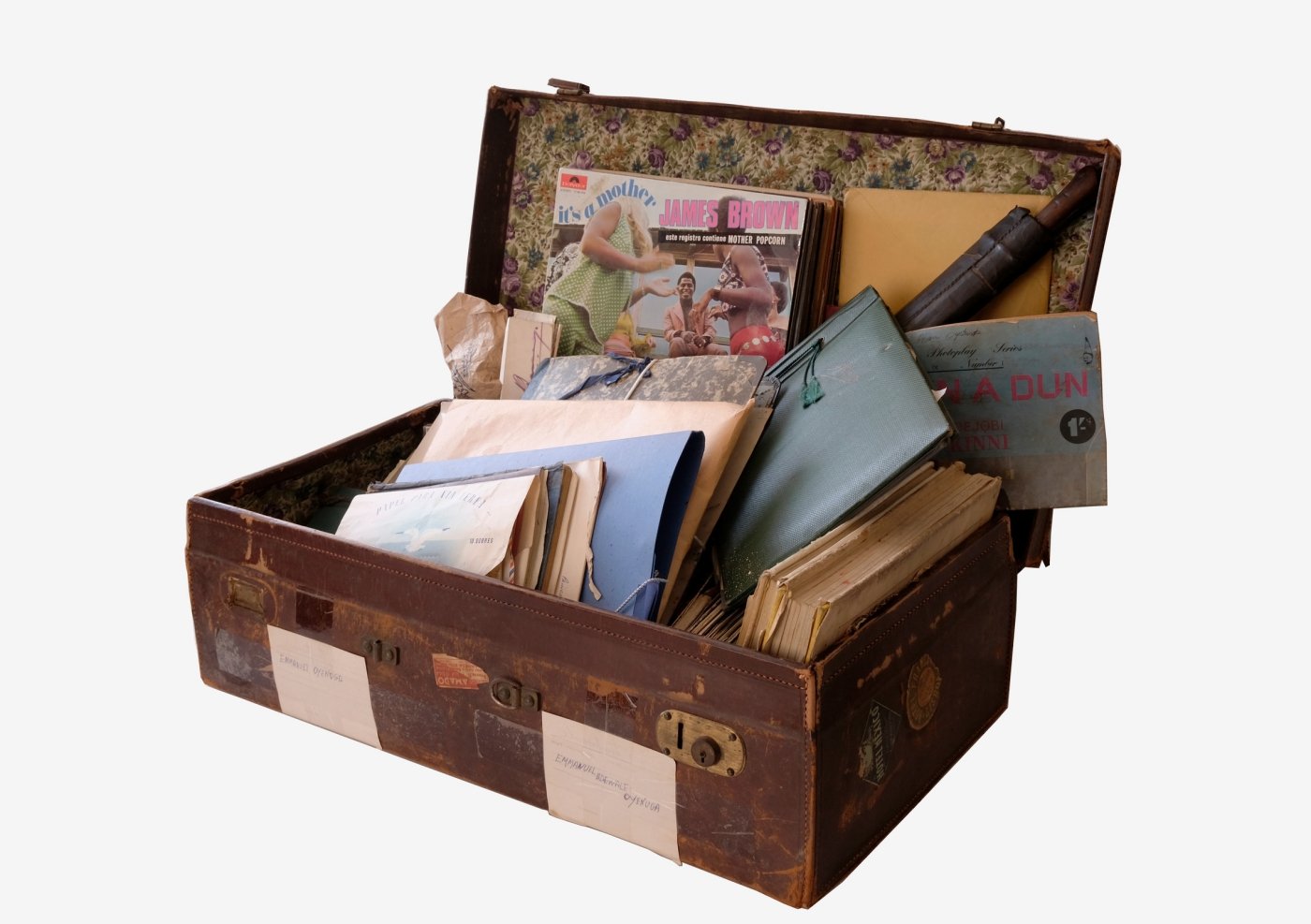
Emaho: Your restitution project “Searching For Prince Adewale Oyenuga” traced a specific object’s journey between Malaga and Lagos, part of a broader practice you’ve described as engaging questions of decolonization, restitution, and repatriation, both tangible and symbolic. What did following one specific object’s actual physical journey teach you about restitution as a lived process, rather than the more abstract, policy-level conversation it often becomes in institutional settings?
Azu Nwagbogu: I consider one of the hazards of our age to be the moral fascism that dominates public discourse and stifles meaningful engagement. We are a society in decay because we lack the moral and intellectual courage to have meaningful engagement, (IE done with the intention to learn and not necessarily to win an argument) yet remain satisfied with tearing down those who do or try to act.
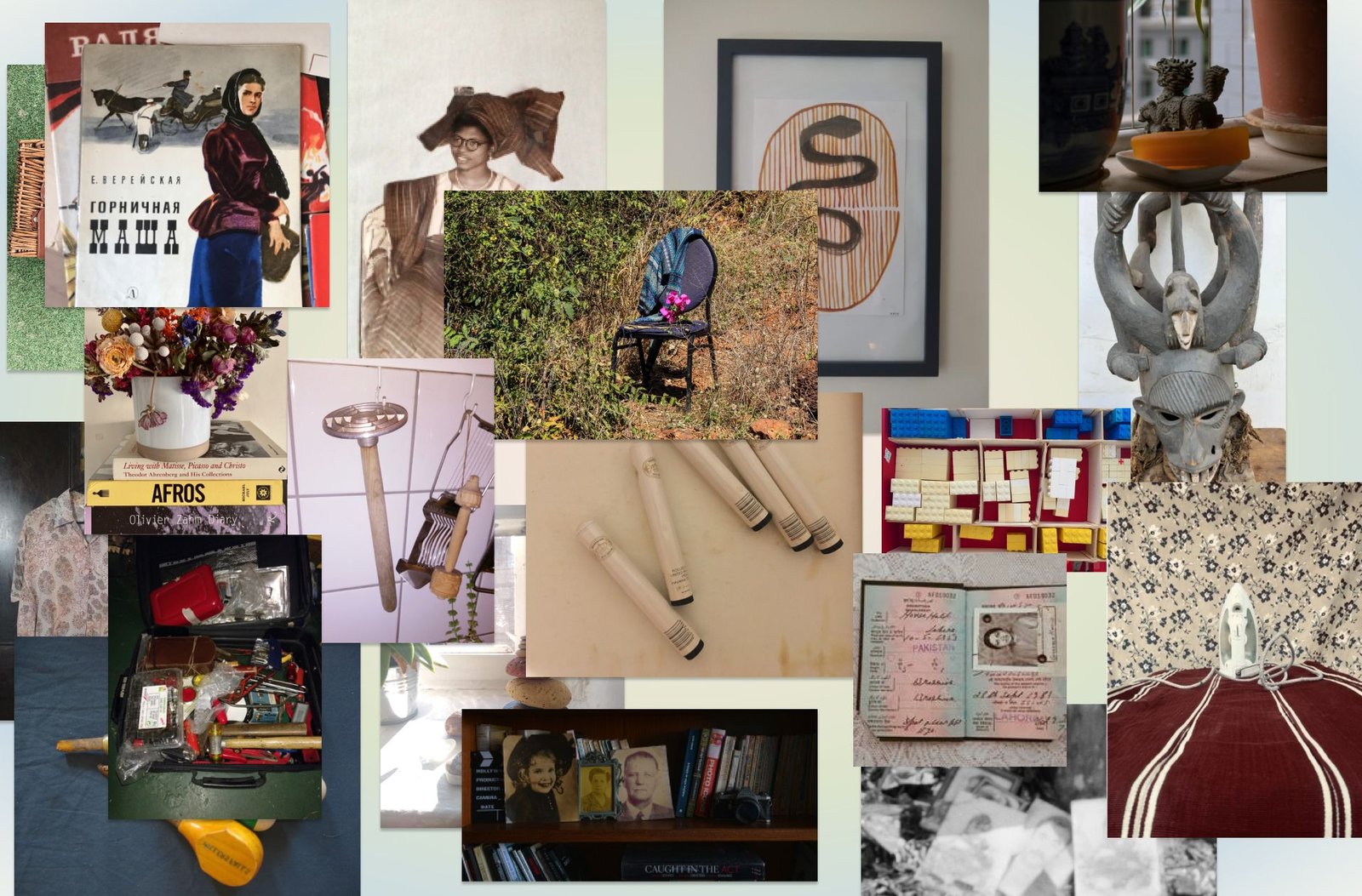
Through discussions about restitution with museums—and, in the case of what became the project Searching for Prince Adewale Oyenuga, with individuals—I have come to understand that effective and meaningful transfers require both ethical and intellectual courage. Ana Briongos demonstrated, on a micro level, the importance of both forms of courage when she sought me out and worked with conviction to find her long-lost friend, Prince Adewale Oyenuga, (a Nigerian artist who was studying at the time in Barcelona) in order to fulfil her dying mother’s wish to return the suitcase. The project unearthed some of the most precious findings: correspondence between Prince Oyenuga and his friends and family during the time of the Nigeria civil war also known as the Biafran War, and artworks, drawings, photographs and artefacts. It’s a treasure trove of knowledge and the project was one of epistemic return whereby all who participated demonstrated incredible endurance, and care for the project.
At the policy level, what we see from politicians is often a series of gestural and ultimately meaningless acts that do little to serve the communities deprived of their cultural artefacts. Politicians who uphold colonial systems are promoted and patted on the back for “doing the right thing,” while the deeper conscience remains unmoved.
Emaho: Your project “Dig Where You Stand, From Coast to Coast” launched at Ibrahim Mahama’s Savannah Centre for Contemporary Art in Tamale, Ghana, offering what you’ve described as a new model for institutional building and engagement. What does “dig where you stand” actually mean to you as a working principle, and how does building an institution in Tamale differ in practice from the work you’ve spent nearly two decades doing in Lagos?
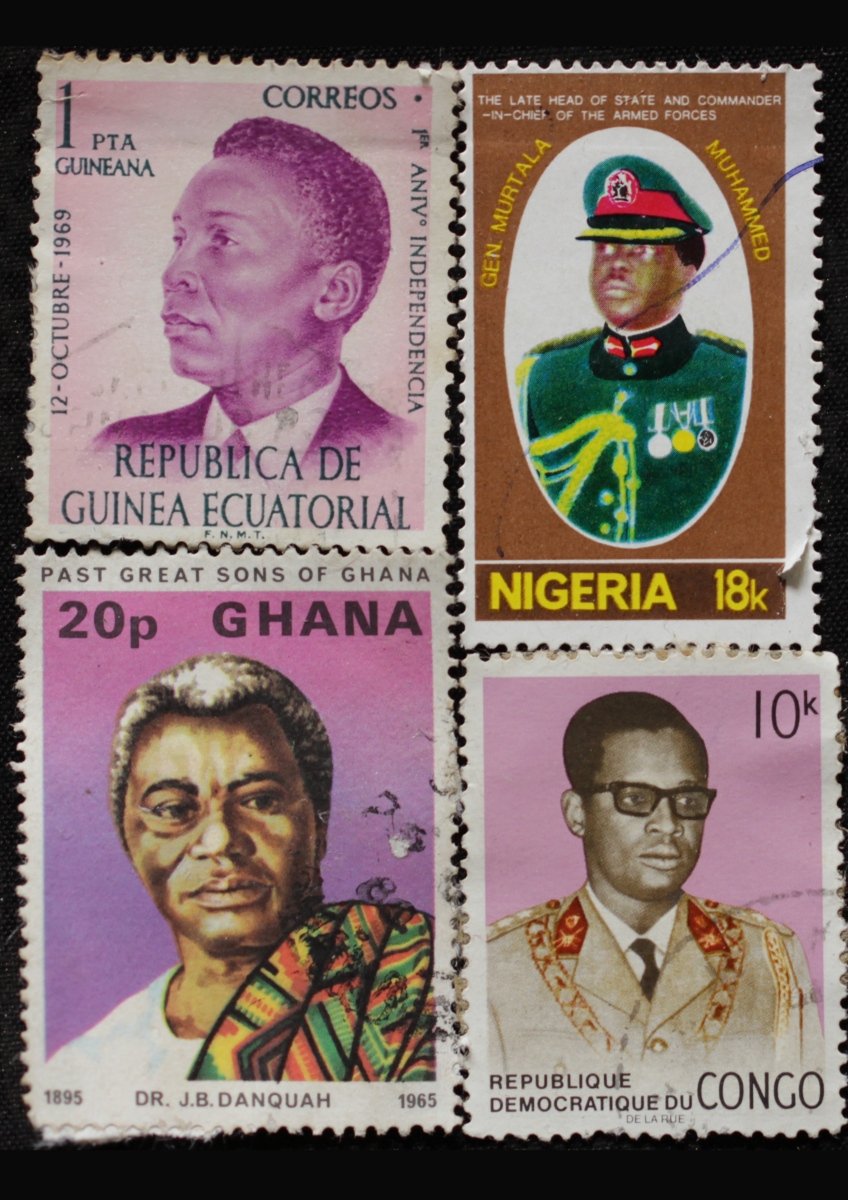
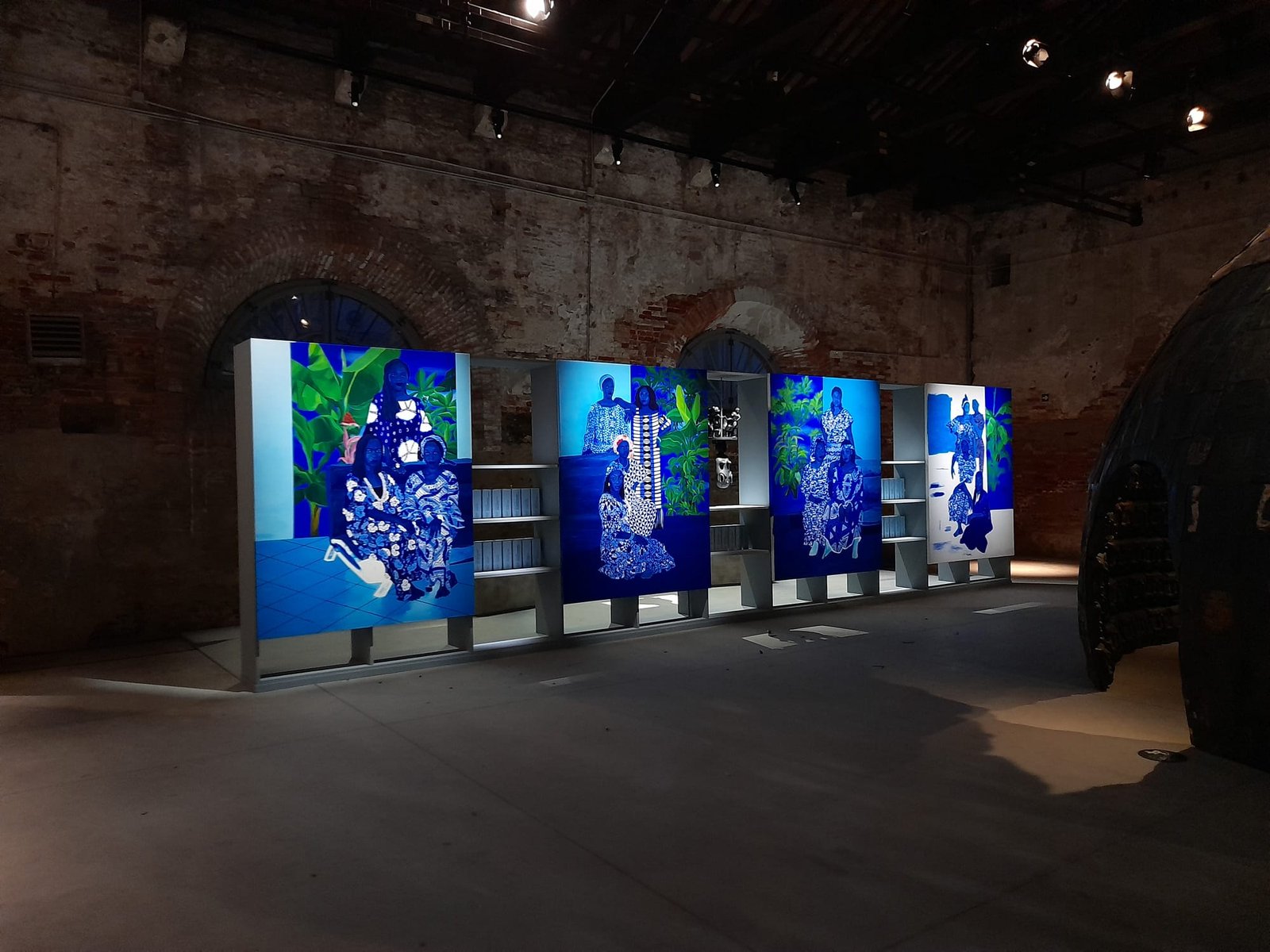
Azu Nwagbogu: t’s a great question. As the title suggests, Dig Where You Stand is about the urgency of working with the tools available to us, wherever we are, in order to write our own histories. The project is inspired by Sven Lindqvist’s 1978 text Gräv där du står, which drew on Maoist ideas about enabling working-class people to write their own histories.[svenlindqvist +1] For us, however, the project goes beyond that. We wanted to launch it in Ghana because the country is, in many ways, a home of the Pan-African movement—even though Kwame Nkrumah’s own hero was Dr Nnamdi Azikiwe, another committed Pan-Africanist. We also wanted to launch it at Mahama’s SCCA, a new kind of cultural and artistic institution that refuses to be constrained by conventional institutional modes of being.
In practice, our aim is to facilitate the circulation and return of knowledge across Africa and its diasporas, without being bound by twentieth-century notions of museology. The project is a concept I conceived, but also a toolkit through which young curators can develop their curatorial visions and voices. The exhibition travels from one location or nation to the next, and at each location we engage a new curator from the previous country. I launched the project in Ghana; it subsequently travelled to Lomé, with Rosemary Esinam Damalie as curator; then to Benin, with Delali Ayivi; and to Lagos, where Nkhensani Mkhari is curating. In Dakar, Olufemi Hinson is curating alongside Ken Aicha.
The methodology has several important strengths:
1. It enables local communities across Africa to engage with the work of artists they might otherwise encounter only in Europe or at international biennials.
2. It allows young curators to learn by doing—to curate at the deep end, navigating the logistical obstacles and challenges of the process while developing their own distinctive approaches.
3. Because the selected curators come from the previous location, the project encourages a cross-pollination of ideas and a continual reworking of the process.
4. The fourth aim addresses the final part of your question. Institutions on the continent often compete for the same grants, opportunities, and exposure. Through Dig Where You Stand, we support these institutions while learning from one another. The project is grounded in a generosity of exchange rather than a hierarchy of expertise.
Emaho: You’ve said in an earlier conversation that you’re interested in evolving new forms of solidarity that move beyond what you called the largely performative contemporary practice of decolonization. That’s a fairly direct critique of language and frameworks the art world itself has widely embraced, including work adjacent to your own. What do you think most institutions get wrong when they claim to be doing decolonial work, and what would doing it seriously actually require of them instead?
Azu Nwagbogu: Again, it comes down to moral and intellectual courage. There is the ease of the performative but I am more interested in the risks involved in going deeper.
Most institutions treat decolonisation as a box to be ticked rather than a practice. It becomes a season of programming, a panel, a wall text, a restitution announcement timed for the press. Meanwhile the structures that matter stay exactly as they were: who sits on the board, who holds the budget, who decides what is acquired, who owns the archive, who is paid and how fairly. To return to what I said about museums, the label on the tin and the content are not the same.
Doing it seriously means giving something up. Ceding authorship, sharing budgets, committing to partnerships measured in decades rather than exhibition cycles, and accepting that the people you work with may set terms you would not have chosen. It also means moving from performance to action, and from trauma to growth. I am tired of exhibitions that rehearse our wounds for audiences who leave feeling virtuous. What interests me is what we build next, and that means building our own table: networks across Africa and the Global Majority that are not routed through the West for validation. That takes risk, and risk is exactly what the performative version is designed to avoid
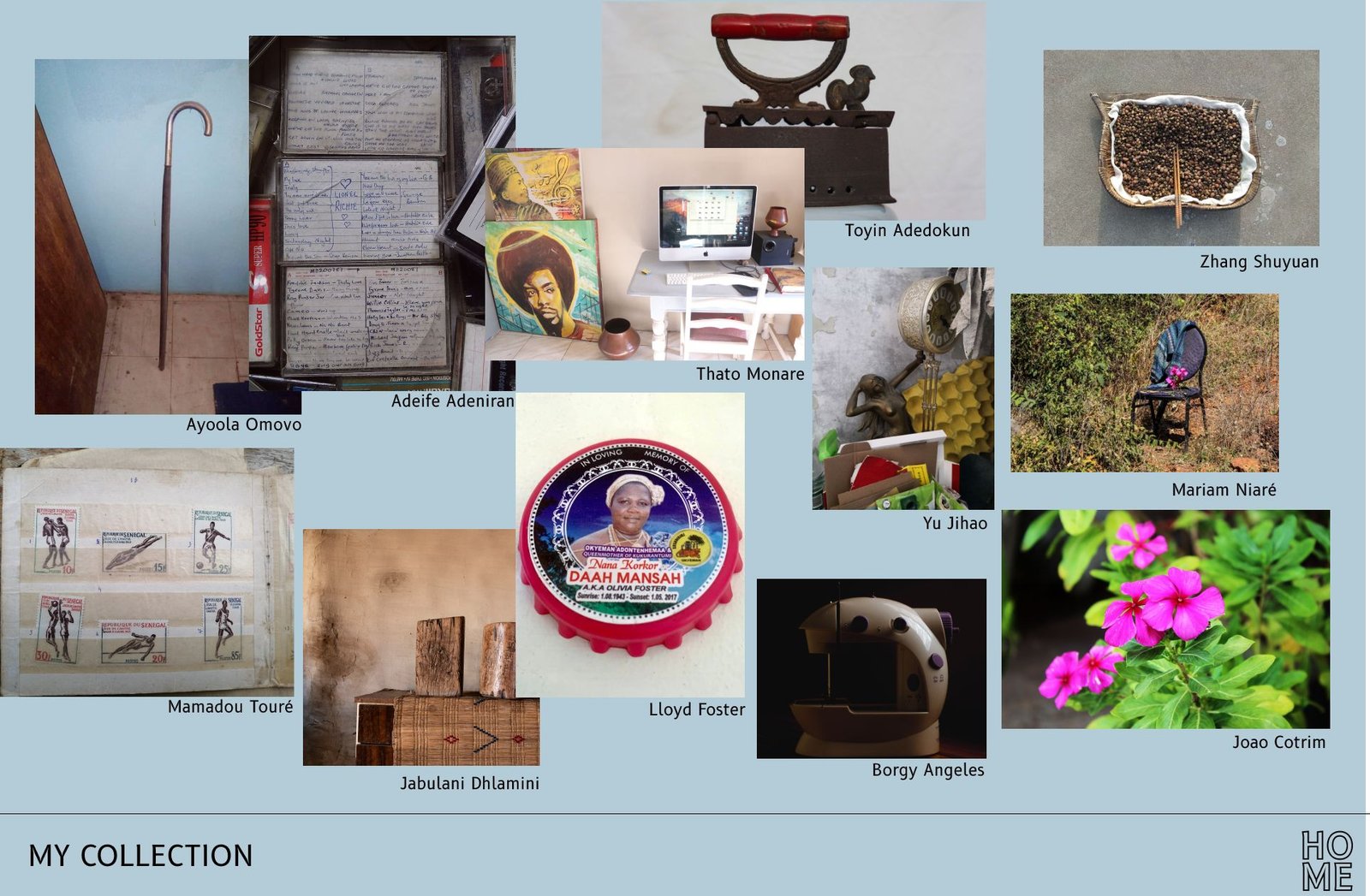
Emaho: In 2023, National Geographic named you an Explorer at Large, a title given to a very small number of global changemakers, supporting your storytelling work across Africa and beyond. Institutional recognition of that scale often comes with implicit expectations about how a person should now represent themselves publicly. Has that title changed how freely you feel you can take curatorial risks, or has it simply amplified reach without changing the actual nature of the work?
Azu Nwagbogu: I’ve been fortunate to work with several organisations over the years, but my collaboration with the National Geographic Society has been singular. Its archival resources are readily available to researchers, and every gathering with fellow Explorers reminds me what a nerd I am—and how much I enjoy being one. Has it enabled me to take more risks? To answer you directly: no. I have always regarded—and guarded—my agency as a curator and thinker as sacrosanct.
What NGS has done, on a personal level, is make me feel less alone. If anything, it has given me licence. The best of National Geographic has always been curiosity without apology: the willingness to go somewhere and be changed by it. That is very close to what I think curating should be.
Recognition becomes a cage the moment you start curating to protect the title, so I would rather spend it than guard it. What has changed is the company I keep. NGS brings me into rooms with scientists, ocean researchers, archaeologists, and conservationists, and those conversations push my curatorial work outward—beyond the art world’s habit of talking only to itself. The work is still the same work; it simply has more collaborators now.
Emaho: In 2024, you curated Benin’s first-ever national pavilion at the Venice Biennale, a genuinely historic milestone for a country making its debut on that global stage. What did building an entire national presence from nothing, with no prior pavilion history or established visual language to draw from, actually require that curating an established festival like LagosPhoto never has?
Azu Nwagbogu: The absence of a history at Venice was both the difficulty and the gift. There was no prior pavilion to measure ourselves against and no established visual language, which also meant no inherited compromise. We had to ask from the very beginning what Benin wanted to say to the world, and on whose terms.
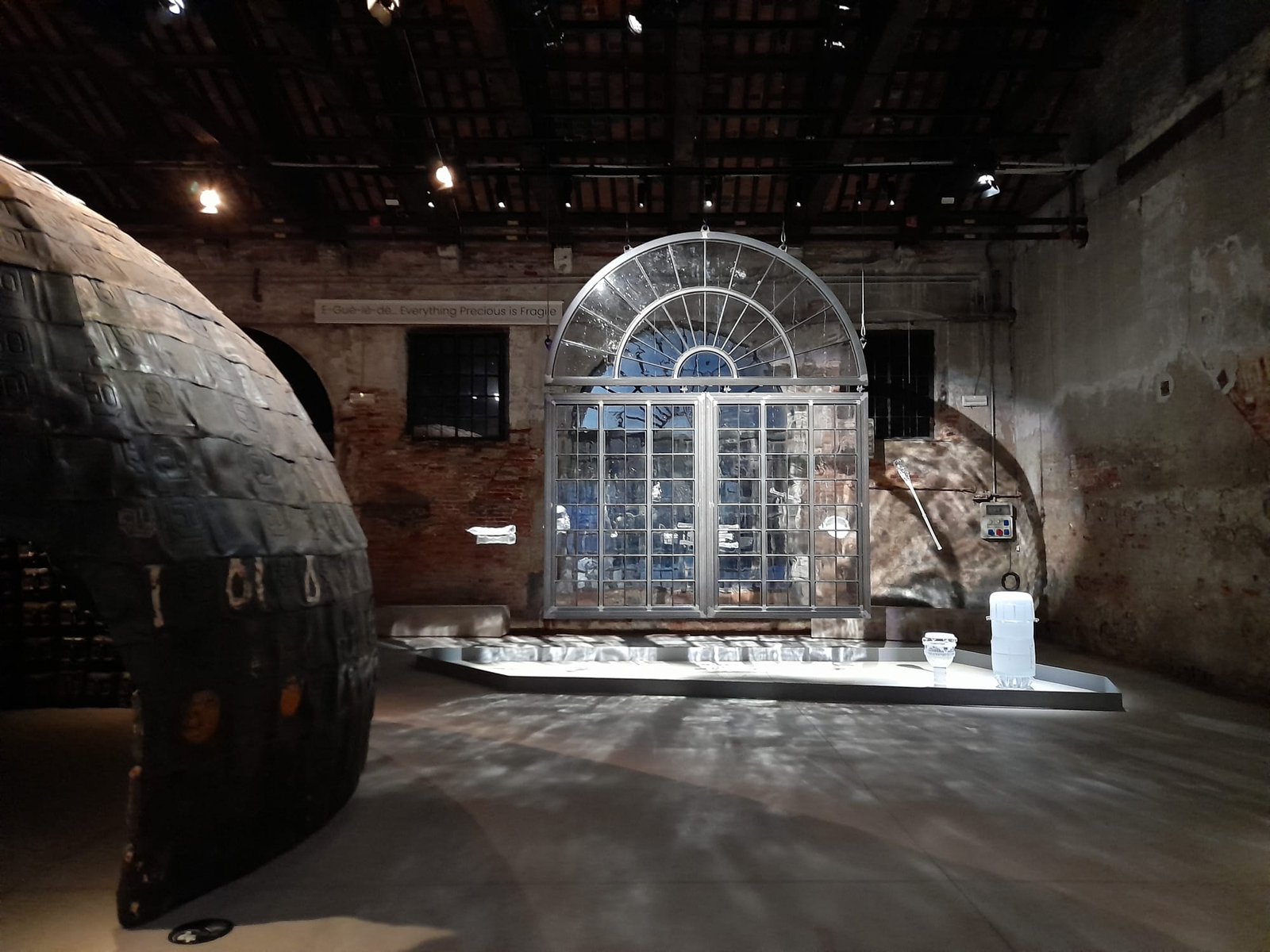
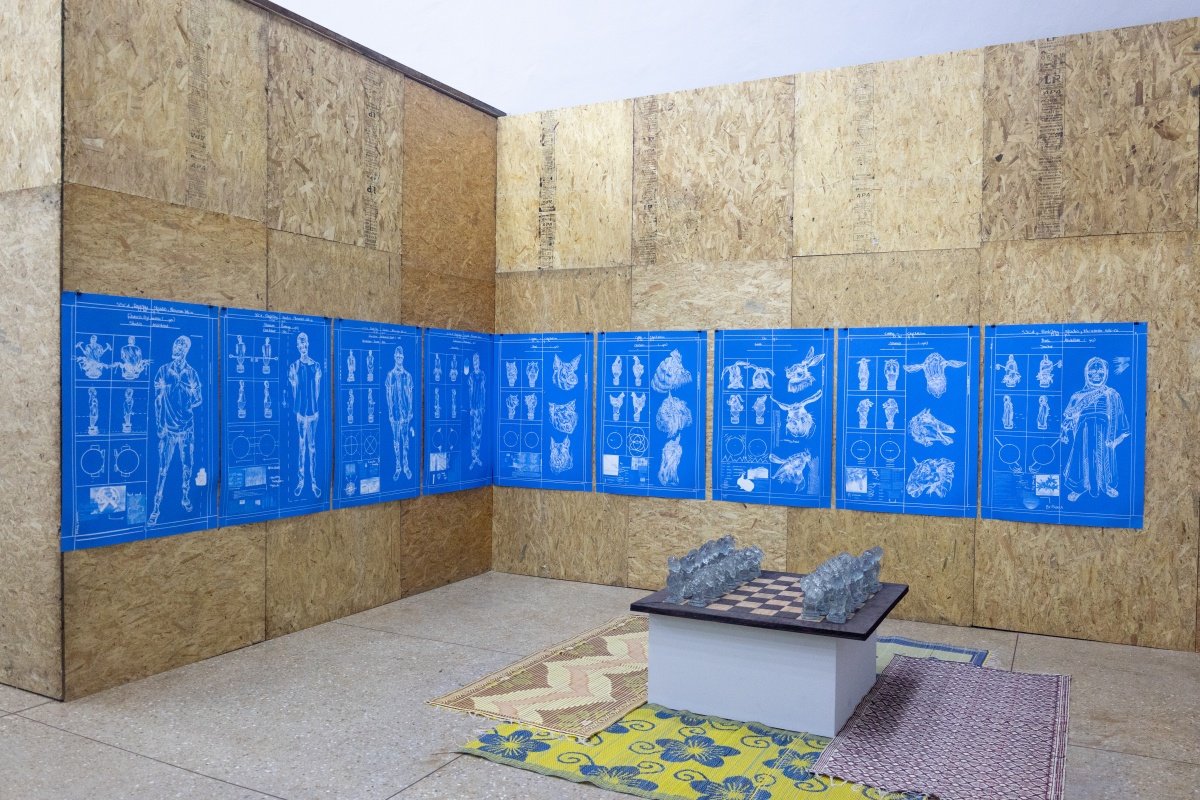
The first thing it required was patience with the process. We did not start with a list of artists. We started with research, travelling across the country, sitting with traditional rulers and custodians of knowledge, and listening. Everything Precious Is Fragile came out of the Gèlèdé tradition, which honours the power and wisdom of women and of the mother. That gave us a philosophy rather than a branding exercise, and Romuald Hazoumè, Chloé Quenum, Moufouli Bello and Ishola Akpo each answered it in their own way.
The second thing it required was an honest relationship with history. The pavilion only became possible in the wake of France returning the 26 royal treasures to Benin in 2021, and we could not stand in Venice without addressing the histories that shaped the nation such as the slave trade, the complicity within it, and what we learnt from our research was the concept of rematriation, the return to the mother–mothernature, mother earth, and to the Divine feminine that gives birth and sustains life and ecology. A festival like LagosPhoto lets you set a theme and invite the world into it. A national pavilion asks you to hold a people’s story in one room, in front of the world, without flattening it. You are negotiating with ministries, agencies, artists and ancestors at the same time. What I brought home was a different understanding of fragility, not as weakness but as a form of strength
Emaho: You’ve said, regarding LagosPhoto’s most recent edition, that you were trying to create space for discomfort, platforming artists who aren’t interested in making anyone comfortable, including yourself. That’s a genuinely different ambition from making African photography more palatable or legible to international audiences. Where do you think the instinct to make African photography “presentable” for global consumption actually comes from, and is LagosPhoto’s current direction a direct response to resisting that instinct?
Azu Nwagbogu: It comes from two places, and they are related. The first is the market and the funding structures. For a long time the routes for African photographers to be seen ran through Western festivals, collectors and grant bodies, and you learn quickly what travels. The second is a reaction against the colonial archive. After a century of ethnographic images that reduced us to types, there was an understandable desire to correct the record with beautiful, aspirational images. I understand that impulse. But a corrective designed for someone else’s eyes is still a performance for someone else.
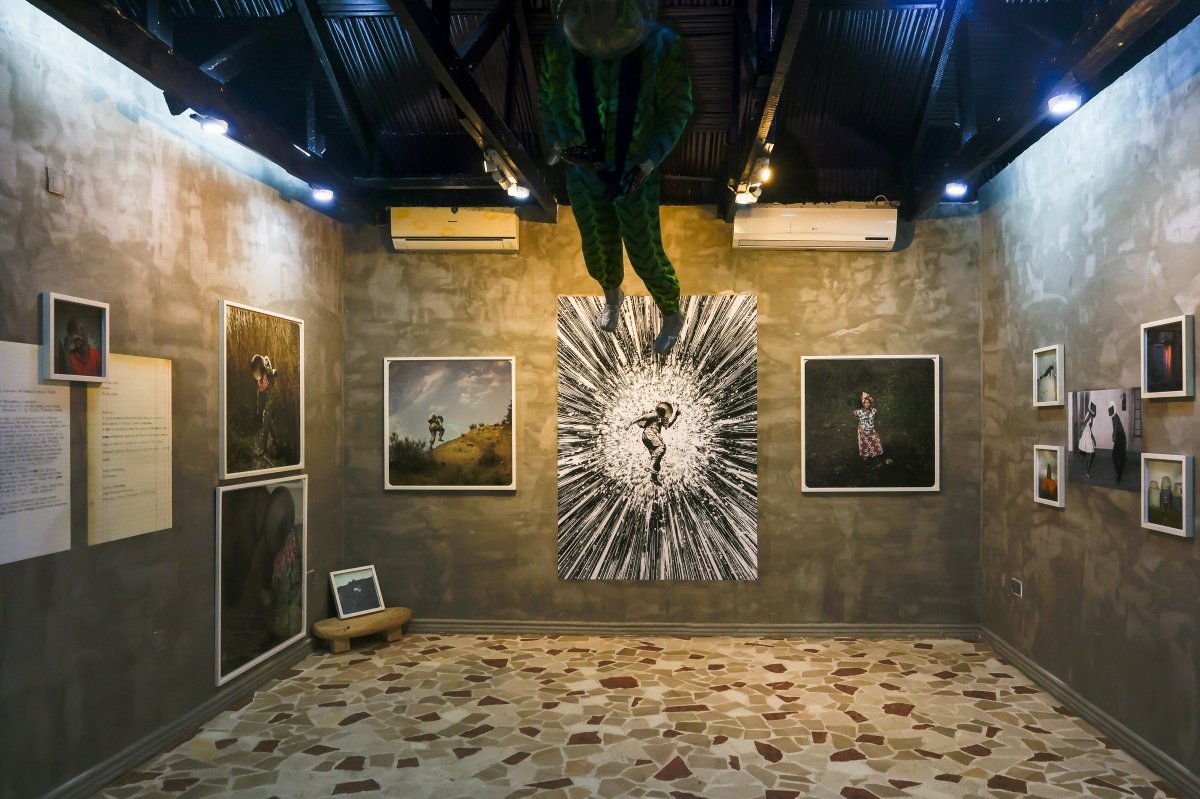
Presentability is a kind of confinement, which is partly why the 2025 edition took Incarceration as its subject. We were interested in every form of captivity, physical, digital and psychological, and one of them is the obligation to be legible, to explain yourself, to be palatable. The artists I wanted to platform are not asking for permission or translation. Some of the work was difficult for me too, and that is as it should be. A curator who is never uncomfortable is only confirming what they already believe.
So yes, it is a response, but resistance is not the goal in itself, because resistance still lets the other set the agenda. The goal is truthfulness, and a public in Lagos that sees itself in all its complexity. If an international audience arrives at that on our terms, they are very welcome.
Emaho: You’ve spent nearly two decades building institutions, from the African Artists’ Foundation to LagosPhoto to Art Base Africa, while continuously serving as a juror across major international photography awards and prizes. When you’re sitting on a jury evaluating photography from far outside Africa, does your specific curatorial lens, shaped by decolonization, restitution, and repatriation, change what you personally look for in an image, or do those concerns stay tied specifically to the African and diaspora-focused work you built your name on?
Azu Nwagbogu: The lens travels with me. I do not switch it off when the work comes from Seoul or São Paulo or Oslo, because these are not only African questions. They are questions about power, and power is present wherever an image is made. On a jury I look first at the relationship between the person behind the camera and the people or places in front of it. Who has the right to make this image? Was there consent, collaboration, reciprocity? Does the image take something from its subject, or does it return something? Restitution, for me, is not only about objects in museums. It is a way of looking. Every photograph is a kind of taking, and the best photographers are conscious of what they owe.
I also look for images that refuse to be merely illustrative. Too much photography illustrates a crisis that has already been framed elsewhere, by a newsroom or a report. I am interested in work that produces something: a new way of seeing, a new archive, a new community around the image. And with generated images now flooding everything, I pay much closer attention to authorship, to where an image comes from and who stands behind it.
What changes outside the African context is my humility. I am aware of what I do not know about a place, so I try to let the work teach me rather than judging it against a framework I carried in with me. It is the same courtesy I have spent twenty years asking the rest of the world to extend to us.