Oliver Cablat: “Story of the teleported DUCK” – Theory of Evolution

Oliver Cablat Born in 1978, Marignane, France. Oliver Cablat lives and works in Arles, France. After university studies in art, ethnology and photography (1996-2003), Olivier Cablat worked as a photographer for the Centre National de la Recherche Scientifique (CNRS) in Karnak, Egypt. Since 2005 he has elaborated his practice in different fields : artist, photographer, publisher and founder of Galerie 2600, teacher, searcher and Artistic Director of Cosmos Arles Books, together with Sebastian Hau.

France –

In 1930, duck farmer Martin Maurer had a duck-shaped building constructed to house his retail poultry shop in Flanders, a small town on Long Island, New York.

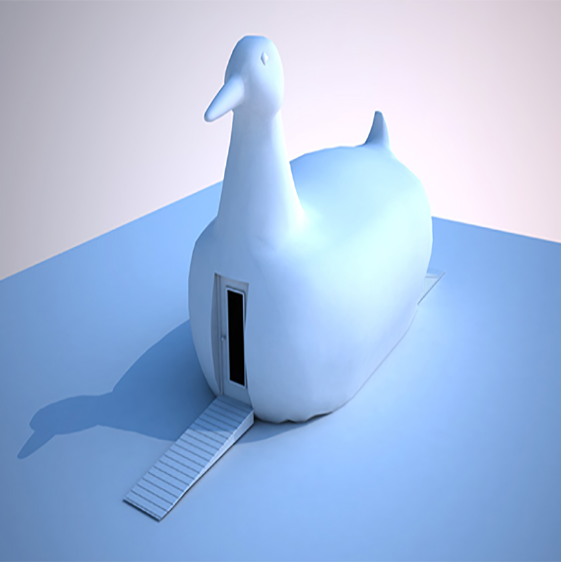
In 1972, Robert Venturi, Denise Scott Brown and Steven Izenour wrote Learning from Las Vegas, a book in which they examined the concepts of vernacular, functional and commercial architecture. They identified two main kinds of buildings: the ‘Decorated Shed’ and the ‘Duck’. Directly referring to the Flanders’s building, a Duck is an architecture taking a form which fully expresses its functional or commercial content.

In 2014, Olivier Cablat reactivated the Venturi’s concept by compiling archives made up of his own photographs, digitalised publications and pictures from the Internet. Those digital archives are the basis of ‘DUCK, A Theory of Evolution’, a genealogical study of the Duck and its evolution towards mobile forms that have more or less strayed from the original concept.


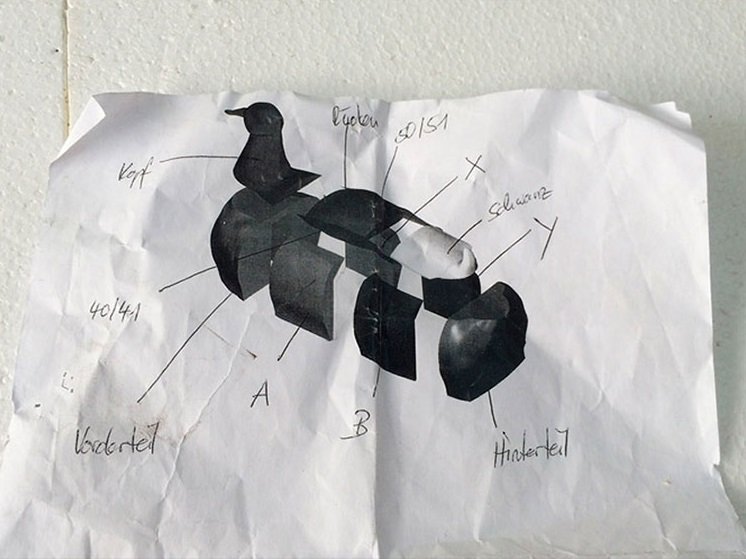
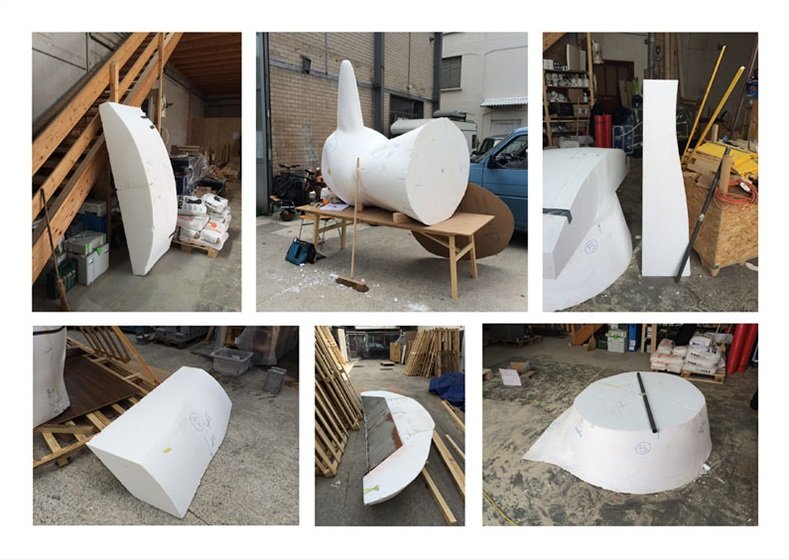
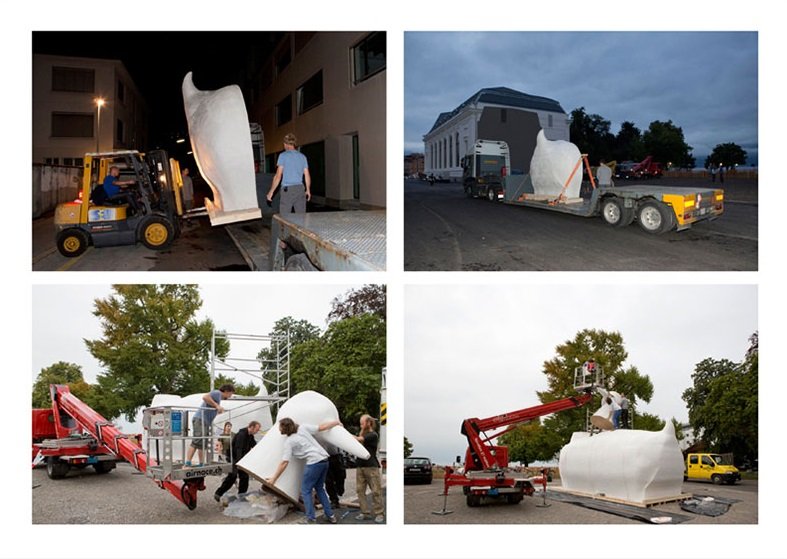
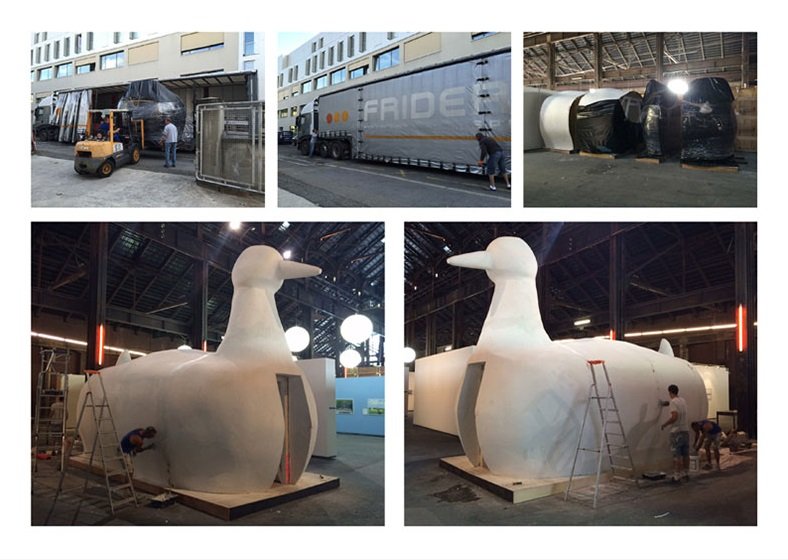
The project is also a reflection on the relationship between a work and the forms it can take. And the most significant of the forms taken by the project is a construction made solely from images and informations collected on the Internet. By covering all the angle of the original building, 10 touristic found pictures were used to re-create the previously unrealized plan of the building.

Then it was possible to create a teleported version of the DUCK, 81% size of the original building, only with a few dust of material found on the internet.


Art & Culture Feature- Oliver Cablat‘s DUCK was published by RVB Books, Paris.

Related Posts

Manal Al Dowayan: “I have a fear of making bad art, but not of the imagined repercussions”

Saudi Arabia – Hailing from a country fraught daily with controversy and oppression, Manal Al Dowayan has blazed into the ...

Under the Northern Sky: Barbara Arcuschin

Argentina –  Barbara Arcuschin’s travel to Northwest Argentina was manifold and inspiring. She documented her way through Argentina’s Jujuy province- ...

Sunday-S Gallerist Peter Ibsen: “If I don’t understand an art work, I like to stay with it longer, read more, talk to the artist, and allow myself to be challenged”

In this Emaho Magazine interview, Sunday-S Gallery founder Peter Ibsen recounts overhauling his collection after a monochrome work defied interpretation, ...

MarpLondon: “You don’t fight revolutions with silk gloves”

United Kingdom –  In her series “Icons of Modern Civilisation“,  British visual artist, Marianne deals with three themes.  Object of Desire – ...

Random Arrangement: Bruce Ingram

England- Emaho caught up with London native and Royal College of Art graduate, Bruce Ingram, to uncover his fetish for ...

Barmer Boys: Nomad Merasi Minstrels

India –   Blending an emphatically distinguishable medley of traditional and contemporary sounds, the Barmer Boys underline eclecticism as they ...

Jeff Frost : ‘If you figure me out, call me!’

U.S.A. – In the ghostly Mojave Desert of Southern California, dead trees don’t stay dead for long. American artist Jeff ...

Nucleya : Mashing it up

India –  Currently a one-man army under the onstage alias ‘Nucleya‘, this is a man who has been a pioneer ...

Tabarak Mansour: “My Iraqi sensibility lives in the forms I create, and viewers often sense it”

Tabarak Mansour’s Emaho Magazine interview explores how her Iraqi sensibility shapes the forms she creates, revealing deep connections to heritage, ...

Nour Al Asadi: The Iraqi Mixed-Media Artist Shaping Layered Worlds

In this Emaho feature, Iraqi mixed‑media artist Nour al Asadi is presented as a layered storyteller whose work fuses illustration, ...

Ece Haskan: “I often use self-portraits in many of my works, I also portray the women around me as like my sister & their stories because I frequently work with themes such as sisterhood and friendship”

Turkish illustrator Ece Haskan discusses how self-portraits and depictions of the women around her shape a visual world of sisterhood, ...

All India Bakchod revolutionises the last chance to ‘Save the Internet’ in India

India –  All India Bakchod (AIB), an Indian comedy collective, has been actively advocating for net neutrality laws online through ...