Tiane Doan na Champassak: Kolkata

Tiane Doan na Champassak is a French artist of Asian descent best known for his photo-based works and artists' books.After a prolific collaboration as a photographer with Agence Vu during which he was awarded a World Press Photo,a Prix Roger Pic, and grants from the Jean-Luc Lagardère Foundation and Villa Medici, Doan na Champassak shifted his attention to photography as a contemporary art form.

India – 

August, 1943. Night is falling on Calcutta, silencing its flocks of ravens, but wakening another kind of life – a feverish, hidden one : in the Maidan, that open space at the city’s heart, there are shadows waiting. »

My uncle, Thaï Doan na Champassak, published Ancestral Voices by Collins – London in 1956 and began his autobiography with this sentence. Mobilised in Algiers during the Second World War, he was sent to China as a trained parachutist in charge of a secret mission destined for clandestine entry into Indochina, then occupied by the Japanese. This extraordinary story has its beginnings in Calcutta, the starting point for his mission to Chungking. In the first chapter he gives a vivid description of the ex-capital of British India just four years before independence. Having travelled frequently to India since 1996 it never occurred to me that Kolkata (formerly the anglicised name Calcutta) would inspire me to produce a body of work focused on its street life and I owe it to my uncle for giving me that desire. In fact it is in the streets of Kolkata that I find the most absolute representation of Indian reality. It is also the only city which holds such an intense concentration of extremes; quiet and loud, rich and poor, clean and dirty, modern and old, beautiful and ugly, past and present. This continuous duality has become my leitmotiv and is the reason I deliberately chose to focus on its street life in order to best represent the chaos of this huge megalopolis of over fifteen million inhabitants.


Tiane_Kolkata


‘Kolkata’ by Photography Tiane Doan na Champassak
Published by Editions Bessard
500 Copies, 152 pages + cover, 20 x 30 cm

Related Posts

Jon Tonks: Empire

United Kingdom –  Empire is a fascinating journey across the South Atlantic exploring life on four remote islands – the British ...

The PhotoBookMuseum by Schaden Foundation

Germany –    The PhotoBookMuseum (The_PBM) pays tribute to the central form of expression in photography: the photobook. To introduce ...

Takeshi Ishikawa: HIJRAS – The Third Gender of India

THIS STORY CONTAINS EXPLICIT CONTENT In Indian society, it is said that when a hermaphrodite baby is born in an ...

EMAHO Picks the Most Interesting Photobooks of 2014

“Just like every year, more and more photobooks were published in 2014. The importance and awareness of making a photobook ...

Manik Katyal on Ernesto Bazan “ISLA”

Cuba –  With an eclectic body of enriching, honest and deeply committed work, one can only admire the talent that ...

Just Like Us : Inside Iran’s Apartments By Palash Krishna Mehrotra

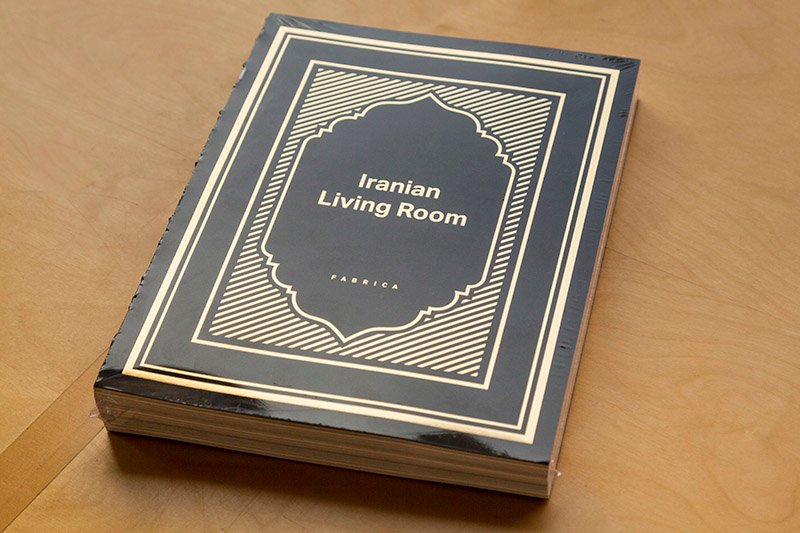
Iran – Iranian Living Room is the first of a series of editorial projects self-published by Fabrica, a think tank ...

Colin Pantall on Max Pinckers “Will They Sing Like Raindrops or Leave Me Thirsty”

Belgium – What do you do if you love somebody but your love is forbidden by your parents, by your ...

Emaho Foundation’s Emerging Asian Photography Grant Winner Announced

India –  We are delighted to announce that Tsunomu Yamagata has won the Emaho Foundation‘s Emerging Asian Photography Grant 2015 ...

Kaveh Kazemi: “My Policy Has Been Not to Fear the Fear” – On Revolution, War and Four Decades of Photojournalism

In this interview, Kaveh Kazemi reflects on a career shaped by revolution, war and documentary photography. From his photographs of ...

Tanya Traboulsi: “Photography as a Language of Memory, Distance and Beirut”

Austrian-Lebanese photographer Tanya Traboulsi speaks about growing up between two cultures, Beirut as muse and mirror, and photography as her ...

Poulomi Basu: “A Ritual of Exile” – Exposing Women Condition in Nepal

Nepal –  “It’s dark, and there is no light. I feel so scared someone might come.” Radha is only 16 ...

Sayako Sugawara: “When Materials Become Witnesses to Time” – On Photography, Painting and the Unpredictability of Making

In this interview, Sayako Sugawara explores how memory, displacement and material traces shape her photographic practice. From mould damaged glass ...