Kanako Sato: Kaleidoscope

Photographer Kanako Sato one of EIZO’s ColorEdge Ambassadors, has long been using ColorEdge for her work. We talked to Ms. Sato about what she sees as important when creating works and her experience using ColorEdge.

Japan – 

The calm surface of the water – it is the most beautiful mirror that is made by nature. It does not only reflect the scenery of the land but also the inside the water if you look up at the surface in the water.

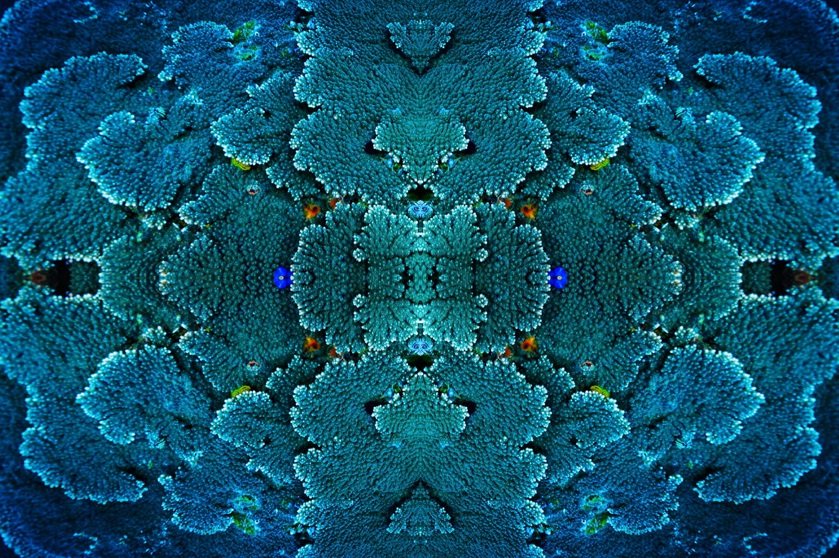
It was about two years ago in the ocean near Tokyo when I had experienced the amazing scenery in the water. A figure of a floating jellyfish was reflected on the surface of the water, which made me see a whole new figure of the creature with a different design from what we usually see.

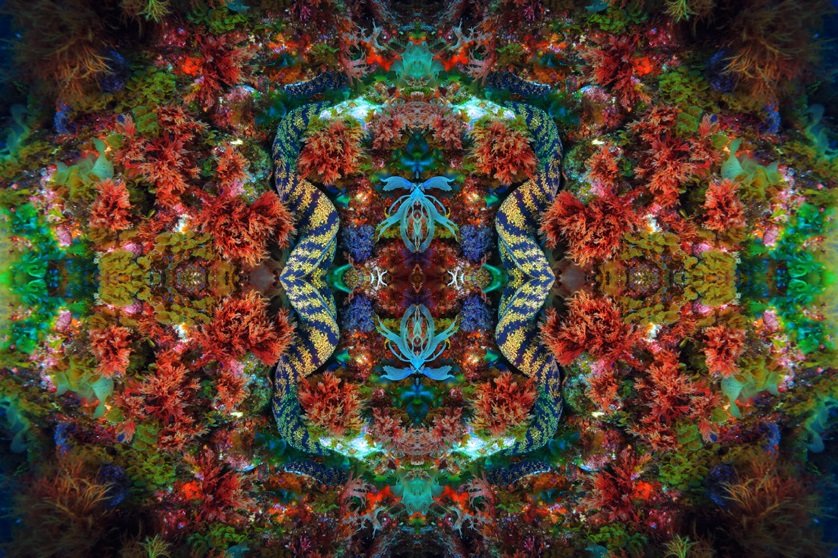
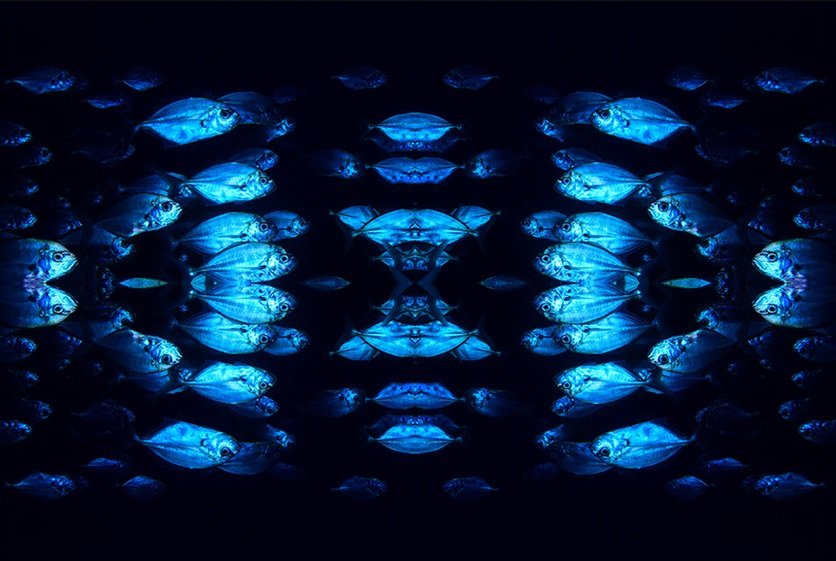
This time, my series of the photographs were inspired by my experience in the water. All my objects are plants and animals that live deep in the water. They would rarely be seen at the surface.  In my picture, I made it symmetrical to show the beauty and tried to express the scenery in the water as an art. I think repetition can enhance the quality of its beauty.

My works represent the undersea world as kaleidoscopes of lives while they resemble mandala which is a spiritual symbol representing the universe. Mandala expresses a sacred place and divinity having symbols of nature and the divine. Making photos of creatures and sceneries symmetrical, I was able to show the undersea world more divine as a sacred place and also found myself having been viewing it as a sacred one. It is because the Japanese cultural concept that all of the things in nature are the divine ones that we should respect is ingrained in myself.

 Though it’s a sacred place, the ocean can easily be destroyed by our hands. In order for us to have minds to keep the beautiful ocean as it is, visualizing divinity of the ocean is one of the most effective ways. I will keep expressing the beauty of the ocean through my works of underwater kaleidoscopes and mandalas.

Art & Culture Featured – Written and Photographed by Kanako Sato

Related Posts

Reem R: “Something shifted in my artistic journey when I saw a drawing that had crying trees made by a Palestinian child, I felt a deep connection to it”

Palestinian painter Reem R reflects on a turning point in her practice after seeing a child’s drawing of “crying trees,” ...

Emilia Yin: The Architecture of Attention in Contemporary Art

LA gallerist Emilia Yin illuminates Make Room's ethos in Emaho - crafting intimate spaces where Asian diaspora artists evolve beyond ...

The Mad Hatter – Philip Smiley

England- London based artist, Philip Smiley did his MA in Fine Arts at the School of Visual Arts, New York. ...

All India Bakchod revolutionises the last chance to ‘Save the Internet’ in India

India –  All India Bakchod (AIB), an Indian comedy collective, has been actively advocating for net neutrality laws online through ...

Melinda Gibson & Thomas Sauvin: Lunar Caustic

China –   When faced with an archive of over 500,000 images of partially destroyed negatives of Beijing based vernacularism ...

Diddo Velema : “I’m still enjoying my childhood!”

With over 15 years of experience as a designer, art director and conceptual artist, Diddo Velema’s achievement lies in breaking ...

Pooya Aryanpour: “The Beauty of Creation Lies at the Intersection: Where Tradition Meets Global Discourse”

Tehran-based artist Pooya Aryanpour, born into a legacy of Iranian intellectuals, discusses his homeschooled roots, passion for painting, and projects ...

Ahoo Hamedi: “The energy, challenges, and culture of Tehran naturally find their way into my work, giving it a sense of place”

Iranian artist Ahoo Hamedi reflects on how Tehran’s charged atmosphere, daily struggles, and rich culture seep into her multidisciplinary practice, ...

Chang-Jin Lee: Comfort Women Wanted

South Korea –  This project is based on my trips to Asia since 2008, interviewing the Korean, Chinese, Taiwanese, Indonesian, ...