Bernard Faucon: Chambers of Gold, 1987-1989

Bernard Faucon is a French photographer and writer. He first established a career in art photography and has exhibited widely around the world.

France –

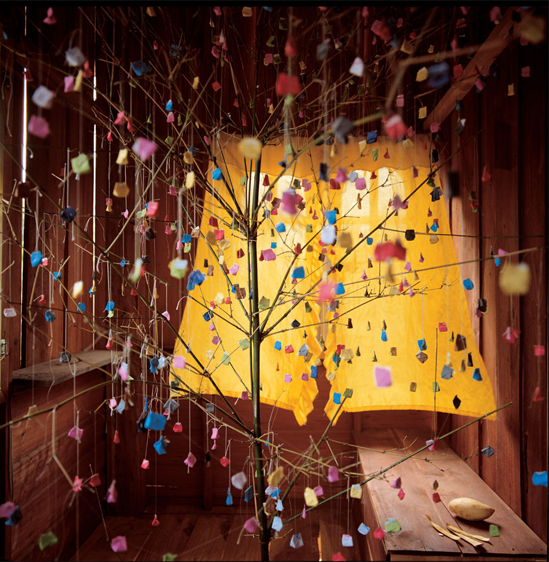
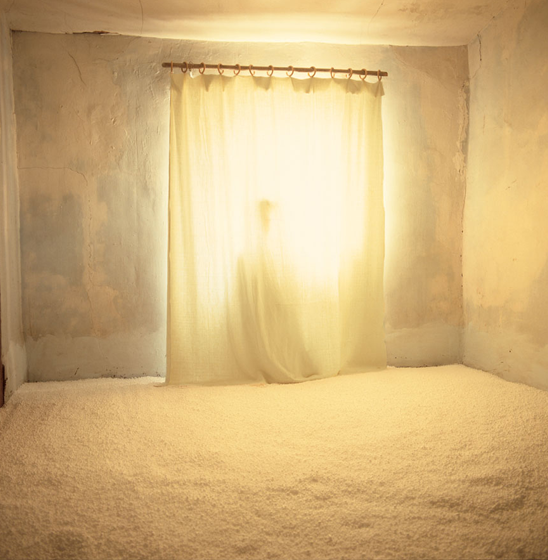
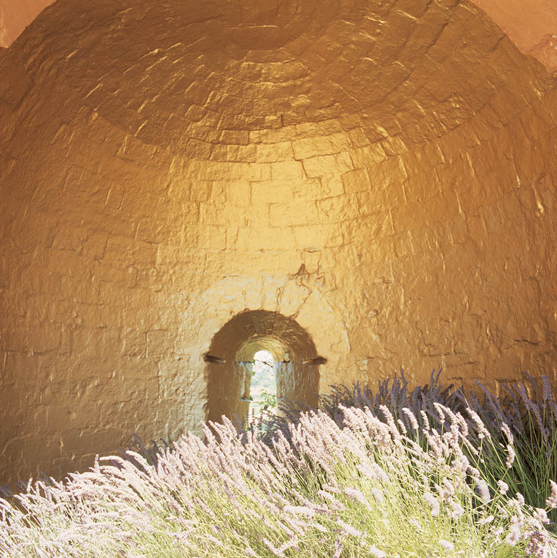
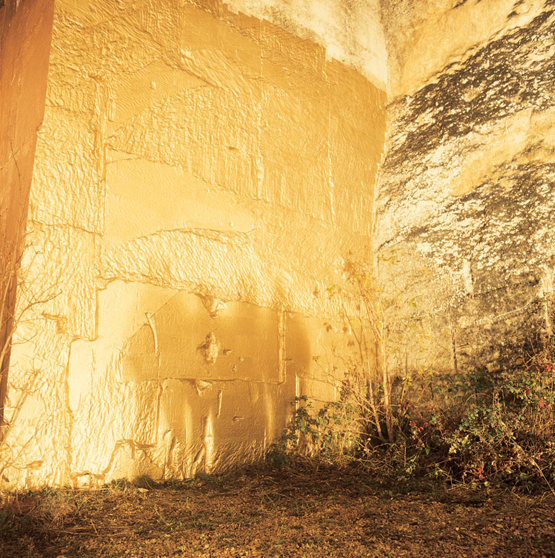
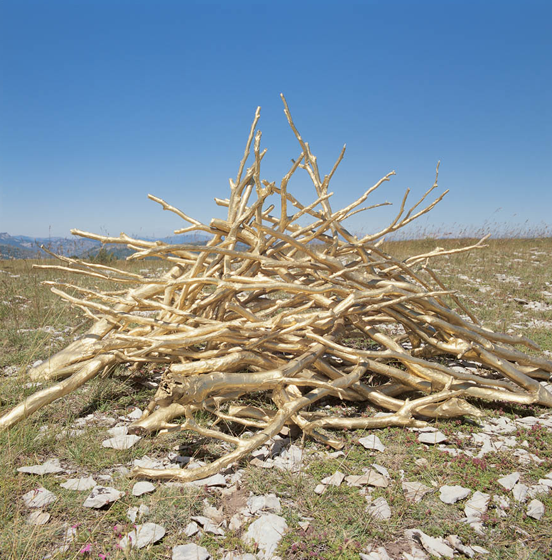
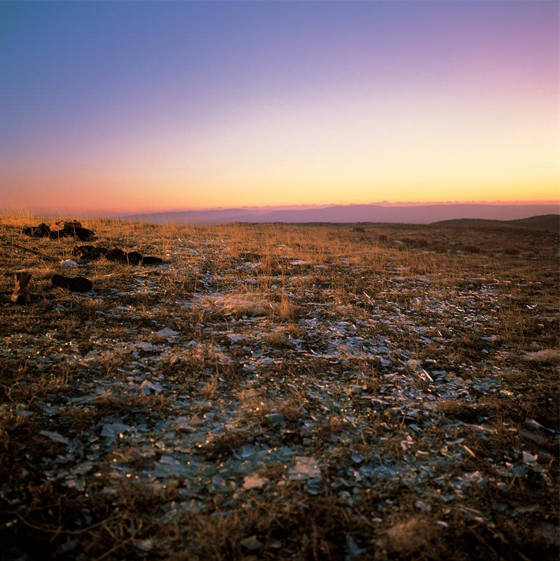
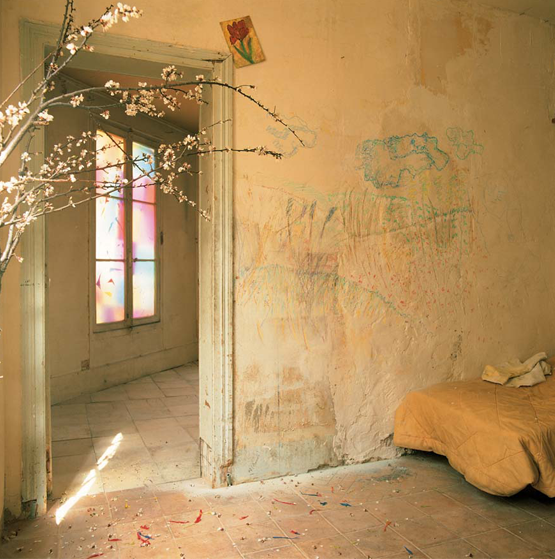
In 1987, I went to Japan for the second time. I came back dizzy with the gold and Buddhist phantasmagoria. Quite naturally, the Chambers of Love to which I could not put an end, that had given rise to three or four Chambers in Winter, became Chambers of Gold. I revelled in the ambivalence of gold. Uncluttered, mystical spaces, where only the dazzle of the presence still dwells, the last material limit, the last visible surface before pure incandescence, before whiteness.

Text by Bernard Faucon 


Chambers of Gold, 1987-1989

Born in France in 1950, Bernard Faucon is one the first artists to explore directed photography and in this way questions the relation between real and manipulated real or false. His work is exhibited all over the world and the European House of Photography in Paris held a retrospective.

At the end of the eighties, Bernard Faucon visits Asia: the inspiring trip for Chambers of Gold. “When I came back, I felt like drunk with gold and Buddhist phantasmagorias.” He entitles his serie Chambers of Gold and continues the work he started for Chambers of Love and Chambers of Winter, showing the all time  splendors of the golden statues representing Buddha in the Asian temples he visited.

Deprived of all human presence, his interiors become areas filled with poetry and emotions, where sense of time seems more important than souvenirs. “Empty but mystic rooms, with a blinding presence as the ultimate material limit before pure and erasing whiteness”.

Photography and Written by Christian Caujolle


This series was recently exhibited as part of Photo Phnom Penh 2013 in Cambodia.
Related Posts

Transgender in Armenia : Nazik Armenakyan

Armenia – Cross dressers and transgender women who engage in sex work have a more difficult time hiding their identities ...

Alejandro Castellote on Musuk Nolte and Leslie Searles’s PIRUW

Peru –                                     ...

EMAHO Picks the Most Interesting Photobooks of 2014

“Just like every year, more and more photobooks were published in 2014. The importance and awareness of making a photobook ...

Emma Phillips: SALT

Australia – Young Melbourne photographer Emma Phillips’ new body of landscape images is so striking in its minimalist visage that ...

Rape Of growth : Ole Elfenkämper

Sweden – The Awful State of Albania Dilapidated industrial plants, a lack of sewage plants and high air pollution burden ...

Oumayma Ben Tanfous: “The Book Definitely Helped Heal Some Wounds” – On Photography, Culture and Finding Her Way Back to Tunisia

For Oumayma Ben Tanfous, photography became a way of returning to Tunisia, twenty years after leaving. Her debut photobook, Between ...

Daisuke Yokota: “Corpus” – Fictitious Mix of Nudity and Reality

Japan –  Photography feature –  Daisuke Yokota was selected for the first OUTSET UNSEEN AWARD in 2013, and his first ...

Colin Pantall on Kazuma Obara “Silent Histories”

Japan – Grave of the Fireflies is an anime film about the Second World War in Japan.  The main characters ...

Manik Katyal on Halil Koyutork’s “I am Playing Ping Pong Now” – Photography, Sexuality, Society

Turkey –  “”I fell into a state of mental and psychological distress after my divorce. That triggered me in a ...

Kaveh Kazemi: “My Policy Has Been Not to Fear the Fear” – On Revolution, War and Four Decades of Photojournalism

In this interview, Kaveh Kazemi reflects on a career shaped by revolution, war and documentary photography. From his photographs of ...

Helmut Smits: “The sculpture already exists within the marble; Michelangelo’s task was merely to chisel away the excess. I think the same is true for almost everything in life.”

From a childhood of crafting without museums to distilling Coca-Cola into pure water in "The Real Thing," Rotterdam artist Helmut ...

David Hornillos: “Mediodia” – Spanish Midday Love For Orange Brick Wall

Spain –  Madrid’s Atocha station was formerly known as Mediodía (Midday), as it was the city’s Southbound railway hub. This ...