Greece –
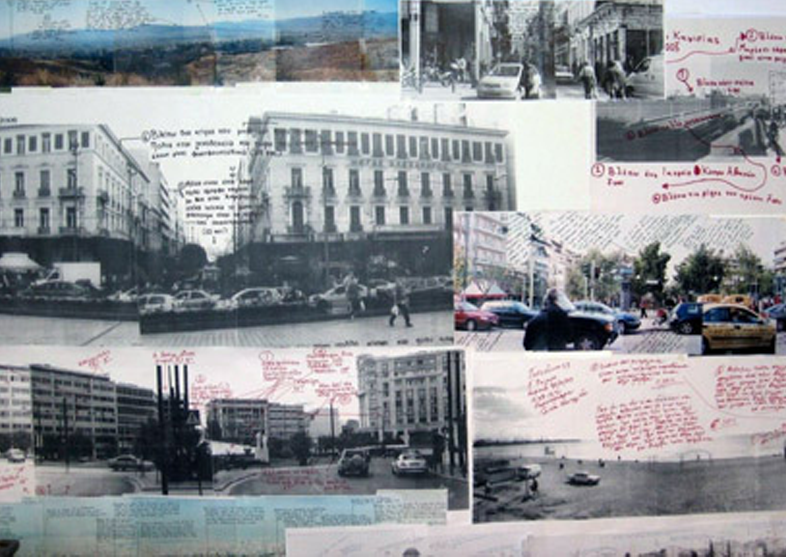
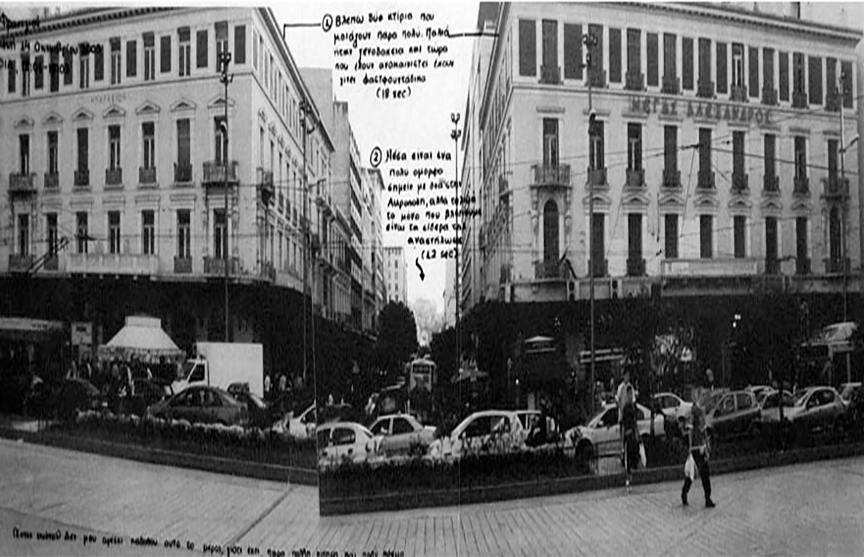
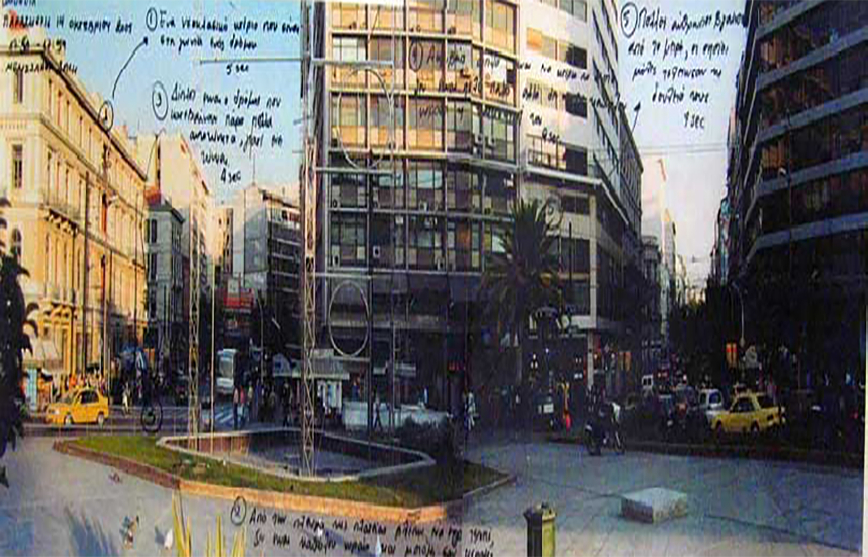
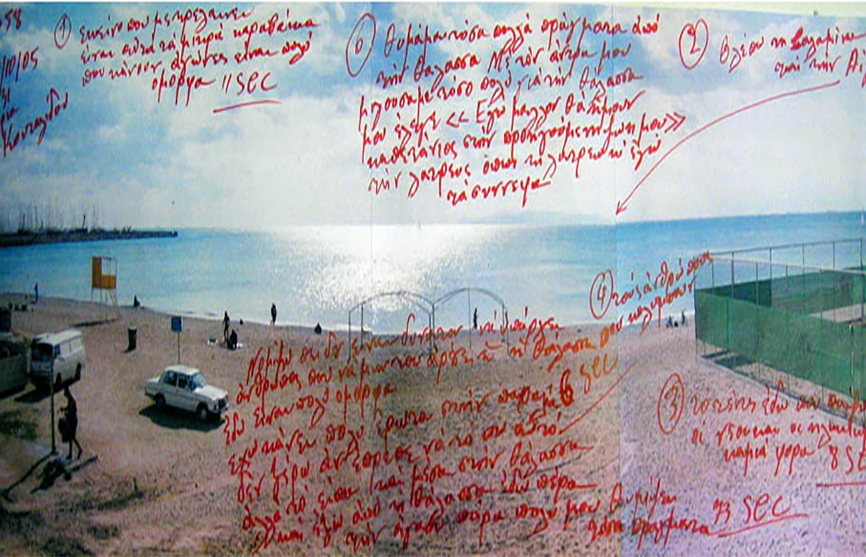
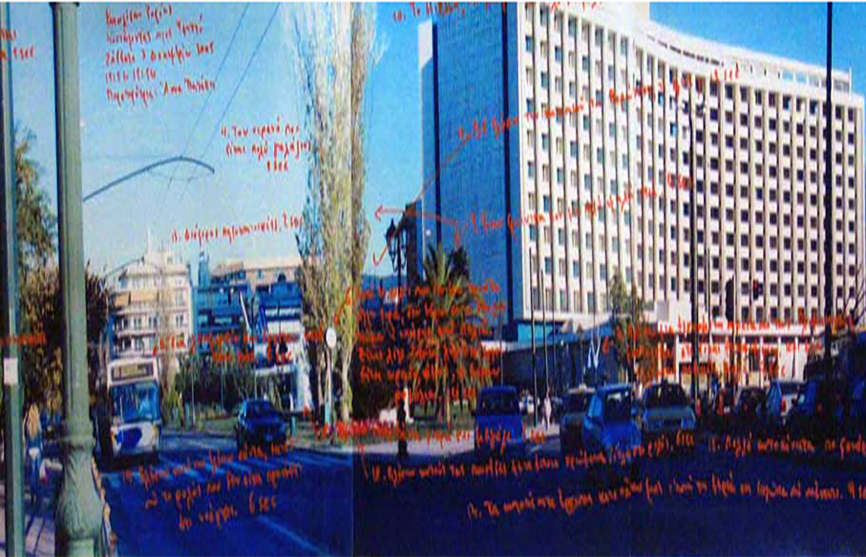
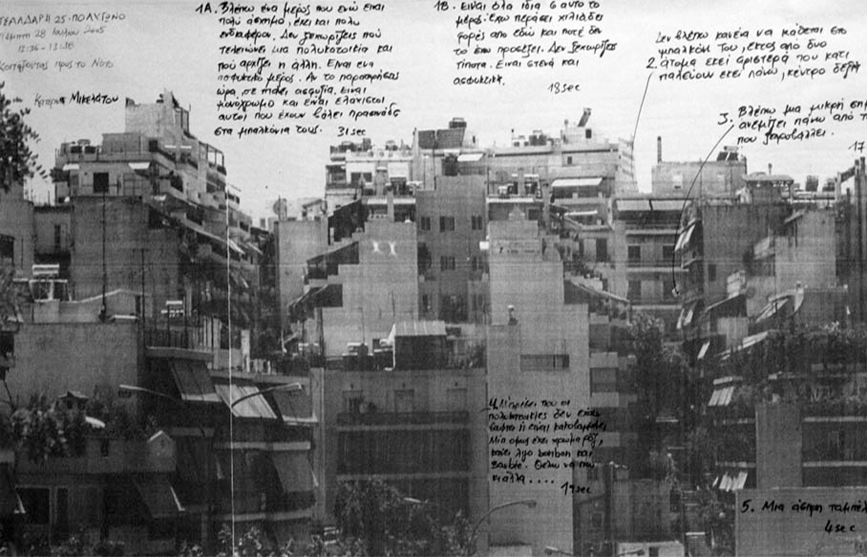
Usually, repeated passage through the places that surround our daily life deprives us of conscious contact with them. The gazings presented in this project constitute an effort to record a conscious relationship with the places within which we move, as inhabitants of Athens or just visitors.
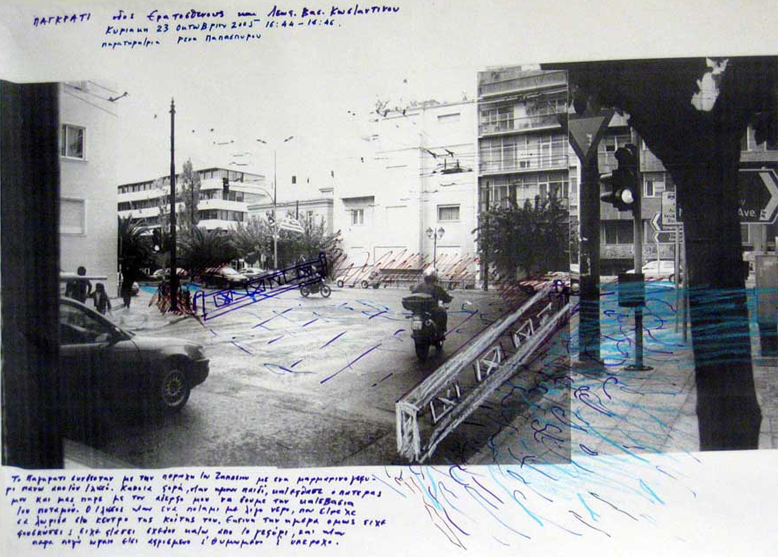
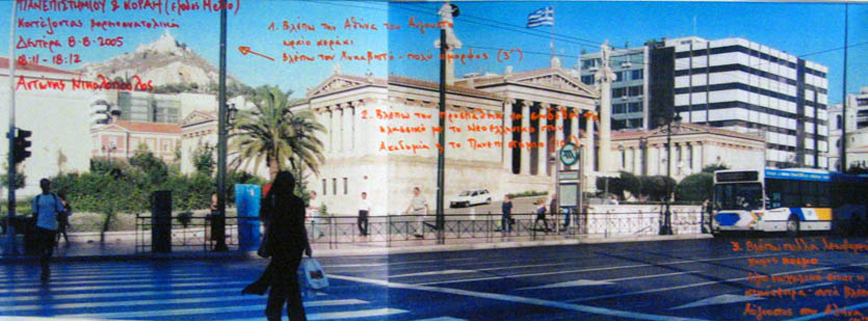
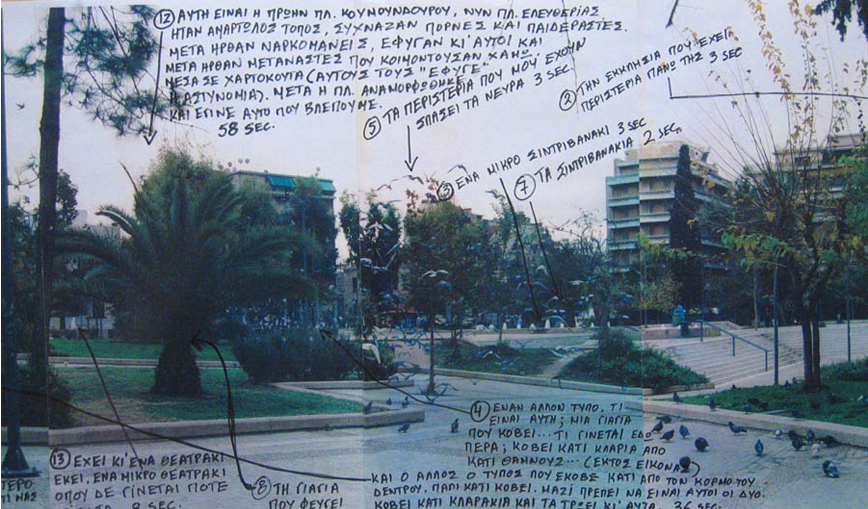
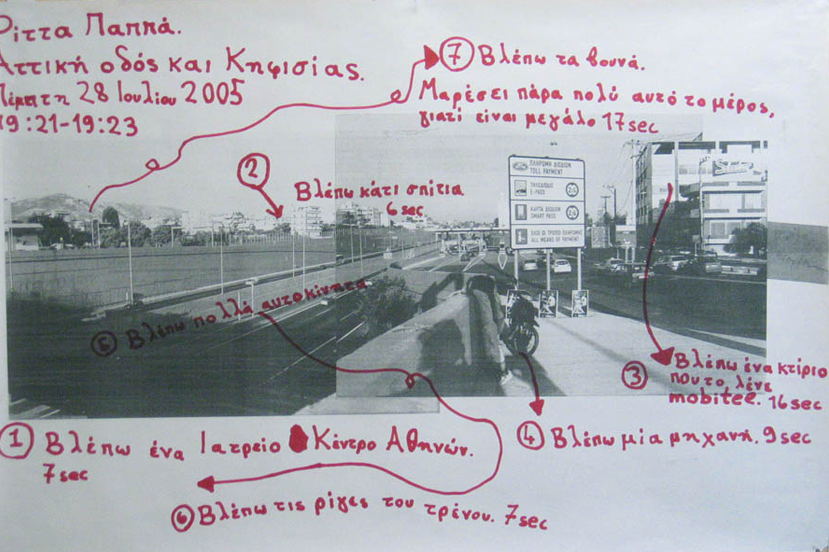
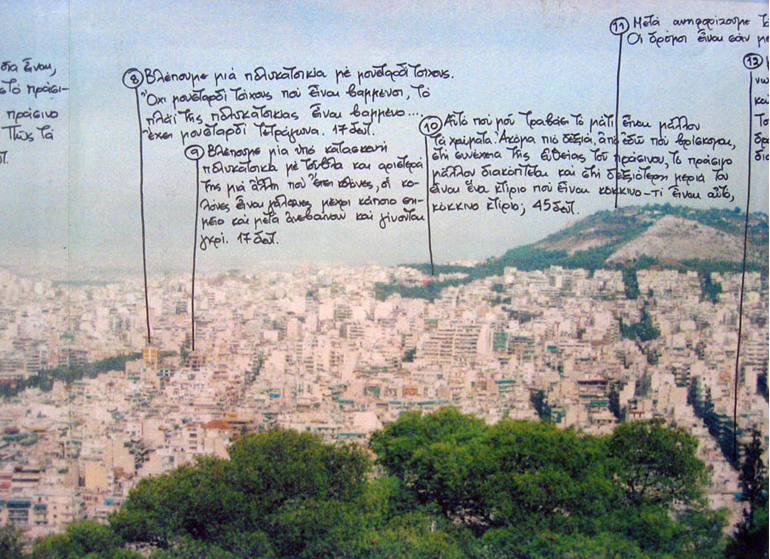
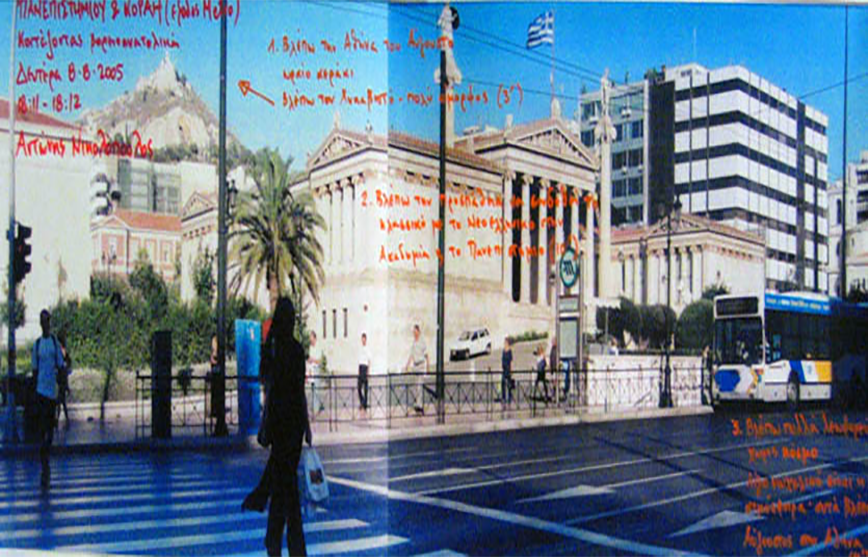
The timing of the gazings is a tool by which we can follow the observer’s thought process, since the time he/she spends focusing does not necessarily coincide with the time it takes to read what is written on the photographs. The time is noted in order to indicate the intensity of the observation, which changes according to the point the viewer is looking at and how interested he/she is in it.
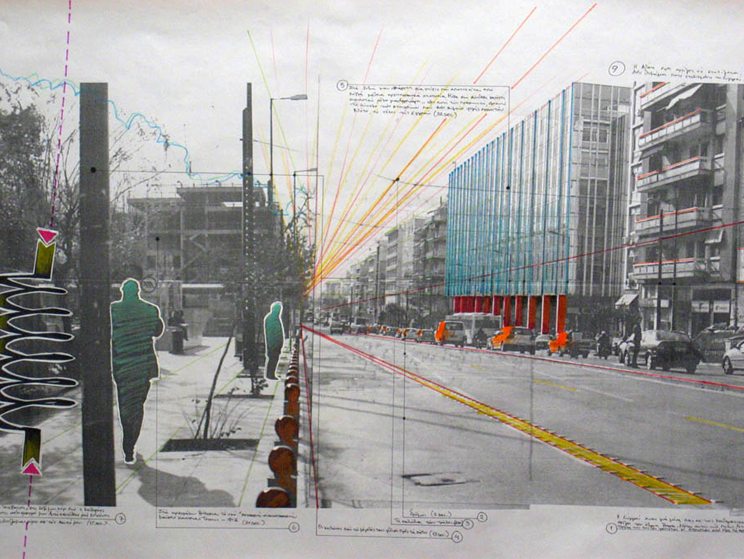
The handwriting styles, the drawings and the diagrams reveal a personal way of connecting with the urban landscape. The observations may carry memories; comment on the state of the location; express aversion, affection or apathy; record habits; or be strictly descriptive. As diverse as they may be, most of them refer to central parts of Athens, which most of us have probably gone by.
The images presented do not cover the entire city; these are places that the viewers themselves have chosen, based on their daily activities. This project would not have been possible without the 55 participants who agreed to share their gaze, their thoughts and their time with me.
The process of “Timed Gazings”:
- We visit a public space in Athens with the observer.
- We take photographs of the place.
- With the use of a tape recorder, we record the comments of the observer, while he/she gazes at the space.
- Based on the recorded material, we follow the order of the observer’s gazing, noting his/her comments for every spot he/she has focused on, and measuring the time of focus for every different place of interest.
- We print and photocopy the photograph of the space.
- The observer takes the enlarged picture and the notes of his/hers gazing. With his/her own handwriting, he/she writes on the picture his/her name, the name of the place, or the street, his/her comments and the time spent on each different spot of his/her gazing. The result is a handwritten document-map of his/her gazing.
Art & Culture Written and Photographed by – Nina Pappa